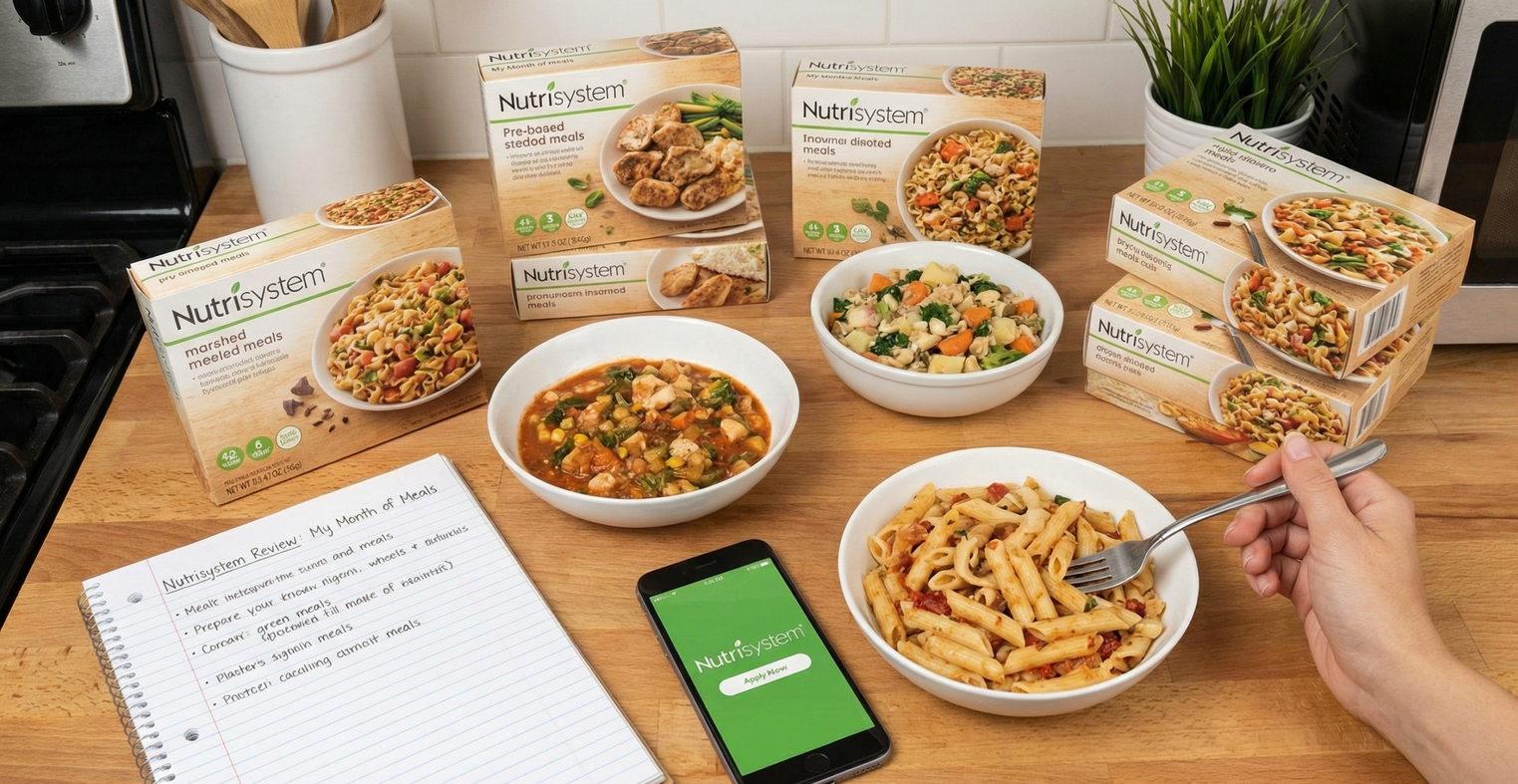
Comprehensive Nutrisystem Review: Does the Classic Meal Delivery Diet Really Work? (2026 Update)
In a world saturated with trendy weight loss apps, keto-specific services, and intermittent fasting protocols, Nutrisystem remains the veteran in the room. It has been a household name for decades, promising one simple thing: we handle the counting so you don’t have to.
But does this “heat-and-eat” model still hold up today? With modern competitors offering chef-prepared gourmet meals, Nutrisystem’s reputation for shelf-stable pantry food has faced scrutiny. However, recent overhauls to their menu—specifically the introduction of “Hearty Inspirations” premium frozen meals—have aimed to modernize the experience.
This review cuts through the marketing noise. We are looking at the current state of Nutrisystem, analyzing the taste difference between their basic and premium tiers, and determining if the convenience justifies the price tag for busy adults looking to shed pounds. We’ve also added deep insights into the glycemic science, how to avoid plateaus, and exactly what happens when you stop the program.
A Brief History of the Brand
Nutrisystem’s roots go back decades, long before “meal delivery” was a mainstream category. The brand originally built its reputation on portion-controlled, shelf-stable food shipped directly to members’ doors — a genuinely novel concept at the time, when the alternative was either a restrictive DIY calorie count or an expensive in-person weight loss clinic. Over the years, the company weathered significant shifts in the diet industry, from the low-fat craze of the 1990s to the low-carb boom of the 2000s, repeatedly updating its nutritional philosophy to reflect evolving science on glycemic control and protein’s role in satiety.
The introduction of the frozen “Hearty Inspirations” line marked a turning point for the brand’s reputation. For years, Nutrisystem’s biggest criticism was food quality, and the shift toward a genuine frozen-meal option — closer in spirit to the fresher meal-kit competitors that emerged in the 2010s — was a direct response to that feedback. The companion NuMi app represents the most recent evolution: turning what used to be a purely passive “eat what’s in the box” experience into an interactive, trackable system that layers in grocery add-ins, exercise logging, and community support features.
Understanding this history matters because it explains why the current version of Nutrisystem feels like two different programs depending on which tier you choose. The Basic plan is closer to the brand’s original shelf-stable identity, while Uniquely Yours and Max+ represent the company’s attempt to compete directly with the fresher, more expensive meal-kit services that have reshaped consumer expectations over the past decade.
How It Works: The “Done-For-You” Model
Nutrisystem is a high-protein, lower-glycemic index plan designed to keep blood sugar steady. Unlike diets that require you to weigh food or track macros, Nutrisystem sends you pre-portioned meals for Breakfast, Lunch, Dinner, and Snacks.
The program is structured around eating six times a day to prevent hunger. You receive a shipment every 4 weeks containing most of your food. However, you are not eating 100% boxed food. The program requires you to purchase fresh grocery add-ins, known as:
- PowerFuels: Lean proteins like chicken, eggs, or yogurt.
- SmartCarbs: High-fiber foods like fruits, whole grains, or beans.
- Vegetables: Unlimited non-starchy veggies are encouraged to add volume to the smaller boxed meals.
This hybrid approach teaches you portion control while ensuring you still eat fresh produce. The companion NuMi App helps you track these add-ins so you stay within your calorie goals. The app now includes barcode scanning for grocery items, a huge upgrade from earlier versions.

Portion Control Containers
Nutrisystem teaches you portion sizes, but having your own set of color-coded containers helps you manage your “Flex Meals” and grocery add-ins with precision.
Check Price on AmazonInside the NuMi App: A Closer Look
The NuMi app has become as central to the Nutrisystem experience as the food itself, and it’s worth understanding what it actually does beyond basic calorie tracking. At its core, the app organizes your daily meal plan into a visual timeline, prompting you when it’s time for your next meal or snack and letting you log both boxed items and grocery add-ins with a few taps. The barcode scanner is a genuine time-saver for grocery add-ins, pulling nutritional data automatically rather than requiring manual entry, which removes a lot of the friction that causes people to abandon food tracking on other platforms.
Beyond tracking, the app includes a library of guided workouts scaled to different fitness levels, a water intake tracker, and a community forum where members can share menu customization tips and troubleshoot cravings together. Progress charts visualize weight trends over time using a rolling average rather than raw daily numbers, which helps counteract the discouragement that comes from normal day-to-day water weight fluctuation.
One underrated feature is the menu customization tool itself, which lets you filter the entire food library by category, sodium level, and prior rating, then build your next shipment box item by item rather than accepting a generic default assortment. Members who spend a few extra minutes each cycle fine-tuning their box based on what they enjoyed (and skipping what they didn’t) report meaningfully higher satisfaction than those who leave the default selections untouched.
The Food: Shelf-Stable vs. Frozen
The single most important factor in your success with Nutrisystem is which plan you choose, because the food quality varies drastically between the tiers.
Shelf-Stable Meals (“Ready to Go”)
These are the classic Nutrisystem foods that do not require refrigeration—think granola bars, muffins, and microwavable bowls of pasta or chili.
The Verdict: They are convenient and portable, making them excellent for office lunches. However, the taste is often compared to canned soup or camping meals. They get the job done, but they aren’t culinary masterpieces. Texture can be mushy, but newer formulations have improved.
Frozen Meals (“Hearty Inspirations”)
This is where the program shines. The frozen line includes skillet meals, roasted turkey, burgers, and pizzas.
The Verdict: These are significantly better than the pantry items. The “Hearty Inspirations” meals are larger, contain more protein (up to 30g), and taste closer to a standard restaurant meal. If you care about flavor, prioritizing a plan with frozen options is non-negotiable. The frozen pizzas, for example, have a crispy crust that defies diet food expectations.
Full Taste Test: Rating Every Meal Category
Taste is subjective, but after sampling dozens of items across every category, some clear patterns emerge. Rather than giving a single blanket verdict, it helps to break the menu down course by course, because the quality gap between the best and worst items on Nutrisystem is genuinely wide. Below is a category-by-category breakdown to help you build a smarter box when you customize your menu.
Breakfasts
Breakfast is arguably Nutrisystem’s strongest category. The muffins, pancakes, and breakfast sandwiches hold up well to reheating, and the cinnamon roll is a longtime fan favorite that tastes close to a genuine bakery treat despite the modest calorie count. The pancakes benefit from a drizzle of sugar-free syrup and a handful of fresh berries, which also counts toward your SmartCarb requirement for the day. Egg-based items, like the frittatas, are hit or miss depending on the batch, but generally deliver a satisfying protein punch to start the morning. If mornings are rushed, the breakfast bars and shakes travel well and require zero prep beyond opening the wrapper or mixing with water or milk.
Lunches
Lunches lean heavily on pasta, soups, and sandwiches. The creamy pastas and chili are consistently well-reviewed and reheat evenly in the microwave. Soups can taste a little salty on their own, which is where adding a fresh side salad or extra non-starchy vegetables makes a meaningful difference, both nutritionally and in terms of satisfaction. Sandwiches and wraps are more polarizing; the bread can turn slightly dense after being frozen or shelf-stored, so many members prefer to swap in a fresh whole-grain wrap as a SmartCarb instead and use the filling packet on its own.
Dinners
This is where the gap between shelf-stable and frozen becomes most obvious. Shelf-stable dinners, like the microwavable chili or pasta bowls, are serviceable comfort food but rarely memorable. The frozen “Hearty Inspirations” dinners are a different story entirely — the roasted turkey medallions, the beef merlot, and the herb chicken are frequently singled out as genuinely enjoyable meals that don’t taste like diet food. Portion sizes on the frozen dinners are also noticeably larger, which matters psychologically at the end of a long day when a small shelf-stable entrée can feel underwhelming.
Snacks & Desserts
Nutrisystem’s snack and dessert lineup is consistently praised, and it’s arguably the reason many people stick with the program long-term. The chocolate-covered pretzels, cookies, and chocolate mousse-style desserts taste closer to indulgent treats than diet snacks, which helps curb the psychological feeling of restriction that derails so many other diets. Salty snack options like pretzel sticks and popcorn round out the lineup for people who crave crunch over sweetness in the afternoon.
Shakes & Bars
The protein shakes and bars are functional rather than exciting, but they serve an important purpose: they are the fastest possible option on mornings when you have zero time, and they pack a reliable protein count that helps you hit daily targets without needing a grocery add-in. Chocolate flavors tend to outperform vanilla or fruit-flavored versions in member feedback.
Bottom line on taste: if you only remember one tip from this section, remember this — prioritize a plan tier with more frozen entrées and lean on the dessert and snack lineup to keep cravings in check. The combination of a good frozen dinner and a satisfying dessert does more for long-term adherence than any other single menu decision.
Plans & Pricing Breakdown
Nutrisystem generally offers three main tiers. While prices fluctuate based on promotions, here is the hierarchy of what you get:
- Basic Plan: The entry-level option. You receive 5 days of meals per week (you cover weekends). The food is primarily the shelf-stable “Ready to Go” variety. This is the most affordable options but offers the least variety. Typical cost ~$8–$10/day.
- Uniquely Yours: The most popular middle-ground. This plan introduces the frozen meals mentioned above. You get a mix of frozen and shelf-stable items, offering much better taste and texture. ~$11–$13/day.
- Uniquely Yours Max+: The premium tier. You get the maximum amount of frozen meals, including the larger “Hearty Inspirations” dinners for every day of the week. This plan requires the least amount of grocery shopping for extra protein. ~$13–$15/day.
Note on Cost: Most plans average between $10 to $15 per day. While this seems like a monthly investment, remember that it replaces about 70-80% of your grocery bill. Also watch for sales: Nutrisystem often runs “50% off” promotions, making the first month much cheaper.

Nutrisystem 5-Day Weight Loss Kit
Not ready to commit to a full month? You can try a 5-day sample kit from Amazon to taste the shelf-stable meals before signing up for a subscription.
Check Price on AmazonNutrisystem for Men
Nutrisystem runs a dedicated track for men, and the distinction matters more than it might seem at first glance. Men generally carry more lean muscle mass and burn more calories at rest, so a standard 1,200-calorie women’s plan would leave most men constantly hungry and likely to abandon the program within weeks. The men’s plans are built around a higher baseline calorie target, typically in the 1,600 to 1,800 range once grocery add-ins are included, with a larger emphasis on protein-forward entrées like beef, turkey, and chicken dishes.
Portion sizes on the men’s menu are noticeably larger, and the PowerFuel and SmartCarb allowances scale up accordingly. Men following the program also tend to see faster initial results simply because a bigger calorie deficit is achievable without the same risk of the metabolic slowdown that can accompany very low-calorie diets in smaller-framed individuals. That said, the core mechanics — shelf-stable versus frozen quality, the six-meal structure, glycemic control — remain identical across the men’s and women’s tracks; only the calorie math changes.
One frequent piece of feedback from men switching from a “bro-science” style bulk-and-cut approach is that the structure itself is the hardest adjustment. Eating on a fixed schedule six times a day, rather than two or three large meals, requires a mindset shift, but most men report that hunger becomes manageable within the first ten days once the eating rhythm sets in.
Nutrisystem for Women
The standard Nutrisystem plans (Basic, Uniquely Yours, and Uniquely Yours Max+) are calibrated primarily around women’s calorie needs, generally landing in the 1,200 to 1,500 calorie range once fresh add-ins are factored in. This is one reason the program has historically been more popular with women, since the default menu and portioning were built with that calorie target as the baseline rather than as an afterthought.
Women managing hormonal fluctuations, particularly around perimenopause or menopause, sometimes find that weight loss on any calorie-restricted plan slows or stalls even when adherence is perfect. Nutrisystem’s higher-protein composition can help here, since preserving lean muscle mass becomes more important — and more difficult — as estrogen levels decline. Some women also report needing to lean more heavily on the vegetable allowance to manage hunger during this life stage, since non-starchy vegetables are unlimited and add volume without meaningfully affecting the calorie count.
For women who are pregnant, breastfeeding, or have a diagnosed eating disorder, Nutrisystem explicitly recommends consulting a physician before starting, and the program is not marketed as appropriate for those groups. As with any structured calorie-controlled plan, checking in with a healthcare provider before starting is a sensible step regardless of gender.
Nutrisystem for Seniors (50+)
Nutrisystem has historically marketed a “Nutrisystem for Seniors” or “50+” track aimed at the specific metabolic and nutritional needs of older adults. Metabolism naturally slows with age, and muscle mass tends to decline (a process called sarcopenia) unless actively countered with adequate protein and resistance exercise. The senior-focused meal composition typically shifts slightly toward more calcium- and vitamin D-rich options, along with a continued emphasis on lean protein to help offset age-related muscle loss.
Convenience is also a bigger selling point for this age group. Older adults living alone, or those who find grocery shopping and meal prep physically taxing, often cite the “no chopping, no dishes, no decisions” aspect of Nutrisystem as the single biggest quality-of-life improvement, separate from the weight loss itself. The pre-portioned format also removes ambiguity around serving sizes, which can be a common blind spot for anyone who has been eyeballing portions for decades.
Seniors managing chronic conditions such as high blood pressure should pay close attention to the sodium content of shelf-stable items in particular, and should loop in their physician before starting, especially if they are on blood pressure or diabetes medication, since rapid weight loss can sometimes require a medication dosage adjustment.
Turbo 13 & Turbo Takeoff: The Kickstart Program
New Nutrisystem members typically start with a two-week “kickstart” phase, historically branded as Turbo 13 or Turbo Takeoff, designed to front-load motivation with a faster initial drop on the scale. The kickstart phase uses a more restrictive but still balanced structure: the first week emphasizes lower-glycemic carbs, higher protein, and a shorter list of “off-limits” grocery add-ins compared to the standard rotation used in later weeks.
The logic behind a kickstart phase is more psychological than purely physiological. Seeing a meaningful number on the scale in the first one to two weeks — often more than what a standard calorie deficit alone would produce, partly due to water weight — builds the confidence needed to stick with the harder parts of behavior change over the following months. After the kickstart window ends, the plan transitions into the standard rotation with a broader menu and slightly more flexible add-in choices.
It’s worth setting realistic expectations here: a portion of kickstart-phase weight loss is water weight related to reduced sodium and carbohydrate intake, not pure fat loss. That doesn’t make it meaningless — momentum matters — but members who understand this going in tend to have healthier expectations for weeks three and beyond, when the rate of loss naturally slows to a more sustainable one to two pounds per week.
Your First Week: What to Expect Day by Day
Knowing what’s coming makes the adjustment period far easier. Here’s a realistic breakdown of what most new members experience during the first seven days.
- Days 1–2: The novelty of not having to cook is often accompanied by mild hunger in the afternoon, especially for people coming from a habit of large, infrequent meals. This is normal; the six-meal rhythm takes a few days to recalibrate hunger signals.
- Days 3–4: Many members report a noticeable energy dip mid-week, often linked to lower sodium and carbohydrate intake compared to their previous diet. Drinking enough water and hitting the full vegetable allowance helps offset this.
- Days 5–6: Hunger typically becomes far more manageable by this point, and the routine of scanning grocery add-ins into the NuMi app starts to feel automatic rather than tedious.
- Day 7: The first weigh-in is a major motivational milestone. Losses in week one are often larger than later weeks due to water weight, so it’s important not to anchor long-term expectations to this number.
The single biggest predictor of first-week success isn’t willpower — it’s preparation. Having the freezer and fridge stocked with grocery add-ins before day one, rather than scrambling to shop mid-week, removes the most common reason people fall off the plan in the first seven days.
A Sample Day on Uniquely Yours (with grocery add-ins)
To give you a real feel, here’s what a typical day looks like (calories ~1300):
- Breakfast: Nutrisystem cinnamon roll (heat in microwave) + 1 cup strawberries (SmartCarb).
- Morning Snack: Nutrisystem chocolate chip cookie + non-fat Greek yogurt (PowerFuel).
- Lunch: Nutrisystem creamy pasta with broccoli + side salad with vinaigrette.
- Afternoon Snack: 1 apple (SmartCarb) with 1 tbsp peanut butter (PowerFuel).
- Dinner: Nutrisystem frozen roasted turkey medallions with mashed potatoes + 1 cup steamed green beans.
- Evening Snack: Nutrisystem double chocolate chip dessert bar.
You’re eating every 2–3 hours, which stabilizes blood sugar and curbs cravings. The total carb count is controlled, yet you get enough fiber to feel full.
The Grocery Add-In Shopping Guide
Since PowerFuels, SmartCarbs, and vegetables make up a meaningful share of your daily calories, choosing the right add-ins has an outsized effect on both results and satisfaction. Here’s a practical shopping list broken down by category.
Best PowerFuel Choices
- Eggs: Cheap, versatile, and quick to prepare — a hard-boiled egg or two makes an easy snack-time PowerFuel.
- Plain Greek yogurt: High in protein per calorie and pairs well with fruit for a balanced snack.
- Skinless chicken breast: The most calorie-efficient way to boost a dinner’s protein content without adding much fat.
- Reduced-fat cheese: A single serving stretches further as a flavor booster for salads and vegetables.
- Canned tuna or salmon (packed in water): Shelf-stable, quick, and useful for busy days when fresh prep isn’t possible.
Best SmartCarb Choices
- Berries: Lower on the glycemic index than most fruits and high in fiber, making them the most “budget-friendly” fruit choice for blood sugar control.
- Steel-cut or rolled oats: A slow-digesting carbohydrate that pairs naturally with breakfast items.
- Sweet potato: A fiber-rich alternative to white potato that holds up well as a dinner side.
- Beans and lentils: Double as a fiber source and a partial protein source, offering strong value within the SmartCarb allowance.
- Whole-grain bread or wraps: Useful for members who find the shelf-stable sandwich items too dense and want a fresher alternative.
Maximizing the Vegetable Allowance
Non-starchy vegetables are effectively unlimited on Nutrisystem, and members who lose the most weight tend to be the ones who take full advantage of this. Bulking up a shelf-stable entrée with a side of steamed broccoli, a large mixed salad, or roasted zucchini adds volume and chewing time — both of which increase satiety — without meaningfully affecting the calorie count. Keeping a rotation of pre-washed, pre-cut vegetables on hand removes the single biggest excuse for skipping this step on busy weeknights.
A Sample Weekly Grocery List
A typical weekly add-in shopping list for one person on Uniquely Yours might include: a dozen eggs, a large tub of plain Greek yogurt, two pounds of chicken breast, a bag of frozen mixed berries, a bag of baby spinach, a head of broccoli, a bag of frozen sweet potato, a can of chickpeas, and a small block of reduced-fat cheese. This list typically runs $25–$35 depending on region and season, which is a fraction of a normal weekly grocery bill.
Health & Nutrition Profile
Nutrisystem is scientifically backed. The meals are designed to fit specific nutritional parameters:
- Calories: Daily intake usually lands around 1,200 to 1,500 calories once you add your grocery items.
- Protein: Average 60–80g per day, higher on Max+ plans, preserving muscle during weight loss.
- Sodium: Prepared meals are notoriously high in salt. Nutrisystem aligns with USDA guidelines (approx. 2,300mg per day), but if you are strictly watching sodium, you must read labels on specific items and choose lower-sodium options (many are marked).
- Diabetes Friendly: The Nutrisystem D plan is specifically tailored for people with Type 2 Diabetes. It focuses on low-glycemic carbs and high protein to prevent blood sugar spikes. The American Diabetes Association has endorsed the program’s principles.
- Fiber: Boxed entrées are formulated to hit a meaningful fiber target per meal, which slows digestion, supports steadier blood sugar, and contributes to the feeling of fullness that helps offset the lower overall calorie count.
- Micronutrients: Because the program restricts total calories, meals are fortified to help members meet daily targets for key vitamins and minerals like calcium, iron, and vitamin D, though members are still encouraged to round out gaps through their fresh grocery add-in choices.
Taken together, this nutritional profile is closer to what a registered dietitian would design for sustainable weight loss than a typical “fad diet” — steady protein, controlled but not eliminated carbohydrates, and enough fiber to keep hunger in check. The main nutritional trade-off members should stay aware of is sodium, which is the one area where boxed, shelf-stable food inherently runs higher than a freshly cooked equivalent.
Nutrisystem D: A Deep Dive for Diabetics
Since this is a resource built for people managing diabetes, the Nutrisystem D track deserves more than a passing mention. The program is designed around three core principles that matter specifically for blood sugar management: consistent carbohydrate spacing, low-glycemic-index ingredient selection, and a protein-to-carb ratio that blunts post-meal glucose spikes.
How Carb Counting Works on Nutrisystem D
Rather than a rigid carb-exchange system, Nutrisystem D pre-portions meals so that each one falls within a controlled carbohydrate range, generally kept lower at breakfast and more moderate at dinner to align with typical insulin sensitivity patterns throughout the day. This removes the guesswork of manual carb counting that many newly diagnosed Type 2 patients find overwhelming when they first start managing the condition. The frequent six-meal structure also helps prevent the long gaps between meals that can lead to reactive hypoglycemia in people on certain diabetes medications.
What the Menu Looks Like
The Nutrisystem D menu draws from the same overall food library as the standard plans but is curated to favor lower-glycemic items: think steel-cut oatmeal over sugary cereal-style breakfasts, and bean-based entrées over refined pasta dishes. Desserts are still included, but portion-controlled and formulated to minimize blood sugar impact, which matters psychologically for anyone who has been told to simply “cut out sweets” in the past and found that approach unsustainable.
Working With Your Doctor
Anyone on insulin or sulfonylurea-class medications should loop in their prescribing physician before starting any structured meal plan, since rapid, consistent weight loss combined with lower carbohydrate intake can increase the risk of hypoglycemia unless medication dosages are adjusted in parallel. This isn’t unique to Nutrisystem — it applies to any calorie-controlled diet — but it’s worth repeating because it’s the single most important safety step for this reader base specifically.
Monitoring Blood Sugar While on the Plan
Members managing diabetes generally get the most value out of Nutrisystem D by continuing to check blood glucose at the same frequency recommended by their care team, and logging results alongside meals in the NuMi app if possible. Patterns often emerge within the first two weeks — for example, certain shelf-stable entrées causing a bigger post-meal spike than frozen equivalents — that can help you further personalize which menu items to prioritize or avoid going forward.
Allergies & Dietary Restrictions
Nutrisystem’s menu is broad, but it is not a fully allergen-free program, so it’s worth understanding what accommodations exist before signing up if you’re managing a food allergy or intolerance.
Gluten Sensitivity
Nutrisystem does not offer a certified gluten-free plan. While some individual items are naturally lower in gluten-containing ingredients, cross-contamination isn’t guaranteed to be controlled at the level required for celiac disease. Members with celiac disease should generally look elsewhere or plan to build the majority of their menu around fresh grocery add-ins rather than the boxed items.
Dairy & Lactose Intolerance
Many entrées contain dairy in the form of cheese or cream-based sauces, though the menu customization tools inside the NuMi app allow members to filter and swap out dairy-heavy items in favor of alternatives. Lactose-intolerant members generally have an easier time on Nutrisystem than those with celiac disease, since dairy-free swaps are more readily available across the menu.
Vegetarian & Plant-Based Needs
As mentioned earlier, a dedicated vegetarian plan exists with meatless versions of many popular entrées. Fully vegan members will find this more restrictive, since even the “vegetarian” items often contain dairy or egg, meaning a vegan approach on Nutrisystem generally requires leaning heavily on grocery add-ins for a larger share of daily calories than other members.
Sodium-Restricted Diets
For members managing high blood pressure or kidney conditions who need to watch sodium closely, the shelf-stable category is the bigger concern, since some items can carry 600–800mg of sodium in a single serving. The NuMi app allows filtering by sodium content, and prioritizing frozen “Hearty Inspirations” entrées, which tend to run lower on average, is a practical workaround.
The Science: Why Nutrisystem Works (Beyond Calories)
Yes, calorie deficit drives weight loss. But Nutrisystem leverages three metabolic levers:
- Glycemic control: Meals are designed to have a low glycemic load. This avoids the insulin roller coaster that leads to fat storage and hunger. Steady insulin = steady energy.
- Portion anchoring: By eating the same structure every day, your body’s hunger hormones (ghrelin) adjust downward. This is called “habituation.”
- Protein pacing: Eating protein every 3–4 hours maximizes thermogenesis and preserves lean mass. The 6‑meal structure is supported by research from the Pennington Biomedical Research Center.
These factors explain why people often lose more weight on Nutrisystem than on a DIY diet with the same calories—the composition matters.
Exercise on Nutrisystem: How to Maximize Results
Nutrisystem does not require exercise, but if you add it, results accelerate. They offer “Exercise Plans” inside the NuMi app with simple at-home routines. Here’s a quick guideline:
- Week 1–2: Focus on walking 30 min/day. Don’t overdo it; your body is adjusting to fewer calories.
- Week 3+: Add resistance training 2x/week (bodyweight squats, push-ups, resistance bands). Preserving muscle boosts metabolism.
- Cardio: 150 minutes moderate intensity per week is the sweet spot. This aligns with CDC guidelines.
Pro tip: On days you exercise, you can add an extra PowerFuel (like a protein shake) to fuel recovery—just log it in the app.
Common Mistakes That Sabotage Results
Most people who don’t succeed on Nutrisystem aren’t failing because the program doesn’t work — they’re falling into a handful of predictable, avoidable traps. Here are the most common ones.
Skipping Meals to “Save Calories”
It’s tempting to skip a snack when you’re not hungry, but doing so regularly undermines the entire mechanism the plan is built on. Long gaps between meals let hunger hormones creep back up, which often leads to overeating later in the day — usually on something outside the plan.
Ignoring the Vegetable Allowance
Because vegetables are “unlimited” and don’t come pre-portioned in a box, they’re the easiest part of the plan to neglect. Members who skip this step consistently report higher hunger levels and are more likely to abandon the program within the first month.
Not Logging Grocery Add-Ins
Skipping the NuMi app tracking step for PowerFuels and SmartCarbs might feel like a minor shortcut, but portion creep happens quickly — an extra tablespoon of peanut butter here, a slightly larger yogurt there — and those small additions compound into a meaningfully smaller calorie deficit over a month.
Treating Flex Meals as a Free-For-All
Flex Meals are designed to let you eat out or cook a home meal occasionally while staying within your calorie target, not to serve as an unlimited cheat day. Members who treat every Flex Meal as an excuse to eat without any portion awareness tend to see their weekly progress stall or reverse.
Expecting Linear Weight Loss
Weight loss is rarely a straight line. Water retention, hormonal fluctuations, and even sodium intake from a single high-sodium shelf-stable meal can mask fat loss on the scale for a few days at a time. Members who weigh in daily and panic over normal fluctuations are more likely to quit prematurely than those who track a weekly average instead.
Not Adjusting the Plan After Initial Weight Loss
As you lose weight, your calorie needs decrease. Sticking with the exact same plan tier and add-in portions for months without ever reassessing can lead to a stall simply because the original calorie target no longer creates enough of a deficit for your new, lighter body weight.
Breaking Through Weight Loss Plateaus
Plateaus are a normal, expected part of any extended weight loss effort, and Nutrisystem is no exception. If the scale hasn’t moved in two to three weeks despite consistent adherence, here are the adjustments worth trying, roughly in order of how often they resolve a stall.
- Reassess portion creep first: Double-check that grocery add-ins are being measured accurately rather than eyeballed, since this is the most common hidden source of extra calories.
- Add a short walk after dinner: Even 15–20 minutes of post-meal walking can meaningfully improve blood sugar response and modestly increase daily calorie burn without adding significant hunger.
- Increase water intake: Mild dehydration is sometimes mistaken for a genuine plateau, and can also mask fat loss through water retention.
- Prioritize protein at each meal: Adding a slightly larger PowerFuel portion (within your calorie budget) can help preserve muscle mass, which in turn supports a higher resting metabolic rate.
- Reorder a Turbo-style kickstart week: Some members find that cycling back to a more structured, lower-glycemic week for a short reset helps break through a stubborn plateau, similar to the effect it had at the very start of the program.
- Check sleep and stress levels: Poor sleep and chronic stress both elevate cortisol, which can blunt weight loss even when calorie intake is well controlled. This is easy to overlook but frequently underestimated as a factor.
The most important mindset shift during a plateau is patience. Bodies don’t lose weight at a perfectly constant rate, and a two-week stall after a month of consistent progress is a statistical near-certainty for most people, not a sign that something has gone wrong.
Pros and Cons
After covering the food quality, pricing tiers, science, and day-to-day logistics in detail above, it’s worth stepping back and summarizing the trade-offs in one place. No program is perfect for everyone, and the list below reflects the recurring themes that show up consistently across taste tests, member feedback, and the structural design of the plan itself.
✅ The Pros
- Ultimate Convenience: No meal prep, no weighing, no thinking.
- Portion Education: It effectively retrains your brain to recognize proper serving sizes.
- Flexibility: The “Flex Meals” allow you to dine out or cook with family occasionally.
- Structure: Great for people who need strict rules to succeed.
- Solid app support with barcode scanning and progress tracking.
❌ The Cons
- Processed Food: Even the frozen meals are processed compared to cooking from scratch.
- Taste Variance: The shelf-stable items can be hit or miss for picky eaters.
- Transitioning Off: You must learn to cook eventually, or the weight may return when you stop the subscription.
- Sodium levels can be high for sensitive individuals.
Nutrisystem vs. The Competition
| Program | Format | Daily cost (approx) | Best for |
|---|---|---|---|
| Nutrisystem | Portioned meals + add-ins | $10–15 | Structure, weight loss speed |
| Weight Watchers (WW) | Self-cooked/any food, points system | ~$6 (digital only) | Flexibility, long-term habits |
| Factor (fresh meals) | Chef-prepared, refrigerated | $13–$17 | Gourmet taste, paleo/keto |
| Keto delivered (e.g., Green Chef) | Meal kits | $12–$15 | Very low carb, cooking |
Vs. Weight Watchers (WW): WW is a lifestyle program that lets you eat anything as long as you track points. It requires more work (cooking/tracking) but offers more freedom. Nutrisystem does the work for you but restricts your choices.
Vs. Keto/Low Carb: Nutrisystem is not Keto. It allows carbs (pasta, bread) but in controlled, high-fiber versions. If you prefer a strict low-carb lifestyle, Nutrisystem might feel too “carby” for you, though their protein-focused plans are a good middle ground.
Vs. Fresh Meal Delivery (e.g., Factor): Fresh meal services taste better (restaurant quality) but are significantly more expensive and often higher in calories/fat. Nutrisystem is cheaper and strictly calorie-controlled for weight loss.
Vs. Jenny Craig
Jenny Craig is Nutrisystem’s closest historical competitor, and the two programs share a similar DNA: pre-portioned meals, a structured eating schedule, and an emphasis on portion education. The biggest practical difference has traditionally been the coaching model — Jenny Craig built its reputation around one-on-one consultant check-ins, either in person or by phone, while Nutrisystem has leaned more heavily on app-based self-tracking and community forums rather than dedicated human coaching. For members who want more built-in accountability and don’t mind paying for it, that coaching layer can be a meaningful differentiator. For members who prefer to self-manage on their own schedule without a recurring call, Nutrisystem’s app-first approach tends to feel less intrusive.
Vs. Noom
Noom takes a fundamentally different approach: rather than shipping food, it’s a psychology-driven app that teaches calorie awareness and behavior-change principles while you continue buying and cooking your own groceries. This makes Noom significantly cheaper on a monthly basis, but it also demands far more day-to-day effort and cooking skill from the user. Nutrisystem is the better fit for someone who wants the thinking done for them; Noom is the better fit for someone who wants to build long-term cooking and food-awareness habits from day one rather than after a transition phase. Some members even use the two sequentially — starting with Nutrisystem for the structured kickstart, then moving to a Noom-style self-directed approach once foundational habits are established.
Ordering, Shipping & Delivery Logistics
Understanding the logistics side of Nutrisystem helps set realistic expectations before your first box arrives. Orders are typically placed through the Nutrisystem website, where you select a plan tier, confirm any menu customizations, and choose between a one-time purchase or an auto-delivery subscription (the latter usually unlocks the biggest discount).
Shipments generally arrive within five to seven business days of ordering, packed in insulated boxes with dry ice or gel packs to keep frozen items safely frozen in transit. It’s important to be home, or have a cooler ready, on the expected delivery day, since frozen items left on a porch in hot weather for several hours can partially thaw and require a same-day refreezing check before use.
Each shipment typically covers a four-week supply, delivered as one larger box rather than weekly installments, which means you’ll need adequate freezer space cleared out in advance, particularly on the Uniquely Yours Max+ tier where the frozen meal count is highest. First-time members are often surprised by how much freezer real estate a month’s supply requires, so clearing a dedicated shelf beforehand saves a scramble on delivery day.
Menu customization happens before each shipment ships, giving you the ability to swap out items you didn’t enjoy in the previous box. Many long-term members treat each new shipment cycle as an opportunity to fine-tune their rotation based on the taste-test lessons from the month before.
Traveling While on Nutrisystem
Travel is one of the most common reasons members temporarily fall off the plan, simply because the boxed meals aren’t designed to be portable in the same way a packed lunch is. A little preparation makes it manageable rather than derailing.
For road trips, the shelf-stable items are the obvious choice since they don’t require refrigeration; packing a small cooler with fresh PowerFuel and SmartCarb add-ins alongside a few days of shelf-stable entrées covers most short trips without needing to plan around hotel kitchens or restaurant menus. For air travel, shelf-stable bars, shakes, and snack items pack easily in a carry-on and clear security without issue, making them a reliable option for long flights or layovers when airport food options are limited and expensive.
For longer trips where boxed meals aren’t practical at all, the Flex Meal framework becomes the primary tool: applying the same portion-template thinking (a palm-size protein, a fist-size carb, unlimited vegetables) to hotel breakfast buffets or restaurant menus keeps you roughly on track even without direct access to your usual food supply. Many members treat vacation weeks as an intentional, planned Flex period rather than trying to force the boxed system into a context it wasn’t built for, then simply resume the regular plan on return.
Money-Back Guarantee & Cancellation Details
Nutrisystem has historically offered some form of satisfaction guarantee on a first order, though the specific terms (length of the window, which items qualify, restocking conditions) shift periodically with promotions, so it’s worth reading the current policy on the order confirmation page before purchasing rather than relying on past terms.
For subscription-based auto-delivery plans, cancellation is generally handled either online through account settings or by phone with customer service. The most common point of confusion is the “second shipment” clause that appears with some promotional discounts: signing up for a steep introductory discount often comes with a commitment to receive at least one additional shipment before cancelling penalty-free. Reading this clause carefully at checkout — rather than after the fact — avoids the most common source of billing frustration reported by new members.
If you’re on the fence about committing to a full month, the single-purchase 5-Day Weight Loss Kit (linked earlier in this review) is a lower-risk way to sample the shelf-stable meal quality before signing up for an ongoing subscription.
Real-World Results: What Reviews Reveal
Looking across the broader landscape of member feedback, a few consistent themes emerge that are worth knowing before you start.
Initial results tend to exceed expectations. The combination of the kickstart phase and the sheer convenience of not having to think about food leads many new members to lose more in the first two to four weeks than they did on previous self-directed diet attempts.
Satisfaction correlates strongly with plan tier. Members on the Basic plan, with its heavier reliance on shelf-stable meals, report lower satisfaction with taste than those on Uniquely Yours or Max+, even when weight loss outcomes are similar. This reinforces the earlier point in this review: if budget allows, the frozen-meal tiers deliver a meaningfully better day-to-day experience.
Long-term success is tied to the transition plan. Members who actively use the maintenance phase to build cooking skills and portion awareness — rather than simply stopping the subscription cold — report far better weight maintenance a year later than those who don’t.
Sodium and processed-food fatigue are the most common complaints. Even satisfied members frequently mention that the taste of packaged food becomes less appealing after a few months, which is a natural byproduct of any prepared-meal program and not unique to Nutrisystem specifically.
As with any aggregate review pattern, individual results vary considerably based on starting weight, adherence, activity level, and how closely grocery add-ins are tracked, so these themes should be read as general tendencies rather than guarantees.
Long-Term Sustainability & the Research Behind the Approach
A fair question for any structured meal-delivery diet is whether it produces results that last, or whether weight simply returns once the boxes stop arriving. The honest answer is that sustainability depends heavily on how the transition phase is handled, not on the diet itself.
The behavioral principles underlying Nutrisystem — frequent smaller meals, consistent portion sizes, and a higher-protein macronutrient split — are well supported in the broader nutrition science literature as effective tools for both weight loss and weight maintenance, independent of any specific commercial program. What a meal-delivery service adds on top of those principles is simply the removal of decision fatigue during the hardest part of behavior change: the first several months, when new habits haven’t yet become automatic.
Members who treat the program purely as a temporary fix, with no plan for what happens after the subscription ends, are the most likely to regain weight. Those who use the structured months as a training period — learning what a proper portion actually looks like, building a rotation of go-to home-cooked meals modeled on the same portion templates, and keeping the frequent-meal eating rhythm — tend to fare significantly better over the following year. In that sense, Nutrisystem functions best not as a permanent solution but as a structured on-ramp to sustainable, self-directed eating habits.
Transitioning Off Nutrisystem: The Maintenance Phase
The biggest criticism of any meal delivery diet is the “rebound” risk. Nutrisystem addresses this with a structured Transition Plan (usually the last 2–4 weeks). Here’s how to make the switch sustainable:
- Phase 1 (partial substitution): Replace 1–2 Nutrisystem meals per day with home-cooked versions that follow the same portion templates (palm-size protein, fist-size veggies, thumb-size fat).
- Phase 2 (full independence): You prepare all meals but continue using the NuMi app to track portions.
- Keep the rhythm: Continue eating every 3–4 hours, even if it’s a small homemade snack.
Success depends on learning the “why” behind the portions. Many people reorder a “booster” month after a vacation to get back on track—it’s designed to be cyclical.
A helpful mental model during this phase is to think of Nutrisystem less as a diet you eventually “graduate” from all at once, and more as training wheels you gradually remove one wheel at a time. Trying to go from fully boxed meals to fully self-cooked overnight is the most common reason members struggle during maintenance; a staged approach that mirrors the portion templates learned during the program tends to hold up far better over the following year.
Medical Considerations: Who Should Be Cautious
While Nutrisystem is generally considered a safe, moderate-calorie program for most healthy adults, a few groups should approach it with extra caution or a doctor’s guidance before signing up.
- People on diabetes medication: As covered in the Nutrisystem D section above, insulin and sulfonylurea users need physician oversight to adjust dosages alongside a calorie-controlled diet.
- People with a history of disordered eating: Any rigid, externally structured eating plan can be triggering for individuals with a history of restrictive eating patterns. This population should consult a therapist or physician experienced in eating disorder recovery before starting.
- Pregnant or breastfeeding individuals: Calorie needs during pregnancy and lactation differ substantially from the standard weight-loss targets used across Nutrisystem’s plans, and the program is not marketed as appropriate for this group.
- People with kidney disease: The sodium content of some shelf-stable items may not align with a renal-friendly diet without careful item selection and medical guidance.
- People under 18: Nutrisystem’s plans are formulated for adult calorie and nutrient needs and are not designed for growing adolescents.
None of this is meant to be alarmist — for the vast majority of adults looking to lose a moderate amount of weight, Nutrisystem’s calorie ranges and macronutrient composition fall well within widely accepted safety guidelines. But a quick conversation with a primary care provider before starting any new diet, particularly for anyone managing an existing condition or taking regular medication, is a sensible precaution rather than an overreaction.
Handling Social Situations & Dining Out
One of the most common concerns new members raise is how to handle restaurants, parties, and family dinners while sticking to a pre-portioned meal plan. This is exactly what Flex Meals are designed for, but using them well takes a bit of strategy.
Before eating out, it helps to look up the restaurant’s menu in advance and identify one or two options that roughly fit a portion-controlled template: a palm-size protein, a fist-size serving of vegetables or a whole-grain side, and minimal added sauce or fried components. Asking for dressing and sauces on the side, and boxing up half the entrée before you start eating, are simple habits that make restaurant meals far easier to manage without feeling deprived at the table.
At parties or family gatherings, eating a small Nutrisystem snack beforehand can take the edge off hunger, making it easier to make measured choices at the buffet table rather than arriving famished and losing track of portions. Alcohol, as covered in the FAQ, is best treated as an occasional add-in that’s consciously accounted for rather than an automatic part of the evening.
The occasional off-plan meal isn’t a failure — it’s an expected and planned-for part of a sustainable approach. Members who treat one imperfect meal as a reason to abandon the week entirely tend to see far worse long-term outcomes than those who simply return to the regular structure at the very next meal.
Can Couples or Families Use Nutrisystem Together?
It’s fairly common for two members of a household to sign up simultaneously, particularly couples pursuing a shared weight loss goal. Because Nutrisystem offers distinct calorie targets and menu tracks for men and women, a couple can each follow a plan calibrated to their own needs while still sharing the same grocery add-in shopping list, which simplifies meal planning and reduces the temptation of one partner eating differently than the other at the dinner table.
Nutrisystem doesn’t currently offer a dedicated child or teenager plan, since the calorie and nutrient targets are formulated for adult needs. Families with children still eating standard meals often find it easiest to prepare a shared vegetable side or salad that works for both the Nutrisystem member and the rest of the household, while keeping the boxed entrées separate. This approach reduces the feeling of eating a completely different meal from everyone else at the table, which matters for long-term social sustainability.
Couples following the plan together also report a built-in accountability benefit: having a shared shipment arrive, a shared grocery list, and a shared eating schedule creates a natural support structure that’s harder to maintain solo. This mirrors research on behavior change generally, which consistently finds that social accountability improves adherence to any structured lifestyle change.
Glossary of Nutrisystem Terms
- PowerFuel: A lean protein grocery add-in category (eggs, chicken, yogurt, etc.) that supplements boxed meals.
- SmartCarb: A high-fiber carbohydrate grocery add-in category (fruit, whole grains, beans) chosen for its lower glycemic impact.
- Flex Meal: A planned meal eaten outside the boxed menu, such as a restaurant meal or home-cooked dish, built to fit within the day’s overall calorie and portion targets.
- Hearty Inspirations: The brand name for Nutrisystem’s premium frozen entrée line, generally considered the highest-quality tier of boxed food.
- NuMi App: The companion mobile app used for meal tracking, grocery add-in logging, exercise guidance, and progress monitoring.
- Turbo 13 / Turbo Takeoff: The branded name for the two-week kickstart phase most new members begin with.
- Nutrisystem D: The specialized track formulated around lower-glycemic ingredient choices for members managing Type 2 diabetes.
- Auto-Delivery: The recurring subscription shipment option, typically offering the largest discount compared to a one-time purchase.
Cost-Benefit Analysis: Is It Worth the Price?
At roughly $10 to $15 per day, a full month of Nutrisystem lands somewhere between $300 and $450 before grocery add-ins, plus another $100 to $150 in fresh PowerFuels, SmartCarbs, and vegetables. On paper, that’s a meaningful monthly expense, and it’s worth comparing honestly against the alternatives rather than assuming convenience automatically justifies the cost.
Against a typical grocery bill, the math is closer than it first appears. Most households already spend a significant portion of their food budget on groceries and takeout combined, and Nutrisystem is designed to replace, not add to, that spending. For someone who currently eats out frequently or relies heavily on convenience food and delivery apps, the total monthly outlay on Nutrisystem can end up comparable to — or even lower than — their previous spending, while delivering far more nutritional structure.
The harder comparison is against a fully DIY, self-cooked calorie-controlled diet, which is almost always cheaper in raw dollar terms. The premium you’re paying with Nutrisystem is for the removal of decision fatigue and time cost — no grocery planning beyond add-ins, no cooking, no dishes, and no need to build nutrition knowledge from scratch. Whether that premium is “worth it” depends heavily on how much you personally value time and mental bandwidth, and how many previous DIY diet attempts have stalled out due to the planning burden rather than motivation itself.
A useful way to frame the decision: if your previous attempts at self-directed dieting failed primarily because of inconsistency, decision fatigue, or a lack of structure — rather than a lack of knowledge about what to eat — the convenience premium Nutrisystem charges is likely to pay for itself in improved adherence. If your previous attempts failed due to cost sensitivity or a strong preference for cooking, a self-directed approach using the same portion and glycemic-control principles outlined in this review may serve you just as well at a fraction of the price.
Final Verdict: Who is Nutrisystem For?
Nutrisystem remains a powerful tool for a specific type of person. It is highly recommended if:
- You are busy and have zero time to meal prep.
- You have tried “eating healthy” on your own but struggle with portion sizes.
- You need a strict “reset” to drop the first 10-15 pounds quickly.
- You don’t mind eating packaged foods in exchange for convenience.
However, if you are a foodie who loves cooking fresh meals every night, or if you are on a very tight budget, you might be better off following a DIY meal plan. For the best experience, we strongly suggest springing for the Uniquely Yours plan to get access to the frozen meals—the taste upgrade is worth the extra cost.
2026 update: With improved frozen selections and the NuMi 2.0 app, Nutrisystem has modernized while keeping its core strength: simplicity.
To summarize by persona: busy professionals with little time to cook are typically the best fit, particularly on the Uniquely Yours or Max+ tiers where taste satisfaction runs highest. People managing Type 2 diabetes who want built-in glycemic structure without manually calculating every carb exchange also tend to do well, provided they coordinate with their physician on any medication adjustments. Men needing a higher-calorie structured plan, and seniors looking to simplify meal prep while maintaining adequate protein intake, are both well served by the program’s dedicated tracks. On the other hand, dedicated home cooks, tight-budget households, and anyone managing celiac disease or a history of disordered eating are likely better served by a self-directed or professionally guided alternative.