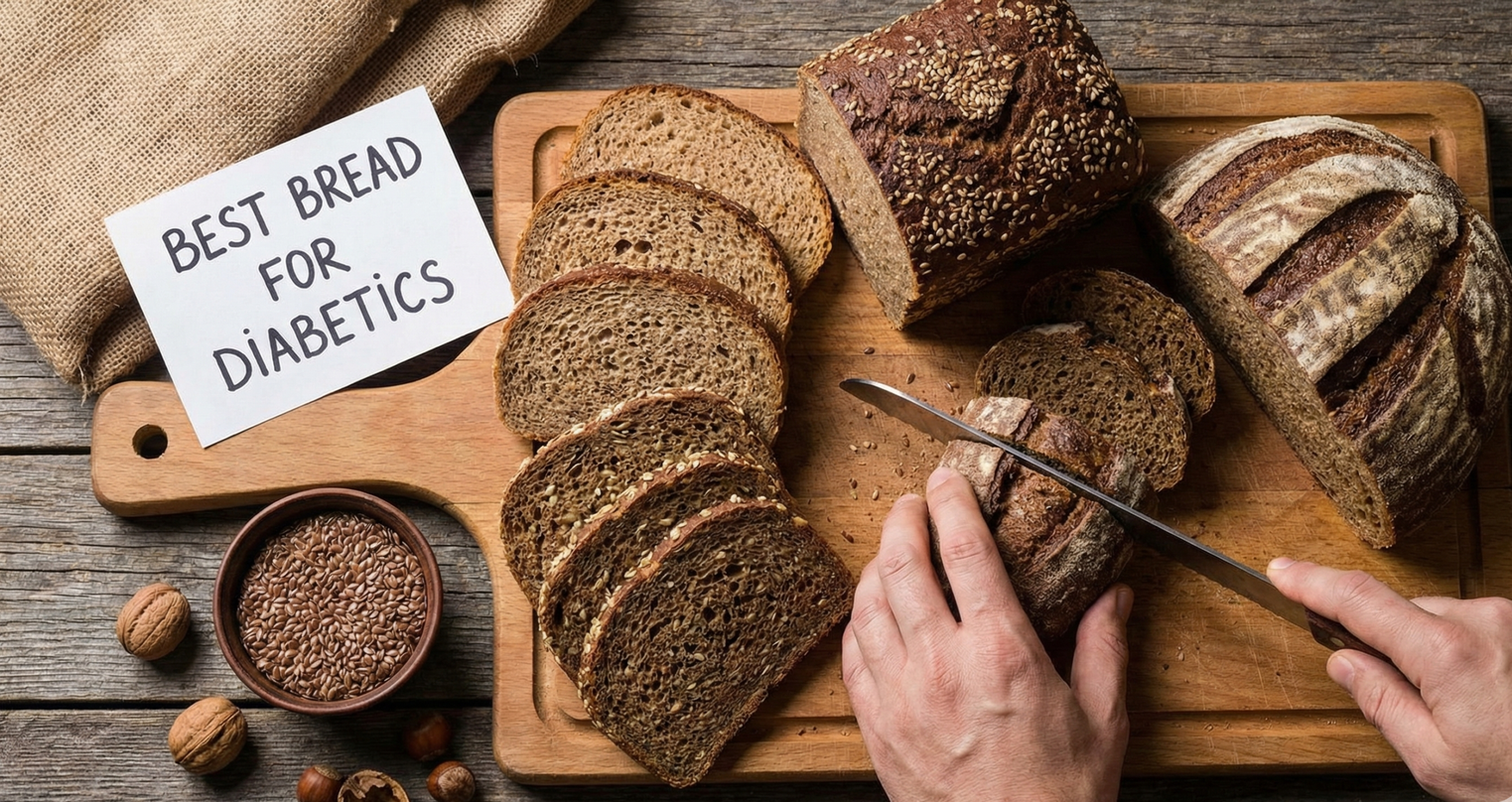
Best Bread for Diabetics: The Ultimate Guide to Low-Carb Loaves
For many people newly diagnosed with diabetes, the first question is often a panicked, “Do I have to give up bread?” The simple answer is no. However, the days of mindlessly grabbing a loaf of fluffy white sandwich bread are likely over.
Bread is a carbohydrate powerhouse, and carbs turn into glucose. While this energy is essential, traditional refined breads cause rapid blood sugar spikes that can be dangerous for diabetics. The secret lies in choosing breads that digest slowly, are packed with fiber, and have a low Glycemic Index (GI).
In this guide, we will break down the science behind diabetic-friendly breads, rank the top healthy options available in grocery stores, and teach you exactly how to read a nutrition label so you never buy a “sugar bomb” loaf again. Plus, we’ve expanded deep into Glycemic Load, baking tips, brand comparisons, and clever pairings to keep your glucose steady.
Carbs, Glucose & Diabetes 101
To understand why bread is such a hot topic in diabetes management, it helps to understand what actually happens after you swallow a bite of toast. Bread is made primarily of starch, a long chain of glucose molecules bound together. As soon as starch hits your saliva, an enzyme called amylase begins breaking those chains apart. By the time the bread reaches your small intestine, most of it has been reduced to individual glucose molecules that are absorbed directly into your bloodstream.
In a person without diabetes, the pancreas responds to this glucose surge by releasing insulin, a hormone that acts like a key, unlocking cells so glucose can move out of the blood and into muscle, fat, and liver tissue for storage or immediate energy. In someone with diabetes, this system is impaired. In Type 1 diabetes, the pancreas produces little to no insulin at all because the immune system has destroyed the insulin-producing beta cells. In Type 2 diabetes, the body still makes insulin, but cells become resistant to its signal, meaning glucose lingers in the bloodstream far longer than it should, a state clinicians call hyperglycemia.
This is why the type of carbohydrate in your bread matters just as much as the amount. A refined starch with no fiber floods the bloodstream with glucose within minutes. A slow-digesting starch, wrapped in fiber and protein, trickles glucose into the blood gradually, giving whatever insulin you do produce (or inject) time to keep pace. Understanding this mechanism is the foundation for every recommendation in this guide — it’s not about eliminating carbohydrates, it’s about controlling the speed and volume of the glucose release.
Three variables determine how quickly a slice of bread turns into blood glucose: the degree of starch gelatinization (how much the starch has been cooked and broken down), the fiber content (which physically slows enzyme access to starch), and the presence of intact plant structures like whole kernels or bran, which act as a mechanical barrier to digestion. Bread that has been finely milled, heavily processed, and baked at high heat with minimal fiber will almost always digest the fastest.
Type 1 vs. Type 2 Diabetes: Does the Best Bread Differ?
The core principles of bread selection — high fiber, low added sugar, whole and intact grains — apply to both Type 1 and Type 2 diabetes. However, the way each condition interacts with bread differs in a few practical ways.
Type 1 Diabetes and Bread
People with Type 1 diabetes typically dose insulin based on the carbohydrate content of a meal, a practice known as carbohydrate counting. Because insulin injections or pump boluses take time to act, a bread with a fast glycemic rise can outpace injected insulin, leading to a spike followed by a crash. For this reason, many people with Type 1 diabetes prefer breads with a predictable, slow digestion curve, since it’s easier to match the insulin action curve to the glucose curve. Consistency matters more here than for Type 2 — switching between wildly different bread types day to day makes insulin dosing far less predictable.
Type 2 Diabetes and Bread
In Type 2 diabetes, the emphasis often falls on reducing the overall glycemic burden and supporting insulin sensitivity, since many people are also managing insulin resistance, weight, and sometimes prediabetes progression. High-fiber, low-glycemic-load breads help on two fronts: they blunt the glucose spike, and the added satiety from fiber and protein can support weight management, which in turn tends to improve insulin sensitivity over time. Some people with Type 2 diabetes who are not on insulin have more flexibility to experiment with portion sizes, but the same “fiber first” rule still applies.
Regardless of type, the single best tool for figuring out how your body responds to a specific bread is your own blood glucose meter or continuous glucose monitor (CGM) — more on that later in this guide.
The “Diabetic-Friendly” Checklist
Before we list specific types, you need to know what separates a “good” bread from a “bad” one. When shopping, look for these three pillars:
- High Fiber: Fiber is your best friend. It acts as a buffer, slowing down the absorption of sugar into your bloodstream. Aim for at least 3g of fiber per slice. Soluble fiber (like beta-glucan in oats/barley) is particularly effective at blunting glucose spikes.
- Whole Grains First: The very first ingredient should be “Whole Wheat Flour” or “Sprouted Grains,” not “Enriched Bleached Flour.”
- Low Sugar: Many commercial breads hide high-fructose corn syrup to improve texture. Look for breads with less than 2g of added sugar per serving. Also watch for malt syrup, cane juice, or honey – they all affect blood sugar.
Hidden sugar traps: Even “healthy” breads sometimes add dried fruit (raisins, dates) which concentrate sugar. Always check the ingredient list.
Glycemic Index vs. Glycemic Load – Why It Matters
The Glycemic Index (GI) tells you how fast a carbohydrate raises blood sugar (0–100). Pure glucose is 100. But GI alone can be misleading; Glycemic Load (GL) also accounts for portion size. GL = (GI x grams of carbs per serving) / 100. A GL under 10 is low.
Example: A slice of sprouted bread might have GI ~45 and 15g carbs → GL ≈ 6.8 (low). White bread GI ~75, 20g carbs → GL = 15 (high). That’s why low-GI, moderate-carb breads are the goal. Always aim for a per‑slice GL below 10. This is the real metric that predicts blood sugar impact.
Carb Counting and Insulin Dosing with Bread
If you take mealtime insulin, bread is one of the easier foods to count accurately because packaged loaves list total carbohydrate per slice right on the label. Most insulin-to-carb ratios (ICRs) are expressed as “1 unit of insulin covers X grams of carbohydrate.” A typical ICR might be 1:10 or 1:15, meaning one unit of rapid-acting insulin is needed for every 10 or 15 grams of carbohydrate eaten. If your slice of bread has 20g of total carbohydrate and your ratio is 1:10, that slice alone requires roughly 2 units, before accounting for anything else on your plate.
Many diabetes educators recommend counting net carbs only when fiber content is high (roughly 5g or more per serving), since fiber isn’t digested into glucose. For a bread with 15g total carbs and 6g fiber, some people count 9g of “effective” carbohydrate for dosing purposes. This is a personal decision best made with your endocrinologist or diabetes educator, since individual digestion and fiber tolerance vary.
Timing also matters. Rapid-acting insulin typically starts working within 10–20 minutes and peaks around 60–90 minutes. A slow-digesting bread like authentic sourdough or dense pumpernickel releases glucose over a longer window, which can sometimes cause a second, delayed rise after the insulin has already peaked and started to fade. Some people address this by using an extended or “square wave” bolus on an insulin pump when eating slower-digesting, higher-fat, or higher-fiber meals. This is a good topic to raise with your care team if you notice unexplained late-meal spikes after eating dense breads.
Bread and Your A1C: The Long Game
Hemoglobin A1C reflects your average blood glucose over roughly the previous two to three months, so no single slice of bread will meaningfully move that number. What matters is the cumulative pattern of choices. Swapping a daily refined white bagel (which might spike glucose by 60–80 mg/dL) for a slice of sprouted or high-fiber bread (which might raise glucose by 20–30 mg/dL) adds up to a meaningfully flatter average glucose curve across weeks and months, which is precisely what A1C measures.
Post-meal glucose excursions — the sharp peaks after eating — are increasingly recognized as important for long-term complication risk, independent of the average A1C number itself. This is part of why “time in range” (the percentage of the day your glucose stays within a target band, often tracked via CGM) has become a popular complementary metric to A1C. Choosing lower-glycemic-load bread is one of the more controllable levers for improving time in range, since bread is eaten so frequently in the average diet.
1. Sprouted Grain Bread (The Gold Standard)
If there is a king of diabetic breads, it is sprouted grain bread (often known by the popular brand Ezekiel 4:9). Unlike traditional flour made from pulverized grain, sprouted bread is made from kernels that have been allowed to sprout (germinate) before being baked.
Why it works: The sprouting process breaks down some of the starch in the grain, naturally lowering the carbohydrate content. It also increases the bioavailability of nutrients like zinc and iron. Because it contains no flour—only mashed, sprouted grains—it has a very low Glycemic Index, causing a much gentler rise in blood sugar compared to standard whole wheat.
Top Brands: Food for Life (Ezekiel), Silver Hills Bakery, Dave’s Killer Bread (Sprouted varieties).
Ezekiel Bread Varieties Compared
Not all sprouted breads are created equal, and this is especially true within the Food for Life “Ezekiel 4:9” product line, which has become almost synonymous with diabetic-friendly bread. Here’s how the most common varieties stack up:
- Original Sprouted Grain: The baseline loaf, made from sprouted wheat, barley, beans, lentils, millet, and spelt. It has a dense, slightly nutty texture and the lowest sugar content of the line.
- Cinnamon Raisin: A tempting option, but be cautious — the added raisins bump the sugar content noticeably higher than the original. This variety is best reserved for occasional use rather than a daily staple.
- Sesame: Nearly identical nutrition to the original, with added sesame seeds for healthy fats and a slight crunch.
- Low Sodium: Formulated for those also managing blood pressure, with roughly half the sodium of the standard loaf — a smart pick for diabetics who are also watching cardiovascular risk factors.
- English Muffins and Tortillas: Food for Life also sells sprouted English muffins and tortillas using the same base grain blend, which can be a useful way to diversify texture without straying from the sprouted-grain principle.
One quirk worth knowing: because Ezekiel bread contains no preservatives, it’s typically sold frozen or refrigerated. Letting it thaw at room temperature and lightly toasting it not only improves texture but, as discussed later in this guide, may also modestly increase resistant starch content.
2. Authentic Sourdough
Sourdough is unique because it relies on fermentation. Traditional sourdough is made with a “starter” of wild yeast and lactic acid bacteria, rather than instant commercial yeast.
Why it works: During the long fermentation process, the bacteria “eat” some of the starches and sugars in the dough. This results in a bread that has a lower Glycemic Index than regular white or wheat bread. Furthermore, the lactic acid produced helps slow down your stomach’s emptying rate, keeping you fuller for longer and stabilizing glucose levels.
Note: Make sure you buy “authentic” sourdough from a bakery. Many supermarket “sourdough” loaves are just white bread with vinegar added for flavor, which does not offer the same health benefits.
Sourdough Starter Science: The Fermentation Deep Dive
A sourdough starter is a living culture of wild yeast (often Saccharomyces species) and lactic acid bacteria (commonly Lactobacillus strains), suspended in a simple mixture of flour and water. Unlike commercial baker’s yeast, which is a single, fast-acting strain selected purely for rapid gas production, a wild starter is a whole ecosystem, and that ecosystem does far more to the dough than just make it rise.
During the long, slow fermentation (often 12–24 hours or more), the lactic acid bacteria produce organic acids that partially break down the starch and gluten structures in the flour. This process, called proteolysis and amylolysis, pre-digests some of the bread’s carbohydrate and protein before it ever reaches your mouth. The result is a lower Glycemic Index compared to bread made with the same flour but leavened quickly with commercial yeast — some research has found sourdough can lower post-meal glucose response by a meaningful margin compared to matched non-fermented bread, though the exact effect varies by recipe and fermentation time.
The organic acids produced during fermentation, primarily lactic acid and smaller amounts of acetic acid, are believed to work similarly to the vinegar mechanism discussed later in this guide: they can inhibit the activity of alpha-amylase, the enzyme responsible for breaking starch into glucose, slowing the overall rate of digestion. Fermentation also modestly increases the amount of resistant starch and may reduce the phytic acid content of the flour, which can improve mineral absorption.
Practically, this means the longer and more traditional the fermentation, the more pronounced these benefits tend to be. A quick “same-day” sourdough made with a small starter addition and only a few hours of proofing won’t offer the same blood-sugar advantages as a true 18–24 hour cold-fermented loaf from an artisan bakery.
3. Pumpernickel and Rye
Traditional heavy, dark rye breads (like Pumpernickel) are staples in Northern European diets for a reason. They are incredibly dense and rich in flavor.
Why it works: True pumpernickel is made with coarse rye flour and whole rye berries. Because the particles are larger and harder to digest, your body takes much longer to break them down into glucose. This results in a very low Glycemic load. However, be careful of American-style “dark rye” which is often just white bread colored with molasses or coffee to look healthy.
Whole Grain vs. Whole Wheat: Understanding the Difference
These two terms are used almost interchangeably in marketing, but they mean different things, and knowing the distinction can help you decode confusing labels.
Whole wheat specifically refers to flour made from the entire wheat kernel — the bran, germ, and endosperm — as opposed to “white” or “refined” wheat flour, which has had the fiber-rich bran and nutrient-dense germ stripped away, leaving mostly starchy endosperm. “100% Whole Wheat” on a label means wheat is the only grain used, and none of it has been refined.
Whole grain is a broader umbrella term that includes whole wheat but also covers any other grain used in its complete, unrefined form: whole oats, whole rye, whole barley, whole corn, brown rice, and so on. A loaf can be “100% whole grain” without containing any wheat at all, or it can be a blend of several whole grains.
For diabetics, the practical takeaway is this: both terms are good signs compared to “wheat flour” or “enriched flour” alone, but neither guarantees a low Glycemic Index by itself. A whole wheat sandwich loaf that has been finely milled can still digest relatively quickly because the bran has been ground into a fine powder, destroying much of its mechanical fiber barrier. Look for breads that specify “stone-ground,” “cracked,” or “whole kernel” — these processing methods leave more of the grain’s structure intact, which slows digestion more effectively than finely milled whole grain flour.
4. Low-Carb & Keto Breads
In recent years, the keto trend has exploded, bringing dozens of “zero net carb” breads to the market. These are typically made with alternative flours like almond flour, coconut flour, or huge amounts of added dietary fiber.
Why it works: These breads often have 0-2g of net carbs per slice, meaning they have almost zero impact on blood sugar. Brands like Sola, Carbonaut, and Franz Keto allow you to have a sandwich without the carb guilt.

Carbonaut Low Carb White Bread
A favorite among the keto community. It tastes surprisingly like “real” white bread but contains only 2g of net carbs per slice, making it excellent for blood sugar management.
Check Price on AmazonTop Tips for Pairing Bread to Minimize Spikes
Even the healthiest bread can raise glucose if eaten alone. The magic lies in pairing:
- Add protein: Top with eggs, turkey, cheese, or nut butter. Protein slows gastric emptying and stimulates glucagon, preventing sharp rises.
- Include healthy fat: Avocado, olive oil, or salmon further flatten the glucose curve.
- Vinegar hack: A drizzle of vinegar (or pickle on the side) can reduce post-meal glucose by up to 20% – acetic acid temporarily inhibits starch-digesting enzymes.
- Cinnamon: Sprinkle cinnamon on your toast. Studies suggest it improves insulin sensitivity. Combine with a low-carb bread for double benefit.
Example: Instead of plain sprouted toast, have it with smashed avocado + a poached egg + a dash of chili. Balanced, delicious, and glucose friendly.
Breads to Avoid (The “Sugar Traps”)
Not all brown bread is healthy. Marketers often use tricks to make unhealthy bread look nutritious. Steer clear of:
- “Honey Wheat”: This is usually white bread with a tiny bit of wheat flour and a lot of added honey (sugar).
- “Multigrain” (without Whole): If the first ingredient is “Enriched Flour,” it doesn’t matter if it has seven grains sprinkled on top; it’s still refined carbs.
- White Bread/Bagels: These are pure, fast-acting carbs that will spike blood sugar almost instantly.
Bread Alternatives for Diabetics (When You Want a Break)
Sometimes you crave the sandwich experience without the grains. Try these low‑carb swaps:
- Cloud bread: Made from eggs and cream cheese – almost zero carbs, fluffy, and can hold sandwich fillings.
- Lettuce wraps: Butter lettuce or collard greens are crisp, hydrating, and carb‑free.
- Portobello mushroom caps: Grilled portobellos make excellent “buns” for burgers.
- Almond flour flatbread: Quick to make, high in protein and healthy fats.
- Norrland / cheese wraps: Thin slices of cheese (or hard cheese baked until crisp) can double as bread.
How to Read a Bread Label Like a Pro
Don’t look at the front of the package; look at the Nutrition Facts on the back.
- Check Serving Size: Is the data for one slice or two?
- Calculate Net Carbs: Take Total Carbohydrates and subtract Dietary Fiber. For example, if a slice has 15g Total Carbs and 5g Fiber, the Net Carbs are 10g. Lower is better.
- Scan Ingredients: The word “Whole” must be the first word. If it says “Wheat Flour” or “Unbleached Flour,” put it back.
How to Bake Your Own Diabetic-Friendly Bread at Home
When you bake yourself, you control every ingredient. Simple low‑carb formula: combine almond flour, psyllium husk, eggs, baking powder, and a little salt. Variations:
- Seeded quick bread: Add sunflower, flax, and pumpkin seeds for fiber and crunch.
- Coconut flour loaf: Coconut flour is highly absorbent – use 1/4 cup plus 4 eggs.
- Yeasted low‑carb bread: Use vital wheat gluten and oat fiber to mimic traditional texture with low net carbs.
Many recipes online use resistant starch (like green banana flour) to further lower glycemic impact. Homemade bread also avoids preservatives and hidden sugars.
Bread, Sodium & Heart Health for Diabetics
Diabetes and cardiovascular disease are closely linked — people with diabetes are at meaningfully higher risk of heart disease and stroke, which means the conversation about “healthy bread” shouldn’t stop at blood sugar. Sodium is a hidden concern in many packaged breads: a single slice can contain anywhere from 100mg to over 230mg of sodium, and it’s easy to eat several slices a day between breakfast toast, a lunch sandwich, and dinner rolls.
The American Heart Association’s general guidance points toward keeping daily sodium intake well under 2,300mg, with an ideal limit closer to 1,500mg for many adults managing blood pressure. Because bread is eaten so frequently, it can quietly become one of the largest sodium contributors in a diabetic’s diet, a phenomenon nutrition researchers sometimes call “the salt of bread” problem, since no single slice tastes salty but the cumulative effect is significant.
When comparing loaves, check for sodium per slice in addition to carbs and fiber. Sprouted grain breads, being minimally processed, are often naturally lower in sodium than heavily processed sandwich breads. Also pay attention to saturated fat in enriched or “buttery” bread varieties, brioche, and croissant-style breads, which can affect cholesterol levels — another common comorbidity in Type 2 diabetes. Choosing breads made with heart-healthy fats (olive oil, flaxseed, or none at all) over those made with palm oil or hydrogenated fats supports both blood sugar and cardiovascular goals simultaneously.
Gestational Diabetes and Bread Choices
Gestational diabetes, which develops during pregnancy, comes with its own set of considerations. Hormonal changes during pregnancy naturally increase insulin resistance, and the goal of dietary management is typically tighter post-meal glucose control than in typical Type 2 diabetes, since even modest glucose excursions during pregnancy are monitored closely by care teams.
Many providers recommend that pregnant individuals with gestational diabetes limit carbohydrate at breakfast specifically, since insulin resistance tends to be highest in the morning due to hormonal patterns. This means breakfast toast is often the most important meal to get right. A small portion of a high-fiber, low-GI bread (such as a single slice of sprouted grain or authentic sourdough), paired generously with protein and fat, is generally better tolerated than a larger portion or a more refined bread at breakfast.
Because gestational diabetes management is typically more tightly monitored via frequent glucose checks, this is an excellent window to directly test how specific breads affect your own numbers. What works for one person’s gestational diabetes may not work identically for another, given individual differences in insulin resistance and pregnancy hormones. Always coordinate any dietary changes with your OB-GYN or a maternal-fetal medicine dietitian.
Bread for Kids with Diabetes: School Lunches Made Easier
Packing lunch for a child with Type 1 diabetes comes with its own logistics: school schedules, recess timing, and the reality that kids often won’t eat foods that look or taste noticeably different from their peers’. The good news is that several diabetic-friendly breads are close enough in taste and texture to standard sandwich bread that many kids accept them without complaint, especially sprouted whole grain varieties marketed in a “kid-friendly” thin-sliced format.
- Keep it familiar: Choose a whole grain or sprouted bread that closely resembles regular sandwich bread in appearance rather than a dense, seed-heavy artisan loaf that may be a hard sell for a picky eater.
- Pre-calculate carb counts: Many school nurses and children old enough to self-manage benefit from a lunch built around round-number carb counts (e.g., exactly 15g or 30g per slice) to simplify mealtime insulin dosing during a busy school day.
- Pair for stability: A sandwich with lean protein (turkey, chicken, or nut butter where allergies allow) helps prevent the mid-afternoon energy crash that can follow a fast-digesting, low-fiber bread.
- Communicate with school staff: Make sure teachers, school nurses, and cafeteria staff are aware of any 504 plan or diabetes management plan, including how lunch carbohydrate counts factor into the school-day insulin schedule.
Best Stores to Buy Diabetic-Friendly Bread
Availability varies by region, but most diabetics can find solid options at mainstream retailers without needing a specialty health food store.
- Costco: Often carries Dave’s Killer Bread and La Brea Bakery sourdough in bulk, which can be a cost-effective way to stock a freezer with better options.
- Trader Joe’s: Known for a rotating selection of sprouted and whole grain loaves, as well as their own sprouted seven-grain bread, typically at a lower price point than specialty brands.
- Whole Foods Market: Carries the widest range of keto and low-carb specialty breads, along with fresh-baked authentic sourdough from an in-house bakery in many locations.
- Walmart and Target: Increasingly stock Dave’s Killer Bread, Ezekiel, and store-brand “double fiber” whole wheat options, making diabetic-friendly bread accessible even in smaller towns.
- Aldi: Offers budget-friendly whole grain and multigrain loaves; always check the ingredient list since “wheat blend” labeling can be inconsistent across their rotating selection.
- Local bakeries: Often the best source for truly authentic, long-fermented sourdough — ask directly about fermentation time, since this is rarely disclosed on packaged bread.
Navigating Bread When Eating Out
Restaurants rarely offer sprouted grain or true sourdough as a default bread basket option, which makes eating out one of the trickier scenarios for diabetics who are trying to manage bread intake. A few practical strategies help:
- Ask for substitutions: Many sandwich shops and burger restaurants will swap a bun for a lettuce wrap on request, or offer a whole grain bread option if you ask rather than default to the white bun.
- Request bread on the side: If you’re not sure of the type, ask the server for the bread’s ingredients, or simply request it be left off or served separately so you can control the portion.
- Prioritize your protein and vegetables first: Eating protein, fat, and fiber-rich vegetables before the bread or starch portion of a meal — sometimes called “food order” or “meal sequencing” — has been shown to blunt the glucose response to the same meal compared to eating carbohydrates first.
- Split it: A shared appetizer bread basket or a half sandwich is often enough; asking for a to-go box immediately and portioning half the meal before eating can prevent overconsumption in the moment.
Using a Continuous Glucose Monitor to Test Bread
If you use a continuous glucose monitor (CGM), you have a powerful, personalized tool for finding out exactly how a specific bread affects your body — which matters because individual glucose responses to identical foods can vary meaningfully from person to person due to differences in gut microbiome, insulin sensitivity, and overall metabolic health.
A simple self-experiment: eat a single, weighed slice of a new bread on an empty stomach, without other food, and track your CGM graph over the following two hours. Note the peak glucose value, how quickly it rises, and how long it takes to return to baseline. Repeat this with your usual bread for comparison. Over time, you’ll build a personal “glycemic response library” that’s often more useful than any generic Glycemic Index chart, since it reflects your own physiology rather than an average from a research study.
Many people are surprised to discover that a bread they assumed was “safe” because of its label causes a larger spike than expected, or that a bread they were nervous about (like an authentic long-fermented sourdough) barely moves their glucose at all. This kind of direct feedback is one of the most valuable uses of CGM technology for day-to-day food decisions.
Gut Microbiome and Prebiotic Fiber in Bread
Emerging research suggests the trillions of bacteria living in your gut play a role in how your body processes glucose, and diet is one of the primary ways to shape that microbial community. Certain fibers found in whole grain and sprouted breads act as “prebiotics” — food specifically for beneficial gut bacteria, rather than for you directly.
Two fiber types are of particular interest: beta-glucan, found in oats and barley, and resistant starch, found in cooled or fermented starchy foods. When gut bacteria ferment these fibers, they produce short-chain fatty acids (SCFAs) like butyrate, which have been studied for potential roles in improving insulin sensitivity and reducing inflammation. While this is still an evolving area of research, it offers another reason to favor whole-grain, high-fiber, and fermented breads (like true sourdough) over refined, low-fiber options — beyond the direct glycemic index benefits already discussed.
Practically, this means variety matters. Rotating between oat-containing breads, sprouted multi-grain loaves, and fermented sourdough may feed a broader range of beneficial gut bacteria than eating the exact same low-carb loaf every single day.
Budget-Friendly Diabetic Bread Options
Specialty keto and sprouted breads can carry a premium price tag, sometimes double or triple the cost of standard sandwich bread. If cost is a barrier, you don’t have to default to the cheapest white loaf on the shelf:
- Store-brand 100% whole wheat: Most grocery chains offer an affordable “100% whole wheat” or “double fiber” store-brand loaf that, while not as low-glycemic as sprouted bread, is a solid step up from white bread.
- Buy in bulk and freeze: Sprouted and low-carb breads freeze well. Buying multiple loaves during a sale and freezing individual slices (separated with parchment paper) keeps costs down without sacrificing quality.
- Bake your own: As covered earlier, a homemade seeded quick bread or yeasted low-carb loaf can be significantly cheaper per slice than store-bought specialty bread, especially if you buy almond flour or vital wheat gluten in bulk.
- Prioritize fiber over brand names: A generic “high fiber” whole wheat bread with 5g of fiber per slice may offer nearly the same blood sugar benefit as a pricier boutique loaf; read the label rather than assuming price equals quality.
Common Mistakes When Switching to Healthy Bread
Transitioning to diabetic-friendly bread trips people up in a few predictable ways:
- Assuming “wheat” means whole wheat: As covered earlier, plain “wheat bread” is often just white bread with caramel coloring. Always check that “whole” appears before the grain name.
- Overeating because it “feels healthy”: A common trap is eating three slices of sprouted bread because it seems virtuous, when the total carbohydrate load ends up higher than a single slice of a more refined bread would have been. Fiber matters, but total carbs still count.
- Ignoring toppings: Swapping to a great bread but topping it with sugary jam, honey, or a sweetened spread can undo much of the benefit. Pair with the protein and fat combinations discussed earlier instead.
- Not adjusting insulin dosing: Switching from a fast-digesting bread to a slow-digesting one (or vice versa) can shift your glucose curve enough to require a dosing conversation with your care team, especially for those on fixed insulin schedules.
- Giving up too early: Denser, seedier, higher-fiber breads have a different taste and texture than fluffy white bread. It often takes a few weeks of consistent exposure for taste preferences to adjust; toasting and flavorful toppings can ease the transition.
Bread Storage and Freshness Tips
Because many diabetic-friendly breads skip the preservatives found in conventional sandwich bread, they spoil faster if stored incorrectly. A few tips to keep your loaf fresh and safe:
- Refrigerate or freeze sprouted bread: Preservative-free sprouted breads like Ezekiel are typically sold refrigerated or frozen for a reason — left at room temperature, they mold noticeably faster than conventional bread.
- Slice and freeze in portions: Freezing individual slices means you can pull out exactly what you need and toast directly from frozen, which, as mentioned earlier, may also modestly increase resistant starch content.
- Store sourdough cut-side down: Authentic sourdough with a crisp crust stores best cut-side down on a cutting board, or wrapped in a paper (not plastic) bag for a day or two, then transitioned to the freezer for longer storage.
- Watch for mold on low-preservative loaves: Because these breads lack the chemical preservatives (like calcium propionate) found in mass-market bread, discard promptly at the first sign of mold rather than assuming a few days of extra shelf life.
FODMAPs and Digestive Comfort for Diabetics
Some diabetics also manage digestive conditions like Irritable Bowel Syndrome (IBS), which adds another layer to bread selection. Wheat contains fructans, a type of fermentable carbohydrate grouped under the acronym FODMAP (Fermentable Oligosaccharides, Disaccharides, Monosaccharides, and Polyols), which can trigger bloating, gas, or discomfort in sensitive individuals.
Interestingly, the long fermentation process in authentic sourdough may partially break down these fructans, which is one reason some people with mild wheat sensitivity tolerate genuine sourdough better than standard whole wheat bread, even though both start from similar flour. This is a separate issue from Celiac disease or diagnosed gluten intolerance, which require strict gluten avoidance regardless of fermentation.
If you’re managing both diabetes and a FODMAP sensitivity, look toward low-FODMAP-certified breads, spelt sourdough (spelt tends to be lower in fructans than modern wheat), or the low-carb almond and coconut flour recipes covered earlier in this guide, which sidestep wheat-based FODMAPs entirely.
Ancient & Alternative Grains Worth Trying
Beyond wheat, rye, and oats, a number of ancient and alternative grains have gained popularity in diabetic-friendly baking, each with a slightly different nutritional profile.
Spelt
An ancient relative of modern wheat, spelt has a similar gluten structure but a somewhat higher protein and fiber content per gram in many varieties. Because it has undergone far less selective breeding than modern wheat, some people find it easier to digest, and as mentioned above, it tends to be naturally lower in FODMAP-triggering fructans, especially when fermented.
Kamut (Khorasan Wheat)
Kamut is a large, buttery-tasting ancient grain that studies have suggested may have a milder effect on post-meal glucose and inflammatory markers compared to modern wheat, though research is still limited. It’s most often found in specialty and organic bread lines.
Teff
The tiny grain behind Ethiopian injera bread, teff is naturally gluten-free and extremely high in fiber and iron relative to its size. Teff flour is often blended with other gluten-free flours in commercial gluten-free bread to boost fiber content and improve the otherwise poor glycemic profile of many gluten-free loaves.
Buckwheat
Despite the name, buckwheat isn’t wheat at all — it’s a seed related to rhubarb, and it’s naturally gluten-free. Buckwheat flour has a notably low Glycemic Index and contains rutin, a plant compound studied for potential benefits to blood vessel health, an added bonus for diabetics managing cardiovascular risk.
Quinoa
While more commonly eaten as a standalone grain, quinoa flour is increasingly blended into gluten-free breads. It’s a complete protein, containing all nine essential amino acids, which adds a satiety and blood-sugar-stabilizing benefit that pure starch-based gluten-free flours lack.
When shopping for breads made with these alternative grains, apply the same rules as everywhere else in this guide: check that the alternative grain is whole and near the top of the ingredient list, not a token addition sprinkled in for marketing purposes behind a base of refined wheat or rice flour.
Resistant Starch Explained: The Secret Weapon in Bread
Resistant starch is exactly what it sounds like — a type of starch that resists digestion in the small intestine and instead passes through to the large intestine, where it behaves much like fiber, feeding beneficial gut bacteria rather than raising blood glucose. Unlike regular starch, it contributes minimal calories and essentially zero glucose response.
There are several types of resistant starch relevant to bread. Type 2 resistant starch occurs naturally in raw or minimally processed starchy foods like green (unripe) bananas and raw potato starch, both of which are sometimes added to specialty low-glycemic bread recipes. Type 3 resistant starch, sometimes called “retrograded starch,” forms when a cooked starchy food is cooled — this is the mechanism behind the well-known tip of cooling and reheating rice or pasta to lower its glycemic impact, and it applies to bread as well.
This is precisely why toasting previously frozen bread, discussed earlier in this guide, may offer a modest glycemic advantage over eating fresh-baked bread straight from the oven: the freeze-thaw cycle promotes starch retrogradation, converting a portion of the digestible starch into resistant starch. The effect is not dramatic — studies suggest single-digit percentage reductions in glycemic response rather than a total transformation — but it’s a free, easy habit that adds up over the course of many meals.
Some specialty bread brands now advertise “added resistant starch” using ingredients like high-amylose corn starch or green banana flour specifically to boost this content beyond what natural cooling and toasting can achieve, which can be a useful feature to look for on a label if you see it.
Bread Machine Guide for Diabetics
A home bread machine can make it far easier to consistently produce diabetic-friendly bread without the time investment of hand-kneading and monitoring a traditional bake. Most machines include a “whole wheat” or “gluten-free” cycle with a longer kneading and rising time suited to denser, higher-fiber doughs, which often struggle to rise properly on a standard “basic” cycle.
- Use vital wheat gluten: Because whole grain and low-carb flours are heavier and lower in gluten-forming proteins than refined white flour, adding a tablespoon or two of vital wheat gluten per loaf helps the bread rise properly and avoid a dense, gummy texture.
- Add fiber gradually: If you’re converting a standard bread machine recipe to a higher-fiber version, replace no more than a third of the flour with a fiber-rich alternative (oat fiber, wheat bran, or almond flour) at a time, since too much too fast can prevent the loaf from rising at all.
- Watch the sugar setting: Many bread machine recipes call for a tablespoon or two of sugar to feed the yeast. This is largely consumed during fermentation and has a minimal effect on the final carb count, but you can reduce it slightly or substitute a small amount of allulose, which yeast can still use without contributing meaningfully to your own blood glucose.
- Batch and freeze: A bread machine makes it easy to bake a fresh, additive-free loaf weekly. Slice the full loaf and freeze portions, pulling out only what you need — this avoids the preservative-laden shelf-stable loaves at the grocery store entirely.
Exercise Timing and Bread: Making Carbs Work For You
The same slice of bread can have a noticeably different effect on blood glucose depending on what you do in the hour or two afterward. Physical activity, even light activity, increases glucose uptake into muscle tissue independent of insulin, through a mechanism involving GLUT4 transporters that activate during muscle contraction.
A short walk of just 10–15 minutes after a meal containing bread has been shown in multiple studies to meaningfully blunt the post-meal glucose spike compared to remaining sedentary. This makes bread a particularly good carbohydrate choice to plan around activity — for example, having toast before a morning walk, or a sandwich before an afternoon errand-run, rather than eating the same bread immediately before sitting down for a long period of desk work or screen time.
For those on insulin, be cautious about combining a fast-digesting bread with vigorous exercise shortly after eating, since the combination of exercise-driven glucose uptake and active insulin can increase the risk of hypoglycemia. Slower-digesting, higher-fiber breads pair more predictably with exercise timing since their glucose release is spread over a longer window, reducing the chance of a mismatch between insulin action and food digestion.
Common Myths About Diabetes and Bread, Busted
- Myth: All diabetics must avoid bread entirely. Reality: as this guide has covered extensively, the right bread in the right portion, paired thoughtfully, fits into most diabetes management plans.
- Myth: Brown bread is always healthier than white bread. Reality: brown coloring is often just added caramel color or molasses on a refined white flour base. Color is not a reliable indicator of nutritional quality — always check the ingredient list.
- Myth: Gluten-free bread is automatically diabetic-friendly. Reality: as covered in the FAQ, many gluten-free breads rely on high-glycemic starches like rice flour, tapioca starch, or potato starch, and can spike blood sugar faster than a well-formulated whole wheat loaf.
- Myth: You should avoid bread completely and eat only “diabetic” specialty products. Reality: many mainstream whole grain and sprouted breads, sold in any regular grocery store, meet diabetic-friendly criteria without needing a specialty “diabetic” label, which isn’t a regulated or standardized term in the first place.
- Myth: Sourdough is a “cheat” that lets you eat unlimited bread. Reality: sourdough has real, evidence-supported benefits for glycemic response, but portion size and total carbohydrate still matter. It’s an improvement, not a loophole.
A 7-Day Bread Meal Prep Plan for Diabetics
Planning ahead removes the guesswork of daily decision-making. Here’s a sample week that rotates through several of the bread types covered in this guide, keeping variety high for gut health while maintaining consistent glycemic control:
- Monday: Sprouted grain toast with mashed avocado, a poached egg, and chili flakes.
- Tuesday: Authentic sourdough open-faced sandwich with turkey, arugula, and mustard.
- Wednesday: Low-carb keto bread grilled cheese with a side salad dressed in vinaigrette (using the vinegar hack).
- Thursday: Pumpernickel with smoked salmon, cream cheese, capers, and red onion.
- Friday: Cloud bread breakfast sandwich with egg and cheese for a change of pace from grain-based bread.
- Saturday: Homemade seeded quick bread (from the baking section) with almond butter and sliced strawberries.
- Sunday: Sprouted English muffin eggs Benedict-style with a side of sautéed spinach.
Batch-toast and freeze several days of bread on Sunday to save time during the week, and always pair each bread serving with a protein and a fat source, per the pairing strategies covered earlier in this guide.
Glycemic Index Reference Chart for Popular Breads
| Bread type | Approximate GI | Category |
|---|---|---|
| White sandwich bread | 70–75 | High |
| Whole wheat (finely milled) | 65–70 | High |
| Whole grain, coarse/stone-ground | 50–55 | Medium |
| Authentic long-fermented sourdough | 50–58 | Medium |
| Pumpernickel / dense rye | 40–46 | Low |
| Sprouted grain (Ezekiel-style) | 36–45 | Low |
| Keto / low-carb specialty bread | Below 20 (minimal net carbs) | Very low |
These are approximate ranges compiled from general Glycemic Index research on bread categories; individual products and personal responses vary, which is why the CGM self-testing approach described earlier in this guide is so valuable.
Bread and Diabetes Medication Timing
Certain diabetes medications interact with meal timing and composition in ways that are worth understanding if bread is a regular part of your diet. Metformin, one of the most commonly prescribed medications for Type 2 diabetes, is typically taken with food specifically to reduce gastrointestinal side effects, and a fiber-rich bread at that meal can further support steady digestion.
Sulfonylureas, a class of medication that stimulates the pancreas to release more insulin, carry a higher risk of hypoglycemia if a meal is skipped or delayed after taking the dose, or if the meal’s carbohydrate content is much lower than usual. If you take a sulfonylurea, keeping your bread and overall carbohydrate intake relatively consistent meal to meal — rather than swinging between a large refined-carb breakfast one day and a near-zero-carb breakfast the next — can help avoid unexpected lows.
For those on rapid-acting mealtime insulin, as discussed in the carb counting section, the digestion speed of your chosen bread should ideally be factored into dosing timing — a “pre-bolus” (dosing 10–20 minutes before eating) is often more effective with fast-digesting bread, while dosing right at the start of the meal may suit slower-digesting, high-fiber bread better. Any changes to dosing strategy should always be discussed with your prescribing physician or diabetes care team, since individual medication regimens vary widely.
Printable Diabetic Bread Shopping Checklist
Keep this quick checklist on your phone for your next grocery run:
- First ingredient says “whole” (whole wheat, whole rye, sprouted grains) — not “enriched” or “wheat flour.”
- At least 3g of fiber per slice, ideally higher.
- Less than 2g of added sugar per slice; scan for honey, molasses, cane syrup, and dextrose hiding in the ingredient list.
- Net carbs (total carbs minus fiber) fit your personal daily carbohydrate targets.
- Sodium per slice checked if you’re also managing blood pressure.
- No unnecessary dried fruit, unless you’re specifically choosing a treat-style loaf.
- Storage instructions checked — refrigerate or freeze promptly if the bread is preservative-free.
Brand Comparison Table (per slice)
| Brand / variety | Calories | Total carbs | Fiber | Net carbs | Protein |
|---|---|---|---|---|---|
| Ezekiel 4:9 Sprouted Grain | 80 | 15g | 3g | 12g | 4g |
| Carbonaut Low Carb White | 50 | 12g | 10g | 2g | 4g |
| Dave’s Killer Bread (21 Grains) | 110 | 22g | 5g | 17g | 5g |
| Franz Keto White | 45 | 11g | 9g | 2g | 5g |
| Silver Hills Sprouted Power | 90 | 16g | 4g | 12g | 6g |
Note: Net carbs = total carbs minus fiber. Aim for <10g net carbs per slice, but also consider overall glycemic load.