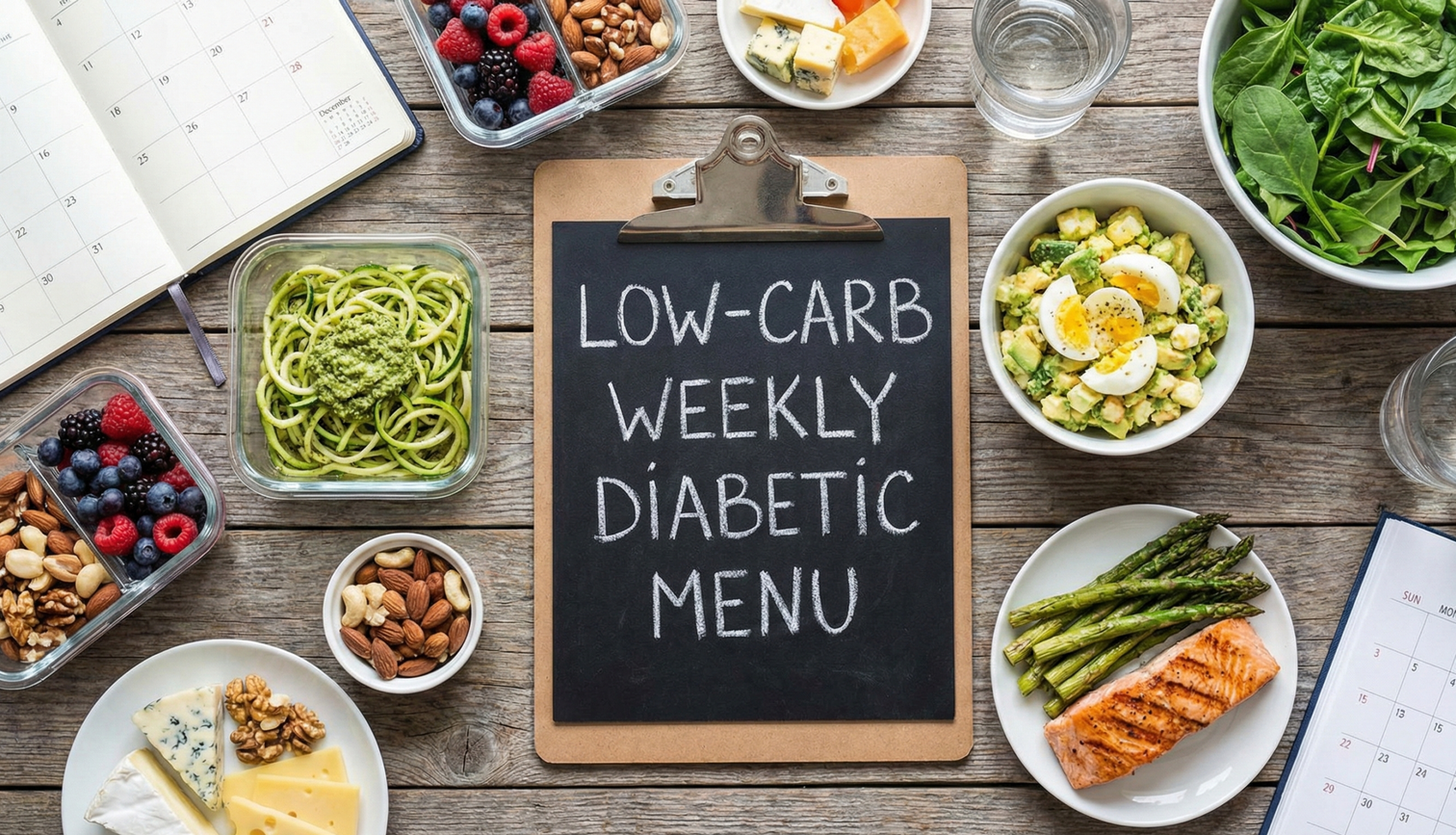
The Definitive Low-Carb Weekly Diabetic Menu: Master Your Metabolism
For millions of people managing diabetes, the standard advice to “eat balanced meals” often leads to confusion and frustration, resulting in blood sugar spikes. The modern nutritional landscape has shifted, and evidence increasingly points to a low-carb approach as one of the most effective tools for managing insulin resistance and lowering A1C levels.
But cutting carbohydrates doesn’t mean resigning yourself to a life of plain boiled chicken and lettuce. A well-designed Low-Carb Weekly Diabetic Menu should be vibrant, satisfying, and full of healthy fats that keep you full for hours. By reducing the glucose load on your bloodstream, you give your pancreas a much-needed break and reduce post-meal inflammation.
This comprehensive guide is more than just a list of recipes. It is a strategic blueprint. Whether you are transitioning from a standard 7-day diabetic menu or you are an experienced low-carb eater looking for structure, this plan is designed to optimize your metabolic health. Each day targets 30–50g net carbs, with ample protein and healthy fats.
Why Low-Carb Works for Diabetes (Physiology Explained)
Diabetes is essentially a condition of carbohydrate intolerance. When you eat carbohydrates, they break down into glucose. In a healthy body, insulin shuttles that glucose into cells for energy. In a diabetic body, that process is broken or inefficient due to insulin resistance or lack of insulin.
The Insulin-Sparing Effect (Lowering the Demand)
By drastically reducing carbohydrate intake, you reduce the amount of insulin your body needs to produce (or inject). This lowers baseline insulin levels, allowing your body to access stored fat for fuel and reducing the inflammation associated with chronic hyperglycemia. It also leads to more stable energy throughout the day without the mid-afternoon crash.
Unlike our standard weekly diabetic meal plan which incorporates moderate complex carbs like oatmeal and brown rice, this low-carb version replaces those starches with fibrous vegetables and healthy fats. This approach typically results in “flat-lining” your blood sugar curves—eliminating the dangerous peaks and valleys that cause fatigue and long-term complications.
If you are looking for a gentle introduction, you might start with our 1-day simple diabetic menu before committing to a full low-carb week.

Miss Bread? You Don’t Have To.
One of the hardest parts of low-carb is giving up sandwiches. Fortunately, almond flour-based mixes allow you to bake delicious, blood-sugar-friendly bread at home. Look for mixes with no added sugar.
Check Price on AmazonThe Core Rules of This Menu (Non‑Negotiable)
To succeed with this plan, we follow three non-negotiable rules:
- Net Carbs Over Total Carbs: We focus on fiber. A food with 10g of carbs and 8g of fiber has only 2g of “net carbs.” Fiber is subtracted because it doesn’t raise blood glucose. Aim for under 20g net carbs per meal.
- Protein Pacing: We include 25–35g of protein at every meal to ensure satiety and muscle maintenance. Protein also has a minimal effect on blood sugar.
- Hydration + Electrolytes: When you cut carbs, your kidneys flush out water and sodium. You must salt your food and drink plenty of water. Consider a cup of bouillon daily for the first week to avoid headaches.
Your 7-Day Low-Carb Diabetic Menu
This menu targets approximately 30–50g of net carbs per day. It is naturally gluten-free and sugar-free. Portions should be adjusted based on hunger and activity level.
Daily Macronutrient Breakdown (Full 7-Day Nutritional Data)
Tracking your macronutrients is the backbone of a successful low-carb diabetic diet plan. Many people are surprised to learn that the exact ratio of protein, fat, and carbohydrates influences not just blood sugar but also energy levels, hormone function, and muscle preservation. The table below provides estimated daily totals for each day of the plan, giving you a complete picture of your weekly diabetic meal planning strategy.
These numbers are approximate and based on standard portion sizes. Individual caloric needs vary based on body weight, activity level, and metabolic rate. Always adjust portions under the guidance of a registered dietitian who understands low-carb protocols for diabetes management.
| Day | Est. Calories | Total Carbs (g) | Fiber (g) | Net Carbs (g) | Protein (g) | Fat (g) | Primary Focus |
|---|---|---|---|---|---|---|---|
| Day 1 | 1,720 | 30 | 9 | 21 | 115 | 128 | Poultry & Leafy Greens |
| Day 2 | 1,680 | 28 | 11 | 17 | 120 | 122 | Seafood & Omega-3s |
| Day 3 | 1,760 | 32 | 10 | 22 | 118 | 132 | Beef & Comfort Foods |
| Day 4 | 1,700 | 29 | 10 | 19 | 112 | 130 | Pork & Cruciferous Veg |
| Day 5 | 1,690 | 31 | 9 | 22 | 116 | 126 | Low-Carb Comfort Meals |
| Day 6 | 1,780 | 27 | 8 | 19 | 125 | 138 | Red Meat & Healthy Fats |
| Day 7 | 1,710 | 30 | 9 | 21 | 118 | 128 | Batch Cook & Reset |
| Weekly Avg. | 1,720 | 29.6 | 9.4 | 20.1 | 117.7 | 129.1 | — |
💡 Pro Tip: Protein Targets for Diabetics
Research on low-carb meal plans for diabetics consistently recommends 1.2–1.6g of protein per kilogram of body weight to preserve lean mass while losing fat. A 180 lb (82 kg) person should aim for approximately 98–131g of protein daily — which aligns perfectly with this plan’s averages. Adequate protein also prevents the muscle catabolism that can worsen insulin resistance over time.
Blood Sugar Testing Schedule: When and How Often to Monitor
A low-carb diabetic menu only works when you measure its impact. Blood sugar monitoring turns a guessing game into a data-driven strategy. Knowing your numbers allows you to understand how your body specifically responds to each meal—because individual blood sugar responses vary significantly even to the same foods. One person’s “safe” meal is another’s spike trigger.
Target Blood Glucose Ranges for Diabetics on Low-Carb
| Measurement Time | Ideal Range (mg/dL) | Ideal Range (mmol/L) | Action if Outside Range |
|---|---|---|---|
| Fasting (morning, before eating) | 70–100 | 3.9–5.6 | Review evening snack; check stress levels |
| Before Meals (pre-prandial) | 80–110 | 4.4–6.1 | May need to delay meal or add brief walk |
| 1 Hour After Meal | Under 140 | Under 7.8 | Identify which food caused the spike |
| 2 Hours After Meal (post-prandial) | Under 120 | Under 6.7 | Adjust portion size of high-carb components |
| Bedtime | 100–140 | 5.6–7.8 | Too low: have a small protein snack |
Recommended Testing Frequency on a Low-Carb Diet
During the first two weeks of transitioning to a low-carb diabetic meal plan, you should test your blood sugar more frequently than usual—ideally 4–6 times per day. This is especially critical if you take insulin or sulfonylureas, as your medication doses will likely need to be reduced. After your blood sugar stabilizes (usually by weeks 3–4), you can reduce testing to 2–3 times daily based on your doctor’s guidance.
🌅 Morning Protocol
Test fasting glucose immediately upon waking, before coffee or water. Record the result alongside your previous night’s dinner for pattern analysis.
🍽️ Meal Testing Protocol
Test 2 hours after your first bite. A post-meal rise of more than 40 mg/dL above your pre-meal reading suggests a meal is too high in carbs for your individual metabolism.
🏃 Exercise Testing Protocol
Test before and 30 minutes after exercise. Aerobic exercise can lower blood sugar significantly; resistance training can temporarily raise it before improving it.
📊 The A1C Connection
Your A1C is a 90-day average. Every consistently good daily reading compounds toward a lower A1C at your next lab appointment. Small daily wins matter enormously.

The Low-Carb Baker’s Essential: Almond Flour
Swap white flour for almond flour to create breading for chicken, low-carb muffins, and pancakes that won’t spike your sugar. It’s also high in healthy fats and vitamin E.
Check Price on AmazonLow-Carb Diabetic Meal Prep Strategy: Cook Once, Eat All Week
Meal prepping is the single greatest predictor of dietary success for diabetics. When healthy food is ready and waiting in your refrigerator, you are far less likely to reach for a high-carb convenience food that derails your blood sugar. The goal of Sunday batch cooking is to eliminate decision fatigue on busy weekdays when willpower is at its lowest.
The Sunday Batch Cooking Blueprint (2.5 Hours, All 7 Days)
This is how to spend one productive Sunday afternoon to set yourself up for an entire week of effortless low-carb diabetic eating:
🥚 Proteins to Batch Cook (60 min)
- Hard-boil 8 eggs — instant snacks and salad toppers all week
- Bake 2 lbs chicken thighs — use in Caesar salad (Day 1), Alfredo (Day 1 dinner), pizza chicken (Day 5), and grain-free bowls
- Brown 1 lb ground beef — ready for burger bowls, taco bowls, or lettuce wraps
- Cook 1 lb ground pork — egg roll in a bowl, or breakfast scrambles
- Bake crustless quiche (Day 7 breakfast) — serves 3–4 mornings
🥦 Vegetables to Prep (45 min)
- Spiralize 4 zucchini — store dry in paper towels in an airtight container
- Steam a head of cauliflower — mash when needed; stores 5 days refrigerated
- Wash and dry all salad greens — spin dry and store in a container lined with paper towels
- Roast a sheet pan of radishes and asparagus — ready to reheat as sides all week
- Slice cucumbers, celery, and bell pepper strips — portion into snack containers
Smart Low-Carb Meal Prep Storage Rules
- Store cooked proteins and vegetables separately to preserve texture and prevent sogginess
- Avocados, when pre-sliced, oxidize quickly — cut fresh daily or squeeze with lemon and press plastic wrap directly onto the flesh
- Dress salads only at the time of eating to prevent wilting
- Label every container with the contents and date — use within 4 days for proteins, 5–6 days for roasted vegetables
- Freeze any proteins you won’t use within 4 days to prevent waste
- Keep a “snack tray” at eye level in your refrigerator: hard-boiled eggs, cheese cubes, celery sticks, and cream cheese ready to grab instantly
💡 The “Protein First” Plating Rule
When building any low-carb diabetic meal, always plate your protein first, then your non-starchy vegetables, and finally your fat source (dressing, oil, cheese, avocado). This visual hierarchy ensures you never accidentally fill up on the higher-carb components first, and it naturally keeps your net carbs per meal in the target range.
Comparison: Low-Carb vs. Standard Diabetic Diet vs. Strict Keto
Why choose this specific approach over traditional advice? Let’s compare the macronutrient profiles and practical aspects.
| Feature | Low-Carb Menu (This Plan) | Standard Diabetic Diet | Strict Keto Diet |
|---|---|---|---|
| Carb Limit (Net) | 30–50g / day | 150–200g total carbs/day | < 20g / day |
| Focus Foods | Proteins, healthy fats, greens, above‑ground veg | Whole grains, fruits, lean meat | High fat (70%+), moderate protein |
| Blood Sugar Impact | Minimal / Flat curves | Moderate spikes possible | Minimal / Flat |
| Hunger Levels | Low (high satiety from fat/protein) | Moderate (glucose dips cause hunger) | Very Low |
| Sustainability | High (flexible, includes berries, nuts) | High | Moderate (socially restrictive) |
Low-Carb for Type 1 vs. Type 2 Diabetes: Key Differences
While a low-carb diet benefits both types of diabetes, the mechanisms and practical considerations differ significantly. Understanding these distinctions is essential for personalizing this diabetic meal plan safely and effectively.
Type 2 Diabetes: The Insulin Resistance Story
In Type 2 diabetes, the pancreas still produces insulin but cells have become resistant to its signals — a condition that is directly worsened by a high-carbohydrate diet. By drastically reducing carbohydrate intake, you directly address the root mechanism of Type 2 diabetes. The pancreas is no longer required to produce massive insulin surges to manage large glucose loads, and over time, insulin sensitivity can meaningfully improve.
Many Type 2 diabetics on a consistent low-carb diabetic diet report being able to reduce oral medication doses under their doctor’s supervision within weeks to months. Some achieve complete medication independence, though this should never be attempted without medical oversight.
Type 1 Diabetes: The Insulin Dosing Story
In Type 1 diabetes, the pancreas produces little to no insulin, so the person must inject it externally. A low-carb diet for Type 1 diabetics doesn’t fix the underlying autoimmune condition, but it profoundly simplifies blood sugar management by reducing the amount of insulin required at each meal — and therefore reducing the risk of dosing errors.
The concept of “low carb, low dose” — popularized by Dr. Richard Bernstein, a Type 1 diabetic himself — argues that small carb inputs require small insulin doses, and small errors in small doses cause smaller blood sugar swings. This leads to much tighter, more predictable glycemic control. Type 1 diabetics must work with their endocrinologist to adjust their insulin-to-carb ratios and basal rates when starting this plan.
⚠️ Critical Safety Warning for Both Types
If you take any glucose-lowering medication — including insulin, metformin, sulfonylureas (glipizide, glyburide), SGLT2 inhibitors (Jardiance, Farxiga), or GLP-1 agonists (Ozempic, Wegovy) — you must inform your doctor before starting this low-carb plan. Reducing carbohydrate intake while maintaining the same medication dose can cause dangerous hypoglycemia (low blood sugar). Your medication requirements will likely decrease, and that dose adjustment must be supervised medically.
Intermittent Fasting + Low-Carb for Diabetics: The Synergy Explained
Intermittent fasting (IF) is the practice of limiting your eating to specific windows of time. When combined with a low-carb diabetic menu, it creates a powerful one-two punch against insulin resistance. While the low-carb diet keeps blood glucose steady during eating periods, the fasting window gives insulin levels a prolonged rest — often the longest break they’ve had in years.
The Most Practical IF Protocols for Diabetics
16:8 Protocol (Most Popular)
Eat within an 8-hour window (e.g., 11am–7pm), fast for 16 hours. This simply means skipping breakfast or having it late. The most sustainable protocol for most people.
14:10 Protocol (Beginner-Friendly)
Eat within a 10-hour window (e.g., 8am–6pm), fast for 14 hours. A gentler entry point for those new to fasting, especially those prone to morning hypoglycemia.
5:2 Protocol (Advanced)
Eat normally 5 days, restrict to 500–600 calories on 2 non-consecutive days. Higher risk for medication users — requires close monitoring and physician oversight.
Time-Restricted Eating (TRE)
Simply aligning your meals with daylight hours — eating earlier in the day — has been shown in research to improve insulin sensitivity independent of calorie intake.
⚠️ IF and Diabetes Medications: Non-Negotiable Caution
Intermittent fasting combined with insulin or sulfonylureas significantly increases the risk of hypoglycemia during the fasting window. Never start intermittent fasting without your doctor’s knowledge if you take any of these medications. You may need to delay or skip a medication dose on fasting days, which must be medically supervised.
For those who prefer a structured approach without fasting, our 30-day diabetic menu provides a month-long framework with consistent meal timing and no fasting windows required.
Exercise and Low-Carb Eating for Diabetics: The Complete Guide
Physical activity is the most underutilized tool in diabetic blood sugar management. Exercise works as a “glucose sink” — muscles consuming blood sugar directly without needing insulin, which is enormously beneficial for people with insulin resistance. Combined with a low-carb diabetic diet plan, the results are synergistic: the diet reduces the amount of glucose entering the bloodstream, while exercise accelerates the clearance of whatever glucose does enter.
How Different Exercise Types Affect Blood Sugar
| Exercise Type | Immediate Blood Sugar Effect | Long-Term Insulin Effect | Best Time to Perform | Ideal Frequency |
|---|---|---|---|---|
| Brisk Walking (20–30 min) | Lowers by 20–30 mg/dL | Moderate improvement | After meals (15–30 min post-meal) | Daily |
| Resistance Training (weights, bands) | May temporarily raise, then lowers | Strong improvement (builds glucose-hungry muscle) | Morning or afternoon | 3–4x per week |
| HIIT (High-Intensity Intervals) | Can raise initially due to cortisol | Very strong improvement | Not fasted; not before bed | 2–3x per week |
| Swimming / Cycling | Steady lowering effect | Moderate to strong | Any time | 3–5x per week |
| Yoga / Stretching | Mild lowering via cortisol reduction | Indirect (stress management) | Evening / before bed | Daily or near-daily |
Post-Meal Walks: The Single Best Habit for Diabetics
A 15–20 minute walk taken 15–30 minutes after a meal has been shown in multiple studies to reduce post-meal blood glucose spikes by up to 30% compared to sitting. This is particularly powerful after your largest meal of the day — typically dinner. The mechanism is simple: walking contracts the large muscles of your legs, which absorb glucose directly from the bloodstream through a non-insulin-dependent pathway (GLUT4 transporters). Even on a low-carb diabetic menu, this practice drives faster glucose clearance and helps hit that under-120 mg/dL two-hour post-meal target.
💡 Exercise Before Grocery Shopping
Research shows that exercising before grocery shopping — even a 20-minute walk — meaningfully improves food choices. People who exercise before shopping choose more whole, low-carb foods and fewer processed, high-sugar items. Stack this habit to reinforce your low-carb diabetic diet from the ground up.
30 Best Low-Carb Snacks for Diabetics (Organized by Net Carbs)
Snacking is the undoing of many diabetic meal plans. A single bag of chips, a handful of crackers, or a glass of juice can send blood sugar soaring between meals. The solution is not to eliminate snacking — it’s to have the right snacks already portioned, visible, and ready to eat. Here are 30 blood-sugar-safe snacks organized by their net carbohydrate content.
Zero to 1g Net Carbs
2–4g Net Carbs
5–8g Net Carbs
Notice what is entirely absent from this list: fruit juice, granola bars, crackers, yogurt with fruit, pretzels, and rice cakes — all of which are commonly marketed as “healthy” but can cause significant blood sugar spikes in diabetics. Always read labels and calculate net carbs before assuming a packaged food is diabetic-safe.
Your Low-Carb Grocery List (Essentials for the Week)
Navigate the grocery store with confidence. Notice what is missing from this list: bread, pasta, rice, potatoes, and sugar. Stock up on these staples.
🥑 Produce
- Spinach & Mixed Greens (2 bags)
- Zucchini (3-4)
- Cauliflower (1 head or 2 bags frozen rice)
- Avocados (4-5 ripe)
- Asparagus (1 bunch)
- Cabbage (or coleslaw mix)
- Berries (Blackberries/Raspberries, 1 punnet)
- Radishes (1 bunch, for roasting)
🥩 Proteins
- Eggs (2 dozen, pastured if possible)
- Bacon (sugar-free cured, 1 pack)
- Chicken Breast & Thighs (total ~2 lbs)
- Ground Beef (1 lb, 80/20)
- Ground Pork (1 lb)
- Salmon Fillets (2 portions) & Smoked Salmon (4oz)
- Canned Tuna (2 cans, in water)
- Ribeye or Sirloin Steak (10-12 oz)
🧀 Dairy & Pantry
- Butter (1 stick, grass‑fed)
- Heavy Whipping Cream (small carton)
- Cheese (Cheddar, Mozzarella, Cream Cheese, Parmesan)
- Olive Oil & Avocado Oil
- Almonds / Macadamia Nuts
- Marinara Sauce (Rao’s or similar no‑sugar)
- Chia seeds, flax seeds, hemp hearts
- Pork rinds (for crunch)
How to Read Food Labels for a Low-Carb Diabetic Diet: Hidden Carbs Exposed
Food manufacturers are experts at hiding sugar and carbohydrates behind confusing terminology. Even foods labeled “sugar-free,” “diabetic-friendly,” or “low-glycemic” can contain ingredients that spike blood glucose. Mastering nutrition label reading is a non-negotiable skill for anyone following a low-carb diabetic meal plan.
The 5-Step Nutrition Label Audit
- Check the serving size first. Manufacturers frequently set artificially small serving sizes to make carb counts look lower. A bag labeled “2g net carbs” may have a serving size of just 7 chips — and you’ll likely eat 3 servings.
- Calculate net carbs: Total Carbs minus Fiber. Ignore the marketing on the front of the package. Flip it over, find the Nutrition Facts panel, and do the math yourself.
- Subtract sugar alcohols (with caution). Erythritol can be fully subtracted (it doesn’t affect blood sugar). Xylitol can be partially subtracted (about 50%). Maltitol should NOT be subtracted — despite appearing in many “sugar-free” products, maltitol has a glycemic index of 52 and will raise blood glucose significantly.
- Scan the ingredients list for hidden sugars. Sugar appears under at least 61 different names on ingredient labels. The most common traps include: corn syrup, dextrose, maltose, fructose, cane juice, barley malt, rice syrup, and agave nectar. If any of these appear in the first five ingredients, the product is not low-carb-safe.
- Look for “added sugars” on the label. Since 2020, FDA regulations require a separate line for “Added Sugars.” For a truly low-carb diabetic diet, you want this number to be zero or as close to zero as possible.
Most Deceptive “Healthy” Foods That Spike Blood Sugar
| Food | Perceived as “Healthy”? | Actual Net Carbs | Better Low-Carb Swap |
|---|---|---|---|
| Fruit Yogurt (1 cup) | Yes | 40–50g | Full-fat plain Greek yogurt + berries (~6g) |
| Orange Juice (8 oz) | Yes | 26g | Sparkling water + lemon (0g) |
| Granola Bar (1 bar) | Yes | 25–35g | Hard-boiled egg + cheese (~0.5g) |
| Brown Rice (1 cup cooked) | Yes | 42g | Cauliflower rice (3–5g) |
| Balsamic Vinaigrette (2 tbsp) | Yes | 6–8g | Olive oil + apple cider vinegar (~0g) |
| Low-Fat Salad Dressing (2 tbsp) | Yes | 8–12g (sugar added to compensate for removed fat) | Full-fat Caesar or ranch (~1–2g) |
| Banana (1 medium) | Yes | 24g | ½ cup raspberries (3.5g) |
| “Sugar-Free” Candy (1 oz) | Yes | 8–14g (maltitol) | 90% dark chocolate (1 square, ~2g) |
Eating Out on a Low-Carb Diabetic Diet: Restaurant Survival Guide
Social eating is one of the biggest challenges for diabetics on a low-carb plan. Restaurant meals are often loaded with hidden sugars, starchy sides, and sugar-laden sauces that can blow a carefully managed blood sugar day. But with the right strategies, you can eat out confidently at almost any restaurant while staying completely on plan.
Universal Low-Carb Ordering Rules
- Ask for all sauces and dressings on the side — most sauces contain sugar; use sparingly or skip entirely
- Substitute the starch (rice, potato, pasta, bread) for a double portion of vegetables or a side salad
- Request butter or olive oil instead of any “sauce” to finish proteins
- Skip the bread basket entirely — do not negotiate with this rule
- Order sparkling water with lemon instead of sodas, juices, or sweetened teas
- For salads, avoid croutons, candied nuts, dried fruit, and honey-based dressings
- Choose grilled, roasted, or poached proteins; avoid breaded, battered, or glazed options
Restaurant Type Quick-Reference Guide
🍔 American / Burger
Order a burger protein-style (lettuce wrap) or ask for a bowl. Remove the bun, skip ketchup (4g sugar per tbsp), add avocado. Side salad instead of fries.
🍣 Japanese / Sushi
Sashimi (fish without rice) is perfect. Avoid nigiri and rolls. Edamame is a safe starter. Use soy sauce in moderation; skip ponzu and teriyaki (both contain sugar).
🥩 Steakhouse
The easiest restaurant for low-carb diabetics. Order any steak with a salad and non-starchy vegetable side. Avoid baked potato and bread; get clarified butter for your steak.
🌮 Mexican
Order a taco salad bowl without the tortilla shell. Fill with ground beef, cheese, sour cream, guacamole, and lettuce. Avoid rice, beans, and corn chips.
🍝 Italian
Grilled salmon or chicken with a side salad. Some Italian restaurants will serve zucchini noodles upon request. Avoid all pasta, bread, and risotto.
🍜 Asian Fusion / Chinese
Stir-fried proteins and vegetables (no sauce or ask for sauce separately). Avoid noodles, fried rice, and spring rolls. Soup broths are often low-carb; avoid wonton soup.

Track Your Metabolic Switch
Are you burning fat or sugar? A dual glucose and ketone monitor gives you the data you need to optimize your low-carb journey. Track your progress and see how different foods affect you.
Check Price on AmazonLow-Carb Diabetic Desserts: Satisfying Your Sweet Tooth Without the Spike
The biggest misconception about a low-carb diabetic diet plan is that it eliminates all pleasure and sweetness. Nothing could be further from the truth. There is an entire world of delicious, blood-sugar-safe desserts that can be incorporated into your weekly menu without guilt or glycemic consequence. The key is swapping the sugar and starchy flours for low-carb alternatives that taste just as satisfying.
Best Low-Carb Sweeteners for Diabetics
| Sweetener | Glycemic Index | Net Carbs per tsp | Best Used For | Notes |
|---|---|---|---|---|
| Erythritol | 0 | ~0g (fully subtracted) | Baking, beverages | Slight cooling effect; very safe for blood sugar |
| Monk Fruit Extract | 0 | 0g | Beverages, sauces | 250–300x sweeter than sugar; use sparingly |
| Stevia (pure leaf) | 0 | 0g | Beverages, yogurt | Some find it bitter; choose good-quality brands |
| Allulose | 0 | 0g (FDA-exempt from total carbs) | Baking, caramel sauces | Closest to real sugar behavior when heated; excellent for caramelizing |
| Xylitol | 13 | ~2.4g (50% absorbed) | Baking | Toxic to dogs; causes GI distress in large amounts |
| Maltitol | 52 | AVOID | Found in most “sugar-free” candy | Significantly raises blood glucose; do not use |
Five Easy Low-Carb Dessert Recipes for Diabetics
1. Chocolate Avocado Mousse (Net Carbs: ~5g)
Blend 2 ripe avocados with 3 tbsp unsweetened cocoa powder, 3 tbsp erythritol, 1 tsp vanilla extract, and ¼ cup heavy cream until silky smooth. Chill for 1 hour. Serve topped with a few raspberries. Rich, chocolate, and completely blood-sugar safe. Stores in the fridge for 3 days.
2. Berry Cream Cheese Parfait (Net Carbs: ~6g)
Whip 4oz cream cheese with 2 tbsp erythritol and 1 tsp vanilla. Layer in a glass with ¼ cup fresh raspberries and ¼ cup blackberries. The fat from the cream cheese slows the absorption of the berry sugars, creating a very gentle blood sugar response.
3. Almond Flour Brownies (Net Carbs: ~3g per square)
Mix 1 cup almond flour, ½ cup cocoa powder, 2 eggs, ½ cup erythritol, ¼ cup melted butter, and 1 tsp vanilla. Pour into an 8×8 pan and bake at 325°F for 20–25 minutes. These brownies are fudgy, satisfying, and won’t spike blood sugar when eaten in 1–2 square portions.
4. Coconut Panna Cotta (Net Carbs: ~3g)
Heat 1 can full-fat coconut milk with 2 tbsp monk fruit sweetener and 1 tsp vanilla. Dissolve 1.5 tsp unflavored gelatin in 2 tbsp cold water, then stir into the warm coconut milk. Pour into ramekins and refrigerate overnight. Top with a few sliced strawberries before serving.
The Low-Carb Diabetic Beverage Guide: What to Drink (and What to Avoid)
Drinks are the hidden carbohydrate saboteur. A single 16oz bottle of orange juice contains 52g of carbohydrates — more than this entire plan’s daily target. Even “healthy” drinks like smoothies, kombucha, sports drinks, and flavored lattes can completely undermine a well-planned low-carb diabetic menu. The good news: there are plenty of delicious, satisfying drinks that are completely safe.
✅ Safe Beverages (0–2g Net Carbs)
- Water — still, sparkling, or infused with cucumber, lemon, or mint
- Black Coffee — 0 carbs; antioxidant benefits; may improve insulin sensitivity
- Coffee with Heavy Cream — ~1g carbs per tbsp of cream; adds satiety
- Unsweetened Green Tea or Black Tea — beneficial polyphenols; 0 carbs
- Unsweetened Herbal Teas — chamomile, peppermint, ginger are all 0 carbs
- Bone Broth — 0–1g carbs; excellent electrolyte source (sodium, potassium, magnesium)
- Sparkling Water (plain) — 0 carbs; fills you up; great soda substitute
- Zevia or Stevia-sweetened sodas — 0 carbs; safe alternative to diet sodas
❌ Beverages to Avoid or Severely Limit
- All Fruit Juices — 26–52g carbs per 8oz; equal to or worse than soda
- Regular Soda — 39g carbs per can; avoid entirely
- Sports Drinks (Gatorade, Powerade) — 21–34g carbs; designed to spike glucose fast
- Sweetened Coffees / Lattes — flavored syrups contain 20g+ carbs per pump
- Milk (cow’s milk) — 12g lactose per cup; raises blood sugar moderately
- Kombucha — marketed as healthy; contains 7–14g carbs per bottle
- Smoothies (commercial) — typically 50–80g carbs from fruit and added sugars
- Beer — 12–15g carbs per bottle; “light beer” 5–7g; avoid or extreme moderation
💡 The Electrolyte Drink Recipe: Make Your Own
Mix 16oz sparkling water + juice of ½ lemon + ¼ tsp sea salt + 2 drops liquid stevia. This homemade electrolyte drink costs pennies, has zero carbs, and replaces commercial electrolyte products that are often laden with sugar and maltodextrin. Drink one during or after exercise and one in the morning during the first week of low-carb adaptation.
Evidence-Based Supplements for Diabetics on a Low-Carb Diet
A well-designed low-carb diabetic meal plan provides the majority of essential nutrients through whole foods. However, the metabolic shift of low-carb eating creates specific needs that are worth addressing with targeted supplementation. The following supplements have credible evidence supporting their use in diabetes management.
⚠️ Important Disclaimer
Supplements are not medications and cannot replace prescribed treatments. Always discuss any supplement with your doctor or endocrinologist before starting, particularly if you take insulin or blood sugar medications, as some supplements can have additive blood-glucose-lowering effects that may cause hypoglycemia.
| Supplement | Why It Matters on Low-Carb | Evidence Level | Suggested Dose |
|---|---|---|---|
| Magnesium Glycinate | Lost rapidly in urine when carbs are reduced; deficiency causes fatigue, cramps, and poor sleep — all common complaints in the first week | Strong | 300–400mg at bedtime |
| Potassium (from food or supplement) | Critical electrolyte also lost when glycogen is depleted; avocado, spinach, and salmon are dietary sources; supplement only under doctor guidance | Strong | Dietary sources preferred; 99mg supplement |
| Vitamin D3 + K2 | Vitamin D deficiency is strongly associated with insulin resistance; K2 ensures calcium goes to bones rather than arteries | Moderate-Strong | 2,000–5,000 IU D3 + 100mcg K2 daily |
| Berberine | Plant alkaloid with extensive research showing blood glucose lowering comparable to metformin in some studies; activates AMPK pathway | Moderate-Strong | 500mg before meals (2–3x daily); CONSULT DOCTOR |
| Alpha-Lipoic Acid (ALA) | Powerful antioxidant that improves insulin sensitivity and has been studied for diabetic neuropathy symptom reduction | Moderate | 300–600mg daily |
| Omega-3 Fish Oil | Reduces triglycerides (which are often elevated in diabetics), reduces inflammation, and complements the Omega-3 from this plan’s seafood days | Strong for triglycerides | 2–4g EPA+DHA daily with meals |
| Chromium Picolinate | Trace mineral involved in insulin signaling; mild evidence for improving insulin sensitivity in Type 2 diabetics | Moderate | 200–1,000mcg daily |
A1C Improvement Timeline: What to Expect Week by Week
One of the most motivating aspects of starting a low-carb diabetic diet is how quickly measurable results appear. Unlike medications that may take months to show effects, dietary changes begin affecting blood glucose readings within the first 24–48 hours. Here is a realistic, evidence-informed timeline of what you can expect at each stage of your low-carb journey.
Days 1–3: The Initial Drop (and the Adjustment)
Within the first 24–48 hours of starting a low-carb diet, many diabetics see their fasting and post-meal glucose readings improve meaningfully. This is because you have stopped providing the glucose surge that was driving elevated readings. However, these first days also bring the most discomfort: fatigue, headaches, and brain fog as your body begins depleting glycogen stores and shifting toward fat-burning. This is normal and expected. Increase salt, water, and electrolytes aggressively. Push through — the worst is almost over by day 3.
Days 4–7: The Adaptation Begins
By the end of the first week, most people report a marked improvement in energy and mental clarity. Fasting glucose readings should be consistently lower than baseline. The liver is beginning to produce ketones as an alternative fuel, and the brain is adapting to using them efficiently. Post-meal glucose spikes should be noticeably smaller and shorter-lived. Many people experience their best sleep quality in years during this phase, as stable blood sugar eliminates the 3am cortisol surges that can disrupt sleep.
Weeks 2–4: Metabolic Momentum
Blood pressure often begins to improve during this period, as insulin-driven sodium retention decreases. Many Type 2 diabetics can work with their doctor to reduce oral medication doses by this point. Cravings for sugar and high-carb foods diminish significantly as the gut microbiome begins adapting and appetite-regulating hormones (ghrelin, leptin) recalibrate. Weight loss — primarily water weight initially, then fat — is often significant in this window: 4–8 lbs for many people.
Months 2–3: The A1C Window
Because A1C reflects an average of the last 90 days of blood sugar, the first meaningful A1C change typically appears at your 3-month lab appointment. Studies on low-carb diets in Type 2 diabetics consistently show A1C reductions of 0.5–2.0 percentage points compared to standard diabetic diets in this timeframe. For context, each 1 percentage point reduction in A1C is associated with a significant reduction in diabetes complications over time — including retinopathy, nephropathy, and cardiovascular risk.
6 Months and Beyond: The New Normal
For those who maintain their low-carb diabetic meal plan consistently, the 6-month mark typically brings full metabolic adaptation, stable and significantly improved A1C, and often a complete revision of their medication regimen (under physician supervision). Many people also report resolution of previously unexplained fatigue, improved skin clarity, and reduced joint inflammation — all downstream effects of lowering chronic insulin levels and systemic inflammation. Our 30-day diabetic menu is a great bridge to this 6-month milestone.
Sleep, Stress, and Blood Sugar: The Missing Pieces of Diabetic Management
The most precisely designed low-carb weekly diabetic menu will underdeliver if two powerful non-dietary factors are left unaddressed: sleep quality and chronic stress. Both have direct, measurable effects on blood glucose and insulin sensitivity that can easily negate the benefits of excellent dietary choices.
How Poor Sleep Raises Blood Sugar
Sleep deprivation triggers a hormonal cascade that directly worsens insulin resistance. Even a single night of poor sleep — defined as less than 6 hours — causes measurable increases in morning fasting glucose in diabetics. The mechanisms are twofold: first, cortisol (the stress hormone) rises with sleep deprivation, signaling the liver to release stored glucose into the bloodstream (hepatic glucose production). Second, sleep deprivation reduces the sensitivity of muscle cells to insulin, meaning the same amount of insulin moves less glucose out of the blood. Research suggests that fixing sleep quality can improve insulin sensitivity as much as a modest low-carb dietary intervention.
💡 Sleep Hygiene Practices That Improve Blood Sugar
- Maintain a consistent sleep and wake schedule — even on weekends
- Avoid eating within 2–3 hours of bedtime to prevent nocturnal blood sugar instability
- Keep your bedroom cool (65–68°F / 18–20°C) — this activates brown fat metabolism and improves glucose regulation
- Limit blue light exposure (phone, laptop screens) in the hour before bed to protect melatonin production
- Consider magnesium glycinate at bedtime — it improves sleep quality and simultaneously addresses the electrolyte losses of low-carb eating
How Stress Spikes Blood Sugar (Even When You’re Eating Perfectly)
Psychological and physiological stress triggers the release of cortisol and adrenaline — hormones that signal the liver to dump glucose into the bloodstream as emergency fuel. This “stress hyperglycemia” can raise blood sugar by 30–80 mg/dL without eating anything. Diabetics who are experiencing high stress at work, in relationships, or from financial pressure often find their blood sugar chronically elevated despite perfect dietary compliance. Effective stress management techniques — including regular exercise, meditation, journaling, deep breathing (box breathing or 4-7-8 breathing), and adequate social connection — are legitimate medical interventions for blood sugar control.
Gut Health and Low-Carb Eating for Diabetics
The gut microbiome — the trillions of bacteria living in your digestive tract — plays a surprisingly important role in blood sugar regulation. Certain gut bacteria produce short-chain fatty acids (SCFAs) from fermentable fiber, which improve insulin sensitivity and reduce intestinal permeability (“leaky gut”), a condition associated with worsening insulin resistance. A low-carb diabetic diet that is rich in non-starchy fibrous vegetables (cruciferous vegetables, leafy greens, asparagus, artichokes, and onions) and fermented foods (full-fat Greek yogurt, kimchi, sauerkraut) actively supports a healthy microbiome even while reducing total carbohydrate intake. This is one more reason to prioritize vegetable diversity on this plan rather than relying exclusively on meat and cheese.
Navigating Social Situations & Holiday Eating on a Low-Carb Diabetic Diet
One of the most underestimated challenges of any diabetic meal plan is navigating the social calendar. Birthdays, holidays, dinner parties, and office events are all minefields of high-carbohydrate, sugar-laden foods. The key is having strategies in place before these situations arise, rather than trying to improvise in the moment when social pressure and food availability may work against you.
Pre-Event Strategies
- Eat a high-protein, high-fat snack before attending any event where food choices will be limited — arriving already full eliminates the urgency that leads to poor choices
- Offer to bring a dish to potlucks — this guarantees at least one item you can eat freely
- Scope the buffet table completely before taking anything — identify all the safe options first, then build your plate strategically
- Inform your host simply: “I’m eating lower carb for my health” — most hosts are accommodating when they understand it’s health-related
Holiday Eating: The Low-Carb Diabetic Advantage
Traditional holiday meals are actually more low-carb-friendly than many people realize. The centerpiece proteins — roast turkey, baked ham, prime rib, roast chicken — are entirely compatible with a low-carb diabetic diet. The problematic elements are the sides and desserts. The strategic approach: eat all the protein and non-starchy vegetables freely, take very small portions of any starchy sides (stuffing, sweet potatoes, rolls), and plan your dessert choice ahead of time — one small piece of pumpkin pie versus free access to everything. This planned moderation approach is far more sustainable than all-or-nothing thinking, and a single special occasion meal is unlikely to meaningfully affect your A1C if the surrounding weeks are diligently maintained.
💡 The “Protein First” Holiday Strategy
At any holiday meal, fill the first half of your plate entirely with protein before touching any other item. This ensures you are partially satisfied by the time you reach the starchy, high-carbohydrate sides — naturally limiting their portion size without requiring significant willpower. Studies on food sequencing show that eating protein and fat before carbohydrates at the same meal meaningfully reduces the glycemic impact of those carbohydrates.
Expert Insights: Navigating the Transition to Low‑Carb
Switching to a low-carb menu is a metabolic shift. Here is what you need to know to stay the course and thrive.
1. Monitor Your Meds (Critical Safety)
Crucial Warning: If you take insulin or sulfonylureas, cutting carbs will drastically reduce your need for these medications. If you do not adjust your dosage with your doctor, you risk severe hypoglycemia. Test your blood sugar frequently, especially before driving.
2. Salt is Your Friend (Electrolytes 101)
Low insulin levels signal the kidneys to release sodium. If you feel lightheaded or get headaches, you likely need more salt. Drink a cup of broth daily or add sea salt to your meals freely. Also eat avocados for potassium.
3. Don’t Fear Fat (Fuel Source)
On a low-carb diet, fat is your energy source. If you cut carbs and fat, you will be starving. Enjoy the skin on the chicken and the full-fat dressing on the salad. Fat keeps you satiated and helps absorb fat‑soluble vitamins.
4. Be Patient with Adaptation
The first 3-4 days may bring fatigue or irritability (the “low-carb flu”). Push through by staying hydrated and adding electrolytes. By day 5, most people report increased mental clarity and stable energy.
5. Track Consistently, Not Obsessively
You do not need to count every calorie forever. But during the first 2–4 weeks of a new low-carb diabetic meal plan, tracking your meals using an app like Cronometer or Carb Manager — both of which calculate net carbs automatically — dramatically increases your success rate. Understanding where your carbohydrates are actually coming from allows you to make targeted adjustments rather than guessing why your blood sugar responded in a particular way to a particular meal.
Ready for a longer commitment? Our 30-day diabetic menu offers extensive strategies for long-term maintenance.
Frequently Asked Questions (Low‑Carb Diabetic Diet)
What is “low carb” for diabetics?
Typically 50–100g total carbs or 30–50g net carbs per day. This menu stays under 50g net.
Will I get keto flu?
Possibly; hydrate, add salt, and eat potassium‑rich foods like avocado.
Can I eat fruit?
Berries only in limited amounts; avoid tropical fruits.
Safe for Type 1?
Yes, but must adjust insulin and monitor closely — consult your endocrinologist.
Net or total carbs?
Net carbs (total minus fiber) matter most for blood sugar management.
High cholesterol concern?
Focus on unsaturated fats (olive oil, nuts) and fatty fish like salmon.
Vs standard diabetic diet?
Standard allows grains and starch; this plan replaces them with healthy fats and greens.
Alcohol allowed?
Spirits and dry wine are low‑carb, but watch for hypoglycemia afterward.
Electrolytes?
Add salt generously, eat spinach and avocado, and drink bone broth daily.
Dairy okay?
Yes — full‑fat cheese, cream, and butter. Avoid regular milk (high in lactose).
Gluten‑free?
All meals are naturally gluten‑free — no grains are used anywhere in this plan.
Sweeteners?
Stevia, erythritol, allulose, and monk fruit are safe. Avoid maltitol entirely.
How long until A1C improves?
Daily fasting glucose improves within 1–2 weeks. A1C reflects 90-day averages, so your first meaningful lab improvement is typically at the 3-month mark.
Can I combine this with intermittent fasting?
Yes — IF and low-carb are highly synergistic for improving insulin sensitivity. Medication users must consult their doctor first to avoid hypoglycemia during fasting windows.
What are the best snacks on this plan?
Hard-boiled eggs, string cheese, pork rinds, macadamia nuts, olives, celery with cream cheese, or a small portion of berries with Greek yogurt — all under 5g net carbs.
Can I exercise on this diet?
Yes — exercise enhances insulin sensitivity and works synergistically with low-carb eating. A 15–20 minute post-meal walk is especially powerful for reducing post-meal glucose spikes.
Take Control of Your Numbers Today
Adopting a Low-Carb Weekly Diabetic Menu is one of the most proactive steps you can take for your health. It moves you from “managing” a disease to actively improving your metabolic function. The energy stability, mental clarity, and improved A1C results are worth the initial adjustment period.
Start with Day 1. If you stumble, don’t worry—just get back on track with the next meal. Your body has an incredible capacity to heal when given the right fuel.
*affiliate links help us create free resources – all product URLs unchanged.
Pingback: Diabetic Thanksgiving Menu: Complete Holiday Plan