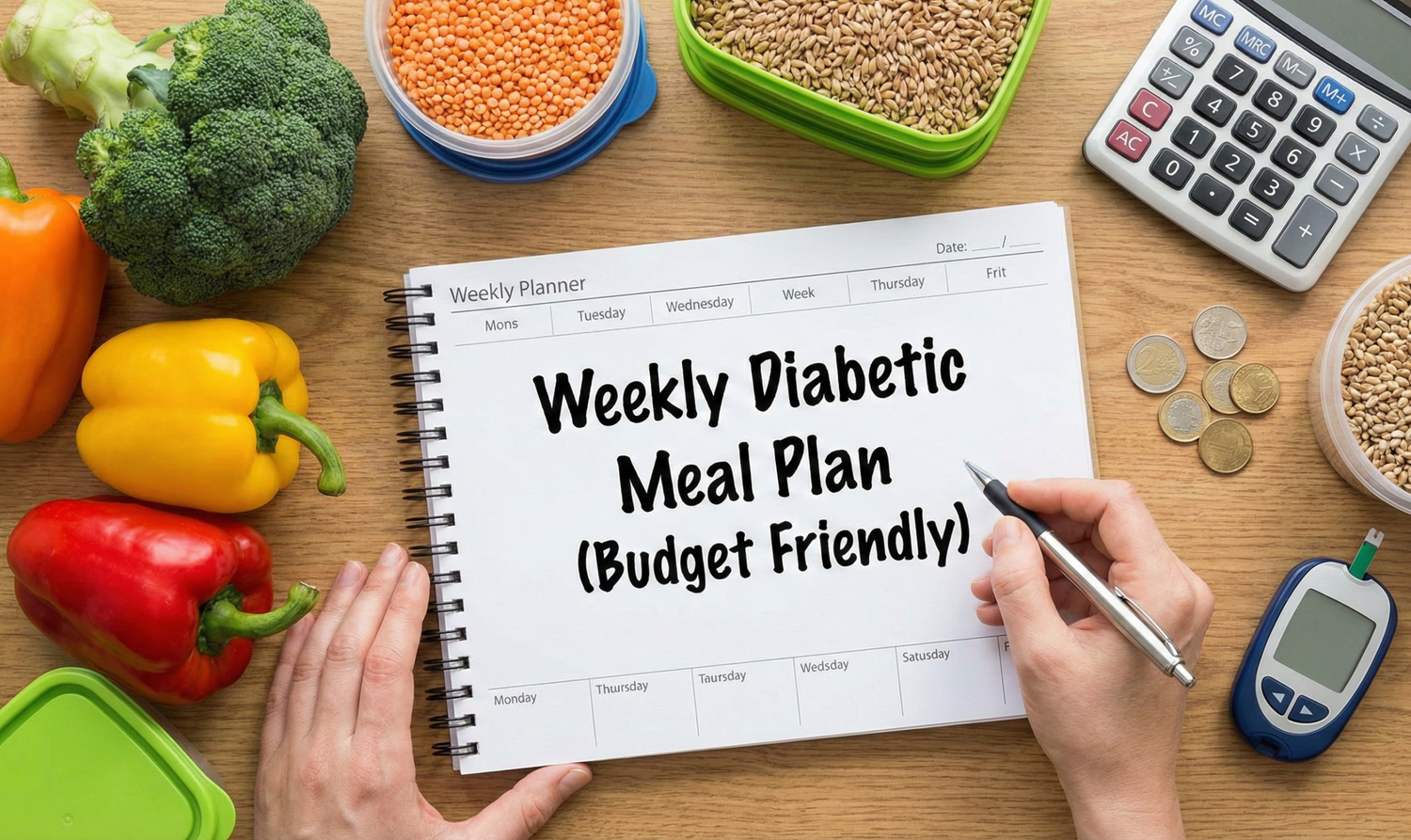
The Ultimate Budget-Friendly Weekly Diabetic Meal Plan: Health Without the High Price Tag
There is a pervasive myth in the world of nutrition that eating healthy requires a celebrity-sized bank account. You walk into a health food store and see $12 almond butter, $8 loaves of gluten-free bread, and organic produce that costs more than your monthly utility bill. For someone managing diabetes, where medication and monitoring supplies already strain the wallet, this can feel discouraging.
However, the truth is quite the opposite. Some of the most powerful foods for stabilizing blood sugar—beans, eggs, oats, and frozen vegetables—are also the most affordable items in the grocery store. A weekly diabetic meal plan (budget friendly) isn’t just about saving pennies; it is about simplifying your nutrition to its most effective, unprocessed roots. By focusing on whole foods and smart shopping, you can eat delicious, blood-sugar-stabilizing meals for under $50 a week.
This guide will dismantle the idea that you need “fancy” food to manage your A1C. We are going to build a robust, flavor-packed week of eating that respects your physiology and your finances. Whether you are looking for a classic 7-day diabetic menu or need to pivot to a low-carb approach, the principles of economy remain the same.
Understanding Blood Sugar Management: The Free Education You Need
Before you can build the most effective affordable diabetic meal plan, you need to understand the basic science of blood sugar — and the good news is that this knowledge costs nothing. Understanding what happens in your body when you eat is the single most powerful tool you have, more powerful than any expensive supplement or “superFood.”
When you eat carbohydrates, your digestive system breaks them down into glucose (sugar), which enters your bloodstream. Your pancreas then releases insulin, a hormone that acts like a key unlocking your cells so glucose can enter and be used for energy. In Type 2 diabetes, your cells have become resistant to insulin’s signal, meaning glucose stays in the bloodstream at elevated levels — a condition that, over time, damages blood vessels, kidneys, nerves, and eyes.
The entire goal of a diabetic diet plan on a budget is to choose foods that slow or minimize the rise of glucose in your bloodstream after eating. This is measured by a concept called the Glycemic Index — and it turns out that understanding it costs nothing but saves everything.
The Glycemic Index (GI) Explained for Beginners
The Glycemic Index is a numerical scale from 0 to 100 that ranks how quickly a carbohydrate-containing food raises blood glucose compared to pure glucose (which scores 100). The lower the number, the slower and more gradual the blood sugar response. For diabetics managing food costs, this scale is invaluable because the cheapest carbohydrates on the planet — oats, lentils, beans, and most vegetables — are consistently found in the low-GI category.
Oats, lentils, beans, most vegetables, plain yogurt, apples. Ideal for diabetics.
Brown rice, whole wheat bread, sweet potato. Use in moderation with protein or fat.
White bread, sugary cereals, white rice, soda, candy. Avoid or strictly limit.
Here is the beautiful irony for budget shoppers: a bag of dried lentils (GI of 32) costs around $1.50 and feeds four people. A box of processed “whole grain” cereal marketed to diabetics costs $6 and has a GI of 71. The cheap option is the healthier option, every single time, when you choose whole, unprocessed foods. This is the foundation of your budget-friendly diabetic eating plan.
Glycemic Load: The Practical Version of GI
Glycemic Load (GL) takes GI one step further by accounting for the actual amount of carbohydrate in a serving. A food can have a high GI but a low GL if you eat a small portion. Watermelon, for example, has a high GI (72) but a low GL per typical serving because it is mostly water. This matters for budgeting because it means you can occasionally include medium-GI foods like sweet potatoes in your cheap diabetic meal plan as long as you pair them with protein, fat, or fiber — which slows the absorption of glucose significantly.
The Plate Method: Free and Simple for Blood Sugar Control
The American Diabetes Association’s Plate Method is free to use and highly effective. Fill half your plate with non-starchy vegetables (frozen broccoli, spinach, carrots — all cheap). Fill one quarter with lean protein (eggs, beans, chicken thigh). Fill the remaining one quarter with a complex carbohydrate (brown rice, oats, lentils). This simple visual guide naturally creates a low-glycemic, high-fiber, protein-adequate meal that costs under $2.50 per plate.
How Fiber Protects Your Blood Sugar (And Your Budget)
Dietary fiber is one of the most critical nutrients for managing Type 2 diabetes on a budget. Fiber slows the digestion of carbohydrates, which dramatically blunts the post-meal spike in blood glucose. It also improves insulin sensitivity over time, reduces LDL cholesterol, feeds beneficial gut bacteria, and keeps you feeling full — which means you eat less and spend less. The American Diabetes Association recommends 25–38 grams of fiber per day, and the cheapest foods are among the highest in fiber: dried beans (15g per cup), lentils (16g per cup), oats (4g per half cup), and frozen peas (4g per half cup). These are not specialty health foods. They are staples found at the bottom shelf of every grocery store.
The “Cheap & Healthy” Strategy (Backed by Basics)
Before we dive into the daily menu, we need to establish the ground rules of budget diabetic shopping. To make this plan work, we lean on specific strategies that lower costs while keeping nutrient density high and glycemic load low.
1. Embrace the Freezer Aisle (Nutrient Lock, Lower Price)
Fresh produce is wonderful, but it spoils quickly and fluctuates in price. Frozen vegetables (spinach, broccoli, green beans, cauliflower) are picked at peak ripeness and flash-frozen. They are often 30-50% cheaper than fresh equivalents and result in zero food waste. They are perfect for stir-fries, soups, and even smoothies. Plus, frozen berries cost a fraction of fresh out-of-season ones.
2. Proteins: Think Beyond Steak (Value Cuts & Plants)
Meat is usually the most expensive part of a meal. In this plan, we utilize:
- Eggs: The gold standard of cheap protein. At ~$2-3 per dozen, each egg is a powerhouse of protein and healthy fats.
- Canned Tuna: High protein, healthy omega-3s, shelf-stable. Buy in bulk when on sale.
- Chicken Thighs: Often half the price of breasts and more flavorful, staying moist during cooking.
- Plant-Based Proteins: Lentils and dried beans cost pennies per serving and are packed with fiber that blunts blood sugar spikes. A one-pound bag of lentils feeds a family of four for under $2.
3. Bulk Buying “Smart Carbs” (Low-GI Staples)
We avoid processed “diabetic-friendly” bars and shakes. Instead, we buy large bags of rolled oats, brown rice, and dried beans. These provide complex carbohydrates that digest slowly, unlike cheap white bread or pasta. Oats, for instance, cost about $0.10 per serving.
Pro Tip: The “Cook Once, Eat Twice” Rule (Leftover Magic)
This meal plan relies on leftovers. Cooking a large batch of chili or roasting a whole chicken saves electricity/gas and ensures you have a free lunch the next day. This prevents the “I have nothing to eat, I’ll just buy fast food” trap – which can cost $10+ per meal. Reheating costs pennies.

The Budget Chef’s Secret Weapon: The Slow Cooker
Turn cheap cuts of meat and dried beans into gourmet meals while you work. A slow cooker is essential for maximizing flavor on a budget – it tenderizes inexpensive cuts and cooks beans from scratch for pennies.
Check Price on AmazonYour 7-Day Budget-Friendly Diabetic Menu
This plan assumes a pantry with basic spices (salt, pepper, garlic powder, paprika, chili powder) and oil (vegetable or olive). It is designed to minimize waste—ingredients bought on Day 1 will be used again on Day 4. Estimated costs are based on average U.S. grocery prices (2025).
Day 1: The Pantry Staples Kickoff (Oats & Lentils)
Focus: utilizing eggs and oats for a low-cost start.
- Breakfast: Oatmeal (1/2 cup rolled oats cooked with water/milk), topped with 1 tbsp peanut butter and a dash of cinnamon. (Cost: ~$0.40)
- Lunch: Egg Salad (2 hard-boiled eggs, mustard, splash of mayo) served over a bed of spinach or in lettuce cups. (Cost: ~$1.20)
- Dinner: Lentil Stew: 1 cup dried lentils simmered with 1 diced carrot, 1 onion, and 1 can diced tomatoes (no salt). Season with garlic powder and cumin. Serves 4, cost per serving ~$1.50. Freeze extras.
- Snack: An apple (approx $0.50).
Cost note: day total ~$3.60
Day 2: Tuna & Frozen Veggies (Omega‑3 on a Dime)
Focus: High protein, omega-3s, low cost using canned tuna and frozen spinach.
- Breakfast: 2 Scrambled Eggs with 1/2 cup frozen spinach (thawed and squeezed). (Cost: ~$0.80)
- Lunch: Leftover Lentil Stew from Day 1. (Cost: $0.00 – already paid for!)
- Dinner: Tuna Patties: 1 can tuna (drained) mixed with 1 egg and 2 tbsp breadcrumbs (or oats), pan-fried in minimal oil. Served with steamed frozen broccoli. (Cost: ~$2.00 for two patties).
- Snack: Carrot sticks (from bulk carrots) with 2 tbsp hummus. (Cost: ~$0.60).
Day 3: The Chicken Thigh Feast (Bulk Buy)
Focus: Buying a family pack of chicken thighs for multiple meals. Thighs are ~$1.99/lb vs. breasts $3.99/lb.
- Breakfast: Yogurt (buy a large 32oz tub, not single cups) with 1 tbsp sunflower seeds. (Cost per serving: ~$1.00)
- Lunch: Tuna Salad over greens (use remaining half can of tuna from Day 2). (Cost: ~$1.50)
- Dinner: Baked Chicken Thighs (2 thighs) with 1 small roasted sweet potato (cubed) and 1 cup frozen green beans. Season with paprika and garlic. (Cost: ~$2.50)
- Snack: Hard-boiled egg (from the dozen).
Need a quicker plan? Check our 1-day simple diabetic menu for ultra-fast ideas.
Day 4: Leftover Leverage (Zero Cooking for Lunch)
Focus: Zero cooking for lunch to save time and money. Using leftover chicken and sweet potato.
- Breakfast: Oatmeal with peanut butter (repeat of Day 1). (Cost: ~$0.40)
- Lunch: Leftover Baked Chicken Thigh (sliced) and leftover sweet potato from Day 3, served over a handful of spinach. (Cost: $0.00)
- Dinner: “Fried” Rice: 1 cup cooked brown rice (made in bulk) sautéed with 1 cup frozen mixed veggies (peas/carrots/corn) and 2 scrambled eggs. Add soy sauce and a dash of sesame oil. (Cost: ~$1.20)
- Snack: Popcorn (air-popped from bulk kernels – about 3 tbsp kernels). (Cost: ~$0.15).
Day 5: Ground Turkey/Beef Day (Stretching Meat)
Focus: Ground meat stretches further than whole cuts, especially when combined with beans.
- Breakfast: Spinach and Cheese Omelet (2 eggs, handful frozen spinach, 1 oz cheddar). (Cost: ~$1.20)
- Lunch: Rice and Veggie bowl (leftover from Day 4). (Cost: $0.00)
- Dinner: Turkey/Beef Chili: 1/2 lb ground turkey or beef (browned), 1 can kidney beans (rinsed), 1 can diced tomatoes, chili powder, onion. Simmer 20 min. Serves 4, per serving ~$2.50. Freeze half.
- Snack: A banana (approx $0.30).
Day 6: Soup Saturday (Volume & Hydration)
Focus: Volume eating with high fluid content – filling and cheap.
- Breakfast: Scrambled eggs with salsa (2 eggs, 2 tbsp salsa). (Cost: ~$0.90)
- Lunch: Leftover Chili from Day 5. (Cost: $0.00)
- Dinner: Vegetable Frittata: Use up any remaining fresh veggies (onions, spinach, maybe a bell pepper) baked with 6 eggs (serves 2-3). Serve with a simple side salad (lettuce, lemon). (Cost: ~$1.50 per serving)
- Snack: Sunflower seeds (1/4 cup). (Cost: ~$0.30).
Looking for more structure on the weekend? See our 3-day diabetic meal plan.
Day 7: The Fridge Clear-Out (Waste‑Free Sunday)
Focus: Ensuring no food goes to waste before the next shopping trip.
- Breakfast: Banana Pancakes (2 eggs + 1 mashed banana, cooked like pancakes). High protein, no added sugar. (Cost: ~$0.80)
- Lunch: Leftover Frittata from Day 6. (Cost: $0.00)
- Dinner: “Kitchen Sink” Stir-fry: Any remaining meat (even a little), frozen veggies, served over the last of the brown rice. Use soy/ginger for flavor. (Cost: ~$1.50)
- Snack: Apple slices (last apple).

Save Leftovers, Save Money
Don’t let that chili or lentil stew go to waste. A good set of airtight containers pays for itself in one week by preserving your bulk-cooked meals. Perfect for freezing portions.
Check Price on AmazonBudget-Friendly Diabetic Snack Ideas: 15 Options Under $1
Snacking is one of the biggest budget-busters in a diabetic diet. Convenience store protein bars cost $2–4 each. Specialty “diabetic snack packs” from health food stores can run $5–8 for a few crackers and some cheese. The solution is to build your own cheap diabetic snacks from whole ingredients. Each option below costs well under $1 per serving, keeps blood sugar stable, and requires minimal preparation.
Hard-Boiled Egg
6g protein, zero carbs, entirely filling. Prep a batch of 6 at the start of the week.
Carrot Sticks
From a 2 lb bag, carrots cost pennies and provide beta-carotene and fiber with very low GI.
Air-Popped Popcorn
Whole grain, high fiber, minimal carbs per cup. Avoid the expensive microwave packets.
Apple Slices + Peanut Butter
The fiber in apple and fat in peanut butter slows glucose absorption significantly.
Plain Yogurt (1/2 cup)
Buy the large tub, not single-serve. Protein and probiotics for gut health. Add cinnamon.
Sunflower Seeds (2 tbsp)
Healthy fats, magnesium (important for insulin sensitivity), and satisfying crunch.
Celery with Peanut Butter
Zero glycemic impact from celery + protein and fat from peanut butter. Classic combo.
Banana (small)
Medium GI but high potassium and fiber. Pair with a small handful of nuts to lower GL.
Hummus + Veggie Sticks
Make hummus from a can of chickpeas, lemon, and garlic at home for pennies per serving.
Cucumber Slices + Salsa
Virtually zero calories and carbs. The salsa adds flavor and lycopene without sugar spikes.
Oat Cracker + Egg
2 tbsp oats pan-toasted into a rough “cracker” topped with a sliced hard-boiled egg.
Frozen Berry Smoothie
Blend 1/4 cup frozen berries with 1/2 cup plain yogurt and water. High in antioxidants.
Snacks to Avoid (Even When Cheap)
Some cheap snacks seem convenient but are devastating for blood sugar. Rice cakes (GI of 82) spike blood sugar faster than table sugar. Flavored instant oatmeal packets are loaded with sugar despite the “healthy” oat branding. Fruit juice — even 100% juice — delivers a sugar hit with no fiber. Pretzels and crackers made from refined flour offer nothing but rapid glucose spikes. Granola bars, regardless of how “natural” they look, often contain 20+ grams of sugar. When in doubt, choose a whole food over a packaged one.
Meal Timing for Diabetics: When You Eat Matters as Much as What You Eat
One of the most overlooked and entirely free tools in Type 2 diabetes meal management is meal timing. Research published in the journal Diabetes Care consistently shows that spreading carbohydrate intake evenly throughout the day, rather than loading at one or two large meals, leads to significantly lower average blood glucose levels and reduced insulin requirements. This strategy costs nothing to implement and can be more powerful than switching to expensive “diabetic” foods.
The 3-Meal + 2-Snack Structure (Budget Version)
For most people managing diabetes on this budget plan, a structured eating schedule works best:
7:00–8:00 AM — Breakfast (Largest Protein Serving)
Start with protein and fiber. Your insulin sensitivity is typically highest in the morning, meaning you can handle carbohydrates better now than at dinner. A bowl of oatmeal with an egg is ideal. Never skip breakfast — it sets your blood sugar baseline for the entire day and prevents the mid-morning hunger that leads to expensive vending machine raids.
10:00–10:30 AM — Mid-Morning Snack (Optional but Stabilizing)
If your breakfast is small or you find yourself getting shaky before lunch, a small snack like a hard-boiled egg or a few carrot sticks prevents a low blood sugar event and the reactive overeating that follows. This is especially important for people on insulin or sulfonylureas.
12:00–1:00 PM — Lunch (Leftovers = Free Meal)
This is where the budget plan truly shines. Every lunch in this plan is a leftover from the previous dinner, making it essentially free. A pre-packed container of lentil stew or chili means you are never tempted to buy a $12 sandwich from a café. Bring it to work. Heat it up. Save money.
3:00–4:00 PM — Afternoon Snack (The Danger Zone)
The afternoon energy slump is real and dangerous for blood sugar management. This is the time when most people reach for a candy bar or a bag of chips. A prepared snack of sunflower seeds, a banana, or a small portion of yogurt from the budget plan keeps blood sugar stable and saves you from that $3 vending machine expense.
6:00–7:00 PM — Dinner (Smaller Carbs, More Vegetables)
Insulin sensitivity decreases in the evening, so a dinner heavier in non-starchy vegetables and protein with a smaller carbohydrate portion produces a gentler blood sugar response. The budget plan’s dinners — stir-fry over brown rice, frittata with vegetables, or chili — naturally achieve this balance without any special ingredients.
8:00–9:00 PM — Optional Evening Snack (Only If Needed)
A small protein-based snack before bed can help prevent overnight hypoglycemia in people on certain diabetes medications. A tablespoon of peanut butter or a hard-boiled egg is ideal. Avoid fruit at this time, as the carbohydrates will be processed while you sleep when metabolism is lowest.
Intermittent Fasting and Diabetes: Consult Your Doctor First
You may have heard about intermittent fasting (eating within a specific window like 8 or 12 hours) as a tool for blood sugar management and weight loss. While some research shows promise for Type 2 diabetes, this approach can be dangerous for people on insulin or certain oral medications due to hypoglycemia risk. Always discuss any significant changes to your meal timing with your healthcare provider before implementing them. The 3-meal-plus-snack structure described above is safe for the vast majority of people managing diabetes.
The Math: Budget vs. Standard Diet (Real Numbers)
Let’s look at the numbers. Why is this plan cheaper than a standard “American” diet or even a typical “Health Food” diet? We compare per serving costs.
| Category | This Budget Plan | Typical “Healthy” Diet | Standard Takeout/Processed |
|---|---|---|---|
| Protein | Eggs, Beans, Canned Tuna, Chicken Thighs (~$0.50-$1.50/serving) | Grass-fed Steak, Fresh Salmon, Organic Chicken Breast (~$4.00-$8.00/serving) | Fast Food Burgers, Fried Chicken (~$5.00-$10.00/meal) |
| Vegetables | Frozen Veggies, Cabbage, Carrots, Onions (~$0.50/serving) | Organic Kale, Fresh Berries, Out-of-season Asparagus (~$2.50/serving) | Usually absent or a token lettuce leaf |
| Carbohydrates | Bulk Oats, Brown Rice, Dried Beans (~$0.15/serving) | Quinoa, Ancient Grains, Gluten-Free Artisan Bread (~$1.50/serving) | Fries, Soda, White Buns (cheap but high healthcare cost) |
| Total Daily Cost (avg) | ~$5.00 – $7.00 per day | ~$15.00 – $25.00 per day | ~$20.00 – $30.00 per day |
By saving ~$10 a day, you save $300 a month. That covers a significant portion of diabetic supplies (test strips, etc.) or allows you to invest in a 30-day comprehensive plan for future variety.
Your Budget Shopping List (Total ~$40-50 for the week)
Stick to this list to avoid impulse buys. Shop the perimeter of the store for fresh items and the bottom shelves for bulk items (top shelves usually have more expensive brands).
🥕 Produce
- Bananas (1 bunch, ~5-6)
- Apples (bag of 6)
- Carrots (2 lb bag)
- Onions (3 lb bag)
- Sweet Potatoes (3 large)
- Spinach (fresh or frozen – frozen is cheaper)
- Lemons (2, for flavor)
🥚 Proteins & Dairy
- Eggs (1 dozen, preferably large)
- Chicken Thighs (family pack, ~2 lbs)
- Ground Turkey or Beef (1 lb)
- Canned Tuna (3 cans, in water)
- Plain Yogurt (32 oz tub)
- Optional: block of cheddar cheese (lasts longer than shredded)
🥫 Pantry & Frozen
- Rolled Oats (canister or bulk bin)
- Brown Rice (1 lb bag)
- Dried Lentils (1 lb bag)
- Canned Kidney Beans (or dried, if you have time)
- Peanut Butter (natural, no sugar)
- Frozen Mixed Veggies (peas/carrots/corn)
- Frozen Broccoli (large bag)
- Frozen Spinach (block or bag)
- Popcorn kernels (bulk)
How to Read Nutrition Labels for Diabetes on a Budget
One of the most powerful — and completely free — skills you can develop as a diabetic shopping on a budget is the ability to read a nutrition label accurately. Manufacturers invest millions of dollars in making products look healthy on the front of the package. The back tells the real story. Knowing what to look for in 30 seconds saves you from buying products that will spike your blood sugar regardless of how “whole grain” or “sugar free” they claim to be.
The 5 Numbers That Matter Most for Diabetics
- Total Carbohydrates: This is the master number. Everything else is a subset of this. Look at “per serving” — then immediately check the serving size. A “low carb” food with a serving size of 10 grams is misleading if a realistic portion is 40 grams. Double or triple the listed carbs to get the real-world number.
- Dietary Fiber: Subtract this from total carbohydrates to get “net carbs,” which more accurately represents the amount of glucose that will enter your bloodstream. A food with 30g carbs and 10g fiber has only 20g net carbs — a significant difference for blood sugar management. High-fiber foods are overwhelmingly the cheapest options: oats, beans, lentils.
- Added Sugars: Since 2020, US nutrition labels are required to list added sugars separately. Any food with more than 5g of added sugars per serving should be avoided or strictly limited. This single line item exposes supposedly healthy foods like flavored yogurt (15g added sugar), granola (12g), and “whole grain” cereal bars (9g) as blood sugar landmines.
- Sodium: Many cheap processed foods are extremely high in sodium, which raises blood pressure — already a significant risk for people with diabetes. Target under 600mg sodium per serving. Canned goods are the main culprit; buying “no salt added” versions or rinsing beans under water reduces sodium by 40%.
- Saturated Fat: People with diabetes are at double the risk of cardiovascular disease. Keep saturated fat under 10% of total calories. Lean proteins like canned tuna, chicken breast, and plant proteins (beans, lentils) are naturally low in saturated fat and also happen to be the most budget-friendly protein options.
✅ Do Buy (Budget + Diabetic Approved)
- Store brand rolled oats: ~$0.10/serving, 4g fiber, 0g added sugar
- Dried lentils: ~$0.20/serving, 16g fiber, 0g added sugar
- Canned tomatoes (no salt added): ~$0.50/can, 2g fiber, 0g added sugar
- Frozen spinach: ~$0.40/serving, 4g fiber, 0g sodium
- Plain whole yogurt (large tub): ~$0.80/serving, 10g protein, 0g added sugar
- Canned tuna in water: ~$0.90/can, 22g protein, 300mg sodium
- Peanut butter (natural, no added sugar): ~$0.20/tbsp, 3g protein, 0g added sugar
❌ Don’t Buy (Looks Healthy, Budget Trap)
- Flavored instant oatmeal packets: 12g added sugar, 3x cost of plain oats
- “Diabetic” granola bars: $2+ each, 15g sugar, minimal fiber
- Fruit juice (even 100%): Same sugar as soda with no fiber
- Rice cakes: GI of 82, essentially pure starch, no nutritional value
- Flavored yogurt cups: 15–20g added sugar, costs 3x the large plain tub
- Low-fat peanut butter: Replaces fat with sugar; worse for blood sugar
- Canned soup: 800–1200mg sodium per serving, poor for blood pressure
Best Cooking Methods for Diabetics: Maximize Nutrition, Minimize Cost
How you cook your food is nearly as important as what you cook. Certain preparation methods can dramatically change the glycemic response of identical ingredients. A boiled potato has a GI of 50; the same potato baked has a GI of 85; mashed with butter it reaches 87. Understanding cooking-method glycemic effects is another free tool that can lower your blood sugar without changing what you buy.
Cooking Methods Ranked from Best to Worst for Blood Sugar
| Cooking Method | Blood Sugar Impact | Budget Rating | Best For |
|---|---|---|---|
| Boiling / Steaming | Lowest GI (gelatinization preserved, cooling increases resistant starch) | ⭐⭐⭐⭐⭐ Cheapest | Vegetables, eggs, chicken, lentils |
| Slow Cooking | Low GI (long, moist cooking makes cheap cuts tender without high heat) | ⭐⭐⭐⭐⭐ Excellent | Beans, tough meat cuts, soups, stews |
| Baking / Roasting | Medium GI (dry heat raises GI slightly; high heat on starchy foods increases it further) | ⭐⭐⭐⭐ Good | Chicken, sweet potatoes, vegetables |
| Sautéing / Stir-frying | Medium GI (quick, uses small oil amounts; preserves nutrients well) | ⭐⭐⭐⭐ Good | Frozen veggies, eggs, ground meat |
| Pressure Cooking | Low-Medium GI (very fast, but high pressure can affect starch structure) | ⭐⭐⭐⭐ Good for time | Dried beans, lentils, tough grains |
| Deep Frying | High GI + high fat (adds significant calories and saturated fat) | ⭐ Avoid | Avoid for diabetics |
| Microwaving | Low GI (fastest, preserves nutrients; similar to steaming) | ⭐⭐⭐⭐⭐ Cheapest energy cost | Reheating leftovers, frozen veggies |
The Resistant Starch Trick: Cook, Cool, Reheat
Here is a little-known, entirely free trick that can lower the glycemic index of rice, potatoes, and pasta by 20–40%. When you cook these starchy foods and then cool them in the refrigerator for at least 12 hours, a portion of the digestible starch converts into “resistant starch” — a form of fiber that your digestive enzymes cannot break down. It passes into the large intestine largely intact, feeding beneficial bacteria and bypassing blood sugar entirely. This is why the brown rice cooked in this plan is always made in batches and reheated the next day: it is genuinely lower-GI when reheated from cold. No special ingredient required. No extra cost. Just a different timing strategy.
Spices That Help Control Blood Sugar (Budget Kitchen Pharmacy)
Your spice rack is a powerful, inexpensive tool for blood sugar management. Dozens of common cooking spices contain bioactive compounds that measurably improve insulin sensitivity, reduce inflammation, and slow the digestion of carbohydrates. Buying spices from the bulk bins at health food stores or from the international aisle (where they cost 60–80% less than the branded spice rack) makes this one of the highest-value budget investments you can make for your diabetes management.
The Top 5 Budget Spices for Diabetics
1. Cinnamon — The Most Studied Spice for Blood Sugar
Numerous clinical studies have demonstrated that cinnamon — specifically Ceylon cinnamon — contains compounds called polyphenols that mimic insulin and improve cellular glucose uptake. A meta-analysis found that consuming 1–6 grams of cinnamon daily significantly reduced fasting blood glucose, triglycerides, and LDL cholesterol in people with Type 2 diabetes. Adding half a teaspoon to your morning oatmeal or yogurt costs less than $0.02 per day and can meaningfully support your blood sugar control. Ceylon cinnamon (the “true cinnamon,” not cassia cinnamon) is preferred for daily use, as cassia contains higher levels of coumarin which can be harmful in large amounts. Buy Ceylon cinnamon from bulk bins or international spice markets where it costs $3–5 for a large quantity.
2. Turmeric — Anti-Inflammatory Powerhouse
Curcumin, the active compound in turmeric, has been shown in multiple studies to reduce insulin resistance and lower fasting blood glucose. Chronic low-grade inflammation is a driving force in Type 2 diabetes, and turmeric is one of the most potent natural anti-inflammatory agents known. Add it to your lentil stew, egg scramble, or even a glass of warm milk (golden milk). The combination of turmeric and black pepper (which contains piperine, dramatically increasing curcumin absorption) is particularly effective. Powdered turmeric from the international spice aisle costs around $3–4 for 4 oz — enough for months of daily use.
3. Ginger — Digestion, Inflammation, and Glucose
Fresh ginger (bought in a small knob for under $1) or dried ground ginger both contain gingerols and shogaols that have been shown to improve insulin sensitivity, reduce post-meal blood glucose, and decrease nausea. Ginger also speeds gastric emptying in a way that reduces post-meal glucose spikes. Add it to stir-fries, soups, and smoothies. Dried ginger powder is even more budget-friendly and has a concentrated effect.
4. Garlic — Blood Pressure and Blood Sugar Dual Action
Garlic (fresh or powdered) contains allicin, which has been shown to reduce fasting blood glucose, improve insulin sensitivity, and lower blood pressure — all critical concerns for people with diabetes. A 3 lb bag of fresh garlic bulbs costs around $3 and lasts weeks. Garlic powder from the store-brand spice section costs $1.50 for a large container. Used liberally in cooking, garlic provides medicinal benefit at essentially zero extra cost.
5. Cumin — Digestive Enzyme and Cholesterol Support
Cumin has been studied specifically for Type 2 diabetes management. It contains compounds that stimulate digestive enzyme activity and slow carbohydrate absorption. Studies have shown that cumin supplementation reduces fasting glucose and HbA1c in people with diabetes. As the key spice in lentil stew and chili — both budget staples in this plan — cumin is already working for you. Buying a large container of ground cumin from an international grocery store for $1–2 provides months of use.
Diabetic Portion Control Guide: How to Eat the Right Amount Without a Scale
One of the greatest free tools for managing blood sugar on a budget is understanding portion sizes. Overeating even the healthiest foods can cause blood sugar spikes and lead to weight gain that worsens insulin resistance. The challenge is that most people dramatically underestimate how much they eat, especially when it comes to calorie-dense foods like nuts, oils, rice, and cheese. The good news is that you do not need a food scale to estimate portions accurately — your own hand is a reasonably accurate measuring tool that goes everywhere with you.
The Hand Portion Method for Diabetics
| Food Category | Portion Size | Hand Reference | Budget Example |
|---|---|---|---|
| Cooked Grains / Rice / Oats | ~1/2 cup | Cupped palm (one hand) | Brown rice, rolled oats |
| Lean Protein | ~3–4 oz | Palm of hand (no fingers) | Chicken thigh, tuna, eggs (2) |
| Non-Starchy Vegetables | 1–2 cups | Both fists combined | Frozen broccoli, spinach, carrots |
| Beans / Lentils | ~1/2 cup cooked | Cupped palm (one hand) | Kidney beans, red lentils |
| Fats / Oils / Nuts | 1–2 tsp (oil) / 1 oz (nuts) | Tip of thumb (oil) / Small handful (nuts) | Peanut butter, sunflower seeds, olive oil |
| Fruit | ~1 medium piece or 1/2 cup | Closed fist | Apple, banana, frozen berries |
| Dairy (Yogurt / Milk) | ~3/4 cup (yogurt) / 1 cup (milk) | Loose cupped hands | Plain yogurt (large tub) |
Portion control on a budget has the added benefit of making your food last longer. If you consistently eat the right portion of brown rice (half a cup cooked), a one-pound bag of dry brown rice yields approximately 20 servings at a cost of roughly $0.07 per serving — versus the same rice served in restaurant portions (often 1.5–2 cups) yielding far fewer servings and doing more blood sugar damage. Eating the right amount is simultaneously the most health-conscious and most budget-friendly choice.
How to Meal Prep for Diabetes on a Budget: The Complete Step-by-Step Guide
Meal prepping — the practice of preparing meals or meal components in advance — is the single most effective strategy for maintaining a budget-friendly diabetic meal plan consistently over time. Without meal prep, the best-intentioned plans collapse under the pressure of a busy Tuesday evening when there is nothing ready to eat and the nearest fast food is a 5-minute drive away. A structured, efficient meal prep session on Sunday afternoon changes the entire week’s trajectory for just 2–3 hours of upfront effort.
The Sunday Budget Meal Prep Sequence (2.5 Hours, Sets Up the Whole Week)
Step 1 (0:00–0:20): Cook the Grains
Put 2 cups of brown rice on to boil with 4 cups of water. This will provide 4–5 days of grain servings. While rice cooks, set up your slow cooker with dried lentils, onion, carrot, canned tomatoes, garlic, and cumin on low (they’ll be ready in 4–6 hours). The slow cooker handles itself; you move on to other tasks.
Step 2 (0:20–0:45): Prep the Proteins
Season the chicken thighs with paprika, garlic powder, salt, and pepper. Place them on a baking sheet and put in the oven at 400°F (200°C) for 35–40 minutes. While chicken bakes, boil 6 eggs in a separate pot for 10–12 minutes, then transfer to cold water. These will be your snacks and breakfast proteins for the week.
Step 3 (0:45–1:15): Prep the Vegetables
While the oven runs, chop 2 onions (half for lentil stew already cooking, half stored in a sealed container for later meals), peel and cube 2 sweet potatoes, wash and roughly chop any fresh greens. The frozen vegetables require no prep — they go directly from bag to pan when needed. Portion carrots into snack-size bags or containers.
Step 4 (1:15–1:45): Assemble the Week’s Containers
By now the rice is done and chicken should be nearly ready. Divide the cooked rice into 5 containers (half-cup servings). Let chicken cool slightly, then store whole thighs (they stay juicier than sliced until you’re ready to serve). Check on lentil stew — if it needs more time, let it run; it’ll finish cooking while you clean up.
Step 5 (1:45–2:15): Write Your Meal Plan on the Fridge
This step costs nothing and prevents decision fatigue. Write a simple list on a piece of paper and stick it on the fridge: Monday lunch = lentil stew, Monday dinner = chicken thigh + rice + broccoli, and so on. When you know exactly what each meal is, you never stand in front of the fridge wondering what to eat — which is when expensive impulse decisions happen.
Step 6 (2:15–2:30): Freeze the Extras
Lentil stew and chili freeze beautifully. Divide any excess into freezer-safe containers or zip-lock bags (lay flat to save freezer space). Label with the date and contents. These become your emergency meals for weeks when grocery shopping doesn’t happen or life gets chaotic — preventing the expensive “nothing to eat, must order delivery” scenario.
What to Keep in Your “Free Pantry” (Zero-Cost Flavor Builders)
Part of making a cheap diabetic meal plan taste like a real meal rather than “healthy food I’m eating because I have to” is building flavor without spending money. These pantry staples, once purchased, last for months and transform basic ingredients:
- Apple cider vinegar: A splash in lentil soup or on salads adds brightness, and the acetic acid has been shown to lower post-meal blood glucose by slowing starch digestion.
- Soy sauce (low sodium): A few teaspoons transforms plain rice, stir-fry, or even eggs into something deeply savory. A $2 bottle lasts months.
- Hot sauce: Zero calories, zero carbs, and capsaicin (from chili peppers) has been shown to improve insulin sensitivity. Makes every meal more interesting.
- Dried bay leaves and thyme: Added to any simmering pot of beans or meat, they provide complexity that makes simple food taste slow-cooked and deliberate.
- Lime or lemon juice: Fresh squeezed or bottled, acid brightens any dish. Used on fish, in salads, or added to water for taste without calories or cost.
Store Brand vs. Name Brand: The Diabetic Budget Shopper’s Guide
One of the fastest ways to reduce your grocery bill on a diabetic meal plan on a budget is to switch from name brand to store brand (also called generic or own-label) products across the board. In blind taste tests and nutritional analyses, store brand staples are almost universally identical to their name brand counterparts — because they are often produced in the same factories, with the same ingredients, just packaged differently.
| Item | Name Brand Cost | Store Brand Cost | Annual Savings (buying weekly) | Nutritional Difference |
|---|---|---|---|---|
| Rolled Oats (42 oz) | $6.49 (Quaker) | $3.29 (store brand) | ~$166 | Zero |
| Canned Tomatoes (14.5 oz) | $1.89 (Hunt’s) | $0.79 (store brand) | ~$57 (using 1/week) | Zero |
| Canned Tuna (5 oz) | $2.49 (StarKist) | $1.19 (store brand) | ~$68 (using 1/week) | Zero |
| Peanut Butter (16 oz) | $4.29 (Jif natural) | $2.49 (store brand natural) | ~$94 (using 1/month) | Zero (same ingredients) |
| Frozen Broccoli (16 oz) | $2.99 (Green Giant) | $1.49 (store brand) | ~$78 | Zero |
| Plain Yogurt (32 oz) | $5.99 (Stonyfield Organic) | $2.99 (store brand) | ~$156 | Minimal (conventional vs organic milk) |
Switching entirely to store brand versions of the items above saves approximately $619 per year compared to always choosing the name brand — enough money to pay for three months of test strips, a new glucometer, or a significant portion of a prescription co-pay. The diabetes management benefit is identical.
The One Time to Splurge: Whole Spices and Certain Canned Goods
There is one category where store brand sometimes falls short: whole dried spices and specialty canned goods like full-fat coconut milk. Cheap store brand spices are often older, less potent, and may have filler in some cases. For the five key blood-sugar-supporting spices (cinnamon, turmeric, ginger, garlic, cumin), buying from bulk bins or ethnic grocery stores is still the most affordable option — and usually fresher than any packaged option, name brand or store brand. International grocery stores consistently offer turmeric and cumin at 50–70% less than American supermarkets.
Budget Diabetic Meal Plan for Seniors: Special Considerations and Adaptations
Managing Type 2 diabetes on a fixed income is a reality for tens of millions of older Americans. For seniors, the budget aspect of a diabetic meal plan is not optional — it is essential. Fortunately, the same principles that make this plan affordable for any adult work especially well for seniors, with a few adaptations for common age-related considerations like decreased appetite, difficulty chewing, medication interactions, and reduced mobility for cooking.
Key Adaptations for Senior Diabetics on a Budget
Smaller Portions, More Frequent Meals
Many seniors experience decreased appetite with age, which can lead to erratic eating patterns that cause blood sugar to spike and crash throughout the day. Eating 4–5 smaller meals spaced 3–4 hours apart keeps blood glucose more stable than 2–3 larger meals. This also reduces the strain on digestion that can be an issue with large meals for older adults. The good news: smaller portions mean the weekly food budget stretches even further.
Texture-Modified Options for Chewing Difficulties
Dental issues, dentures, or reduced jaw strength can make some budget staples challenging. However, most of the most important budget diabetic foods are naturally soft or easily softened: oatmeal, lentil soup, yogurt, scrambled eggs, mashed avocado (if affordable), canned fish, and slow-cooked chicken thighs that fall apart with a fork. Sweet potatoes become fork-tender when baked or steamed. Frozen vegetables like peas and chopped spinach require no chewing at all when incorporated into soups and stews.
Medication Interactions to Watch
Several budget-friendly diabetic foods can interact with common diabetes medications. People on Metformin should maintain consistent vitamin B12 intake (eggs and canned tuna are good budget sources). People on warfarin (a blood thinner common in older adults) need to maintain consistent vitamin K intake — meaning leafy greens like spinach should be eaten in roughly similar amounts each day rather than sporadically. People on ACE inhibitors for blood pressure should be cautious about significantly increasing potassium-rich foods like sweet potatoes and bananas. Always review your specific medications with your pharmacist or physician when changing your diet significantly.
Senior Discount Programs That Reduce Food Costs Further
- Senior SNAP (Supplemental Nutrition Assistance Program): Eligible seniors can receive $20–$290+ per month in grocery benefits. Apply through your state’s SNAP office. Many eligible seniors do not apply because they believe they earn too much — the income thresholds are higher than many people realize.
- Commodity Supplemental Food Program (CSFP): Provides monthly food packages to low-income seniors 60 and older, including canned proteins, oats, and other staples that align perfectly with a budget diabetic meal plan.
- Senior grocery discount days: Many grocery store chains (Kroger, Publix, Harris Teeter) offer 5–10% senior discounts on specific days of the week. A few phone calls to local stores can reveal savings of $2–5 per week.
- Meals on Wheels: For homebound seniors with diabetes, Meals on Wheels programs in many areas now offer diabetes-specific meal plans at reduced or no cost. Check your local Area Agency on Aging for availability.
10 Diabetic Diet Myths Debunked (Especially for Budget Shoppers)
Misinformation about diabetic diets costs people money every day. People buy expensive “low sugar” packaged foods that spike blood sugar more than cheap whole foods. They avoid affordable items based on outdated advice. Clearing up these myths is not just educational — it is directly money-saving for anyone following a budget-friendly diabetic diet.
Diabetics can’t eat carbs
Diabetics can and should eat complex, high-fiber carbohydrates. Oats, lentils, brown rice, and beans are carbohydrates that actually improve blood sugar control because of their fiber content and low glycemic index. Avoiding all carbs leads people to expensive protein-heavy diets unnecessarily.
Fruit is too sugary for diabetics
Whole fruits contain fiber that blunts their natural sugar’s effect on blood glucose. Apples, pears, berries, and peaches are all appropriate for diabetics. The budget staples bananas and apples are fine in normal portions. Only fruit juice (stripped of fiber) is problematic.
You need special “diabetic” foods
Products marketed as “diabetic-friendly” are largely a marketing category, not a medical one. They often contain sugar alcohols that cause digestive issues and still affect blood sugar. Regular whole foods — oats, eggs, lentils — are superior and dramatically cheaper.
Brown rice isn’t worth the extra cost
Brown rice costs only $0.02–$0.05 more per serving than white rice. For that minimal cost difference, you get 4x more fiber, a significantly lower glycemic index (50 vs. 72), and more vitamins and minerals. It is one of the best nutritional upgrades available for pennies.
Beans cause dangerous blood sugar spikes
Beans are among the best foods on Earth for blood sugar management. Their combination of protein, fiber, and resistant starch creates one of the lowest glycemic responses of any carbohydrate food. A GI of 24–34 makes them safer than almost any other starchy food. And they cost $0.20 per serving.
Eggs raise your cholesterol dangerously
Decades of research have revised this. Dietary cholesterol from eggs has minimal effect on blood cholesterol for most people. Eggs raise HDL (good) cholesterol and the type of LDL they raise (large fluffy particles) is not associated with cardiovascular risk. Up to 7 eggs per week is considered safe for people with diabetes by the ADA.
You need to completely avoid sugar forever
The goal is to limit and control added sugar, not to eliminate every molecule. A small square of dark chocolate or a drizzle of honey on plain yogurt in the context of an otherwise well-managed diet will not derail blood sugar control. Rigid restriction that leads to binge eating is far more damaging.
Diet sodas are safe alternatives to regular soda
Emerging research suggests artificial sweeteners may negatively affect gut microbiome composition and insulin response in ways not yet fully understood. More importantly, diet soda is an ongoing expense. Water flavored with lemon (a budget staple in this plan) costs virtually nothing and has proven benefits for kidney health.
Cheap food is always unhealthy food
The most unhealthy foods (processed snacks, fast food, sugary drinks) are expensive. The most powerful foods for diabetes management (dried lentils, rolled oats, frozen spinach, eggs) are consistently the cheapest items in the grocery store. The “healthy eating is expensive” narrative benefits processed food companies, not patients.
You can’t lower your A1C through diet alone
While medication plays a critical role for many people with diabetes, dietary changes can produce dramatic A1C improvements. Studies consistently show that a high-fiber, low-GI diet can reduce A1C by 0.5–2.0 percentage points — a clinically significant improvement that can reduce medication requirements for some patients. Always work with your healthcare provider to monitor and adjust treatment.
Expert Tips for Sticking to the Budget (Mindset Matters)
Creating the plan is easy; sticking to it when life gets busy is the hard part. Here is how to stay on track and keep your wallet happy.
1. Drink Water (The Ultimate Free Drink)
Soda, juice, and fancy coffees drain your budget and spike your sugar. Water is free (from the tap) and essential for kidney health. Flavor it with a slice of lemon or cucumber if you need variety. A reusable bottle saves hundreds a year.
2. Check the Unit Price (Don’t Be Fooled by Sales)
Always look at the small print on the price tag that says “price per ounce” or “per 100g.” Sometimes the larger bag isn’t cheaper. Sometimes the “sale” item is still more expensive than the store brand. Store brand oats and canned goods are usually identical to name brands.
3. Don’t Shop Hungry (The Golden Rule)
Shopping while hungry leads to buying snacks. Diabetic snacks are notoriously expensive. Eat a hard-boiled egg or a spoon of peanut butter before you leave the house.
4. Use Inexpensive Flavor Boosters
Garlic, onions, spices, and vinegar add flavor without carbs or cost. Buy spices from bulk bins or international aisles – they’re often much cheaper.
Once you master this week, you might feel ready to tackle a longer duration. Our 14-day diabetic meal plan builds on these principles with slightly more variety.

Stop Buying Drinks
A durable, reusable water bottle saves you hundreds of dollars a year on bottled beverages and keeps your hydration levels optimal. Plus, it’s eco-friendly.
Check Price on AmazonA1C-Lowering Foods on a Budget: The Evidence-Based Shopping List
Your HbA1c (glycated hemoglobin) is the gold-standard measure of long-term blood glucose control — it reflects your average blood sugar over the past 2–3 months. Lowering your A1c by even one percentage point reduces your risk of diabetic complications (neuropathy, retinopathy, nephropathy) by 21–37% according to the UKPDS landmark study. The foods most reliably shown in clinical research to lower A1c are overwhelmingly budget-friendly whole foods. This is not a coincidence — processed foods, which cost more, contribute to A1c elevations, while the cheap whole foods do the opposite.
| Budget Food | Avg Cost/Serving | A1c Evidence | Active Compound | How to Use |
|---|---|---|---|---|
| Rolled Oats | $0.10 | Reduces A1c by 0.4–0.8% in T2D studies | Beta-glucan (soluble fiber) | Daily breakfast, oat-based coatings for fish |
| Lentils | $0.20 | Low GI (32); regular consumption lowers A1c by 0.5% | Fiber, resistant starch, plant protein | Soups, stews, side dishes, salads |
| Beans (dried) | $0.18 | Reduces post-meal glucose by 25–35% | Soluble fiber, resistant starch | Chili, rice and beans, soups |
| Cinnamon | $0.02 | Lowers fasting glucose by 10–29% in multiple RCTs | Cinnamaldehyde, polyphenols | Oatmeal, yogurt, coffee, smoothies |
| Frozen Spinach | $0.40 | Magnesium content improves insulin sensitivity | Magnesium, alpha-lipoic acid | Eggs, stir-fry, soup, smoothie base |
| Apple Cider Vinegar | $0.05 | Reduces post-meal glucose by 20–34% when taken before meals | Acetic acid | Salad dressing, 1 tbsp in water before meals |
| Eggs | $0.25 | High protein breakfast reduces post-breakfast glucose | Complete protein, choline | Any meal; breakfast anchor food |
| Garlic | $0.08 | Reduces fasting glucose in T2D by average of 3–4 mmol/L in meta-analysis | Allicin, organosulfur compounds | All savory cooking; raw is most potent |
If you simply build your meals around these eight budget staples — eating oatmeal for breakfast most mornings, including lentils or beans in most dinners, seasoning generously with cinnamon, garlic, and turmeric, incorporating frozen spinach into multiple meals, and adding a small splash of apple cider vinegar to your water before dinner — you are implementing the most evidence-backed nutritional strategies for A1c reduction, at a total food cost of under $7 per day. This is not alternative medicine. This is mainstream clinical nutrition applied to a tight budget.
Frequently Asked Questions (Budget Diabetic Edition)
Is diabetic diet expensive?
No, whole foods like beans, oats, eggs are cheap. Avoid processed “diabetic” snacks which are both expensive and nutritionally misleading.
Canned veggies ok?
Yes, choose “no salt added” or rinse well to reduce sodium by up to 40%.
Frozen vs fresh?
Frozen is just as nutritious, often cheaper, and reduces waste. Flash-freezing locks in vitamins at peak ripeness.
Cheapest protein?
Eggs ($0.25 each), lentils ($0.20/serving), canned tuna ($0.90/can), chicken thighs, and bulk beans.
How meal prep saves?
Prevents takeout, uses every ingredient purchased, saves time, and avoids the “nothing to eat” emergency spend.
Brown rice worth it?
Yes, low-GI and only ~$0.12/serving. The $0.02–$0.05 premium over white rice is the best health investment in the grocery store.
Can I drink coffee?
Brew at home — black or with a splash of milk. $0.15/cup vs $5–7 at a café. Plain coffee may actually improve insulin sensitivity.
Need organic?
No, conventional is fine. Prioritize whole foods over organic processed products every time.
Save more on veg?
Buy cabbage, carrots, onions — cheap and long‑lasting. Frozen spinach is a lifesaver at $0.40/serving.
Leftovers for breakfast?
Absolutely! Top chili or lentil stew with a fried egg — zero extra cost, complete protein, genuinely delicious.
Best cheap sweetener?
Bulk stevia or monk fruit — zero glycemic impact, pennies per serving. Buy online for the best price.
Vegetarian version?
Swap tuna/chicken for extra beans, lentils, eggs, and tofu. Still budget‑friendly and often even cheaper.
What is the glycemic index?
A 0–100 scale ranking how quickly foods raise blood sugar. Foods under 55 (oats, lentils, beans) are ideal for diabetics and also the cheapest groceries available.
Best cooking method for diabetics?
Boiling and steaming preserve the lowest GI. The cook-cool-reheat method for rice and potatoes further reduces glycemic impact by converting starch to resistant fiber.
Budget diabetic meals for seniors?
Soft foods like oatmeal, lentil soup, scrambled eggs, and slow-cooked chicken are ideal. Senior SNAP benefits and discount grocery days can further reduce costs.
Final Thoughts: Your Health is an Investment, Not an Expense
Following a budget-friendly weekly diabetic meal plan requires a shift in mindset. It asks you to value simple, raw ingredients over convenient packaging. But the payoff is immense. Not only do you save money at the checkout line, but you also invest in your long-term health, potentially saving thousands in future medical costs.
Start with this 7-day plan. See how much money you save. Feel the difference in your energy levels. And remember, healthy eating doesn’t have to be complicated or costly—it just has to be consistent. You’ve proven you can eat well for less.
*affiliate links help us create free resources – all product URLs unchanged.
Pingback: Can a Diabetic Eat Oranges? Complete Guide
Pingback: Diabetic Salad Recipes: 12 Blood Sugar-Friendly