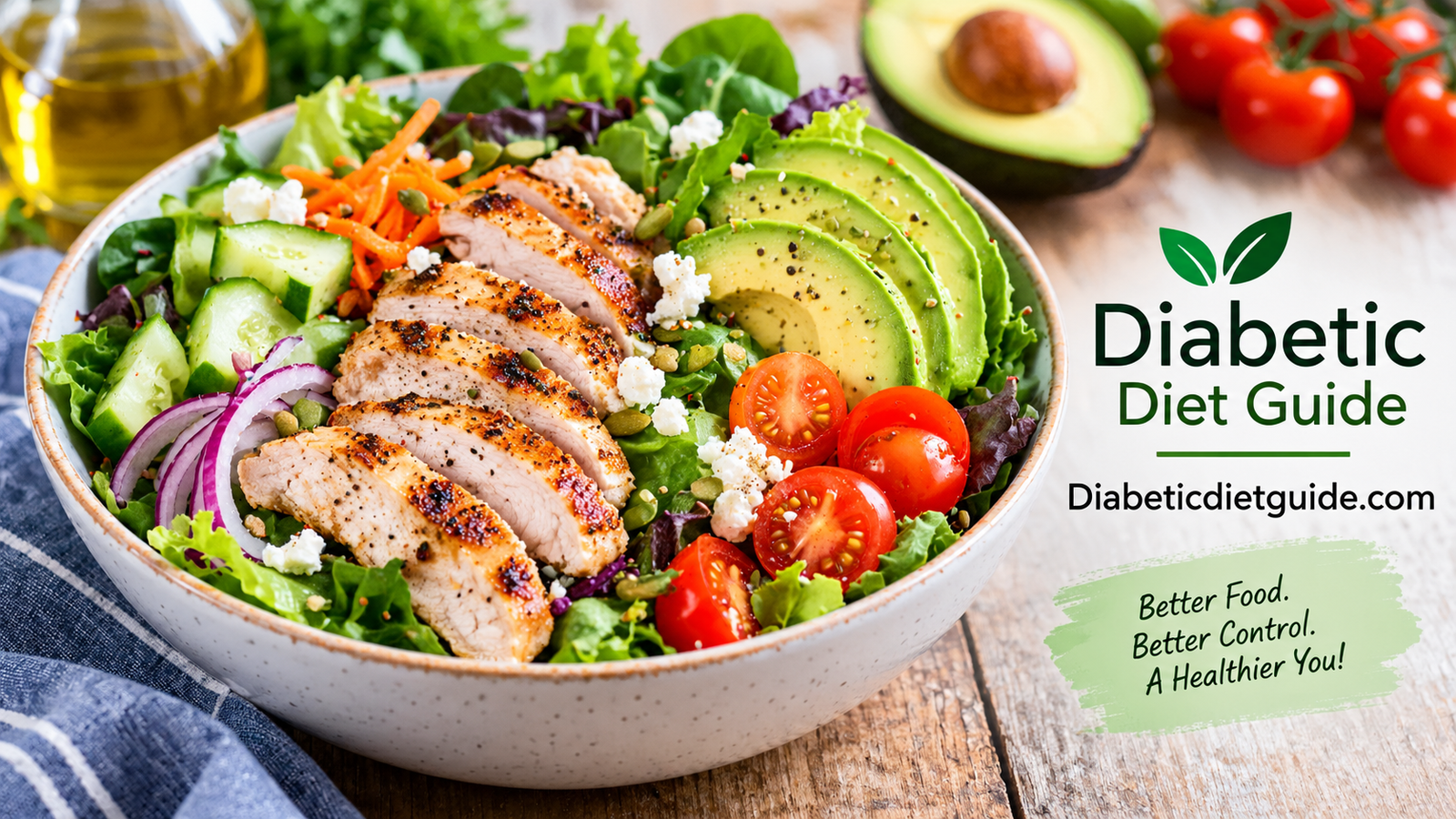
Diabetic Salad Recipes: Filling, Flavorful Bowls That Keep Blood Sugar Steady
A salad can be the smartest meal on your table or a plate of hidden sugar wearing a healthy costume. This guide shows you how to build the first kind, with tested recipes, dressing formulas, portion guidance, and meal prep habits that make salad something you actually look forward to.
This article contains Amazon affiliate links. As an Amazon Associate we earn from qualifying purchases, at no extra cost to you.
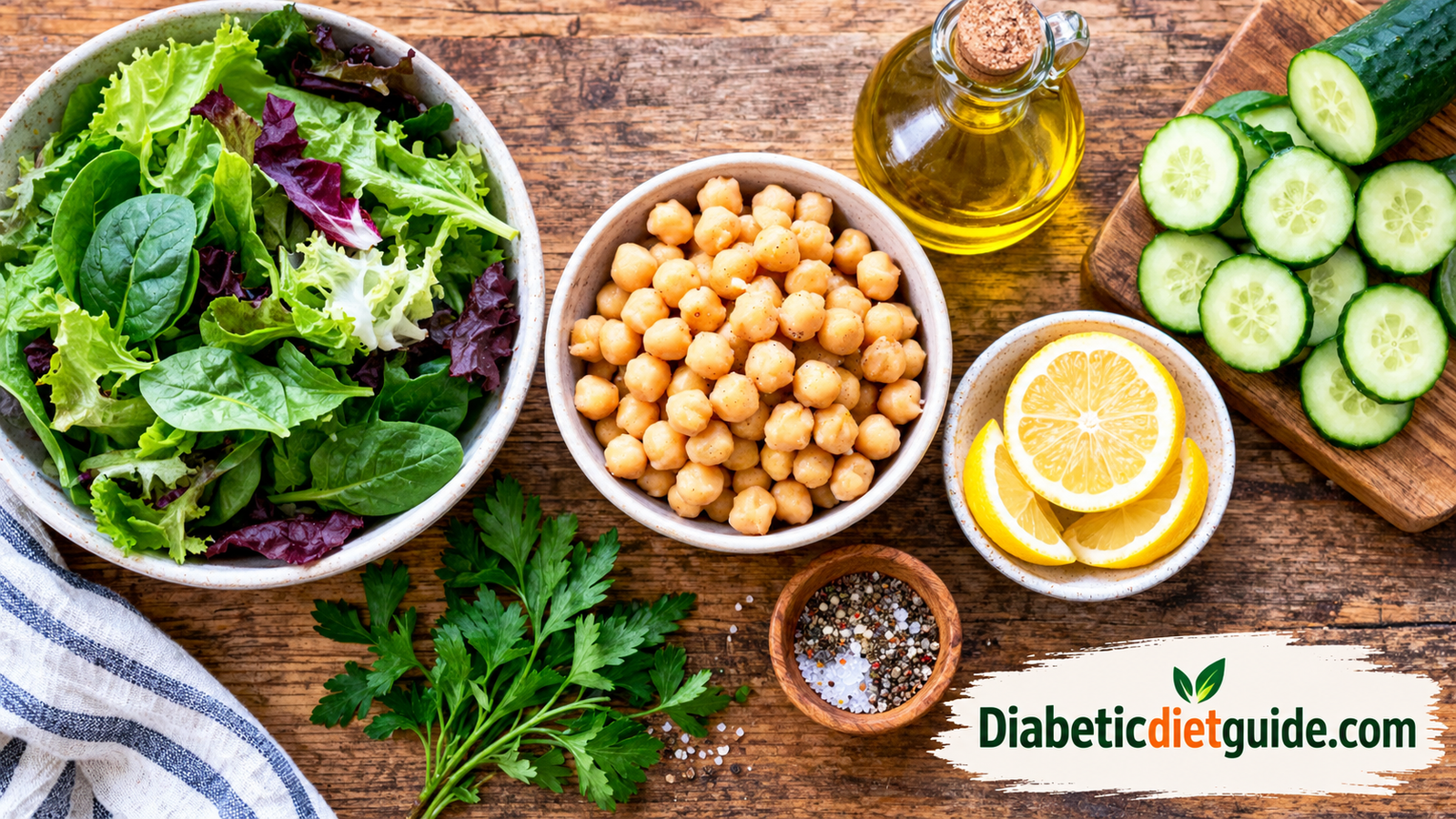
Ask ten people with diabetes what they eat when they want something light and healthy, and most will say salad. Ask the same ten how their blood sugar looks two hours later, and you may hear some surprising answers. A bowl of lettuce topped with dried cranberries, candied pecans, crispy noodles, and a sweet bottled dressing can carry more carbohydrate than a sandwich. A salad built with the right pieces, on the other hand, can leave you full for hours with a gentle, predictable glucose curve.
The difference is not magic and it is not about eating sad, plain leaves. It comes down to a handful of building blocks: non-starchy vegetables for volume, protein for staying power, fiber for a slower digestive pace, fat for flavor, and a dressing that adds taste without a hidden load of sugar. Once you understand how those blocks fit together, you can invent your own diabetic salad recipes in five minutes without measuring anything.
Below you will find twelve in-depth sections covering the science in plain language, a plate formula you can memorize, the best greens and vegetables, more than a dozen complete recipes, dressing formulas, advice on fruit and grains, meal prep strategies, and the mistakes that quietly sabotage a good salad. Nutrition numbers throughout are approximate and meant to guide you. Your own meter, continuous glucose monitor, and care team are the final word on what works for your body.
What Makes a Salad Diabetic-Friendly?
A diabetic-friendly salad is one that delivers satisfying flavor and real nourishment while keeping the total carbohydrate load in a range that suits your personal targets. That sounds clinical, so let us translate it into everyday terms. It means the salad is mostly vegetables, contains a meaningful serving of protein, includes some healthy fat, brings fiber from more than one source, and uses carbohydrate-rich extras like fruit, grains, beans, or croutons in deliberate, measured amounts rather than by the handful.
There is no single carbohydrate number that fits everyone. Some people aim for around 30 to 45 grams of carbohydrate at a meal, others aim lower, and some work with a dietitian on a number tailored to their medication, activity, and goals. What stays constant is the principle: know where your carbohydrates are coming from and make each one earn its place on the plate.
The five qualities of a salad that behaves well
- Vegetable-forward volume. At least half the bowl should be leafy greens and other non-starchy vegetables. They are low in digestible carbohydrate, high in water and fiber, and they make the meal visually generous.
- A real protein anchor. Aim for roughly 20 to 35 grams of protein from chicken, fish, eggs, tofu, beans, cottage cheese, or lean meat. Protein slows stomach emptying and keeps hunger quiet.
- Healthy fats in small, deliberate amounts. Olive oil, avocado, nuts, and seeds add flavor and help you absorb fat-soluble vitamins from the vegetables, but they are calorie dense, so measure them.
- Fiber from several directions. Beans, lentils, chia, flax, berries, and crunchy raw vegetables all contribute. Fiber blunts the speed at which carbohydrate reaches your bloodstream.
- A dressing you control. Homemade dressings usually contain a fraction of the sugar and sodium of bottled versions, and they taste fresher too.
Why salad gets a bad reputation with some people
Many people with diabetes try salad once, feel hungry an hour later, and decide it simply does not work for them. Usually the issue is that the salad was a pile of lettuce with a few tomatoes and no protein or fat. That is a side dish, not a meal. Others do everything right and then drown the bowl in a creamy dressing that lists sugar as the second ingredient. When you fix these two problems, salad becomes one of the most reliable meals you can eat.
Before you eat, look at your bowl and ask three questions. Is half of it vegetables? Can I point to the protein? Do I know how much dressing and how many carbohydrate-heavy toppings are in here? Three yeses means you are in good shape.
If you like having a bigger framework around your eating, our weekly diabetic meal plan shows how salads can slot in alongside cooked meals, and the guide to diabetic lunch menu ideas offers plenty of variety for the midday slot where salads shine.
Pack your salad like a proA leak-proof container with a separate dressing compartment keeps greens crisp until lunch.
Shop salad containers on AmazonHow Salads Affect Blood Sugar
To build better salads, it helps to know what is happening inside your body after you eat one. Carbohydrate is the nutrient with the biggest direct effect on blood glucose. Your digestive system breaks starches and sugars into glucose, which enters the bloodstream, and insulin (your own or from medication) helps move that glucose into cells. Protein and fat have smaller direct effects, but they change the timing of the whole process.
Glycemic index versus glycemic load
You may have seen glycemic index, or GI, used to rank foods by how quickly they raise glucose. It is a useful rough guide, but it ignores portion size. Glycemic load fixes that by combining the speed with the amount of carbohydrate you actually eat. Watermelon, for example, has a high glycemic index but a modest glycemic load in a normal slice because it is mostly water. If you have ever wondered whether a favorite summer fruit is allowed, our article on watermelon and diabetes walks through this exact idea.
Most salad vegetables, including lettuce, cucumber, peppers, radishes, celery, and mushrooms, have such a small amount of digestible carbohydrate that their glycemic load is close to zero. That is why they are the foundation of any diabetic salad. The glycemic load only starts to climb when you add the extras.
The role of fiber, protein, and fat
Fiber is a carbohydrate your body cannot fully digest, so it does not raise glucose the way sugar does, and soluble fiber (found in beans, oats, chia, and the flesh of many fruits and vegetables) forms a gel that slows absorption. General recommendations for adults often land somewhere between 25 and 38 grams of fiber a day, and most people fall well short. Salads are one of the easiest places to close the gap.
Protein and fat slow gastric emptying, which means the carbohydrate in your meal reaches your bloodstream more gradually. This is why a salad with grilled salmon and avocado tends to produce a flatter curve than the identical vegetables eaten alone. It is also why very large fatty meals can cause a delayed rise some hours later in certain people, so portions matter on both ends.
Does the order you eat matter?
Several small studies have suggested that eating vegetables and protein before carbohydrate can lower the after-meal glucose peak compared with eating the same foods in the opposite order. The research is not large enough to be a rule, but it costs nothing to try. If your salad includes a scoop of quinoa or a few pieces of fruit, eat the greens and protein first and finish with the carbohydrate. Check your own readings to see whether it helps you.
A word about vinegar
Vinegar-based dressings may modestly reduce the glucose rise after a carbohydrate-containing meal, according to some small trials. Do not expect a dramatic effect, and do not treat it as a substitute for medication. Still, a tangy vinaigrette is a delicious, low-cost habit that fits perfectly with the way most of us want to eat anyway.
If you take insulin or medications that can cause low blood sugar, changes in how much carbohydrate you eat may require adjustments. Talk with your doctor or diabetes educator before making big shifts, and use the numbers in this article as a starting point rather than a prescription.
If you are working on insulin sensitivity more broadly, the insulin resistance diet plan pairs nicely with the salad strategies here, and anyone at an earlier stage can find a gentle starting point in the menu for prediabetes.
Learn what your own body doesTesting before and two hours after a new salad is the fastest way to learn which combinations work for you.
Browse glucose meters on AmazonBuild a Balanced Salad: The Plate Formula
Recipes are wonderful, but a formula is freedom. Once you memorize the structure of a balanced salad, you can open the refrigerator on a tired Tuesday and assemble something excellent from whatever you find. The formula below is based on the familiar plate method used in diabetes education: half non-starchy vegetables, a quarter protein, and a quarter smart carbohydrate, with fat folded in through the dressing and toppings.
| Layer | How much | Examples | Approx. carbs |
|---|---|---|---|
| Base greens | 2 to 3 cups | Romaine, spinach, arugula, mixed spring greens, kale | 2 to 5 g |
| Extra vegetables | 1 to 2 cups | Cucumber, tomato, peppers, radish, shredded cabbage, broccoli, mushrooms | 4 to 10 g |
| Protein | 3 to 5 oz cooked | Grilled chicken, salmon, tuna, eggs, tofu, shrimp, cottage cheese | 0 to 3 g |
| Smart carbohydrate | 1/3 to 1/2 cup | Chickpeas, lentils, black beans, quinoa, berries, a few apple slices | 10 to 20 g |
| Healthy fat | 1 to 2 tbsp | Olive oil, avocado, walnuts, almonds, pumpkin seeds, feta | 1 to 4 g |
| Flavor boosters | To taste | Fresh herbs, lemon, vinegar, mustard, garlic, spices, olives | 0 to 2 g |
Notice that the formula gives ranges rather than exact portions. A person who is very active or has higher carbohydrate targets can sit at the upper end of the smart carbohydrate row. Someone following a lower-carb approach can skip it entirely and let the protein, vegetables, and fats carry the meal.
A five-minute assembly routine
- Fill the bowl halfway with greens. Toss them lightly with a teaspoon of dressing so every leaf is coated.
- Pile on two or three colorful vegetables. Color is a practical stand-in for variety of nutrients.
- Add the protein, warm or cold, in a portion about the size of your palm.
- Measure the smart carbohydrate, even if you only do it once to train your eye. A quarter-cup measuring scoop is enough.
- Finish with the crunchy fat, a spoonful of seeds or chopped nuts, and a squeeze of lemon.
Texture is not optional
People abandon healthy eating habits when meals feel monotonous. Every great salad has contrast: something crisp, something creamy, something chewy, and something bright. Think crunchy cucumber against soft avocado, or chewy lentils against peppery arugula. If your salad feels boring, the fix is almost always a missing texture or a missing acid, not more food.
When you are short on time or energy, the collection of 5-ingredient diabetic recipes and the no-cook diabetic meals guide both pair beautifully with this formula, since many of those ideas are essentially salads in disguise.
Bowls built for big saladsA wide, deep bowl lets you toss greens properly without half of them landing on the counter.
Shop salad bowl sets on AmazonThe Best Greens and Non-Starchy Vegetables for Diabetic Salads
The base of your salad does more work than any other component. It determines the volume, the crunch, the micronutrient content, and how much room is left for everything else. Choosing a variety of greens and vegetables also prevents the flavor fatigue that sends people back to takeout menus.
Leafy greens worth rotating
Dark, leafy greens are especially valuable. Spinach, kale, and arugula supply magnesium, potassium, and vitamin K, and some research connects higher intake of leafy green vegetables with better long-term blood sugar outcomes. Even if the research is still developing, there is nothing to lose by eating more of them. Rotate your base through the week so your palate stays interested: tender baby spinach on Monday, crisp romaine on Tuesday, peppery arugula on Wednesday, and massaged kale on Thursday.
| Green | Approx. net carbs | Flavor and texture | Best used in |
|---|---|---|---|
| Romaine | 2 g | Crisp, mild, sturdy | Cobb salads, taco boats, Caesar-style bowls |
| Baby spinach | 1 g | Tender, slightly sweet | Fruit and nut salads, warm salads |
| Arugula | 1 g | Peppery and bright | Bean salads, salmon, roasted vegetables |
| Kale (massaged) | 4 g | Chewy, earthy | Meal prep salads, grain bowls |
| Mixed spring greens | 2 g | Soft and varied | Everyday side or base salads |
| Shredded cabbage | 4 g | Crunchy, holds up for days | Slaws, jar salads, make-ahead lunches |
| Butter lettuce | 1 g | Soft, delicate | Lettuce wraps, light vinaigrettes |
Vegetables that add crunch, color, and fiber
Beyond the greens, non-starchy vegetables are what turn a plain bowl into something that looks like a restaurant dish. Cucumbers, bell peppers, radishes, celery, tomatoes, broccoli florets, cauliflower, shredded carrots, red onion, mushrooms, asparagus, zucchini, and snap peas all contribute volume with relatively little carbohydrate. Raw carrots and tomatoes contain a bit more sugar than the others, but in typical salad portions they are perfectly reasonable.
Cooking changes the experience. Roasted broccoli, charred peppers, and grilled zucchini bring a deep, savory sweetness that raw vegetables cannot, and warm vegetables over cold greens create a pleasant contrast. If you own an air fryer, it is an easy way to crisp chickpeas, cauliflower, or chicken for topping, and our air fryer diabetic recipes collection has more ideas along those lines.
Vegetables to measure rather than pile
A few vegetables are starchier and deserve a little more attention: corn, peas, beets, and sweet potato. They are nutritious, and nothing is forbidden, but a half-cup of corn adds around 15 grams of carbohydrate. Treat them as part of your smart carbohydrate allowance instead of as free vegetables.
Wash and spin-dry greens as soon as you get home, then store them in a container lined with a dry paper towel. Moisture is what turns leaves slimy. Properly dried greens often stay fresh for five days or more.
A salad spinner pays for itselfDry greens hold dressing better, stay crisp longer, and taste noticeably fresher.
Shop salad spinners on AmazonProtein-Packed Diabetic Salad Recipes
Protein is what transforms a salad from a snack into a meal. It supports muscle, keeps you satisfied, and softens the glucose impact of anything else in the bowl. The four recipes below lean on easy, affordable proteins and take less than 25 minutes. For more ideas that use this approach all week long, browse the high-protein diabetic menu.
Greek Chicken Salad with Lemon-Oregano Dressing
- Prep 15 min
- Cook 10 min
- Serves 2
- About 12 g carbs
- About 38 g protein
Ingredients
- 8 oz chicken breast, sliced thin
- 4 cups chopped romaine
- 1 cup diced cucumber
- 1 cup cherry tomatoes, halved
- 1/4 cup sliced red onion
- 1/4 cup crumbled feta
- 8 Kalamata olives, halved
- 2 tbsp olive oil, divided
- 2 tbsp lemon juice
- 1 tsp dried oregano
- 1 small garlic clove, grated
- Salt and pepper
Method
- Toss the chicken with 1 tablespoon olive oil, half the oregano, salt, and pepper. Cook in a hot skillet for 4 to 5 minutes per side until cooked through. Rest for 5 minutes, then slice.
- Whisk the remaining olive oil, lemon juice, remaining oregano, garlic, and a pinch of salt in a small bowl.
- Combine romaine, cucumber, tomatoes, and onion in a large bowl. Add half the dressing and toss.
- Divide between two plates and top with chicken, feta, and olives. Drizzle with the remaining dressing.
Nutrition figures are estimates per serving and vary with brands and portions. Variation: swap the chicken for shrimp or chickpeas.
Tuna and White Bean Salad with Arugula
- Prep 10 min
- No cooking
- Serves 2
- About 22 g carbs
- About 8 g fiber
Ingredients
- 1 can (5 oz) tuna in olive oil or water, drained
- 3/4 cup canned white beans, rinsed
- 3 cups arugula
- 1/2 cup thinly sliced celery
- 2 tbsp chopped parsley
- 2 tbsp red wine vinegar
- 1 tbsp olive oil
- 1 tsp Dijon mustard
- Black pepper and a pinch of salt
Method
- Whisk vinegar, olive oil, mustard, pepper, and salt in a large bowl.
- Fold in the beans, celery, parsley, and flaked tuna. Let it sit for 5 minutes so the beans absorb the dressing.
- Place the arugula on plates and spoon the tuna mixture over the top.
Choose no-salt-added beans when possible, and rinse well to cut sodium by about a third. This one keeps well for lunch the next day if you store the arugula separately.
Salmon and Cucumber Dill Salad
- Prep 10 min
- Cook 12 min
- Serves 2
- About 8 g carbs
- About 32 g protein
Ingredients
- 2 salmon fillets (4 to 5 oz each)
- 1 tsp olive oil
- 1 large cucumber, thinly sliced
- 4 cups mixed greens
- 1/4 cup plain Greek yogurt
- 1 tbsp lemon juice
- 1 tbsp chopped fresh dill
- 1 tbsp capers, drained
- Salt and pepper
Method
- Heat the oven to 400°F. Rub the salmon with olive oil, season, and bake for 10 to 12 minutes until it flakes easily.
- Stir together yogurt, lemon juice, dill, and a little pepper to make a creamy sauce.
- Arrange greens and cucumber on plates. Flake the salmon on top and spoon over the sauce. Scatter capers on top.
Fatty fish like salmon brings omega-3 fats, which fit well into a heart-conscious eating pattern. See the heart-healthy diabetic menu for more along these lines. Plain Greek yogurt works well in sauces, and our roundup of the best yogurt for diabetes can help you pick one.
Soft-Boiled Egg and Asparagus Salad
- Prep 10 min
- Cook 10 min
- Serves 2
- About 9 g carbs
- About 16 g protein
Ingredients
- 4 eggs
- 1 bunch asparagus, trimmed
- 3 cups baby spinach
- 1/4 cup shaved Parmesan
- 2 tbsp toasted pumpkin seeds
- 1 tbsp olive oil
- 1 tbsp lemon juice
- 1 tsp whole-grain mustard
Method
- Boil eggs for 6 to 7 minutes for a jammy center, then cool in cold water and peel.
- Blanch asparagus in boiling water for 2 minutes, drain, and cool.
- Whisk oil, lemon juice, and mustard. Toss with spinach and asparagus.
- Top with halved eggs, Parmesan, and pumpkin seeds.
Eggs are a budget-friendly protein. Wondering how many are reasonable? Our guide on how many eggs a diabetic can eat in a day explains the current thinking.
Perfectly cooked protein, every timeAn instant-read thermometer removes the guesswork, so chicken stays juicy and salmon never turns dry.
Shop meat thermometers on AmazonVegetarian and Plant-Based Diabetic Salad Recipes
Plant proteins such as beans, lentils, chickpeas, edamame, and tofu bring fiber and protein in a single package, which is a big advantage for blood sugar. They do contain carbohydrate, so portions matter, but the fiber slows digestion enough that many people find legumes produce a gentler rise than the same grams of carbohydrate from refined grains. If you eat mostly plants, the dedicated guides to a diabetic meal plan for vegetarians and a vegan diabetic meal plan go deeper on getting enough protein, iron, and B12.
Smoky Chickpea and Cucumber Crunch Bowl
- Prep 15 min
- Cook 20 min
- Serves 2
- About 30 g carbs
- About 9 g fiber
Ingredients
- 1 can (15 oz) chickpeas, rinsed and dried, about 1 1/2 cups
- 1 tsp smoked paprika
- 1 tbsp olive oil
- 4 cups chopped romaine
- 1 cup diced cucumber
- 1/2 cup diced red pepper
- 1/4 avocado, sliced
- 2 tbsp tahini
- 1 tbsp lemon juice
- 2 to 3 tbsp warm water
Method
- Toss chickpeas with olive oil, paprika, and salt. Roast at 425°F for 20 minutes, shaking the pan once, until crisp.
- Whisk tahini, lemon juice, and warm water until pourable.
- Build bowls with romaine, cucumber, and pepper. Top with roasted chickpeas and avocado, then drizzle with tahini sauce.
Dry chickpeas thoroughly before roasting so they crisp rather than steam. Leftover roasted chickpeas make an excellent crunchy snack, and the diabetic snack ideas page has more.
Warm Lentil and Roasted Vegetable Salad
- Prep 15 min
- Cook 30 min
- Serves 4
- About 28 g carbs
- About 10 g fiber
Ingredients
- 1 cup dry green or brown lentils
- 1 zucchini and 1 red pepper, chopped
- 1 cup cauliflower florets
- 2 tbsp olive oil, divided
- 3 cups baby spinach
- 2 tbsp balsamic vinegar
- 1 tsp Dijon mustard
- 1/4 cup chopped walnuts
- 1/4 cup crumbled goat cheese (optional)
Method
- Simmer lentils in plenty of water for 20 to 25 minutes until tender but not mushy. Drain.
- Toss the vegetables with 1 tablespoon oil and roast at 425°F for 20 to 25 minutes.
- Whisk the remaining oil, balsamic, and mustard. Toss with warm lentils.
- Fold in the roasted vegetables and spinach so it wilts slightly. Top with walnuts and goat cheese.
This salad is delicious warm or cold and keeps for four days in the refrigerator, which makes it a great base for meal prep. The recipe fits the style of the high-fiber diabetic meal plan.
Edamame and Sesame Slaw
- Prep 15 min
- No cooking
- Serves 3
- About 14 g carbs
- About 7 g fiber
Ingredients
- 1 1/2 cups shelled edamame, thawed
- 3 cups shredded red and green cabbage
- 1/2 cup shredded carrot
- 2 green onions, sliced
- 2 tbsp rice vinegar
- 1 tbsp toasted sesame oil
- 1 tbsp low-sodium soy sauce
- 1 tsp grated ginger
- 1 tbsp sesame seeds
Method
- Whisk vinegar, sesame oil, soy sauce, and ginger in a large bowl.
- Add cabbage, carrot, edamame, and green onions. Toss well.
- Chill for 15 minutes to soften the cabbage slightly, then sprinkle with sesame seeds.
Love these flavors? The collection of Chinese diabetic recipes builds on the same pantry staples.
A tablespoon or two of nuts adds crunch, healthy fat, and a little protein. Our guide to the best nuts for diabetics compares options so you can choose your topper wisely.
Stock a bean-friendly pantryCanned beans labeled no salt added make fast, fiber-rich salads possible any night of the week.
Browse beans and lentils on AmazonLow-Carb Diabetic Salad Recipes
Some people manage their glucose best with a lower carbohydrate intake, and salad is a natural fit. The trick is making sure that cutting carbohydrate does not mean cutting satisfaction. When you remove the croutons and the sweet dressing, replace them with texture and richness: crispy bacon bits or roasted nuts, ripe avocado, good cheese, soft eggs, and a punchy dressing. If you are exploring this style of eating more seriously, start with our guides to keto diabetic recipes and meal planning and the low-carb weekly diabetic menu.
Cobb Salad Without the Fuss
- Prep 15 min
- Cook 10 min
- Serves 2
- About 9 g carbs
- About 36 g protein
Ingredients
- 4 cups chopped romaine
- 2 hard-boiled eggs, sliced
- 6 oz cooked chicken breast, diced
- 3 slices cooked bacon, crumbled
- 1/2 avocado, diced
- 1/2 cup cherry tomatoes, halved
- 2 tbsp crumbled blue cheese
- 2 tbsp olive oil
- 1 tbsp red wine vinegar
- 1/2 tsp Dijon mustard
Method
- Whisk the oil, vinegar, and mustard in a small bowl with a pinch of salt and pepper.
- Arrange romaine on two plates or in wide bowls.
- Lay rows of chicken, egg, bacon, avocado, tomato, and blue cheese over the greens.
- Drizzle with dressing just before eating.
Bacon is salty, so keep the added salt low and use it as an accent rather than the main attraction.
Taco Salad in Lettuce Boats
- Prep 10 min
- Cook 12 min
- Serves 3
- About 10 g carbs
- About 28 g protein
Ingredients
- 1 lb lean ground turkey or beef
- 2 tsp chili powder, 1 tsp cumin, 1/2 tsp garlic powder
- 6 to 9 large romaine or butter lettuce leaves
- 1 cup diced tomatoes
- 1/2 cup shredded cheddar
- 1/2 avocado, diced
- 1/4 cup plain Greek yogurt, as sour cream
- Lime wedges and cilantro
Method
- Brown the meat in a skillet, breaking it up. Stir in spices and 2 tablespoons water, then cook 2 more minutes.
- Spoon meat into lettuce leaves.
- Top with tomato, cheddar, avocado, a dollop of yogurt, cilantro, and a squeeze of lime.
Mix your own spices to avoid the sodium and sugar in many store-bought taco packets. Want more bold flavors? Try the Mexican diabetic food recipes.
Zucchini Ribbon Caprese
- Prep 15 min
- No cooking
- Serves 2
- About 9 g carbs
- About 14 g protein
Ingredients
- 2 medium zucchini, shaved into ribbons
- 1 cup cherry tomatoes, halved
- 4 oz fresh mozzarella pearls
- 1/4 cup torn basil
- 1 tbsp olive oil
- 1 tbsp balsamic vinegar
- Salt, pepper, and chili flakes
Method
- Salt the zucchini ribbons lightly and let them sit for 5 minutes, then pat dry.
- Toss with tomatoes, mozzarella, and basil.
- Dress with oil and balsamic and finish with pepper and chili flakes.
Add grilled shrimp or a handful of white beans to make this a complete meal.
Lower-carb salads work especially well at dinner, when many people prefer something lighter. The diabetic dinner menu ideas page shows how to pair them with warm sides.
Turn vegetables into noodlesA spiralizer or julienne peeler makes zucchini and cucumber ribbons in seconds.
Shop spiralizers on AmazonFiber-Rich Grain and Bean Salads
Grain and bean salads are the hearty, make-ahead workhorses of the salad world. They hold up for days, travel well, and feel like a proper meal. They also carry more carbohydrate than leafy salads, so the key is portion control and choosing the whole, intact, high-fiber options. A half-cup cooked scoop is a good starting measure.
| Food | Approx. carbs | Approx. fiber | Notes |
|---|---|---|---|
| Lentils | 20 g | 8 g | High in protein and fiber, cook quickly |
| Black beans | 20 g | 7 g | Hearty, great with peppers and lime |
| Chickpeas | 22 g | 6 g | Roast, mash, or toss in whole |
| Quinoa | 20 g | 3 g | Complete protein, light texture |
| Pearled barley | 22 g | 3 g | Chewy, rich in beta-glucan fiber |
| Bulgur | 17 g | 4 g | Fast cooking, nutty flavor |
| Brown rice | 22 g | 2 g | Familiar, but less fiber than the others |
For a deeper comparison of popular choices, our post on white rice, brown rice, and quinoa for blood sugar breaks down how they behave in practice, and the article asking is quinoa good for diabetics covers the truth about this popular grain.
Herby Quinoa and Cucumber Salad
- Prep 15 min
- Cook 15 min
- Serves 4
- About 24 g carbs
- About 7 g protein
Ingredients
- 1 cup dry quinoa, rinsed
- 1 large cucumber, diced
- 1 cup cherry tomatoes, quartered
- 1/2 cup chopped parsley and mint
- 1/4 cup chopped almonds
- 3 tbsp olive oil
- 3 tbsp lemon juice
- Salt and pepper
Method
- Cook quinoa according to package directions. Spread on a tray to cool completely.
- Whisk the oil and lemon juice with salt and pepper.
- Toss the cooled quinoa with the vegetables, herbs, and dressing. Fold in the almonds just before serving.
Serve over a bed of spinach and top with grilled chicken or chickpeas to raise the protein and bring down the carbohydrate per bite.
Black Bean and Roasted Pepper Salad
- Prep 15 min
- No cooking
- Serves 4
- About 26 g carbs
- About 9 g fiber
Ingredients
- 2 cans (15 oz) black beans, rinsed
- 1 cup jarred roasted red peppers, chopped
- 1/2 cup diced red onion
- 1 jalapeno, minced (optional)
- 1/3 cup chopped cilantro
- 2 tbsp olive oil
- 3 tbsp lime juice
- 1 tsp ground cumin
Method
- Combine beans, peppers, onion, jalapeno, and cilantro in a large bowl.
- Whisk oil, lime juice, and cumin and pour over the top.
- Chill for 30 minutes so the flavors mingle. Serve over greens or with grilled fish.
Skip the corn that many versions include, or limit it to a couple of tablespoons.
Pros and cons of grain-based salads
Pros
- Filling and satisfying for hours
- Excellent source of fiber when beans or whole grains are used
- Hold up for several days, perfect for meal prep
- Budget friendly and easy to scale
Cons
- Higher in carbohydrate, so portions need measuring
- Easy to overserve from a large batch
- Can feel heavy if there are not enough raw vegetables
- Canned beans may be high in sodium unless rinsed
If you want to double down on fiber, the high-fiber diabetic meal plan offers a complete framework, and our review of the best fiber supplements for diabetics covers options for days when food alone falls short.
Whole grains for the pantryBuying quinoa, barley, and lentils in bulk keeps salads cheap and varied.
Shop whole grains on AmazonDressings That Will Not Spike Your Blood Sugar
Dressing is where a healthy salad most often goes wrong. Bottled dressings can contain added sugar, corn syrup, refined oils, and a surprising amount of sodium, and a typical restaurant pour is two to four times a labeled serving. Making your own takes less than two minutes, tastes dramatically better, and puts you in control.
The master vinaigrette formula
Use three parts oil to one part acid, plus a pinch of salt, a little mustard to emulsify, and flavorings. For a lighter dressing, shift toward two parts oil to one part acid. Shake everything in a jar and refrigerate for up to a week. Variations are endless: swap in lemon juice, red wine vinegar, balsamic, apple cider vinegar, or lime. Add garlic, shallot, herbs, smoked paprika, or a drop of hot sauce.
| Dressing | How to make it | Approx. carbs | Best on |
|---|---|---|---|
| Lemon-herb vinaigrette | 3 tbsp olive oil, 1 tbsp lemon juice, 1 tsp mustard, chopped herbs, salt | 1 g | Greek salads, chicken, grain bowls |
| Creamy yogurt-tahini | 1/4 cup Greek yogurt, 1 tbsp tahini, lemon juice, garlic, water to thin | 3 g | Chickpea salads, roasted vegetables |
| Balsamic-Dijon | 2 tbsp olive oil, 1 tbsp balsamic, 1 tsp Dijon, black pepper | 3 g | Lentil salads, spinach, goat cheese |
| Avocado-lime | 1/2 avocado, juice of 1 lime, 1/4 cup water, cilantro, salt, blended smooth | 3 g | Taco salads, black bean bowls, shrimp |
How to read a store-bought dressing label
- Check serving size first. Two tablespoons is common, but you will likely pour more.
- Look at added sugars. Aim for 2 grams or less per serving. Fat-free dressings often compensate with sugar.
- Watch sodium. More than 300 milligrams per serving adds up fast, especially if you are managing blood pressure. The low sodium diabetic meal plan offers more guidance.
- Scan the first ingredients. Oil, vinegar, and herbs are good signs. Sugar, high fructose corn syrup, or a long list of thickeners are not.
Smart ways to dress a salad
Serve dressing on the side and dip your fork into it before each bite, a classic trick that delivers flavor with far less dressing. When you do toss, start with one tablespoon, mix, and add more only if needed. Dressing a salad lightly beforehand also helps greens taste seasoned from within. If you enjoy sweetness in a dressing, a tiny amount of a non-nutritive sweetener or a dash of fruit juice is plenty, and our comparison of stevia versus Splenda can help you choose one. You can also browse our list of the best sugar-free condiments for ready-made options.
Extra virgin olive oil is a cornerstone of Mediterranean-style eating, which has a strong track record for heart and metabolic health. It is calorie dense at about 120 calories per tablespoon, so measure it, but there is no reason to avoid it.
Shake up your own dressingsA small shaker bottle emulsifies vinaigrette in seconds and doubles as storage.
Shop dressing shakers and olive oil on AmazonUsing Fruit in Salads Without the Sugar Surprise
Fruit can make a salad sing. A few strawberries against peppery arugula, a handful of raspberries with spinach and walnuts, or thin apple slices alongside sharp cheddar all add brightness that vegetables alone cannot. Fruit is not off limits for people with diabetes. It is simply a carbohydrate source that deserves the same measuring you would give a scoop of quinoa.
| Fruit | Portion | Approx. carbs | Why it works |
|---|---|---|---|
| Strawberries, sliced | 1/2 cup | 6 g | Juicy and sweet with plenty of vitamin C |
| Raspberries | 1/2 cup | 7 g | One of the highest-fiber fruits |
| Blackberries | 1/2 cup | 7 g | Tart, fiber-rich, deeply colored |
| Blueberries | 1/2 cup | 11 g | Antioxidants, but measure carefully |
| Apple, thin slices | 1/2 small | 10 to 13 g | Crisp texture, keep the skin on for fiber |
| Pear, diced | 1/2 small | 12 g | Pairs well with blue cheese and walnuts |
| Orange segments | 1/2 medium | 8 g | Bright acid for fennel and spinach salads |
| Dried cranberries, sweetened | 2 tbsp | 18 g | Easy to overdo, use sparingly or skip |
Whole fruit beats juice, and fresh versus frozen is a close call
Whole fruit contains fiber that juice lacks, so the sugar enters your bloodstream more slowly. Frozen fruit is picked ripe and frozen quickly, which means it can match fresh in nutrition and often costs less; we compare the two in detail in our guide to fresh versus frozen fruit for diabetics. Citrus, a classic salad partner, is covered in the article on whether a diabetic can eat oranges, and bananas, which rarely appear in salads but often raise questions, have their own explainer on whether a diabetic can eat bananas.
Pair fruit with protein and fat
A simple strategy is to never let fruit travel alone. Combine it with nuts, cheese, yogurt, or a protein, and the glucose response often softens. A strawberry spinach salad with walnuts and a little feta, for instance, balances sweetness, fat, and tang in a single bowl.
Strawberry Spinach Salad with Walnuts and Feta
- Prep 10 min
- No cooking
- Serves 2
- About 14 g carbs
- About 8 g protein
Ingredients
- 5 cups baby spinach
- 1 cup sliced strawberries
- 1/4 cup chopped walnuts
- 1/4 cup crumbled feta
- 2 tbsp thinly sliced red onion
- 2 tbsp olive oil
- 1 tbsp balsamic vinegar
- Black pepper
Method
- Whisk oil, balsamic, and pepper.
- Toss spinach and onion with half the dressing.
- Top with strawberries, walnuts, and feta, then drizzle with the rest.
Add 4 ounces of grilled chicken per person to turn it into a full meal.
If a sweet craving strikes after your salad, the collection of best dessert recipes for diabetics offers fruit-forward options that keep things sensible.
Fresh citrus makes every dressing betterA sturdy hand juicer gets every drop from lemons and limes with no mess.
Shop citrus juicers on AmazonMeal Prep, Storage, and Make-Ahead Salad Strategies
The best salad is the one that is actually waiting for you at noon when you are hungry and tempted by the vending machine. Meal prep turns good intentions into reality. The secret to prepping salads that do not turn into soggy disappointments is simple: keep wet and dry ingredients apart and dress at the last moment.
The jar layering method
For a portable lunch, use a wide-mouth quart jar and build in this order from the bottom: dressing, hard vegetables (carrots, cucumbers, peppers), beans or grains, protein, soft vegetables and cheese, nuts and seeds, and finally the greens on top. When you are ready to eat, shake the jar into a bowl. Because the dressing stays at the bottom, the leaves stay crisp for up to four days.
| Day | Salad | Prep ahead |
|---|---|---|
| Monday | Greek chicken salad | Cook chicken, chop vegetables, mix dressing |
| Tuesday | Black bean and pepper salad | Combine bean mixture, store with greens separate |
| Wednesday | Salmon dill salad | Bake extra salmon on Monday night, mix yogurt sauce |
| Thursday | Lentil and roasted vegetable bowl | Cook lentils on Sunday, roast vegetables |
| Friday | Edamame sesame slaw | Shred cabbage and carrots, keep dressing separate |
How long things keep
- Washed, dry greens: about 5 days in a sealed container with a paper towel.
- Cooked chicken, fish, and eggs: 3 to 4 days in the refrigerator. Hard-boiled eggs in the shell keep up to a week.
- Cooked grains and legumes: 4 to 5 days.
- Homemade vinaigrettes: about a week. Yogurt or avocado dressings: 2 to 3 days.
- Cut avocado: add on the day you eat it, or toss with lemon juice and press wrap directly on the surface.
Cool cooked foods quickly, keep your refrigerator at 40°F or below, and do not leave a prepared salad at room temperature for more than two hours. If something smells or looks off, throw it out.
Make prep part of a bigger routine
Prepping salads fits neatly into a broader plan. Many readers combine a Sunday salad prep session with the structure in our 7-day diabetic menu, while those with more budget concerns can lean on the strategies in the low-income diabetic menu. If you work outside the home, the diabetic menu for working adults suggests more grab-and-go ideas. And for anyone cooking in bulk for the weeks ahead, our diabetic meal plan for weight loss shows how salads support calorie goals.
Salad crackers and bread are a common companion at lunch. If you want one, see which options work best in our guides to the best crackers for diabetics and the best bread for diabetics.
Glass containers that lastLeak-proof glass containers keep salads fresh and go safely from fridge to desk.
Shop meal prep containers on AmazonCommon Salad Mistakes and How to Eat Salad Out
Even people who love salad slip into habits that undermine it. The good news is that every one of these mistakes has an easy fix, and most take less than a minute to correct.
| Mistake | Why it matters | The simple fix |
|---|---|---|
| No protein | You feel hungry within an hour and snack on carbs | Add 3 to 5 ounces of chicken, fish, eggs, tofu, or beans |
| Sweet candied toppings | Candied nuts and dried fruit add sugar quickly | Use plain toasted nuts and fresh berries |
| Crispy noodles and croutons | Refined carbohydrate with little fiber | Swap for pumpkin seeds or roasted chickpeas |
| Drowning in dressing | Calories and sodium rise, sometimes sugar too | Dress on the side and use one to two tablespoons |
| Fat-free dressing | Often higher in sugar, and fat helps vitamin absorption | Use a small amount of olive oil-based dressing |
| Too little variety | Boredom leads to abandoning the habit | Rotate bases, proteins, and dressings weekly |
Pros and cons of leaning on salads
Pros
- Easy to control carbohydrate and portion size
- Packed with fiber, water, and micronutrients
- Flexible for low-carb, vegetarian, and Mediterranean styles
- Quick to make with almost no equipment
Cons
- Can leave you hungry if protein and fat are too low
- Toppings and dressings can hide sugar and sodium
- Raw vegetables may bother some digestive systems
- Restaurant salads can be larger and richer than expected
Ordering a salad at a restaurant
Restaurant salads vary wildly. Some are modest and elegant, while others pack more than a thousand calories once cheese, fried chicken, tortilla strips, and dressing are included. A few habits help: ask for dressing on the side, choose grilled over crispy protein, request extra vegetables instead of croutons, and skip the sweet glazed nuts. Dressings like olive oil and vinegar or lemon wedges are almost always available even when they are not listed. For a bigger toolkit, see our guide to the eating out diabetic menu.
Making salad fit the holidays and special occasions
Salads can be the centerpiece of a festive table. A pomegranate and kale salad, a roasted beet and arugula plate, or a citrus fennel salad adds freshness next to heavier dishes. The diabetic holiday recipes page has even more ideas. If you grew up with Southern flavors, the soul food diabetic recipes show how to keep tradition while lightening the load, and anyone cooking with Indian flavors will find inspiration in the Indian diabetic diet chart.
When to talk with a professional
If your glucose readings remain high or unpredictable despite good choices, or if you notice frequent lows after meals, speak with your healthcare provider or a registered dietitian who specializes in diabetes. They can look at your medications, your activity, and your history and make adjustments that no article can. Salad is a tool, not a cure, and it works best as one part of a bigger plan.
Measure once, then trust your eyesA simple kitchen scale helps you learn what a true portion looks like, so measuring gets faster over time.
Shop kitchen scales on AmazonFrequently Asked Questions About Diabetic Salad Recipes
Can people with diabetes eat salad every day?
Yes. Salad is one of the most diabetes-friendly meals when it is built around non-starchy vegetables, a solid protein, and a measured amount of healthy fat and carbohydrate. Variety is the key. Rotate your greens, proteins, and dressings so you get a wide range of nutrients and do not get bored.
What is the best lettuce for diabetics?
No single lettuce is best, because nearly all of them are very low in digestible carbohydrate. Darker, leafier choices such as spinach, kale, arugula, and romaine bring more vitamins, minerals, and fiber than pale iceberg, so they are worth emphasizing. Iceberg is still fine if you enjoy its crunch.
How many carbs should a diabetic salad have?
It depends on your individual goals, medications, and activity level. Many people aim for roughly 30 to 45 grams of carbohydrate per meal, while others aim lower. A salad built mostly from vegetables and protein will often land under 15 grams before any beans, grains, or fruit are added. Ask your care team or dietitian for the range that suits you.
Is salad dressing bad for blood sugar?
Not by definition. Oil and vinegar dressings have very little carbohydrate and may even help moderate the glucose rise after a meal. The problem is sweetened bottled dressings such as honey mustard, raspberry vinaigrette, and some creamy styles. Read labels, keep the serving modest, or make your own using olive oil, vinegar or citrus, mustard, and herbs.
Can I add fruit to a diabetic salad?
Yes, in measured portions. Berries are usually the best choice because they are lower in sugar and higher in fiber. A half-cup of strawberries or raspberries is plenty. Pair the fruit with protein or healthy fat, and be careful with dried fruit, which concentrates sugar in a tiny volume.
Are beans and chickpeas okay in salads?
They are a great addition. Beans, lentils, and chickpeas provide both protein and fiber, and their carbohydrate tends to be absorbed gradually. Because they still contain carbohydrate, a typical serving is about a third to a half cup. Rinse canned varieties to reduce sodium.
What protein is best on a diabetic salad?
Lean and minimally processed options are ideal: grilled chicken, turkey, fish such as salmon and tuna, eggs, shrimp, tofu, tempeh, cottage cheese, and legumes. Fatty fish adds omega-3 fats. Limit heavily processed meats such as deli slices and bacon, which tend to be high in sodium.
Why does my blood sugar still rise after a salad?
The usual culprits are hidden carbohydrates: sweet dressing, dried fruit, candied nuts, croutons, crispy noodles, or a large scoop of grains or beans. Stress, illness, poor sleep, medication timing, and the carbohydrate you ate earlier in the day can also play a role. Testing before and two hours after the meal, and keeping a short food log, will help you identify the cause.
Can I eat salad if I follow a low-carb or keto diet?
Absolutely. Salad is an excellent keto-friendly meal. Focus on leafy greens, above-ground vegetables, avocado, olives, cheese, eggs, and fatty proteins, and use full-fat dressings that contain no added sugar. Skip starchy extras like croutons, corn, and sweetened toppings.
How do I keep a salad filling enough to last until my next meal?
Prioritize protein and fiber. Aim for at least 20 to 30 grams of protein, include a source of fiber such as beans or chia seeds, and add some healthy fat from avocado, nuts, or olive oil. Eating slowly and including crunchy, chewy textures also increases satisfaction.
Can I meal prep salads for the whole week?
Yes, with a few precautions. Store greens, proteins, and dressings separately or use the jar layering method, and add delicate ingredients such as avocado and herbs on the day you eat. Most prepped salad components keep well for three to five days in the refrigerator.
Are store-bought salad kits a good option?
They can be a convenient backup, but check the extras. Many kits include sweetened dressing, dried cranberries, candied nuts, and crispy toppings. Use the greens and vegetables, add your own protein, and swap the packet dressing for a homemade vinaigrette or use only half the packet.
Keep the ideas comingA good diabetes-friendly cookbook is a handy way to keep your salad rotation fresh.
Browse diabetic cookbooks on AmazonConclusion: Make Salad Your Most Reliable Meal
A salad that supports steady blood sugar is not complicated. It is built on volume from vegetables, staying power from protein, flavor and satisfaction from healthy fats, and fiber from beans, seeds, and whole foods. It uses carbohydrate-rich extras on purpose and measures them, at least until your eye is trained. It is dressed with something you made yourself or chose carefully, and it is varied enough that you will still be happy eating salad next month.
Start small. Choose two or three recipes from this guide, try them over the next week, and check how you feel and how your readings respond. Keep the winners, tweak the rest, and use the plate formula to invent your own versions. Over time, building a great salad stops feeling like following rules and starts feeling like a skill you own.
If you are ready to go further, explore the related guides below for full meal plans, snack ideas, and product reviews, and share this article with someone who could use a little salad inspiration.
Ready to start your salad routine?Grab the essentials that make healthy salads fast, fresh, and fun to build.
Shop salad essentials on Amazon