
For decades, we have been told that breakfast is the most important meal of the day. But for the millions of people managing Type 2 diabetes or insulin resistance, the breakfast aisle is a minefield. The colorful boxes promising “heart health” and “whole grains” are often Trojan horses packed with hidden sugars, refined flours, and preservatives that send blood glucose soaring before 9 AM.
So, is cereal off the table forever? Absolutely not.
A revolution has happened in the food industry. New brands are utilizing plant proteins, monk fruit, and alternative flours to create crunchy, nostalgic cereals that actually stabilize blood sugar instead of spiking it. Whether you miss the fruity loops of your childhood or crave a hearty granola, there is now a safe option for you.
In this guide, we have taste-tested and glucose-tested the top contenders to bring you the 5 best cereals for diabetics. We judged them on crunch, flavor, aftertaste, and—most importantly—their impact on the continuous glucose monitor (CGM).
Buying Guide: The “Rule of 5”
Before we dive into the specific brands, you need to know how to fish. When you are standing in the grocery store aisle reading a nutrition label, use our “Rule of 5” to determine if a cereal is safe:
- Less than 5g Added Sugar: Ideally zero. Look for sweeteners like Stevia, Monk Fruit, Erythritol, or Allulose.
- More than 5g Fiber: Fiber is the brake pedal for blood sugar. It slows down digestion and reduces the net carb impact.
- More than 10g Protein: Protein promotes satiety and prevents the mid-morning crash.
- Whole Ingredients: The first ingredient should not be “milled corn” or “wheat flour.” Look for “pea protein,” “almond flour,” or “sprouted grains.”
1. Magic Spoon (Best Overall / Keto Friendly)
Magic Spoon has taken the internet by storm, and for good reason. They have managed to recreate the exact taste and texture of childhood favorites like Froot Loops and Cocoa Puffs, but with a nutritional profile that looks more like a protein shake than a cereal.

Magic Spoon Cereal
High protein, zero sugar, and grain-free. It uses a milk protein blend and sweetens with Allulose and Monk Fruit. The “Fruity” flavor is shockingly accurate to the sugary classic.
Pros
- 0g Sugar & 4g Net Carbs
- 13-14g Protein per serving
- Zero glycemic sweeteners
- Nostalgic flavors
Cons
- Expensive compared to standard cereal
- Sticks to teeth slightly
2. Catalina Crunch (Best Crunch & Fiber)
If you prefer a heartier, crunchier cereal (think Cinnamon Toast Crunch but denser), Catalina Crunch is the winner. It is designed specifically for the Keto and diabetic community. The secret weapon here is the fiber content.

Catalina Crunch Keto Cereal
Made with pea protein and potato fiber (don’t worry, the starch is removed), this cereal stays crunchy in milk for a long time. It is sweetened with Stevia and Monk Fruit.
Pros
- 9g Fiber per serving (Huge!)
- Zero sugar alcohols
- Vegan & Gluten-Free
- Very filling
Cons
- Harder texture than traditional cereal
- Slight Stevia aftertaste
3. Ezekiel 4:9 Sprouted Whole Grain Cereal (Best Natural)
For those who want to avoid processed protein powders and alternative sweeteners entirely, Ezekiel is the gold standard. It is not “low carb” in the keto sense, but it is low glycemic. It is made from sprouted living grains, which breaks down starches and increases nutrient bioavailability.
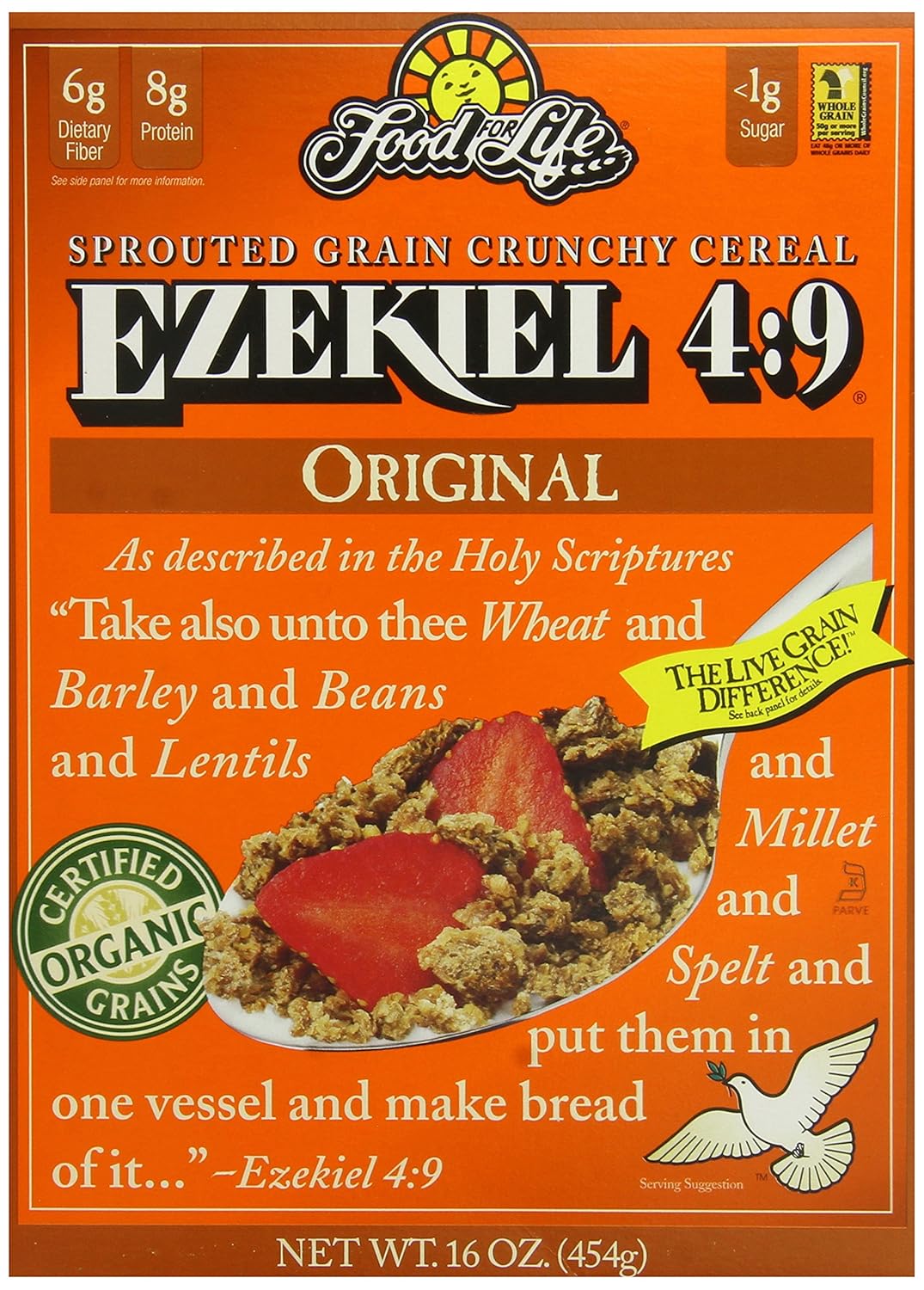
Ezekiel 4:9 Almond Crunchy Cereal
This is food, not a science experiment. No flour, no sugar, no oil. Just sprouted wheat, barley, beans, lentils, millet, and spelt. It tastes nutty, earthy, and dense.
Pros
- 100% Organic & Sprouted
- No artificial ingredients
- Complete protein profile
- Digests slowly (Low GI)
Cons
- Contains Gluten (not for Celiacs)
- Higher carb count (must portion control)
- Not sweet at all
4. Kashi Go Original (Best Budget / High Protein)
You can find Kashi in almost any supermarket, and it is often half the price of the “boutique” keto cereals. While some Kashi flavors are high in sugar, the GO Original (formerly GoLean) is a solid choice for diabetics on a budget.

Kashi GO Original Cereal
A mix of crunchy fiber twigs and soy protein grahams. It has a mild, honey-like sweetness but relies mostly on fiber to blunt the glucose response.
Pros
- 12g Protein & 13g Fiber
- Affordable and accessible
- Very high satiety
Cons
- Contains some cane sugar (9g total sugar)
- Contains Soy (allergen)
5. Three Wishes (Best Grain-Free / Allergy Friendly)
If you have multiple food sensitivities along with diabetes, Three Wishes is your safe haven. It is free from wheat, corn, rice, dairy, oats, peanuts, and soy. The base is chickpeas, but it doesn’t taste like hummus.

Three Wishes Grain Free Cereal
Uses chickpeas and tapioca for a satisfying crunch. Sweetened lightly with monk fruit and organic cane sugar (very low amount). It’s essentially a cleaner, high-protein cheerio.
Pros
- Top 8 Allergen Free
- 8g Protein per serving
- Clean, simple ingredients
- Great for kids too
Cons
- Slightly lower fiber (3g)
- Contains small amount of real sugar
Quick Comparison Chart
| Brand | Main Ingredient | Net Carbs | Protein | Sweetener | Best For |
|---|---|---|---|---|---|
| Magic Spoon | Milk Protein Blend | 4g | 13g | Allulose/Monk Fruit | Keto/Flavor |
| Catalina Crunch | Pea Protein | 5g | 11g | Stevia/Monk Fruit | Maximum Crunch |
| Ezekiel 4:9 | Sprouted Wheat | 24g | 8g | None | Clean Eating |
| Kashi Go | Soy Protein | 30g (High Fiber) | 12g | Cane Sugar | Budget |
| Three Wishes | Chickpeas | 12g | 8g | Monk Fruit/Sugar | Allergies |
The Science of the Morning Blood Sugar Spike
To understand why cereal choice matters so critically, you must first understand what happens in your body between waking up and taking that first bite. Many diabetics experience frustration when their blood glucose reading is high even before they’ve eaten anything. This is not a failure of medication or diet—it’s biology.
The Dawn Phenomenon Explained
Between roughly 2:00 AM and 8:00 AM, the body undergoes a natural circadian rhythm process called the Dawn Phenomenon. In preparation for waking, the liver is signaled by hormones like cortisol, glucagon, and epinephrine to release stored glucose into the bloodstream. It’s essentially your body’s ancient “alarm clock,” meant to give you energy to get out of bed and hunt for food. For a non-diabetic, the pancreas simply releases insulin to mop this up seamlessly. For a diabetic, however, insulin resistance or deficiency means this glucose hangs around. By the time you sit down for breakfast at 7:30 AM, your blood sugar might already be at 130-150 mg/dL, even on an empty stomach.
When you pour a bowl of standard, high-glycemic cereal on top of this already elevated baseline, you aren’t starting from zero; you’re starting from a ledge. The 30-40 grams of refined carbohydrates from the cereal push glucose levels into dangerously high territories (often exceeding 200 mg/dL) and demand a significant insulin response that the body struggles to mount. This is why breakfast cereal has such a bad reputation among endocrinologists.
The Somogyi Effect: A Rebound Hyperglycemia
Another less common but possible scenario is the Somogyi Effect. This occurs when a person experiences a blood sugar low (hypoglycemia) during the night, perhaps due to too much insulin or medication. The body, in a panic, releases counter-regulatory hormones to dump massive amounts of glucose from the liver. You wake up with a very high reading, and eating carbs makes it worse. While not strictly caused by cereal, the choice of a high-sugar breakfast in this state adds fuel to the fire. A high-fiber, low-carb cereal helps break this rebound cycle by not triggering another insulin surge.
Actionable Strategy: The 10-Minute Walk
Clinical studies, including those published in the journal Diabetes Care, have shown that a short 10-15 minute walk immediately after breakfast can blunt the postprandial glucose spike by up to 30%. Pairing one of our top 5 cereal picks with a quick walk around the block is arguably the most powerful combination for glucose management available to you.
Glycemic Index (GI) vs. Glycemic Load (GL): The Real Numbers
Most people have heard of the Glycemic Index (GI). It ranks foods from 0 to 100 based on how quickly they raise blood sugar. But fixating solely on GI is a mistake that leads people to fear carrots but eat giant bowls of whole-wheat pasta. The smarter, more accurate metric is the Glycemic Load (GL).
Calculating the Impact
The formula for Glycemic Load is: (GI x Grams of Carbs per Serving) / 100. A GL of 10 or less is low; 11-19 is medium; 20+ is high. This considers not just the speed of the sugar rush, but the volume of the sugar itself. Let’s apply this to our cereal world.
| Cereal Type | Approximate GI | Carbs (g) per serving | Glycemic Load | Diabetic Safety |
|---|---|---|---|---|
| Corn Flakes | 81 (High) | 24g | 19.4 (High) | Very Poor |
| Rice Krispies | 82 (High) | 22g | 18.0 (High) | Very Poor |
| Instant Oatmeal (Flavored) | 79 (High) | 27g | 21.3 (High) | Poor |
| Plain Cheerios | 74 (Medium) | 20g | 14.8 (Medium) | Use Caution |
| Kashi GO Original | 55 (Low-Med) | 30g (Net: 17g) | 9.3 (Low) | Good |
| Ezekiel 4:9 | 36 (Low) | 24g (Net: 18g) | 6.5 (Low) | Very Good |
| Magic Spoon | ~15 (Very Low) | 4g (Net) | 0.6 (Negligible) | Excellent |
Notice how Cheerios has a lower GI than Corn Flakes, but its Glycemic Load is still medium. This is why a diabetic can’t just “eat whole grains” without considering the amount. The rule of thumb for cereal is to aim for a GL of under 10. Magic Spoon and Catalina Crunch achieve this through protein and fiber manipulation, effectively making the carb content nearly irrelevant.
The Diabetic’s Guide to Cereal Sweeteners
When you look at the back of a keto or “healthy” cereal box, the ingredient list can look like a chemistry exam. Knowing the difference between Erythritol, Allulose, Stevia, and Maltitol is critical not just for blood sugar control, but also for avoiding digestive distress.
Tier 1: The Gold Standards
Allulose: This is the rising star. Allulose is a “rare sugar” found in small quantities in figs and jackfruit. It has the taste and texture of white sugar and even caramelizes like sugar. However, the body does not metabolize it; it’s absorbed but then excreted. It has almost zero calories and a Glycemic Index of 0. It also doesn’t cause the “cooling” sensation that other sweeteners do. Magic Spoon’s success is largely built on Allulose.
Monk Fruit (Lo Han Guo): Extracted from a small Asian melon, monk fruit is 150-200 times sweeter than sugar. It’s an antioxidant powerhouse (mogrosides) and has no impact on blood glucose. It has a slightly fruity aftertaste when used alone, which is why it’s often blended with Erythritol or Allulose.
Tier 2: The Solid Performers
Stevia (Reb M/Reb A): A leaf extract from South America. Pure stevia is bitter and licorice-like, which is why many people complain of an aftertaste. However, biotech has now isolated specific glycosides (like Reb M) that are almost sugar-like without the bitterness. Catalina Crunch uses a stevia blend. It does not raise blood sugar, but some people find it spikes insulin slightly due to a cephalic phase response (the brain tasting sweet).
Erythritol: A sugar alcohol produced by fermenting glucose. It has a GI of 0 and 0.24 calories per gram. It’s usually well-tolerated in small amounts, but large quantities can cause gas and bloating. It also creates that distinct “cooling” mouthfeel, which some love and others hate. Many grain-free granolas rely on it.
Tier 3: Approach with Caution
Maltitol: This is the impostor. It has a Glycemic Index of 35 (Sugar is 60), which means it will raise your blood sugar significantly. It’s cheap, so many “sugar-free” chocolates and cookies use it, causing horrific reviews about gastric distress and glucose spikes. If you see Maltitol in a “diabetic-friendly” cereal, run.
Sucralose (Splenda): While it doesn’t raise blood sugar in most studies, recent research on the gut microbiome suggests sucralose may negatively alter gut bacteria and could theoretically worsen insulin resistance over time when consumed in large amounts. It’s not an acute spiker, but it’s not a health food.
Chicory Root Fiber (Inulin): Often used as a prebiotic fiber and natural sweetener. It’s great for gut health, but it’s also a high-FODMAP food. For diabetics with sensitive digestion or IBS, Inulin can cause severe bloating if overeaten.
CGM Test Data: Sweetener Blunting
In informal testing, cereals that combine Allulose with Monk Fruit (like Magic Spoon) produce the flattest glucose curves. Allulose actually appears to have a mild inhibitory effect on the breakdown of other starches, making it a perfect “bodyguard” ingredient in a cereal mix.
Build a Better Bowl: The Diabetic Toppings Bar
Even the best cereal can become boring if eaten plain every day. But unlike the frozen yogurt shops where toppings mean crushed Oreos and caramel syrup, your breakfast bowl can be supercharged with nutrients that actually lower your glucose response.
Crunch & Texture Enhancers
Dicing up a few nuts and seeds not only adds a satisfying bite, but the healthy fats coat the digestive tract, further delaying gastric emptying.
- Pecans: High in magnesium, which aids insulin sensitivity.
- Flaxseeds (Ground): A mucilaginous fiber that forms a gel, trapping sugars.
- Cacao Nibs: Chocolate flavor without any sugar; loaded with antioxidants that improve endothelial function.
- Hemp Hearts: 3 tablespoons add 10g of protein and zero carbs.
Fresh Fruit (Portion Controlled)
Fruit is not the enemy; portion size is. Berries are the universal diabetic recommendation due to their high fiber-to-sugar ratio.
- Raspberries & Blackberries: 8g of fiber per cup. The seeds physically slow down sugar absorption.
- Blueberries: A superfood, but stick to 1/4 cup. The anthocyanins improve insulin sensitivity.
- Strawberries (Sliced): Very low in sugar compared to tropical fruits.
- Green Apple Matchsticks: A few thinly sliced pieces provide tartness without the sugar bomb of a ripe banana.
Supplemental Mix-Ins
- Plain Greek Yogurt “Dollop”: Instead of milk, use 1/4 cup of full-fat Greek yogurt. The acidity from the fermentation actually reduces post-meal glucose spikes according to a 2015 study in the Journal of Nutrition.
- Cinnamon: 1/2 teaspoon of Ceylon cinnamon mimics insulin and increases glucose uptake into cells. It tastes incredible on Catalina Crunch.
5 Dangerous Cereal Myths Diabetics Believe
The cereal aisle is a masterclass in marketing. Phrases like “made with whole grains” and “heart healthy” are regulated by the FDA, but they often mask a product that is metabolic poison. Let’s debunk the most common falsehoods.
Myth 1: “Granola is Healthier Than Frosted Flakes.” This is the biggest trap in the store. Standard granola is made by mixing oats with honey, brown sugar, canola oil, and dried fruit. A single cup of standard granola can contain 30-40g of sugar and 60g of carbs. Frosted Flakes has about 27g of sugar. Granola is calorie-dense and sugar-dense. It’s a treat, not a breakfast staple. The exception is explicitly labeled “Keto Granola” made with nuts and monk fruit.
Myth 2: “Multi-Grain Means Low GI.” Multi-grain simply means the box contains multiple grains (wheat, corn, rice). If all three are refined (milled corn, rice flour, wheat flour), the glycemic hit is identical to, or worse than, single-grain cereal. You must check for the word “100% Whole” before the grain name.
Myth 3: “Bran Flakes are Pure Fiber.” Bran flakes (like All-Bran or Raisin Bran) do contain wheat bran, which is a great insoluble fiber. However, to hold the flakes together and make them palatable, manufacturers add sugar, malt syrup, or high fructose corn syrup. A bowl of Raisin Bran can have 40g of carbs and 18g of sugar. The bran helps slow absorption slightly, but the load is still dangerously high. Plain bran buds are better, but taste like twigs.
Myth 4: “If it’s Organic, it’s Safe for Diabetics.” Organic cane sugar is still sugar. Organic evaporated cane juice is still sugar. Organic wheat flour is still ground wheat. The “Organic” label guarantees the absence of pesticides, which is fantastic for overall health and the environment, but it offers zero glycemic protection. In fact, some organic cereals are the sweetest on the shelf because they avoid high-fructose corn syrup but load up on organic tapioca syrup, organic brown rice syrup, and organic molasses.
Myth 5: “Low-Fat Cereal is Good for Me.” When fat is removed from food, something must replace the texture and flavor, and that something is usually sugar and salt. For diabetics, dietary fat is beneficial because it slows stomach emptying and triggers cholecystokinin (CCK), a hormone that signals fullness. A high-carb, low-fat breakfast is the perfect recipe for a blood sugar roller coaster. Always opt for full-fat milk alternatives or add fat via nuts to your bowl.
The Milk Factor: What to Pour?
You can buy the lowest carb cereal in the world, but if you drown it in skim milk, you are still going to spike. Why? Because cow’s milk contains lactose, which is literally milk sugar.
Best Milk Options for Diabetics:
- Unsweetened Almond Milk: The gold standard. < 1g carb per cup. Nutty flavor pairs well with cereal.
- Unsweetened Soy Milk: Creamier than almond and higher in protein. Good for consistency.
- Flax Milk: Very neutral taste and loaded with Omega-3s.
- Fairlife (Ultra-Filtered) Milk: If you must have cow’s milk, this brand filters out half the sugar and doubles the protein.
Avoid: Oat milk (very high glycemic) and Rice milk (pure starch).
Portion Control Hacks
Cereal is a “volume trap.” The serving size listed on the box is usually 3/4 cup or 1 cup. Most standard bowls hold 2-3 cups. If you fill the bowl, you are eating triple the carbs.
How to fix it:
- Use a Ramekin: Eat cereal out of a small dessert bowl rather than a soup bowl.
- Weigh It: Use a kitchen scale to measure the gram weight listed on the box. You will be surprised how small a serving really is.
- The “Topper” Method: Instead of a bowl of cereal, have a bowl of Greek Yogurt and use the cereal as a crunchy topping. You get the flavor and crunch with a fraction of the carbs.
Hot Cereal Alternatives
Sometimes you want something warm. While instant oatmeal is a “no-go” due to high sugar and processing, you have options:
- Steel Cut Oats: They take longer to digest than rolled oats.
- Chia Pudding (Warm): Chia seeds expand and create a porridge-like texture with zero net carbs.
- Hemp Hearts “Oatmeal”: Hemp seeds boiled in almond milk mimic the texture of oatmeal but are pure fat and protein.
Glycemic Impact of Processing
Why is a Cheerio worse than a steel-cut oat if they are both oats? It comes down to Extrusion.
Most commercial cereals are made by grinding grains into flour, mixing them with water, and blasting them through a high-pressure extruder to puff them up. This process destroys the structural integrity of the grain, making the starch incredibly easy for your body to convert into glucose instantly.
That is why keto cereals (like Magic Spoon) and sprouted cereals (like Ezekiel) are superior. Keto cereals don’t use grains at all, and sprouted cereals keep the grain structure intact, forcing your body to work harder to digest it.
Is Cereal Ever Okay Before Bed? The “2-Hour Rule”
Many diabetics suffer from the “midnight munchies.” A bowl of cereal before bed is a classic comfort snack, but is it a safe one? The answer is nuanced. Generally, eating high-carb food before bed is discouraged because you are about to be sedentary for 8 hours, leaving glucose circulating with nowhere to go. However, the Somogyi Effect mentioned earlier complicates things.
Some individuals on insulin or sulfonylureas experience a drop in blood sugar around 3:00 AM. In these specific cases, a small, strategic snack containing protein and complex fiber can prevent a dangerous nighttime hypoglycemic event. But we are not talking about a bowl of Corn Flakes.
If you absolutely need a “cereal fix” at night, follow the “2-Hour Rule” and the “15g Method”:
- Eat 2+ Hours Before Sleep: Give your body time to process the glucose while you are still upright and moving.
- Target 15g Net Carbs: A half-serving of Magic Spoon in Fairlife milk is the ideal profile.
- Add a Fat Drizzle: A teaspoon of almond butter mixed into the bowl creates a slow-digesting barrier.
Always check your blood sugar before bed and upon waking to see if the snack strategy works for your specific biology.
5 Popular Brands Diabetics Must Strictly Avoid
While we’ve highlighted the heroes, we must name the villains. These are cereals that, regardless of their marketing claims, consistently produce dangerous glucose spikes in CGM tests. We are not just looking at sugar; we are looking at the Glycemic Index, the starch structure, and the portion distortion.
1. Honey Nut Cheerios
It’s easy to think, “It’s Cheerios with a little honey; how bad can it be?” A single serving contains 12g of added sugar (nearly 3 teaspoons). But the real problem is the reduction in protein compared to the fiber content. It’s a classic “carb-fest.” The glycemic load is high enough to take you from a fasting of 110 mg/dL to over 200 in 45 minutes. Better Swap: Plain Cheerios mixed with a handful of plain nuts and a dusting of your own cinnamon.
2. Raisin Bran (Any Major Brand)
This is the most deceptive cereal on the shelf. It looks healthy. It sounds healthy. Raisins (dried fruit) are just sugar bombs with the water removed. When you combine them with bran flakes coated in malt syrup and “dried cane syrup,” you are essentially eating a candy bar in a bowl. A standard bowl (which no one actually measures) can easily hold 50g of sugar. Better Swap: Plain bran buds with 5-6 fresh raspberries.
3. Special K Original
Marketed for dieters and women’s health, Special K is made from rice and wheat gluten. It’s puffed rice at its core. It contains almost no fiber and negligible protein. Consequently, it has a Glycemic Index similar to white bread. You will experience a rapid rise and a harsh crash that makes you hungrier than before. Better Swap: Three Wishes Cereal, which has a similar texture but 8g of protein.
4. Life Cereal
Quaker Oats Life Cereal is a nostalgic favorite, but the nutrition label reveals the truth: “Whole Grain Oat Flour” is the first ingredient, which means it’s ground into a fine powder before being extruded. The glycemic response to flour-based cereals (even oat flour) is drastically higher than intact oats. It’s a simple starch delivery system. Better Swap: Ezekiel 4:9 Original for that wholesome square crunch.
5. Cap’n Crunch (and all “Candy” Cereals)
This one is obvious, but it must be stated for clarity. Cereals like Cap’n Crunch, Froot Loops, and Apple Jacks are not “occasional treats.” For a diabetic, they are toxic. They combine corn flour, sugar, and hydrogenated oils. The combination of high-fructose corn syrup and trans fats actually increases insulin resistance acutely. Even a tiny portion causes significant oxidative stress. Better Swap: Magic Spoon “Fruity” flavor. You get the exact same loop shape and crunch without the metabolic damage.
Navigating Cereal for Type 1 Diabetic Children
Parenting a Type 1 diabetic child comes with the unique heartbreak of explaining why everyone else at the slumber party gets Froot Loops, but they can’t. The psychological aspect of food restriction in childhood diabetes is massive. Fortunately, the new wave of low-carb cereals is virtually indistinguishable from the “real thing,” offering a bridge of normalcy.
Why Kids Cereal is Dangerously Fast
Children’s cereals are engineered to dissolve instantly (“milk wash” factor). This makes them delicious, but for a T1D kid, it means the glucose hits the bloodstream faster than injected Humalog or Novolog insulin can even start working. This creates a “post-meal mountain” and then a steep fall later when the insulin catches up. The solution is to pre-bolus (taking insulin 15 minutes before eating), but with toddlers and unpredictable eaters, this is risky. A cereal like Magic Spoon or Catalina Crunch solves this because the protein and fat profile naturally delays gastric emptying, syncing up better with the insulin action curve.
The “Ice Cream” Hack
For a special weekend breakfast, many T1D parents utilize the “ice cream trick.” A small scoop of low-carb vanilla ice cream (Rebel or Enlightened) placed in the center of a bowl of Catalina Crunch Cinnamon Toast creates a “cinnamon toast crunch milk” experience without the sugar spike. The fat content in the ice cream negates any minor carbs from the cereal.
Meal Prepping with Diabetic Cereal
Cereal is the ultimate fast food, but you can make it even more strategic. If you are rushing out the door, you risk grabbing the wrong box. Pre-portioning is the key to consistency.
Dry Mix Jars (Mason Jar Method)
On Sunday, assemble the week’s breakfasts in wide-mouth mason jars. Layer the bottom with your chosen cereal (Magic Spoon or Catalina Crunch), add a layer of chia seeds and crushed walnuts, and top with freeze-dried berries. Seal the jar. In the morning, just pour in your unsweetened milk, shake, and you have a parfait that works on the commute. This prevents the “bowl over-pour” where you accidentally eat 3 servings.
The Frozen Smoothie Bowl Base
Take 1/2 cup of unsweetened almond milk, 1/4 avocado, a scoop of unflavored protein powder, and a handful of spinach. Blend and freeze in a small container. In the morning, defrost for 30 seconds, pour into a bowl, and top with a crumbled low-carb cereal for crunch. The avocado provides monounsaturated fats that stabilize blood sugar for hours.
Keep It Cool
Keto cereals often contain natural oils and non-hydrogenated fats. They don’t have the chemical preservatives that standard cereals do. To keep Magic Spoon or Catalina Crunch from going stale or rancid, close the bag tightly and clip it. Humidity is the enemy. If you buy in bulk, store the bag in the freezer. This keeps the crunch intact and preserves the healthy oils. Cold cereal right out of the freezer is often even more satisfying.
Expert Tips from Registered Dietitians
We consulted with certified diabetes care and education specialists (CDCES) to distill their best clinical advice into actionable tips for your cereal routine.
Tip 1: The “First-Bite” Veggie
Several Japanese studies on meal sequencing have shown that eating vegetables (fiber) before carbohydrates significantly blunts the glucose peak. While it sounds weird for breakfast, a single stick of celery or a handful of spinach before your cereal can act as a “gatekeeper.” Chewing the fiber physically triggers the stomach to slow down.
Tip 2: Don’t Drink Your Cereal Milk
It’s the most sacred ritual of cereal eating, but dietitians warn against it. That leftover milk at the bottom of the bowl is a suspension of maltodextrin, dissolved sugar, and fine grain particles. It’s the most glycemic part of the meal. Pour it out, or use just enough milk to moisten the cereal and leave no liquid behind.
Tip 3: Cycle Your Cereal Days
Cereal is processed. Even the good ones. The gut microbiome thrives on variety. Dietitians recommend eating a low-carb, high-fiber cereal only 3-4 times per week, alternating with eggs, avocado, or smoothies on the other days. This rotation prevents potential food sensitivities to the fibers (like chickpea or pea protein) that can build up in keto cereals.
Tip 4: The “Wet-Spoon” Test
If you are unsure how a new cereal will affect you, do the wet-spoon test: Leave a spoonful of the cereal in milk for 5 minutes. If it turns to complete mush immediately, it’s highly processed and will spike you. If it retains structure (like Catalina Crunch does), it’s a resistant starch or high-protein matrix that will digest slowly.
Tip 5: Watch for the “Sneaky Sodium”
Diabetics are often rightly focused on sugar, but they should also be watching blood pressure. Cereal can be a hidden source of sodium. Magic Spoon contains around 160-180mg per serving, which is moderate. However, some “healthy” cereals pack 300mg or more. Always check the label; aim for under 200mg per serving to protect your vascular health, which is already under strain from diabetes.
Frequently Asked Questions
The Verdict: Breakfast is Served
You don’t have to resign yourself to eggs and bacon every single morning. The cereal market has evolved, and options like Magic Spoon and Catalina Crunch prove that you can have your crunch and eat it too.
Start with the Magic Spoon if you want flavor, or Catalina Crunch if you want fiber. Remember to watch your milk choice and keep an eye on portion sizes. A good breakfast sets the tone for your blood sugar all day long.
Get a Free Low-Sugar Meal Plan