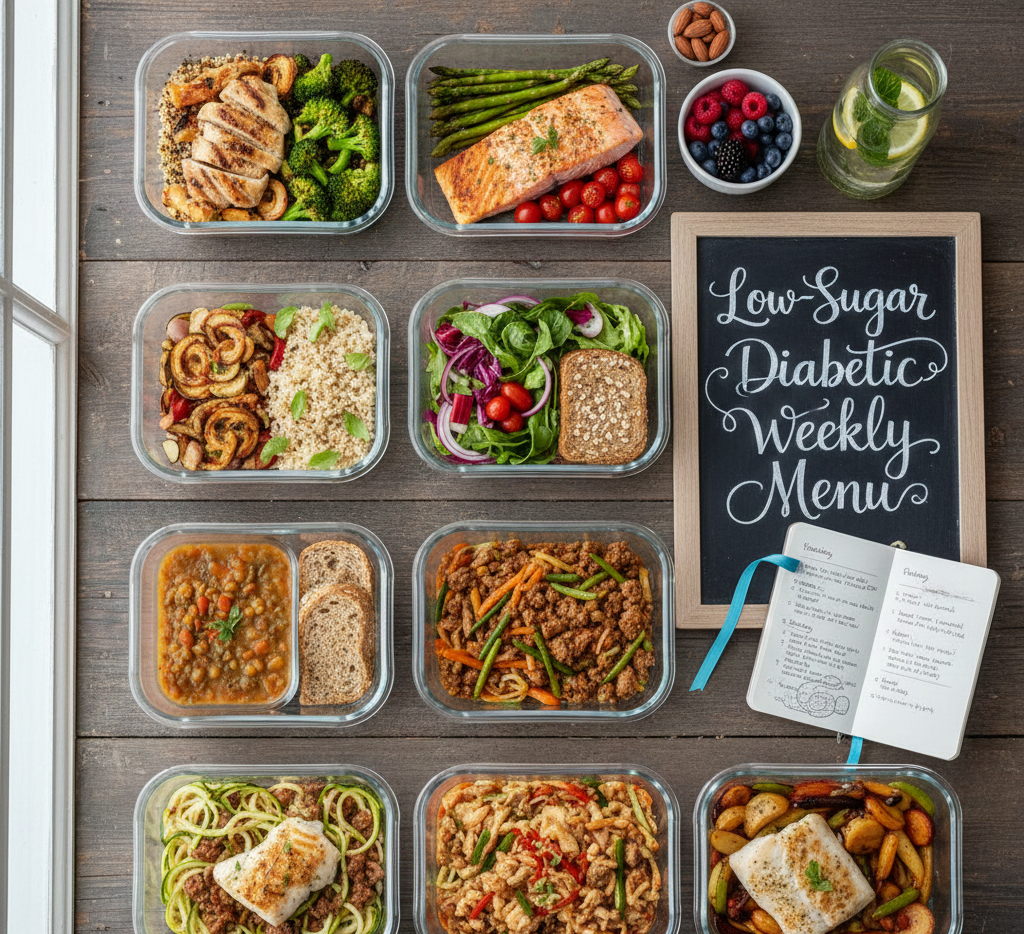
The Ultimate Low-Sugar Diabetic Weekly Menu: Reclaim Your Energy
For individuals living with diabetes, the grocery store can feel like a minefield. Sugar hides everywhere—in pasta sauces, salad dressings, and even “healthy” granola bars. But adopting a low-sugar diabetic weekly menu isn’t just about restriction; it is about liberation. It is about freeing yourself from the rollercoaster of glucose spikes and crashes that dictate your mood, energy, and long-term health.
This comprehensive guide goes beyond simple advice. We will construct a strategic, delicious, and medically sound nutritional architecture for your week. Whether you are newly diagnosed or a veteran looking to tighten your control, this plan focuses on nutrient density, fiber, and low-glycemic impact foods that keep your A1C in check without sacrificing flavor.
Below, you’ll find not just the 7-day menu itself, but a full toolkit: how to read a glycemic index chart, how to build a shopping list that doesn’t leave you standing confused in the cereal aisle, how to survive a birthday party without a glucose spike, and how to talk to your care team about adjusting medication as your diet improves. Managing blood sugar is a skill, and like any skill, it gets easier with the right systems in place.
Defining “Low Sugar” in a Diabetic Context
When we talk about a low-sugar menu for diabetics, we aren’t just banning the white granular stuff in your sugar bowl. We are addressing total glycemic load. A bagel might not taste sweet, but it converts to glucose in your bloodstream faster than table sugar. A true low-sugar approach involves prioritizing complex carbohydrates and pairing them with healthy fats and proteins to slow absorption.
Expert Insight: “The goal isn’t zero carbohydrates. The goal is ‘slow’ carbohydrates. By reducing added sugars and refined grains, we reduce the burden on your pancreas and improve insulin sensitivity.”
If you are looking for a broader foundation before diving into this specific menu, you might want to review our comprehensive weekly diabetic meal plan which covers the basics of macronutrient balancing.
Added Sugar vs. Naturally Occurring Sugar
One of the most common points of confusion for people newly managing blood glucose is the difference between added sugar and the sugar that occurs naturally in whole foods like fruit and dairy. A cup of plain milk contains natural lactose, and an apple contains natural fructose, but both come packaged with fiber, protein, water, and micronutrients that blunt the speed of absorption. A can of soda, by contrast, delivers sugar with nothing to slow it down, so it hits your bloodstream almost immediately. This is why nutrition labels in most countries now separate “Total Sugars” from “Added Sugars”—the added sugar line is the one that matters most for a low-sugar diabetic weekly menu. Learning to scan that single line on a label can save you from dozens of hidden sugar traps every week, from flavored yogurts to “healthy” trail mixes to bottled iced teas marketed as diet-friendly.
Why Total Glycemic Load Matters More Than a Single Ingredient
It’s tempting to fixate on individual “bad” ingredients, but blood glucose responds to the entire meal, not just one component. A slice of white bread eaten alone will spike your blood sugar faster than the same slice eaten alongside eggs, avocado, and a handful of spinach. This is the concept of glycemic load: the combined effect of carbohydrate quantity, carbohydrate quality, and the fat, protein, and fiber that accompany it. Building your weekly menu around this principle—rather than a rigid list of forbidden foods—gives you far more flexibility and makes the plan sustainable for years, not just a few white-knuckled weeks.
Understanding the Glycemic Index and Glycemic Load
The glycemic index (GI) ranks how quickly a carbohydrate-containing food raises blood glucose compared to pure glucose, which is scored at 100. Foods are generally categorized as low GI (55 or under), medium GI (56–69), or high GI (70 and above). Glycemic load (GL) takes this a step further by factoring in the actual portion size, giving a more realistic picture of a food’s real-world impact. A food can have a high glycemic index but a low glycemic load if you only eat a small amount of it—watermelon is a classic example.
| Food | Glycemic Index (Approx.) | Category |
|---|---|---|
| Steel-cut oats | 55 | Low |
| Quinoa | 53 | Low |
| Chickpeas | 28 | Low |
| Sweet potato (boiled) | 63 | Medium |
| Brown rice | 68 | Medium |
| White rice | 73 | High |
| White bread | 75 | High |
| Watermelon | 76 (low glycemic load) | High GI / Low GL |
| Instant mashed potatoes | 87 | High |
Practically speaking, you don’t need to memorize a giant chart to eat well. A simple rule of thumb is that the more processed and “instant” a food is, the higher its glycemic impact tends to be. Whole, intact grains like steel-cut oats or wheat berries digest more slowly than rolled oats, which digest more slowly than instant oatmeal packets, which digest more slowly than a sugary breakfast cereal. The same logic applies across the board: a whole orange beats orange juice, a baked potato with the skin beats mashed potatoes, and brown rice beats white rice, every single time, for blood sugar purposes.
How Carbs, Protein, Fat, and Fiber Work Together
Every meal on a low-sugar diabetic weekly menu should be thought of as a balancing act between four macronutrient levers. Understanding how each one behaves gives you the power to build your own meals confidently, rather than following a script forever.
Carbohydrates
The primary driver of blood glucose. Not all carbs are equal—fiber-rich, minimally processed carbohydrates such as legumes, non-starchy vegetables, and intact whole grains raise blood sugar far more slowly than refined starches and sugars.
Protein
Protein has a minimal direct effect on blood glucose but plays a major role in satiety and slows gastric emptying, which in turn slows the rate at which accompanying carbohydrates are absorbed.
Fat
Dietary fat slows digestion significantly, which is why a slice of pizza (carbs plus fat) can cause a slower but more prolonged blood sugar rise than a plain bagel. Fat should be included in moderation, prioritizing unsaturated sources like olive oil, avocado, and nuts.
Fiber
Fiber is the unsung hero of a low-sugar diet. Soluble fiber, in particular, forms a gel-like substance in the digestive tract that physically slows sugar absorption. Aim for 25–35 grams of fiber daily from vegetables, legumes, seeds, and whole grains.
When you build a plate using roughly half non-starchy vegetables, a quarter lean protein, and a quarter quality carbohydrate—finished with a drizzle of healthy fat—you are essentially automating this balancing act without needing to calculate anything. This visual approach, often called the “diabetes plate method,” is one of the simplest and most sustainable frameworks available and pairs perfectly with the 7-day menu outlined later in this guide.
Building Your Low-Sugar Arsenal
Success starts with what you keep in your kitchen. If it’s not in the pantry, you can’t eat it during a late-night craving. Here is how to stock up for success.
| Category | Green Light (Eat Freely/Moderately) | Red Light (Avoid/Minimize) |
|---|---|---|
| Proteins | Salmon, Chicken breast, Tofu, Eggs, Greek Yogurt (plain) | Breaded fried meats, Sweet BBQ meats, Honey-glazed ham |
| Vegetables | Leafy greens, Broccoli, Cauliflower, Zucchini, Peppers | Corn (in excess), Sweet glaze carrots, Canned veggies with sugar |
| Fruits | Berries (Raspberries, Blackberries), Avocado, Green Apple | Dried fruit, Canned fruit in syrup, Bananas (very ripe) |
| Grains/Starches | Quinoa, Chia seeds, Almond flour, Shirataki noodles | White rice, White pasta, sugary cereals, Instant oats |
For those interested in how fiber plays a role in negating sugar spikes, our guide on the high-fiber diabetic meal plan is an essential companion piece to this low-sugar approach.
Reading Nutrition Labels Like a Pro
Grocery shopping becomes dramatically easier once you know exactly where to look on a nutrition label. Start with the serving size at the top—many packages contain two or three servings, and the “per serving” numbers can be misleading if you plan to eat the whole container. Next, scan the “Added Sugars” line specifically, not just “Total Sugars.” Then check total carbohydrates and dietary fiber; subtracting fiber from total carbs gives you a rough “net carb” estimate, though this shortcut is less reliable for highly processed low-carb products that use sugar alcohols. Finally, glance at the ingredient list: if sugar, corn syrup, dextrose, maltose, or any other sweetener appears in the first three ingredients, the product is likely to have an outsized glycemic impact regardless of how the front-of-package marketing describes it.
The Diabetic-Friendly Pantry Checklist
Keep these staples stocked so a balanced meal is always within reach:
- Canned beans and lentils (rinsed to reduce sodium)
- Extra virgin olive oil and avocado oil
- Raw nuts and seeds (almonds, walnuts, chia, flax, pumpkin seeds)
- Unsweetened almond, soy, or oat milk
- Canned tomatoes with no added sugar
- Low-sodium vegetable and chicken broth
- Frozen vegetables without sauce packets
- Vinegars (apple cider, balsamic, red wine) for sugar-free dressings
- Herbs, spices, and no-salt seasoning blends
- Plain, unsweetened Greek yogurt and cottage cheese

Master Your Macros
Eye-balling portions is the enemy of blood sugar control. Use these color-coded containers to ensure your low-sugar grains don’t accidentally become high-sugar portions.
Check Price on AmazonBuilding Your Weekly Low-Sugar Grocery List
A well-organized shopping list is the single biggest predictor of whether you’ll actually follow through on a low-sugar diabetic weekly menu. Trying to remember everything on the fly leads to impulse buys and missed staples. Organize your list by store section so you move through the store efficiently and spend less time near the tempting bakery and cereal aisles.
Produce Section
Fill your cart first with non-starchy vegetables: spinach, kale, broccoli, cauliflower, zucchini, bell peppers, cucumbers, mushrooms, green beans, and cabbage. Add a modest quantity of lower-sugar fruits such as berries, green apples, and citrus. If your store carries pre-washed salad blends or pre-riced cauliflower, these can save significant prep time on busy weeknights.
Protein Aisle
Look for skinless chicken breast or thighs, wild-caught salmon or other fatty fish, lean ground turkey, eggs, and firm tofu or tempeh. Check processed and marinated proteins carefully, since many pre-marinated meats and deli meats contain added sugar in the brine or glaze.
Dairy and Refrigerated
Plain Greek yogurt, cottage cheese, unsweetened plant milks, and hard cheeses are all excellent low-sugar staples. Flavored yogurts marketed as “light” or “low-fat” frequently contain more added sugar than their full-fat counterparts to compensate for lost flavor, so read the label rather than trusting the front-of-box claims.
Pantry and Dry Goods
Stock quinoa, steel-cut oats, brown or wild rice (in moderation), canned beans and lentils, nuts, seeds, and olive oil. For sweetness without the glucose spike, monk fruit or erythritol blends are worth adding to your list.
A Sample One-Week Shopping List
- 2 lbs boneless chicken breast or thighs
- 1 lb wild salmon fillets
- 1 lb lean ground turkey
- 1 dozen eggs
- 1 block firm tofu
- 2 bags mixed salad greens
- 1 head broccoli, 1 head cauliflower
- 2 zucchini, 1 bag snap peas
- 1 pint raspberries, 1 pint blueberries
- 2 avocados, 2 green apples
- 1 container plain Greek yogurt (32 oz)
- 1 tub cottage cheese
- 1 bag quinoa, 1 canister steel-cut oats
- 1 can chickpeas, 1 can black beans
- Olive oil, apple cider vinegar, Dijon mustard
- Almonds, walnuts, chia seeds, flaxseed
Your 7-Day Low-Sugar Diabetic Weekly Menu
This menu is designed to provide approximately 1500-1800 calories per day with a focus on low added sugars. If you have specific calorie requirements, you can scale portions up or down. (See our 1500 calorie diabetic menu or 2000 calorie diabetic menu for precise scaling).
Day 1: The Fresh Start
- Breakfast: Spinach and mushroom omelet cooked in olive oil. Side of ½ grapefruit.
- Lunch: Grilled chicken salad with mixed greens, cucumber, cherry tomatoes, and a vinegar-oil dressing (avoid store-bought creamy dressings which hide sugar).
- Dinner: Baked Salmon with asparagus and cauliflower rice.
- Snack: A handful of walnuts.
Day 2: Plant-Forward Power
Sometimes, giving your digestion a break from heavy meats can improve insulin sensitivity. If you are curious about a shorter commitment, check out our 1-day simple diabetic menu.
- Breakfast: Chia seed pudding made with unsweetened almond milk and a few raspberries.
- Lunch: Lentil soup (watch the sodium) with a side of celery sticks.
- Dinner: Zucchini noodles (Zoodles) with homemade turkey meatballs and marinara (sugar-free).
- Snack: Sliced bell peppers with hummus.
Day 3: Mid-Week Stability
- Breakfast: Greek yogurt (plain, full fat) with flaxseeds and a dash of cinnamon.
- Lunch: Tuna salad served in lettuce cups (no bread).
- Dinner: Stir-fry beef with broccoli, snap peas, and ginger-soy sauce (use Tamari or coconut aminos).
- Snack: Hard-boiled egg.
Day 4: The Protein Boost
Protein is satiating and has minimal impact on blood sugar. For a deeper dive, read about our high-protein diabetic menu.
- Breakfast: Scrambled tofu with turmeric and kale.
- Lunch: Leftover beef stir-fry from Day 3.
- Dinner: Roast chicken thighs (skin on) with Brussels sprouts and a small portion of quinoa.
- Snack: String cheese.
Day 5: Comfort Food Reimagined
- Breakfast: Avocado toast on low-carb/high-fiber bread topped with red pepper flakes.
- Lunch: Chicken vegetable soup (skip the noodles, add extra carrots and celery).
- Dinner: “Burger Night” – Lean beef patty wrapped in lettuce with tomato, onion, and mustard (no ketchup).
- Snack: Cucumber slices with guacamole.
Day 6: The Weekend Social
Weekends are harder. If you are a working professional preparing for the week ahead, you might find our diabetic menu for working adults helpful for batch cooking tips.
- Breakfast: Cottage cheese with savory toppings (cherry tomatoes, cucumber, black pepper).
- Lunch: Cobb salad (egg, bacon, chicken, avocado, greens, blue cheese).
- Dinner: Grilled shrimp skewers with a large side salad and olive oil dressing.
- Snack: Sugar-free gelatin or a small square of 85% dark chocolate.
Day 7: Prep for Success
Use Sunday to prep for the next cycle. If you want to extend this plan, look at our 14-day diabetic meal plan.
- Breakfast: Almond flour pancakes (sugar-free syrup or just butter).
- Lunch: Turkey and cheese roll-ups (no tortilla) with a side of pickles.
- Dinner: Pork tenderloin with roasted green beans and a small sweet potato.
- Snack: Pumpkin seeds.
Meal Prep Strategy: Making the Weekly Menu Sustainable
The difference between a plan you follow for two days and one you follow for two years usually comes down to preparation. Batch cooking on a single day—commonly Sunday—removes the decision fatigue that derails good intentions on a busy Tuesday night. Here is a practical approach for turning this 7-day menu into a repeatable weekly ritual.
Step 1: Cook Your Base Proteins in Bulk
Set aside two to three hours to roast, grill, or poach several proteins at once: a tray of chicken thighs, a batch of hard-boiled eggs, and a pan of seasoned ground turkey. These building blocks can be repurposed across breakfasts, lunches, and dinners throughout the week, which is exactly how Day 3’s stir-fry beef becomes Day 4’s lunch leftovers in the menu above.
Step 2: Roast a Tray of Non-Starchy Vegetables
Broccoli, cauliflower, zucchini, peppers, and Brussels sprouts all roast well and keep for four to five days in the refrigerator. Having a container of ready-to-eat roasted vegetables means you’re far less likely to reach for a starchy, higher-glycemic side dish out of convenience.
Step 3: Pre-Portion Snacks
Divide nuts, cut vegetables, and cheese sticks into single-serving containers or bags as soon as you get home from the store. Unportioned snack foods are one of the most common places where a low-sugar plan quietly falls apart, simply because it’s easier to keep eating from an open bag than to stop and measure.
Step 4: Batch a Sauce or Two
A homemade vinaigrette, a sugar-free marinara, or a yogurt-based dressing can transform plain proteins and vegetables into genuinely craveable meals. Making a larger batch once means you always have a flavorful, low-sugar option on hand instead of reaching for a bottled dressing loaded with high fructose corn syrup.
Step 5: Freeze in Individual Portions
Soups, stews, and casseroles freeze beautifully. Cooking a double batch of the Day 2 lentil soup, for example, and freezing half in individual containers gives you an instant backup meal for the weeks when life gets too busy to cook from scratch.
How Exercise Complements a Low-Sugar Menu
Diet and movement work together, not separately. Physical activity increases insulin sensitivity, meaning your cells become better at pulling glucose out of the bloodstream and using it for energy, sometimes for up to 24 hours after a single workout. Combining a low-sugar diabetic weekly menu with a consistent movement routine tends to produce far better glucose stability than diet changes alone.
Post-Meal Walks
One of the simplest and most evidence-backed interventions is a short walk—even just 10 to 15 minutes—within 30 to 60 minutes after eating. This single habit can meaningfully blunt the post-meal glucose spike, particularly after higher-carbohydrate meals like Day 7’s dinner with sweet potato.
Resistance Training
Muscle tissue is one of the body’s largest reservoirs for glucose storage. Building and maintaining muscle mass through resistance training two to three times per week increases your overall capacity to store glucose as glycogen, effectively giving your body a bigger “buffer” against blood sugar spikes.
Timing Considerations
If you use insulin or other glucose-lowering medications, exercise timing matters. Working out shortly after a meal can be an effective way to prevent a spike, but exercising with insulin already peaking in your system can increase the risk of hypoglycemia. Always discuss exercise timing with your care team as you build new movement habits into your routine.
Adapting the Low-Sugar Menu for Special Needs
Diabetes affects everyone differently. A generic plan is a starting point, but customization is key to long-term adherence.
For Seniors
As we age, our appetite and ability to chew may diminish. However, the need for blood sugar control remains. If chewing raw vegetables is difficult, opt for soups and smoothies. We have a specialized diabetic menu for seniors and, for those with dental challenges, a diabetic menu for elderly with no teeth.
For Budget Conscious Shoppers
A low-sugar diet often implies expensive meats and fresh produce. However, frozen vegetables (without sauce) and eggs are budget-friendly low-sugar staples. Check our low-income diabetic menu for tips on saving money while saving your health.
For Pregnant Women (Gestational Diabetes)
Strict low-sugar diets during pregnancy must be balanced to ensure the baby gets enough energy for growth. Ketosis is generally avoided in pregnancy. Please consult the diabetic menu for pregnant women for a safety-first approach.
For Teenagers
Teens need higher energy for growth and sports. Cutting sugar doesn’t mean cutting energy. Focus on complex carbs. See the diabetic menu for teenagers for age-appropriate strategies.
For Type 1 Diabetics on Insulin Pumps or Multiple Daily Injections
People with type 1 diabetes generally have more flexibility in their carbohydrate choices because insulin dosing can be adjusted meal to meal, but lowering overall sugar and refined carbohydrate intake still produces smoother, more predictable glucose curves and reduces the frequency of both highs and lows. Carbohydrate counting remains essential, and working closely with an endocrinologist or certified diabetes educator to fine-tune insulin-to-carb ratios alongside a lower-sugar menu tends to produce the most stable results.
For People Managing Insulin Resistance or PCOS
Insulin resistance, common in prediabetes, type 2 diabetes, and polycystic ovary syndrome (PCOS), means the body needs more insulin than usual to move glucose out of the bloodstream. A lower-sugar, higher-fiber eating pattern like the one in this guide is frequently recommended as a first-line strategy in these cases, since reducing the frequency and size of glucose spikes gives the body’s insulin response a chance to recover some sensitivity over time.
For Shift Workers and Irregular Schedules
Rotating or overnight shifts disrupt the body’s natural circadian rhythm, which itself affects insulin sensitivity, often making late-night eating harder on blood sugar than the identical meal eaten at noon. If your schedule is irregular, try to keep meal timing as consistent as possible relative to your wake time rather than the clock on the wall, and lean even more heavily on protein and fiber-forward choices during your equivalent of “night” hours, when insulin sensitivity tends to be at its lowest.

Sweeten Without the Spike
Missing your sweet treats? High-quality Monk Fruit or Erythritol blends can replace sugar in your coffee and baking without raising blood glucose.
Check Price on AmazonA Closer Look at Sugar Substitutes
Not all sugar substitutes behave the same way in the body, and choosing the right one can make a meaningful difference in both blood sugar stability and digestive comfort.
Stevia
Derived from the leaves of the stevia plant, this sweetener has essentially zero calories and no measurable effect on blood glucose. Some people notice a mild bitter or licorice-like aftertaste, particularly in liquid form, so it’s worth trying a few brands to find one that suits your palate.
Monk Fruit
Extracted from a small melon native to Southeast Asia, monk fruit sweeteners are similarly calorie-free and glucose-neutral. Monk fruit is frequently blended with erythritol to mimic the bulk and texture of sugar in baking, which is why many commercial monk fruit products list erythritol as a co-ingredient.
Erythritol
A sugar alcohol that is roughly 70% as sweet as table sugar, erythritol is absorbed and excreted largely unchanged by the body, resulting in minimal blood sugar impact. It is generally well tolerated compared to other sugar alcohols, though very large quantities can cause digestive discomfort in some individuals.
Allulose
A rare sugar naturally found in small quantities in figs and raisins, allulose has a taste and browning behavior remarkably close to real sugar, making it a favorite for baking. It contributes minimal calories and has a negligible effect on blood glucose and insulin.
Sweeteners to Approach with Caution
Sugar alcohols like maltitol, common in many “sugar-free” candies, can still cause a noticeable blood sugar rise in some people despite the “sugar-free” label, along with significant digestive upset in larger amounts. Additionally, some research suggests that certain artificial sweeteners may influence the gut microbiome and future sugar cravings, so treating any sweetener—natural or artificial—as an occasional tool rather than an unlimited free pass is the most balanced approach.
Dining Out and Social Eating on a Low-Sugar Plan
Restaurants and social gatherings are consistently cited as the hardest part of managing a low-sugar diabetic weekly menu, since you lose control over ingredients and portion sizes. A few practical strategies can make navigating these situations far less stressful.
Before You Go
If possible, look at the restaurant’s menu online ahead of time and identify one or two suitable options in advance, which removes decision pressure once you’re seated and hungry. Eating a small protein-rich snack before a big social event can also prevent the kind of extreme hunger that leads to over-ordering bread baskets and sugary cocktails.
At the Table
Ask for sauces and dressings on the side, since restaurant versions are frequently sweetened more heavily than home-cooked equivalents. Request steamed or grilled preparations over breaded or glazed options, and don’t hesitate to ask your server about hidden sugar in marinades, barbecue sauces, and salad dressings—most kitchens are used to these questions and can accommodate substitutions.
Navigating Buffets and Potlucks
Do a full lap of the buffet before putting anything on your plate so you can make deliberate choices rather than piling on the first tempting dish you see. Fill roughly half your plate with vegetables and salad first, then add lean protein, and treat starchy or sweetened dishes as a small taste rather than a full serving.
Alcohol at Social Events
Dry wines, champagne, and spirits mixed with soda water or a splash of fresh citrus are lower-sugar options compared to beer, dessert wines, and sweet mixed cocktails. Keep in mind that alcohol can also cause delayed low blood sugar hours after drinking, particularly if consumed on an empty stomach, so eating something with your drink and monitoring glucose afterward is a wise precaution.
Common Mistakes That Sabotage a Low-Sugar Diabetic Menu
Even highly motivated people trip over a handful of recurring pitfalls when transitioning to a lower-sugar way of eating. Recognizing these ahead of time can save weeks of frustration.
Mistake 1: Trusting “Healthy” Marketing Claims
Labels like “natural,” “no sugar added,” or “made with real fruit” are marketing terms, not nutritional guarantees. Granola bars, flavored oatmeal packets, and bottled smoothies are frequent offenders, often containing more added sugar per serving than a small dessert.
Mistake 2: Under-Eating and Overcompensating Later
Skipping meals to “save up” for a treat later often backfires, since arriving at the next meal extremely hungry tends to result in eating faster, choosing higher-glycemic foods, and consuming larger portions overall, which can produce a bigger glucose spike than if you had eaten consistently throughout the day.
Mistake 3: Ignoring Liquid Calories
Juices, sweetened coffee drinks, and flavored waters can quietly contribute more sugar to your day than any solid food on your plate. A large flavored latte, for example, can contain as much sugar as a slice of cake, without providing the same sense of fullness or satisfaction.
Mistake 4: Going Too Restrictive Too Fast
Eliminating all carbohydrates overnight is rarely sustainable and can trigger intense cravings and binge-eating episodes. A gradual, moderate approach—like the one outlined in this 7-day menu—tends to produce better long-term adherence than an extreme, all-or-nothing restriction.
Mistake 5: Not Adjusting Medication as the Diet Improves
As blood sugar control improves through diet and exercise, some medications, particularly insulin and sulfonylureas, may need to be reduced to avoid hypoglycemia. This adjustment should always be made in partnership with your prescribing physician, not on your own, but it’s an important conversation to have as your weekly menu starts producing real results.
Low Sugar vs. Low Carb vs. Keto: What’s the Difference?
It is easy to get confused by the terminology. Here is a quick breakdown to help you decide if this menu is right for you, or if you need something more restrictive like our low-carb weekly diabetic menu.
- Low Sugar: Focuses primarily on eliminating added sugars (sucrose, high fructose corn syrup) and simple starches. Fruit and whole grains are usually allowed in moderation.
- Low Carb: Limits all carbohydrates, usually to under 100g or 50g per day. This restricts grains and some fruits.
- Keto: Extremely restrictive (under 20g net carbs). High fat, moderate protein. Forces the body to burn fat for fuel.
For most diabetics, a Low Sugar approach is the most sustainable long-term lifestyle, whereas Keto is a short-term therapeutic intervention.
Where the Mediterranean Diet Fits In
The Mediterranean eating pattern—rich in olive oil, fish, legumes, vegetables, and whole grains, with limited red meat and added sugar—shares a great deal of overlap with the low-sugar approach in this guide and has some of the strongest long-term research behind it for cardiovascular and glucose outcomes in people with diabetes. If the strict day-by-day structure of a 7-day menu feels too rigid for your lifestyle, borrowing broader Mediterranean principles (more olive oil, more fish, more legumes, less red meat and refined grain) is a research-backed way to keep sugar low without following a prescriptive script.
Intermittent Fasting and Blood Sugar
Some people managing diabetes also explore time-restricted eating windows, such as consuming all meals within a 10 to 12 hour window each day. Early research suggests this approach may improve insulin sensitivity for some individuals, but it is not appropriate for everyone, particularly those on insulin or sulfonylureas, who face a higher risk of hypoglycemia during extended fasting periods. As with any significant eating pattern change, this should be discussed with your care team before starting.
Using a Glucose Monitor to Fine-Tune Your Menu
Whether you use fingerstick testing or a continuous glucose monitor (CGM), tracking your actual blood sugar response to specific meals is one of the most powerful tools available for personalizing a low-sugar diabetic weekly menu. Two people can eat the exact same bowl of oatmeal and see meaningfully different glucose responses due to differences in gut microbiome, insulin sensitivity, sleep, stress, and activity level the day before.
How to Test a New Meal
Check your blood sugar immediately before eating, then again at one hour and two hours after the first bite. A rise of more than 30 to 50 points at the one-hour mark that hasn’t come back down substantially by two hours generally signals that the meal’s carbohydrate load or composition needs adjusting, whether that means a smaller portion, more fiber, more protein, or pairing it with a short walk.
Building a Personal “Safe Meals” List
Over a few weeks of testing meals from this 7-day menu, you’ll start to identify which specific combinations work best for your body. Keeping a simple log—meal, portion, and your one- and two-hour readings—turns this weekly menu from a generic template into a genuinely personalized eating plan built on your own data.
Pros and Cons of a Low-Sugar Lifestyle
✅ The Benefits
- Lower A1C: Direct correlation between reduced sugar intake and better 3-month averages.
- Reduced Inflammation: Sugar is a known inflammatory agent; reducing it eases joint pain.
- Weight Loss: Cutting empty calories naturally leads to a caloric deficit.
- Better Energy: No more “sugar crash” naps in the afternoon.
❌ The Challenges
- Withdrawal: The first week can cause headaches and irritability (the “sugar flu”).
- Social Difficulty: Dining out requires vigilance and asking questions about sauces.
- Cost: Fresh whole foods are often more expensive than processed sugary fillers.
The Sleep and Stress Connection
Blood sugar management is often framed purely as a food equation, but sleep deprivation and chronic stress both raise cortisol, which in turn raises blood glucose and reduces insulin sensitivity, sometimes independent of what you actually ate that day. A single night of poor sleep can measurably worsen next-day glucose control, which is why pairing this menu with a consistent sleep schedule and basic stress-management practices—brief walks, breathing exercises, or simply protecting a wind-down routine before bed—amplifies the benefits of the dietary changes themselves.
The Gut Microbiome Angle
Emerging research increasingly points to the gut microbiome as a meaningful player in individual blood sugar responses. Fiber-rich, minimally processed foods like the vegetables, legumes, and whole grains featured throughout this weekly menu feed beneficial gut bacteria that produce short-chain fatty acids linked to improved insulin sensitivity. Fermented foods such as plain yogurt, kefir, sauerkraut, and kimchi can be a useful, low-sugar addition for supporting this side of the equation.
Frequently Asked Questions
Yes, but choose wisely. Berries (strawberries, blueberries, raspberries) are low in sugar and high in fiber. Avoid high-sugar tropical fruits like mangoes, pineapples, and very ripe bananas, or eat them in very small portions paired with protein.
Generally, yes. Sweeteners like Stevia, Monk Fruit, and Erythritol do not spike blood sugar. However, some studies suggest that artificial sweeteners might increase cravings for sweet foods, so use them in moderation.
Many people see improved fasting glucose numbers within 3 to 7 days of eliminating added sugars and refined carbs. However, significant changes in A1C take about 3 months.
This menu is healthy for Type 1s, but you must adjust your insulin bolus accordingly. Lower carbohydrate intake requires less rapid-acting insulin. Always consult your endocrinologist to prevent hypoglycemia.
Alcohol can be tricky. Dry wines and spirits (vodka, whiskey) have no sugar, but beer and sweet cocktails are sugar bombs. Also, alcohol can block the liver from releasing glucose, leading to delayed hypoglycemia.
Cravings usually peak in the first week. Hydrate, eat enough protein, and ensure you are getting enough sleep. Sometimes a small piece of dark chocolate (85% cocoa) is enough to satisfy the urge without the spike.
Not necessarily, but calories still matter for weight management. If you are replacing sugar with excessive amounts of fat (cheese, nuts), you might stall weight loss. If you need structure, check our 1200 calorie diabetic menu.
Standard white bread converts to sugar rapidly. Look for sprouted grain breads (like Ezekiel bread) or low-carb keto breads that use fiber to lower the net carb count.
The glycemic index ranks how quickly a carbohydrate raises blood sugar. You don’t need to memorize exact numbers—a general rule that whole, minimally processed foods rank lower than refined, instant foods will get you most of the benefit.
No. Exercise and diet work together but are not interchangeable. Physical activity improves insulin sensitivity and can blunt post-meal spikes, but it does not eliminate the direct glucose impact of consuming large amounts of added sugar.
It’s possible, but any medication adjustment must be made with your doctor. Improved blood sugar control through diet can sometimes reduce the need for insulin or other glucose-lowering medications, and changing doses on your own without supervision can be dangerous.
Many people find a CGM extremely helpful for identifying exactly which meals and portion sizes work best for their individual body, turning a general weekly menu into a personalized plan based on real data rather than guesswork.

Expand Your Culinary Horizons
Boredom is the biggest threat to your diet. Get 500+ recipes that adhere to low-sugar principles so you never run out of ideas.
Check Price on AmazonType 1 vs. Type 2 Diabetes: Why the Menu Still Works for Both
Type 1 diabetes is an autoimmune condition in which the pancreas produces little or no insulin, requiring lifelong insulin therapy regardless of diet. Type 2 diabetes, by contrast, typically develops when the body becomes resistant to insulin over time, often related to genetics, weight, and lifestyle factors, though it can also occur in people who are not overweight. Despite these different mechanisms, a low-sugar, high-fiber, balanced-macronutrient menu like the one in this guide benefits both groups, because in both cases the underlying goal is the same: minimizing large, rapid swings in blood glucose that stress the body and increase long-term complication risk.
For people with type 1 diabetes, this menu should be used alongside careful carbohydrate counting and insulin dosing, since even “healthy” carbohydrates still require appropriately matched insulin. For people with type 2 diabetes, particularly those in the earlier stages or with prediabetes, dietary changes of this kind can sometimes meaningfully reduce or eliminate the need for medication, always under a doctor’s supervision.
Prediabetes: The Window of Opportunity
Prediabetes, characterized by blood sugar that is elevated but not yet in the diabetic range, represents one of the most impactful windows for dietary intervention. Research consistently shows that structured lifestyle changes, including the type of glycemic-conscious eating pattern outlined in this guide, can delay or in some cases prevent the progression from prediabetes to full type 2 diabetes. If you’ve recently received a prediabetes diagnosis, this 7-day menu is an excellent, low-pressure starting point before more intensive interventions become necessary.
How Common Diabetes Medications Interact With a Lower-Sugar Diet
While this guide is nutritional, not medical, advice, understanding broadly how your medication class interacts with dietary changes can help frame useful conversations with your prescribing doctor.
Metformin
Metformin works primarily by reducing glucose production in the liver and improving insulin sensitivity. It carries a low risk of hypoglycemia on its own, so most people can adopt a lower-sugar menu without significant dosing concerns, though any major dietary shift is still worth mentioning at your next appointment.
Sulfonylureas
Medications in this class stimulate the pancreas to release more insulin regardless of current blood sugar levels, which means they carry a meaningfully higher hypoglycemia risk, especially as a lower-sugar, lower-glycemic-load diet begins reducing your overall glucose levels. Close monitoring and potential dose adjustment are often necessary when starting a plan like this one.
Insulin (Basal and Bolus)
Both long-acting basal insulin and rapid-acting bolus insulin doses are frequently tied to carbohydrate intake and current blood glucose readings. As meals shift toward lower glycemic load, bolus insulin doses in particular often need reduction to prevent lows, making this one of the most important medication categories to discuss proactively with your care team before beginning a new weekly menu.
GLP-1 Receptor Agonists and SGLT2 Inhibitors
These newer medication classes work through different mechanisms—slowing gastric emptying and promoting satiety, or causing glucose excretion through urine—and are generally considered lower risk for hypoglycemia when combined with dietary changes, though they are frequently prescribed precisely because they pair well with lifestyle interventions like improved nutrition.
Important: Never adjust medication dosing on your own based on dietary changes. Always coordinate any changes with your prescribing physician, and monitor blood glucose closely during the first two to three weeks of any new eating pattern.
Common Myths About Sugar and Diabetes, Debunked
Myth: “Diabetics can never eat sugar again.”
Modern diabetes management is not about total elimination but about frequency, portion, and context. A small amount of dessert eaten occasionally, planned for, and balanced with the rest of the day’s meals is very different from daily consumption of sugary snacks and beverages.
Myth: “Eating sugar directly causes diabetes.”
Type 2 diabetes develops from a complex interplay of genetics, body weight, activity level, and overall dietary pattern, not from sugar consumption in isolation. That said, diets high in added sugar are strongly associated with weight gain and insulin resistance, both of which are major risk factors, so the relationship, while indirect, is still meaningful.
Myth: “Brown sugar and honey are healthy alternatives to white sugar.”
Nutritionally, brown sugar, honey, agave, and white table sugar all raise blood glucose in largely similar ways. While honey contains trace antioxidants and agave has a somewhat lower glycemic index, none of these should be treated as free passes on a low-sugar diabetic weekly menu.
Myth: “Fruit should be avoided entirely.”
Whole fruit, eaten in reasonable portions and ideally paired with protein or fat, provides fiber, vitamins, and antioxidants that outweigh the moderate glucose impact for most people with diabetes. The concern is with fruit juice, dried fruit, and large portions of high-sugar fruit eaten alone, not with whole fruit in general.
Myth: “If a product is labeled ‘diabetic-friendly,’ it’s automatically a good choice.”
This label is not tightly regulated in most markets and can appear on products that are still high in refined carbohydrates or sugar alcohols that spike blood sugar in some individuals. Reading the actual nutrition label remains far more reliable than trusting front-of-package claims.
Extra Breakfast, Lunch, Dinner, and Snack Ideas to Rotate In
Repetition is one of the biggest reasons people abandon a new eating pattern. Once you’re comfortable with the core 7-day menu, use the ideas below to keep things interesting in the weeks that follow.
Additional Breakfast Options
- Veggie-packed frittata muffins made in a batch and reheated throughout the week
- Overnight oats made with steel-cut oats, chia seeds, unsweetened almond milk, and a small handful of blueberries
- Smoked salmon with cream cheese on a low-carb flax wrap
- Savory breakfast bowl with cauliflower rice, a fried egg, black beans, and salsa
- Protein smoothie with unsweetened almond milk, spinach, protein powder, and a tablespoon of nut butter
Additional Lunch Options
- Mason jar salad layered with vinaigrette, chickpeas, cucumber, feta, and greens
- Turkey lettuce wraps with hummus, shredded carrot, and cucumber
- Grilled chicken and roasted vegetable bowl with a lemon-tahini dressing
- Egg salad (made with Greek yogurt instead of mayonnaise) over mixed greens
- Leftover-friendly buddha bowl with quinoa, roasted chickpeas, and tahini sauce
Additional Dinner Options
- Sheet-pan chicken thighs with broccoli and cauliflower, roasted in olive oil and garlic
- Baked cod with a lemon-caper sauce, served with sautéed spinach
- Turkey chili made with kidney beans, tomatoes, and a mix of peppers (no added sugar)
- Stuffed bell peppers with ground turkey, cauliflower rice, and melted cheese
- Grilled pork chops with a side of roasted Brussels sprouts and a small portion of wild rice
Additional Snack Options
- Celery sticks with natural peanut or almond butter
- A small handful of mixed nuts and a few raspberries
- Plain Greek yogurt with a sprinkle of cinnamon and chia seeds
- Roasted chickpeas seasoned with paprika and cumin
- Cherry tomatoes with a small portion of fresh mozzarella
Adapting the Low-Sugar Menu to Different Cuisines
A low-sugar diabetic weekly menu doesn’t have to mean giving up the flavors you grew up with. Most global cuisines have naturally lower-sugar options once you know where to look.
Mexican-Inspired Meals
Lean into grilled meats, fajita-style vegetables, black beans, salsa, guacamole, and lettuce-wrapped tacos instead of flour tortillas and sugary bottled sauces. Watch for added sugar in some commercial taco seasoning blends and barbacoa-style sauces.
Asian-Inspired Meals
Stir-fries built on lean protein, non-starchy vegetables, and a small portion of brown rice or cauliflower rice work well, but be cautious with bottled sauces like teriyaki and sweet chili sauce, which are frequently loaded with sugar. Tamari, coconut aminos, rice vinegar, and fresh ginger are excellent lower-sugar flavor builders.
Mediterranean-Inspired Meals
Grilled fish, olive oil, lemon, legumes, and abundant vegetables make Mediterranean cuisine one of the most naturally diabetes-friendly cuisines available, with minimal adaptation required beyond watching portion sizes on bread and rice.
Indian-Inspired Meals
Lentil-based dals, tandoori-style grilled proteins, and vegetable curries built on tomato and spice bases (rather than cream and sugar) fit well within a low-sugar framework. Be mindful of portion sizes on rice and naan, and watch for added sugar in some commercial curry pastes and chutneys.
Cooking for the Whole Family When One Member Has Diabetes
One of the most common practical concerns is whether the rest of the household needs to eat differently. In most cases, the answer is no—the balanced, whole-food approach in this weekly menu is appropriate and beneficial for the entire family, diabetic or not. The main adjustments tend to happen at the margins: serving a starchy side like rice or bread on the side so portions can be individualized, and keeping sweetened condiments and desserts as occasional additions rather than daily staples for everyone at the table.
For children without diabetes in the household, there’s no need to restrict fruit or dairy the way you might for tighter glycemic control; the emphasis for kids should remain on overall balanced nutrition and limiting genuinely excessive added sugar sources like soda and candy, which benefits growing children regardless of diabetes status in the home.
Tracking Progress Beyond the Scale
It’s tempting to judge the success of a low-sugar diabetic weekly menu purely by weight loss, but blood sugar management involves several metrics worth tracking together for a fuller picture of your progress.
Fasting Blood Glucose
Your morning reading, taken before eating or drinking anything besides water, reflects how well your body managed glucose overnight. A gradual downward trend over several weeks is a strong sign the plan is working.
A1C
This blood test, typically done every three months, reflects your average blood glucose over that period and is one of the most important long-term indicators your doctor will use to assess overall diabetes management.
Energy and Mood
Many people report improved energy, fewer afternoon crashes, and more stable mood within the first two weeks of reducing added sugar, often before any measurable change on the scale or in lab work appears.
Waist Circumference
Because visceral fat around the abdomen is closely tied to insulin resistance, tracking waist measurement alongside or instead of total body weight can offer a more meaningful signal of metabolic improvement.
Sleep Quality
Since blood sugar and sleep are bidirectionally connected, many people notice improved sleep quality as their glucose stabilizes—fewer nighttime awakenings and less of the restless, unrefreshing sleep that often accompanies large blood sugar swings.
Restaurant Menu Decoder: Words That Signal Hidden Sugar
Restaurant menus use specific language that can tip you off to hidden sugar before you even ask your server a question. Learning to spot these words quickly makes dining out significantly less stressful.
| Menu Word | What It Usually Means | Better Alternative to Request |
|---|---|---|
| Glazed | Sugar or honey-based coating, often reduced to a syrup | Grilled or blackened, sauce on the side |
| Candied | Nuts or vegetables cooked in sugar | Plain roasted or toasted |
| BBQ / Barbecue | Sauce typically contains significant added sugar | Dry rub or vinegar-based sauce on the side |
| Teriyaki | Soy-sugar reduction, high glycemic impact | Ginger-garlic or lemon-herb preparation |
| Sweet and Sour | Explicitly sugar-based sauce | Steamed with sauce on the side, or skip entirely |
| Honey Mustard / Honey Glazed | Contains added honey, often in large quantity | Dijon mustard or vinaigrette |
A useful general habit is to ask your server how a dish is prepared rather than relying solely on the menu description, since kitchens frequently make substitutions or omissions on request, particularly for sauces and dressings served on the side.
The Overlooked Role of Hydration in Blood Sugar Control
Water intake is rarely discussed alongside diabetes nutrition, but dehydration can concentrate blood glucose and make readings appear higher than they would be with adequate fluid intake. Additionally, thirst is sometimes misinterpreted as hunger, leading to unnecessary snacking. Aiming for consistent water intake throughout the day, roughly half your body weight in ounces as a general starting guideline, supports both kidney function (particularly important since diabetes increases kidney strain over time) and appetite regulation.
Be cautious with beverages that seem hydrating but carry a hidden glycemic cost: sports drinks, vitamin waters, and sweetened iced teas can undermine an otherwise well-planned low-sugar diabetic weekly menu. Unsweetened sparkling water, herbal tea, and water infused with citrus, cucumber, or mint are satisfying, flavorful alternatives that keep added sugar at zero.
Navigating Holidays and Special Occasions
Holidays present a concentrated version of the social eating challenges discussed earlier in this guide, often stacked across several consecutive days. A few strategies help preserve the progress made during the rest of the year.
Choose Your Splurges Deliberately
Rather than trying to avoid every tempting dish at a holiday table, decide in advance which one or two items are truly worth it to you, and enjoy a modest portion mindfully, while filling the rest of your plate with lower-glycemic options like turkey, vegetables, and salad.
Don’t Abandon the Framework Entirely
Keeping breakfast and any meals before the main holiday event aligned with your usual low-sugar pattern helps prevent the extreme hunger that leads to overeating later in the day. A protein-forward breakfast on Thanksgiving morning, for instance, sets you up to enjoy the holiday meal itself with more control.
Get Back on Track Quickly
One indulgent meal or even one indulgent day will not undo weeks of consistent low-sugar eating. The people who maintain the best long-term blood sugar control are not the ones who never deviate, but the ones who return to their baseline pattern at the very next meal rather than treating one splurge as permission for an extended departure from the plan.
Staying Low-Sugar While Traveling
Travel disrupts routine, access to a kitchen, and control over ingredients, making it one of the more challenging environments for maintaining a low-sugar diabetic weekly menu. A little preparation goes a long way.
Pack Portable, Shelf-Stable Snacks
Nuts, seeds, individual nut butter packets, and jerky (checking labels for added sugar) travel well and prevent the airport-gate scenario where the only readily available options are pastries, candy, and sugary coffee drinks.
Research Grocery Access at Your Destination
If you’ll have access to a kitchen or even just a mini-fridge, a quick grocery run upon arrival for eggs, Greek yogurt, fruit, and pre-washed salad can anchor your meals even in an unfamiliar city.
Prioritize Protein and Vegetables When Eating Out on the Road
Most restaurants, regardless of cuisine or location, can accommodate a protein-and-vegetable-forward order even if it’s not exactly how the dish is typically presented. Applying the same restaurant strategies covered earlier in this guide—sauces on the side, asking about preparation methods—works just as well while traveling as it does at home.
What to Expect at 30, 60, and 90 Days
Understanding a realistic timeline helps manage expectations and keeps motivation intact through the inevitable plateaus.
The First 30 Days
Expect some adjustment as your palate recalibrates to less added sugar; many people describe foods tasting unusually sweet again after just a few weeks of reduced intake. Fasting blood glucose readings often begin trending downward within this window, and energy levels frequently improve noticeably.
Days 30 to 60
The low-sugar pattern typically starts to feel more automatic by this point, requiring less conscious decision-making. This is a good time to introduce more variety using the additional meal ideas and cuisine adaptations covered earlier in this guide, since the core habits are now more firmly established.
Days 60 to 90
By around the three-month mark, an A1C test can reveal whether the sustained dietary change has translated into a meaningful average blood glucose improvement. This is also a natural checkpoint to revisit medication needs with your doctor, since improved control may open the door to adjustments in your treatment plan.
Final Verdict: Consistency Over Perfection
Embarking on a low-sugar diabetic weekly menu is one of the most powerful steps you can take for your health. It is not about being perfect every single meal; it is about creating a new baseline where nutritious, whole foods are the norm, and sugary processed foods are the rare exception.
By following the 7-day plan outlined above, you give your body a chance to reset. Your insulin sensitivity can improve, your energy levels can stabilize, and your palate will eventually change to appreciate the natural sweetness in foods like berries and almonds. If you are ready to commit to a longer timeline, we highly recommend transitioning from this week into our 30-day diabetic menu to solidify these habits into a lifestyle.
Remember that this guide is designed to complement, not replace, guidance from your doctor, registered dietitian, or certified diabetes educator. Blood sugar management is deeply individual, and the general principles here—balanced plates, glycemic awareness, consistent meal timing, movement, and stress management—should always be adapted to your specific labs, medications, and life circumstances. Bring this weekly menu to your next appointment and use it as a starting point for a conversation about what fine-tuning might look like for you specifically.