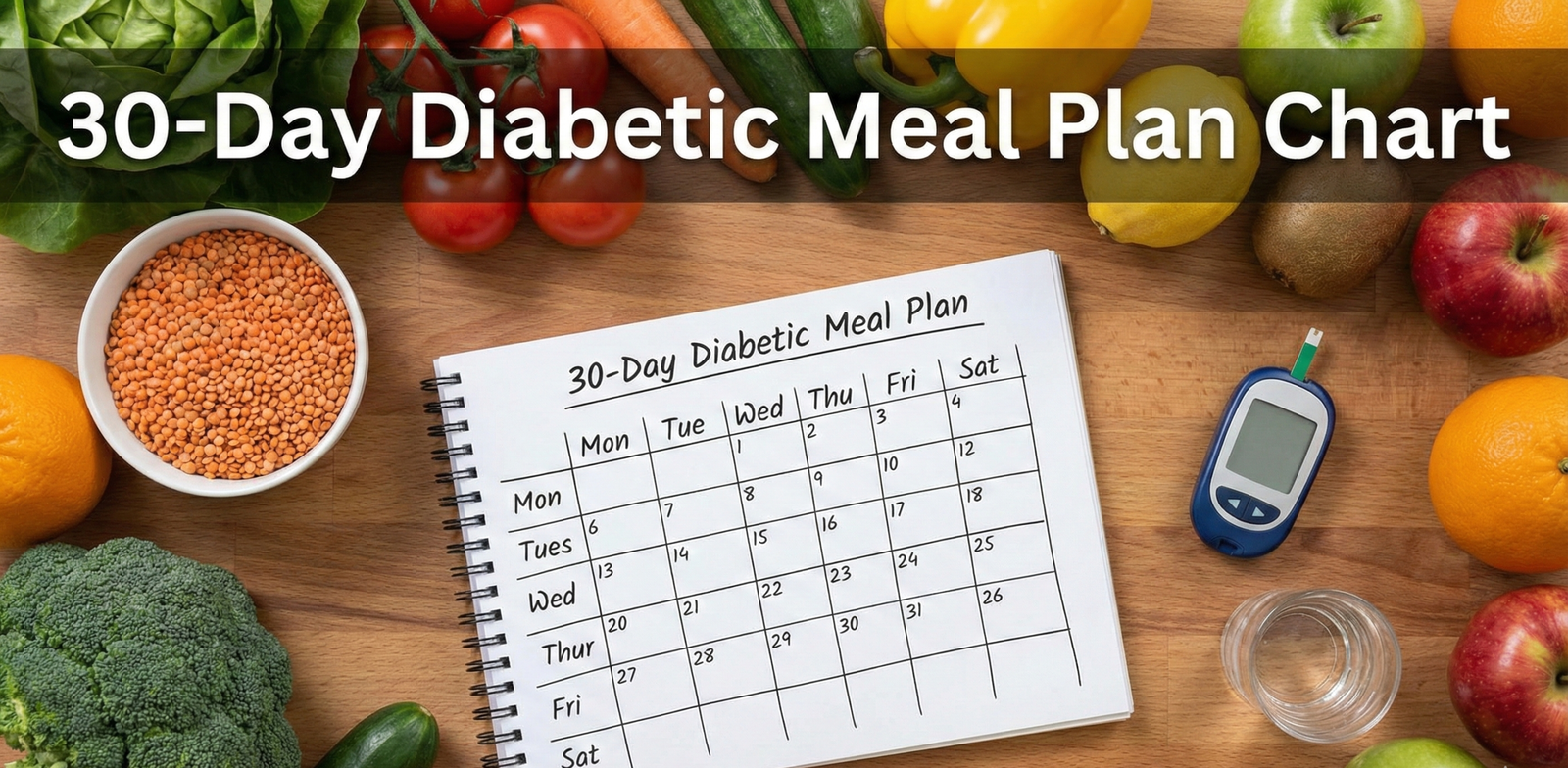
The Definitive 30-Day Diabetic Meal Plan Chart: Your Roadmap to Glucose Stability
Managing diabetes is not about a single good meal or one perfect day; it is about consistency over time. While short-term resets like a 1-day simple diabetic menu or a 3-day diabetic meal plan are excellent for getting back on track, real physiological change happens when you sustain those habits. That is where a comprehensive 30-Day Diabetic Meal Plan Chart becomes your most powerful tool.
The challenge most diabetics face isn’t a lack of knowledge—it’s decision fatigue. Waking up every morning for a month and having to decide what to eat, calculate carbs, and ensure nutritional balance is exhausting. This 30-day guide removes that burden. We have done the heavy lifting, planning every breakfast, lunch, dinner, and snack to ensure your blood sugar remains stable, your energy stays high, and your taste buds remain satisfied. Each week builds upon the last, from detox to mastery.
In this guide, we will break down the month into four distinct weeks, each with a specific focus. From the initial “detox” phase to the “maintenance” phase, this chart is designed to transform your relationship with food and provide measurable improvements in your HbA1c.
Type 2 Diabetes Meal Plan: What Makes This Different From Generic Healthy Eating
Not all “healthy eating” plans are created equal when you have diabetes. A diet that works beautifully for someone without blood sugar concerns can send a diabetic into dangerous post-meal spikes. This is the single most important distinction to understand before you take one bite of this 30-day plan.
In Type 2 diabetes, the body produces insulin but cells have become resistant to its effects—a condition called insulin resistance. Over time, the pancreas struggles to produce enough insulin to overcome that resistance. The result? Glucose piles up in the bloodstream instead of being absorbed by cells for energy. A diabetic meal plan specifically addresses this cascade by targeting three levers simultaneously: glycemic response, insulin sensitivity, and caloric balance.
🥗 Generic “Healthy” Eating
- Focuses on calorie counts
- Allows high-GI fruits freely (bananas, grapes, watermelon)
- Considers whole-grain bread “healthy” without limits
- Ignores meal timing and glucose rhythm
- No specific carb-per-meal targets
🩺 This Type 2 Diabetic Meal Plan
- Targets 30–45g net carbs per meal maximum
- Prioritizes low-GI fruits (berries, cherries, pears)
- Pairs every carb source with protein + fat to slow absorption
- Strategically times meals to match natural cortisol rhythms
- Builds insulin sensitivity through fiber density and omega-3 fats
The plan you are holding is not a weight-loss diet that accidentally helps with diabetes. It is architected from the ground up around the metabolic reality of living with Type 2 diabetes. Every meal has been built around the principle that what you eat matters less than how your body processes what you eat. By understanding that distinction, you will be far more motivated to stick to it when temptation strikes.
💡 Key Insight for Type 2 Diabetics
Research consistently shows that for people with Type 2 diabetes, the order in which you eat food at a meal matters significantly. Eating vegetables first, then protein, then carbohydrates last can reduce post-meal blood glucose spikes by up to 37% compared to eating carbohydrates first. This plan uses that principle every single day.
How to Lower Blood Sugar Naturally Through Diet: 10 Evidence-Based Strategies
Medication manages blood sugar. Diet resets it. If you are asking how to lower blood sugar naturally, the answer lies in a multi-pronged dietary approach that works on multiple pathways simultaneously. The following strategies are the backbone of every meal in this 30-day chart.
- Eat low-glycemic carbohydrates exclusively. Replace white rice, white bread, and sugary cereals with quinoa, steel-cut oats, and barley. These foods digest slowly, releasing glucose in a gentle trickle rather than a flood. A glycemic index below 55 is your target for every carb food on this plan.
- Front-load fiber at every meal. Starting your meal with a large portion of non-starchy vegetables—salad, steamed broccoli, or sautéed spinach—creates a physical fiber “mat” in your stomach that slows the absorption of everything that follows. Aim for 8–12g of fiber per meal.
- Pair every carbohydrate with protein. Protein triggers a glucagon-like peptide response that slows gastric emptying. In plain English: protein literally pumps the brakes on how fast sugar enters your bloodstream. This is why a plain apple spikes blood sugar faster than an apple with almond butter.
- Add apple cider vinegar strategically. One to two tablespoons of apple cider vinegar diluted in water before a high-carb meal has been shown in multiple studies to reduce post-meal glucose response by 19–34%. Add it to salad dressings throughout this 30-day plan.
- Use cinnamon as a daily spice. Ceylon cinnamon contains compounds that mimic insulin and improve glucose uptake by cells. Half a teaspoon per day on oatmeal, in smoothies, or on sweet potatoes is a free blood-sugar tool hiding in your spice rack.
- Stay aggressively hydrated. When you are dehydrated, your blood becomes more concentrated with glucose. Drinking 8–10 glasses of water daily—especially before meals—dilutes blood glucose and helps kidneys flush excess sugar. Sparkling water with lemon is an excellent substitute for sugary drinks.
- Eat smaller, more frequent meals. This plan uses 3 main meals plus 1 snack to prevent the blood sugar roller coaster that comes from eating two enormous meals per day. Keeping meal gaps to 4–5 hours prevents both dangerous lows and reactive highs.
- Reduce sodium and processed food. High-sodium processed foods damage blood vessel walls and worsen insulin resistance over time. This plan is built on whole, real foods that are naturally low in sodium and free of the inflammatory seed oils found in packaged products.
- Prioritize omega-3 fatty acids. The salmon, trout, and sardines throughout this plan are not just delicious—they are pharmacological tools. Omega-3 fats reduce systemic inflammation, one of the core drivers of insulin resistance.
- Limit liquid calories to zero. Every drink in this plan is water, unsweetened coffee or tea, or plain sparkling water. Fruit juice, sports drinks, and sweetened coffee beverages are sugar delivery systems that bypass satiety signals entirely and spike blood glucose within minutes.
The Complete Diabetic Superfoods Guide: 18 Foods That Actively Fight High Blood Sugar
The word “superfood” is often marketing fluff. In the context of diabetes management, however, there is a genuine category of foods that contain specific compounds scientifically linked to improved blood sugar control, enhanced insulin sensitivity, or reduced diabetes-related inflammation. Every item on this list appears repeatedly throughout your 30-day chart for a specific reason.
Steel-Cut Oats
GI of 42 vs. 83 for instant oats. The intact groat structure means fiber slows digestion dramatically. Beta-glucan in oats also improves insulin sensitivity over time with daily consumption.
Fatty Fish (Salmon, Trout, Sardines)
EPA and DHA omega-3 fats reduce liver fat accumulation—a major driver of insulin resistance. Zero carbohydrates means zero glycemic impact. Aim for 3–4 servings per week.
Chia Seeds
One tablespoon delivers 5g of fiber and forms a gel in the stomach that physically slows glucose absorption. Also provides omega-3s, calcium, and magnesium—a mineral most diabetics are deficient in.
Blueberries & Berries
Despite being sweet, berries have a low glycemic load due to their extraordinary fiber and anthocyanin content. Anthocyanins actively improve insulin signaling at the cellular level.
Leafy Greens (Spinach, Kale, Arugula)
Extremely low in digestible carbohydrates (2–3g net per cup) and packed with magnesium, which 48% of Type 2 diabetics are deficient in. Magnesium deficiency directly worsens insulin resistance.
Eggs
One of the most bioavailable protein sources on earth with zero carbohydrates. Research shows daily egg consumption does not raise cardiovascular risk in people with diabetes when replacing processed carbs.
Greek Yogurt (Plain)
High in protein (15–20g per serving) and probiotics that improve gut microbiome diversity—directly linked to better blood sugar regulation. Avoid flavored versions which contain 20–30g of added sugar.
Lentils & Legumes
The protein-fiber-carb trifecta. Lentils have a GI of 32 and provide 16g of fiber per cup. They also improve next-meal glucose response—eating lentils at lunch blunts the glucose spike at dinner.
Avocado
Rich in monounsaturated oleic acid, which improves insulin receptor sensitivity. The 10g of fiber per avocado makes it one of the most fiber-dense foods available. Used in this plan at breakfast and as snacks.
Broccoli & Cruciferous Veg
Sulforaphane, a compound in broccoli, has been shown to reduce fasting blood glucose in obese patients with dysregulated Type 2 diabetes. A truly functional food beyond its fiber and vitamin content.
Almonds & Walnuts
Consuming 1–1.5oz of almonds daily for 12 weeks has been shown to reduce HbA1c by 0.3%. Walnuts add ALA omega-3s. Both slow gastric emptying when eaten before or with meals.
Turmeric
Curcumin, turmeric’s active compound, reduces insulin resistance by downregulating inflammatory cytokines. Use it in scrambles, curries, and soups throughout this plan. Always pair with black pepper to increase absorption 2000%.
Quinoa
A complete protein AND a complex carbohydrate with a GI of 53. Contains 5g of fiber per cup cooked and all nine essential amino acids. A true dual-role food that stabilizes blood sugar while building muscle.
Sweet Potato
A GI of 44 (vs. 78 for white potato) and rich in fiber, potassium, and beta-carotene. The purple-flesh variety has the highest anthocyanin content and the lowest glycemic impact of all potato varieties.
Apple Cider Vinegar
The acetic acid in vinegar inhibits enzymes that break down starch into glucose, effectively “pre-slowing” any carbohydrate meal. Use in salad dressings throughout this plan for a free glucose management tool.
Black Beans
15g of fiber and 15g of protein per cup, making them one of the most blood-sugar-friendly foods on the planet. The resistant starch in beans feeds beneficial gut bacteria that produce short-chain fatty acids linked to improved insulin sensitivity.
Extra Virgin Olive Oil
Oleocanthal, a polyphenol in olive oil, has anti-inflammatory effects comparable to low-dose ibuprofen. Daily use in this plan reduces the oxidative stress that drives diabetic complications over time.
Green Tea
EGCG, the main catechin in green tea, improves insulin sensitivity and reduces fasting blood glucose. Two cups daily throughout this 30-day plan is a simple, free intervention with measurable metabolic effects.
Carb Counting Made Simple: Your Complete 30-Day Reference Guide
Carbohydrate counting is the most important practical skill a diabetic can develop. You don’t need to memorize hundreds of numbers—you need to understand the core principles and have a quick reference for the foods you eat most. This section is your permanent reference for carb counting throughout this plan and beyond.
The Three Carbohydrate Rules for Diabetics
- Rule 1 — Net Carbs, not Total Carbs: Net carbs = Total Carbohydrates − Fiber − Sugar Alcohols. Fiber does not raise blood sugar. If a food has 30g total carbs and 10g fiber, your blood sugar sees only 20g. Always subtract fiber first.
- Rule 2 — 30–45g net carbs per meal, 15–20g per snack: These are general targets for most Type 2 diabetics. Your personal target should be set with your doctor or dietitian, but these ranges work for the majority of people following this plan.
- Rule 3 — Carb quality over carb quantity alone: 30g of carbs from lentils affects your blood sugar completely differently than 30g from white bread. Always consider the GI and fiber content alongside the raw carb number.
| Food | Serving Size | Total Carbs | Fiber | Net Carbs | Glycemic Index | Diabetic Rating |
|---|---|---|---|---|---|---|
| Steel-cut oats (cooked) | ½ cup | 27g | 4g | 23g | 42 | ✅ Excellent |
| Quinoa (cooked) | ½ cup | 20g | 2.5g | 17.5g | 53 | ✅ Excellent |
| Brown rice (cooked) | ½ cup | 22g | 1.8g | 20.2g | 50 | ✅ Good |
| Sweet potato (baked) | ½ medium | 15g | 2g | 13g | 44 | ✅ Excellent |
| Lentils (cooked) | ½ cup | 20g | 8g | 12g | 32 | ✅ Excellent |
| Black beans | ½ cup | 20g | 8g | 12g | 30 | ✅ Excellent |
| Whole grain bread | 1 slice | 15g | 2g | 13g | 51 | ✅ Good |
| Blueberries | ½ cup | 11g | 2g | 9g | 40 | ✅ Excellent |
| Apple | 1 small | 21g | 3.6g | 17.4g | 36 | ✅ Good |
| Greek yogurt (plain) | 5oz | 6g | 0g | 6g | 11 | ✅ Excellent |
| White rice (cooked) | ½ cup | 27g | 0.3g | 26.7g | 73 | ⚠️ Use sparingly |
| White bread | 1 slice | 13g | 0.6g | 12.4g | 75 | ❌ Avoid |
| Banana (ripe) | 1 medium | 27g | 3g | 24g | 62 | ⚠️ Limit |
| Orange juice | 8oz | 26g | 0g | 26g | 57 | ❌ Avoid |
| Broccoli (steamed) | 1 cup | 11g | 5g | 6g | 10 | ✅ Unlimited |
| Spinach (raw) | 2 cups | 2g | 1.3g | 0.7g | 15 | ✅ Unlimited |
| Avocado | ½ fruit | 6g | 5g | 1g | 10 | ✅ Unlimited |
| Almonds | 1oz (23 nuts) | 6g | 3.5g | 2.5g | 15 | ✅ Excellent |
💡 The “Palm Method” for Quick Carb Estimation
When you can’t weigh food, use your hand: Your cupped palm = approximately ½ cup of cooked grains (15–23g net carbs). Your closed fist = approximately 1 cup of vegetables (negligible carbs for non-starchy). Your thumb tip to first knuckle = approximately 1 teaspoon of oil or nut butter (0g carbs). This visual system works surprisingly well in restaurants and social situations.
The Insulin Resistance Diet: How This 30-Day Plan Reverses Your Cells’ Resistance to Insulin
Insulin resistance is the root mechanism behind Type 2 diabetes, and reversing it—or at minimum improving it significantly—is what separates a diabetes management diet from a true therapeutic intervention. Understanding what drives insulin resistance helps you make choices that go beyond just “eating less sugar.”
What Causes Insulin Resistance?
At its core, insulin resistance develops when cells are chronically overexposed to insulin. When you consistently eat large amounts of refined carbohydrates and sugar, your pancreas releases wave after wave of insulin to manage the glucose flood. Over time, cells become desensitized—they essentially put up “do not disturb” signs. The pancreas responds by producing even more insulin to compensate, creating a vicious cycle.
But insulin resistance is also driven by factors beyond carbohydrate intake, including: excess visceral fat (the fat stored around your organs), chronic inflammation, poor sleep, physical inactivity, and deficiency in key nutrients like magnesium, chromium, and vitamin D.
Foods That Worsen Insulin Resistance
- Refined flour products (white bread, pasta, pastries)
- Sugary beverages (soda, juice, sweetened coffee)
- Trans fats and industrial seed oils (canola, soybean)
- Processed meats with nitrates and preservatives
- High-fructose corn syrup (in condiments and packaged foods)
- Alcohol consumed regularly
Foods That Improve Insulin Sensitivity
- Fatty fish rich in omega-3 (salmon, mackerel, sardines)
- High-fiber foods (legumes, oats, vegetables)
- Extra virgin olive oil and avocado oil
- Nuts and seeds (almonds, walnuts, chia, flax)
- Fermented foods (Greek yogurt, kefir, sauerkraut)
- Spices: cinnamon, turmeric, ginger, fenugreek
How This Plan Directly Targets Insulin Resistance
Every week of this 30-day plan has been designed to systematically chip away at insulin resistance through several mechanisms. First, by replacing high-GI carbohydrates with low-GI alternatives, we dramatically reduce the frequency and magnitude of insulin surges—giving your cells time to re-sensitize. Second, by emphasizing omega-3-rich fish 3–4 times per week, we reduce the systemic inflammation that drives resistance at the cellular signaling level.
Third, the high magnesium content of this diet—delivered through leafy greens, nuts, seeds, and legumes—directly supports insulin receptor function. Magnesium is required for over 300 enzymatic reactions in the body, including glucose metabolism. Correcting a magnesium deficiency alone has been shown to meaningfully improve insulin sensitivity in deficient individuals.
By Day 14 of this plan, most people begin to notice they feel less “hungry” soon after meals—a classic early sign that insulin sensitivity is improving and blood sugar is stabilizing. By Day 30, fasting blood glucose readings typically show a measurable downward trend.
The Science Behind the 30-Day Chart
Before diving into the daily breakdown, it is crucial to understand the logic governing this plan. Randomly picking healthy foods isn’t enough; we need strategic pairings that work synergistically to blunt glucose spikes.
1. The Plate Method (Visual Simplicity)
Every lunch and dinner in this chart follows the 50/25/25 rule:
- 50% Non-Starchy Vegetables: Leafy greens, broccoli, peppers, zucchini, asparagus.
- 25% Lean Protein: Chicken, turkey, fish, tofu, eggs, lean beef.
- 25% Complex Carbohydrates: Quinoa, brown rice, sweet potato, legumes, steel-cut oats.
This ratio ensures you’re full without overloading your glycemic system.
2. Glycemic Load (GL) Management
We don’t just look at carb count; we look at how fast those carbs hit your bloodstream. This plan prioritizes low-GI foods (GI < 55) that provide a slow, steady release of energy, preventing the dreaded post-meal spike and crash. For example, steel-cut oats replace instant oats, and sweet potatoes replace white potatoes.
3. Fiber Saturation
Fiber is the diabetic’s secret weapon. It acts as a brake on digestion. By ensuring every meal has at least 8-10g of fiber, we naturally regulate blood sugar levels without needing to starve. Fiber also feeds beneficial gut bacteria, which is linked to improved insulin sensitivity.
4. Protein Pacing
Spreading protein evenly across meals (25-35g per meal) helps maintain muscle mass and keeps you satiated, reducing cravings for refined carbs.

Glass Meal Prep Containers (Set of 10)
Success on a 30-day plan requires preparation. These glass containers allow you to prep days in advance, ensuring you never grab convenience food out of desperation. Microwave and dishwasher safe, with leak-proof lids.
Check Price on AmazonWeek 1: The Reset & Stabilization (Days 1–7)
The first week is often the hardest as your body adjusts to lower sugar intake. The focus here is on simple, whole foods to “detox” from processed sugars. We keep recipes simple to reduce stress and minimize cooking time. You may experience some cravings initially, but by day 4 they will subside.
If you find this week challenging, remember you can always reference our 7-day diabetic menu for more foundational tips.
| Day | Breakfast | Lunch | Dinner | Snack |
|---|---|---|---|---|
| Day 1 | Steel-cut oats (1/2c cooked) with 1 tbsp chia seeds & 1/3c berries | Grilled chicken salad (2c greens, 3oz chicken, olive oil dressing) | Baked Salmon (5oz) with asparagus & 1/2c quinoa | Hard-boiled egg |
| Day 2 | Greek yogurt (plain, 5oz) with 1 tbsp flaxseeds & 10 walnut halves | Leftover Salmon wrap (low-carb tortilla, greens, leftover salmon) | Turkey stir-fry (4oz turkey, broccoli, bell peppers, cauliflower rice) | Apple slices with 1 tbsp almond butter |
| Day 3 | Veggie omelet (2 eggs, spinach, mushrooms) + 1 slice sprouted toast | Lentil soup (1.5c) with side green salad (lemon vinaigrette) | Roast Chicken breast (4oz) with 1/2 sweet potato & roasted Brussels sprouts | String cheese |
| Day 4 | Avocado toast (1 slice sprouted bread, 1/3 avocado) + poached egg | Chicken Caesar salad (no croutons, light dressing) | Beef & Broccoli (4oz flank steak, 1c broccoli, 1/2c brown rice) | Handful of almonds (12) |
| Day 5 | Chia seed pudding (3 tbsp chia, 1c almond milk, berries) | Tuna salad lettuce wraps (3oz tuna, Greek yogurt, celery, lettuce cups) | White fish (Cod, 5oz) with green beans & 1/2c wild rice | Cucumber slices with 2 tbsp hummus |
| Day 6 | Scrambled eggs (2) with 2 oz smoked salmon + 1/2 grapefruit | Leftover Beef & Broccoli | Zucchini noodles (1 large) with turkey meatballs (3) & marinara | Greek yogurt cup (plain) |
| Day 7 | Whole grain pancakes (2 small) with sugar-free syrup & 1/2c berries | Caprese salad (4oz fresh mozz, tomato, basil) + grilled chicken strips | Sunday Roast: Lean pork loin (4oz) & roasted root veg (carrots/turnips) | Pear with 5 walnut halves |
Week 2: Expanding Flavors (Days 8–14)
Now that your blood sugar is stabilizing, we introduce more variety. Boredom is the enemy of a 30-day plan. This week features more spices, global flavors (Mexican, Asian, Mediterranean), and new vegetables to keep things exciting. You’ll also start to notice improved energy.
| Day | Breakfast | Lunch | Dinner | Snack |
|---|---|---|---|---|
| Day 8 | Spinach & Feta Egg Muffins (2 muffins) | Leftover Pork Loin sandwich (open face, 1 slice bread, mustard) | Shrimp Tacos (2 corn tortillas, 4oz shrimp, cabbage slaw, lime) | Celery sticks with 1 tbsp peanut butter |
| Day 9 | Smoothie: spinach, 1 scoop protein powder, 1/2c berries, almond milk | Taco Salad (leftover shrimp/cabbage, black beans, salsa, avocado) | Chicken Curry (coconut milk, 4oz chicken, cauliflower, bell peppers) | Edamame (1/2c steamed) |
| Day 10 | Cottage cheese (1/2c) with sliced peaches (fresh or frozen) | Leftover Chicken Curry | Eggplant Parmesan (baked, no breading) with side salad | Roasted chickpeas (1/4c) |
| Day 11 | Mushroom Frittata (2 eggs, 1/2c mushrooms) | Mediterranean Quinoa Bowl (1/2c quinoa, cucumber, tomato, feta, olives) | Grilled Flank Steak (4oz) with Chimichurri & roasted cauliflower | Dark chocolate (1 square, 85% cocoa) |
| Day 12 | Tofu Scramble (with turmeric, spinach, nutritional yeast) | Steak Salad (leftover steak over arugula, tomato, vinaigrette) | Lemon Garlic Tilapia (5oz) with 1/2c wild rice & sautéed kale | Berries (1/2c) with sugar‑free whipped cream |
| Day 13 | Poached eggs (2) on a bed of sautéed greens | Turkey & Avocado roll-ups (3 slices turkey, 1/4 avocado, mustard) | Stuffed Bell Peppers (ground turkey, black beans, diced tomatoes) | Pistachios (1/4c in shell) |
| Day 14 | Almond flour waffles (2 small) with 1 tbsp peanut butter | Leftover Stuffed Pepper | Baked Trout (5oz) with sautéed kale & roasted butternut squash (1/2c) | Carrot sticks with 2 tbsp guacamole |
If you’re enjoying the variety, you might want to look at our detailed 14-day diabetic meal plan which dives deeper into these recipes.
The Diabetic Air Fryer Cookbook
Craving the crunch without the carbs or oil? An air fryer is essential for Weeks 3 and 4. This cookbook offers 100+ recipes compatible with our 30-day chart, including crispy chicken and veggie chips.
Check Price on AmazonWeek 3: Efficiency & Batch Cooking (Days 15–21)
By Week 3, motivation can sometimes dip. To combat this, we focus on “Cook Once, Eat Twice.” This week utilizes leftovers strategically to minimize time in the kitchen while keeping meals fresh and exciting. It also introduces budget‑friendly ingredients.
| Day | Breakfast | Lunch | Dinner | Snack |
|---|---|---|---|---|
| Day 15 | Overnight Oats (cocoa powder, 1/2 banana, chia seeds) | Canned Salmon Salad (with Greek yogurt, celery, lemon) on lettuce | Large Batch Turkey Chili (1lb turkey, kidney beans, tomatoes, chili spice) | Cheese stick |
| Day 16 | Boiled Eggs (2) & 1/2c berries | Leftover Turkey Chili (top with avocado) | Sheet Pan Chicken & Veggies (chicken thighs, broccoli, bell peppers) | Almonds (12) |
| Day 17 | Yogurt Parfait (plain Greek, berries, 1 tbsp pumpkin seeds) | Leftover Sheet Pan Chicken | Grilled Pork Chops (5oz) with Brussels sprouts (roasted) | Apple & 1 tbsp PB |
| Day 18 | Veggie Scramble (eggs, leftover Brussels sprouts, mushrooms) | Pork Chop strips over mixed greens | Beef Stir-Fry (flank steak, snap peas, carrots, brown rice) | Pumpkin seeds (1/4c) |
| Day 19 | Avocado Toast on sprouted grain | Leftover Beef Stir-Fry | Baked Cod (5oz) with Lemon Butter & steamed green beans | Hard-boiled egg |
| Day 20 | Smoothie Bowl (spinach, protein powder, 1/4 avocado, berries) | Cod Tacos (flaked cod in lettuce cups with slaw) | Vegetable Lentil Stew (large pot, carrots, celery, lentils, spinach) | Walnuts (12 halves) |
| Day 21 | Omelet with cheese & leftover stew veg | Leftover Lentil Stew | Roast Whole Chicken (save bones for broth, serve with cauliflower mash) | Sugar‑free jelly with cottage cheese |
For those who prefer a stricter carbohydrate limit, compare this week with our low-carb weekly diabetic menu.
Week 4: Mastery & Maintenance (Days 22–30)
You have made it to the final stretch! Week 4 is about cementing these habits. The meals here are balanced and sustainable, proving you can eat like this forever. We also include a “choose your own” ending to emphasize flexibility.
| Day | Breakfast | Lunch | Dinner | Snack |
|---|---|---|---|---|
| Day 22 | Chicken & Spinach Omelet (use leftover roast chicken) | Chicken Salad Sandwich (whole grain bread, Greek yogurt base) | Grilled Salmon (5oz) with roasted beets & 1/2c quinoa | Olives (6-8) |
| Day 23 | Chia Pudding (with almond milk, vanilla, topped with raspberries) | Salmon Cakes (from leftover salmon, baked) over salad | Lean Burger (4oz, no bun) with sweet potato wedges (baked) | Greek Yogurt (plain, 1/2c) |
| Day 24 | Ricotta cheese (1/2c) with berries & cinnamon | Burger Patty Salad (burger over greens, tomato, onion, mustard vinaigrette) | Ratatouille (eggplant, zucchini, tomatoes) with Poached Eggs (2) | Sunflower seeds (1/4c) |
| Day 25 | Breakfast Burrito (low‑carb tortilla, scrambled eggs, salsa, avocado) | Ratatouille leftovers | Asian Glazed Salmon (soy, ginger, garlic) with bok choy & 1/2c brown rice | Cucumber & hummus |
| Day 26 | Steel-cut oats with savory toppings (1 egg, avocado, everything bagel seasoning) | Salmon & Edamame Bowl (quinoa base, leftover salmon, edamame, avocado) | Lemon Herb Roasted Turkey Breast (4oz) with roasted asparagus | Pear slices |
| Day 27 | Turkey Hash (leftover turkey, diced peppers, onions, topped with egg) | Turkey Club Lettuce Wrap (turkey, bacon bits, tomato, avocado) | Scallops or Shrimp (4oz) with zucchini noodles and pesto | Almonds (12) |
| Day 28 | Repeat your favorite breakfast from week 1-4 | Choose any lunch you loved | Choose any dinner you loved | Your go‑to snack |
| Day 29 | Repeat another favorite | Repeat lunch | Repeat dinner | Snack |
| Day 30 | Celebrate with a “flex meal” – maybe a slightly higher carb meal you’ve missed, but keep portions reasonable! | |||
Diabetic-Friendly Desserts: Satisfying Your Sweet Tooth Without Spiking Blood Sugar
One of the biggest fears people have when starting a diabetic meal plan is giving up dessert forever. The good news: that is completely unnecessary. There is an entire world of genuinely satisfying sweet foods that are compatible with blood sugar management—you just need to know which ingredients to reach for and which to avoid.
The key principle for diabetic-friendly desserts is replacing the high-glycemic spike of refined sugar with natural sweetness from fruits, the richness of healthy fats, and the structure of almond or coconut flour instead of white flour. The result is desserts that are often more nutritionally dense AND more satisfying than their conventional counterparts.
🍫 Dark Chocolate Bark
85%+ cocoa dark chocolate with crushed almonds and sea salt. 2–3 squares deliver antioxidants, magnesium, and only 5–7g net carbs. Melt, pour thin on parchment, refrigerate 20 minutes.
Net carbs: ~6g | GI: ~23
🍓 Berry Chia Parfait
Layer plain Greek yogurt with fresh berries and a drizzle of sugar-free maple syrup. Top with 1 tbsp chia seeds. Refrigerate overnight for a thick, pudding-like texture.
Net carbs: ~12g | Protein: 15g
🥑 Chocolate Avocado Mousse
Blend 1 ripe avocado, 2 tbsp cocoa powder, 2 tbsp almond milk, stevia to taste, and a pinch of sea salt until smooth. Refrigerate 1 hour. Rich, creamy, zero sugar spikes.
Net carbs: ~8g | Healthy fats: 22g
🍦 Frozen Banana “Nice Cream”
Blend 1 frozen overripe banana (use small, less ripe = lower GI) with 2 tbsp peanut butter and a splash of almond milk. Yields a creamy one-ingredient ice cream substitute.
Net carbs: ~22g | Best as an occasional treat
🧁 Almond Flour Mug Cake
Mix 3 tbsp almond flour, 1 egg, 1 tbsp cocoa, 1 tsp sweetener, ½ tsp baking powder, 1 tbsp almond milk. Microwave 90 seconds. A satisfying cake in under 2 minutes.
Net carbs: ~5g | Protein: 8g
🍋 Lemon Ricotta Cups
Whip ½ cup whole milk ricotta with lemon zest, 1 tbsp sweetener, and vanilla extract. Top with 2 tbsp fresh blueberries. A light, refreshing dessert with excellent protein content.
Net carbs: ~8g | Protein: 14g
⚠️ Sweeteners: Which to Use and Which to Avoid
Safe for diabetics: Stevia (zero GI), Monk fruit sweetener (zero GI), Erythritol (GI of 0), Xylitol (GI of 7 — note: toxic to dogs). Use with caution: Honey (GI 58), Maple syrup (GI 54), Coconut sugar (GI 54) — these still raise blood sugar but less dramatically than table sugar. Avoid: Regular sugar, agave syrup (high fructose), and most commercial “sugar-free” syrups that use maltitol (GI 52, nearly as high as real sugar).
30-Day Planning vs. Short-Term Dieting
Why go the distance? Here is how a 30-day commitment stacks up against shorter plans and unstructured eating.
| Feature | 30-Day Plan | 7-Day Plan | “Winging It” |
|---|---|---|---|
| Habit Formation | High (Rewires behavior) | Moderate (Good start) | None |
| Blood Sugar A1C Impact | Significant (0.5-1% potential drop) | Minimal Short-term | Unpredictable |
| Shopping Efficiency | High (Bulk buying, less waste) | Moderate | Low (Impulse buys) |
| Weight Loss (average) | Sustainable (4-8 lbs) | Water weight mostly | Variable |
| Cravings Reduction | Significant (by week 3-4) | Minimal | None |
If you aren’t ready for the full month, try our weekly diabetic meal plan first to build confidence.
Exercise & Meal Timing: How to Pair Movement With This Meal Plan for Maximum Blood Sugar Control
Food is only one half of the blood sugar management equation. Exercise is the other—and the timing of your workouts relative to your meals can make a profound difference in your daily glucose readings. This section will help you build a complete lifestyle protocol around this 30-day chart.
How Exercise Lowers Blood Sugar
When your muscles contract during exercise, they absorb glucose from the bloodstream without requiring insulin. This is a completely separate glucose disposal mechanism from insulin-mediated uptake—which is why exercise is so powerfully blood-sugar-lowering even in people with severe insulin resistance. The effect is immediate (glucose drops during the workout) and prolonged (muscles remain more glucose-sensitive for 24–72 hours after exercise).
Best Exercise Timing for Diabetics
- 30–60 min after meals: The single most effective window. Exercise during the post-meal glucose rise prevents the peak from occurring. A 10–15 minute walk after dinner can reduce post-dinner glucose by 20–30%.
- Morning fasted cardio: Effective for fat burning but can cause glucose fluctuations in some people. Start with short, moderate sessions (20 min brisk walking) and monitor your response.
- Avoid vigorous exercise right before bed: Can elevate blood glucose overnight due to adrenaline release in some individuals.
Best Exercise Types for Type 2 Diabetes
- Walking (best starting point): 30 minutes daily at brisk pace lowers fasting glucose and improves insulin sensitivity over 8 weeks.
- Resistance training: Building muscle mass creates permanent “glucose sponge” tissue. Even 2 sessions per week has significant metabolic impact.
- Swimming & cycling: Low-impact options ideal for those with joint concerns or diabetic neuropathy.
- Yoga: Reduces cortisol (a glucose-raising stress hormone) and improves body awareness around eating.
The Post-Dinner Walk Protocol
If you implement only one exercise habit alongside this 30-day meal plan, make it this: a 15-minute brisk walk within 30 minutes of finishing dinner, every night. Research shows this simple intervention alone reduces post-dinner glucose by 22% compared to sitting after eating. It requires no gym membership, no special equipment, and takes less time than an episode of television. By the end of this 30-day plan, this habit will be automatic.
💡 Pre-Workout Nutrition for Diabetics
If your pre-workout blood glucose is below 90 mg/dL, have a small carbohydrate snack (15g) before exercising to prevent hypoglycemia—for example, 1 small apple or 4 glucose tablets. If your reading is 90–150 mg/dL, proceed with exercise as planned. If above 250 mg/dL, check for ketones and consult your healthcare team before exercising. Always carry a fast-acting carbohydrate source (glucose tablets, juice box) during workouts.
Your Monthly Shopping Strategy (Pantry + Weekly Fresh)
Buying food for 30 days at once is impossible for produce. We recommend a “Pantry Load” at the start, followed by weekly “Fresh Runs.” This minimizes waste and ensures peak freshness.
The Day 1 Pantry Load (non‑perishables)
- Grains: Steel-cut oats, Quinoa, Brown Rice, Chia Seeds, Almond flour.
- Canned Goods: Beans (Black, Kidney, Garbanzo), Tuna/Salmon, Diced Tomatoes, Low-sodium broths.
- Oils/Condiments: Olive Oil, Avocado Oil, Balsamic Vinegar, Soy Sauce, Dijon mustard, Sugar-free marinara.
- Frozen: Berries, Spinach, Broccoli, Cauliflower rice.
- Spices: Cinnamon, Paprika, Cumin, Chili powder, Garlic powder.
Weekly Fresh Run (every 5-7 days)
- Proteins: Chicken breasts, fresh fish, eggs, Greek yogurt (check dates).
- Vegetables: Leafy greens (spinach, arugula), bell peppers, zucchini, avocado, asparagus, broccoli.
- Fruits: Apples, berries, lemons, avocados.
Root vegetables like sweet potatoes and onions last longer, buy bi-weekly.
Diabetic Meal Plan on a Budget: Eating for Blood Sugar Control Without Breaking the Bank
One of the most persistent myths about diabetic eating is that it is expensive. Fresh fish, organic produce, and specialty health foods can seem like a financial burden. But the truth is that the most blood-sugar-friendly foods on earth are among the most affordable: eggs, dried legumes, frozen vegetables, canned fish, and oats. This section shows you exactly how to execute this 30-day plan on a tight budget without compromising a single nutritional principle.
The 10 Most Cost-Effective Diabetic Foods
| Food | Average Cost | Servings per Purchase | Cost per Serving | Blood Sugar Benefit |
|---|---|---|---|---|
| Dried Lentils (1 lb bag) | $1.50 | 10 | $0.15 | ⭐⭐⭐⭐⭐ |
| Dried Black Beans (1 lb) | $1.50 | 10 | $0.15 | ⭐⭐⭐⭐⭐ |
| Eggs (dozen) | $3.50 | 12 | $0.29 | ⭐⭐⭐⭐⭐ |
| Frozen spinach (16oz) | $1.80 | 8 | $0.23 | ⭐⭐⭐⭐⭐ |
| Frozen broccoli (16oz) | $1.80 | 5 | $0.36 | ⭐⭐⭐⭐⭐ |
| Steel-cut oats (2 lb) | $4.00 | 20 | $0.20 | ⭐⭐⭐⭐⭐ |
| Canned tuna (5oz) | $1.20 | 2 | $0.60 | ⭐⭐⭐⭐⭐ |
| Canned salmon (14.75oz) | $3.50 | 4 | $0.88 | ⭐⭐⭐⭐⭐ |
| Whole chicken (3-4 lb) | $7.00 | 6-8 | $0.90 | ⭐⭐⭐⭐ |
| Chicken thighs (family pack) | $6.00 | 6-8 | $0.80 | ⭐⭐⭐⭐ |
Budget-Saving Strategies for This 30-Day Plan
🛒 Shopping Strategies
- Buy protein in bulk and freeze: Chicken breasts, ground turkey, and salmon all freeze excellently. Buy the family pack and freeze in meal-sized portions.
- Choose frozen over fresh for vegetables: Frozen vegetables are flash-frozen at peak ripeness and are nutritionally identical to fresh—often superior to “fresh” produce that has been in transit for days.
- Prioritize dried beans over canned: A 1 lb bag of dried lentils costs the same as two cans and yields three times the food. Soak overnight and cook in bulk on Sunday.
- Use canned fish strategically: Canned salmon and tuna are omega-3-rich, shelf-stable, and cost 60–70% less than fresh fish. Perfect for salads, wraps, and quick meals.
🍳 Cooking Strategies
- Embrace the “stretch” protein: Ground turkey and chicken thighs are far cheaper than premium cuts and equally nutritious. Week 3 of this plan is built around this principle.
- Make your own marinades and sauces: Olive oil + garlic + lemon + herbs replaces expensive bottled dressings for pennies. The spice rack is your cheapest flavor tool.
- Eggs are your emergency protein: When budget is tight at the end of the week, a vegetable omelet or egg scramble with frozen veg costs under $1 and delivers 20g of protein.
- Repurpose leftovers intentionally: Week 3 of this plan is built on this—roast one large chicken on Sunday and it becomes 4 different meals. This single habit cuts weekly food costs by 25%.
Reading Nutrition Labels as a Diabetic: The Complete Decoding Guide
The nutrition label is your most powerful shopping tool—but only if you know what to look for. Most people scan the calorie count and move on. As a diabetic, you need to extract three specific pieces of information from every label, and know exactly which marketing claims to ignore.
The 5 Label Claims That Mislead Diabetics
- “No Sugar Added” ≠ Low Carb. A product can have no added sugar but still contain 30g of natural carbohydrates per serving from fruit concentrates, dried fruit, or starchy flours. Always check the total carb count, not the marketing claim.
- “Whole Grain” ≠ Low GI. Whole grain bread can still have a GI of 60–70. Whole grain crackers often contain 20g+ of carbs per serving. The presence of whole grain does not automatically make a product blood-sugar-safe.
- “Sugar Free” ≠ No Blood Sugar Impact. Many “sugar free” products use maltitol, which has a GI of 52—almost as high as table sugar. True blood-sugar-safe sweeteners are stevia, monk fruit, and erythritol.
- “Low Carb” has no legal definition. Food manufacturers can label a product “low carb” without any regulatory standard. Always check the actual carb number rather than trusting the front-of-package claim.
- “Natural” tells you nothing about glycemic impact. Honey, coconut sugar, and maple syrup are all “natural” and all raise blood sugar significantly. The source of a sweetener does not change its effect on glucose.
Eating Out on a Diabetic Diet: Your Complete Restaurant Survival Guide
Life doesn’t stop for 30 days just because you’ve committed to a meal plan. Birthdays, work lunches, date nights, and family gatherings will happen. Knowing how to navigate restaurants without derailing your blood sugar progress is an essential skill—and it’s far simpler than most people think once you know the framework.
The Universal Restaurant Order Formula
Regardless of cuisine type, almost every restaurant can produce a diabetes-friendly meal if you order using this simple formula: Grilled/baked lean protein + double vegetables instead of starch + sauce/dressing on the side. Ask your server to swap fries or rice for a side salad or steamed vegetables. Request sauces on the side so you control the amount. Ask for olive oil and lemon instead of bottled dressing.
🍣 Japanese / Sushi
Order: Sashimi (no rice), miso soup, seaweed salad, edamame, grilled fish. Limit: White rice rolls (high GI). Avoid: Tempura, teriyaki with sweet sauce, spicy mayo rolls. Tip: Ask for brown rice when available and limit to 6 pieces of nigiri max.
🌮 Mexican
Order: Grilled chicken or steak fajitas without the tortillas, served on lettuce. Black beans (not refried). Guacamole in place of sour cream. Avoid: Rice, chips, flour tortillas, sweetened margaritas. Tip: Corn tortillas have lower GI than flour; limit to 2.
🍝 Italian
Order: Grilled fish or chicken with side vegetables. Minestrone soup (fiber-rich). Caesar salad no croutons. Limit: Any pasta dish. If you do have pasta, choose a protein-heavy topping and limit to half a portion. Avoid: Garlic bread, risotto, tiramisu.
🍛 Indian
Order: Tandoori chicken or fish (no sauce), dal (lentil curry, very low GI), saag paneer, raita. Limit: Basmati rice (half portion), one small piece of naan. Avoid: Mango lassi, samosas, biryanis with heavy sauces.
🥗 American / Casual
Order: Bunless burger with side salad, grilled chicken salads, steak with double vegetables. Limit: Sweet potato fries (better than regular but watch portion). Avoid: All-you-can-eat anything, loaded potato skins, sweetened BBQ sauce in large quantities.
☕ Fast Food / Coffee Shops
Order: Grilled chicken salads, egg & cheese protein boxes, plain black coffee or americano. Limit: Protein-style (lettuce) burgers. Avoid: All sugary drinks, frappuccinos, sweetened teas, pastries. A large Starbucks frappuccino can contain 60g of sugar.
💡 The Pre-Restaurant Strategy
Never arrive at a restaurant ravenously hungry. Have a small protein-rich snack 30–45 minutes before: 12 almonds, a hard-boiled egg, or 2 tbsp peanut butter on celery. This reduces hunger-driven decision-making and prevents you from eating the bread basket while waiting for your order. Also, drink a large glass of water immediately upon sitting down—hunger and thirst share overlapping signals in the brain.

Track Your Progress
The only way to know if this 30-day chart is working is to test. A reliable glucose monitor gives you the data you need to stay motivated. Look for one with Bluetooth memory.
Check Price on AmazonPortion Control for Diabetics: The Visual Reference Guide You’ll Use Every Day
Weighing every gram of food is precise but unsustainable in real life. The solution is developing an instinct for portion sizes using visual references tied to objects you always have with you—your hands. This guide works in restaurants, at friends’ homes, at buffets, and anywhere you eat without access to a kitchen scale.
| Hand Reference | Equals Approximately | Best For | Net Carbs |
|---|---|---|---|
| 👊 Closed fist | 1 cup / 240ml | Non-starchy vegetables, salad, broth-based soup | 2–6g (unlimited) |
| 🤲 Cupped palm | ½ cup / 120ml | Cooked grains (rice, quinoa, oats), legumes, starchy veg | 15–22g (1 serving) |
| ✋ Open palm (flat) | 3–4oz | Meat, poultry, fish — your protein target per meal | 0g |
| 👍 Thumb (whole) | 1oz / 2 tablespoons | Nut butter, cheese, hummus, avocado spread | 2–5g |
| 👍 Thumb tip (1 knuckle) | 1 teaspoon | Oils, butter, dressings, condiments | 0g |
| ✌️ Two fingers (together) | 1oz / 28g | Hard cheese, a small slice of meat | 0–1g |
| 🤌 Pinch (3 fingers) | ¼ teaspoon | Salt, dried spices — a useful limiting reminder | 0g |
The most important portion principle for diabetics is not restricting protein and vegetables—eat as much of these as you want. The discipline is reserved entirely for carbohydrates. A dinner plate that is 50% leafy greens, 25% salmon, and 25% sweet potato will keep you full, satisfied, and in blood sugar control regardless of the exact gram weights involved.
Your 30-Day Diabetic Meal Plan Mindset & Habit Tracker
Nutrition knowledge is only as useful as the habits you build around it. This section provides a framework for tracking your non-food habits throughout these 30 days—the daily behaviors that compound alongside the meal plan to produce measurable improvements in blood sugar control, energy, and wellbeing.
Research in habit formation consistently shows that what you track, you improve. People who keep food and health diaries lose significantly more weight and see better metabolic markers than those who rely on willpower alone. This tracker is not about perfection—it is about building awareness and accountability.
Daily Water Intake
Target: 8–10 glasses. Dehydration concentrates blood glucose. Track by refilling the same bottle twice.
Fasting Glucose Log
Test and record your fasting reading every morning before eating. This single data point shows your 30-day trend.
Post-Dinner Walk
Target: 15 min every night. Check off each day. By Day 21, this should feel automatic rather than deliberate.
Sleep Quality (7–9 hrs)
Poor sleep raises cortisol, which raises blood glucose. Track your bedtime and wake time. Note how you feel.
Meal Timing Log
Record when you eat breakfast, lunch, and dinner. Consistent meal timing regulates insulin rhythm.
Stress Level (1–10)
Stress hormones raise blood glucose. Tracking your stress score helps identify patterns between mental state and glucose readings.
Veg Servings Today
Target: 5+ servings of non-starchy vegetables. Use tally marks. Most people realize they’re eating far fewer than they thought.
Energy Level (1–10)
Rate your energy mid-afternoon daily. Rising energy scores by Week 2 are the first indicator the plan is working.
Week-by-Week Expectations: What’s Normal
Week 1 (Days 1–7): The Adjustment
You may experience sugar withdrawal symptoms: headaches, fatigue, irritability, and strong cravings. This is physiologically normal and temporary. Blood sugar may actually fluctuate more during this week as your body adjusts. Energy should begin to stabilize by Day 4–5. Weight loss of 2–3 lbs is common in the first week, largely water weight from reduced carbohydrate intake.
Week 2 (Days 8–14): The Turn
Cravings for sugar and processed foods should diminish noticeably. Many people report their first “clear energy” day—no afternoon slump, steady focus. Fasting glucose readings typically begin trending lower. Sleep often improves during this week as blood sugar stabilizes overnight. Digestion improves due to the increased fiber intake.
Week 3 (Days 15–21): The Groove
This is the week when the habits begin to feel natural rather than effortful. The “Cook Once, Eat Twice” system makes the plan sustainable. Most people experience significantly reduced hunger between meals—evidence that insulin sensitivity is improving. Some may see their first truly stable fasting glucose readings in this week.
Week 4 (Days 22–30): The Proof
By Week 4, you likely no longer feel like you are “on a diet.” These foods have become your normal. Fasting glucose readings should show a clear downward trend compared to Day 1. Many people lose 5–8 lbs over 30 days. Energy is consistently high. By Day 30, repeating this plan—or continuing its principles indefinitely—feels achievable rather than daunting.
Complete Glycemic Index Food List for Diabetics: Low, Medium & High GI Reference
The glycemic index (GI) measures how quickly a carbohydrate-containing food raises blood glucose relative to pure glucose (GI = 100). For diabetics, understanding GI is fundamental—but it’s important to use it alongside glycemic load, which accounts for typical serving size, to get the full picture.
| Category | Food | GI Score | Diabetic Guidance |
|---|---|---|---|
| Grains | Steel-cut oats | 42 | ✅ Daily choice |
| Quinoa | 53 | ✅ Daily choice | |
| Brown rice | 50 | ✅ Moderate portions | |
| White rice | 73 | ❌ Avoid | |
| Instant oats | 83 | ❌ Avoid | |
| Breads | Sprouted grain bread | 36 | ✅ Best bread choice |
| Sourdough | 54 | ✅ Good option | |
| Whole wheat bread | 62 | ⚠️ Limit to 1 slice | |
| White bread | 75 | ❌ Avoid | |
| Fruits | Cherries | 22 | ✅ Excellent snack |
| Berries (all) | 25–40 | ✅ Daily choice | |
| Apple / Pear | 36–38 | ✅ Good choice | |
| Banana (ripe) | 62 | ⚠️ Choose underripe, small | |
| Watermelon | 76 | ❌ Avoid | |
| Vegetables | Non-starchy (all) | 10–20 | ✅ Unlimited |
| Sweet potato | 44 | ✅ Good choice | |
| Corn | 60 | ⚠️ Small portions | |
| White potato (baked) | 85 | ❌ Avoid | |
| Legumes | Lentils | 29–32 | ✅ Frequent choice |
| Chickpeas | 33 | ✅ Frequent choice | |
| Black beans | 30 | ✅ Frequent choice | |
| Kidney beans | 29 | ✅ Frequent choice | |
| Dairy | Greek yogurt (plain) | 11 | ✅ Excellent choice |
| Whole milk | 27 | ✅ Moderate use | |
| Flavored yogurt | 56–70 | ❌ Avoid |
Remember that GI is measured for foods eaten in isolation. When you combine foods—especially adding fat, protein, or fiber to carbohydrates—the effective glycemic impact of the meal drops significantly. A high-GI food like white rice becomes much safer metabolically when eaten with salmon and broccoli than when eaten alone. This is the fundamental logic behind the meal combinations in this 30-day chart.
Frequently Asked Questions
Why 30 days vs weekly?
30 days builds habits, reduces decision fatigue, and shows real A1C improvement. Weekly is great for starters.
Can I repeat weeks?
Yes, repeat your favorite week; consistency matters most. Use week 3 for batch cooking efficiency.
Safe for Type 1?
Yes, but adjust insulin for carbs (~45g per meal). Consult your endo first.
Weight loss?
1-2 lbs/week typical due to controlled portions and fiber.
Supplements needed?
No, whole foods cover needs unless prescribed.
Allergies to nuts/seafood?
Swap fish for chicken, nuts for seeds. Keep macros similar.
Alcohol allowed?
Minimize; if you do, dry wine/spirits with food.
Cheat days?
Use flex meals instead, keeping principles in mind.
Bored with meals?
Swap any day with another; variety is built into weeks 2 & 4.
Gluten-free?
Most meals are naturally GF (quinoa, oats). Check labels.
Meal prep ahead?
Yes, week 3 is designed for batch cooking. Sunday prep saves time.
How to know it’s working?
Log fasting glucose daily; look for downward trend.
Your New Life Starts Day 1
Completing this 30-Day Diabetic Meal Plan Chart is a monumental achievement. By the end of this month, you will likely feel lighter, more energetic, and more in control of your diabetes than ever before. Your fasting numbers will thank you.
Remember, this chart isn’t a temporary diet; it is a training ground for the rest of your life. Use the recipes you loved, modify the ones you didn’t, and keep moving forward. And once you’ve mastered 30 days, maintaining healthy eating becomes second nature.
*affiliate links help us create free resources – all product URLs unchanged.