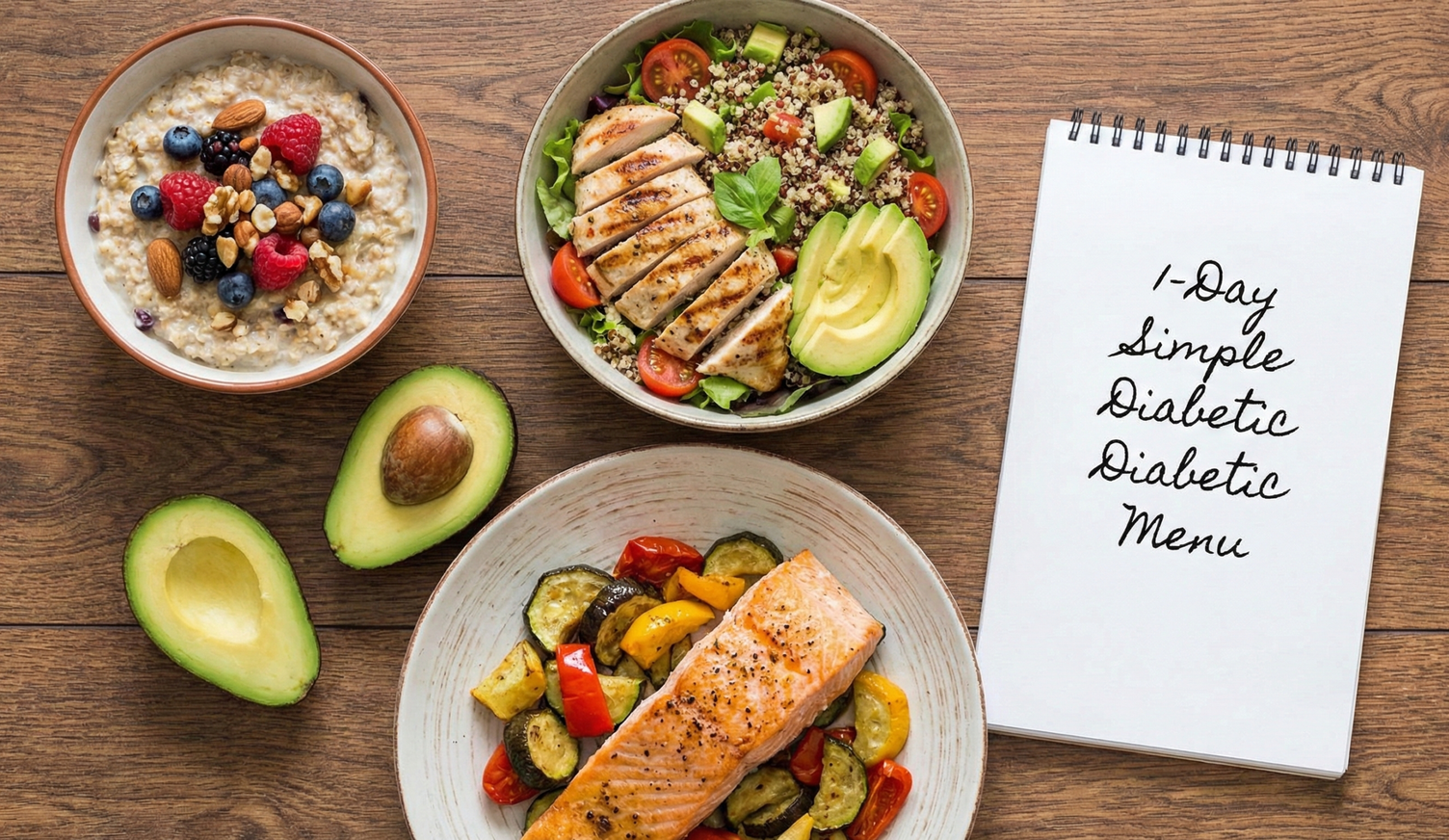
The Perfect 1-Day Simple Diabetic Menu: Reset Your Blood Sugar Today
Managing diabetes often feels like a full-time job where the rules keep changing. You are told to watch your carbs, monitor your portions, count calories, and check your glucose, all while trying to live a normal life. It is easy to feel overwhelmed by the sheer volume of decisions you have to make every time you open the refrigerator.
This is exactly why a 1-Day Simple Diabetic Menu is such a powerful tool. It removes the complexity. It eliminates the “what should I eat?” anxiety. For just 24 hours, you have a blueprint. It serves as a reset button for your body and your mind, proving to yourself that eating for blood sugar control can be delicious, satisfying, and surprisingly uncomplicated. And because it’s only one day, the commitment feels doable — you’re not signing up for a lifetime of deprivation, just one day of nourishment.
Whether you have been recently diagnosed with prediabetes, type 2 diabetes, or you are a veteran looking to get back on track after a holiday season of indulgence, starting with a single day is the most effective strategy. Once you master one day, extending it to a 3-day diabetic meal plan becomes effortless. For now, let’s focus on these 24 hours of steady glucose and delicious food.
537M
Adults living with diabetes worldwide in 2021
80%
Of Type 2 cases preventable through diet & lifestyle
10–20
mg/dL drop possible from just one disciplined day of eating
30g
Daily fiber target this menu helps you hit
Why Start With Just One Day? (The Psychology of Success)
The psychology of behavior change tells us that small, achievable goals lead to long-term success. Committing to a strict diet for a month can feel like a prison sentence. Committing to one day feels like an experiment — one you’re likely to ace.
The “Reset” Effect: More Than Just Glucose
A single day of clean eating won’t cure diabetes, but it can:
- Break the craving cycle: High-sugar foods trigger cravings for more sugar. A day of balanced macros breaks that loop, reducing the desire for sweets the next day.
- Stabilize morning numbers: A controlled dinner today leads to better fasting glucose tomorrow. Many people see a 10–20 mg/dL drop just from one disciplined day.
- Boost confidence: Accomplishing your goal for the day releases dopamine, motivating you to continue. Small wins build momentum.
- Reduce inflammation: Processed foods spike inflammatory markers. A day of whole foods gives your body a break, often reducing joint pain or brain fog.
If you find that this day goes well, you don’t have to stop there. You can easily transition into our 7-day diabetic menu for a full week of stability. But for now, let’s just focus on the next 24 hours.
Understanding Your Blood Sugar Numbers Before You Start
Before diving into the menu itself, you need to know what you’re working toward. Many people with diabetes dutifully follow a meal plan without knowing whether their numbers are actually good, borderline, or dangerous. Knowledge is power — and the following reference ranges will help you interpret your glucose meter readings throughout your reset day.
Fasting Blood Glucose Targets
Your fasting blood glucose is the number you get first thing in the morning before eating or drinking anything except water. This reading tells you how well your body managed blood sugar overnight. Here are the clinically recognized categories:
| Category | Fasting Glucose (mg/dL) | Fasting Glucose (mmol/L) | What It Means |
|---|---|---|---|
| Normal | Below 100 | Below 5.6 | Optimal metabolic health |
| Prediabetes | 100 – 125 | 5.6 – 6.9 | Elevated risk; lifestyle intervention critical |
| Diabetes | 126 or above | 7.0 or above | Diagnosis confirmed on two separate tests |
| Diabetic Target (managed) | 80 – 130 | 4.4 – 7.2 | ADA recommended range before meals |
| Hypoglycemia (low) | Below 70 | Below 3.9 | Requires immediate treatment (fast-acting carbs) |
Postprandial (After-Meal) Targets
Just as important as your fasting number is what happens after you eat. The postprandial glucose test — taken exactly 2 hours after the first bite of a meal — reveals how aggressively your blood sugar spiked and whether your body is handling carbohydrates effectively. The American Diabetes Association (ADA) recommends that most diabetics aim for below 180 mg/dL at the 2-hour mark. Many endocrinologists set a tighter personal target of below 160 or even 140 mg/dL for those who are motivated and medically stable.
This 1-day menu is specifically designed so that every meal and snack combination keeps your postprandial readings well within this target zone. The fiber-first, protein-paired approach you’ll follow today is clinically proven to flatten the glucose curve.
Understanding A1C: The Long Game Indicator
Your A1C (glycated hemoglobin) is a blood test that reveals your average blood glucose level over the past 2 to 3 months. It is measured as a percentage, and for most adults with type 2 diabetes, the ADA recommends a target below 7%. For reference: an A1C of 7% corresponds roughly to an average blood glucose of 154 mg/dL, while an A1C of 8% corresponds to an average of approximately 183 mg/dL.
While one day of clean eating won’t move your A1C overnight, it absolutely contributes to the 90-day average. Every low-spike meal today shaves a tiny fraction off your A1C trajectory. When you multiply one excellent day by 90 days, you begin to see how consistent daily choices can reduce A1C by 0.5–2.0% — a clinically significant improvement that reduces the risk of retinopathy, neuropathy, and kidney disease.
Pro Tip: Test your blood sugar at four specific times today: (1) upon waking (fasting), (2) 2 hours after breakfast, (3) 2 hours after lunch, and (4) 2 hours after dinner. This gives you a full glucose profile of how this specific 1-day menu works in your body, and it’s the same data your doctor would want to see.
Is This Menu Right for Your Type of Diabetes?
Diabetes is not a single condition. It is an umbrella term covering several distinct metabolic disorders, each with its own causes, mechanisms, and dietary considerations. Understanding which type you have — or which type someone you’re caring for has — will help you apply this menu most effectively.
Type 1 Diabetes
In type 1 diabetes, the immune system destroys the insulin-producing beta cells in the pancreas. People with type 1 produce little to no insulin and require insulin injections or an insulin pump to survive. This menu is absolutely compatible with type 1 management, but carbohydrate counting for insulin dosing becomes especially critical. If you use a carbohydrate-to-insulin ratio, the approximate 130–150g of carbs in this menu should be factored into your bolus calculations. Always work with your endocrinologist or diabetes educator when making dietary changes.
Type 2 Diabetes
Type 2 is the most prevalent form, accounting for approximately 90–95% of all diabetes cases. It develops when cells become resistant to insulin and the pancreas can no longer compensate by producing enough insulin to overcome that resistance. Lifestyle factors — particularly diet, physical activity, and body weight — play a massive role in both the development and management of type 2. This 1-day menu is primarily designed for type 2 management. The low glycemic index foods, high fiber content, and balanced macronutrients directly address insulin resistance at a cellular level.
Prediabetes
Prediabetes is a serious condition where blood sugar is higher than normal but not yet high enough for a formal diabetes diagnosis. The good news is that prediabetes is highly reversible through diet and lifestyle. Studies show that modest weight loss (5–7% of body weight) combined with increased physical activity can reduce the risk of progressing to type 2 diabetes by up to 58%. This menu is an excellent starting point for prediabetes reversal.
Gestational Diabetes
Gestational diabetes develops during pregnancy and typically resolves after delivery. However, it significantly increases the risk of both the mother and child developing type 2 diabetes later in life. Women with gestational diabetes should use this menu as a template and work closely with their OB or midwife, as caloric and carbohydrate needs during pregnancy differ from those of non-pregnant individuals. The principles — prioritizing fiber, pairing carbs with protein, avoiding sugary drinks — remain exactly the same.
What Is Insulin Resistance and Why Does Food Matter So Much?
Insulin resistance is the core mechanism behind type 2 diabetes and prediabetes. Think of insulin as a key and your cells as locked doors. In a healthy body, insulin (the key) fits perfectly into the cell’s receptor (the lock) and allows glucose to enter the cell for energy. In insulin resistance, the locks become stiff and jammed. The pancreas responds by producing more and more insulin (more keys) to try to force the doors open. This works for a while — during the prediabetes stage — but eventually the pancreas exhausts itself, insulin production drops, and blood glucose rises uncontrollably. This is type 2 diabetes.
What does food have to do with this? A diet high in refined carbohydrates and added sugars causes chronic, repetitive glucose spikes, which in turn demand chronic, repetitive surges of insulin. Over years, this constant overstimulation causes the cellular locks to become progressively more resistant. By contrast, the low glycemic foods in this 1-day menu produce slow, gentle glucose rises that require only modest insulin responses, giving your cells a chance to become more sensitive again. This is the biological reason why this menu works — not just to treat symptoms, but to address the root metabolic cause.

Master Portions with Ease
One of the hardest parts of a diabetic diet is visualizing portions. A portion control plate takes the guesswork out of the “Plate Method” used in this menu. Just fill the sections and you’re perfectly balanced.
Check Price on AmazonThe Nutritional Strategy: Science Meets Simplicity
Before we look at the specific meals, it is vital to understand why this menu works. This isn’t just random healthy food; it is a chemically balanced approach to hormone regulation and glycemic control. Let’s dive deeper into the principles.
1. The Plate Method (Visually Foolproof)
We utilize the standard diabetic plate method: 50% non-starchy vegetables, 25% lean protein, and 25% complex carbohydrates. This ensures volume (fullness) without the glycemic load. Vegetables like spinach, broccoli, and peppers provide essential vitamins and antioxidants that combat diabetic complications.
2. Fiber-First Approach
Every meal in this plan includes fiber. Fiber acts as a physical barrier in your intestine, slowing down the absorption of sugar into your bloodstream. This prevents the dreaded post-meal spike. The target is at least 30g of fiber from oats, chia, beans, and greens. Soluble fiber also helps lower LDL cholesterol, which is often elevated in diabetics.
3. Hydration & Electrolytes
High blood sugar forces your kidneys to work overtime to flush out excess glucose, leading to dehydration. This plan emphasizes water intake (aim for 8 cups) to assist your kidneys and keep your energy levels high. Herbal teas and infused water with lemon count, too.
4. Glycemic Load Awareness
We don’t just count carbs; we choose carbs with a low glycemic index (GI). Steel-cut oats (GI 42), quinoa (GI 53), and sweet potatoes (GI 44) ensure that glucose enters the bloodstream gradually. By pairing carbs with protein or fat (apple with peanut butter), we further lower the glycemic response.
The Diabetic Glycemic Index Guide: Choose Smarter Carbs
The glycemic index (GI) ranks carbohydrate-containing foods on a scale of 0–100 based on how quickly they raise blood glucose compared to pure glucose. Foods with a high GI cause rapid spikes; low GI foods cause gentle, sustained rises. This menu is built almost entirely from low and medium GI foods. Understanding the GI of common foods empowers you to make smart swaps on days when you can’t follow this plan exactly.
| Food | GI Score | Category | Diabetic-Friendly? |
|---|---|---|---|
| Steel-cut oats | 42 | Low GI (≤55) | ✅ Yes — excellent choice |
| Sweet potato (boiled) | 44 | Low GI | ✅ Yes — in moderate portions |
| Lentils | 32 | Low GI | ✅ Yes — ideal protein + carb combo |
| Chickpeas | 28 | Low GI | ✅ Yes — resistant starch powerhouse |
| Quinoa | 53 | Low GI | ✅ Yes — complete protein & fiber |
| Apple (with skin) | 36 | Low GI | ✅ Yes — pair with protein |
| Blueberries | 53 | Low GI | ✅ Yes — antioxidant-rich |
| Whole grain bread | 51 | Low GI | ⚠️ Moderate — portion carefully |
| Brown rice | 55 | Low-Medium GI | ⚠️ Moderate — prefer in small portions |
| Banana (ripe) | 62 | Medium GI (56–69) | ⚠️ Caution — pair with fat/protein |
| White rice | 73 | High GI (≥70) | ❌ Avoid or minimize |
| White bread | 75 | High GI | ❌ Avoid |
| Cornflakes | 81 | High GI | ❌ Avoid |
| Regular soda (12 oz) | ~63 + large load | High Glycemic Load | ❌ Never on a diabetic plan |
| Watermelon | 76 | High GI (low GL) | ⚠️ Small portions only |
GI vs. Glycemic Load: The glycemic index doesn’t tell the whole story. Glycemic Load (GL) factors in portion size. Watermelon has a high GI (76) but a low GL per typical serving because it’s mostly water. This is why this menu focuses on Glycemic Load — not just GI — to ensure real-world blood sugar control.
Your 1-Day Simple Diabetic Menu (Step‑by‑Step)
Here is your step-by-step guide from waking up to winding down. No fancy ingredients, no hours in the kitchen—just simple, real food. Feel free to adjust portion sizes based on your appetite and activity.
Breakfast: Fiber-Rich Oatmeal Power Bowl
Start your day with slow-burning energy. Unlike sugary cereals that spike and crash your energy, steel-cut oats provide a steady release of glucose. This meal is designed to keep you full until lunch without any mid-morning slump.
Ingredients:
- 1/2 cup cooked steel-cut oats (or rolled oats – cook with water or unsweetened almond milk)
- 1 tablespoon chia seeds (for Omega-3s and an extra 5g fiber)
- 1/4 cup blueberries or raspberries (antioxidants reduce oxidative stress)
- 1 hard-boiled egg on the side (for protein to stabilize morning glucose)
- Dash of cinnamon (helps improve insulin sensitivity)
Why this works: The fiber in the oats and chia seeds blunts the carb impact. The egg provides the protein necessary to keep you full until lunch. Berries add sweetness without spiking sugar.
Morning Snack: The Crunch Factor (Blood‑Smart Pairing)
Bridge the gap between breakfast and lunch to prevent low blood sugar (hypoglycemia) or extreme hunger that leads to overeating. This snack is around 150 calories with a perfect macro split.
The Choice:
- 1 small apple (preferably with skin for extra fiber)
- 1 tablespoon natural peanut butter or almond butter (no added sugar or hydrogenated oils)
Tip: Always pair fruit with a fat or protein source. An apple alone raises blood sugar faster than an apple with peanut butter. The fat slows digestion, leading to a smooth glucose curve.
Lunch: The “Big Salad” Technique (High Volume, Low Glycemic Load)
Lunch is often where diets fail because of convenience foods. This meal takes 5 minutes to assemble if you have pre-washed greens. It’s packed with color and texture.
Ingredients:
- 2–3 cups mixed greens (spinach, kale, arugula – the more leaves, the better)
- 3-4 oz grilled chicken breast (or canned tuna, or 1/2 cup firm tofu for plant‑based)
- 1/2 avocado (healthy fats keep you satiated and help absorb vitamins)
- 1/4 cup chickpeas or black beans (rinsed, adds fiber and plant protein)
- Dressing: 1 tbsp extra virgin olive oil + squeeze of lemon juice + salt/pepper/oregano
Why this works: This meal is high volume but low calorie. The volume stretches the stomach, triggers satiety signals, while the lack of refined carbs keeps you from falling into a “food coma” in the afternoon. The beans add resistant starch.
Afternoon Snack: Savory Satisfaction (Defeat the 3 p.m. Slump)
Around 3:00 PM, the desire for chips or sweets usually hits. Combat it with crunch and salt without the carbs. This snack is also hydrating.
The Choice:
- 1 cup raw veggie sticks (cucumber, bell pepper, celery, jicama)
- 2 tablespoons hummus (look for no added sugar) or 2 tbsp guacamole
Dinner: Lean and Green Comfort (Light Carbs for Overnight Stability)
Dinner should be lighter on carbs than breakfast to prevent high blood sugar while you sleep (dawn phenomenon). We focus on protein and vegetables here with a small side of complex carbs.
Ingredients:
- 4-6 oz Baked Salmon or White Fish (Cod/Tilapia) seasoned with herbs and lemon
- 1 cup Roasted Broccoli, Asparagus, or Brussels sprouts (drizzled with olive oil)
- 1/2 cup Quinoa or small roasted Sweet Potato (about 3–4 oz)
Why this works: Fish is excellent for heart health—a major concern for diabetics. The omega-3 fatty acids reduce inflammation. The small portion of complex carbs ensures your liver has enough glycogen for the night without overloading your system. If you prefer even fewer carbs, swap quinoa for cauliflower rice.
Need more dinner ideas? Check out our weekly diabetic meal plan for diverse evening recipes.
The Dawn Phenomenon: Why Your Fasting Sugar Is High (and How This Menu Fixes It)
If you’ve ever woken up to a surprisingly high blood sugar reading even after a night of not eating, you’ve experienced the dawn phenomenon. It’s one of the most confusing and frustrating aspects of living with diabetes, and it deserves a thorough explanation.
The dawn phenomenon occurs because of your body’s natural circadian rhythm. In the early morning hours — typically between 4 and 8 AM — the body releases a surge of counter-regulatory hormones including cortisol, growth hormone, glucagon, and epinephrine. These hormones are part of the body’s preparation for waking and activity. In people without diabetes, a corresponding release of insulin keeps the resulting glucose rise in check. In diabetics, this insulin response is impaired, so the liver dumps extra glucose into the bloodstream, and you wake up with elevated fasting readings.
How Does This Menu Address the Dawn Phenomenon?
The key is what you eat for dinner the night before. Consuming a high-carbohydrate dinner floods the bloodstream with glucose late in the day, and any excess is stored in the liver as glycogen. During the overnight hormonal surge, that glycogen-stuffed liver has more glucose to release, making the dawn phenomenon significantly worse.
The dinner in this 1-day menu — baked fish, roasted vegetables, and a small portion of quinoa — deliberately minimizes the liver’s glycogen stores overnight. The high protein and fiber content slow gastric emptying so that no large glucose wave reaches the liver late at night. This gives many people their best fasting reading in weeks, sometimes months, simply by changing one dinner.
⚠️ Important: The dawn phenomenon is distinct from the “Somogyi effect,” which is a rebound hyperglycemia caused by overnight hypoglycemia (low blood sugar). If your nighttime readings are very low but morning readings are very high, consult your physician immediately — these two conditions require entirely different management approaches.

Stay Informed, Stay Safe
Knowing your numbers is half the battle. A reliable, quick-response glucose monitor helps you see exactly how this 1-day menu improves your levels compared to your regular diet. Track before breakfast and 2 hours after meals.
Check Price on AmazonTips for Success on Your 1-Day Reset
Even the simplest plans can face hurdles. Here is how to guarantee success for your day.
1. Prep the Night Before
Decision fatigue is your enemy. Boil the eggs, wash the greens, and thaw the chicken the night before. When you wake up, the path of least resistance should be the healthy one. Pre-portion your snacks so you’re not tempted to overeat.
2. Test, Don’t Guess
Use this day as a data-gathering experiment. Test your blood sugar fasting, before lunch, and two hours after dinner. Seeing the stable numbers will be the biggest motivator to turn this 1-day plan into a 14-day routine. Write down your readings to spot patterns.
3. Adjust for Activity
If you plan on hitting the gym or going for a long walk (which you should!), you might need a slightly larger snack or a little extra complex carb. Listen to your body. If you are sedentary today, the portions listed above are likely sufficient.
4. Manage Cravings with Herbal Tea
When a sugar craving hits, wait 10 minutes and sip a warm herbal tea (peppermint, chamomile, or ginger). Often cravings are just boredom or thirst in disguise.
The Hidden Glucose Triggers: Stress, Sleep, and Hormones
Diet is the most powerful lever in blood sugar management, but it is not the only one. Millions of people follow a perfect diabetic diet and still struggle with unpredictable readings because of non-food factors that directly influence glucose. Understanding these triggers can be the difference between frustration and breakthrough.
How Chronic Stress Raises Blood Sugar
When you perceive stress — whether it’s a deadline at work, a family argument, or financial worry — your body’s hypothalamic-pituitary-adrenal (HPA) axis activates. This triggers the release of cortisol and adrenaline. These stress hormones instruct the liver to release stored glucose into the bloodstream to fuel the “fight or flight” response. In a non-diabetic person, insulin quickly clears this extra glucose. In a diabetic, the process is impaired.
Chronic stress keeps cortisol perpetually elevated, which directly contributes to insulin resistance. Studies have shown that people with high perceived stress scores have significantly higher A1C levels than those with lower stress levels, even when dietary habits are similar. This means that on your reset day, managing your mental state matters just as much as what’s on your plate.
Practical Stress Management During Your Reset Day:
- Morning Breathing Exercise: 5 minutes of slow, deep belly breathing (4 counts in, 6 counts out) lowers cortisol within 15 minutes and can reduce fasting glucose readings.
- Limit Negative News: Inflammatory media is a stress trigger. Consider a news-free morning on your reset day.
- Nature Exposure: Even 10 minutes in a garden or park activates the parasympathetic nervous system, counteracting stress hormones.
- Journaling: Writing down three things you’re grateful for has been shown in studies to lower cortisol and subjective stress levels.
Why Poor Sleep Destroys Blood Sugar Control
Sleep deprivation is perhaps the most underestimated driver of blood sugar dysregulation. Even a single night of poor sleep (less than 6 hours) can increase insulin resistance by up to 25%, according to research published in the Annals of Internal Medicine. Here’s why: during deep sleep (slow-wave sleep), your body undergoes critical hormonal repair. Growth hormone is secreted, which helps cells replenish their insulin receptor sensitivity. Cortisol should reach its lowest point around midnight to 2 AM.
When you sleep poorly, cortisol doesn’t dip properly, growth hormone secretion is disrupted, and hunger hormones (ghrelin and leptin) are thrown off — causing increased appetite and carbohydrate cravings the next day. If you follow this perfect 1-day diabetic menu but slept poorly the night before, your glucose responses will be worse than if you’d slept well and eaten moderately. Sleep is medicine.
The Night Before Your Reset: A Glucose-Friendly Sleep Protocol
- Avoid screens (blue light) for 60 minutes before bed — blue light suppresses melatonin, delaying sleep onset.
- Keep your bedroom cool (65–68°F / 18–20°C) — body temperature drops during sleep, and a cool room accelerates this process.
- Don’t eat within 2–3 hours of bedtime — late-night eating raises overnight glucose and worsens the dawn phenomenon.
- Try 200–400mg of magnesium glycinate before bed — magnesium is a natural muscle relaxant and is depleted in most diabetics due to increased urinary excretion.
- A small handful of almonds (not exceeding 1 oz) before bed provides slow-releasing protein that stabilizes overnight blood glucose without adding significant carbs.
Essential Micronutrients Every Diabetic Needs More Of
Most discussions about diabetic diets focus on macronutrients — carbs, fat, protein. But micronutrients (vitamins and minerals) play an equally important role in blood sugar regulation, and many diabetics are chronically deficient in several key ones. This menu helps address several of these deficiencies naturally.
| Micronutrient | Role in Blood Sugar Control | Best Food Sources in This Menu | Signs of Deficiency |
|---|---|---|---|
| Magnesium | Required for 300+ enzymatic reactions; improves insulin receptor sensitivity; reduces fasting glucose | Spinach, almonds, pumpkin seeds, dark chocolate | Muscle cramps, poor sleep, high fasting glucose, fatigue |
| Chromium | Enhances the action of insulin; helps cells absorb glucose more efficiently; may reduce HbA1c | Broccoli, green beans, whole grains, eggs | Increased sugar cravings, impaired glucose tolerance |
| Zinc | Involved in insulin synthesis and storage in pancreatic beta cells; antioxidant protection | Chickpeas, lentils, pumpkin seeds, fish | Slow wound healing, impaired immune function, altered taste |
| Vitamin D | Vitamin D receptors exist on pancreatic beta cells; deficiency linked to insulin resistance and increased T2D risk | Salmon, eggs (yolk), fortified almond milk | Bone pain, low mood, fatigue, higher A1C |
| Omega-3 Fatty Acids | Reduce inflammatory cytokines that worsen insulin resistance; lower triglycerides (often elevated in diabetics) | Salmon (dinner), chia seeds (breakfast), walnuts | Dry skin, brain fog, joint stiffness, high triglycerides |
| B Vitamins (esp. B12) | Long-term metformin use depletes B12; deficiency causes neuropathy, fatigue, and cognitive decline | Eggs, fish, lean poultry | Tingling in hands/feet, fatigue, memory issues |
Notice that the foods in this 1-day menu naturally supply significant quantities of all six of these critical micronutrients. This is not accidental. Salmon at dinner provides Omega-3s, Vitamin D, and B12 simultaneously. Eggs at breakfast deliver chromium, zinc, and B12. The spinach in the lunch salad is one of the richest plant sources of magnesium available. Eating whole, unprocessed foods is the most efficient way to address multiple micronutrient deficiencies at once — no supplement stack required.
Comparison: 1-Day Planning vs. Other Methods
Is planning just one day really better than planning a whole month? Let’s compare the approaches. This table shows why the 1‑day method is ideal for beginners.
| Feature | 1-Day Simple Menu | Full Month Plan | “Winging It” (No Plan) |
|---|---|---|---|
| Stress Level | Low — just 24 hours | High — can feel overwhelming | Moderate to High — constant decisions |
| Flexibility | High — easy to adapt | Low — rigid structure | Maximum — but risky |
| Cost Efficiency | Moderate — minimal waste | High (bulk buying) | Low (impulse buys, takeout) |
| Success Rate | Very High — 80%+ completion | Low (high drop-off after week 1) | Variable, usually poor control |
| Best For | Beginners, resets, busy schedules | Advanced preppers | Nobody managing diabetes |
As you can see, the 1-day approach offers the highest success rate for beginners. Once you are comfortable, you can graduate to our 30-day diabetic menu for maximum cost efficiency and routine.
13 Diabetes Superfoods to Build Every Meal Around
The term “superfood” is often used loosely in marketing, but for diabetics, certain foods genuinely stand out for their proven ability to improve glucose control, reduce inflammation, and protect against diabetic complications. The following are the most evidence-backed foods for blood sugar management. Several already appear in today’s 1-day menu.
Your Complete Diabetic Grocery Shopping List
One of the biggest barriers to following a diabetic meal plan is not having the right ingredients on hand when hunger strikes. The following master shopping list is designed to support not just this 1-day reset menu but also a full week of blood-sugar-friendly eating. Keep these staples stocked and you’ll always have the building blocks for a glucose-smart meal.
Produce Section
- Baby spinach (pre-washed bag)
- Kale or arugula
- Broccoli florets
- Brussels sprouts
- Asparagus
- Bell peppers (mixed colors)
- Cucumber
- Celery
- Avocados (2–3, slightly firm)
- Blueberries or raspberries
- Apples (Granny Smith lowest GI)
- Lemons (for dressings)
- Sweet potatoes (small/medium)
- Cherry tomatoes
- Garlic (fresh bulb)
Protein Section
- Salmon fillets (wild-caught preferred)
- Chicken breasts (boneless, skinless)
- Eggs (1 dozen)
- Canned tuna in water (no-drain variety)
- Firm tofu (for plant-based days)
- Canned chickpeas (low sodium)
- Canned black beans (low sodium)
- Red or green lentils (dry)
- Edamame (frozen, shelled)
Grains & Pantry
- Steel-cut oats (not instant)
- Quinoa (dry)
- Chia seeds
- Extra virgin olive oil
- Natural almond or peanut butter (no added sugar)
- Hummus (no added sugar)
- Raw almonds or walnuts
- Cinnamon (Ceylon preferred)
- Low-sodium vegetable or chicken broth
- Apple cider vinegar (for dressings)
Dairy / Dairy Alternatives
- Unsweetened almond milk or oat milk
- Plain Greek yogurt (0% or 2%)
- Feta cheese (in moderation)
- Parmesan (small block — more flavor per gram than processed)
Budget-Friendly Tip: Eating for diabetes doesn’t have to be expensive. Frozen vegetables are nutritionally equivalent to fresh and significantly cheaper. Canned legumes (chickpeas, black beans, lentils) are among the most affordable high-fiber proteins available. Buy oats, chia seeds, and quinoa in bulk — they have a long shelf life and cost far less per serving than packaged “health foods.”
Adapting the Menu for Specific Needs
No two bodies are the same. Here is how to tweak this 1-day simple diabetic menu for your specific situation without losing the blood‑smart benefits.
For the Low-Carb Enthusiast
If you prefer a tighter control on carbohydrates, simply remove the oatmeal at breakfast and replace it with an extra egg and sautéed spinach. At dinner, swap the quinoa for cauliflower rice. This brings the menu closer to our low-carb weekly diabetic menu standards.
For the Busy Professional (Meal Prep Shortcuts)
No time to cook salmon? Use rotisserie chicken (skin removed) for dinner and pre-packaged hard-boiled eggs for breakfast. Convenience doesn’t have to mean unhealthy. Pre-cut veggies from the grocery store save time for the salad.
For Vegans / Plant-Based
Replace chicken and salmon with baked tofu, tempeh, or a generous portion of lentils. Use maple dijon dressing instead of honey. This menu is easily veganized.
How to Read Nutrition Labels Like a Diabetic Expert
Walking through a grocery store as a diabetic can feel like navigating a minefield when every package claims to be “healthy,” “natural,” or “low fat.” Knowing how to quickly decode a nutrition facts panel will save you from hidden sugar traps and help you make better choices on autopilot.
- 1 Check the Serving Size First (Always) Every number on a nutrition label is based on one serving. A bag of granola might list 22g of carbs, but if the serving size is 1/4 cup and you eat 1 cup, you’re consuming 88g — nearly your entire daily target. Always multiply all values by the number of servings you actually eat.
- 2 Total Carbohydrates — Then Subtract Fiber Your real “blood sugar impact” carbs equal Total Carbohydrates minus Dietary Fiber (and, if applicable, sugar alcohols). Fiber is not digested into glucose. So a food with 28g total carbs and 9g fiber has only 19g of “net carbs” that will affect your blood sugar.
- 3 The “Added Sugars” Line Is Your Danger Radar Since 2020, FDA regulations require nutrition labels to list “Added Sugars” separately under total carbohydrates. For diabetics, this number should be as close to zero as possible in any packaged food. Aim for products with 3g or less of added sugars per serving. Natural sugars (from fruit and dairy) are acceptable in context.
- 4 Scan the Ingredient List for Hidden Sugar Aliases Sugar has over 60 different names on ingredient lists. Key ones to watch for: high-fructose corn syrup, dextrose, maltose, cane juice, agave nectar, barley malt, molasses, rice syrup, and anything ending in “-ose.” If any of these appear in the first three ingredients, put the product back.
- 5 Look for the Fiber-to-Carb Ratio A good general rule: aim for products where fiber makes up at least 10% of total carbohydrates. A bread with 20g carbs and 3g fiber (15% ratio) is significantly better than bread with 20g carbs and 1g fiber (5% ratio). The higher the ratio, the more buffered your glucose response will be.
- 6 Protein Content Matters for Satiety Math When comparing similar products, favor the one with more protein per serving. Protein slows gastric emptying and reduces the postprandial glucose spike of any carbohydrates consumed alongside it. A yogurt with 15g protein is dramatically better for blood sugar than one with 5g protein, even if the carb counts are identical.
Eating Out Without Blowing Your Blood Sugar: A Restaurant Survival Guide
Life happens, and you won’t always be able to cook every meal at home. The good news is that the principles of this 1-day menu translate perfectly to restaurant eating, fast food, and even social dinners — once you know what to look for. Here is your complete guide to dining out without glucose consequences.
The Universal Rules for Any Restaurant
- Order protein first: Mentally anchor your meal around the protein source — grilled chicken, fish, steak, tofu. Everything else is a side dish in support of that anchor.
- Ask for dressing and sauces on the side: Restaurant sauces are almost universally high in sugar and hidden carbs. By ordering them on the side, you control how much you use.
- Request vegetable substitutions: Most restaurants will swap out fries, mashed potatoes, or rice for extra vegetables or a side salad at little or no extra cost. Simply ask.
- Eat the vegetables first: Research shows that eating fiber and protein before carbohydrates significantly lowers postprandial glucose, even when total carb intake is identical. Start with salad or vegetables before any starchy sides.
- Avoid the bread basket immediately: The moment the bread basket arrives, ask the server to remove it. Out of sight, out of mouth. A single dinner roll can contain 25–30g of fast-digesting carbs — setting off a glucose spike before your meal even arrives.
Navigating Popular Restaurant Types
Italian Restaurants
Italian menus can be deceptively carb-heavy, but there are excellent options. Choose grilled fish, chicken piccata, or osso buco. Order a large side salad with olive oil and lemon (skip the bottled dressing). If you want pasta, ask for half a portion and request it paired with a protein sauce (like marinara with shrimp rather than Alfredo). Avoid garlic bread and tiramisu entirely.
Mexican Restaurants
Skip the tortilla chips (they arrive before you’re even hungry and are easy to mindlessly consume). Choose burrito bowls over burritos — you get all the same fillings without the high-GI flour wrap. Load up on fajita vegetables, grilled chicken or steak, black beans, guacamole, and salsa. Avoid rice or request only a small portion. Corn tortillas (if you must) have a lower GI than flour tortillas.
Asian Restaurants
Request brown rice or cauliflower rice if available, or simply ask for extra vegetables in place of rice. Steamed or stir-fried dishes are better than breaded and deep-fried. Soy sauce is very low in carbs, but many restaurant sauces (teriyaki, hoisin, sweet and sour) are loaded with sugar — ask for plain soy or skip the sauce entirely. Miso soup is an excellent low-carb starter.
Fast Food (When There’s No Other Option)
Fast food and diabetes aren’t a great combination, but sometimes it’s the only option. Best choices: grilled chicken sandwich (eat the patty and toppings, discard half the bun), side salad, and water or unsweetened iced tea. Most major chains now publish nutrition information online — check it before you go. Avoid anything described as “crispy,” “breaded,” “glazed,” or “sweet,” as these terms almost always signal high sugar and refined carbohydrate content.
Alcohol and Diabetes: What You Need to Know
Alcohol and diabetes have a complicated relationship that most healthcare providers don’t take enough time to explain. The effects of alcohol on blood glucose are genuinely counterintuitive — alcohol can cause blood sugar to spike, drop dangerously, or do nothing, depending on what you drink, how much you consume, whether you’ve eaten, and what medications you’re on. Here is a clear breakdown.
How Alcohol Affects Blood Glucose
The liver has two major jobs relevant to blood sugar: producing glucose (gluconeogenesis) and processing alcohol. These two functions compete for the same enzymatic machinery. When you drink alcohol, the liver prioritizes alcohol metabolism and temporarily reduces glucose production. For most people this causes blood sugar to drop — sometimes precipitously — for up to 24 hours after drinking. This is particularly dangerous if you take insulin or sulfonylureas (like glipizide or glyburide), which also lower blood sugar. The combination can cause severe nocturnal hypoglycemia while you sleep.
However, some alcoholic beverages also contain substantial carbohydrates. Beer, sweet wines, ciders, and cocktails mixed with juice or soda can cause initial glucose spikes before the hypoglycemic effect takes hold — a dangerous roller coaster for anyone with diabetes.
The Safer Choices (If You Choose to Drink)
- Dry red or white wine (5 oz): Contains 3–4g carbs, relatively low glycemic impact. Resveratrol in red wine may have mild anti-inflammatory benefits.
- Spirits (vodka, whiskey, gin, tequila) served straight or with soda water: Zero carbs from the alcohol itself, though mixers add carbs. Avoid tonic water (contains sugar).
- Light beer (12 oz): 5–6g carbs — significantly less than regular beer (12–15g) or craft beer (20–30g).
- Avoid: Sweet cocktails, margarita mixes, sangria, dessert wines, liqueurs (like Baileys or Kahlúa), and spiked sodas — all can contain 20–40g of sugar per serving.
⚠️ Never drink on an empty stomach if you have diabetes. Always consume alcohol with food to slow its absorption and reduce the risk of hypoglycemia. If you use insulin, discuss alcohol safety protocols with your endocrinologist, as adjustments to your regimen may be necessary on days you plan to drink.
The Hand Portion Method: Measure Anywhere, Anytime
You don’t always have a food scale or measuring cups on hand, especially when eating out or at social events. The hand portion method is a surprisingly accurate way to estimate portions using your own hand as a guide — and it automatically scales to your body size, since bigger people tend to need more food and tend to have bigger hands.
| Food Type | Hand Reference | Approximate Portion | Example |
|---|---|---|---|
| Carbohydrates (rice, oats, quinoa, potato) | Cupped hand (one) | ~1/2 cup cooked / 30–40g | Half a cupped hand of quinoa at dinner |
| Protein (chicken, fish, tofu, eggs) | Palm (no fingers) | ~3–4 oz / 85–115g | Palm-sized salmon fillet |
| Vegetables (non-starchy) | Two cupped hands together | ~1–2 cups / unlimited | Two handfuls of spinach for salad |
| Fats (olive oil, nut butter, avocado) | Thumb tip to first knuckle | ~1 tablespoon / 15g | Thumb of almond butter on apple |
| Nuts and Seeds | Small cupped hand (one) | ~1 oz / 28g | A small handful of almonds |
| Fruit | Closed fist (one) | ~1 medium piece | One fist-sized apple |
Practice using the hand method at home first, comparing it to your measuring cups, so you can calibrate your estimates. After a week or two, most people can portion accurately by sight alone — making diabetes management significantly less burdensome in social and restaurant situations.
The Gut-Diabetes Connection: Why Your Microbiome Matters
Emerging research is revealing a fascinating and clinically important link between the gut microbiome and blood sugar regulation. The trillions of bacteria, fungi, and other microorganisms that live in your digestive tract don’t just help digest food — they actively communicate with your immune system, produce short-chain fatty acids (SCFAs) that improve insulin sensitivity, and regulate glucose metabolism in ways scientists are only beginning to understand.
What Research Shows
Studies have found that people with type 2 diabetes have a measurably different gut microbiome composition compared to non-diabetic individuals. Specifically, they tend to have lower levels of beneficial bacteria like Akkermansia muciniphila and Faecalibacterium prausnitzii — both of which produce butyrate, a short-chain fatty acid that improves the gut lining’s integrity, reduces intestinal inflammation, and enhances insulin receptor sensitivity in peripheral tissues.
How This Menu Feeds Your Good Bacteria
The high-fiber, legume-rich, vegetable-forward structure of this 1-day menu is essentially a prebiotic feast for your beneficial gut bacteria. Every gram of fiber you consume that reaches your colon undigested is food for these bacteria. The chickpeas in the lunch salad, the chia seeds at breakfast, and the broccoli at dinner all provide specific types of fiber (inulin, resistant starch, fructooligosaccharides) that selectively nourish the most beneficial bacterial strains.
Over time, consistently feeding your gut microbiome with prebiotic fiber improves the diversity and abundance of beneficial bacteria — which in turn creates a self-reinforcing cycle of better insulin sensitivity, reduced inflammation, and more stable blood glucose readings. This is one reason why research consistently shows that high-fiber, plant-rich diets outperform low-carb diets for long-term type 2 diabetes management, even when the low-carb approach produces faster initial results.
Probiotic Tip: Adding a small serving of fermented foods (plain kefir, unsweetened yogurt, kimchi, or sauerkraut) to your daily routine introduces live beneficial bacteria directly into your gut. For this 1-day menu, 1/2 cup of plain Greek yogurt makes an excellent optional addition to breakfast, providing both probiotics and an extra 8–10g of blood-sugar-stabilizing protein.
Medication and Meal Timing: Getting the Most from Both
For many people with diabetes, dietary changes work alongside medications rather than replacing them. Understanding how to time your meals relative to your medications can significantly improve glucose control and reduce side effects. While this information is general and your specific regimen should always be managed by your healthcare provider, here are the key principles for the most commonly used diabetes medications.
Metformin (Most Common Type 2 Medication)
Metformin works primarily by reducing the liver’s glucose production (hepatic gluconeogenesis). It should always be taken with food to minimize the most common side effects — nausea, diarrhea, and stomach upset. On this 1-day reset plan, take your metformin at breakfast and dinner (if twice daily) exactly as prescribed, with your first bite of food. Note that long-term metformin use depletes vitamin B12, which is why the egg and salmon in this menu are particularly valuable — they’re two of the best dietary sources of B12.
GLP-1 Receptor Agonists (Ozempic, Victoza, Trulicity)
GLP-1 agonists work by slowing gastric emptying and reducing appetite. Because these medications already significantly slow digestion, meals high in fat or fiber may occasionally cause discomfort during the first few weeks of use. If you’re new to a GLP-1 agonist, start with smaller portions of this menu and increase gradually as your body adjusts. The protein-forward, lower-fat structure of this menu is ideal for GLP-1 users.
Insulin (Short-Acting / Rapid-Acting)
If you use rapid-acting insulin (like lispro/Humalog or aspart/NovoLog), you need to know the carbohydrate content of each meal to calculate your bolus dose. This 1-day menu contains approximately 40g of carbs at breakfast, 20g at the morning snack, 25g at lunch, 10g at the afternoon snack, and 35g at dinner — totaling approximately 130g for the day. Adjust these figures based on your individual carb-to-insulin ratio as determined by your endocrinologist or diabetes educator.
⚠️ Never change your medication timing or dosing based on dietary changes without consulting your physician. Reducing carbohydrate intake while maintaining the same insulin dose can lead to dangerous hypoglycemia. Always inform your healthcare team when making significant dietary changes.
Cooking Methods That Naturally Lower the Glycemic Impact of Your Food
What you eat matters enormously, but how you cook it matters more than most people realize. The same ingredient can have dramatically different effects on blood glucose depending on the cooking method, the degree of processing, and even the temperature at which it’s served. These are evidence-backed cooking strategies that lower the glycemic impact of your meals without changing a single ingredient.
🍝 Cook Pasta & Grains Al Dente
Overcooked starches have a significantly higher glycemic index than firm, al dente starches because overcooking breaks down the starch structure, making glucose absorption faster. Cook your oats just until tender, not mushy. Slightly undercooked quinoa and sweet potato will produce a noticeably lower glucose spike.
❄️ Cool and Reheat Starches
Cooking and then cooling starchy foods (rice, potatoes, pasta, oats) causes a process called retrogradation, where some of the digestible starch converts into resistant starch — which acts more like fiber. Reheating doesn’t fully reverse this. Cold leftover quinoa or chilled sweet potato has a lower GI than the freshly cooked equivalent.
🥦 Steam or Roast Vegetables Rather Than Boiling
Boiling vegetables causes water-soluble nutrients (particularly vitamin C, B vitamins, and magnesium) to leach into the water, which is then discarded. Steaming or roasting preserves 30–50% more of these nutrients. Roasting at high heat (400°F/200°C) creates the Maillard reaction, which adds flavor without adding any sugars.
🍋 Add Acid (Lemon/Vinegar) to Carb Dishes
Research consistently shows that adding acidic ingredients (lemon juice, apple cider vinegar, balsamic vinegar) to carbohydrate-containing meals reduces the postprandial glucose spike by 20–30% by slowing gastric emptying. This is exactly why the dressing in the lunch salad uses lemon juice — it’s not just for flavor. Splash some vinegar on your quinoa or potato for measurable blood sugar benefits.
🥚 Include Fat and Protein With Every Carb
This fundamental principle runs through every meal in this menu: fat and protein slow gastric emptying, which directly extends the time it takes for carbohydrate-derived glucose to enter the bloodstream. Never eat a carbohydrate source in isolation. An apple alone = fast spike. Apple + almond butter = slow, flat curve.
🧊 Use Smaller Pieces & Whole Grains
The surface area of food affects digestion speed. A finely milled flour product (white bread) digests much faster than an intact whole grain (steel-cut oats). Finely ground oat flour has a higher GI than whole oat groats. This is why steel-cut oats are superior to instant oats for blood sugar — less processing = more work for your digestive system = slower glucose release.
Frequently Asked Questions (Clinical Answers)
Why start with just a 1-day diabetic menu?
Starting with a single day reduces decision fatigue. It’s a low‑risk experiment that shows you can eat well without deprivation, paving the way for longer plans.
Can I drink coffee on this meal plan?
Yes, black coffee or with a splash of unsweetened almond milk. Avoid sugar and high‑fat creamers. A small amount of cinnamon in your coffee provides blood-sugar benefits too.
How many carbs in this 1-day plan?
Approximately 130–150g of complex carbs, spread across meals to prevent spikes. Adjust based on your doctor’s advice and individual insulin sensitivity.
Is this menu suitable for vegetarians?
Absolutely. Swap chicken/fish for tofu, tempeh, or extra legumes. Keep the fiber high and pair every carb source with protein or fat.
What if I get hungry between meals?
Try a low‑carb snack: celery with nut butter, one boiled egg, or 1 oz of almonds. Drink a glass of water first — thirst frequently mimics hunger in diabetics due to increased fluid loss.
Should I skip breakfast if morning blood sugar is high?
No. A protein‑focused breakfast (like eggs and spinach) helps stabilize morning glucose. Skipping can trigger the Somogyi rebound effect and causes overeating at lunch.
Can I use artificial sweeteners?
Moderate use of stevia, erythritol, or monk fruit is generally safe. Avoid aspartame and saccharin if you notice they worsen cravings. Minimize all sweeteners over time in favor of whole foods.
How does this compare to a keto diet?
This plan is balanced with complex carbs (130–150g/day); keto restricts carbs to below 50g. This menu is easier to sustain and better for gut microbiome diversity long-term.
What if I eat out?
Follow the plate method: half non-starchy vegetables, quarter lean protein, quarter complex carb. Eat vegetables first, ask for sauces on the side, and skip the bread basket.
Do I need to weigh my food?
For a 1-day reset, the hand portion method works well. Use measuring cups for high-carb items like oats and quinoa. A food scale becomes valuable if you use insulin and need precise carb counts.
Can I reuse this menu multiple days?
Yes — many people repeat this exact day as a weekly reset. Cool and reheat leftover quinoa for added resistant starch. When ready for more variety, move to a 3‑day or 7‑day plan.
Is exercise recommended on reset day?
Yes. A 10–20 minute walk after each meal activates GLUT-4 glucose transporters in muscle cells, allowing glucose uptake independent of insulin. This can lower postprandial glucose by 30+ mg/dL.
What blood sugar level is considered normal after eating?
Most diabetics target below 180 mg/dL at the 2-hour postprandial mark. Many physicians recommend below 160 mg/dL for tighter control. Non-diabetics typically stay below 140 mg/dL after meals.
How does this 1-day menu affect my A1C over time?
One day won’t change your A1C, but consistently eating this way over 90 days can reduce A1C by 0.5–2.0% — clinically significant enough to reduce the risk of diabetic complications.
Can I drink alcohol on a diabetic meal plan?
Alcohol can cause both spikes and dangerous drops. If you drink, choose dry wine or plain spirits, always eat food with alcohol, and monitor your glucose closely. Discuss with your physician if you use insulin or sulfonylureas.
Does stress raise blood sugar?
Yes. Cortisol and adrenaline trigger the liver to release stored glucose, raising blood sugar even without eating. Stress management — deep breathing, sleep, nature exposure — is a legitimate part of blood sugar control.
Conclusion: Your Journey Starts with One Day
Managing diabetes is a marathon, not a sprint. But every marathon is just a series of single steps. This 1-Day Simple Diabetic Menu is your first step. It is proof that you are in control, not your condition.
By following this plan for just 24 hours, you give your body a break from the rollercoaster of blood sugar spikes and crashes. You will likely sleep better, think clearer, and feel more energetic. And the best part? If you can do it for one day, you can do it for two.
You now understand not just what to eat, but why it works at a cellular level. You know how to read a nutrition label, navigate a restaurant, manage stress, time your medications, and cook in ways that naturally lower the glycemic impact of every meal. That knowledge is permanent. No matter what tomorrow brings, you have the tools to make blood-sugar-smart choices for life.
Once you’ve conquered today, don’t stop. Explore our comprehensive weekly plans to keep the momentum going. Build on today’s success, one day at a time.
*affiliate links help us create more free resources – all product URLs unchanged.