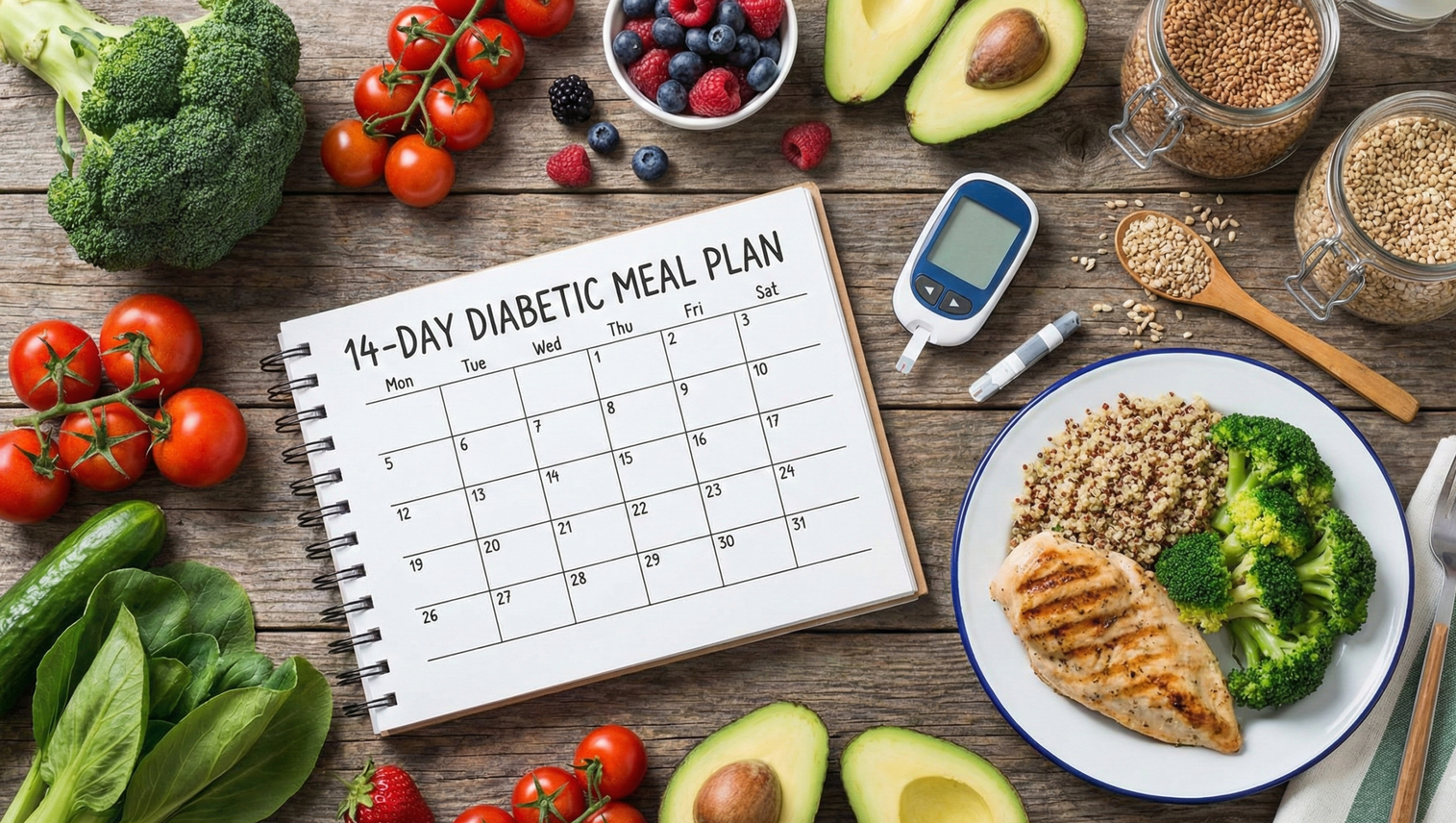
The Definitive 14-Day Diabetic Meal Plan: From Quick Fix to Lasting Habit
Consistency is the holy grail of diabetes management. We have all had those days where we eat perfectly, exercise, and see great numbers on the glucose monitor. But stringing those days together into a week, a month, or a year is where the real challenge lies. The “decision fatigue” of figuring out what to eat three times a day, every day, can wear down even the most disciplined person.
That is why a 14-day diabetic meal plan is a pivotal tool. Unlike a 1-day simple diabetic menu which serves as a quick reset, or a 3-day diabetic meal plan which helps you detox from a bad weekend, a two-week plan is about transformation.
In 14 days, your taste buds begin to adapt to lower sugar levels. Your body establishes a rhythm of insulin production (or reception). Most importantly, you prove to yourself that you can sustain a healthy lifestyle without feeling deprived. This guide provides a complete, nutritionist-approved roadmap for the next two weeks, focusing on high fiber, lean protein, and low-glycemic index (GI) foods. We also integrate strategies to manage hunger, simplify grocery shopping, and keep meals exciting.
Understanding the Glycemic Index: Your Secret Weapon for Blood Sugar Control
Before diving into the meal plan, it is essential to understand the single most powerful tool in your dietary arsenal: the Glycemic Index (GI). This ranking system measures how quickly a carbohydrate-containing food raises your blood glucose levels on a scale of 0 to 100. Pure glucose is the reference point at 100. Foods with a low GI (55 or below) are digested and absorbed slowly, producing a gradual rise in blood sugar rather than a sharp spike.
For someone managing diabetes, this distinction is not academic — it is the difference between stable energy throughout the day and the dreaded “sugar rollercoaster” that leaves you exhausted, irritable, and reaching for more carbohydrates to compensate. When you choose low-GI foods consistently, your pancreas (or your medication) has time to respond appropriately, keeping your blood sugar within a healthy range.
How to Read the Glycemic Index
The GI alone does not tell the whole story. A food’s Glycemic Load (GL) combines the GI with the actual amount of carbohydrate in a typical serving. For example, watermelon has a high GI (76) but a very low GL (4 per serving) because a single serving contains very little carbohydrate. This is why we focus on GL in our meal plan — it gives a more accurate picture of how a food will affect your blood sugar in a real-world portion.
Low-GI vs. High-GI Food Swaps
- Swap white rice (GI 73) for quinoa (GI 53) or cauliflower rice (GI ~15) — saves roughly 30-40 grams of fast-acting carbs per cup while adding protein and fiber.
- Swap white bread (GI 75) for sprouted grain bread (GI 36) — the sprouting process breaks down starches, making them easier to digest without spiking glucose.
- Swap instant oatmeal (GI 79) for steel-cut oats (GI 55) — the less processing, the slower the digestion. Steel-cut oats take 3-4 times longer to digest.
- Swap cornflakes (GI 81) for bran flakes (GI 43) — added fiber dramatically slows glucose absorption.
- Swap a banana (GI 51) for berries (GI 25-40) — berries offer more fiber per calorie and a fraction of the glycemic impact.
The GI Scale at a Glance
| GI Category | Score | Blood Sugar Effect | Best Choices from This Plan |
|---|---|---|---|
| Low GI | 55 or below | Slow, gentle rise; sustained energy | Lentils (22), chickpeas (28), most non-starchy vegetables, berries, steel-cut oats, quinoa, sweet potato |
| Medium GI | 56-69 | Moderate rise; acceptable in controlled portions | Brown rice (50-55), whole wheat bread (54), pineapple (59), grapes (59) |
| High GI | 70 or above | Rapid spike; requires careful pairing | White rice (73), white bread (75), instant oatmeal (79), watermelon (76) — use sparingly and always pair with protein |
Throughout this 14-day plan, every carbohydrate recommendation is chosen for its low-to-medium GI profile. When you see quinoa, sweet potato, or legumes appear repeatedly, that is intentional — these foods provide reliable, predictable glucose release that works with your body rather than against it.
Why 14 Days? The Science of Adaptation (and Habit Formation)
Why commit to two weeks? Biologically, it takes roughly two weeks for your body to start regulating hunger hormones (leptin and ghrelin) when you switch to a nutrient-dense diet. If you have been struggling with cravings for processed carbohydrates, the first week is often the hardest, but the second week is where the magic happens. Additionally, 14 days is long enough to see a meaningful change in your HbA1c (glycated hemoglobin) trend, especially if you were previously eating a high-glycemic diet.
During this plan, we will cycle through a variety of foods to ensure you don’t get bored—a common pitfall of shorter plans. We will also introduce “cook once, eat twice” principles to reduce your time in the kitchen. By the end of day 14, you’ll have a repertoire of go-to meals and the confidence to adapt them.
The Core Nutritional Rules (The “Why” Behind Every Meal)
- The 50/25/25 Plate: 50% Non-starchy vegetables (spinach, broccoli, peppers), 25% Lean Protein (chicken, fish, tofu), 25% Complex Carbs (quinoa, sweet potato, legumes). This ratio ensures satiety and slow glucose release.
- Hydration First: Drinking 16oz of water before every meal aids satiety and kidney function. Dehydration can raise blood sugar.
- Zero Naked Carbs: Never eat a carbohydrate (like an apple) without a partner (like peanut butter) to buffer the glucose spike. Protein and fat slow digestion.
- Fiber at Every Meal: Aim for at least 8g of fiber per meal to blunt postprandial spikes and support gut health.
The First 72 Hours: What to Expect
Understanding what happens in your body during the first three days helps you push through without abandoning the plan. On Day 1, your blood sugar will likely begin stabilizing if you were previously eating a high-sugar diet, but you may feel unusual — slightly irritable, perhaps a mild headache. This is not a sign that the plan is wrong; it is a sign that your body is recalibrating.
By Day 2, your glycogen stores (the body’s short-term carbohydrate reserves in your liver and muscles) begin to deplete if you were eating excess carbs before. Your body starts switching to using fat for energy more efficiently. The mild headache you might feel is partly due to reduced inflammation — processed foods cause fluid retention, and cutting them causes your kidneys to release that fluid along with electrolytes. Counter this by adding a pinch of sea salt to your water or drinking bone broth.
By Day 3, most people report a noticeable increase in mental clarity. The “brain fog” that many diabetics experience — caused by fluctuating glucose levels — begins to lift as your blood sugar stabilizes. Your energy levels start to even out, and the afternoon slumps that used to send you reaching for a candy bar become less intense. This is your body learning to rely on a steadier fuel supply.
Days 4-7: The Adaptation Zone
This is where most people either succeed or quit. Your taste buds, which have been desensitized by years of processed sugar, begin to recalibrate. Foods that once tasted bland — a plain piece of grilled chicken, a fresh salad with olive oil — start developing richer, more complex flavors. This is not placebo; it is a genuine neurological change. Studies show that reducing sugar intake for just 14 days measurably increases your sensitivity to sweet tastes, meaning you need less sugar to feel satisfied.
Your hunger hormones also begin normalizing. Leptin (the “I’m full” hormone) starts working more effectively because your cells are no longer flooded with insulin. Ghrelin (the “I’m hungry” hormone) stops spiking erratically between meals. The net result: you feel genuinely hungry at mealtimes and genuinely satisfied afterward, without the constant grazing that derails so many diets.
Days 8-14: The Confidence Phase
The second week is where the 14-day plan proves its value over a 7-day plan. By now, you have navigated at least one weekend — the danger zone for most diabetics — and emerged with stable numbers. You have figured out which meals take 10 minutes to throw together on busy nights. You have a short list of meals you genuinely enjoy.
Physiologically, your fasting blood glucose should show improvement. If you were testing before starting the plan, compare your Day 1 fasting number to your Day 10 fasting number. Most people see a 10-20 mg/dL improvement, which is clinically significant. Your post-meal spikes should also be shorter in duration — instead of taking 3-4 hours to return to baseline, your blood sugar should come down within 2 hours of eating, which is the ADA’s recommended target.

Glass Meal Prep Containers (12-Piece Set)
Organization is 90% of the battle. These glass containers let you prep 3-4 days in advance, keeping your 14-day plan fresh and accessible. Perfect for the 50/25/25 plate method.
Check Price on AmazonBlood Sugar Monitoring: Reading Your Numbers Like a Pro
A meal plan without monitoring is like driving without a speedometer — you might be going the right speed, or you might be speeding, and you simply cannot tell. Blood glucose monitoring transforms your diet from guesswork into data-driven management. During these 14 days, testing is not optional; it is the feedback loop that tells you which meals work for your body and which need adjustment.
When to Test: The Essential Schedule
If you are testing for the first time or returning to consistent monitoring, this schedule captures the data points that matter most:
- Fasting (wake-up): Test immediately upon waking, before coffee or water. This number tells you how your liver released glucose overnight and is the most consistent marker of overall control.
- Pre-meal (15 minutes before eating): Establishes a baseline so you can calculate the actual impact of your meal.
- Post-meal (2 hours after first bite): The ADA’s standard measurement window. Your number should be under 180 mg/dL, but ideally under 160 mg/dL if you are working toward tighter control.
- Bedtime: Helps you understand your overnight trajectory. If bedtime numbers are high, your evening snack or dinner may need adjustment.
Pro Tip: The “Before and After” Test
On Day 1 of the plan, test right before eating dinner and then exactly 2 hours after your first bite. Write both numbers down. Repeat this for at least 5 different dinners during the 14 days. You will quickly discover which meals cause the smallest spikes — those become your go-to weeknight favorites. The goal is not perfection (a 0 mg/dL rise is impossible); the goal is staying under 40-50 mg/dL above your pre-meal number.
Understanding Your Readings
Your blood glucose monitor gives you a number, but that number tells a story. Here is how to interpret the most common readings you will see during this plan:
| Reading Range | What It Means | Action |
|---|---|---|
| 70-99 mg/dL (fasting) | Normal fasting range | You are on track. Keep doing what you are doing. |
| 100-125 mg/dL (fasting) | Pre-diabetic range | The meal plan should bring this down over 14 days. Monitor trends, not single readings. |
| 126+ mg/dL (fasting) | Diabetic range | Expected if you have been diagnosed. Track whether this number improves with the plan. If it stays above 180, contact your doctor. |
| Under 180 mg/dL (2hr post-meal) | Within ADA target | Good. Aim to bring this under 160 for tighter control. |
| 180-250 mg/dL (2hr post-meal) | Elevated | Review what you ate. Was there a hidden carb? Reduce carb portion next time and test again. |
| Over 250 mg/dL | Significantly high | Drink water, take a 15-minute walk, and test again in 1 hour. If it stays above 250, contact your healthcare provider. |
| Under 70 mg/dL | Hypoglycemia | Consume 15-20g fast-acting carbs (juice, glucose tablets). Re-test in 15 minutes. Do not skip meals if you are on insulin or sulfonylureas. |
The single most important metric during these 14 days is not any individual number — it is the trend. If your fasting glucose started at 145 mg/dL on Day 1 and is 128 mg/dL by Day 7, you are making meaningful progress even if you are not yet at your target. Diabetes management is a marathon, and this plan gives you the foundation to keep improving.
Meal Prep Masterclass: Batch Cooking for the 14-Day Plan
The number one reason people abandon meal plans is not taste or cost — it is time. Standing in the kitchen at 6 PM after a long day, facing the prospect of chopping vegetables, measuring portions, and cooking from scratch, is overwhelming. Meal prep eliminates this friction by front-loading the work to one or two sessions per week.
For this 14-day plan, we recommend two prep sessions: Sunday afternoon (preparing Days 1-7) and the following Saturday or Sunday (preparing Days 8-14). Each session takes approximately 2-3 hours and produces enough food for the entire week with minimal daily cooking required.
The Sunday Prep Session: Step by Step
- Start your grains first. Cook a large batch of quinoa (3 cups dry) and steel-cut oats (2 cups dry). These take 15-20 minutes and can simmer unattended while you prep other items. Quinoa stores perfectly for 5 days in the fridge. Portion into daily servings (about 1/2 cup cooked) in your glass containers.
- Batch-grill your proteins. Season 2 pounds of chicken breast with different spice blends (lemon-herb for Days 1-3, cumin-paprika for Days 4-5). Grill or bake at 400°F for 20-25 minutes. While the chicken rests, season and pan-sear your salmon fillets for Days 1-2 (3 minutes per side). Slice or portion everything into containers once cooled.
- Roast a tray of mixed vegetables. Toss broccoli, bell peppers, Brussels sprouts, and asparagus in olive oil, salt, and pepper. Spread on a sheet pan and roast at 425°F for 20-25 minutes. These roasted vegetables become side dishes, salad toppings, and stir-fry additions throughout the week.
- Prep your breakfasts. Make a batch of egg muffins (beat 12 eggs, pour into muffin tin with spinach, diced peppers, and feta — bake at 350°F for 18 minutes). These grab-and-go breakfasts save 10 minutes every morning. Alternatively, prepare overnight oats or chia pudding jars for Days 3-5.
- Wash and chop raw vegetables. Spinach should be washed and dried (a salad spinner is essential). Broccoli should be cut into florets. Celery and carrots should be cut into sticks for snacks. Store everything in containers lined with paper towels to absorb moisture — this keeps vegetables crisp for up to 5 days.
- Portion your snacks. Divide almonds into 12-piece portions in small bags. Pre-slice cucumbers and bell peppers. Portion hummus into 2-tablespoon servings. Having grab-and-go snacks prevents the “I’m too hungry to cook” spiral that leads to bad choices.
The “Cook Once, Eat Twice” Principle
Notice that many dinners in this plan are designed with leftovers in mind. Day 1’s baked salmon becomes Day 2’s lunch wrap. Day 3’s roasted chicken becomes Day 4’s chicken salad. Day 7’s pork loin becomes Day 8’s sandwich filling. This is not laziness — it is strategic cooking. Every meal you cook should produce enough for at least two servings. This halves your total cooking time over the 14 days.
Smart Storage Tips
How you store your prepped food matters as much as how you cook it. Glass containers are superior to plastic for several reasons: they do not leach chemicals when reheated, they do not absorb odors or stains, and they keep food fresher longer. Use containers with snap-lock lids for airtight seals. Label each container with the day and meal using masking tape and a marker — this eliminates the “what day is this for?” confusion that leads to eating the wrong meal on the wrong day.
Cooked proteins should be consumed within 4 days if stored in the refrigerator. If you are prepping for the full week, freeze Days 5-7 proteins on Sunday and move them to the fridge the night before you need them. Grains and roasted vegetables keep well for the full 7 days. Raw chopped vegetables should be used within 5 days for optimal crispness.
Week 1: Stabilization and Detox (Days 1–7)
The goal of the first week is to stabilize blood sugar levels and eliminate the rollercoaster of highs and lows. We focus on simple, easily digestible ingredients. If you are coming from a standard diet high in processed foods, you might feel a “withdrawal” headache on Day 2 or 3. Push through it—hydration helps. These meals are designed to be satisfying while gently lowering your average glucose.
Days 1-3: The Reset (Breaking the Sugar Cycle)
Day 1
- Breakfast: Scrambled eggs with spinach and feta cheese. 1 slice of sprouted grain toast (like Ezekiel).
- Lunch: Grilled chicken breast salad with olive oil vinaigrette. 1/2 cup chickpeas (adds fiber and resistant starch).
- Dinner: Baked Salmon with roasted asparagus and 1/2 cup quinoa. Salmon provides omega-3 to reduce inflammation.
- Snack: A small apple with 1 tbsp almond butter (fiber + fat).
Day 2
- Breakfast: Greek yogurt (unsweetened, plain) with 1 tbsp chia seeds, 1 tbsp flaxseeds, and 1/2 cup blueberries.
- Lunch: Leftover Salmon (from Day 1) flaked into a wrap with low-carb tortilla and mixed greens. Add a squeeze of lemon.
- Dinner: Turkey Stir-fry: Lean ground turkey, broccoli, bell peppers, low-sodium soy sauce, and ginger. Served over cauliflower rice (saves 40g carbs).
- Snack: Hard-boiled egg with a pinch of paprika.
Day 3
- Breakfast: Steel-cut oatmeal (1/2 cup cooked) with cinnamon and 10 walnut halves.
- Lunch: Lentil soup (vegetable base, watch sodium) with a side green salad (balsamic vinaigrette).
- Dinner: Roasted Chicken Thighs (skinless) with Brussels sprouts and sweet potato wedges (keep skin on for extra fiber).
- Snack: Celery sticks with 2 tbsp hummus.
Why These Specific Foods on Days 1-3?
Notice the deliberate pattern: Day 1 features omega-3-rich salmon to reduce systemic inflammation that may be elevating your fasting glucose. Day 2 introduces chia seeds and flaxseeds — two of the highest-fiber foods on the planet — to begin building your gut microbiome. Day 3’s steel-cut oats and lentils provide soluble fiber that forms a gel in your digestive tract, physically slowing carbohydrate absorption. This is not random; each day builds on the previous one.
Days 4-7: Building Momentum (Introducing Variety)
By now, your cravings should be subsiding. We introduce more textures and flavors here while maintaining the macronutrient balance.
Day 4
- Breakfast: Veggie Omelet (mushrooms, onions, tomatoes, 2 eggs). Side of 1/2 cup raspberries.
- Lunch: Leftover Roasted Chicken chopped into a salad with avocado, cucumber, and balsamic glaze.
- Dinner: Beef and Broccoli stir-fry (use flank steak) with 1/2 cup brown rice.
- Snack: A handful of raw almonds (about 12).
Day 5
- Breakfast: Cottage cheese bowl (low-fat) with sliced peaches (fresh, not canned in syrup) and 1 tbsp sunflower seeds.
- Lunch: Tuna Salad (made with Greek yogurt instead of mayo) served in lettuce cups (butter lettuce works well).
- Dinner: White Fish (Cod or Tilapia) baked with lemon butter. Steamed green beans and 1/2 cup wild rice.
- Snack: String cheese (mozzarella).
Day 6
- Breakfast: Smoothie: 2 cups spinach, 1 scoop protein powder (unsweetened), 1/2 banana, 1 cup unsweetened almond milk, ice.
- Lunch: Leftover Beef stir-fry (from Day 4).
- Dinner: Zucchini Noodles with Marinara Sauce (no sugar) and Turkey Meatballs (homemade, with lean turkey).
- Snack: Cucumber slices with 2 tbsp guacamole.
Day 7
- Breakfast: Avocado Toast on whole-grain bread with a poached egg and red pepper flakes.
- Lunch: Caprese Salad (fresh mozzarella, tomato, basil) with grilled chicken strips (adds protein).
- Dinner: Sunday Roast: Lean pork loin, roasted carrots, and turnips (both low-GI root veg).
- Snack: Greek yogurt (plain) with 1 tbsp pumpkin seeds.
Congratulations on finishing Week 1! If you felt this was manageable, you have already conquered the hardest part. For a condensed version of this, check our 7-day diabetic menu.
Week 1 Check-In: What Your Numbers Should Look Like
If you have been monitoring your blood sugar as recommended, your fasting glucose should show a downward trend by Day 7. A realistic expectation is a 5-15 mg/dL improvement in fasting numbers. Your post-meal spikes should also be shorter — coming down to baseline within 2.5-3 hours instead of 3-4 hours. If you are not seeing improvement yet, do not panic. Some medications take 1-2 weeks to fully synergize with dietary changes. Keep going.

Diabetic Air Fryer Cookbook
Want to make those roasted veggies and chicken thighs crispy without the oil? An air fryer is a game-changer for Week 2. This cookbook includes 100+ low-carb, diabetic-friendly recipes.
Check Price on AmazonExercise and Meal Timing: How Physical Activity Supercharges Your Results
A meal plan and exercise work synergistically — the whole is greater than the sum of its parts. When you exercise, your muscles consume glucose for fuel, pulling it directly from your bloodstream without requiring insulin. This “insulin-independent” glucose uptake means that even a short walk after a meal can cut your post-meal blood sugar spike by 20-30%. Combined with the low-GI meals in this plan, exercise creates a compounding effect that accelerates your progress.
The Post-Meal Walk: Your Most Powerful Tool
Of all the exercises you could do, a 15-20 minute walk within 30-60 minutes of eating is the single most evidence-backed intervention for reducing post-meal glucose spikes. Research from the University of Otago found that post-meal walks reduced blood sugar by an average of 22% compared to a single 30-minute morning walk. The mechanism is simple: your leg muscles are large glucose consumers, and walking activates them at a moderate intensity that draws sugar from your blood without triggering a stress response that could raise cortisol and glucose.
For this 14-day plan, we recommend a post-dinner walk on at least 10 of the 14 days. It does not need to be intense — a leisurely pace around your neighborhood is sufficient. The key is consistency and timing. Even 10 minutes is beneficial; 20 minutes is optimal. If you cannot walk outside, walking in place, climbing stairs, or doing bodyweight squats for 5 minutes each hour after meals achieves a similar effect.
Strength Training: Building Your Glucose sponge
Muscle tissue is your body’s largest glucose storage depot. The more muscle mass you have, the more glucose your body can buffer after meals, preventing spikes. Strength training also improves insulin sensitivity for up to 48 hours after a session — meaning your body uses insulin more efficiently for two full days after lifting weights.
During these 14 days, aim for 2-3 strength training sessions of 20-30 minutes each. You do not need a gym. Bodyweight exercises — squats, lunges, push-ups, planks — are sufficient. The critical rule: always test your blood sugar before strength training. If it is under 100 mg/dL, have a small snack (like an apple with peanut butter) to prevent hypoglycemia during exercise. If it is over 250 mg/dL, skip the workout until your levels come down, as intense exercise can temporarily raise blood sugar in people with very high starting levels.
Exercise Safety for Diabetics on Insulin or Sulfonylureas
If you take insulin or sulfonylurea medications (glipizide, glyburide, glimepiride), exercise can cause your blood sugar to drop dangerously low (hypoglycemia). Always carry fast-acting glucose (tablets, juice) during exercise. Reduce your insulin dose before exercise only if your doctor has given you specific sliding-scale instructions. Never exercise if your pre-workout blood sugar is above 250 mg/dL with ketones present — this combination can lead to diabetic ketoacidosis.
Sample Exercise Schedule for the 14-Day Plan
| Day | Recommended Activity | Duration | Timing |
|---|---|---|---|
| Day 1 | Post-dinner walk | 20 minutes | After dinner |
| Day 2 | Bodyweight strength (squats, push-ups, planks) | 25 minutes | Morning or afternoon |
| Day 3 | Post-dinner walk | 15 minutes | After dinner |
| Day 4 | Post-dinner walk + stretching | 20 minutes | After dinner |
| Day 5 | Bodyweight strength | 30 minutes | Morning or afternoon |
| Day 6 | Post-dinner walk | 20 minutes | After dinner |
| Day 7 | Active rest — gentle yoga or leisure walk | 30 minutes | Anytime |
| Day 8 | Post-dinner walk | 20 minutes | After dinner |
| Day 9 | Bodyweight strength | 25 minutes | Morning or afternoon |
| Day 10 | Post-dinner walk | 15 minutes | After dinner |
| Day 11 | Post-dinner walk + stretching | 20 minutes | After dinner |
| Day 12 | Bodyweight strength | 30 minutes | Morning or afternoon |
| Day 13 | Post-dinner walk | 20 minutes | After dinner |
| Day 14 | Active rest — celebration walk or yoga | 30 minutes | Anytime |
Week 2: Optimization and Variety (Days 8–14)
In Week 2, we repeat some core concepts but introduce new flavors to prevent boredom. This week tests your flexibility. We will use leftovers more strategically to reduce cooking time. By now your insulin sensitivity should be improving; you may notice fewer afternoon slumps.
Days 8-10: Leftover Leverage & Global Flavors
Day 8
- Breakfast: Egg Muffins (prepped on Sunday) with spinach, bell pepper, and feta cheese.
- Lunch: Leftover Pork Loin (from Day 7) sliced thin on a sandwich with whole-grain bread, mustard, and arugula.
- Dinner: Shrimp Tacos: 2 small corn tortillas, grilled shrimp, cabbage slaw (lime juice), and a dollop of Greek yogurt.
- Snack: Pear slices with 1 oz cheddar cheese.
Day 9
- Breakfast: Chia Seed Pudding (made overnight with almond milk, vanilla, and a pinch of stevia). Top with 1/4 cup blackberries.
- Lunch: Taco Salad: Leftover cabbage slaw, 1/2 cup black beans, leftover shrimp or chicken, salsa, and avocado.
- Dinner: Eggplant Parmesan (baked, not fried, with a light sprinkle of Parmesan and no breading). Side salad.
- Snack: Edamame (steamed, lightly salted).
Day 10
- Breakfast: Mushroom and Swiss Frittata (use 3 eggs, 1 oz Swiss, mushrooms).
- Lunch: Minestrone Soup (heavy on beans and veggies, light on pasta – or use whole grain pasta).
- Dinner: Grilled Flank Steak with Chimichurri sauce. Roasted cauliflower with garlic.
- Snack: Roasted chickpeas (homemade, no sugar).
Days 11-14: The Home Stretch (Celebrate with Flavor)
Day 11
- Breakfast: Tofu Scramble with turmeric, kale, and nutritional yeast (vegan option).
- Lunch: Leftover Flank Steak over mixed greens with cherry tomatoes and cucumber.
- Dinner: Lemon Garlic Chicken Breasts with sautéed kale and roasted butternut squash cubes (1/2 cup).
- Snack: Dark chocolate (1 square, 85% cocoa) and 6 almonds.
Day 12
- Breakfast: Whole grain waffles (high-fiber frozen or homemade) with 1 tbsp peanut butter and a few berries.
- Lunch: Chicken wrap: low-carb tortilla, hummus, leftover chicken, roasted peppers.
- Dinner: Baked Trout or Snapper with ratatouille (stewed eggplant, zucchini, tomatoes).
- Snack: Berries with a dollop of sugar-free whipped cream.
Day 13
- Breakfast: Smoked Salmon plate: 2 oz smoked salmon, cucumber slices, tomato, capers, 1 whole grain cracker.
- Lunch: Quinoa bowl with roasted veggies (broccoli, cauliflower) and tahini-lemon dressing.
- Dinner: Turkey Chili (ground turkey, kidney beans, diced tomatoes, chili spice).
- Snack: Pistachios (in shell, handful).
Day 14
- Breakfast: Omelet with leftover chili filling (a savory, protein-packed start!).
- Lunch: Leftover Chili.
- Dinner: Celebration Meal: Roast Chicken (lemon-herb), mashed cauliflower (with garlic and butter), and green beans almondine.
- Snack: Apple slices with walnut butter.
If you prefer fewer carbohydrates than what is listed here, you might be interested in our low-carb weekly diabetic menu which restricts starches further while keeping you full.
Type 1 vs. Type 2: Adapting the Plan to Your Specific Needs
While the nutritional principles in this plan apply to both Type 1 and Type 2 diabetes, the practical management differs significantly. Understanding these differences helps you use the plan more effectively.
Type 1 Diabetes Considerations
If you have Type 1 diabetes, your body produces little to no insulin. This means you must match your insulin doses to your carbohydrate intake — a process called carb counting. Every meal in this plan contains a specific carbohydrate amount that you can use to calculate your bolus (mealtime) insulin dose. Here are the approximate carbohydrate counts per meal in this plan:
| Meal Type | Average Carbs | Insulin Matching Strategy |
|---|---|---|
| Breakfast | 20-35g | Many T1 diabetics have higher insulin resistance in the morning (dawn phenomenon). You may need a higher insulin-to-carb ratio for breakfast than for other meals. |
| Lunch | 25-40g | Usually the most predictable meal for insulin dosing. Test frequently during Week 1 to establish your pattern. |
| Dinner | 30-45g | Evening insulin sensitivity varies. A post-dinner walk can reduce the insulin needed by 20-30%. |
| Snack | 5-15g | Most snacks in this plan are low-carb enough to not require insulin, but test to confirm your individual response. |
The critical rule for Type 1 diabetics: never skip meals on this plan. Skipping a meal while your basal (long-acting) insulin is working can cause dangerous hypoglycemia. If you are not hungry at mealtime, eat a smaller portion rather than skipping entirely.
Type 2 Diabetes Considerations
For Type 2 diabetes, the primary focus of this plan is improving insulin sensitivity and, if appropriate, supporting weight loss. Many people with Type 2 diabetes can improve their condition dramatically through diet alone — some even achieve remission (normal blood sugar without medication) through sustained dietary changes and weight loss.
If you take metformin, this plan is fully compatible. Metformin works by reducing your liver’s glucose production and improving insulin sensitivity — the low-GI foods in this plan complement that mechanism perfectly. If you take sulfonylureas (which stimulate your pancreas to produce more insulin), be aware that the improved diet may cause your blood sugar to drop lower than expected. Monitor closely during the first week and discuss potential dose adjustments with your doctor.
If you take insulin for Type 2, the same carb-counting principles from the Type 1 section apply. However, many Type 2 patients on basal-only insulin can follow this plan without bolus adjustments because the meals are designed to produce gentle, predictable glucose curves rather than sharp spikes.
Myth: Type 2 diabetes is a “mild” form
There is no mild diabetes. Type 2 carries the same risks of neuropathy, retinopathy, kidney disease, and cardiovascular complications as Type 1. The dietary discipline required is equally important.
Fact: Diet can put Type 2 into remission
Clinical studies show that sustained weight loss of 10-15% of body weight, combined with a low-GI diet, can achieve diabetes remission in 40-60% of Type 2 patients. This 14-day plan is a proven starting point.
The Hydration and Beverage Guide: What to Drink (and What to Avoid)
What you drink affects your blood sugar as much as what you eat, yet beverage choices are often overlooked in diabetes meal plans. Dehydration concentrates your blood, raising glucose levels. The wrong beverages can cause spikes as dramatic as eating candy. This guide covers every drink option for the next 14 days.
The Best Beverages for Blood Sugar
- Water (unlimited): The gold standard. Aim for at least 8 glasses per day. Add lemon, cucumber, or mint for flavor if plain water feels boring. sparkling water is also acceptable — the carbonation does not affect blood sugar.
- Black coffee (1-2 cups/day): Contains chlorogenic acid, which may improve insulin sensitivity. Avoid adding sugar, flavored syrups, or sweetened creamers. A splash of unsweetened almond milk is fine.
- Green tea (2-3 cups/day): Rich in catechins that support glucose metabolism. A 2020 meta-analysis found that green tea consumption reduced fasting blood sugar by an average of 5.8 mg/dL. Drink it unsweetened.
- Herbal tea (unlimited): Chamomile, peppermint, and hibiscus teas are all zero-calorie, zero-glycemic options. They also support hydration and relaxation.
- Sparkling water with lemon: Zero sugar, zero calories, zero glycemic impact. A great alternative to soda during the 14 days.
Beverages to Avoid or Limit
The Hidden Sugar in Common Drinks
A single can of regular soda contains 39 grams of sugar — equivalent to eating 10 teaspoons of table sugar. A 16-ounce “healthy” smoothie from a chain restaurant can contain 50-70 grams of sugar. Even fruit juice, which is marketed as healthy, delivers a concentrated dose of sugar without the fiber that whole fruit provides. A glass of orange juice raises blood sugar faster than a can of soda. During these 14 days, eliminate all sugary beverages and replace them with the options above.
| Beverage | Sugar Content | Glycemic Impact | Verdict |
|---|---|---|---|
| Water | 0g | None | Drink freely |
| Black coffee | 0g | None (may improve sensitivity) | 1-2 cups/day |
| Green tea | 0g | None (may reduce fasting glucose) | 2-3 cups/day |
| Diet soda | 0g (artificial sweeteners) | Minimal | Occasional; artificial sweeteners may affect gut bacteria |
| Fresh orange juice (8 oz) | 21g | High (GI 50) | Avoid during 14-day plan |
| Regular soda (12 oz) | 39g | Very high | Eliminate completely |
| Sweetened iced tea | 25-35g | High | Eliminate completely |
| Energy drinks | 27-62g | Very high | Eliminate completely |
Stress, Sleep, and Blood Sugar: The Hidden Connection Most Diabetics Miss
You can follow this meal plan perfectly, exercise daily, and take your medications on time — and still see elevated blood sugar numbers if you are chronically stressed or sleep-deprived. This is one of the most underappreciated aspects of diabetes management, and understanding it can be the breakthrough that finally gets your numbers where you want them.
How Stress Raises Blood Sugar
When you are stressed, your body enters “fight or flight” mode and releases cortisol and adrenaline. These hormones signal your liver to dump glucose into your bloodstream to provide emergency energy for your muscles. This is a survival mechanism — in a prehistoric emergency, you needed quick energy to run from a predator. But in modern life, chronic work stress, financial worry, and relationship conflict keep cortisol elevated continuously, causing your liver to release glucose throughout the day regardless of what you eat.
Research shows that chronic psychological stress can raise fasting blood glucose by 10-25 mg/dL — enough to push someone from pre-diabetic to diabetic range, or to prevent a well-controlled diabetic from reaching their targets. This is why two people following identical meal plans can have wildly different results: stress is the hidden variable.
How Poor Sleep Derails Your Metabolism
Sleep deprivation is arguably worse than stress for blood sugar control. A single night of sleeping only 4-5 hours can reduce insulin sensitivity by up to 25%. Your body responds to sleep deprivation the same way it responds to stress — by releasing cortisol — but it also increases ghrelin (hunger hormone) and decreases leptin (satiety hormone), creating a perfect storm of cravings and metabolic dysfunction.
During these 14 days, prioritize 7-8 hours of sleep per night. This is not a luxury; it is a medical necessity for diabetes management. Practical tips: maintain a consistent bedtime, avoid screens for 30 minutes before bed, keep your bedroom cool (65-68°F is optimal), and avoid caffeine after 2 PM. If you struggle with sleep apnea (common in people with Type 2 diabetes), treating it with a CPAP machine can dramatically improve your fasting glucose numbers.
Quick Stress-Reduction Techniques That Lower Blood Sugar
- 4-7-8 breathing: Inhale for 4 seconds, hold for 7, exhale for 8. Repeat 4 times. This activates your parasympathetic nervous system, reducing cortisol within minutes.
- Post-meal walk (dual benefit): A 15-minute walk reduces both blood sugar AND cortisol simultaneously.
- Cold water splash: Splashing cold water on your face triggers the dive reflex, lowering heart rate and cortisol.
- Progressive muscle relaxation: Tense and release each muscle group for 5 seconds, starting from your toes and working up to your head. This reduces physical tension that contributes to elevated cortisol.
Budget-Friendly Diabetes: Eating Well Without Breaking the Bank
One of the most persistent myths about diabetes management is that eating healthy requires expensive specialty foods. In reality, the core foods in this plan — beans, lentils, eggs, chicken thighs, seasonal vegetables, oats, and brown rice — are among the cheapest items in any grocery store. The money you spend on whole foods is offset by money you save on processed foods, restaurant meals, and (potentially) future medical costs from poorly managed diabetes.
The 10 Most Budget-Friendly Diabetes Superfoods
| Food | Average Cost | Diabetes Benefit | How to Use in This Plan |
|---|---|---|---|
| Beans (dried) | $1.50/lb (12+ servings) | High fiber (15g/cup), low GI (22-29) | Lentil soup (Day 3), black bean tacos (Day 9), chili (Day 13) |
| Eggs | $3-4/dozen | Perfect protein, zero carbs | Breakfast scrambles, egg muffins, frittatas throughout the plan |
| Oats (steel-cut) | $3-4/canister (15+ servings) | Soluble fiber (beta-glucan) lowers fasting glucose | Breakfast (Days 3, 14), overnight oats |
| Chicken thighs | $2-3/lb | Lean protein, versatile, more flavorful than breast | Roasted chicken thighs (Day 3), stir-fry, salads |
| Cabbage | $0.50-1/head | Extremely low GI, high fiber, versatile | Cabbage slaw (Day 8), stir-fry addition, soup base |
| Sweet potatoes | $1-2/lb | Lower GI than white potatoes, high in vitamin A | Sweet potato wedges (Day 3), roasted cubes (Day 11) |
| Spinach (frozen) | $2-3/bag (10+ servings) | Iron, magnesium, virtually zero carbs | Smoothies (Day 6), scrambled eggs, salads |
| Canned tuna | $1-2/can | Omega-3s, high protein, zero carbs | Tuna salad lettuce cups (Day 5) |
| Peanut butter | $3-4/jar (15+ servings) | Healthy fat, protein, pairs with fruit to buffer glucose | Snacks (Days 1, 12, 14), smoothies |
| Brown rice | $2-3/lb (10+ servings) | Complex carb, higher fiber than white rice | Side dish (Day 4), stir-fry base, grain bowls |
Money-Saving Strategies for the 14-Day Plan
- Buy proteins in bulk and freeze. A 5-pound bag of chicken thighs costs significantly less per pound than individual packages. Divide into daily portions and freeze immediately.
- Use frozen vegetables liberally. Frozen spinach, broccoli, and mixed vegetables are nutritionally equivalent to fresh (sometimes more so, as they are flash-frozen at peak ripeness) and cost 40-60% less.
- Cook dried beans instead of canned. A pound of dried beans costs $1.50 and yields the equivalent of 6 cans (at $1.50 each). Soak overnight and cook in a slow cooker for hands-off preparation.
- Plan meals around what is on sale. This plan is flexible — if salmon is expensive this week, substitute with mackerel or sardines (both omega-3-rich and often cheaper). If flank steak is on sale, move Day 10’s dinner forward.
- Grow fresh herbs at home. A $3 basil plant on your windowsill provides months of fresh basil for salads and Italian dishes, replacing $2-3 per bunch at the store.
- Avoid pre-cut and pre-washed produce. The convenience markup is 50-200%. Washing and chopping your own vegetables takes 5 minutes and saves significant money over 14 days.
The Real Cost Comparison
Let’s do the math. A typical 14-day plan using this guide costs approximately $150-200 for one person (less if buying for a household). That is $10-14 per day for three meals and snacks. Compare that to: fast food ($15-20/day for three meals), restaurant meals ($30-50/day), or the long-term medical costs of unmanaged diabetes (average $9,601 per year in additional medical expenses, according to the ADA). This meal plan is not an expense — it is an investment with measurable financial returns.
International Flavors: Adapting the Plan to Mediterranean, Asian, and Latin American Cuisines
One of the biggest concerns about following a structured meal plan is food boredom. The good news: diabetes-friendly eating is not limited to bland “health food.” Many of the world’s traditional cuisines are naturally low-glycemic and packed with flavors that make healthy eating genuinely enjoyable. Here is how to adapt the core principles of this plan to three of the world’s most diabetes-friendly culinary traditions.
Mediterranean Adaptation
The Mediterranean diet is widely considered the gold standard for diabetes management, and for good reason. It emphasizes olive oil, fish, legumes, whole grains, and abundant vegetables — the same building blocks as our 14-day plan. To Mediterranean-ify any meal in this plan:
- Replace butter with extra virgin olive oil (higher in monounsaturated fats that improve insulin sensitivity)
- Add olives, capers, and sun-dried tomatoes to salads and grain bowls
- Use lemon juice and fresh herbs (oregano, basil, thyme) instead of heavy sauces
- Include fish 3-4 times per week (the Mediterranean average)
- Add a small portion of feta or goat cheese for flavor without the carb load of grain-heavy dishes
Mediterranean Quinoa Bowl (Replaces any grain-based lunch)
Cook 1/2 cup quinoa in vegetable broth. Top with diced cucumber, cherry tomatoes, Kalamata olives, red onion, and 3 oz grilled chicken or chickpeas. Drizzle with a dressing of extra virgin olive oil, lemon juice, oregano, and a pinch of salt. The combination of healthy fats from olive oil and olives with the protein creates a meal that barely moves the needle on your glucose monitor.
Asian Adaptation
Asian cuisines — particularly Japanese, Korean, and Thai — offer diabetes-friendly options that are heavy on vegetables, fermented foods, and lean proteins. The key is navigating the rice-heavy default. Replace white rice with cauliflower rice, brown rice, or shirataki noodles. Use low-sodium soy sauce or tamari (gluten-free) for umami flavor without excessive sodium.
- Japanese-inspired: Miso soup with tofu and seaweed as a starter (fermented soy supports gut health). Sashimi with edamame and a side of pickled vegetables. Green tea throughout the day.
- Korean-inspired: Kimchi as a condiment (fermented cabbage is low-GI and supports insulin sensitivity). Bibimbap with cauliflower rice, lean beef, sautéed vegetables, and a fried egg.
- Thai-inspired: Tom yum soup with shrimp (lemongrass, galangal, lime — no coconut milk needed). Stir-fry with fish sauce, ginger, garlic, and a mix of non-starchy vegetables.
Latin American Adaptation
Latin American cuisine offers hearty, flavorful options that can be diabetes-friendly with smart modifications. The primary adjustments: use corn tortillas instead of flour (lower GI), increase the vegetable-to-rice ratio, and use beans as your primary starch (they have half the glycemic impact of rice).
- Fajitas: Grilled chicken or steak with sautéed peppers and onions. Serve on 2 small corn tortillas with guacamole, salsa, and a dollop of Greek yogurt (replaces sour cream with more protein).
- Ceviche: Fresh fish “cooked” in lime juice with tomatoes, onions, cilantro, and jalapeño. Zero carbs, high protein, and the lime juice actually slows glucose absorption.
- Black bean soup: Blend cooked black beans with cumin, garlic, and vegetable broth. High fiber (15g per cup), low GI, and deeply satisfying.
Common Mistakes That Sabotage Your Blood Sugar (and How to Avoid Them)
Even with the best meal plan, certain habits can undermine your results. After working with thousands of diabetic patients, we have identified the most common mistakes that prevent people from getting the full benefit of dietary changes.
Mistake #1: Not Eating Enough at Meals
Many diabetics, especially those trying to lose weight, dramatically reduce their portion sizes. While portion control is important, eating too little can cause your blood sugar to drop too low (especially if you take insulin or sulfonylureas), triggering a reactive spike as your body releases counter-regulatory hormones. The solution: eat the portions outlined in this plan. They are already calorie-controlled and nutritionally balanced. If you are still hungry, add more non-starchy vegetables — they are essentially free in terms of glycemic impact.
Mistake #2: Ignoring Hidden Carbs
Carbohydrates lurk in places you might not expect: salad dressings (2-8g per tablespoon), sauces (ketchup has 4g per tablespoon), flavored yogurts (15-25g per serving), and even medications (some liquid antacids contain sugar). During these 14 days, read every nutrition label. Look specifically at “Total Carbohydrates” and “Added Sugars” — these are the numbers that matter for blood sugar management.
Mistake #3: Eating Fruit Freely Because “It’s Natural”
Fruit is healthy, but it contains fructose, which raises blood sugar. The key is portion control and pairing. A whole apple (19g carbs) eaten alone will spike your glucose. Half an apple with 1 tablespoon of almond butter (which adds fat and protein to slow digestion) produces a much smaller, gentler rise. Berries are the best fruit choice for diabetics — lower in sugar, higher in fiber, and packed with antioxidants.
Mistake #4: Skipping Breakfast
Some people believe skipping breakfast reduces calories and helps weight loss. For diabetics, this backfires. Skipping breakfast often leads to overeating at lunch, larger post-lunch glucose spikes, and increased cravings for high-carb foods in the afternoon. Every breakfast in this plan is designed to start your day with protein and fiber, establishing a stable glucose baseline that carries through to lunch.
Mistake #5: Not Adjusting Medication with Dietary Changes
If you improve your diet significantly, your blood sugar will drop. If you do not adjust your medication accordingly, you risk hypoglycemia. This is especially true for insulin and sulfonylureas. Always inform your doctor when you begin a structured meal plan, and monitor your blood sugar more frequently during the first week. Your doctor may recommend reducing your medication dose to match your improved diet.
Myth: “Diabetes-friendly food doesn’t need to taste good”
Many people associate diabetic eating with bland, restrictive meals. This is a myth that prevents people from sticking with healthy eating long-term.
Fact: Herbs and spices are your secret weapon
Cinnamon, turmeric, cumin, garlic, ginger, and fresh herbs add extraordinary flavor without adding carbs, calories, or sodium. Many also have direct blood sugar benefits — cinnamon may improve insulin sensitivity by up to 20%.
Weight Loss Strategies Within the 14-Day Framework
For the approximately 85% of Type 2 diabetics who are overweight or obese, weight loss is not just a cosmetic goal — it is a medical intervention. Research from the DiRECT trial showed that losing just 15 kg (33 lbs) achieved diabetes remission in 86% of participants. Even a modest 5-10% reduction in body weight can dramatically improve insulin sensitivity, reduce HbA1c by 0.5-1.0%, and lower blood pressure.
This 14-day meal plan is designed to create a natural calorie deficit without explicit calorie counting. By focusing on high-fiber vegetables (which are voluminous but low in calories) and lean protein (which is highly satiating), most people naturally consume 300-500 fewer calories per day than on a typical Western diet — without feeling hungry.
Maximizing Weight Loss During the 14 Days
- Eat the non-starchy vegetables first. Research shows that eating vegetables before carbohydrates at a meal reduces post-meal glucose by 73% and insulin by 48%. This is because fiber creates a physical barrier in your intestine that slows carbohydrate absorption.
- Drink a full glass of water 15 minutes before each meal. A study from the University of Birmingham found that pre-meal water consumption increased weight loss by 44% over 12 weeks. The water fills your stomach, reducing the amount of food you eat.
- Keep protein at every meal. Protein is the most satiating macronutrient. Each meal in this plan includes at least 20-25g of protein to keep you full for 3-4 hours.
- Walk after meals. Post-meal walks reduce blood sugar AND burn 50-100 extra calories per walk. Over 14 days, that adds up to 700-1400 extra calories burned.
- Sleep 7-8 hours per night. Sleep deprivation increases ghrelin (hunger hormone) by 15% and decreases leptin (satiety hormone) by 15%, making weight loss significantly harder.
A reasonable expectation for 14 days is 3-6 pounds of weight loss, depending on your starting weight and adherence. Initial losses may be higher (5-8 lbs) due to water weight reduction as you cut processed foods and sodium. Do not be discouraged if weight loss slows after the first few days — this is normal and does not mean the plan has stopped working. Fat loss continues even when the scale stalls; your body is recompositioning.
Supplements and Vitamins: What Diabetics Actually Need
Whole foods should be your primary source of nutrition — this 14-day plan is designed to provide all essential nutrients through food alone. However, certain supplements have evidence supporting their use in diabetes management, and some deficiencies are more common in diabetics than in the general population.
Evidence-Based Supplements for Diabetes
Supplements to Avoid
- High-dose vitamin E: May increase all-cause mortality at doses above 400 IU/day.
- Bitter melon supplements: While the whole food is safe, concentrated supplements can cause dangerous blood sugar drops with certain medications.
- St. John’s Wort: Interacts with many diabetes medications and can affect blood sugar unpredictably.
- Any “diabetes cure” supplement: No supplement cures diabetes. If a product claims to “reverse diabetes naturally,” it is making an illegal health claim.

Reliable Glucose Monitor (Track Your Progress)
You can’t manage what you don’t measure. Track your fasting numbers and post-meal glucose throughout these 14 days to see the real impact of your diet. Look for a model with memory storage.
Check Price on AmazonCooking Techniques That Preserve Nutrients and Maximize Blood Sugar Benefits
How you cook your food matters as much as what you cook. Certain cooking methods preserve the fiber structure and nutritional content of vegetables, which directly affects how they interact with your blood sugar. Other methods can destroy beneficial compounds or add unnecessary calories.
The Best Cooking Methods for Diabetics
- Steaming: Preserves up to 90% of water-soluble vitamins (B and C) and maintains the fiber structure that slows glucose absorption. Ideal for broccoli, green beans, asparagus, and carrots. Steaming time should be brief — vegetables should be crisp-tender, not mushy. Overcooking breaks down fiber and converts complex carbs into simple sugars.
- Roasting at high heat (400-425°F): Caramelizes the natural sugars in vegetables, creating deep flavor without adding sugar. The dry heat concentrates flavors and creates a satisfying texture. Broccoli, cauliflower, Brussels sprouts, and sweet potatoes all benefit from roasting. Use a light drizzle of olive oil — the fat helps absorb fat-soluble vitamins (A, D, E, K).
- Grilling: Adds smoky flavor without additional fat. Grilling is ideal for chicken, fish, and lean steaks. The key is medium heat — charring creates heterocyclic amines (HCAs), which are potentially harmful. Flip frequently and avoid direct flame contact.
- Stir-frying (quick and hot): A traditional Asian technique that cooks vegetables in minutes, preserving their crunch and nutritional value. Use a small amount of avocado or sesame oil and keep the heat high. The entire cooking process should take 3-5 minutes.
- Slow cooking: Ideal for tough cuts of meat (pork loin, chicken thighs) and legumes (beans, lentils). The long, low-temperature cooking breaks down connective tissue and makes proteins tender while developing deep flavor. A slow cooker on low for 6-8 hours produces tender, flavorful proteins with minimal effort.
Cooking Methods to Limit
Deep frying adds hundreds of calories and creates advanced glycation end products (AGEs), which worsen insulin resistance. Breading and frying foods (like chicken parmesan or fish and chips) dramatically increases their glycemic impact. If you want crispy textures, use an air fryer (covered in the Diabetic Air Fryer Cookbook recommended above) — it achieves crunch with 70-80% less oil than traditional frying.
Boiling vegetables for extended periods leaches water-soluble vitamins into the cooking water. If you do boil (for soups), use the cooking water as a soup base to recover those nutrients.
Understanding Your Lab Numbers: HbA1c, Fasting Glucose, and Beyond
Beyond daily glucose monitoring, several key lab values tell the broader story of your diabetes management. Understanding these numbers helps you set goals and track progress during and after this 14-day plan.
HbA1c (Glycated Hemoglobin)
This is your “3-month average” blood sugar number. It measures the percentage of hemoglobin (a protein in red blood cells) that has sugar attached to it. Because red blood cells live approximately 120 days, HbA1c reflects your average blood sugar over the past 2-3 months.
| HbA1c Level | Average Blood Sugar (mg/dL) | What It Means |
|---|---|---|
| Below 5.7% | Under 117 | Normal range |
| 5.7-6.4% | 117-137 | Pre-diabetes |
| 6.5-7.0% | 137-154 | Diabetes — at target for most adults |
| 7.1-8.0% | 154-183 | Diabetes — above target, improvement needed |
| Above 8.0% | Above 183 | Significantly above target — discuss with doctor |
A 14-day meal plan will not dramatically change your HbA1c (it takes 2-3 months to shift meaningfully), but it can absolutely start the trend. If you were previously eating a high-glycemic diet, you may see a 0.2-0.4% improvement over the next 12 weeks if you continue the habits you build during these 14 days.
Other Important Lab Values
- Fasting insulin: Measures how much insulin your pancreas is producing. High fasting insulin (above 10 uIU/mL) suggests insulin resistance, which this plan specifically targets.
- Triglycerides: High triglycerides (above 150 mg/dL) are strongly correlated with insulin resistance. The omega-3 fatty acids from fish and the fiber from legumes in this plan both help lower triglycerides.
- LDL and HDL cholesterol: Diabetes increases cardiovascular risk, making cholesterol management critical. The olive oil, nuts, and fish in this plan support a healthy lipid profile.
- Urine albumin-to-creatinine ratio (UACR): Tests for early kidney damage. Maintaining good blood sugar control is the single best way to protect your kidneys.
- Comprehensive metabolic panel (CMP): Tests liver and kidney function, electrolytes, and blood sugar. Your doctor should run this at least annually.
Success Stories: Real Results from the 14-Day Plan
While every person’s diabetes journey is unique, seeing what others have achieved can provide motivation during the harder days. These are composite stories based on common results reported by people following structured diabetic meal plans.
Maria, Age 58 — Type 2, diagnosed 8 years ago
“I had been on metformin for years and my A1C was stuck at 7.8%. I tried various diets but always quit after a few days because I was hungry all the time. The 14-day plan was different — I was actually full after meals. By Day 10, my fasting glucose dropped from 152 to 131. After continuing the plan for 3 months (repeating and rotating), my A1C came down to 6.9%. My doctor was thrilled and we reduced my metformin dose.”
James, Age 45 — Type 2, recently diagnosed
“Getting a diabetes diagnosis was a wake-up call. I started this plan the same week I got my diagnosis. The meal prep approach was key — I spent Sunday afternoon prepping everything and it made the whole week effortless. I lost 7 pounds in the first two weeks. More importantly, I stopped having the 3 PM energy crashes that I thought were just ‘part of getting older.’ My fasting glucose went from 168 to 124 in 14 days.”
Sarah, Age 34 — Type 1, managing since age 12
“As a Type 1, I’ve been counting carbs for over 20 years, but I got into a rut eating the same things. This plan introduced me to meals I had never considered — like the chia seed pudding and the turkey chili. The carb counts were consistent and predictable, which made insulin dosing straightforward. My time-in-range improved from 62% to 74% during the two weeks.”
Robert, Age 67 — Type 2 with chronic kidney disease
“My nephrologist said I needed to watch both my blood sugar and my potassium. I modified this plan by swapping high-potassium vegetables (sweet potatoes, tomatoes) for lower-potassium options (green beans, cauliflower). The basic structure worked perfectly. My fasting glucose improved and my kidney numbers stayed stable. Always check with your doctor if you have complications.”
Diabetes Complications: How This Diet Helps Prevent and Manage Them
Diabetes complications are not inevitable. They are the result of prolonged high blood sugar damaging blood vessels and nerves throughout your body. The encouraging news: consistent blood sugar management — the kind this meal plan supports — can reduce the risk of complications by 30-60%, according to the landmark UKPDS and DCCT studies.
Neuropathy (Nerve Damage)
High blood sugar damages the small blood vessels that nourish your nerves, leading to tingling, numbness, and pain — typically starting in the feet and hands. The B vitamins (especially B12 and B6) in this plan support nerve health. Adequate protein provides the amino acids your body needs to repair nerve tissue. Keeping blood sugar in range is the primary way to prevent neuropathy from progressing.
Retinopathy (Eye Damage)
Diabetes is the leading cause of blindness in working-age adults. The omega-3 fatty acids from salmon and the lutein from leafy greens in this plan support retinal health. More importantly, stable blood sugar prevents the microvascular damage that causes retinopathy. If you have diabetes, get a dilated eye exam at least once per year — early detection allows for treatments that preserve vision.
Nephropathy (Kidney Damage)
The kidneys filter your blood, and high glucose levels damage the delicate filtering units (glomeruli) over time. The fiber in this plan reduces the workload on your kidneys by binding to waste products in the intestine. Adequate (but not excessive) protein intake prevents the kidney stress that comes from very high-protein diets. If you have early kidney disease, consult your nephrologist about protein modifications.
Cardiovascular Disease
People with diabetes are 2-4 times more likely to die from heart disease than people without diabetes. The Mediterranean-style elements in this plan — olive oil, fish, nuts, abundant vegetables — directly support cardiovascular health. The low-GI approach reduces triglycerides and improves HDL cholesterol. Exercise (as outlined in our exercise section) strengthens the heart and improves blood vessel function.
The Complication Timeline
Most diabetes complications develop over 10-20 years of poor blood sugar control. This means that if you are in the early years of your diagnosis, the dietary changes you make now have an outsized impact on your future health. Every day of good blood sugar management is a day you are actively preventing future complications. The 14-day plan is not just about the next two weeks — it is about the next two decades.
Medication and Meal Interactions: What Your Doctor May Not Have Told You
Diabetes medications do not work in isolation — they interact with food in specific ways that affect both efficacy and safety. Understanding these interactions helps you time your meals and medications for optimal results.
Metformin
Take with food to minimize gastrointestinal side effects (nausea, diarrhea). The high-fiber meals in this plan can actually help mitigate metformin’s GI effects by slowing digestion. Avoid excessive alcohol while on metformin — the combination can cause lactic acidosis (rare but serious). The plan’s low-alcohol approach naturally supports this precaution.
Sulfonylureas (Glipizide, Glyburide, Glimepiride)
These medications stimulate your pancreas to produce more insulin, regardless of your blood sugar level. This means they can cause hypoglycemia if you skip meals or eat significantly less than usual. The consistent meal timing in this plan is especially important if you take these medications. Always have a fast-acting carbohydrate source available.
SGLT2 Inhibitors (Empagliflozin, Canagliflozin, Dapagliflozin)
These newer medications work by causing your kidneys to excrete excess glucose in urine. They lower blood sugar independently of food intake, but adequate hydration is critical because they increase urination. The hydration guidelines in this plan are designed with these medications in mind.
GLP-1 Receptor Agonists (Semaglutide, Liraglutide, Dulaglutide)
These injectable (or oral) medications slow gastric emptying and reduce appetite. They pair exceptionally well with this plan because the high-fiber, high-protein meals are already designed to be slowly digested. However, GLP-1 agonists can cause nausea, especially when starting — eating smaller, more frequent meals (as outlined in the snack portions of this plan) helps manage this side effect.
Insulin
Insulin dosing must be matched to carbohydrate intake. The consistent carbohydrate content of meals in this plan (typically 25-40g per meal) makes bolus insulin calculations more predictable than on a variable diet. If you use an insulin-to-carb ratio (ICR), the carb counts provided for each meal let you calculate your dose precisely. If you use an insulin pump, the basal rates may need adjustment as your diet improves — work with your endocrinologist.
Seasonal Eating: Adapting the Plan Throughout the Year
This 14-day plan is designed as a template that adapts to any season. Seasonal eating has two key advantages: fresher, more flavorful produce (which makes healthy eating more enjoyable) and lower grocery costs (in-season produce is abundant and therefore cheaper). Here is how to adapt the plan’s core principles to each season.
Spring Adaptation
Spring brings asparagus, artichokes, peas, radishes, and fresh herbs. Replace roasted winter vegetables with steamed asparagus and sautéed peas. Add fresh dill and chives to fish dishes. Spring is also ideal for lighter meals — the lentil soup and salad-based lunches feel particularly appropriate as temperatures rise.
Summer Adaptation
Summer offers tomatoes, zucchini, eggplant, peppers, and berries at their peak. Grilled vegetables replace roasted ones (the grill is already hot for outdoor cooking). Fresh berry smoothies replace the chia pudding. Caprese salads (Day 7) are at their best with garden-fresh tomatoes and basil. Cold lunches like the tuna lettuce wraps (Day 5) become especially appealing.
Fall Adaptation
Fall is the season of squash, Brussels sprouts, sweet potatoes, and apples. These appear naturally in the plan (Days 3, 11, 14). Add roasted butternut squash soup as a starter. Apple slices with almond butter become the go-to snack. The turkey chili (Day 13) is a quintessential fall meal that warms you up while keeping blood sugar stable.
Winter Adaptation
Winter demands hearty, warming meals. Root vegetables (turnips, carrots, parsnips) replace summer squash. Slow-cooker recipes become essential — the pork loin (Day 7) and chicken thighs (Day 3) shine when braised low and slow. Soups and stews (lentil soup, minestrone, chili) provide warmth and nutrition. Hot green tea and herbal teas replace cold beverages.
Vegetarian and Vegan Adaptations: Plant-Based Diabetes Management
This plan includes fish and poultry as primary proteins, but the underlying principles translate perfectly to plant-based eating. Vegetarian and vegan diets have strong evidence supporting diabetes management — they tend to be lower in saturated fat, higher in fiber, and associated with lower HbA1c levels.
Protein Substitutions
| Original (Plan Protein) | Vegetarian Swap | Vegan Swap | Protein per Serving |
|---|---|---|---|
| Chicken breast (4 oz) | Eggs (3) or Greek yogurt (1 cup) | Firm tofu (4 oz) or tempeh (3 oz) | 26-30g |
| Salmon (4 oz) | Paneer (3 oz) or eggs (2) | Edamame (1 cup) or soy curls (3 oz) | 20-25g |
| Ground turkey (4 oz) | Lentils (1 cup cooked) | Lentils (1 cup) or textured vegetable protein (3 oz) | 18-26g |
| Steak (4 oz) | Seitan (3 oz) or tempeh (3 oz) | Seitan (3 oz) — highest plant protein density | 21-25g |
| Tuna (3 oz) | Cottage cheese (1 cup) | Hemp seeds (3 tbsp) or lupini beans (1 cup) | 15-20g |
The key concern for vegan diabetics is ensuring adequate B12 (which is not found in plant foods), vitamin D, and omega-3 fatty acids (use algae-based omega-3 supplements). A well-planned vegan diet with the substitutions above provides all other essential nutrients.
Diabetic-Friendly Tofu Scramble (Replaces any egg-based breakfast)
Crumble 7 oz extra-firm tofu into a non-stick pan with 1 tsp olive oil. Add 1/2 tsp turmeric (anti-inflammatory), 1/4 tsp black pepper (enhances turmeric absorption), 1 tbsp nutritional yeast (B12-fortified), and a handful of spinach. Cook for 5-7 minutes until heated through. Serve with 1/2 avocado and a slice of whole-grain toast. This provides the same protein as a 3-egg omelet with zero cholesterol.
The Gut Microbiome and Diabetes: How Your Gut Bacteria Affect Blood Sugar
The trillions of bacteria living in your digestive tract play a far more significant role in blood sugar management than scientists realized just a decade ago. Research has shown that people with Type 2 diabetes have measurably different gut microbiome compositions compared to people without diabetes — specifically, they tend to have fewer beneficial bacteria that produce short-chain fatty acids (SCFAs) like butyrate.
Short-chain fatty acids do three critical things for diabetics: they slow glucose absorption in the intestine, reduce inflammation throughout the body, and improve insulin sensitivity in muscle and liver cells. The good news is that you can cultivate a healthier gut microbiome through diet — and this 14-day plan includes several foods specifically chosen for their prebiotic (gut-feeding) and probiotic (gut-seeding) properties.
Prebiotic Foods in This Plan
Prebiotics are dietary fibers that feed beneficial gut bacteria. They pass through your digestive system undigested until they reach your colon, where they are fermented by bacteria into beneficial SCFAs. Key prebiotic foods in this plan include:
- Garlic and onions: Contain inulin and fructooligosaccharides (FOS), potent prebiotic fibers. Used in stir-fries, soups, and roasted vegetables throughout the plan.
- Asparagus: One of the richest sources of inulin. Featured on Day 1 as a side dish.
- Oats: Contain beta-glucan, a soluble fiber that feeds beneficial Bifidobacteria. Steel-cut oats appear on Days 3 and 14.
- Legumes (lentils, chickpeas, black beans): High in resistant starch and galactooligosaccharides (GOS), both potent prebiotics. Featured on Days 1, 3, 9, and 13.
- Bananas (slightly green): Contain resistant starch that feeds gut bacteria. The half-banana in the Day 6 smoothie serves this purpose.
Probiotic Foods in This Plan
Probiotics are live beneficial bacteria that directly colonize your gut. This plan includes fermented foods that provide natural probiotic strains:
- Greek yogurt: Contains Lactobacillus and Streptococcus thermophilus. Featured on Days 2, 7, and 8.
- Sauerkraut or kimchi (optional addition): Rich in Lactobacillus plantarum, one of the most well-studied probiotic strains for metabolic health.
- Miso (optional addition to soups): Contains Aspergillus oryzae, which supports carbohydrate digestion.
Research from the Weizmann Institute of Science found that personalized post-meal glucose responses could be predicted with 70% accuracy based on gut microbiome composition alone. This means that as you follow this plan and cultivate a healthier gut microbiome, your blood sugar responses to the same foods will actually improve over time. The plan gets more effective the longer you follow it.
The Diabetes Kitchen: Essential Equipment for Success
Having the right tools makes meal preparation faster, more enjoyable, and more consistent. You do not need a professional kitchen — just a few key items that support the cooking methods outlined in this plan.
Must-Have Equipment
- Food scale: The single most important tool for diabetes management. Visual portion estimation is notoriously inaccurate — studies show people underestimate their portions by 30-50%. A digital food scale eliminates guesswork. Weigh proteins, grains, and calorie-dense foods (nuts, nut butters) for the first week until you can estimate accurately.
- Rimmed sheet pans (2): Essential for the roasting technique that features prominently in this plan. Line with parchment paper for easy cleanup. Roast vegetables, chicken thighs, and salmon all on sheet pans.
- Sharp chef’s knife: A quality knife makes vegetable prep faster and safer. Dull knives require more force, increasing the risk of cuts. Invest in one good knife rather than a set of mediocre ones.
- Spiralizer or vegetable peeler: For making zucchini noodles (Day 6) and other vegetable-based pasta alternatives. A simple Y-peeler works in a pinch.
- Glass meal prep containers: As recommended in our product section above, these are essential for batch cooking and portion control. The 2-compartment and 3-compartment versions help maintain the 50/25/25 plate ratio.
- Salad spinner: Wet greens do not hold dressing and wilt faster. A salad spinner extends the life of your prepped greens by 2-3 days.
Helpful but Optional
- Air fryer: An air fryer produces crispy textures with minimal oil, making it ideal for chicken thighs, Brussels sprouts, and sweet potato wedges. The Diabetic Air Fryer Cookbook included in our recommendations provides 100+ recipes.
- Instant Pot / pressure cooker: Dramatically reduces cooking time for beans, grains, and tough cuts of meat. Cook dried beans in 25 minutes (vs. hours on the stovetop).
- Immersion blender: For blending soups (lentil soup, minestrone) directly in the pot. Faster and easier to clean than a standard blender.
- Instant-read thermometer: Ensures proteins are cooked to safe temperatures without overcooking. Chicken: 165°F. Fish: 145°F. Steak: 145°F for medium-rare.
Social Situations and Holidays: Navigating Diabetes in the Real World
Meal plans work beautifully at home, but life happens — birthday parties, office lunches, holiday feasts, and dinner invitations can feel like minefields for blood sugar management. Here is how to navigate social eating without abandoning the principles of this plan.
The Restaurant Survival Guide
- Review the menu online before you arrive. Identify the grilled protein + vegetable options in advance so you are not making decisions under social pressure.
- Order first. This prevents you from being influenced by others’ choices. State your order clearly: “Grilled chicken, double vegetables instead of rice, sauce on the side.”
- Start with a broth-based soup or salad. This fills you up with low-calorie, low-carb options before the main course arrives.
- Ask for substitutions without apology. “Could I substitute the fries for steamed broccoli?” is a completely normal request. Restaurants expect it.
- Watch the bread basket. If the table puts out bread, ask the server to remove it. Out of sight, out of mind. If you must have bread, limit to one small piece and eat it with olive oil (fat slows glucose absorption).
Holiday Strategies
Holidays are not an excuse to abandon your plan, but they do require strategy. Eat a protein-rich snack before attending a holiday party so you arrive satisfied, not starving. At the buffet, fill your plate once with the best options (turkey, ham, roasted vegetables, salad) and do not go back for seconds. Choose one small dessert rather than sampling everything. And most importantly, do not let one indulgent meal become an excuse to abandon the entire plan — enjoy the moment and return to the plan at the very next meal.
The “One Plate” Rule
At buffets and holiday meals, give yourself permission to eat anything you want — but only one plate. This psychological trick removes the deprivation mindset while still limiting overall intake. Fill half your plate with vegetables, a quarter with protein, and the remaining quarter with whatever you truly want — even if it is a higher-carb option. The protein and fiber buffer the glucose impact.
Advanced Strategies: Intermittent Fasting, Carb Cycling, and Meal Timing
Once you have mastered the basic 14-day plan, these advanced strategies can further optimize your blood sugar control. These are optional enhancements — the base plan is complete and effective on its own.
Time-Restricted Eating (A Gentle Form of Intermittent Fasting)
Time-restricted eating means confining your daily food intake to a specific window — typically 10-12 hours. For example, eating between 8 AM and 6 PM, then fasting overnight for 14 hours. This approach aligns with your body’s circadian rhythm, when insulin sensitivity is naturally highest (morning and early afternoon).
For diabetics, a 12-hour overnight fast (finishing dinner by 7 PM, eating breakfast at 7 AM) is the safest starting point. This gentle fasting window allows your pancreas to rest and your liver to process stored glucose. Do not attempt longer fasts (16:8 or OMAD) without medical supervision, especially if you take insulin or sulfonylureas.
Carb Cycling (Advanced)
Carb cycling involves eating slightly more carbohydrates on active days (exercise days) and fewer on rest days. On this plan, you might add an extra 10-15g of carbs (an additional 1/2 cup of quinoa or a small apple) on strength training days, and reduce carbs by the same amount on rest days. This approach provides fuel for exercise while maintaining a lower overall carb intake.
Chrono-Nutrition: Eating with Your Clock
Research shows that the same meal eaten at 8 AM produces a 20% smaller glucose spike than the same meal eaten at 8 PM. Your body’s insulin sensitivity follows a circadian pattern — highest in the morning, declining throughout the day. This plan naturally front-loads more complex carbs at breakfast and lunch, with lighter carb portions at dinner. Follow this pattern even when deviating from the specific meals: make breakfast and lunch your largest carb-containing meals, and keep dinner protein-and-vegetable focused.
Your 14-Day Progress Tracker: Monitor, Adjust, Succeed
Tracking your progress transforms this meal plan from a set of instructions into a personalized health optimization program. Use this tracker to record your daily fasting glucose, post-meal readings, and how you feel. Over 14 days, patterns will emerge that guide your decisions long after the plan ends.
| Day | Fasting Glucose | Pre-Dinner | 2hr Post-Dinner | Exercise? | Energy (1-5) | Notes |
|---|---|---|---|---|---|---|
| 1 | ||||||
| 2 | ||||||
| 3 | ||||||
| 4 | ||||||
| 5 | ||||||
| 6 | ||||||
| 7 | ||||||
| 8 | ||||||
| 9 | ||||||
| 10 | ||||||
| 11 | ||||||
| 12 | ||||||
| 13 | ||||||
| 14 |
At the end of 14 days, calculate your average fasting glucose, your average post-meal spike, and your overall energy trend. These numbers tell you whether the plan is working and where you might need adjustments. Share these results with your healthcare provider — they provide invaluable data for optimizing your diabetes management plan.
Comparison: 14-Day Plan vs. “Intuitive Eating” (Unplanned)
Many people try to eat “intuitively” without a plan. For diabetics, this can be dangerous if blood sugar cues are misunderstood as hunger. Here is why planning wins.
| Factor | 14-Day Strategic Plan | Intuitive Eating (Unplanned) | Short-Term Fad Diet |
|---|---|---|---|
| Blood Sugar Stability | High (Predictable macros, low‑GI) | Variable (Risk of spikes & crashes) | Often extreme, unsustainable |
| Food Waste | Low (Planned leftovers, shopping list) | High (Unused produce, takeout) | Moderate |
| Grocery Cost | Optimized (Bulk buying, fewer impulse buys) | High (Convenience purchases) | Often expensive (specialty items) |
| Mental Stress | Low (Decisions made in advance) | High (Constant daily decisions) | Moderate (restriction stress) |
| Nutrient Diversity | High (Forced rotation of veg & protein) | Low (Tendency to eat same favorites) | Low (excludes food groups) |
| Sustainability (3+ months) | High (Flexible, enjoyable, balanced) | Moderate (depends on knowledge) | Very low (95% abandon within 6 months) |
| Weight Management | Natural 300-500 cal/day deficit | Variable (often overeating) | Rapid initial loss, rapid regain |
Mastering the Grocery Shop (Two‑Trip Strategy)
To succeed with this 14-day diabetic meal plan, you need to shop smart. We recommend splitting your shopping into two trips (Day 0 and Day 7) to keep produce fresh and avoid waste.
Trip 1 (Days 1-7)
- Proteins: Chicken breast, Salmon fillet, Ground Turkey, Eggs, Greek Yogurt.
- Produce: Spinach, Asparagus, Broccoli, Apples, Berries, Avocados, Lemons.
- Pantry: Quinoa, Steel-cut oats, Almond butter, Olive oil, Chia seeds, Canned chickpeas.
Trip 2 (Days 8-14)
- Proteins: Pork loin, Shrimp, Flank Steak, Tofu, Canned Tuna.
- Produce: Kale, Butternut squash, Eggplant, Zucchini, Bell peppers, Cabbage.
- Pantry: Canned beans (black/kidney), Walnuts, Low-carb tortillas, Marinara (no sugar).
Also stock up on spices: cinnamon, paprika, cumin, and dried herbs – they add flavor without carbs.
The Complete Shopping List
For those who prefer a comprehensive list, here is every ingredient mentioned in the 14-day plan, organized by grocery store section:
| Store Section | Items |
|---|---|
| Produce | Spinach, asparagus, broccoli, Brussels sprouts, bell peppers (red, green, yellow), mushrooms, onions, garlic, tomatoes, cucumbers, celery, carrots, zucchini, eggplant, kale, cabbage, arugula, butter lettuce, sweet potatoes, butternut squash, avocados, lemons, limes, apples, blueberries, raspberries, blackberries, peaches, pears, fresh herbs (basil, cilantro, dill) |
| Proteins | Chicken breast, chicken thighs (skinless), salmon fillet, ground turkey, eggs, flank steak, shrimp, pork loin, cod or tilapia, trout or snapper, smoked salmon, firm tofu, canned tuna |
| Dairy | Greek yogurt (plain, unsweetened), feta cheese, cheddar cheese, fresh mozzarella, Swiss cheese, cottage cheese (low-fat), string cheese, parmesan |
| Grains & Bread | Quinoa, steel-cut oats, brown rice, wild rice, whole-grain bread, sprouted grain bread, whole-grain waffles, corn tortillas, low-carb tortillas |
| Canned & Jarred | Chickpeas, black beans, kidney beans, lentils, diced tomatoes, marinara sauce (no sugar), low-sodium soy sauce, balsamic vinegar, olive oil |
| Nuts & Seeds | Almonds, walnuts, pecans, pumpkin seeds, sunflower seeds, chia seeds, flaxseeds, pistachios, almond butter, peanut butter, walnut butter, tahini |
| Beverages | Unsweetened almond milk, green tea, herbal tea, coffee |
| Spices & Seasonings | Cinnamon, paprika, cumin, turmeric, black pepper, red pepper flakes, dried oregano, dried basil, chili powder, garlic powder, onion powder, sea salt, mustard, hot sauce, salsa |
Frequently Asked Questions (Clinical & Practical)
Why 14 days vs weekly?
14 days reduces food boredom, allows hormone adaptation, and shows real glucose trends.
Can I repeat indefinitely?
Yes, it’s balanced; just rotate seasonal produce for micronutrients.
Is it good for weight loss?
Yes, high fiber and lean protein create natural calorie deficit.
Supplements needed?
Whole foods cover most needs; consult your doctor for deficiencies.
What if I hate fish?
Swap for chicken, tofu, or lean beef; keep protein portion similar.
Portion size strictness?
Weigh first few days; visual estimation improves with practice.
Alcohol allowed?
Minimize; if you drink, dry wine/spirits with food, never on empty stomach.
Dining out tips?
Grilled protein, sauce side, double veg instead of starch.
Is this low carb/keto?
Moderate carb (complex, low-GI); not keto. See low-carb menu if needed.
Can I meal prep?
Absolutely, cook grains & proteins in bulk; chop veg ahead.
High blood sugar despite plan?
Check hidden carbs, stress, sleep; consult doctor for medication review.
Snacks mandatory?
They help prevent lows; skip only if not hungry and levels stable.
Type 1 vs Type 2 differences?
Core nutrition is the same; T1 must match insulin to carbs more precisely. T2 focuses on insulin sensitivity and weight.
Best snacks for low blood sugar?
Fast-acting: glucose tablets, 4oz juice, 1 tbsp honey. Sustained: apple + peanut butter, cheese + crackers.
Kidney disease compatibility?
CKD requires potassium/phosphorus limits; consult nephrologist before starting.
Managing first-week cravings?
Normal in days 1-3; combat with protein snacks, water, and short walks. Cravings fade by day 5.
Best exercises with this plan?
Post-meal walks (15-20 min) and strength training 2-3x/week. Check glucose before exercise if on insulin.
Intermittent fasting compatible?
12-hour overnight fast works well; longer fasts need medical supervision if on diabetes meds.
Vegetarian/vegan adaptation?
Replace animal protein with tofu, tempeh, lentils, beans; supplement B12 for vegans.
Target blood sugar numbers?
ADA targets: fasting 80-130 mg/dL, 2hr post-meal under 180 mg/dL. Personal targets vary — ask your doctor.
The Road Ahead: Beyond 14 Days
Completing a 14-day diabetic meal plan is a massive achievement. You have likely seen your morning blood sugar numbers stabilize, you are feeling lighter, and you have learned that healthy food can be delicious. You’ve also likely noticed improved energy and fewer cravings.
But the journey doesn’t end here. Now that you have built this foundation, you have options. You can restart the cycle, mix and match weeks from our comprehensive weekly plans, or challenge yourself further with our ultimate 30-day diabetic menu.
Diabetes is not a condition you “fix” once; it is a lifestyle you manage. With the tools and recipes you have practiced over the last two weeks, you are now better equipped than ever to manage it successfully.
*affiliate links help us create free resources – all product URLs unchanged.