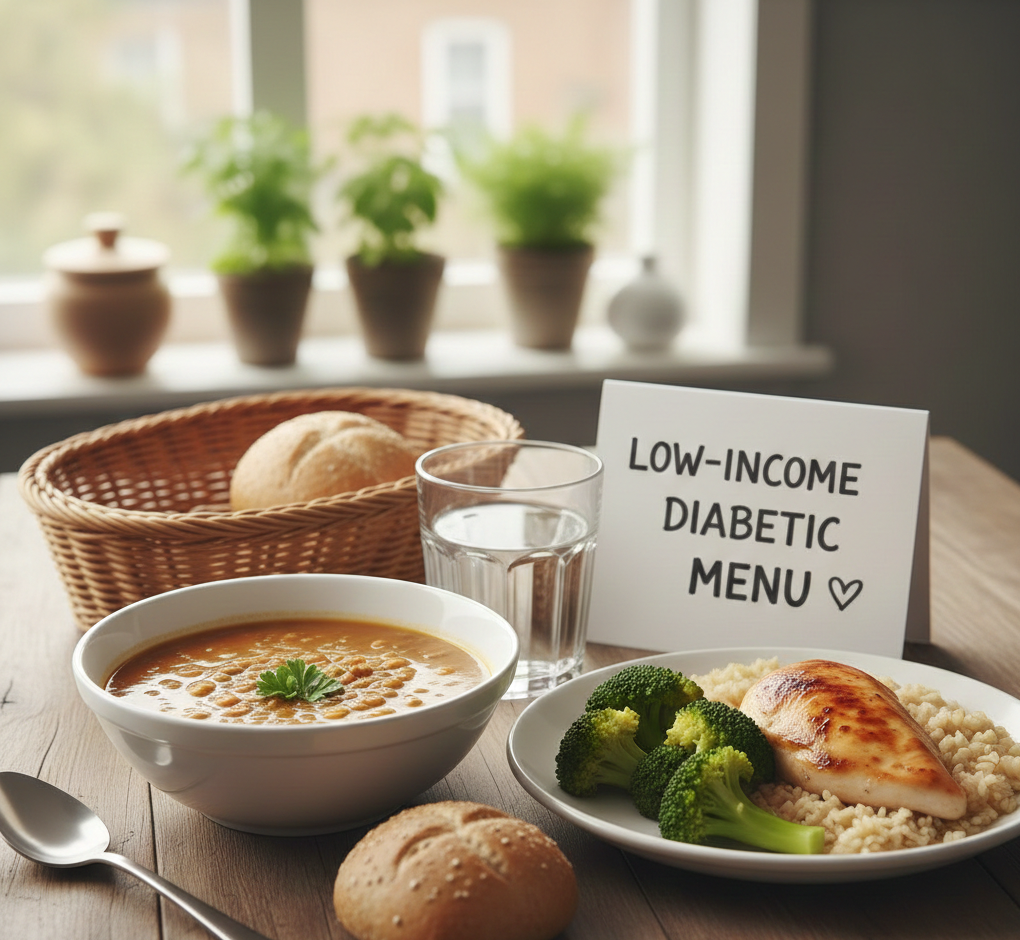
The Ultimate Low-Income Diabetic Menu: Managing Blood Sugar on a Shoestring Budget
There is a pervasive and damaging myth in the world of nutrition: that healthy eating is a luxury reserved for the wealthy. When you walk into a high-end grocery store and see $12 green juices and $8 loaves of artisanal keto bread, it is easy to feel defeated. For those managing diabetes on a tight budget—whether you’re a senior on a fixed income, a single parent, or someone facing food insecurity—the stress is twofold: paying for medication and supplies while trying to afford the “right” food.
But here is the truth: You do not need expensive superfoods to manage your A1C. In fact, some of the most powerful foods for blood sugar control—beans, lentils, eggs, oats, cabbage, and frozen spinach—are the cheapest items on the shelf. Managing diabetes on a low income isn’t just possible; it can be done with delicious, satisfying meals that the whole family will enjoy, without expensive “diet” products.
This guide is a practical, no-nonsense roadmap to a Low-Income Diabetic Menu. We prioritize nutrient density, shelf life, and minimal waste. Whether you are a senior looking for a diabetic menu for seniors or a parent trying to feed hungry teenagers, these strategies work. We’ll also show you how to adapt meals for specific needs: soft food options or low-calorie senior menus — all while stretching every dollar.
The “Smart Shopper” Diabetic Strategy
Before we dive into the meal plan, we need to reset how we shop. The goal is to maximize nutrition per dollar and reduce food waste — the hidden budget killer.
Top 5 Budget Rules for Diabetics (plus bonus tips)
- The Freezer is Your Best Friend: Fresh produce spoils. If you throw away a bag of spinach, you’ve thrown away money. Frozen vegetables (broccoli, spinach, mixed blends, bell peppers) are flash-frozen at peak ripeness, retain all nutrients, are often 50% cheaper, and never rot. They’re also pre-chopped, saving time.
- Embrace Plant Protein & Bulk Legumes: Meat is the most expensive part of a meal. Dried beans, chickpeas, and lentils cost pennies per serving, are packed with fiber (which blunts blood sugar spikes), and keep you full. A 1lb bag of dry lentils = 7 servings for about $1.50.
- Buy in Bulk, Cook in Batches: A 5lb bag of brown rice or rolled oats is significantly cheaper per ounce than small boxes. “Unit Price” is the only number that matters on the price tag. Same goes for frozen veggies in family-size bags.
- Strategic Canned Goods: Canned tomatoes, no-salt veggies, and water-packed tuna are shelf-stable and versatile. Always rinse canned beans to cut sodium by 40%. Stock up when they’re on sale (buy 10 cans if budget allows).
- Reduce Food Waste = Free Money: Vegetable scraps and chicken bones become broth. Wilted veggies go into frittatas. Stale bread becomes breadcrumbs. Use every part.
Budget spice hack: Check international aisles or small tiendas — spices in bags are 80% cheaper than bottled brands. Cumin, chili, garlic powder, and cinnamon are must-haves.
If you are new to meal planning, you might want to start with our 1-day simple diabetic menu to get the hang of it without feeling overwhelmed. For more structured help, the 3-day plan gives you a short shopping list.
Understanding Glycemic Index & Glycemic Load — The Free Tool That Changes Everything
One of the most valuable pieces of knowledge a diabetic on a budget can have costs absolutely nothing: understanding the glycemic index (GI) and glycemic load (GL). These two numbers tell you exactly how a food will affect your blood sugar — and the foods with the best scores happen to be the cheapest in the store.
What Is the Glycemic Index?
The glycemic index is a ranking system from 0 to 100 that measures how quickly a carbohydrate-containing food raises blood glucose levels compared to pure glucose (which scores 100). Foods are grouped into three categories:
- Low GI (55 or less): Cause a slow, gradual rise in blood sugar. Best for diabetics. Examples: lentils (GI 32), oatmeal (GI 55), beans (GI 24–42), sweet potato (GI 44).
- Medium GI (56–69): Moderate blood sugar impact. Examples: brown rice (GI 68), corn (GI 52–60), canned peaches (GI 58).
- High GI (70 or above): Cause rapid blood sugar spikes. Examples: white bread (GI 75), instant oatmeal (GI 83), white rice (GI 73), most breakfast cereals (GI 70–85).
What Is Glycemic Load — and Why It’s Even Better?
Glycemic load refines the GI concept by factoring in how much of a carbohydrate you actually eat in a serving. A food can have a high GI but a low glycemic load if you only eat a small portion. For example, watermelon has a GI of 76 (high), but its glycemic load per serving is only 8 (low) because it contains very little actual carbohydrate per slice. This means you can enjoy it in moderation without a dramatic blood sugar spike.
GL = (GI × grams of carbs per serving) ÷ 100. A GL below 10 is considered low; 11–19 is medium; 20 and above is high. The goal for diabetics is to keep the total daily glycemic load as low as possible.
The Budget-Diabetic Sweet Spot: Low GI + Low Cost
Here is the remarkable fact that most expensive diet books don’t advertise: the cheapest foods at any grocery store — dried lentils, dried beans, rolled oats, frozen non-starchy vegetables, eggs, and canned fish — are also the foods with the lowest glycemic index scores. You don’t need specialty low-glycemic bread at $8 a loaf. You need a $1.29 can of chickpeas.
| Food | Approx. GI Score | Glycemic Load (per serving) | Avg. Cost per Serving | Blood Sugar Rating |
|---|---|---|---|---|
| Dried Lentils (cooked) | 32 | 5 | $0.22 | ⭐ Excellent |
| Rolled Oats (plain) | 55 | 13 | $0.18 | ✅ Good |
| Black Beans (canned, rinsed) | 30 | 7 | $0.45 | ⭐ Excellent |
| Sweet Potato (baked) | 44 | 11 | $0.60 | ✅ Good |
| Brown Rice (cooked) | 68 | 16 | $0.25 | ⚠️ Moderate |
| Frozen Broccoli (steamed) | 10 | 1 | $0.30 | ⭐ Excellent |
| White Rice (cooked) | 73 | 29 | $0.15 | 🚨 Caution |
| Eggs (2, scrambled) | 0 | 0 | $0.55 | ⭐ Excellent |
Using SNAP, EBT, and Food Assistance Programs for Diabetic Eating
For millions of Americans managing diabetes on a low income, government food assistance programs like SNAP (Supplemental Nutrition Assistance Program) can be a critical lifeline. But many people don’t realize how strategically these benefits can be used to build a blood-sugar-friendly meal plan. If you are on a fixed income or face food insecurity, understanding these programs fully can significantly change your ability to eat well with diabetes.
What SNAP Covers — and How to Maximize It for Diabetics
SNAP benefits (often delivered via an EBT card) can be used to purchase almost all food items in grocery stores, including the most diabetes-friendly staples: fresh and frozen produce, dried and canned beans, eggs, whole grains like oats and brown rice, canned fish, peanut butter, and seeds and nuts. What SNAP does not cover: alcohol, tobacco, vitamins, medicines, and hot prepared foods.
The strategy is to prioritize the most nutrition per SNAP dollar. This means focusing on bulk dried goods (where SNAP dollars stretch furthest) and frozen vegetables over individually packaged snack items, which are technically SNAP-eligible but offer poor nutritional value for the price.
Double Up Food Bucks — Doubling Your Produce Budget
One of the most powerful and underutilized programs for diabetics on SNAP is Double Up Food Bucks, available in many states. When you use your SNAP EBT card at participating farmers markets, farm stands, or some grocery stores, you can receive matching dollars to spend on fruits and vegetables — effectively doubling your fresh produce budget at no cost. In practical terms, spending $10 of SNAP on produce can give you $20 worth of fresh vegetables. For diabetics who need consistent access to low-glycemic produce, this program is invaluable.
Other Food Assistance Resources for Diabetics
- Food Pantries and Food Banks: Most food banks now make an effort to include low-glycemic, diabetes-friendly staples. Many also partner with healthcare organizations to provide “diabetic food boxes” containing appropriate items. Contact your local food bank to inquire about diabetes-specific resources.
- WIC (Women, Infants, and Children): For pregnant or postpartum women with gestational or Type 2 diabetes, WIC provides targeted nutrition benefits including milk, eggs, whole grain cereals, fruits and vegetables, and legumes — all blood-sugar-friendly options.
- USDA Senior Farmers’ Market Nutrition Program (SFMNP): Seniors on limited incomes may qualify for coupons to purchase fresh fruits, vegetables, herbs, and honey from local farmers markets — perfect for a diabetic diet.
- Meals on Wheels: For homebound seniors with diabetes, Meals on Wheels programs in many areas offer diabetic-specific meal options. Ask your local chapter about their diabetes-friendly menu.
- Community Gardens: Many urban areas have community garden programs that allow low-income residents to grow their own produce for free or at minimal cost. Vegetables like tomatoes, zucchini, kale, and green beans are low-glycemic and easy to grow.
- Free Diabetes Education Programs: The CDC-recognized National Diabetes Prevention Program (NDPP) offers free or low-cost diabetes education that includes nutrition counseling — which can be accessed in person or online.
SNAP Grocery List: Best Diabetic Purchases Per Dollar
- Dried lentils (1 lb bag) — ~$1.50, yields 7 high-fiber, low-GI servings
- Dried black beans or kidney beans (2 lb bag) — ~$2.50, yields 10+ servings of plant protein
- Rolled oats (42 oz canister) — ~$4.00, yields 30 breakfasts at $0.13 each
- Frozen spinach (16 oz bag) — ~$1.80, rich in magnesium (helps insulin sensitivity)
- Frozen broccoli (32 oz bag) — ~$2.50, ultra-low glycemic, high in chromium
- Canned tuna in water (5 oz, 4-pack) — ~$5.00, lean protein, zero carbs
- Eggs (18-count) — ~$4.50, 18 servings of zero-carb protein
- Brown rice (5 lb bag) — ~$4.00, far better GI than white rice
- Canned diced tomatoes, no salt added (4-pack) — ~$4.00, base for soups, stews, chili
- Peanut butter, natural (16 oz) — ~$3.50, healthy fat + protein, low GI

The Budget Chef’s Secret Weapon
A slow cooker turns the cheapest, toughest cuts of meat and dried beans into tender, gourmet meals while you are at work. It pays for itself in a week. Use it for stews, chilis, and even oatmeal.
Check Price on Amazon7-Day Low-Income Diabetic Meal Plan (Budget Stretch Edition)
This menu relies on “staple ingredients” that are used multiple times to ensure nothing goes to waste. It focuses on affordable proteins like eggs, tuna, chicken thighs, and plant-based combinations. Every day includes a snack, and we show how to repurpose leftovers.
Processed Food vs. Budget Diabetic Cooking — Real Cost Breakdown
Many people believe fast food is cheaper. Let’s break down the cost per meal and the true impact on your health and wallet.
| Meal Type | Average Cost | Nutritional Value | Diabetic Impact |
|---|---|---|---|
| Fast Food Combo | $8.00 – $12.00 | High sodium, trans fats, low fiber | High Spike (sugar/refined carbs) |
| Frozen “Diet” Meal | $4.00 – $6.00 | Low protein, processed starches, preservatives | Moderate Spike (hidden sugars/starches) |
| Homemade Lentil Stew | $0.75 – $1.50 | High fiber, plant protein, iron, low fat | Stable glucose (slow digestion) |
| Homemade Omelet (2 eggs + veg) | $1.00 – $1.50 | High protein, healthy fat, vitamins | Very stable (minimal carbs) |
| Bean & Rice Bowl | $0.90 – $1.75 | Complete protein, fiber, magnesium | Low glycemic response |
Note: Prices estimated based on national average for generic/store brands in 2025.
The Complete Budget Diabetic Pantry: A Master Staples List
Having the right pantry is the foundation of successful low-income diabetic eating. When your shelves are stocked with these staples, you can always make a blood-sugar-friendly meal even if you haven’t been shopping in a week. Think of this as your “emergency pantry” that also happens to be your everyday cooking toolkit. All of these items have long shelf lives, are available at any grocery store, and represent the best nutritional value per dollar for managing type 2 diabetes, prediabetes, or type 1 diabetes on a budget.
🥫 Canned & Jarred Goods
- Canned black beans (no salt added)
- Canned kidney beans
- Canned chickpeas (garbanzo beans)
- Canned diced tomatoes
- Canned tomato paste
- Canned tuna in water
- Canned salmon
- Canned sardines in water
- Natural peanut butter
- Salsa (low-sodium)
🌾 Dry Goods & Grains
- Rolled oats (old-fashioned, bulk)
- Brown rice (5 lb bag)
- Dried red lentils
- Dried green or brown lentils
- Dried black beans
- Dried chickpeas
- Whole wheat flour (small bag)
- Popcorn kernels
- Barley (pearl or hulled)
- Cornmeal (for polenta)
❄️ Freezer Staples
- Frozen broccoli (large bag)
- Frozen spinach
- Frozen mixed vegetables
- Frozen green beans
- Frozen bell pepper strips
- Frozen edamame (shelled)
- Frozen chicken thighs
- Frozen ground turkey
- Frozen blueberries or mixed berries
- Corn (frozen, no sauce)
🥚 Refrigerator Essentials
- Eggs (18-count)
- Plain low-fat Greek yogurt (32 oz)
- Block cheddar cheese (grate yourself)
- Cabbage (lasts weeks in fridge)
- Carrots (1 lb bag)
- Celery
- Yellow onions
- Garlic bulbs
- Low-sodium soy sauce or hot sauce
- Plain low-fat milk or unsweetened soy milk
🫙 Spices & Flavor (Buy at Ethnic Markets)
- Ground cumin
- Chili powder
- Garlic powder
- Onion powder
- Ground cinnamon
- Paprika (smoked or sweet)
- Black pepper (whole peppercorns)
- Dried oregano
- Bay leaves
- Red pepper flakes
🧴 Oils & Pantry Liquids
- Vegetable or canola oil (large bottle)
- White or apple cider vinegar
- Low-sodium chicken or vegetable broth
- Worcestershire sauce
- Mustard (yellow or Dijon)
- Hot sauce (very low-calorie, no sugar)
- Light mayo or plain yogurt (as mayo sub)
With these pantry staples stocked, you can produce dozens of different meals without a single emergency grocery run. The total cost to stock this pantry from scratch typically runs $80–$120 — and most of these items won’t need to be repurchased for weeks or months. The per-meal cost quickly drops below $1.50 once the pantry is established.

Save Your Leftovers, Save Your Money
Throwing away food is throwing away money. Good airtight containers (glass or BPA-free plastic) extend the life of your bulk cooking and prevent the need for costly takeout. Perfect for soups, chili, and meal prep.
Check Price on AmazonDiabetic Meal Prep on a Budget: The Once-a-Week System That Works
Meal prepping is one of the single most powerful strategies for managing diabetes on a limited income. When healthy food is already cooked and ready to eat in your fridge, you’re far less likely to reach for processed snacks or expensive takeout. And when you cook in large batches, you save both time and money — the unit cost of a big pot of soup is dramatically lower than buying individual servings. Here is a complete system designed specifically for low-income diabetic households.
The Sunday Prep Session (2–3 Hours, One Week of Meals)
Dedicate one afternoon per week — typically Sunday — to batch cooking. This doesn’t mean cooking seven complete different meals. Instead, it means preparing the building blocks that can be assembled into different meals throughout the week. This approach is flexible, prevents boredom, and dramatically reduces daily cooking time.
Step 1: Cook Your Whole Grains (30 minutes, hands-off)
Start a large pot of brown rice or barley. This takes about 45 minutes but requires almost no attention. Make a big batch — at least 4 cups dry — which gives you approximately 10–12 cups cooked. This will serve as the base for grain bowls, soups, and side dishes all week. Portion into containers and refrigerate or freeze half for the following week.
Step 2: Cook Your Legumes (60 minutes, slow cooker or stovetop)
If you are using dried beans or lentils, soak beans overnight and cook them the next day, or use a slow cooker while you sleep. Cook a large pot of lentils or two different types of beans. Red lentils cook in just 20 minutes without soaking — ideal for a quick prep session. Divide into meal-sized portions (about 1 cup each) for the freezer. Having pre-cooked beans on hand is the single biggest time-saver in diabetic budget cooking.
Step 3: Roast a Sheet Pan of Vegetables (25 minutes)
Chop whatever budget vegetables you have — carrots, onions, sweet potatoes, bell peppers, zucchini, cabbage — toss with a tablespoon of oil and spices, and roast at 425°F for 20–25 minutes. These roasted vegetables can be added to eggs for breakfast, stirred into grain bowls for lunch, or eaten as a side with dinner. Roasting concentrates natural sugars but on non-starchy vegetables (anything except sweet potato and corn), the glycemic impact remains low.
Step 4: Hard-Boil a Dozen Eggs
Hard-boiled eggs keep in the refrigerator for up to one week and represent one of the cheapest, most portable, zero-carbohydrate protein sources available. Having a dozen ready means you always have a blood-sugar-stable snack or quick protein addition to any meal within seconds.
Step 5: Make a Big Pot of Soup or Stew
Use your cooked beans, some of the roasted vegetables, canned tomatoes, broth, and spices to assemble a large soup or stew. This can be portioned into individual containers and frozen. Having 8–10 frozen portions of diabetic-friendly soup means that on busy evenings or days when cooking feels impossible, you have a healthy meal ready in minutes — removing the temptation of expensive, blood-sugar-spiking takeout.
Budget Meal Prep: The Math
Here is a real cost example of one Sunday prep session that produces approximately 14 individual meal servings:
- 5 lb bag brown rice (used half): $2.00
- 2 lb dried lentils: $3.00
- 3 cans diced tomatoes: $3.00
- 1 bag carrots: $1.29
- 1 head cabbage: $1.50
- 1 dozen eggs: $3.00
- 1 can kidney beans: $1.29
- Spices (amortized): $0.50
- Total: ~$15.58 for 14 servings = $1.11 per serving
Portion Control for Diabetics on a Budget: The Plate Method Without a Scale
Portion control is a cornerstone of diabetes management — consistently eating the right amounts prevents blood sugar spikes and also helps stretch your food budget further. The good news is that you don’t need an expensive food scale or smartphone app to portion correctly. The most effective tool you already own: your hand and a standard dinner plate.
The Diabetes Plate Method — Free and Foolproof
Recommended by the American Diabetes Association, the Diabetes Plate Method divides a standard 9-inch dinner plate into three sections to guide portion sizes without counting calories or carbs:
- Half the plate (50%) = Non-starchy vegetables: Fill this half generously with low-glycemic vegetables like broccoli, cabbage, spinach, green beans, carrots, cauliflower, or cucumber. These foods have a minimal impact on blood sugar and are the cheapest produce available — especially frozen.
- One quarter of the plate (25%) = Lean protein: Fill this section with eggs, beans, lentils, canned tuna, chicken, or plain yogurt. These proteins slow the absorption of any carbohydrates on your plate, preventing blood sugar spikes.
- One quarter of the plate (25%) = Quality carbohydrates: This section holds your grains or starchy vegetables — brown rice, lentils (they count as both protein and carb), sweet potato, or barley. These should be the cheapest bulk staples from your pantry.
This simple visual guide eliminates the need for calorie counting and naturally reduces blood sugar impact. And from a budget perspective, it also means you’re stretching the expensive protein (even cheap protein like eggs) with inexpensive vegetables, which makes each meal more economical. Using the plate method, a family of four can eat a complete diabetic-friendly dinner for under $6 total.
Hand Portion Guides — When You Don’t Have a Plate
For snacks, packed lunches, or food away from home, use your hand as a measuring tool:
- Fist = 1 cup — appropriate for cooked grains, soup, or cut fruit
- Palm = 3 oz protein — one serving of chicken, fish, or a handful of beans
- Cupped hand = ½ cup — appropriate for legumes, canned fruit, or yogurt
- Thumb = 1 tablespoon — for peanut butter, oils, dressings
- Fingertip = 1 teaspoon — for added sugars, butter, or honey
Portion Control and Budget: The Surprising Connection
Most Americans eat portions that are 50–100% larger than recommended serving sizes. This is particularly true for high-GI foods like white rice, pasta, and bread. When you practice portion control, you not only manage blood sugar better — you also make your food go further. If you reduce your brown rice serving from 1.5 cups to 0.75 cups (the recommended diabetic portion) and fill the rest of your plate with cheap frozen vegetables, you get a better glucose outcome and your bag of rice lasts twice as long. Portion control, paradoxically, is a budget strategy as much as a health strategy.
Reading Nutrition Labels on a Budget: What Diabetics Must Check First
At the grocery store, every second you spend comparing labels is time well spent — especially when you’re managing diabetes on a limited budget. The wrong choice (buying a “diet” or “sugar-free” product full of refined starches) can waste money and harm blood sugar. The right choice might be the plain store-brand can right next to it, costing half as much and containing far fewer carbohydrates. Here is exactly what to look for.
The Five Numbers That Matter Most
- Serving Size: This is the most manipulated number on the label. A can of soup might list the serving size as “½ cup” but contain 2.5 servings — meaning the carb count shown must be multiplied by 2.5 if you eat the whole can (which most people do). Always check serving size first and multiply accordingly.
- Total Carbohydrates: This is the primary number diabetics must track — not just “sugars.” Total carbs includes all carbohydrate types (sugar, starch, fiber) and determines the glycemic impact of a food. Aim for 45–60g per meal (or as directed by your healthcare provider).
- Dietary Fiber: Subtract fiber from total carbs to get “net carbs” — the carbs that actually raise blood sugar. High-fiber foods (beans, vegetables, oats) have a lower net carb impact and are the best blood-sugar-friendly choices. Aim for at least 3g fiber per serving in any packaged food.
- Added Sugars: Look for this specifically (it’s listed separately under Total Sugars since 2020). Even “healthy” seeming products like yogurt, granola bars, canned fruit, and flavored oatmeal can contain 15–25g of added sugar per serving. Zero added sugars is ideal; under 5g is acceptable.
- Sodium: High sodium is particularly dangerous for diabetics, who face elevated heart disease and kidney disease risk. Look for “no salt added” on canned goods, or choose products with under 600mg sodium per serving. Rinsing canned beans removes approximately 40% of sodium.
The “Health Halo” Trap — Expensive Products That Aren’t Worth It
Grocery stores are full of products marketed to diabetics or health-conscious shoppers that are priced at a premium but offer no meaningful benefit over their generic counterparts. Here are common traps:
- “Diabetic-friendly” breads and crackers: Often contain nearly the same net carbs as regular versions, at 3–4x the price. Compare total carbs minus fiber between the specialty product and the store-brand whole wheat option. Often the difference is minimal.
- Flavored instant oatmeal: A packet of “maple and brown sugar” instant oatmeal contains 12–18g of added sugar. The 42-oz canister of plain rolled oats nearby costs the same price per serving and has zero added sugar. Add your own cinnamon and half a banana.
- “Sugar-free” snack bars: These frequently use maltitol or other sugar alcohols that still significantly raise blood sugar, at prices of $2–$4 per bar. A hard-boiled egg costs $0.25 and has zero carbohydrates.
- Specialty nut butters: Almond butter, cashew butter, and specialty peanut butters marketed as “diabetes-friendly” cost $8–$14 per jar. Standard natural peanut butter (just peanuts and salt) costs $3.50 and has an equally excellent glycemic profile.
Watch for These Hidden Sugar Aliases on Labels
Food manufacturers use over 60 different names for added sugar. When scanning ingredient lists, these are red flags: high-fructose corn syrup, dextrose, maltose, glucose, sucrose, corn syrup, fructose, cane juice, agave nectar, barley malt, and anything ending in “-ose.” If any sugar appears in the first three ingredients, the product’s carbohydrate impact will likely be high.
Diabetic-Friendly Cooking Methods That Save Money and Blood Sugar
How you cook food is just as important as what you cook. Certain cooking methods not only produce healthier outcomes for blood sugar — they also use cheaper cuts of meat and less expensive cooking equipment, saving money in the process. Understanding these methods can transform your low-income diabetic kitchen.
Slow Cooking — The Ultimate Budget Diabetic Technique
A slow cooker (Crock-Pot) is without question the most valuable piece of kitchen equipment for a diabetic on a budget. It allows you to use the toughest, cheapest cuts of meat — chuck roast, pork shoulder, chicken thighs, beef shanks — and transform them into tender, flavorful meals over 6–8 hours of unattended cooking. From a diabetes perspective, slow-cooked foods often have lower glycemic impact than the same foods cooked at high temperatures, because lower heat preserves more fiber structure in legumes and vegetables. You can also cook an entire pot of dried beans from scratch in a slow cooker overnight without soaking.
Braising — Rich Flavor, Cheap Cuts
Braising means cooking food slowly in a small amount of liquid (broth, water, canned tomatoes) in a covered pan or Dutch oven. This technique is perfect for cheap, collagen-rich cuts like chicken drumsticks, beef short ribs, pork neck bones, or even whole heads of cabbage. The slow, moist heat breaks down tough connective tissues and creates deeply flavorful sauces from simple, inexpensive ingredients. Braised dishes are naturally high in protein and low in refined carbohydrates — an excellent combination for blood sugar management.
Batch Roasting — The Hands-Off Vegetable Method
Roasting vegetables in a hot oven (400–425°F) on a sheet pan requires minimal effort and produces maximum flavor. Budget vegetables that transform beautifully through roasting include cabbage wedges, broccoli, cauliflower, sweet potato, Brussels sprouts, and carrots. The caramelization from roasting concentrates natural flavors, meaning you need very little seasoning (just oil, salt, pepper) to make inexpensive vegetables taste restaurant-quality. One sheet pan of roasted vegetables can serve as a side dish for 4 people at a cost of under $2.
Poaching and Steaming — Preserve Nutrients, Skip the Fat
Poaching eggs in water (rather than frying in oil) saves cooking fat calories and keeps the glycemic impact of an egg-based meal as low as possible. Steaming frozen vegetables — either in a microwave-safe bowl with a little water or in a basic steamer basket — preserves the most vitamins and minerals compared to boiling, where nutrients leach into the water. Neither method requires special equipment. A microwave and a colander used as a steam basket are sufficient.
Pressure Cooking — Speed and Nutrition Together
If you have access to an Instant Pot or stovetop pressure cooker, this is a game-changer for dried beans. Dried beans that normally take 2 hours to cook on the stovetop are done in 25–30 minutes under pressure, and dried lentils cook in just 10 minutes. Pressure cooking also preserves nutrients better than long boiling, and studies suggest it may actually lower the glycemic index of some legumes compared to conventional cooking by affecting starch digestibility. If a used Instant Pot is within budget (often found at thrift stores for $10–$20), it is a worthwhile investment that pays for itself within weeks in reduced cooking time and energy costs.
Adapting for Specific Needs on a Tight Budget
For Seniors on Fixed Incomes & Those with Chewing Difficulties
Seniors often face the tightest budgets and unique health challenges. The menu above is ideal because it uses soft foods (eggs, beans, soups, cooked veggies) which are easier to chew and digest. If chewing is a significant issue, see our guide on the diabetic menu for elderly with no teeth (mashed beans, smooth soups, oatmeal). For those needing strict calorie control to save even more, the 1200 calorie senior menu reduces portion sizes, further stretching the budget and supporting weight management.
For Large Families or Teens with Diabetes
If you are feeding a hungry teenager with diabetes, portion sizes need to increase without breaking the bank. Rice and beans are your best friend here—they are cheap fillers that are healthy. Add extra eggs or peanut butter sandwiches on whole-wheat bread. Buy the largest size of peanut butter and oats. Check our diabetic menu for teenagers for high-energy, low-cost ideas that keep them satisfied.
For Pregnant Women Needing High Nutrition
Pregnancy requires extra nutrients like folate, iron, and omega-3s. While budget is a concern, prioritize eggs (choline), frozen spinach (folate), and canned sardines or mackerel (cheaper than salmon but high in Omega-3). See our pregnancy menu for nutrient specifics and affordable swaps.
For People Living Alone on a Very Tight Budget
Cooking for one person on a limited income presents a unique challenge: recipes designed for four people produce expensive leftovers that may go to waste, or require buying ingredients in quantities too large to use. The solution is to focus even more aggressively on batch cooking and freezing. Cook a full pot of beans or soup, portion it immediately into single-serving freezer containers, and freeze. This gives you 8–10 individual meals from one cooking session — each at a cost well under $1.50 — and prevents the spoilage that devastates small-household food budgets.
Additionally, buy eggs in the smallest pack that makes sense per price per egg. For produce, buy items that last: cabbage, carrots, and onions last 2–4 weeks in the refrigerator and are far more budget-smart for a single person than delicate greens that wilt within days. Frozen vegetables exist precisely for single-person households — use only what you need and return the rest to the freezer.
Diabetic-Friendly Beverages on a Budget: What to Drink (and What to Avoid)
Beverages are one of the most overlooked components of diabetes management and budget eating. A single 20-oz bottle of regular soda contains approximately 65 grams of pure sugar — enough to cause a dramatic blood sugar spike in any diabetic. Worse, liquid calories don’t trigger the same satiety signals as solid food, so people often consume hundreds of extra sugar calories from drinks without feeling full. Over a week, beverage choices can easily add $20–$40 in unnecessary grocery costs and dramatically undermine blood sugar control.
The Best Budget Beverages for Diabetics
- Water (tap water): The ideal beverage for diabetics is completely free from your tap. Staying well-hydrated actually helps kidneys flush excess blood sugar through urine. If you dislike plain water, a slice of lemon, cucumber, or frozen berries adds flavor for negligible cost. A basic pitcher water filter (one-time cost) improves taste significantly.
- Unsweetened iced tea (brewed at home): A family-size tea bag costs about $0.10 and brews a gallon of unsweetened iced tea. Studies suggest certain teas — particularly green tea — may modestly improve insulin sensitivity. Brew a gallon at a time and refrigerate for the week. Add ice and a lemon slice for a refreshing, zero-sugar drink that costs almost nothing.
- Black coffee: Coffee without added sugar or cream has a negligible glycemic impact and is one of the most extensively studied beverages for diabetes prevention and management. Research suggests moderate coffee consumption (2–3 cups per day) may improve insulin sensitivity. A large bag of store-brand ground coffee costs $5–$8 and lasts several weeks — less than $0.25 per cup, far cheaper than any coffee shop option.
- Sparkling water (store brand): For those who crave carbonation, store-brand plain sparkling water provides the fizz of soda with zero sugar, zero carbs, and zero cost to blood sugar. Look for the store brand, which typically costs $3–$4 for a 12-pack versus $6–$8 for name brands.
- Vegetable broth (homemade from scraps): Save onion skins, celery tops, carrot peels, and herb stems in a bag in the freezer. When the bag is full, simmer everything in water for 45 minutes, strain, and you have free vegetable broth with a small glycemic load and significant flavor for soups and cooking.
Beverages to Avoid — Budget and Blood Sugar Destroyers
- Regular soda: 65g+ of sugar per bottle, $1.50–$2.00 per bottle, causes severe blood sugar spikes. Replace entirely.
- Fruit juice: Even 100% orange juice or apple juice is essentially liquid sugar — all the fructose of fruit with none of the fiber that would slow absorption. A single cup of orange juice raises blood sugar nearly as fast as soda. Eat the whole fruit instead (far cheaper and lower GI).
- Sweetened iced tea and lemonade: A bottle of Arizona Tea or similar product contains 34–60g of sugar. Make your own unsweetened tea for 1/20th the cost and zero sugar.
- Energy drinks: Typically contain 25–55g of sugar plus excessive caffeine. They cause extreme blood sugar spikes followed by crashes, and cost $2–$4 per can — one of the worst budget-to-nutrition ratios of any grocery product.
- Flavored milks and coffee drinks: Chocolate milk contains about 25g of sugar per cup. Bottled coffee drinks (frappuccinos, etc.) often contain 40–60g. Use plain milk or unsweetened plant milk instead.
Calculate Your Beverage Savings
If your household currently spends $5 per day on soda, juice, and bottled drinks, switching entirely to water, homemade iced tea, and black coffee saves approximately $150 per month — nearly $1,800 per year. That is enough to pay for several months of diabetes medication or supplies. The blood sugar benefits are an added bonus.
Seasonal Eating for Diabetics: The Free Money Strategy
One of the most powerful and underutilized budget strategies for diabetics is aligning your produce purchases with what’s in season locally. When produce is in season and abundant, prices can drop by 50–80% compared to out-of-season prices. A pint of blueberries might cost $5 in January but only $1.50 in July. Buying in-season produce and freezing the surplus is one of the smartest investments a diabetic on a budget can make.
Seasonal Low-Glycemic Produce by Season
- Spring: Asparagus, spinach, cabbage, lettuce, radishes, peas, artichokes. Focus on fresh leafy greens while prices are lowest — spinach is often discounted to $1/bag. Freeze any excess.
- Summer: Zucchini, tomatoes, cucumbers, green beans, berries, bell peppers, corn (eat in moderation). This is the cheapest time of year for produce. Buy flats of tomatoes and freeze them whole (they’re perfect for soups and sauces all winter). Blueberries (low GI, rich in antioxidants that help insulin sensitivity) are at their most affordable — buy in bulk and freeze.
- Fall: Sweet potatoes, winter squash (butternut, acorn), Brussels sprouts, kale, broccoli, cauliflower, apples, cabbage. Sweet potatoes are at their cheapest in fall — buy a large bag, cube, and freeze some for later. Butternut squash and acorn squash store naturally for months at room temperature without refrigeration.
- Winter: Cabbage, onions, carrots, parsnips, turnips, dried beans and lentils (always in season), frozen produce. Winter is the season when shelf-stable pantry staples truly shine. Cabbage at $0.49/lb is one of the most nutrient-dense, blood-sugar-friendly, and cheapest vegetables available in the coldest months.
The key principle is simple: buy the cheapest, most abundant seasonal produce, eat some fresh, and freeze the rest. A $5 bag of summer blueberries frozen in mid-July becomes a $5 supply of antioxidant-rich, low-GI fruit for the following six months — at a fraction of what you’d pay for fresh blueberries out of season.
Type 1 vs. Type 2 Diabetes: Budget Diet Differences You Should Know
While many of the same foods benefit both Type 1 and Type 2 diabetics, there are some important distinctions that affect how you should approach your low-income diet plan. Understanding these differences helps you make better decisions about which foods to prioritize when every dollar counts.
Type 2 Diabetes on a Budget
Type 2 diabetes is characterized by insulin resistance — the body produces insulin but cells don’t respond to it properly. Dietary strategy focuses on reducing carbohydrate intake overall, choosing lower-glycemic carbohydrates, losing excess weight if needed, and reducing inflammation. For budget purposes, this means the staples recommended throughout this guide — beans, lentils, oats, non-starchy vegetables, eggs, and lean proteins — are ideal because they address insulin resistance directly. High-fiber, low-GI foods are not only cheap; they are therapeutically appropriate for Type 2 management.
For Type 2 diabetics on a tight budget, the most cost-effective strategy is to reduce refined carbohydrates (white rice, white bread, crackers, sugary beverages) rather than spending money on specialty diabetic products. Replacing a $4 box of “diabetic crackers” with a $0.89 can of plain beans at lunch achieves far better blood sugar outcomes at a fraction of the cost.
Type 1 Diabetes on a Budget
Type 1 diabetes requires the body to have insulin delivered externally (via injections or pump) and involves precise matching of insulin doses to carbohydrate intake. Budget eating for Type 1 diabetics benefits enormously from consistency — eating similar carbohydrate amounts at similar times each day makes insulin management more predictable and reduces the risk of dangerous hypoglycemic or hyperglycemic episodes. The 7-day meal plan in this guide works well for Type 1 diabetics precisely because it uses consistent, whole food carbohydrate sources (oats, brown rice, lentils) whose glycemic behavior is more predictable than processed foods.
For Type 1 diabetics on a budget, it is especially important to always have a fast-acting carbohydrate readily available for hypoglycemia treatment. The most cost-effective options: glucose tablets ($4–$6 for 50 tablets), regular soda (keep 4-oz juice boxes or a mini can on hand), or hard candies like regular Lifesavers. Avoid spending money on expensive glucose gels unless specifically recommended by your provider.
Prediabetes: The Best Time to Act on a Budget
If you have been told you have prediabetes, you have a remarkable and time-sensitive opportunity: dietary changes alone — particularly adopting the low-income diabetic eating style described in this guide — can prevent or significantly delay the development of full Type 2 diabetes, potentially saving tens of thousands of dollars in lifetime medication costs. The CDC-recognized National Diabetes Prevention Program (NDPP) provides free or low-cost lifestyle coaching specifically designed for this purpose and is available in-person and online throughout the United States.
Expert Tips: Hidden Savings & Shelf-Life Hacks
- Check Unit Prices relentlessly: The price tag on the shelf usually has a smaller number in the corner (price per ounce/100g). Use this to compare different brands and sizes — sometimes buying two smaller bags is cheaper than one “family size”.
- Shop the “ugly” or discount rack: Many grocery stores have a clearance section for produce that is slightly bruised or near expiration. These are perfect for soups, stews, and smoothies where texture doesn’t matter. Freeze them immediately.
- Drink water (and save hundreds): Soda, juice, sweet tea, and fancy coffees destroy budgets and blood sugar. Water is free. If you miss fizz, buy generic sparkling water or invest in a water filter pitcher (one-time cost).
- Grow your own herbs: Fresh herbs are expensive ($3 for a tiny packet that wilts). Buying a potted basil, parsley, or cilantro plant for the same price gives you fresh herbs for months on a windowsill.
- Flash freeze chopped veggies: If you buy fresh onions, peppers, or carrots in bulk, chop and freeze them on a tray, then store in bags. They’re ready for cooking and won’t rot.
- Use apple cider vinegar strategically: Research suggests that 1–2 tablespoons of vinegar consumed before or during a meal can reduce the glycemic response of carbohydrates by 20–30%. At $2–$3 per bottle that lasts months, it is one of the cheapest blood sugar management tools available. Add to salad dressings, marinades, or drink diluted in water before meals.
- Choose store brand over name brand without hesitation: Store-brand canned beans, frozen vegetables, oats, rice, and eggs are identical in nutritional value to national brands but cost 20–40% less. There is no scientific basis for paying a premium for a different label on a can of kidney beans.
- Repurpose cooking water: The water you use to cook vegetables contains leached vitamins and minerals. Use it as the liquid base in soups, stews, and gravies rather than pouring it down the drain.
If you can master these habits for a month, check out our 30-day diabetic menu to turn this into a permanent lifestyle — with rotating seasonal savings.
Preventing Costly Complications: How Budget Eating Protects Your Long-Term Health
One of the most compelling reasons to invest time and effort into a healthy low-income diabetic diet is the potential to prevent the devastating and enormously expensive complications of poorly controlled diabetes. Understanding what is at stake can provide powerful motivation to choose the lentil soup over the fast food combo — even on the hardest days.
The True Cost of Uncontrolled Diabetes
The average person with diabetes spends approximately $16,750 per year on medical costs, compared to $5,900 for someone without diabetes. The majority of this excess cost comes from managing complications — not from diabetes itself. These complications include:
- Diabetic neuropathy (nerve damage): Affects up to 50% of people with diabetes, causing pain, numbness, and eventual loss of sensation in the feet. The leading cause of lower limb amputations in the US (approximately 100,000 per year). A single hospitalization for diabetic foot complications can cost $20,000–$60,000.
- Diabetic nephropathy (kidney disease): Diabetes is the leading cause of kidney failure in the US. Dialysis costs approximately $90,000 per year per patient. Diet — specifically limiting sodium, controlling blood sugar, and maintaining a healthy weight — is the primary tool for preventing or slowing kidney disease.
- Diabetic retinopathy (eye disease): Diabetes is the leading cause of new cases of blindness in working-age adults. Regular blood sugar control significantly reduces risk — even a 1% reduction in A1C can reduce the risk of microvascular complications by 25–40%.
- Cardiovascular disease: People with diabetes have 2–4 times the risk of heart disease and stroke. Diet that emphasizes heart-healthy fats (peanut butter, eggs, oily fish), fiber (beans, oats), and low sodium directly addresses this risk.
Every dollar spent on lentils, frozen vegetables, and eggs instead of fast food is not just a meal decision — it is a long-term financial investment. Preventing just one hospitalization for a diabetic complication can save more money than a lifetime of healthy grocery shopping. The budget diabetic diet is genuinely one of the most financially rational decisions a person with diabetes can make.
Key Nutrients That Protect Against Complications
All of these nutrients are abundantly available in the low-cost foods recommended throughout this guide:
- Magnesium: Low magnesium is strongly associated with poor insulin sensitivity and increased risk of Type 2 diabetes. Best budget sources: pumpkin seeds, black beans, spinach, oatmeal, brown rice.
- Chromium: Helps insulin transport glucose into cells. Best budget sources: broccoli, green beans, eggs, whole grain products.
- Omega-3 fatty acids: Reduce inflammation and cardiovascular risk significantly elevated in diabetics. Best budget sources: canned sardines, canned mackerel, canned salmon, walnuts (in small amounts), ground flaxseed (very cheap, available in bulk).
- Soluble fiber: Directly blunts blood sugar spikes by slowing carbohydrate digestion. Best budget sources: oats, lentils, beans, peas, apples, carrots.
- Vitamin D: Low levels are associated with higher diabetes risk and poorer blood sugar control. Budget sources: eggs (yolks), canned salmon, fortified milk. Sun exposure is free and provides significant vitamin D.
Frequently Asked Questions — Real Answers for Tight Budgets
Is it expensive to eat a diabetic-friendly diet?
It is a common myth that you need expensive specialty foods to manage diabetes. Staples like dried beans, eggs, frozen vegetables, and oats are some of the most affordable foods in the grocery store and are excellent for blood sugar control.
Are canned vegetables okay for diabetics?
Yes, canned vegetables are a budget-friendly option. However, it is important to choose ‘no salt added’ varieties or rinse them thoroughly under water to remove excess sodium, which can affect blood pressure.
What is the cheapest source of protein for diabetics?
Eggs, dried lentils, beans, and canned tuna are generally the most cost-effective protein sources. Buying chicken thighs or whole chickens instead of boneless skinless breasts also saves significant money.
Can I eat rice on a low-income diabetic diet?
White rice can spike blood sugar, but brown rice is a budget-friendly whole grain that is better for diabetics. Buying it in bulk bags reduces the cost per serving significantly. You can also mix white and brown rice half-and-half to lower the overall glycemic impact while maintaining a familiar taste.
Are frozen fruits and vegetables as healthy as fresh?
Yes, often they are even healthier because they are flash-frozen at peak ripeness, locking in nutrients. They are also usually cheaper and prevent food waste since they don’t spoil quickly.
How can I make cheap meat taste good?
Cheaper cuts of meat are often tougher but have more flavor. Using a slow cooker or braising them with low-cost spices, onions, and garlic can turn tough cuts into tender, delicious meals.
Should I buy generic store brands?
Absolutely. Generic or store-brand oats, beans, rice, and frozen veggies are often processed in the exact same facilities as name brands but cost 20-30% less. Read the ingredients list to ensure no added sugars.
What is a good budget-friendly diabetic snack?
Hard-boiled eggs, homemade popcorn (air-popped), peanut butter on celery, or a small handful of bulk-bin sunflower seeds are excellent low-cost snacks. Plain Greek yogurt (from a large tub) with a pinch of cinnamon is another excellent option at under $0.50 per serving.
Can I use leftovers safely for meal prep?
Absolutely — leftovers are the cornerstone of a low-income menu. Store them in airtight containers and consume within 3-4 days, or freeze portions for later. This prevents waste and saves money. Always reheat to steaming hot.
What spices should I start with on a shoestring?
Focus on inexpensive, versatile spices: cinnamon (for oatmeal and fruit), chili powder, cumin, garlic powder, onion powder, and black pepper. Check international markets for 50¢ packets — avoid $8 jars.
Can people with diabetes use SNAP benefits to buy healthy food?
Yes. SNAP benefits can be used to purchase almost all food items, including fresh, frozen, and canned produce, beans, eggs, whole grains, and lean proteins — all ideal for a diabetic meal plan. Many states also offer Double Up Food Bucks programs that double your SNAP dollars at participating farmers markets, effectively giving you twice as much produce for the same SNAP spend.
What is the glycemic index and why does it matter on a budget?
The glycemic index (GI) measures how quickly a food raises blood sugar on a scale of 0–100. Low-GI foods (55 or below) like lentils, oats, and most vegetables cause a slow, steady rise — ideal for diabetics. The remarkable advantage for budget shoppers is that the cheapest staple foods are also the lowest on the glycemic index. Dried lentils (GI: 32), rolled oats (GI: 55), and black beans (GI: 30) cost under $0.45 per serving and rank among the most blood-sugar-friendly foods available anywhere.
How do I handle eating out on a very limited budget with diabetes?
When eating out is unavoidable, choose wisely to minimize blood sugar damage and expense. Most fast food restaurants offer side salads, grilled chicken sandwiches (skip the bun), or bean burritos (without the rice) for under $3. At Mexican restaurants, a beans-and-vegetable bowl without the tortilla is one of the most diabetes-friendly and affordable restaurant meals available. Avoid combo meals, which always include high-GI fries and a sugary drink — two of the worst choices for blood sugar management.
Is peanut butter okay for diabetics on a budget?
Natural peanut butter (ingredients: peanuts, salt) is an excellent food for diabetics — it has a very low glycemic index, provides satisfying healthy fats and protein, and costs about $3.50 for a 16-oz jar. Avoid varieties with added sugar or hydrogenated oils (listed as “partially hydrogenated” on the label). A tablespoon of peanut butter added to oatmeal, eaten with celery or apple slices, or used as a dip provides lasting satiety that prevents blood sugar swings.
Health is Within Your Budget — Start Today
Managing diabetes on a low income is undeniably challenging, but it is not impossible. By shifting your focus to whole, unprocessed staples like beans, lentils, eggs, and frozen vegetables — and by using the strategies in this guide around glycemic index, meal prepping, SNAP benefits, seasonal eating, and label reading — you can create a Low-Income Diabetic Menu that is healthier than the expensive processed diets many people follow. Every dollar saved by cooking from scratch is a dollar that can go toward medication, supplies, or simply peace of mind.
Start small. Buy one bag of lentils. Cook one big pot of soup. Use your freezer. Repurpose leftovers. Learn to read nutrition labels. Drink water instead of soda. Each small change you make is a compounding investment in your future health — one that pays dividends not just in better blood sugar numbers, but in the prevention of devastating and financially ruinous complications years down the road.
Remember: the same foods that protect your pancreas also protect your wallet. Beans, lentils, oats, eggs, cabbage, and frozen vegetables are simultaneously the cheapest items in any grocery store and the most powerful tools in your diabetes management toolkit. The alignment is not an accident — whole, minimally processed foods have always been the foundation of both good health and frugal eating. You have everything you need to succeed. Start today, one meal at a time.
(affiliate links help keep this content free)