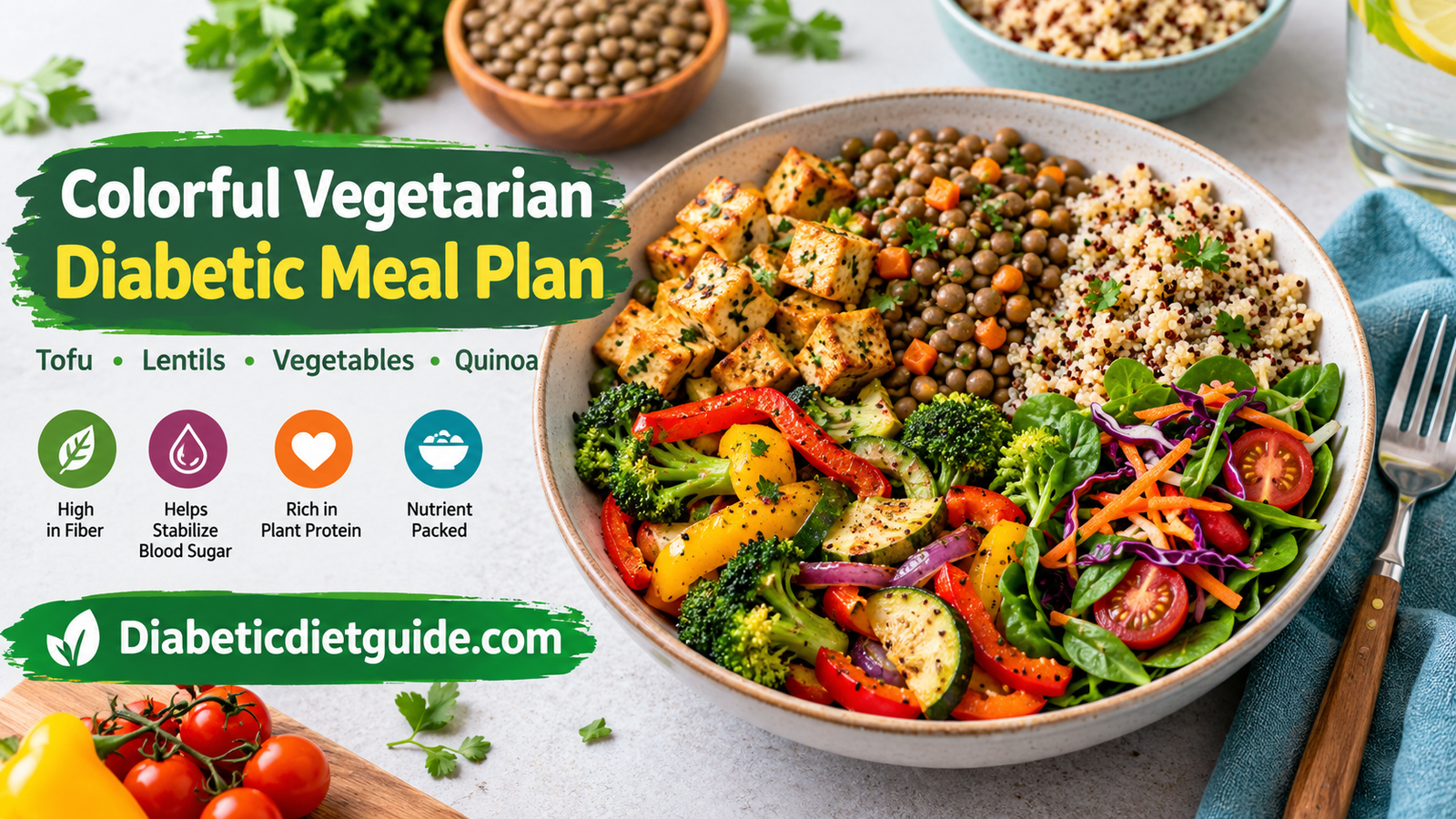
Diabetic Meal Plan for Vegetarians: A Complete Guide to Eating Well With Plants
Balanced meals, smart carbs, plant proteins and a full week of ideas to support steady blood sugar.
This article is for general education and is not medical advice. Talk with your doctor or dietitian before changing your diet or medication.
1. Why a Vegetarian Pattern Can Work Well for Diabetes
A well-built vegetarian diet is one of the most studied eating patterns for blood sugar management. Beans, lentils, whole grains, vegetables, nuts and dairy bring fiber and slow-digesting carbohydrate, and they tend to be lower in saturated fat than a meat-heavy plate. Many people find that fasting glucose, A1C and cholesterol all move in a better direction when plants take center stage.
The catch is that “vegetarian” does not automatically mean “diabetes-friendly.” White pasta, sweet granola, fruit juice and fried snacks are all meat-free, and all of them can send glucose climbing. A good plan is built around carbohydrate quality, portion size and protein at every meal, not just the absence of meat.
This guide walks through the plate, the best plant proteins, a full week of meals, snacks, nutrient gaps and grocery strategy. If you eat no animal products at all, our vegan diabetic meal plan goes a step further, and if you simply want a template, the weekly diabetic meal plan is a good companion.
What the Evidence Suggests
Studies comparing vegetarian and non-vegetarian eating patterns in people with type 2 diabetes often find modest but meaningful improvements in A1C, body weight and LDL cholesterol. The benefits seem to come from fiber, lower saturated fat and fewer processed meats rather than from any single food.
Who Benefits Most
People with insulin resistance, high cholesterol or excess weight often respond well. Those who are lacto-ovo vegetarian have the easiest transition, because eggs and dairy make protein and B12 simple. If you are new to meatless eating, start by swapping two or three dinners a week and build from there rather than overhauling everything overnight.
Setting Realistic Expectations
Blood sugar responds to the whole pattern: sleep, movement, stress and medication all matter. A meal plan is a tool, not a cure, so use it alongside the guidance of your care team and expect gradual change over weeks, not days.
Common Myths About Vegetarian Eating and Diabetes
One myth says plant foods are too high in carbohydrate for diabetes. In reality, the fiber packaged with beans, whole grains and vegetables slows absorption, and studies of lentil and chickpea meals show gentler glucose curves than comparable portions of white rice or bread. Another myth says vegetarians cannot get enough protein. With eggs, dairy, soy and legumes, protein is easy to reach.
Making the Transition Gradually
Week one, replace two dinners with vegetarian meals. Week two, switch breakfasts to eggs, yogurt or oats. Week three, upgrade snacks and lunches. A gradual shift gives your taste buds and digestion time to adapt, especially to the extra fiber, which can cause gas if added too quickly. Drink plenty of water as fiber rises.
Working With Your Care Team
If you take insulin or sulfonylureas, a drop in carbohydrate or a change in meal timing can lower your glucose more than expected. Share your plan with your provider or a registered dietitian so doses can be adjusted safely.
Want a plant-forward cookbook on your counter?
Browse Diabetic Vegetarian Cookbooks2. Carbs, Protein and Fat on a Meat-Free Plate
Carbohydrate raises blood sugar the most, so it deserves attention. Most adults with diabetes do well with roughly 30 to 45 grams of carbohydrate per meal and 15 to 20 grams per snack, but your own target depends on medication, activity and your care team’s advice.
Protein slows digestion and keeps you full. Aim for a palm-sized portion of a protein-rich food at each meal. Healthy fats from olive oil, nuts, seeds and avocado help satiety and heart health. Fiber, ideally 25 to 35 grams a day, is the hidden hero: it blunts the glucose rise after meals. Our high-fiber diabetic meal plan shows how to hit that number comfortably.
One thing vegetarians should know: beans and lentils contain both protein and carbohydrate. A cup of cooked lentils holds around 40 grams of carbs, so count them as a starch, not as a free protein.
Counting Carbs Without Obsessing
You do not need a food scale forever. Learn visual cues for a roughly 15-gram carb serving: one small apple, a third of a cup of cooked rice or pasta, one slice of bread, or half a cup of beans. After a few weeks of checking labels, most people estimate well by eye.
Why Fat Is Not the Enemy
Fat does not raise glucose directly, and it slows stomach emptying, which can flatten the post-meal curve. Prefer olive oil, avocado, nuts and seeds, and go easy on butter, cream and fried foods, especially if cholesterol is also a concern.
A Simple Daily Target
A useful rule of thumb is three balanced meals and one or two small snacks, spacing carbohydrate fairly evenly through the day. Even distribution makes patterns easier to read on a glucose meter and reduces big swings.
Reading a Nutrition Label
Start with serving size, because every number depends on it. Then look at total carbohydrate, which already includes fiber and sugar, so you do not need to add them together. Added sugars matter too: look for products with little or none. Fiber of five grams or more per serving is excellent.
Net Carbs, Explained
Net carbs subtract fiber from total carbohydrate, and some people with diabetes use them for planning. Fiber from whole foods does blunt glucose, but processed products with added fibers can behave differently, so confirm with your own readings.
Sample Macro Breakdown
A typical lunch might be one cup of lentil soup (about 30 grams carb, 14 grams protein), a salad with olive oil, and a small pear. This delivers roughly 45 grams of carbohydrate with plenty of fiber and protein. Keep a food log for a week to see how your usual meals compare, then adjust one meal at a time.
Track portions with the right tools.
Shop Carb-Counting Guides3. The Diabetes Plate Method, Vegetarian Style
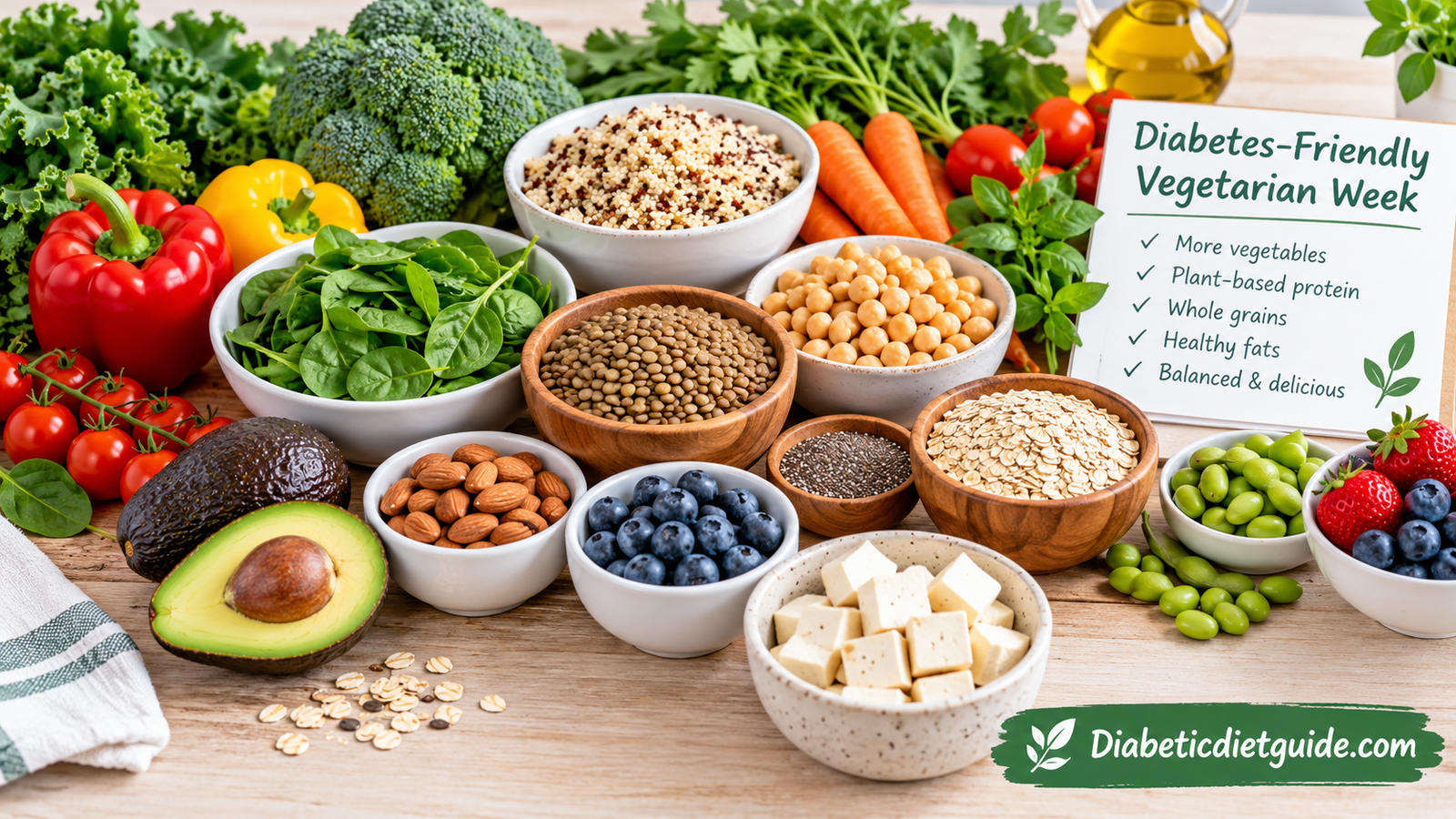
The plate method removes most of the math. Fill half your plate with non-starchy vegetables such as spinach, broccoli, peppers, zucchini, cauliflower or green beans. Fill one quarter with plant protein (tofu, tempeh, eggs, Greek yogurt, paneer or beans). Fill the final quarter with a high-fiber carbohydrate such as quinoa, barley, brown rice, sweet potato or whole-grain bread.
Add a thumb of healthy fat and a glass of water or unsweetened tea. If you use beans as your protein, shrink the starch quarter slightly to keep the carbs balanced.
For heart protection on top of glucose control, pair this method with our heart-healthy diabetic menu, which leans on the same foods.
Adapting the Plate to Real Meals
Mixed dishes like curries, soups and casseroles do not sit neatly on a plate, but the proportions still apply. Mentally divide the dish: mostly vegetables, a clear protein source, and a modest starch. If a stew is thick with potatoes and pasta, add a side salad and reduce the grain.
Plate Examples
Dinner one: roasted cauliflower and green beans (half), baked tofu with herbs (quarter), a small scoop of farro (quarter). Dinner two: a large mixed salad with chickpeas, feta and olive oil, plus a slice of seeded bread. Dinner three: zucchini noodles with lentil marinara and a sprinkle of parmesan.
Using Your Hand as a Guide
Your fist approximates a cup of grains or starchy vegetables, your palm a protein portion, and your thumb a serving of fat. Hand measures travel well to restaurants and friends’ homes.
Non-Starchy Vegetables to Love
Think beyond salad: roasted Brussels sprouts, sautéed greens with garlic, grilled eggplant, spiralized zucchini, shaved cabbage slaw, cauliflower mash and tomato-cucumber salads. Roast with olive oil and spices at high heat to bring out natural sweetness without sugar.
Choosing the Starch Quarter
Rotate quinoa, barley, farro, bulgur, wild rice, sweet potato and whole-grain pasta. Cooked al dente, pasta has a lower glycemic effect than soft, overcooked noodles. Keep portions around a half to two-thirds of a cup cooked.
Sauces and Dressings
Sauces can hide sugar. Make your own with olive oil, lemon, vinegar, mustard, tahini, herbs and spices. Ketchup, teriyaki and sweet chili sauces can add 10 or more grams of sugar per serving, so measure them carefully.
A divided plate makes this habit automatic.
Shop Portion Control Plates4. The Best Plant Proteins for Blood Sugar Control
| Food | Serving | Protein | Net carbs |
|---|---|---|---|
| Firm tofu | 1/2 cup | 10 g | 2 g |
| Tempeh | 3 oz | 16 g | 7 g |
| Greek yogurt, plain | 3/4 cup | 15 g | 6 g |
| Eggs | 2 large | 12 g | 1 g |
| Lentils, cooked | 1/2 cup | 9 g | 14 g |
| Chickpeas, cooked | 1/2 cup | 7 g | 16 g |
| Paneer | 2 oz | 10 g | 2 g |
| Edamame | 1/2 cup | 9 g | 4 g |
Rotate these through the week for variety. Tofu, tempeh, eggs and paneer are very low in carbohydrate, while lentils and chickpeas count toward your starch allowance. For more ideas, see our high-protein diabetic menu. If you like to nibble, the best nuts for diabetics are a handy protein-and-fat top-up.
How to Cook Tofu and Tempeh Well
Press firm tofu for 15 minutes, cube it, and bake or air fry until crisp before tossing it in a sauce. Steam tempeh for ten minutes to remove bitterness, then marinate in lemon, garlic and herbs. Good technique is the difference between bland and craveable.
Combining Proteins
Old advice said you must combine plant proteins at the same meal. In reality, eating a variety through the day supplies all essential amino acids. Still, pairing legumes with grains, such as dal with a small portion of rice, is a traditional and tasty combination.
Watch the Processed Options
Meat substitutes such as veggie burgers, nuggets and deli slices can be high in sodium and refined starch. Check labels for carbs and sodium, and treat them as occasional convenience foods rather than daily staples.
Eggs and Dairy for Lacto-Ovo Vegetarians
Eggs are versatile, low in carbs and rich in nutrients. Most people can include them regularly unless advised otherwise; talk to your provider if you have high cholesterol. Plain Greek yogurt, kefir, cottage cheese and paneer are strong protein sources, but choose unsweetened versions, since flavored yogurts can contain more sugar than dessert.
Soy: Whole Versus Processed
Whole soy foods like edamame, tofu and tempeh are excellent choices. Soy milk should be unsweetened. Be cautious with highly processed soy protein products that can contain additives and sodium.
Nuts and Seeds as Protein Boosters
Hemp seeds provide about ten grams of protein in three tablespoons. Pumpkin seeds, almonds, peanuts and pistachios add crunch, healthy fat and protein. Keep servings to about a small handful, since they are calorie-dense.
Protein Powders
If you use a plant protein powder, choose one with minimal added sugar, and check the carbohydrate count per scoop.
Stock up on staple plant proteins.
Shop Tofu, Tempeh and Lentils5. Smart Carbs: Low-Glycemic Grains, Legumes and Fruit
The glycemic index ranks how quickly a food raises glucose. Favor intact, minimally processed carbs: steel-cut oats, barley, bulgur, farro, quinoa, buckwheat, whole-grain sourdough, beans and lentils. Pair any carb with protein, fat or vegetables to slow absorption further.
Not sure about rice? Our comparison of white rice, brown rice and quinoa breaks down the differences, and this quinoa deep dive covers the grain in detail. For sandwiches, check out the best breads for diabetics.
Fruit is allowed. Berries, apples, pears, citrus and stone fruit are the gentlest choices, eaten whole rather than juiced. See fresh versus frozen fruit for practical tips.
Why Intact Grains Win
Whole kernels like barley, wheat berries and steel-cut oats take longer to digest than flour-based products. Even whole-wheat bread made from fine flour can raise glucose faster than you might expect, so look for visible grains and seeds, and test your own response.
Cooling and Reheating Starches
Cooked and then cooled rice, potatoes and pasta develop resistant starch, which digests more slowly. Making a batch ahead and reheating it can modestly lower the glucose impact, a nice bonus for meal preppers.
Portion Strategies for Legumes
Start with half a cup of cooked beans or lentils per meal and check your reading two hours later. If your numbers stay in range, you can increase gradually. Rinsing canned beans removes much of the added sodium.
Sample Swaps
Replace white rice with cauliflower rice or barley, regular pasta with chickpea or lentil pasta, a flour tortilla with a lettuce wrap, and mashed potatoes with mashed cauliflower mixed with a little potato. Swap sugary cereal for steel-cut oats and flavored yogurt for plain yogurt with berries.
Fruit Portions Made Simple
One serving is about 15 grams of carbohydrate: a small apple, a cup of strawberries, three-quarters of a cup of blueberries, or a small orange. Pair fruit with nuts or cheese to slow absorption, and avoid juice, dried fruit and canned fruit in syrup.
Starchy Vegetables
Corn, peas, potatoes and winter squash count toward your starch allowance. Sweet potatoes with the skin on are a better choice than white potatoes for many people, but portion size still matters.
Testing Your Personal Response
Two people can react differently to the same oatmeal. Test two hours after a new meal to see whether it works for you.
Swap refined grains for slow-burning ones.
Shop Low-Glycemic Grains6. A 7-Day Vegetarian Diabetic Meal Plan
This sample plan runs about 1,500 to 1,800 calories and keeps carbohydrate near 40 grams per meal. Adjust portions to your needs. For specific calorie targets, see the 1500-calorie and 1800-calorie menus.
| Day | Breakfast | Lunch | Dinner |
|---|---|---|---|
| Mon | Veggie scramble, berries, 1 slice whole-grain toast | Lentil soup with side salad | Tofu stir-fry, broccoli, 1/2 cup brown rice |
| Tue | Plain Greek yogurt, walnuts, chia, raspberries | Chickpea and cucumber bowl, feta, olive oil | Stuffed peppers with black beans and quinoa |
| Wed | Steel-cut oats, cinnamon, almond butter | Egg salad lettuce wraps, side of apple slices | Palak paneer, cauliflower rice |
| Thu | Spinach-mushroom omelet, avocado | Black bean and zucchini quesadilla, salsa | Tempeh tacos in lettuce cups, slaw |
| Fri | Cottage cheese with pear and pumpkin seeds | Barley salad with roasted veg and hummus | Eggplant parmesan, large green salad |
| Sat | Chickpea flour pancakes, berries | Minestrone with white beans | Vegetable curry with lentils, small portion basmati |
| Sun | Tofu scramble, tomato, whole-grain toast | Greek salad with edamame | Mushroom-walnut “meatballs,” zucchini noodles |
Need a longer runway? Try the 14-day plan or the 30-day menu.
How to Customize the Plan
Swap any dinner for another in the same week, and swap breakfasts freely. If you are active, add a small snack or a bit more grain. If you are trying to lose weight, trim starchy portions slightly and keep the vegetables generous. If you take insulin, discuss carb counts per meal with your provider.
Sample Snacks to Pair With the Week
Choose one or two a day: a small handful of almonds, celery with peanut butter, plain yogurt with berries, hummus with carrots, a boiled egg or roasted chickpeas. Each should contain protein or fat to keep you full.
Leftovers and Batch Cooking
Lentil soup, curry and stuffed peppers freeze well, so double the recipe and freeze single portions. Having ready meals is the best defense against reaching for takeout on tired evenings.
Sample Day: Detailed Breakdown
Take Monday: the veggie scramble uses two eggs, spinach and mushrooms cooked in a teaspoon of olive oil, with berries and one slice of whole-grain toast, roughly 25 to 30 grams of carbohydrate. Lunch is a bowl of lentil soup with a large salad, about 35 grams. Dinner is tofu stir-fry with plenty of broccoli and a half cup of brown rice, about 35 grams. Add a snack of almonds and an apple for roughly 15 more grams.
Weekend Meal Prep Plan
On Sunday, bake a tray of tofu, cook a pot of lentils, roast broccoli and cauliflower, boil a dozen eggs, and cook a batch of quinoa. Portion these into containers so lunches and dinners can be assembled in minutes during the week.
Adjusting for Different Calorie Levels
For lower calorie needs, reduce starch and fat portions slightly. For higher needs, add an extra snack, a second slice of whole-grain toast or more beans. Keep vegetables and protein consistent.
Variety Keeps You on Track
Repeat favorite meals, but rotate sauces and spices weekly to avoid boredom.
Batch-cook on Sunday and eat well all week.
Shop Meal Prep Containers7. Breakfasts That Keep Morning Glucose Steady
Many people see their highest readings after breakfast, so it pays to get this meal right. Skip sweet cereal and juice. Build breakfast around protein and fiber: eggs with vegetables, Greek yogurt with nuts and berries, cottage cheese with fruit, tofu scramble, or steel-cut oats with seeds and nut butter.
Our breakfast ideas for diabetes and diabetic breakfast menu offer dozens of variations. In a rush? A protein-rich blend from our diabetic smoothie menu works, as long as you keep fruit modest and add greens and seeds.
Savory Breakfast Ideas
Try an omelet with spinach and mushrooms, a tofu scramble seasoned with turmeric and cumin, or a chickpea flour pancake topped with yogurt and herbs. Savory breakfasts tend to be higher in protein and lower in carbs than sweet ones.
Sweet Breakfast Done Right
For something sweeter, stir cinnamon and chopped walnuts into plain Greek yogurt with a handful of berries. Overnight oats made with steel-cut or rolled oats, chia seeds, unsweetened milk and half a cup of berries are fast and filling.
Timing and Testing
Insulin resistance is often highest in the morning, so keep breakfast carbs modest, around 30 grams for many people, and test two hours after eating to see whether your breakfast works for you.
Make-Ahead Breakfasts
Egg muffins baked with spinach, peppers and feta keep in the fridge for four days. Chia pudding made with unsweetened almond milk and topped with berries is ready when you wake. Overnight oats and yogurt parfaits assemble in a minute.
Breakfasts on the Go
A hard-boiled egg with a small apple and a handful of nuts is portable and balanced. A protein smoothie made with unsweetened milk, spinach, half a banana, chia and protein powder is another option, though keep an eye on the carbs.
Breakfast Foods to Skip
Sweetened cereals, pastries, flavored instant oatmeal, fruit juice, pancakes with syrup and granola are all high in refined carbs and added sugar. If you love pancakes, make them from chickpea or almond flour and top them with yogurt and berries.
Coffee and Add-Ins
Black coffee and unsweetened tea are fine. Flavored creamers can contain several grams of sugar per tablespoon, so use unsweetened milk or a splash of half-and-half.
Boost fiber at breakfast with seeds.
Shop Chia and Flax8. Satisfying Lunch and Dinner Ideas
Aim for variety in flavor and cuisine so the plan never feels like a chore. Bowls are the easiest format: a base of greens or a small scoop of grain, a plant protein, roasted vegetables and a flavorful sauce. Soups, curries, chilis and stir-fries stretch beans and vegetables into hearty meals.
Look to cuisines that are naturally vegetarian-friendly. Our Indian diabetic diet chart covers dal, sabzi and millet-based meals, while Mexican and Chinese diabetic recipes offer bean, tofu and vegetable dishes. See also our lunch and dinner menus.
Short on time? 5-ingredient recipes and no-cook meals keep things simple, and an air fryer turns tofu and vegetables crisp without much oil.
Bowl Formula
Start with two cups of greens or roasted vegetables, add half a cup of beans or a serving of tofu, a quarter cup of cooked whole grain, and finish with a spoonful of tahini, olive oil vinaigrette or yogurt sauce. Vary the spices to change the cuisine: cumin and lime for Mexican, ginger and sesame for Asian, oregano and lemon for Mediterranean.
Soups, Stews and Curries
Lentil soup, minestrone, vegetable chili and chana masala are naturally fiber-rich and reheat well. Thicken with pureed beans rather than flour or cream, and watch the sodium in canned broths.
Quick Weeknight Dinners
Sheet-pan tofu with broccoli, a veggie omelet with side salad, black bean tacos in lettuce cups, or a stir-fry served over cauliflower rice each take under thirty minutes.
Three Sample Recipes in Brief
Lentil and vegetable curry: sauté onion, garlic and ginger, add curry spices, a cup of red lentils, diced tomatoes, spinach and cauliflower, and simmer until tender. About 30 grams of carbohydrate per generous bowl.
Stuffed peppers: fill halved peppers with black beans, quinoa, corn, cumin and cheese, then bake until tender. Serve with salad.
Tofu and broccoli stir-fry: cube pressed tofu, sear until golden, add broccoli, garlic, ginger and a splash of low-sodium soy sauce, and serve over cauliflower rice.
Flavor Without Sugar
Use garlic, ginger, citrus zest, fresh herbs, smoked paprika, cumin, chili and vinegar to build flavor. Add a splash of acid at the end of cooking for brightness.
Cooking Methods That Help
Roasting, grilling, steaming and sautéing in olive oil keep vegetables flavorful without heavy breading. Skip deep frying and heavy cream sauces.
Make weeknight cooking faster.
Shop Air Fryers9. Snacks That Won’t Spike Your Glucose
Snacks bridge long gaps, but the wrong ones undo a good meal. Choose combinations of protein or fat with fiber: celery with peanut butter, hummus with cucumber, a small handful of almonds, a boiled egg, plain yogurt with cinnamon, roasted chickpeas or string cheese with berries.
Read labels on packaged items. Our guides to diabetic snack ideas, crackers and peanut butter help you pick products without hidden sugar.
Building a Better Snack
Aim for 10 to 20 grams of carbohydrate with some protein. Examples: an apple with a tablespoon of almond butter, three-quarters of a cup of Greek yogurt with cinnamon, a small whole-grain wrap with hummus, or a quarter cup of trail mix without candy.
Snacks to Limit
Granola bars, flavored yogurts, dried fruit, rice cakes and pretzels are common culprits. They seem healthy but can raise glucose quickly because they are low in protein and fiber.
Bedtime Snacks
If you tend to wake with high or low morning readings, ask your provider whether a small protein-rich bedtime snack, like cottage cheese or a handful of nuts, would help.
Snack Pairing Chart
Pair a carbohydrate with a protein: apple plus cheese, whole-grain crackers plus hummus, berries plus yogurt, carrots plus guacamole, banana half plus peanut butter. The pairing slows digestion and improves satisfaction.
Portable Snacks for Work and Travel
Single-serve nut packs, string cheese, hard-boiled eggs, roasted chickpeas, olives, seed crackers and unsweetened jerky-style mushroom or soy snacks are easy to carry. Keep an emergency snack in your bag in case of delays, especially if you take glucose-lowering medication.
Sweet Cravings
Try a square of dark chocolate with at least 70 percent cocoa, berries with whipped yogurt, or baked cinnamon apples with walnuts. Planning a small dessert into your day is more sustainable than banning sweets.
Mindful Snacking
Portion snacks into a bowl instead of eating from the bag, and ask yourself whether you are hungry or bored before eating.
Keep smart snacks within reach.
Shop Diabetic-Friendly Snacks10. Nutrients Vegetarians With Diabetes Should Watch
Vitamin B12: Dairy and eggs help, but if you eat little of either, ask your doctor about a supplement. This matters even more if you take metformin, which can lower B12 over time.
Iron: Lentils, tofu, pumpkin seeds and spinach contain plant iron. Pair them with vitamin C foods like peppers or lemon to improve absorption.
Zinc, calcium and vitamin D: Found in legumes, seeds, dairy and fortified foods. Omega-3s: Flax, chia, walnuts and algae-based supplements fill the gap left by fish. Always review supplements with your healthcare provider.
If you also manage blood pressure or kidney concerns, see our low-sodium and renal diabetic plans, since beans, nuts and dairy may need adjusting.
Protein Quality and Variety
Because plant proteins differ in amino acid profile, a variety of legumes, soy, grains, nuts and seeds across the day covers your needs. Soy foods such as tofu, tempeh and edamame provide complete protein on their own.
Choline, Iodine and Selenium
Eggs are a great source of choline. Iodine comes from iodized salt and dairy, and selenium from Brazil nuts, which are potent, so one or two a day is plenty. If you cut salt for blood pressure, make sure iodine comes from another source.
Getting Labs Checked
Ask your doctor to periodically check B12, ferritin, vitamin D and your lipid panel. Catching a gap early is far easier than correcting a deficiency later.
Vitamin B12 in Detail
B12 comes almost exclusively from animal foods and fortified products. Lacto-ovo vegetarians may get enough from dairy and eggs, but absorption declines with age and with long-term metformin use. Symptoms of low B12 include fatigue, tingling and memory trouble, which can overlap with diabetic neuropathy, so testing matters.
Iron Absorption Tips
Plant iron absorbs less efficiently than iron from meat. Eat vitamin C foods alongside iron-rich meals, and avoid drinking tea or coffee with them, since tannins reduce absorption. Cooking in a cast-iron pan also adds a little iron to food.
Calcium and Vitamin D
Dairy, fortified plant milks, tofu set with calcium, kale and almonds provide calcium. Vitamin D comes from sunlight, fortified foods and supplements, and many people with diabetes are low.
Omega-3 Options
Ground flaxseed, chia, hemp seeds and walnuts provide ALA, while algae oil supplies DHA and EPA directly.
Close nutrient gaps with your doctor’s guidance.
Browse B12 and Algae Omega-311. Grocery List and Prep Strategy
Produce: leafy greens, broccoli, cauliflower, zucchini, peppers, mushrooms, tomatoes, berries, apples. Proteins: firm tofu, tempeh, eggs, plain Greek yogurt, cottage cheese, paneer. Pantry: lentils, chickpeas, black beans, steel-cut oats, quinoa, barley, nuts, seeds, olive oil, spices.
Cook a pot of lentils, roast two trays of vegetables and prepare one grain on prep day. Dried beans and frozen vegetables are inexpensive; our low-income diabetic menu has more budget tactics. Make the most of flavor with sugar-free condiments instead of sugary sauces.
Shopping Strategy
Shop the perimeter first for produce, dairy and eggs, then visit the aisles for dried beans, canned tomatoes, whole grains, nuts and spices. Choose frozen vegetables and berries for convenience and value, as they are frozen at peak ripeness.
Label Reading
Check total carbohydrate, fiber and added sugars. Prefer products with at least three grams of fiber per serving and little added sugar. For canned beans, choose no-salt-added versions or rinse thoroughly.
A Sunday Prep Routine
Spend about 90 minutes: cook a grain, simmer a pot of lentils, roast two trays of vegetables, boil eggs, wash greens and portion snacks. Weeknight meals then become assembly rather than cooking.
Budget-Friendly Staples
Dried lentils, split peas, beans, oats, brown rice, eggs, cabbage, carrots, onions, frozen spinach and canned tomatoes are inexpensive and nutritious. Buying in bulk and cooking in batches stretches your budget further.
Storage and Freshness
Store leafy greens with a paper towel in an airtight container, keep herbs in a jar of water, and freeze cooked beans and grains in portions. Label containers with dates so nothing gets forgotten.
Kitchen Tools Worth Having
A good chef’s knife, sheet pans, a slow cooker or pressure cooker, a blender, a food scale and measuring cups make healthy cooking quicker and more accurate. A pressure cooker turns dried beans into dinner in under an hour.
Sample Weekly Shopping List
Two bags of leafy greens, three heads of broccoli or cauliflower, peppers, zucchini, mushrooms, two dozen eggs, two blocks of tofu, plain Greek yogurt, a bag of lentils, canned chickpeas and black beans, steel-cut oats, quinoa, berries, apples, almonds and olive oil.
Flavor without sugar or excess salt.
Shop Salt-Free Spice Sets12. Eating Out, Common Mistakes and Monitoring
Restaurants offer plenty of vegetarian options, but portions of pasta, rice and bread run large. Ask for extra vegetables, a side salad, sauces on the side and half the starch. Our eating out diabetic menu has more strategies.
Common mistakes: relying on cheese and refined carbs, treating beans as pure protein, skipping meals, drinking juice, and overdoing fruit or dried fruit. Monitor: check glucose before and two hours after new meals to learn which foods work for you. If you take insulin or other glucose-lowering drugs, talk to your care team before changing your carb intake, and see our insulin resistance diet plan for related background.
Restaurant Cuisines
Mediterranean, Indian, Mexican and Thai restaurants are vegetarian-friendly. Order dal, grilled vegetables, bean dishes, tofu curries or salads with chickpeas, and skip the naan, tortilla chips and sweet sauces when possible.
Mistakes to Avoid
Do not replace meat with cheese and refined pasta, do not skip protein at breakfast, and do not assume labeled vegetarian foods are low-carb. Restrictive swings and skipped meals can lead to blood sugar rollercoasters.
Signs Your Plan Needs Adjusting
Frequent readings above target, unusual fatigue, or low readings if you take glucose-lowering medication all deserve a conversation with your provider. Keep a simple food and glucose log to bring to appointments.
Handling Social Situations
At parties and holidays, eat a small protein-rich snack beforehand so you are not ravenous, fill your plate with vegetables and protein first, and bring a dish you know fits your plan. Politely declining seconds is fine.
Travel Tips
Pack nuts, seed crackers, fruit and protein bars with low sugar. Look up vegetarian-friendly restaurants ahead of time and keep a consistent meal schedule when possible, especially if you take medication.
Using Glucose Data
A meter or continuous monitor reveals which foods affect you most. Look for patterns, such as a rise above your target two hours after a certain meal, and adjust the portion or pairing rather than banning the food entirely.
Staying Consistent
Aim for progress, not perfection. If a meal does not go as planned, return to your plan at the next meal. Pair good nutrition with regular walking, particularly a ten-minute stroll after meals, which helps blunt glucose spikes. Sleep and stress management matter too.
Test, learn and adjust.
Shop Glucose MonitorsFrequently Asked Questions
Can people with diabetes follow a vegetarian diet?
Yes. Research suggests well-planned vegetarian diets can improve A1C, weight and cholesterol. Focus on fiber, protein and portion control, and work with your care team.
How much protein do I need each day?
Many adults need roughly 0.8 to 1.0 grams per kilogram of body weight, though needs vary. Include a protein source at every meal and ask your provider for a personalized target.
Are beans and lentils safe for diabetes?
Yes. They have a low glycemic impact thanks to fiber and protein, but they contain carbs, so count them as part of your starch portion.
Is tofu good for diabetes?
Tofu is low in carbohydrate and rich in protein, making it an excellent choice when prepared without sugary sauces.
Can I eat eggs and dairy?
Most plans include them. Choose plain Greek yogurt and cottage cheese, and check with your provider if cholesterol is a concern.
Do I need supplements?
Vitamin B12 is the most common one, especially with metformin or limited animal foods. Ask your doctor to check your levels.
What are the best carbs?
Steel-cut oats, barley, quinoa, bulgur, beans, lentils and whole-grain bread, paired with protein or vegetables.
Can I eat fruit?
Yes. Choose whole fruit like berries, apples and pears in controlled portions, and avoid juice.
How many carbs per meal?
A common starting range is 30 to 45 grams per meal, but your ideal amount depends on medication and goals.
Is a vegetarian plan good for weight loss?
It can be, since high-fiber plant foods are filling. For a structured option, see our diabetic meal plan for weight loss.
Can I eat out as a vegetarian with diabetes?
Yes. Choose vegetable-heavy dishes, ask for sauces on the side and limit refined starches.
When should I talk to my doctor?
Before any major diet change, especially if you take insulin or sulfonylureas, since doses may need adjusting.
Conclusion
A vegetarian diet and diabetes can work beautifully together when you build meals around non-starchy vegetables, plant protein, high-fiber carbs and healthy fats. Start with the plate method, borrow a few meals from the sample week, test how your body responds and adjust with your care team. Small, repeatable habits beat perfect plans every time.
Ready to start your plant-powered week?
Shop Diabetes-Friendly Kitchen Essentials