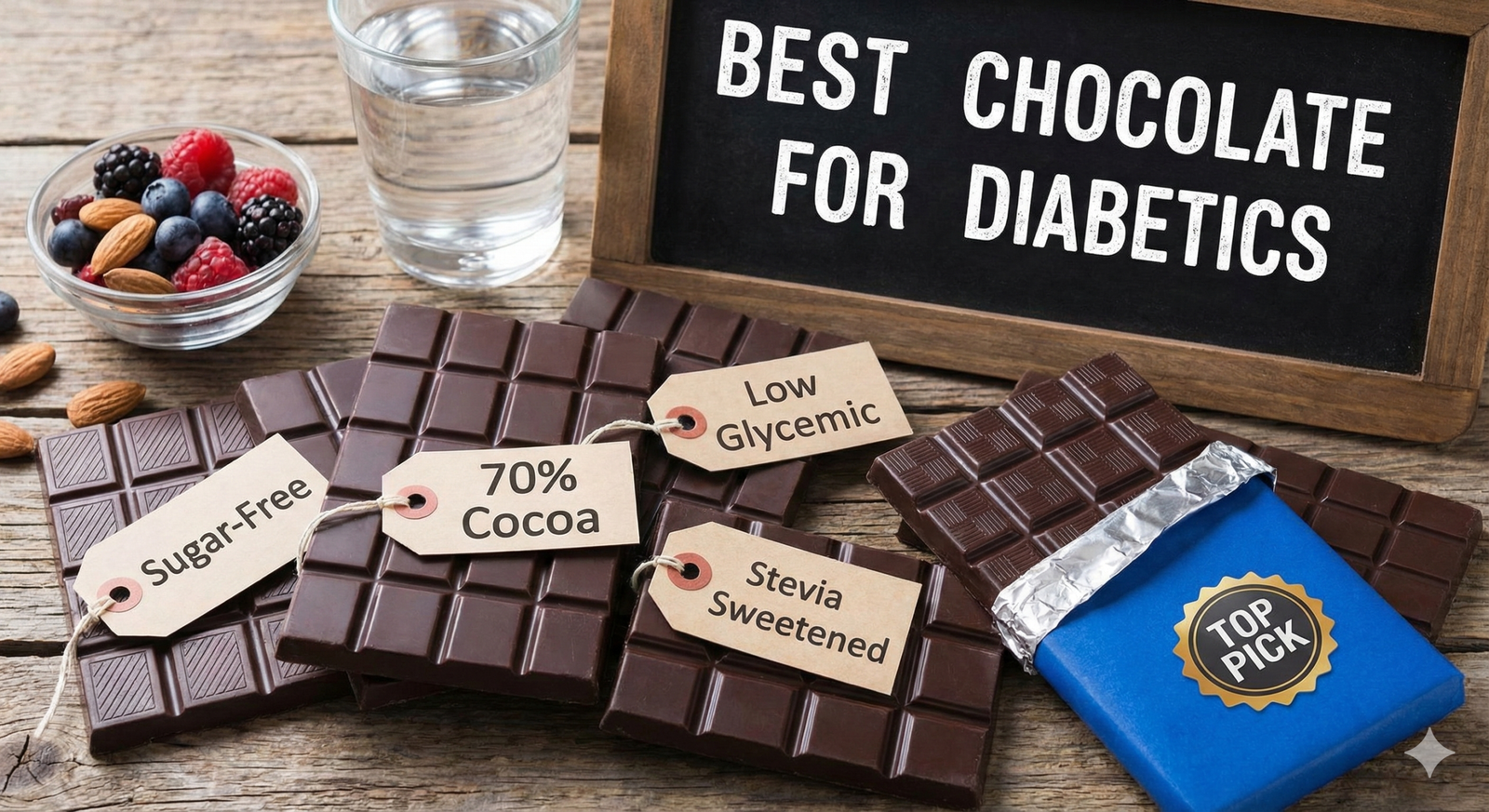
7 Best Chocolates for Diabetics: Indulge Without the Spike (2026 Review)
For those managing Type 2 diabetes or insulin resistance, a diagnosis doesn’t have to mean the end of chocolate. In fact, emerging science suggests that high-quality chocolate—specifically dark chocolate rich in flavonoids and antioxidants—can actually help improve insulin sensitivity, lower blood pressure, and support heart health.
The problem has never been the cocoa; it’s the sugar. Fortunately, the “diabetic chocolate” aisle has undergone a massive revolution. We have moved past the days of waxy, chalky “diet” bars that leave a chemical aftertaste. Today, artisanal brands are using advanced plant-based sweeteners like Stevia, Monk Fruit, Erythritol, and Allulose to create bars that melt in your mouth without spiking your blood glucose levels.
Cocoa percentage matters: Experts generally recommend chocolate with at least 70% cocoa for diabetics. Higher cocoa content usually means less sugar and more flavanols. For example, a 70% bar contains roughly half the sugar of a 50% bar. This guide focuses on bars that either use safe sweeteners or naturally low sugar through high cocoa mass.
In this comprehensive guide, we have analyzed ingredients, calculated net carbs, and taste-tested the top diabetic-friendly chocolates on the market to bring you the 7 best options for guilt-free indulgence. We will also dive deep into the nutritional science, exploring how specific compounds in chocolate interact with your metabolism, and provide a complete roadmap for integrating chocolate into a balanced diabetic diet without the fear of glucose spikes.
Buying Guide: How to Read the Label
Before you buy, you need to look beyond the “Sugar-Free” label. Navigating the world of diabetic chocolate requires a critical eye for detail. Manufacturers are clever with marketing, often slapping “No Added Sugar” on a product loaded with Maltitol, which can still raise your blood sugar. Understanding the hierarchy of sweeteners, the calculation of net carbohydrates, and the role of fiber is paramount for maintaining stable blood glucose levels. Here is what matters for blood sugar management:
1. The Sweetener Hierarchy
The choice of sweetener is the single most critical factor when choosing a diabetic chocolate. Different sweeteners have vastly different metabolic effects, and what works for one person might cause a spike or digestive distress for another. It’s essential to understand the spectrum from naturally derived, zero-glycemic options to problematic sugar alcohols that are best avoided.
- The Best (Green Light): Stevia, Monk Fruit, Erythritol, and Allulose. These have a Glycemic Index (GI) of 0 and virtually no impact on blood sugar. They do not contribute to net carbs and are generally well-tolerated, though some individuals may experience a mild cooling sensation from Erythritol.
- The Cautionary (Yellow Light): Maltitol and Sorbitol. These are sugar alcohols often found in cheaper candies. Maltitol has a GI of around 35-52, meaning it can raise blood sugar and insulin levels, albeit slower than table sugar. It is also notorious for causing significant digestive distress, including bloating, gas, and a laxative effect if consumed in quantities over 30g.
- The Natural Route: High percentage cacao (85%+). This relies on minimal cane sugar rather than artificial substitutes. While it does contain some sugar, the quantity is so small per serving that the overall glycemic load is negligible for most individuals with type 2 diabetes.
2. Understanding Net Carbs
For diabetics and those on a Keto diet, “Total Carbs” can be misleading. The concept of “Net Carbs” is crucial because it represents the carbohydrates that actually digest and have a measurable effect on your blood glucose. You want to look for Net Carbs.
Formula: Total Carbs – Fiber – Sugar Alcohols (like Erythritol) = Net Carbs.
Fiber and most sugar alcohols pass through the body undigested, so they don’t spike your blood sugar. A bar might have 20g of Total Carbs, but if 10g is fiber and 8g is Erythritol, the Net Carbs are only 2g. This distinction allows you to enjoy a satisfying treat while staying well within your carbohydrate budget for a meal or snack. However, be cautious with soluble corn fiber (often used in ChocZero) and inulin; while effective for net carb reduction, they can cause sensitivity in some gut microbiomes.
3. The Fat, Fiber, and Protein Matrix
A truly diabetic-friendly chocolate isn’t just about low sugar; it’s about the food matrix. The combination of cocoa butter (a stearic acid-rich fat that has a neutral effect on cholesterol), soluble fiber, and sometimes added nuts creates a physical and chemical package that slows gastric emptying. This means even if there are trace sugars, they enter your bloodstream much more gradually. When selecting a bar, prioritize those with a higher fat and fiber content to create the most favorable metabolic response.
4. Portion Control: Even “safe” chocolate adds up
No matter how clean the ingredients, calories and carbs still count. A serving is typically 1–2 squares (about 15–30g). Eating an entire family-sized bar in one sitting, even if sugar‑free, can lead to digestive discomfort and unwanted calorie intake. We recommend pre-portioning your chocolate or buying individually wrapped pieces to help maintain mindfulness. Remember, the goal is to integrate chocolate as a joyful part of a balanced diet, not to replace meals with it.
1. Lily’s Sweets (Best Overall)
Lily’s has become the gold standard for low-carb and keto-friendly chocolate. You can find it in almost any grocery store, and they offer a massive variety—from Salted Caramel Milk Chocolate style to 92% Dark. They also make excellent chocolate chips for baking diabetic-friendly cookies. Their seasonal offerings (like pumpkin spice) keep things exciting. The brand’s commitment to using non-GMO, Fair Trade certified cocoa ensures that you’re not only taking care of your health but also supporting ethical farming practices.
What truly sets Lily’s apart is their masterful blending of sweeteners. By combining Erythritol with Stevia, they mitigate the cooling aftertaste that Erythritol can have on its own, while the chicory root fiber adds a creamy mouthfeel that mimics the texture of traditional milk chocolate. Their salted almond and blood orange varieties are particularly popular for those who want a multi-sensory snacking experience without the carbohydrate load.
Sweetener: Erythritol, Stevia, and Chicory Root Fiber.

Lily’s Salted Almond Milk Chocolate Style
The perfect balance of creamy and crunchy without the sugar crash. Sweetened with Stevia and Erythritol, offering a classic milk chocolate taste that satisfies cravings. Fans also love the crispy rice and sea salt varieties for texture. Each serving delivers around 3-4g of net carbs, making it an easy fit into a low-carb or diabetic meal plan.
Pros
- Huge variety of flavors
- Widely available in stores
- Certified Gluten-Free & Non-GMO
- Great for baking (chips available)
- Fair Trade certified cocoa
- Smooth texture with no waxy aftertaste
Cons
- Pricey compared to standard bars
- Contains soy lecithin (in some flavors)
- Erythritol may cause cooling sensation for some
2. ChocZero (Best No Sugar Alcohols)
If sugar alcohols like Erythritol hurt your stomach or leave a cooling aftertaste, ChocZero is your savior. They refuse to use sugar alcohols, instead using Monk Fruit and prebiotic soluble corn fiber to achieve sweetness and texture. This makes them exceptionally high in fiber. They also produce sugar-free syrups and peanut butter cups that are popular in the keto community. The company has built a loyal following by being completely transparent about their ingredient sourcing and manufacturing processes.
ChocZero’s unique soluble corn fiber acts as a prebiotic, feeding the beneficial bacteria in your gut. While this is a fantastic health benefit, those new to high-fiber diets should start with a small portion (one or two squares) to allow their digestive system to adjust. The chocolate itself has a rich, European-style snap and a deep cocoa flavor that belies its zero-sugar nature. Their Keto Bark, studded with almonds, is a masterclass in texture contrast—the crunch of the nut against the smooth chocolate is incredibly satisfying for those who miss the tactile experience of a candy bar.
Sweetener: Monk Fruit Extract.

ChocZero Keto Bark (Dark Chocolate Almond)
Zero sugar alcohols means zero bloating for sensitive stomachs. This bark is famous for its satisfying snap and rich flavor, offering just 1g of Net Carbs per serving. The bark format breaks into perfect portions.
Pros
- No sugar alcohols (gut friendly)
- 1g Net Carb per serving
- High fiber content (prebiotic benefits)
- Soy-Free and Gluten-Free
- Excellent, clean dark chocolate flavor
Cons
- Soluble corn fiber doesn’t agree with everyone
- Melts easily in shipping
- More expensive per ounce than alternatives
3. Lindt Excellence 90% Cocoa (Best Natural)
Sometimes the best sugar-free chocolate is just… chocolate. Lindt 90% is widely available and technically contains regular sugar, but the cocoa content is so high that the sugar amount is negligible (approx 1.3g per square). This is the best option for those wanting the full cardiovascular benefits of flavonoids without artificial ingredients. Lindt sources their cocoa beans sustainably, and the 90% bar is also rich in iron, magnesium, and copper.
For the diabetic chocolate purist, the ingredient list on a Lindt 90% bar is a thing of beauty: chocolate, cocoa butter, cocoa powder, sugar, and bourbon vanilla beans. That’s it. The fermentation and roasting of their Arriba Nacional beans creates a complex flavor profile with notes of red fruit, earth, and a lingering finish that is completely absent in artificially sweetened bars. While the initial bitterness can be an acquired taste, many long-term low-carbers find that their palate adapts, and they begin to perceive even 90% cocoa as deliciously sweet.
Sweetener: Demerara Sugar (Very small amount).

Lindt Excellence 90% Cocoa Supreme Dark
The connoisseur’s choice. Pure, intense cocoa experience with minimal sugar. Packed with heart-healthy antioxidants to combat inflammation. The high concentration of theobromine and magnesium also provides a gentle, sustained energy lift without the jitters of caffeine.
Pros
- No artificial sweeteners or aftertaste
- High in antioxidants/minerals
- Available everywhere
- Simple, clean ingredient list
- Contains heart-healthy stearic acid
Cons
- Acquired taste (can be bitter)
- Not strictly “sugar-free”
- Easy to over-consume if you don’t pre-portion
4. Gatsby Chocolate (Best Low Calorie)
From the co-founder of Halo Top Ice Cream comes Gatsby, the low-calorie chocolate revolution. Most diabetic chocolates are high in fat (and calories), but Gatsby uses Allulose and esterified propoxylated glycerol (EPG)—a modified plant-based fat—to create a bar with half the calories of regular chocolate. Allulose is a rare sugar that tastes like sugar but doesn’t raise blood glucose or insulin. Gatsby also makes chocolate-covered almonds and peanut butter cups.
The innovation behind Gatsby lies in its fat source. EPG provides the creamy mouthfeel and melt-away texture of cocoa butter but with far fewer metabolizable calories. For diabetics who are also watching their weight—a common dual challenge in managing type 2 diabetes—Gatsby represents a paradigm shift. You can eat a significantly larger portion for the same calorie and carbohydrate budget. Their Almond Dark Chocolate variety is the most popular, providing a satisfying crunch and a hint of nutty sweetness that perfectly complements the Allulose-sweetened chocolate base.
Sweetener: Allulose.

Gatsby Almond Dark Chocolate
The “Halo Top” of chocolate. Incredibly low calorie and low sugar thanks to Allulose, a rare sugar found in raisins that doesn’t impact blood glucose. The reduced-fat formula makes it a unique tool for those on a calorie-restricted diet.
Pros
- Lowest calorie option on the list
- Allulose doesn’t spike insulin
- Very smooth texture
- Keto friendly
- Excellent for weight management
Cons
- Can be pricey
- Contains gluten (some varieties)
- EPG fat is novel, long-term studies are limited
5. Russell Stover Sugar Free (Best Budget)
This is the classic “candy aisle” option. Russell Stover makes sugar-free versions of Turtles (Pecan Delights), Peanut Butter Cups, and Mint Patties. They taste almost exactly like the real thing, but diabetics should exercise caution due to the use of Maltitol. If you tolerate maltitol well, these are an affordable treat. They also offer sugar-free hard candies and toffee.
Russell Stover has been a staple in the diabetic community for decades, primarily because of their accessibility and taste. The Pecan Delights, in particular, are virtually indistinguishable from the sugar-laden original in a blind taste test. The combination of chewy caramel, crunchy pecans, and a chocolate coating creates a sensory experience that is hard to find in the diabetic category. However, the presence of Maltitol means that portion control is not just about calories; it’s about preventing a blood sugar rise and avoiding the gastrointestinal urgency that can accompany overconsumption.
Sweetener: Stevia and Maltitol.

Russell Stover Sugar Free Pecan Delights
The nostalgic taste of caramel, pecans, and chocolate without the sugar. Affordable and easy to find in drugstores. Individually wrapped portions make it easy to stick to a single serving.
Pros
- Tastes like traditional candy
- Very affordable
- Individual portions help portion control
- Widely available in supermarkets and drugstores
Cons
- Contains Maltitol: May cause gas/bloating
- Maltitol may cause slight glucose rise
- Not suitable for a strict keto diet
6. Hu Kitchen Simple Dark (Best Clean Label)
Hu (Human) Kitchen is a cult favorite among Paleo, Clean Eating, and Vegan communities. They do not use refined sugar, sugar alcohols, or lecithin. They use organic coconut sugar, which gives a caramel-like note to the dark chocolate. Their mission is “simple ingredients” – you won’t find any fillers or emulsifiers. The chocolate is ethically sourced and certified Paleo.
Hu Kitchen’s philosophy is that chocolate should be made from just three ingredients: cacao, unrefined coconut sugar, and cocoa butter. This back-to-basics approach resonates with diabetics who prefer a whole-foods approach to their sweets. While coconut sugar does have a higher glycemic index than Stevia or Erythritol, it is lower than refined white sugar and retains some minerals like potassium and inulin fiber. For someone managing their blood sugar through a Paleo framework or simply avoiding all artificial and processed sweeteners, Hu Kitchen is the undisputed champion. The chocolate has a deep, complex flavor with a hint of molasses-like richness from the coconut sugar.
Sweetener: Unrefined Coconut Sugar.

Hu Kitchen Simple Dark Chocolate
No weird ingredients. Just cacao, cocoa butter, and unrefined coconut sugar. A clean, Paleo-friendly option for those avoiding chemicals. The organic certification ensures the absence of pesticides, which is a bonus for overall health.
Pros
- Zero artificial ingredients
- No sugar alcohols
- Paleo, Vegan, & Gluten-Free
- Organic ingredients
- Rich, complex flavor profile
Cons
- Coconut sugar still impacts blood glucose (higher GI than Stevia)
- Higher calorie density
7. Lakanto Sugar-Free Chocolate (Best Monk Fruit)
Lakanto is famous for their Monk Fruit sweetener, and their chocolate bar utilizes it perfectly. It is handcrafted from heirloom Arriba Nacional cacao beans, giving it a premium floral flavor profile often missing in sugar-free chocolates. They also offer baking chips and salted almond varieties. The brand is a top choice for those who prioritize zero glycemic impact.
The secret to Lakanto’s success is the synergy between their proprietary Monk Fruit extract and a small amount of Erythritol. Monk Fruit on its own can be incredibly sweet but lacks bulk; Erythritol provides the crystalline structure that allows the chocolate to snap and melt like a traditional bar. The result is a chocolate that feels and tastes like a high-end confection, not a dietary compromise. The heirloom Arriba Nacional beans contribute notes of jasmine and tropical fruit, making it a favorite for those who like to savor their chocolate slowly. It’s a bar that you nibble, not devour, which naturally aids in portion control.
Sweetener: Monk Fruit and Erythritol.

Lakanto Sugar-Free Chocolate Bar
A gourmet sugar-free experience. Uses heirloom cacao beans and Monk Fruit for a zero-glycemic treat that tastes luxurious. The dairy-free formula also makes it suitable for vegans and those with lactose intolerance.
Pros
- Zero Glycemic Index
- Vegan, Dairy Free, & Gluten-Free
- High quality heirloom cacao
- Keto friendly
- Subtle floral notes enhance the cocoa
Cons
- Can be hard to find in local stores
- Higher price point
Quick Comparison Chart
| Brand | Sweetener | Net Carbs (per serving) | Best For |
|---|---|---|---|
| Lily’s | Stevia / Erythritol | 3-4g | Baking & Variety |
| ChocZero | Monk Fruit | 1g | Sensitive Stomachs / Fiber |
| Lindt 90% | Sugar (Minimal) | ~3g | Heart Health / Purists |
| Gatsby | Allulose | 4-5g | Low Calorie Diets |
| Russell Stover | Maltitol / Stevia | Varies | Budget / Candy Taste |
| Hu Kitchen | Coconut Sugar | ~9g | Paleo / Clean Eating |
The Science of Cocoa: How Flavonols Benefit Diabetics
Cocoa is rich in flavonols (a type of flavonoid) that have been shown to improve endothelial function and increase insulin sensitivity. A 2017 meta-analysis published in Nutrients found that regular consumption of dark chocolate (with high flavonol content) was associated with a significant reduction in fasting blood glucose and HbA1c in type 2 diabetics. The key is choosing chocolate that retains these flavonols—processing with alkali (Dutch processing) reduces them, so look for “natural cocoa” or high-percentage dark chocolate.
Additionally, the magnesium in dark chocolate helps regulate blood sugar by improving insulin receptor function. A square of 90% dark chocolate provides about 10% of your daily magnesium needs.
The mechanism behind cocoa’s benefit lies in its ability to stimulate nitric oxide production in the endothelium, the inner lining of blood vessels. For diabetics, who are at high risk for cardiovascular disease, this vasodilation effect is particularly important. Improved blood flow helps deliver glucose and insulin more efficiently to muscle tissues, effectively lowering systemic insulin resistance. Furthermore, the polyphenols in cocoa inhibit the action of alpha-glucosidase, an enzyme that breaks down starches into glucose, meaning that consuming a square of dark chocolate after a meal can actually reduce the post-prandial glucose spike from the meal itself.
Flavanols, Inflammation & Insulin Resistance
Type 2 diabetes is increasingly understood as a chronic inflammatory condition. The flavanols in dark chocolate, particularly epicatechin and catechin, are potent anti-inflammatory agents. They work by downregulating NF-κB, a key transcription factor that promotes the production of pro-inflammatory cytokines like TNF-alpha and IL-6. By reducing systemic inflammation, cocoa flavanols help restore the insulin signaling pathway within cells, allowing glucose transporters (GLUT4) to translocate to the cell surface more effectively and take up glucose from the bloodstream.
Recent research from Brigham and Women’s Hospital also suggests that cocoa flavanols can increase the production of GLP-1 (glucagon-like peptide-1), a hormone that stimulates insulin secretion from the pancreas and promotes satiety. This makes dark chocolate a doubly beneficial food: it helps control the immediate glucose response and potentially reduces appetite for further carbohydrate consumption. This emerging science reinforces why a high-cocoa, low-sugar chocolate should be considered a functional food within a diabetic diet, not merely an allowed indulgence.
The Deep Science of Diabetic Sweeteners: Glycemic Impact and Gut Health
The sweeteners used in diabetic chocolates are not all metabolized equally, and understanding their individual pathways can help you make a personalized choice that aligns with your digestive system and glucose management goals.
Erythritol: The Zero-Calorie Sugar Alcohol
Erythritol is absorbed directly into the bloodstream from the small intestine, but it is not metabolized. Over 90% of it is excreted unchanged in the urine. This means it contributes zero net carbs and has a negligible effect on blood sugar or insulin levels. However, because it is such a small molecule, it exerts a strong osmotic effect; in the large intestine, the unabsorbed portion can draw water in, leading to loose stools or bloating for some individuals when consumed in large amounts (typically >50g). It also produces a well-known “cooling” sensation on the tongue, a physical effect that some find refreshing and others off-putting.
Allulose: The Rare Sugar
Allulose is chemically a monosaccharide (like glucose and fructose), but its shape is subtly different. This structural difference means it binds to the sweet taste receptors on your tongue but cannot be phosphorylated by the enzymes (like hexokinase) that trap glucose inside cells. Consequently, it passes through the body providing sweetness without being used as fuel. Recent studies have shown that Allulose may actually have an anti-hyperglycemic effect, meaning it can modestly lower the blood sugar response when consumed alongside other carbohydrates by competing for absorption pathways.
Monk Fruit (Mogrosides)
Monk fruit sweetness comes from mogrosides, antioxidant compounds that are hundreds of times sweeter than sugar. These molecules are not carbohydrates, so they have a glycemic index of zero. Beyond sweetening, the mogrosides in monk fruit have been investigated for their potential to reduce oxidative stress and protect pancreatic beta-cells, the cells that produce insulin, from damage. This makes monk fruit not just a safe choice, but a potentially therapeutic one for people with diabetes.
Mastering the Diabetic Chocolate Label: Hidden Pitfalls
Even armed with knowledge of sweeteners, reading a chocolate label requires detective work. Manufacturers often use sophisticated labeling to make products appear more diabetic-friendly than they are. Here are the most common pitfalls:
- “No Added Sugar” but High in Natural Sugars: Some products boast “no added sugar” but are made with fruit juice concentrates or dates. While “natural,” these are still concentrated sources of glucose and fructose that will raise blood sugar.
- Maltitol Loophole: In some jurisdictions, maltitol is not counted as “sugar” on the front label, but its glycemic impact is significant. Always look at the ingredient list for maltitol if the product seems too sweet to be true.
- Serving Size Manipulation: A bar might be marketed as “only 2g sugar!” but then define a serving as a quarter of a tiny bar. Check the serving size and do the math for the whole bar if you know you’re likely to eat more than a single serving.
- The Polyol Phase-Out: In Europe and increasingly in the US, brands are moving away from maltitol and sorbitol due to new labeling laws requiring warnings about excessive consumption and laxative effects. This is creating a cleaner market for true diabetic-friendly options.
Tips for Including Chocolate in a Diabetic Meal Plan
Integrating chocolate into a diabetic lifestyle is an art as much as a science. Beyond just choosing the right bar, when and how you eat it can dramatically change your glucose response. These evidence-based strategies will help you maximize pleasure while minimizing metabolic impact:
- Pair with protein or fat: Eating chocolate with a handful of almonds or a slice of cheese can slow down sugar absorption even further. The fat and protein form a physical matrix that slows gastric emptying, leading to a gentler, more prolonged rise in blood sugar rather than a sharp spike.
- Test your response: Everyone reacts differently to sweeteners. Try a small piece and check your blood sugar after 1–2 hours to see how your body handles it. Keep a food diary noting which bars cause late glucose rises or digestive issues.
- Use it as a dessert, not a snack: Having chocolate right after a fiber-rich meal can blunt any potential glucose spike. The presence of other food in your stomach dilutes the carbohydrate concentration and stimulates a more balanced insulin release.
- Watch out for “sugar-free” mix-ins: Some sugar-free chocolates contain maltitol-sweetened caramel or crisps that may raise glucose more than the chocolate itself. Stick to bars where the mix-ins are primarily nuts or cacao nibs.
- Store properly: To avoid melting and bloom, keep chocolate in a cool, dark place (not the fridge if humidity is high). Store in a sealed container away from strong odors, as cocoa butter easily absorbs surrounding smells.
- Practice mindful eating: Place your chocolate on a nice plate, sit down, and savor the flavor and aroma. The sensory experience of smelling cocoa and letting it melt slowly on your tongue can trigger satiety signals that prevent overconsumption.
- Combine with cinnamon or chili: Adding a sprinkle of cinnamon or a pinch of chili powder to your chocolate can further enhance insulin sensitivity and add a gourmet twist to your indulgence.
Baking with Diabetic Chocolate: Transforming Recipes
One of the joys of finding the right diabetic chocolate is bringing it into your kitchen. Baking with sugar-free chocolate requires understanding how different sweeteners and cocoa percentages behave under heat. Stevia-sweetened chocolate chips, like Lily’s, bake remarkably well because erythritol, the bulk sweetener, can caramelize similarly to sugar, providing structure and browning. Here’s a comprehensive guide to successful diabetic baking:
Choosing Your Baking Chocolate
For brownies and cakes, a 70% or higher cacao sugar-free bar (or simply a Lindt 90% bar with its minimal sugar) provides a deep, fudgy flavor without the need for cups of sugar. If your recipe calls for melted chocolate, chop your diabetic bar finely and melt it over a double boiler with a tablespoon of coconut oil to enhance the melt and improve the final texture of your baked good. The addition of fat helps mimic the richness that sugar typically provides in traditional recipes.
Mastering the Texture Puzzle
Sugar provides bulk and moisture retention in baking, not just sweetness. When you remove sugar, you must compensate. For every cup of sugar you replace, add ¼ cup of unsweetened applesauce or Greek yogurt to maintain moisture, and increase your leavening agents by 25% to help the structure rise without the crystalline scaffolding that sugar provides.
Flavor Boosting for Baked Goods
Without sugar’s flavor-carrying properties, you need to amplify other tastes. Add an extra teaspoon of vanilla extract, a pinch of espresso powder (it enhances chocolate flavor profoundly without adding coffee taste), and a dash of sea salt. The salt suppresses bitterness and makes the chocolate taste more authentically sweet. For a sophisticated diabetic dessert, pair your chocolate bakes with berries—raspberries and strawberries are low on the glycemic index and their tartness contrasts beautifully with dark chocolate.