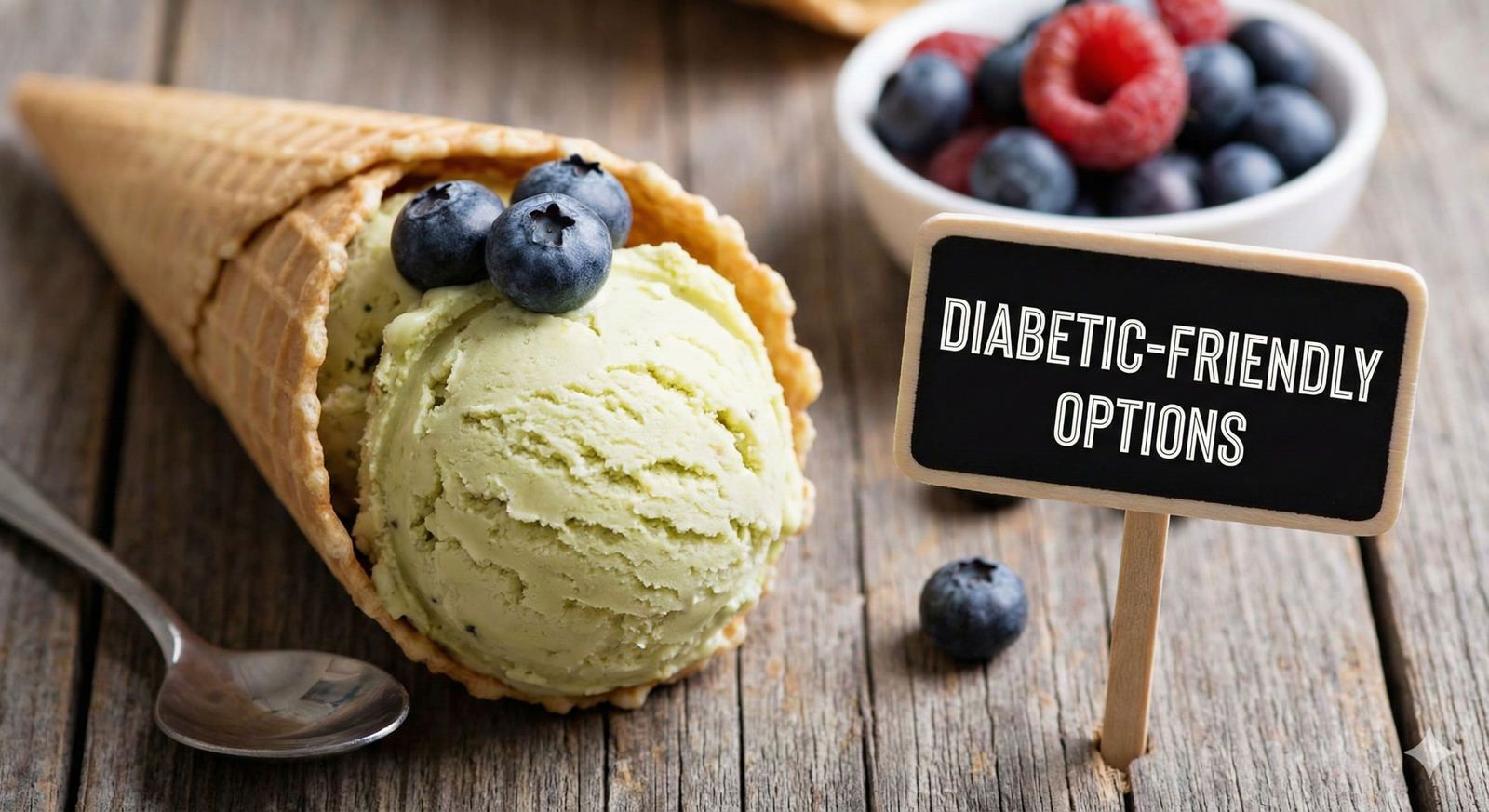
5 Best Ice Cream Brands for Diabetics: Indulge Without the Spike (2026 Deep Dive)
A diagnosis of diabetes often feels like the end of dessert. The freezer aisle, once a place of joy, becomes a gallery of forbidden sugar bombs. But in 2026, the ice cream landscape has changed dramatically. Food science has evolved, and “diabetic-friendly” no longer means “tastes like icy cardboard.”
Today, shelves are stocked with pints that boast creamy textures, decadent mix-ins, and surprisingly low net carb counts. Brands are utilizing advanced sweeteners like Allulose and Monk Fruit to replicate the freezing properties of sugar without the glycemic impact. In fact, the chemistry of ice cream relies heavily on sugar to lower the freezing point and prevent a rock-hard block—modern sweeteners now mimic that function perfectly.
In this guide, we’ve scooped our way through the freezer section to find the 5 best ice cream brands that won’t wreck your blood sugar. We analyzed them for net carbs, sweetener safety, and most importantly—taste. But we also added a deep dive into label literacy, topping strategies, and even some honorable mentions you might spot at your local store. Beyond the top five, we’ll explore the psychology of dessert deprivation, how ice cream fits into a holistic diabetic diet, and what the latest 2026 research says about sugar alternatives and gut health. By the end, you’ll not only know which pint to pick, but exactly how to enjoy it without guilt or glucose spikes.
How We Chose the Winners: The Criteria
To make this list, an ice cream had to pass a strict diabetic-friendly checklist:
- Low Net Carbs: We prioritized pints with less than 10g net carbs per serving (and often much lower). Net carbs are calculated as Total Carbs minus Fiber minus Sugar Alcohols. This is the true measure of what impacts blood glucose.
- Safe Sweeteners: We looked for Erythritol, Allulose, Stevia, and Monk Fruit. We minimized brands relying heavily on Maltitol, which can cause gastric distress and glucose spikes.
- Fat & Protein Balance: Higher fat and protein content helps slow the absorption of any remaining sugars, preventing rapid spikes. Full-fat cream is your friend here.
- Texture: It has to scoop and melt like real ice cream. No one wants a pint of ice crystals.
- Taste Longevity: We looked for brands that don’t leave a bitter aftertaste or a cooling sensation that overwhelms the palate. A great diabetic ice cream should taste like a treat, not a compromise.
- Ingredient Integrity: We favored brands using simple, recognizable ingredients—real cream, egg yolks, cocoa, vanilla—and avoiding fillers like maltodextrin or polydextrose where possible.
Beyond the checklist, we also spoke with registered dietitians specializing in diabetes care. They emphasized that psychological satisfaction plays a huge role in dietary adherence. If a diabetic feels deprived, binge-eating regular ice cream becomes a risk. Finding a truly satisfying alternative is therefore not just a nutritional goal but a mental health one.
We also considered price per pint and availability. A perfect ice cream that exists only in one boutique store in Manhattan doesn’t help the majority of people. We balanced specialty quality with supermarket accessibility so you can actually find these products near you or order them conveniently online.
Reading Ice Cream Labels Like a Diabetic Pro
Before we dive into the brands, it’s crucial to understand what you’re looking at on the nutrition panel. Here’s a quick decoder:
- Sugar Alcohols: Erythritol and Xylitol are common. Erythritol has a GI of 0 and is well tolerated; Xylitol has a GI of ~13 but is toxic to dogs. Maltitol (GI 35–52) is cheaper but can spike blood sugar—avoid if possible.
- Allulose: A rare sugar with the same taste and texture as table sugar but zero glycemic impact. It also helps with browning and freezing point depression. Look for it!
- Fiber (especially chicory root / inulin): Often added to boost texture and lower net carbs, but too much can cause gas.
- Total Carbs vs. Serving Size: A pint often claims “per serving” but contains 3–4 servings. If you eat the whole pint (we won’t judge), multiply everything!
- Protein Content: Ice creams with added whey protein or milk protein isolate can further blunt glucose response. Some brands now boast 8-10g of protein per serving, making them almost like a frozen protein shake.
- Fat Quality: Look for cream and milk fat rather than vegetable oils. Real dairy fat digests slowly and carries fat-soluble vitamins absent in oil-based frozen desserts.
Decoding the ingredient list is equally important. Ingredients are listed by weight, so the first few make up the bulk of the product. If water is the first ingredient, the ice cream will likely be icy. If cream or milk is first, you’re off to a good start. Watch for “soluble corn fiber” or “tapioca fiber” – while these are technically fiber, some diabetics report that certain fiber syrups still elevate their blood glucose. The safest approach is to choose ice creams with a short, recognizable ingredient list and test your personal response.
Another factor to consider is the “cooling effect” of erythritol. Many keto ice creams use high amounts of erythritol, which absorbs heat when it dissolves, creating a cold sensation in the mouth. While harmless, some find this sensation off-putting. Brands that blend allulose with erythritol (like Nick’s) reduce this effect because allulose behaves more like sugar.
1. Rebel Creamery (Best for Strict Keto/Low Carb)
Rebel was a pioneer in the high-fat, low-carb ice cream game, and they remain the king for those who need strict blood sugar control. Their ice cream uses real cream and egg yolks, giving it a density that mimics super-premium brands like Häagen-Dazs.
Why it wins: Rebel often has the lowest net carbs on the market (sometimes as low as 4-6g for the entire pint). They use Erythritol and Monk Fruit, which have virtually zero glycemic impact. Just remember to let it sit on the counter for 10 minutes before scooping—it freezes rock hard because it lacks sugar. Flavors like “Triple Chocolate” and “Butter Pecan” are fan favorites, and they also offer non-dairy options for lactose-sensitive individuals.
Deep Dive: The Fat Advantage. Rebel’s full-fat profile (often 20-25g fat per serving) is actually a metabolic asset. Dietary fat triggers the release of cholecystokinin (CCK), a hormone that slows gastric emptying. This means any trace carbs are absorbed more gradually, flattening the glucose curve. Many diabetics find they can eat Rebel without any insulin adjustment (for Type 1s) or glucose elevation (for Type 2s).
Flavor Spotlight: Their “Cherry Chip” is a standout for summer, using real cherry pieces and dark chocolate chips. “Snickerdoodle” brings a cinnamon-cream cheese swirl that feels indulgent. If you’re dairy-free, the “Rebel Coconut Cream” line swaps dairy fat for coconut cream and remains equally low in net carbs.
What to Watch: Because Rebel is so dense, it’s easy to over-scoop. Use a kitchen scale if you’re counting macros precisely. Also, the high fat content means it’s calorie-dense; a serving can be 200-250 calories. For weight management, stick to the recommended ⅔ cup.
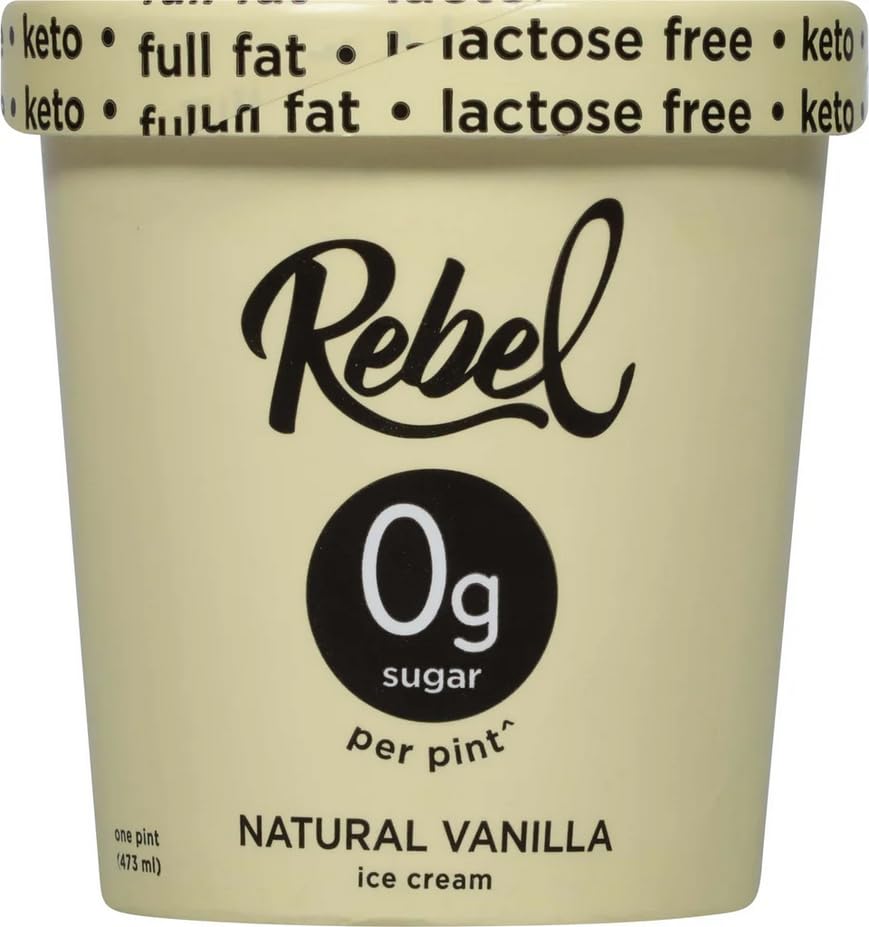
Rebel Creamery Keto Ice Cream
The lowest net carb option available. Full fat, real cream, and zero sugar added. Ideal for strict glucose management without sacrificing richness.
Check Price on Amazon2. Halo Top (Best Calorie Count)
Halo Top is the brand that started the “healthy ice cream” revolution. While their original line is lower in calories, diabetics should look specifically for their Keto Series, which is formulated with higher fat and lower carbs than their standard pints. The Keto series uses a blend of cream, erythritol, and stevia, and avoids the high sugar alcohols of the past.
Why it works: It is widely available and offers a lighter texture than Rebel. If you are managing both weight (calories) and blood sugar, Halo Top hits a sweet spot. Their Keto series typically has around 5-10g net carbs per pint. Flavors like “Keto Peanut Butter Chocolate” and “Keto Berry Swirl” are particularly satisfying.
Addressing the Texture Debate: Some critics say Halo Top can taste “gummy” or “icy” compared to full-fat counterparts. This is because they use a higher proportion of skim milk and fiber (inulin) to keep calories low. To improve texture, let the pint sit on the counter for 15 minutes (rather than 10) and stir thoroughly before eating. The inulin and gums need time to soften.
Calorie Math: A major appeal is the ability to eat an entire pint for under 400 calories. For diabetics who also struggle with weight—a common combination—this psychological win can’t be overstated. You feel like you’re indulging in a full container without derailing your calorie budget or carb count.
Hidden Gems: The “Keto Chocolate Cheesecake” flavor is one of the most satisfying, with a tangy cream cheese note that offsets the sweetness of erythritol. “Keto Caramel Butter Pecan” has real pecan pieces that add crunch and healthy fats. Always check the label, as Halo Top also has non-keto flavors with higher sugar—look for the black lid and “Keto Series” branding.

Halo Top Keto Series
A lighter, fluffy texture with significantly fewer calories than competitors. Great for weight management and diabetic-friendly snacking.
Check Price on Amazon3. Nick’s Swedish Style (Best Texture)
Nick’s brings food science from Sweden to your freezer. They use a unique blend of sweeteners, including Allulose and EPG (a modified plant-based oil), to create a texture that is impossibly creamy and soft right out of the freezer. The brand is a hit among diabetics because of its dedication to low glycemic impact without compromising mouthfeel.
Why it works: Unlike Rebel (which can be hard) or Halo Top (which can be icy), Nick’s feels like traditional gelato. Allulose is a rare sugar that doesn’t spike blood glucose, making it an excellent choice for diabetics. Plus, their mix-ins (chunks of cookie, swirls of caramel) are generous. Flavors like “Chocolate Peanut Butter” and “Strawberry” are legendary.
The Allulose Edge: Allulose isn’t just a zero-calorie sweetener; it actively resists crystallization in frozen environments. This is why Nick’s scoops so smoothly even at 0°F. More importantly, emerging research (2025-2026) suggests allulose may have a minor GLP-1 stimulating effect, meaning it could slightly enhance insulin sensitivity post-meal. While not a drug, it’s a functional sweetener rather than an inert filler.
EPG Explained: EPG (esterified propoxylated glycerol) is a fat substitute derived from plants that provides creaminess without calories. Some consumers are skeptical of novel ingredients, but EPG has been generally recognized as safe (GRAS) by the FDA. It simply passes through the digestive system. If you’re an ingredient purist, this may be a drawback; if you prioritize glycemic response and texture, it’s a net positive.
Flavor Raves: “Swedish Mint Chip” is often sold out for a reason—the peppermint is natural-tasting, and the chocolate chips are abundant. “Triple Chocolate” blends three cocoa styles for a complex dark chocolate profile. “Salted Caramel” uses real salt to cut the sweetness and enhance the buttery caramel note.

Nick’s Swedish Style Ice Cream
Incredibly soft and creamy straight from the freezer. Uses Allulose for sweetness without the spike. Known for delicious mix-ins and chunks.
Check Price on Amazon4. Enlightened (Best Decadent Flavors)
Enlightened offers a Keto Collection that rivals any premium ice cream brand in flavor complexity. We are talking about flavors like “P.B. Cookie & Brownie Dough” and “Butter Pecan.” They also have a “Gluten-Free” line, but the keto line is where the diabetic magic happens.
Why it works: They focus heavily on the “experience” of eating ice cream. They use high-fat cream and Erythritol/Allulose blends. Their net carb count is extremely low (usually 1g net carb per serving), making it very safe for blood sugar despite tasting indulgent. The brand also publishes their glycemic response studies on their website, which adds transparency.
Transparency Trailblazers: Enlightened has commissioned third-party glycemic response testing for their Keto Collection. Their published data shows a negligible blood sugar impact in test subjects—a level of transparency almost unheard of in the dessert industry. For diabetics who rely on data, this is incredibly reassuring.
Mix-In Mastery: The “P.B. Cookie & Brownie Dough” isn’t just flavored ice cream; it contains actual chunks of keto-friendly cookie dough and brownie pieces. These add textural contrast that makes each bite different. “Keto Glazed Donut” is another head-turner—it captures the yeasty sweetness of a glazed donut without any wheat flour. “Mint Chocolate Chunk” uses large, irregular chocolate pieces rather than uniform chips, making the eating experience feel artisanal.
Dough Bites: Enlightened also sells frozen “Keto Dough Bites” which are edible cookie dough morsels—a perfect mix-in for plain vanilla low-carb ice cream or eaten straight from the bag as a mini treat.

Enlightened Keto Collection
The foodie’s choice. Rich, complex flavors like Coffee Chip and Brownie Dough with only ~1g net carb per serving.
Check Price on Amazon5. Breyers CarbSmart (Best Budget/Accessible Option)
Sometimes you don’t want to go to a specialty health food store; you just want to grab a tub of vanilla at the local supermarket. Breyers CarbSmart is the most accessible option on this list. It’s available in virtually every grocery store and usually costs about the same as regular ice cream.
The Caveat: Breyers uses Maltitol in some of their CarbSmart products (though they are transitioning recipes). Maltitol can cause a slight blood sugar rise and gas/bloating in some people. However, for a moderate diabetic diet, it is significantly better than regular sugar-laden ice cream and costs half as much as the “keto” brands. If you tolerate maltitol well, this is a great everyday option.
Understanding Maltitol: Maltitol has a glycemic index around 35, compared to table sugar at 65. While that’s a reduction, it’s not zero. A serving of CarbSmart might contain 5g of maltitol, which could theoretically contribute 1.75g of effective glucose. For many Type 2 diabetics, this is still manageable within a meal plan. But for those on strict keto or with insulin-dependent diabetes, brands like Rebel or Nick’s are safer bets.
Flavor Standbys: CarbSmart offers classic flavors: Vanilla, Chocolate, and Mint Fudge. The Vanilla makes an excellent base for milkshakes (blend with unsweetened almond milk and a splash of sugar-free syrup). Their “Almond Bar” frozen novelties (individual ice cream bars coated in chocolate and almonds) are portion-controlled and surprisingly good.
Pro Tip: Check the ingredient panel each time you buy. Breyers has been gradually reformulating CarbSmart to include allulose or erythritol in some flavors. You may find a newer batch that uses a more diabetes-friendly sweetener blend. The Vanilla flavor, in particular, has seen recipe improvements in 2025.

Breyers CarbSmart
The classic family favorite tailored for carb-conscious eaters. Widely available and affordable, but check labels for Maltitol sensitivities.
Check Price on AmazonThe Science of Sweeteners: A Diabetic’s Guide to Sugar Alternatives
Understanding the sweeteners in your ice cream can feel like a biochemistry course. Here, we break down the most common ones found in 2026’s diabetic ice creams and how they affect your body.
Allulose: The Game-Changer
Allulose is a rare sugar found naturally in figs, raisins, and maple syrup. Chemically, it’s almost identical to fructose, but your body doesn’t metabolize it the same way. It’s absorbed into the bloodstream but excreted in urine without being used for energy. This gives it a calorie count near zero and a glycemic index of zero. Beyond that, allulose behaves like sugar in cooking—it caramelizes, adds bulk, and depresses the freezing point of ice cream. No other zero-calorie sweetener does all three.
2026 Research Update: A 2025 study in the Journal of Nutritional Biochemistry found that allulose may inhibit intestinal alpha-glucosidase, an enzyme that breaks down starches into glucose. This means consuming allulose with a meal could slightly reduce the glycemic impact of other foods. While the effect is modest, it makes allulose a uniquely functional ingredient.
Erythritol: Reliable but Imperfect
Erythritol is a sugar alcohol produced by fermenting glucose. It has a GI of 0 and about 0.24 calories per gram. It’s well-tolerated by most people because 90% is absorbed before reaching the colon, reducing the gas and bloating associated with other sugar alcohols. However, erythritol has a “cooling effect”—it literally feels cold on the tongue—which some consumers dislike. In ice cream, this effect is masked by the frozen temperature, but high-erythritol brands can leave a faint cooling aftertaste.
Heart Health Note: Some 2023-2024 studies linked very high erythritol blood levels to cardiovascular events. However, follow-up research clarified that the body naturally produces erythritol in response to metabolic stress, and dietary erythritol intake in moderate amounts (a pint of ice cream) doesn’t appear to raise risk in healthy individuals. Still, moderation is wise.
Monk Fruit: The Intense Natural Sweetener
Monk fruit extract (mogrosides) is 150-200 times sweeter than sugar, so it’s used in tiny amounts. It has a GI of 0 and no aftertaste when properly processed. However, pure monk fruit is expensive, so many products combine a small amount of monk fruit with erythritol or allulose for bulk. This blend is an excellent strategy—you get sweetness from all sources without over-relying on one.
Stevia: Plant-Based and Potent
Stevia comes from the leaves of Stevia rebaudiana. Its sweet compounds (steviol glycosides) are 200-300 times sweeter than sugar. Stevia has a GI of 0 but can carry a bitter, licorice-like aftertaste. In ice cream, stevia is usually paired with erythritol or allulose to mask this bitterness. The Halo Top Keto Series uses a stevia-erythritol blend effectively.
Maltitol: The Controversial One
Maltitol is cheap and tastes close to sugar, which is why Breyers CarbSmart and some bulk “no sugar added” products use it. But it has a GI around 35-52 (depending on the form), which is half to three-quarters of table sugar’s impact. It also ferments in the colon, causing gas, bloating, and laxation in sensitive people. If you have gastroparesis (common in long-term diabetes), maltitol may be especially problematic.
Sweetener Synergy
The best diabetic ice creams use a blend of sweeteners. Why? Each sweetener hits a different part of the taste curve. Erythritol provides bulk and initial sweetness, allulose mimics sugar’s texture, and monk fruit or stevia boosts the peak sweetness without adding carbs. This synergy allows for lower amounts of each individual sweetener, reducing side effects. When scanning labels, look for “Erythritol + Allulose + Monk Fruit” or “Erythritol + Stevia” blends—these are the state of the art in 2026.
How Ice Cream Affects Blood Sugar: Beyond Net Carbs
Net carb counting is the first layer of diabetic management, but it’s not the whole story. Several other factors influence how a scoop of ice cream impacts your glucose.
Glycemic Load vs. Glycemic Index
Glycemic Index (GI) measures how quickly a food raises blood sugar compared to pure glucose. Glycemic Load (GL) factors in the amount of carbohydrates per serving. A food can have a high GI but low GL (like watermelon) or a moderate GI and low GL (like a small serving of CarbSmart). For ice cream, GL is the more practical measure because serving sizes are controlled. A pint of Rebel may have a serving GL of essentially 0, while a serving of regular vanilla ice cream might have a GL of 12.
The Second Meal Effect
Interestingly, eating low-glycemic foods can improve your glycemic response to the next meal. This is called the second meal effect. If you eat a low-carb, high-fat ice cream in the afternoon, your body may handle dinner’s carbohydrates more efficiently. The fiber and fat slow digestion, keeping insulin sensitivity higher for longer. This doesn’t mean ice cream is a health food, but it’s a fascinating context for why choosing the right brand matters beyond the immediate glucose spike.
Fat’s Role in Glucose Modulation
Dietary fat doesn’t just add calories—it modifies the hormonal response to a meal. When fat reaches the small intestine, it triggers the release of glucose-dependent insulinotropic polypeptide (GIP) and cholecystokinin (CCK), both of which slow stomach emptying. A full-fat ice cream like Rebel or Enlightened will produce a flatter, more extended glucose curve than a low-fat, high-sugar “lite” ice cream, even if the total calorie count is higher. For diabetics, a flat curve is preferable to a sharp spike and crash.
The Freezing Factor
Frozen desserts feel less sweet because cold suppresses sweetness perception. This is why a melted pint of Nick’s tastes sweeter than the frozen version. The practical takeaway: don’t over-sweeten homemade ice cream trying to match the sweetness of its melted state; it will taste balanced once frozen. Commercially, brands account for this, but it’s good to know when evaluating why a product’s sweetness level seems different on different days.
Head-to-Head Brand Comparisons: Which One Fits Your Life?
Choosing between five excellent brands is a good problem to have. Here’s a lifestyle-based breakdown to help you decide.
If You’re on Strict Keto: Rebel vs. Enlightened
Both Rebel and Enlightened offer 1-2g net carbs per serving. Rebel has higher fat (often 25g vs. 12g), making it more satiating and more keto-compliant. Enlightened has more creative mix-ins and a slightly softer texture. Choose Rebel if you want pure, simple ingredients and satiety; choose Enlightened if you want a more playful dessert experience within keto macros.
If You’re Watching Calories: Halo Top vs. Nick’s
Both offer lower-calorie options, but via different mechanisms. Halo Top uses skim milk, fiber, and erythritol to keep calories around 100-150 per serving. Nick’s uses allulose and EPG to achieve a similar calorie range but with a creamier texture. If ingredient simplicity matters, Halo Top edges ahead. If texture is king and you don’t mind novel ingredients, Nick’s wins.
If You’re on a Budget: Breyers CarbSmart vs. Store Brands
CarbSmart is the national budget champion, but many grocery chains now have their own “keto” or “no sugar added” ice creams. Kroger’s “CarbMaster” line and Aldi’s “Sundae Shoppe Keto” popsicles are often cheaper and use erythritol/allulose blends instead of maltitol. Always check the label—store brands are increasingly competitive with name brands in the diabetic space.
If You Have Digestive Sensitivities: Allulose-Based Brands
If sugar alcohols cause you grief, prioritize allulose-heavy brands: Nick’s, Enlightened, and select flavors of Rebel. Allulose rarely causes bloating because it’s absorbed early in the digestive tract. Erythritol, while better than maltitol, can still cause gas in large amounts. Stevia and monk fruit are generally well-tolerated, though stevia can have a bitter note.
DIY Diabetic Ice Cream: Recipes, Ratios, and Troubleshooting
Store-bought is convenient, but homemade ice cream gives you total control. Here’s how to make ice cream that rivals the top brands without any mystery ingredients.
The Base Recipe Ratio
A perfect low-carb ice cream base follows this ratio:
- 2 cups liquid base: Heavy cream, canned coconut milk (full-fat), or a blend of cream and unsweetened almond milk for lighter results.
- ½ cup sweetener: Allulose is best because it mimics sugar’s freezing point depression. Erythritol works but may lead to harder ice cream. A blend of ⅓ cup allulose and 2-3 tbsp erythritol is often ideal.
- 4-5 egg yolks: For custard-style richness. Omit for Philadelphia-style (lighter).
- Flavorings: 1-2 tsp vanilla extract, ¼ cup cocoa powder for chocolate, or ½ cup fresh berries for fruit.
- Optional stabilizers: ¼ tsp xanthan gum or 1 tbsp vodka (the alcohol lowers the freezing point and reduces iciness).
Simple No-Churn Method
If you don’t own an ice cream maker, no-churn ice cream is surprisingly good. Whip 2 cups of heavy cream to stiff peaks, then fold in a chilled mixture of 1 can (13.5 oz) full-fat coconut cream, ½ cup allulose, 1 tsp vanilla, and a pinch of salt. Pour into a loaf pan, add mix-ins (sugar-free chocolate chips, chopped nuts), and freeze for 4-6 hours. The high fat content keeps it scoopable.
Troubleshooting Hard Homemade Ice Cream
If your homemade ice cream freezes like a brick, the culprit is usually insufficient sugar (or allulose) to depress the freezing point. Solutions:
- Increase allulose to ¾ cup per batch.
- Add 1 tablespoon of vegetable glycerin (a sugar alcohol liquid that softens frozen desserts).
- Add 1-2 tablespoons of alcohol (vodka, rum, or bourbon depending on flavor).
- Store in a shallow, flat container rather than a deep tub.
Flavor Variations
Chocolate: Add ¼ cup unsweetened cocoa powder and 2 oz melted unsweetened chocolate to the base.
Berry Swirl: Simmer 1 cup raspberries with 2 tbsp allulose, mash, strain seeds if desired, and swirl into the churned base.
Pumpkin Spice (Fall): Add ½ cup pumpkin puree, 1 tsp pumpkin pie spice, and a splash of heavy cream to maintain fat ratio.
Peppermint Chip: Add 1 tsp peppermint extract and ¼ cup sugar-free chocolate chips.
Seasonal & Holiday Ice Cream Survival Guide
Holidays and summer barbecues are ice cream minefields. Here’s how to navigate them without derailing your glucose control.
Summer BBQs
Someone will bring a tub of full-sugar ice cream. Volunteer to bring dessert yourself—arrive with a pint of Nick’s or a homemade berry swirl ice cream. When others ask, share the joy; most won’t believe it’s diabetic-friendly. If you’re stuck with only sugary options, take a spoonful (literally a tablespoon) and top it with extra nuts or berries. The small portion minimizes the glucose hit, and the fat/protein from toppings buffers it.
Thanksgiving & Christmas
Holiday meals are already high in carbs. Dessert can push you into dangerous territory. Pre-game with a low-carb ice cream: Enlightened’s Pumpkin Cheesecake (limited edition) or a homemade cinnamon allulose ice cream. Serve it in small ramekins pre-portioned so the temptation to over-scoop is removed. A sprinkle of cinnamon on top adds holiday flair and may modestly improve insulin sensitivity.
Birthday Parties
Ice cream cake is a double whammy—sugary cake plus sugary ice cream. Instead, make a “diabetic ice cream cake” by softening two pints of low-carb ice cream, layering them in a springform pan with a crust of crushed sugar-free cookies (like HighKey) and melted butter. Freeze until solid. You get the celebration without the spike.
Valentine’s Day & Date Nights
Sharing a dessert is romantic. Nick’s Strawberry or Enlightened Chocolate Peanut Butter is indulgent enough to feel special. Serve in chilled coupes with a drizzle of ChocZero sugar-free chocolate syrup and a fresh raspberry on top. It looks restaurant-worthy and keeps your date night on track.
Diabetic Ice Cream for Kids: What Parents Need to Know
Children with Type 1 diabetes still crave treats, and birthday parties are a social minefield. Low-carb ice creams can be a solution, but there are special considerations for kids.
Watch the Sugar Alcohols
Children’s smaller body mass means the laxative effect of sugar alcohols hits them harder and faster. Avoid maltitol entirely. Erythritol should be limited to 5-10g per serving (roughly one scoop of Rebel). Allulose is gentler, but start with half a scoop to test tolerance. Some children are more sensitive than adults to any sugar substitute.
Texture Matters for Picky Eaters
Kids who are used to soft, sweet, airy ice cream may reject dense, harder keto ice creams. Nick’s is often the best gateway because it’s soft and has recognizable mix-ins. Halo Top’s lighter texture may also appeal. Let the ice cream warm up thoroughly and stir it to fluff the texture before serving.
Involve Kids in Homemade Ice Cream
Making ice cream together teaches carb awareness without being preachy. Let kids choose mix-ins (nuts, sugar-free chips, berries) and show them how sweeteners are measured. When they understand that allulose behaves like sugar but doesn’t raise blood sugar, they feel empowered rather than restricted.
School & Social Situations
If a class party features ice cream, send your child with a pint of a diabetic-friendly brand or pre-portioned homemade cups. Label them with their name. Most teachers are accommodating. Some parents also partner with the room parent to include one “sugar-free” option for the whole class, normalizing dietary differences.
Post-Workout Ice Cream? The Case for Frozen Fuel
For active diabetics, the rules bend slightly. Exercise increases insulin sensitivity and drains glycogen stores. A post-workout window is the best time to enjoy a slightly higher-carb treat—or to maximize the satiety of a low-carb one.
Why Post-Exercise Glucose Handling Improves
After resistance training or HIIT, muscle cells become more permeable to glucose via non-insulin-dependent pathways (GLUT4 translocation). This means even a modest amount of sugar may be cleared more quickly. A small scoop of regular ice cream post-workout might spike blood sugar less than the same scoop at midnight. However, this doesn’t mean you can binge—the effect plateaus after 30-50g of carbs.
Protein Ice Cream as Recovery
Some brands now pack 10-15g of protein per serving, making them a viable recovery snack. Look for Halo Top’s higher-protein flavors or add a scoop of unflavored whey protein to homemade ice cream. The protein helps repair muscle fibers while the fat and trace carbs replenish energy without a dramatic glucose swing.
Pre-Workout Caution
Eating high-fat ice cream immediately before exercise can cause sluggishness because fat digests slowly. If you want a pre-workout boost, choose a lighter option like Halo Top and eat it 1-2 hours before activity. For aerobic exercise lasting more than an hour, you may need fast-acting carbs anyway—but for the average gym session, stick to post-workout treats.
The Psychology of Sweet Cravings: Ice Cream Without Guilt
Food is emotional. Ice cream, in particular, is tied to comfort, celebration, and nostalgia. Telling a diabetic to “just never eat ice cream” ignores the powerful emotional reasons we crave it. Here’s how to maintain a healthy relationship with dessert.
Permission and Portioning
Research in behavioral nutrition shows that labeling foods as “forbidden” increases binge-eating risk. By having a pint of diabetic-friendly ice cream in your freezer, you give yourself permission to enjoy a treat without guilt. Pre-portioning—scooping into a small bowl rather than eating from the pint—adds a mindful checkpoint. You can always go back for seconds, but the pause interrupts automatic eating.
Mindful Eating with Ice Cream
Try this: scoop a single serving of Nick’s or Enlightened into a bowl. Sit down. Take a small spoonful and let it melt on your tongue. Note the flavors, the texture, the temperature. Are you eating for hunger, comfort, or boredom? This practice, called mindful eating, can reduce the quantity needed for satisfaction. Many people find they enjoy one scoop mindfully more than a whole pint eaten distractedly.
Emotional Triggers & Alternatives
If stress triggers your ice cream craving, the low-carb pint is a tool but not a solution. Pair it with a stress-reducing activity: a short walk after your bowl, a few minutes of deep breathing, or calling a friend. Over time, the ice cream becomes a treat rather than a coping mechanism. For some, simply having the pint available reduces the urgency of the craving—you want it less when you know you can have it.
Using CGM Data to Find Your Perfect Ice Cream
Continuous Glucose Monitors (CGMs) have revolutionized diabetes management. They also make you a personal scientist of your own metabolism. Here’s how to use CGM data to find your ideal brand and portion.
Run a Systematic Test
Pick one brand at a time. On three separate evenings, eat a measured serving (½ cup) and observe your CGM for the next 2 hours. Note the baseline, the peak glucose level, the time to peak, and the 2-hour return. A good response: less than 30 mg/dL rise and return to baseline within 90-120 minutes. Compare brands under similar conditions (same time of day, similar activity level, similar preceding meal).
Identify Your Personal Sweetener Sensitivity
Some diabetics spike from maltitol while others don’t. Some get a delayed rise from fiber syrups. Your CGM will show you patterns. If Breyers CarbSmart raises your glucose 40 mg/dL but Enlightened raises it 5 mg/dL, you have objective data that the higher price of Enlightened is worth it for you.
Toppings as Modifiers
Test the ice cream plain first. Then test it with toppings: a tablespoon of almonds, a handful of raspberries, a dollop of unsweetened whipped cream. You may find that adding 5g of net carbs from berries extends satiety but keeps the glucose curve identical. Or you may find that nuts blunt a small spike you saw with the plain ice cream. This kind of granular data empowers you to build a personalized perfect dessert.
Share Your Data
Online diabetes communities thrive on shared data. Post your CGM graphs (anonymized) alongside the ice cream brand and flavor. Others will appreciate your real-world results, and the collective knowledge helps everyone refine their choices. You might discover that a particular flavor within a brand performs differently due to its mix-in composition.
Diabetic-Friendly Ice Cream Around the World
While this guide focuses on U.S.-available brands, the global market for low-glycemic frozen desserts is booming. If you travel or live outside the U.S., here are some international stars to look for.
United Kingdom: Oppo Brothers
Oppo uses stevia and erythritol, with flavors like Salted Caramel and Chocolate Hazelnut. They emphasize natural ingredients and have won Great Taste Awards. Net carbs are typically 6-8g per serving.
Australia: Fropro
Fropro is a high-protein, low-sugar ice cream using whey protein and erythritol. It’s more about muscle recovery than pure keto, but its 4-5g net carbs per serving work for many diabetics.
Canada: CoolWay
CoolWay offers keto-friendly flavors sweetened with allulose and erythritol. Their “Maple Pecan” is a uniquely Canadian twist that’s still low-carb.
Japan: Lakanto Ice Cream
Lakanto, famous for monk fruit sweetener, produces a monk-fruit-sweetened ice cream in Japan. It’s hard to find in the U.S., but travelers should try it; the texture is exceptional due to a unique churning process.
No matter the country, the same label-reading principles apply: prioritize allulose, erythritol, and monk fruit over maltitol; check net carbs per serving; and favor higher fat and protein content.
Honorable Mentions & What’s New in 2026
Killer Creamery
This brand uses a blend of allulose, erythritol, and stevia, and is known for ultra-creamy textures (they use extra egg yolks). Their “High Protein, Low Carb” pints are often found at Whole Foods and have around 3g net carbs per serving.
Yasso Frozen Greek Yogurt (Light line)
While not keto, Yasso’s light bars (like chocolate fudge) contain around 5-7g net carbs and use real sugar, but the protein from Greek yogurt helps slow absorption. They’re portion-controlled (bars) and a great lower-calorie option for those who prefer yogurt tang.
Sola Ice Cream
Sola uses a sweetener blend heavy on allulose and boasts that their ice cream scoops like traditional premium brands. Flavors like “Butter Pecan” and “Chocolate Chip Cookie Dough” are rich and satisfying. Net carbs hover around 4g per serving. Availability is expanding in 2026.
Keto Foods Ice Cream Bars
These individually wrapped bars solve the portion control problem. They’re chocolate-coated, 1-2g net carbs each, and perfect for an on-the-go treat. The “Mint” and “Vanilla” varieties are widely available online.
Keep an eye out for smaller craft brands like “Cado” (avocado-based, keto-friendly) and “Arctic Zero” (very low calorie, but some find texture icy). The market is exploding, so always check the label. We’re also hearing buzz about a new brand using fermented sweet proteins (similar to brazzein) that provide sweetness without any glycemic impact or sugar alcohols. The future is bright—and sweet.
Ingredients to Watch Out For
Not all “Sugar Free” labels are safe. When shopping for ice cream, turn the pint around and look for these red flags:
- Maltitol (in high amounts): As noted, this sugar alcohol has a higher glycemic index than others and can cause spikes. If it’s the first sweetener listed, proceed with caution.
- Dextrose/Maltodextrin: These are fillers often used in “low fat” products that spike blood sugar faster than table sugar. They appear in some “light” ice creams.
- “Low Fat” Claims: Usually, when fat is removed, sugar is added to compensate for flavor. Diabetics are often better off with full-fat, low-sugar options.
- Corn Syrup (even in small amounts): Some “keto” brands sneak in corn fiber or syrup; make sure it’s not added sugar.
- Sorbitol and Xylitol (in high amounts): Both can cause digestive distress. Xylitol, in particular, is extremely toxic to dogs—if you have pets, xylitol-containing ice cream is a no-go.
- High-Fructose Corn Syrup (HFCS): Should be an obvious red flag, but some “no sugar added” products use it as a base sweetener. Read carefully.
- Artificial Colors & Dyes: While not directly glycemic, artificial dyes (Red 40, Blue 1, Yellow 5) add nothing nutritional and some diabetics with autoimmune tendencies prefer to avoid them. Enlightened and Nick’s generally use natural colorings.
Pairing Ice Cream with Blood-Sugar-Friendly Toppings
Even the best low-carb ice cream can be part of a more balanced dessert. Here are some diabetic-friendly ways to dress up your scoop:
- Fresh Berries: Strawberries, blueberries, and blackberries are relatively low in sugar and high in fiber. A handful adds natural sweetness and antioxidants.
- Chopped Nuts: Almonds, pecans, or walnuts add healthy fats and protein, which slow down any carbohydrate absorption.
- Unsweetened Cocoa Nibs: For a crunchy chocolate fix without sugar.
- Cinnamon: Sprinkling cinnamon can help improve insulin sensitivity and adds warmth without carbs.
- Sugar-Free Chocolate Syrup: Brands like ChocZero make monk-fruit sweetened syrups that pair beautifully.
- Unsweetened Whipped Cream: Whip heavy cream with a dash of vanilla and a pinch of allulose. It adds richness, fat, and only trace carbs.
- Shredded Coconut (unsweetened): Toast lightly for a tropical crunch that doesn’t raise blood sugar.
- Chia Seed Jam: Simmer raspberries with chia seeds until thickened. The chia adds fiber and omega-3s, further blunting glucose response.
Pro tip: turn your pint into an affogato by pouring a shot of hot espresso over a scoop—the bitterness balances sweetness and adds no carbs. For an evening treat, consider a decaf affogato to avoid caffeine’s potential impact on insulin sensitivity.
Nutritional Comparison Chart (Per ⅔ cup serving)
| Brand | Net Carbs (g) | Calories | Fat (g) | Protein (g) | Primary Sweetener | Texture Vibe | Price (approx) |
|---|---|---|---|---|---|---|---|
| Rebel | 1-2g | 200-250 | 20-25 | 2-3 | Erythritol, Monk Fruit | Dense, Creamy | $5-$7/pint |
| Halo Top (Keto) | 2-3g | 100-150 | 7-10 | 5-8 | Erythritol, Stevia | Light, Fluffy | $4-$6/pint |
| Nick’s | 3-5g | 100-130 | 7-9 | 3-5 | Allulose, Erythritol | Soft, Gelato-like | $5-$7/pint |
| Enlightened | 1g | 180-220 | 15-18 | 3-4 | Allulose, Erythritol | Rich, Decadent | $5-$6/pint |
| Breyers CarbSmart | 4-5g | 100-140 | 5-7 | 2-3 | Maltitol (mostly) | Classic Ice Cream | $3-$5/tub |
Note: Always check the specific pint, as formulations change. Prices are approximate U.S. retail 2026.
This expanded table gives you a clearer picture for aligning ice cream choices with your specific health goals—whether that’s minimizing net carbs, controlling calories, increasing protein, or sticking to a budget.
Frequently Asked Questions
Final Scoop: Enjoying Ice Cream as Part of a Healthy Diabetic Life
Ice cream doesn’t have to be a forbidden food. With the right brand, proper portioning, and smart pairing, it can be a regular part of a diabetic-friendly diet. The five brands we’ve highlighted—Rebel, Halo Top, Nick’s, Enlightened, and Breyers CarbSmart—each bring something unique to the table, from strict keto macro control to budget-friendly accessibility.
Remember that diabetes management is personal. What works for one person’s glucose response might not work for another’s. Use your CGM data, listen to your body, and don’t be afraid to experiment. The psychological benefit of enjoying a delicious, creamy bowl of ice cream without guilt is real—and it can make the broader discipline of diabetic eating easier to sustain.
Life is about balance, and in 2026, that balance includes ice cream that tastes like indulgence but acts like fuel. So grab a spoon, pick a pint, and enjoy the sweet side of smart eating.
I have to thank you for the efforts you have put in writing this
website. I really hope to view the same high-grade content
by you in the future as well. In fact, your creative writing abilities has encouraged me to get my own, personal blog now
😉