Indian Diabetic Diet Chart: South Indian vs. North Indian Meal Plans
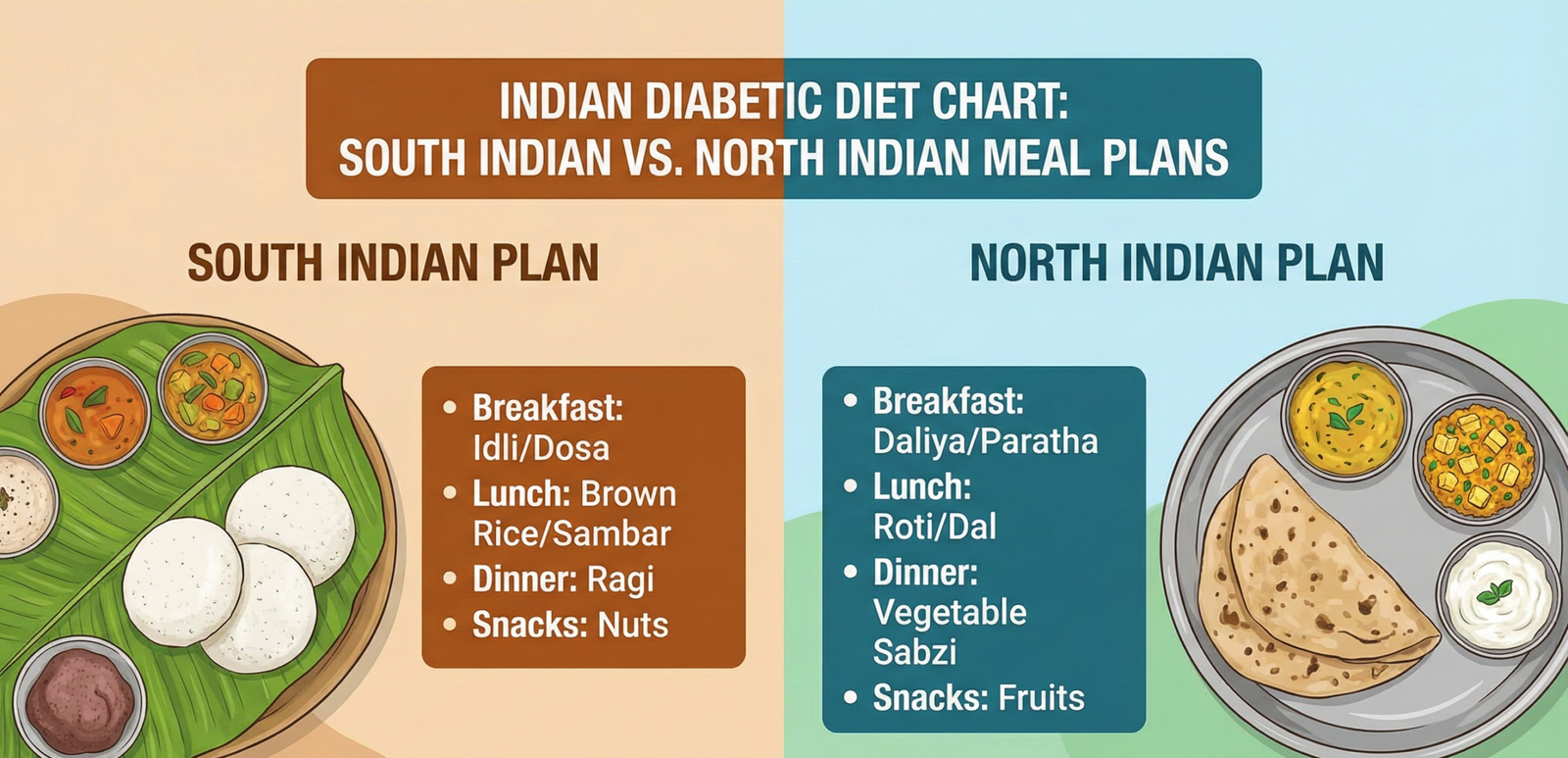
India is often referred to as the “Diabetes Capital of the World,” with over 77 million individuals living with diabetes and another 25 million prediabetics, according to the ICMR. Genetics play a role, but the primary driver is the modern Indian diet—rich in carbohydrates, refined grains, and sugars. However, India is not a monolith. The culinary landscape is broadly divided into two distinct powerhouses: the rice-centric South and the wheat-centric North.
For a diabetic, navigating these cuisines can be tricky. Is the South Indian reliance on rice inherently worse for blood sugar? Does the North Indian love for parathas and rich gravies pose a greater risk? The truth lies in the details—ingredients, preparation methods, and portion control. Recent studies from the Madras Diabetes Research Foundation show that replacing white rice with millets can lower HbA1c by up to 0.7% in six months.
In this comprehensive guide, we will dissect the Indian diabetic diet chart, comparing South vs. North Indian approaches. Whether you are looking for a 7-day diabetic menu to manage insulin resistance or exploring a heart-healthy diabetic diet, this comparison will help you curate the perfect plate. We’ll also dive into the glycemic index of staple foods, the role of traditional spices, and how to enjoy festive meals without guilt. Beyond the North-South divide, we’ve also expanded this guide to cover East and West Indian regional patterns, glycemic load versus glycemic index, fruit and dairy choices, portion and calorie guidance, common mistakes, dining-out survival tactics, and the myths that keep tripping up well-meaning families across the country.
At a Glance: South Indian vs. North Indian Diabetic Diet
Before we dive deep, here is a snapshot of how these two traditional diets stack up against each other regarding glycemic management.
| Feature | South Indian Diet | North Indian Diet |
|---|---|---|
| Primary Staple | Rice (White/Parboiled), Millets | Wheat (Atta), Maida |
| Protein Source | Lentils (Sambar/Ras), Fish, Chicken | Paneer, Rajma, Chole, Chicken |
| Cooking Fat | Coconut Oil, Gingelly Oil, Ghee | Mustard Oil, Ghee, Refined Oil |
| Breakfast GI | High to Moderate: Idli/Dosa (Rice base) | Moderate: Paratha/Roti (Wheat base) |
| Key Advantage | High use of fermented foods (Gut health) | Higher protein options (Paneer/Dals) |
| Main Risk | Excessive carb load from white rice | High fat content in gravies & breads |
Glycemic Index of Common Indian Foods
Understanding the Glycemic Index (GI) helps you make smarter swaps. Foods with GI ≤ 55 are low, 56–69 medium, ≥70 high. Here’s how typical Indian foods measure up:
| Food | GI Value | Category |
|---|---|---|
| White Rice (cooked) | 73 | High |
| Brown Rice | 68 | Medium |
| Parboiled Rice | 48 | Low |
| Roti (whole wheat) | 55-60 | Medium |
| Idli (rice + dal) | 70 | High |
| Dosa (plain) | 65 | Medium |
| Ragi (finger millet) mudde | 45 | Low |
| Chana (chickpea) curry | 28 | Low |
| Rajma (kidney bean) | 35 | Low |
| Upma (suji) | 65 | Medium |
| Poha (flattened rice) | 60 | Medium |
📌 Tip: Replace high-GI foods with lower alternatives. For example, switch white rice to parboiled rice or millets, and choose whole-grain rotis over refined flour versions.
Glycemic Index vs. Glycemic Load: Why the Difference Matters
Most Indian diabetic diet articles stop at the Glycemic Index, but GI alone can be misleading. GI only tells you how quickly a food raises blood sugar per gram of carbohydrate—it says nothing about how much of that food you are actually eating. This is where Glycemic Load (GL) comes in, and it is arguably more useful for real-world Indian meal planning.
Glycemic Load is calculated as: GL = (GI × grams of carbohydrate per serving) ÷ 100. A food can have a high GI but a low GL if the serving size is small or the carbohydrate density is low. Watermelon, for instance, has a high GI of around 72, but because a typical serving contains very little actual carbohydrate (mostly water), its GL is quite low, around 4. This is why fruit should not be judged by GI alone.
| Food | GI | Typical Serving | Glycemic Load | Category |
|---|---|---|---|---|
| Watermelon | 72 (High) | 120g | ~4 | Low GL |
| White Rice (1 cup cooked) | 73 (High) | 150g | ~29 | High GL |
| Carrots (boiled) | 39 (Low) | 80g | ~2 | Low GL |
| Ragi Mudde (1 ball) | 45 (Low) | 100g | ~9 | Low-Medium GL |
| Chapati (2 medium) | 55-60 (Med) | 60g | ~15 | Medium GL |
For everyday Indian cooking, this means you don’t need to fear every high-GI vegetable or fruit outright. Instead, look at the combination of GI and portion size together. A small piece of watermelon after a protein-rich meal is very different, metabolically, from a large plate of plain white rice eaten on its own. When building your Indian diabetic diet chart, always think in terms of glycemic load for the whole plate, not just the GI of one ingredient in isolation.
The South Indian Diabetic Diet: Managing the Rice Dilemma
The traditional South Indian meal is visually vibrant—white rice contrasting with yellow sambar, green poriyal, and red pickles. While delicious, the heavy reliance on polished white rice is a major hurdle for blood sugar management.
The Challenge: The Rice Factor
White rice has a high Glycemic Index (GI), causing rapid spikes in glucose. Traditional breakfast items like Idli and Dosa are made from a fermented batter of rice and urad dal. While fermentation improves nutrient bioavailability, the rice content remains high. A single idli contains about 8-10g carbs; two idlis with sambar can easily hit 40g carbs.
The Solution: Millets and Whole Grains
South India is the land of millets. Returning to ancient grains like Ragi (Finger Millet), Thinai (Foxtail Millet), and Kambu (Pearl Millet) can revolutionize a diabetic’s health. These grains are high in fiber and digest slowly. Ragi, for example, has a GI of 45 and is rich in calcium and polyphenols.
Sample South Indian Diabetic Menu
- Breakfast: 2 Ragi Idlis with Sambar (heavy on veggies) and Mint Chutney (no coconut). See more breakfast ideas for diabetes.
- Lunch: 1 cup Foxtail Millet Rice + 1 cup Spinach Poriyal + 1/2 cup Rasam + Fish Curry (if non-veg).
- Snack: Sundal (boiled chickpeas with mustard seeds and curry leaves). A perfect diabetic snack idea.
- Dinner: 2 Adai (lentil pancakes) with Tomato Chutney. Adai has more lentils than rice, making it protein-rich.
More South Indian Diabetic-Friendly Recipes
- Kanji (Porridge): Made from broken millets or brown rice, cooked with buttermilk and ginger. Excellent for gut health.
- Avial (Mixed Veg in Yogurt): Use pumpkin, carrots, beans, and raw banana; thicken with chickpea flour instead of coconut paste to reduce calories.
- Steamed Kozhukattai (dumplings): Use ragi or whole wheat dough stuffed with spiced lentil filling; steam instead of frying.
Andhra and Telangana Variations
Within the South itself, there is meaningful regional variety worth noting. Andhra and Telangana cuisine leans heavily on tamarind-based curries, gongura (sorrel leaves), and a fiery chili profile that, interestingly, works in favor of diabetics because capsaicin has been linked to modest improvements in insulin sensitivity. Pesarattu, a green gram dosa, is a smarter breakfast choice than the standard rice dosa because green gram has a much lower glycemic index than fermented rice batter and brings extra protein to the plate. Swap the usual upma topping for a vegetable-loaded version and pair pesarattu with a thin ginger chutney instead of a coconut-heavy one.
Kerala’s Coconut Balancing Act
Kerala cuisine uses coconut in almost every dish—coconut oil for tempering, grated coconut in thoran, and coconut milk in stews (ishtu). Coconut is not inherently bad; its medium-chain triglycerides can support satiety, and coconut-based curries tend to have a lower glycemic load than heavy rice-only meals. The caution is calorie density. A Kerala-style diabetic plate should favor thoran (dry stir-fried vegetables with light coconut) over coconut milk-based stews, and puttu made with a mix of rice flour and ragi flour rather than pure rice flour, served with a small portion of kadala curry (black chickpea curry) for added protein and fiber.

Organic Millet Combo Pack (Foxtail, Little, Kodo)
Replace high-GI white rice with nutrient-dense millets. They cook just like rice but keep your blood sugar stable for hours.
Check Price on AmazonThe North Indian Diabetic Diet: Beyond the Butter
North Indian cuisine is famous globally for its Tandoori meats and rich curries. For locals, the staple is “Roti” or “Chapati” made from whole wheat flour (Atta). While wheat has a lower GI than white rice, the quantity consumed and the accompaniments often lead to trouble.
The Challenge: Hidden Fats and Refined Flours
Modern North Indian diets often sneak in Maida (refined flour) in Naans and Bhaturas. Additionally, the “Tadka” culture—tempering dals with generous amounts of Ghee—can contribute to caloric surplus, affecting those on a 1500 calorie diabetic menu for weight loss. A typical serving of Dal Makhani can have up to 20g fat.
The Solution: Multigrain Atta and Lean Proteins
To optimize this diet, one must switch from pure wheat atta to a multigrain mix (containing soy, chickpeas, and barley). Furthermore, increasing the ratio of Sabzi (vegetables) to Roti is crucial. Include more salads and raita to add volume without spiking glucose.
Sample North Indian Diabetic Menu
- Breakfast: 1 Stuffed Paneer Paratha (using little oil) + low-fat curd. Alternatively, explore our diabetic breakfast menu.
- Lunch: 2 Multigrain Rotis + 1 bowl Palak Paneer + Salad (Cucumber/Radish).
- Snack: Roasted Makhana (Fox nuts) or a small bowl of Sprout Chaat.
- Dinner: 1 bowl Dal Tadka (yellow dal) + 1 cup Stir-fried Bhindi (Okra) + 1 Roti. See more diabetic dinner menu ideas.
Regional North Indian Variations
- Punjabi: Emphasizes paneer, butter, and cream. Modify by using low-fat milk products and adding more vegetables.
- Rajasthani: Uses gram flour (besan) and buttermilk; dishes like Gatte ki Sabzi can be high in carbs but can be portion-controlled.
- Mughlai: Rich gravies – ask for dry-roasted versions or “gravy on the side.”
Uttar Pradesh and Bihar: The Litti-Chokha Belt
Eastern parts of the Hindi belt, including Uttar Pradesh and Bihar, favor Litti Chokha—roasted wheat and gram-flour balls served with mashed roasted vegetables (chokha). This dish is naturally diabetic-friendlier than it looks: the sattu (roasted gram flour) filling has a low GI and adds protein, and the chokha is essentially a fiber-rich vegetable mash. The main adjustment needed is cutting back on the ghee traditionally drizzled over the litti and swapping deep frying for baking or roasting on a tawa.

Diabetic Friendly Low GI Atta (Sugar Release Control)
Don’t give up your Rotis. This clinically tested flour blend ensures a slow release of sugar, keeping you full and stable.
Check Price on AmazonThe East Indian Diabetic Diet: Bengal, Odisha, and the Northeast
No comparison of Indian diabetic diets is complete without the East. Bengali, Odia, Assamese, and broader Northeastern cuisines bring their own strengths and pitfalls, and they deserve just as much attention as the North-South divide.
The Bengali Pattern: Rice, Fish, and a Sweet Tooth
Bengali meals are built around rice (bhaat) and fish (maach), with mustard oil as the dominant cooking fat. The reliance on rice mirrors the South Indian challenge—large servings of plain white rice at both lunch and dinner. However, Bengali cuisine’s saving grace is its fish-forward protein pattern; oily fish like hilsa and rohu provide omega-3 fatty acids that support cardiovascular health, which matters greatly for diabetics who face elevated heart disease risk.
The bigger red flag in Bengali food culture is the dessert tradition—rosogolla, sandesh, mishti doi, and payesh are all high-sugar, high-GI items eaten with genuine frequency, not just on festival days. For a diabetic following a Bengali-style diet, the single highest-impact change is reducing rice portion at dinner (shifting to one bowl instead of two) and treating traditional sweets as rare, small, festival-only indulgences rather than everyday desserts.
Odia and Assamese Patterns
Odisha’s Pakhala (fermented rice soaked in water) is an interesting case—the fermentation process actually lowers the effective glycemic impact compared to fresh cooked rice, and it is traditionally eaten with saag (greens) and a dry fish or vegetable side, making it a reasonably balanced option in moderate portions. Assamese food uses fewer heavy oils and more steaming and boiling techniques, along with fermented bamboo shoot and khar (an alkaline preparation), which can be included in moderate amounts as part of a varied diabetic plate.
Sample East Indian Diabetic Menu
- Breakfast: Chirer Pulao (flattened rice pulao) made with extra vegetables and minimal oil, or a small bowl of daliya (broken wheat porridge).
- Lunch: 1 small bowl brown or parboiled rice + Shukto (mixed vegetable bitter curry) + Steamed Fish (Bhapa Maach) + Dal.
- Snack: Muri (puffed rice) mixed with chopped cucumber, onion, and mustard oil—a low-calorie jhal muri variation without the fried sev.
- Dinner: 1 bowl rice or 2 rotis + Lau Chingri (bottle gourd with a small amount of shrimp) + a clear fish or vegetable soup (jhol).
The West Indian Diabetic Diet: Gujarat, Maharashtra, and Goa
West Indian cuisine spans the sweet-savory balance of Gujarati thalis, the varied grain culture of Maharashtra, and the seafood-and-rice patterns of Goa. Each brings distinct considerations for blood sugar management.
Gujarati Cuisine: The Sugar-in-Savory Problem
Gujarati food is famous for adding jaggery or sugar to dals, kadhi, and even vegetable sabzis to achieve its signature sweet-savory flavor. This is one of the most overlooked sources of hidden sugar in Indian diabetic diets—a bowl of dal that seems perfectly healthy can carry a meaningful sugar load if prepared in the traditional Gujarati style. The fix is not to abandon the cuisine but to prepare these dishes with little to no added sugar or jaggery, relying instead on tomato and tamarind for tang.
On the positive side, Gujarati thalis are naturally varied and vegetable-heavy, often including a shaak (vegetable dish), dal, kadhi, and a small grain portion in the same meal, which supports balanced eating if the added-sugar habit is corrected. Handvo and dhokla, both fermented and steamed preparations made from rice and lentil batter, are reasonable choices when portioned modestly, similar in principle to idli.
Maharashtrian Cuisine: Jowar and Bajra Country
Maharashtra, particularly its rural and drier regions, has a strong tradition of jowar (sorghum) and bajra (pearl millet) bhakri instead of wheat roti. This is a genuine advantage—both grains have a lower glycemic index than refined wheat and are naturally part of the everyday diet rather than a “health food” add-on. Combined with pithla (a spiced gram-flour curry) and a vegetable bhaji, a bajra bhakri thali is one of the more diabetes-friendly regional combinations in the country, provided the amount of oil used for tempering is kept moderate.
Goan Cuisine: Balancing Rice, Fish, and Coconut
Goan meals typically combine rice, fish curry (usually coconut-based), and a vegetable side. Similar to Kerala, the coconut milk adds calories and should be used in moderation rather than eliminated. Choosing grilled or pan-seared fish (rechado or recheado-style with less oil) over deep-fried preparations, and swapping a portion of white rice for red parboiled rice (commonly available in Goa), improves the glycemic profile of a traditional Goan thali considerably.
Sample West Indian Diabetic Menu
- Breakfast: Moong Dal Dhokla (steamed, no added sugar) with a mint-coriander chutney.
- Lunch: 2 Bajra Bhakri + Pithla + a stir-fried seasonal vegetable + small bowl of unsweetened kadhi.
- Snack: Roasted chana or a small bowl of sprouted moth bean usal.
- Dinner: Grilled fish (Goan-style, light masala) + red parboiled rice (small portion) + cucumber-onion koshimbir salad.
Detailed Comparison: Which is Better for Diabetes?
Let’s break down the nutritional warfare between these two giants to see which fits better into a menu for insulin resistance.
1. Carbohydrate Management
South: Traditional meals are 70-80% carbohydrates (Rice). Even the sides like veggie kootu often contain dal and coconut but are eaten with large mounds of rice.
North: Rotis are portioned units, making it easier to count. “I ate 2 rotis” is a clearer metric than “I ate a plate of rice.”
Winner: North Indian (Easier portion control).
2. Protein Availability
South: Relies on Sambar (diluted dal) and yogurt. Vegetarians often struggle to get enough protein unless they consume large amounts of Sundal or Adai.
North: Paneer, Rajma, Chole, and thicker Dals provide substantial protein. Tandoori chicken is also a staple lean protein method.
Winner: North Indian (Higher protein density).
3. Healthy Fats & Gut Health
South: Fermented foods (Idli/Dosa batter) are excellent for the gut microbiome, which is linked to better insulin sensitivity. The use of coconut oil (MCTs) and curry leaves offers unique metabolic benefits.
North: Heavy reliance on dairy (Ghee, Butter, Cream) can be problematic for diabetics with high cholesterol.
Winner: South Indian (Better for gut health and metabolism).
4. Spice Power
Both cuisines use powerful spices. South Indian cuisine frequently uses mustard seeds, curry leaves, and asafoetida—all known to improve insulin sensitivity. North Indian cuisine uses turmeric, cumin, coriander, and fenugreek (methi), which also help control blood sugar.
5. Where East and West Fit In
If we widen the comparison to all four regions, Maharashtra’s jowar-bajra pattern and the fermented-food culture of both South India and Bengal (through pakhala and fish preparations) come out relatively strong on glycemic control, while Gujarat’s hidden-sugar habit and Bengal’s dessert culture represent the biggest overlooked risks nationally. No single region “wins” outright; each has one or two specific fixable habits standing between a traditional thali and a genuinely diabetes-friendly one.
Spice Up Your Life: Diabetes-Friendly Indian Spices
Indian cooking is a treasure trove of spices that double as medicine. Here are five essential spices to incorporate daily:
- Turmeric (Haldi): Curcumin improves insulin sensitivity and reduces inflammation. Add a pinch to dals and sabzis.
- Fenugreek (Methi): Seeds or leaves help lower fasting glucose. Soak 1 tsp methi seeds overnight and drink the water in the morning.
- Cinnamon (Dalchini): Improves insulin receptor function. Use a stick in your tea or sprinkle powder on oatmeal.
- Ginger (Adrak): Gingerols enhance glucose uptake. Grate fresh ginger into curries or sip ginger tea.
- Black Pepper (Kali Mirch): Piperine boosts turmeric absorption and aids digestion.
Fruits for Indian Diabetics: What to Eat and How Much
A common myth is that diabetics should avoid fruit entirely. This is inaccurate and can lead to unnecessary nutrient gaps. The right approach is choosing lower-GI, higher-fiber fruits and controlling portion size, rather than eliminating fruit altogether.
| Fruit | Approx. GI | Suggested Portion | Notes |
|---|---|---|---|
| Guava | Low (12-24) | 1 medium | High fiber, very filling |
| Apple (with skin) | Low-Medium (36-40) | 1 small-medium | Eat with skin for fiber |
| Papaya | Medium (56-60) | 1 small bowl (100g) | Good for digestion |
| Pear | Low (33-38) | 1 medium | High in soluble fiber |
| Pomegranate | Low (18-35) | 1 small bowl | Rich in antioxidants |
| Orange | Low (40-45) | 1 medium | Better whole than as juice |
| Banana (ripe) | High (51-62 varies with ripeness) | Half, occasionally | Riper = higher GI |
| Mango | Medium-High (51-60) | Few small pieces, seasonal only | Portion strictly during mango season |
| Grapes | Medium (46-59) | Small handful (8-10) | Easy to overeat—portion in advance |
| Watermelon | High (72) | Small cup, low GL due to water content | Fine in small portions |
A few practical rules make fruit selection simple: always eat whole fruit rather than fruit juice, since juicing removes fiber and concentrates sugar; pair fruit with a handful of nuts or a spoon of curd to slow absorption further; and space fruit servings between meals rather than eating them immediately after a large carbohydrate-heavy meal, which would stack two sugar-releasing events back to back.
Dairy, Curd, and Milk in an Indian Diabetic Diet
Dairy holds a central place in Indian kitchens, from the morning glass of milk to the after-meal bowl of curd. For diabetics, dairy can be a helpful ally when chosen correctly, since it brings protein and calcium with a relatively low glycemic impact, but it can also add unnecessary saturated fat and sugar when consumed in its richer forms.
- Curd/Dahi: Plain, unsweetened low-fat curd is one of the best additions to an Indian diabetic plate. Its probiotics support gut health, which is increasingly linked to better glucose regulation. Avoid sweetened, flavored, or fruit-mixed varieties sold commercially.
- Milk: Choose toned or double-toned milk over full-cream milk. A glass of warm turmeric milk (haldi doodh) at bedtime is a traditional remedy that can support better overnight glucose stability when unsweetened or sweetened only with a diabetic-safe sweetener.
- Paneer: An excellent protein source, especially homemade paneer from low-fat milk. Store-bought paneer can vary widely in fat content, so check labels or make it at home when possible.
- Buttermilk (Chaas/Majjige): One of the most underrated diabetic-friendly drinks in Indian cuisine—low calorie, cooling, and aids digestion. Always choose the unsalted, unsweetened version with roasted cumin over the sugared “sweet lassi” variety.
- Ghee: Traditional wisdom and some modern research both support small amounts of ghee (roughly 1 teaspoon per meal) as beneficial for gut lining and fat-soluble vitamin absorption, but larger quantities used generously in North Indian and Rajasthani cooking should be scaled back.
Full-fat cream, condensed milk-based sweets (rabri, basundi), and sweetened yogurt drinks should be treated as occasional treats rather than daily dietary staples.
Pros & Cons Breakdown
South Indian Diet
✅ Pros
- Fermented foods improve digestion.
- High use of spices like Turmeric and Fenugreek.
- Steamed foods (Idli, Appam) are low fat.
- Coconut provides sustained energy.
❌ Cons
- Extremely high glycemic load from white rice.
- Coconut chutney is calorie-dense.
- Lack of solid protein in standard vegetarian meals.
North Indian Diet
✅ Pros
- Whole wheat has more fiber than white rice.
- Portion control is easier with Rotis.
- Rich variety of legume and dairy proteins.
- Tandoori cooking method is low oil.
❌ Cons
- High usage of saturated fats (Ghee/Butter).
- Refined flour (Maida) usage in breads.
- Heavy gravies can lead to caloric excess.
East Indian Diet
✅ Pros
- Fish-forward protein with omega-3 benefits.
- Mustard oil supports heart health in moderation.
- Fermented rice (pakhala) lowers effective GI.
❌ Cons
- Large rice portions at both main meals.
- Strong dessert culture (mishti) eaten frequently.
- Limited whole-grain habits compared to the West.
West Indian Diet
✅ Pros
- Jowar/bajra bhakri offers naturally lower GI grains.
- Thalis are vegetable-diverse and balanced.
- Fermented dhokla/handvo are lighter options.
❌ Cons
- Hidden sugar/jaggery in Gujarati savory dishes.
- Coconut-heavy Goan curries add calories.
- Fried snacks (farsan) are a common daily habit.
Practical Portion and Calorie Guide for an Indian Diabetic Plate
Numbers alone rarely stick in daily life, so the most reliable method endorsed across Indian hospitals and dietitians is the “plate method”: fill half the plate with non-starchy vegetables, a quarter with a complex carbohydrate (roti, millet, or a modest portion of rice), and a quarter with a protein source (dal, paneer, fish, chicken, or egg). This visual approach removes the need for constant calorie counting while still controlling glycemic load naturally.
| Meal | Approx. Calories | Carb Guidance |
|---|---|---|
| Breakfast | 300-350 kcal | 30-40g carbs, prioritize protein alongside grains |
| Mid-morning snack | 100-150 kcal | Fruit or nuts, 10-15g carbs |
| Lunch | 400-450 kcal | 45-55g carbs, half-plate vegetables |
| Evening snack | 100-150 kcal | Roasted or steamed snack, 10-15g carbs |
| Dinner | 350-400 kcal | 35-45g carbs, lighter than lunch |
These figures are general guidance for a moderately active adult and should be personalized with a registered dietitian based on age, weight, medication, and activity level. The important underlying principle, regardless of region or cuisine, is consistency: eating roughly similar carbohydrate amounts at similar times each day helps stabilize blood sugar far more effectively than occasional strict days followed by unplanned indulgent ones.
The Final Verdict: Why Not Both?
The “best” diet is one you can stick to. However, nutritional science suggests a hybrid approach yields the best results. By combining the gut-friendly fermentation of the South with the protein-rich structure of the North, you create a powerhouse weekly diabetic meal plan.
7-Day Hybrid Diabetic Meal Plan (Sample)
| Day | Breakfast | Lunch | Snack | Dinner |
|---|---|---|---|---|
| Mon | Ragi Idli (2) + Sambar | Multigrain Roti (2) + Baingan Bharta | Roasted Chana (30g) | Foxtail Millet Pulao + Raita |
| Tue | Moong Dal Chilla + Pudina Chutney | Brown Rice + Sambar + Poriyal | Buttermilk + Flaxseeds | Palak Paneer + 1 Roti |
| Wed | Oats Upma + Veggies | Rajma (1 bowl) + 2 Rotis + Salad | Apple + Walnuts | Grilled Fish + Steamed Veggies |
| Thu | 2 Vegetable Dosa + Sambar | Chickpea Curry + 2 Rotis | Makhana Roast | Cauliflower Millet Biryani |
| Fri | Paneer Paratha (thin) + Curd | Lemon Rice (brown rice) + Peanut Chutney | Green Tea + 2 Biscuits (sugar-free) | Dal Tadka + 1 Roti + Bhindi Sabzi |
| Sat | Idiyappam (string hoppers) + Veg Kurma | Chole (1 bowl) + 2 Rotis + Onion Salad | Cucumber slices with chaat masala | Mutton Curry (low oil) + Foxtail Millet Rice |
| Sun | Pongal (made with millet) + Sambar | Fish Curry + Brown Rice + Veg | Fresh coconut water | Tandoori Chicken + Mint Raita + Salad |
This approach ensures you get fiber, protein, and probiotics without “flavor fatigue.” It works well for working adults who need variety.
Smart Snacking & Beverages
Indian snacks can be high in refined carbs and trans fats. Here are healthier alternatives:
- Sundal (steamed legumes): Use chickpeas, horse gram, or green gram. Toss with mustard, curry leaves, and a pinch of asafoetida.
- Roasted Makhana: 1 cup has about 100 calories and 15g carbs; toss with turmeric and black pepper.
- Vegetable Soup: Tomato, carrot, and beetroot soup with ginger and garlic.
- Buttermilk (chaas): Whisk low-fat yogurt with water, roasted cumin, and mint. Avoid adding salt/sugar.
- Herbal Teas: Tulsi, ginger, lemongrass, or cinnamon tea without sugar.
Navigating Festivals and Celebrations
Indian festivals revolve around sweets and fried foods. Here’s how to enjoy without guilt:
- Diwali: Instead of deep-fried samosas, opt for baked mathri or roasted chivda. For sweets, try stevia-based ladoos made with nuts and dates (in moderation).
- Pongal/Sankranti: Make chakkara pongal with brown rice and a natural sweetener like palm jaggery (use sparingly).
- Holi: Skip thandai loaded with sugar; prepare a sugar-free version using almond milk, fennel seeds, and saffron, sweetened with stevia.
- Ganesh Chaturthi: Modaks can be steamed using whole wheat or ragi dough and filled with coconut and stevia.
- Durga Puja/Bengali festivities: Choose sandesh made with less sugar and paneer as the base, and limit portion to one small piece; favor bhog khichuri (khichdi) made with brown rice and extra vegetables over deep-fried luchi.
- Navratri/Gujarati festive meals: Farsan trays are often the biggest hidden carb-and-oil trap during festivals; choose steamed dhokla or khaman over fried items like fafda and jalebi.
Always eat a protein-rich meal before heading to a party—this slows down the absorption of any indulgences.
Common Mistakes Indian Diabetics Make (And How to Fix Them)
- Skipping meals to “save” carbs: This often backfires, leading to overeating later and unstable blood sugar swings. Regular, portioned meals at consistent times work far better than skipping.
- Assuming “no sugar added” means safe: Many traditional dishes carry hidden carbohydrate load from rice, potatoes, or besan, even without any added sugar. Total carbohydrate content matters, not just added sugar.
- Overcorrecting with fruit avoidance: As covered above, whole fruit in controlled portions is beneficial, not harmful. Cutting it out entirely can lead to micronutrient deficiencies.
- Treating fried snacks as “just this once” too often: Pakoras, samosas, and vadas eaten “occasionally” in a culture where every gathering has fried snacks can add up to several times a week without anyone noticing.
- Ignoring the drink: Sweetened tea, filter coffee with excess sugar, and fruit juices are often overlooked contributors to daily sugar intake, even when the meals themselves are well controlled.
- Not adjusting for regional hidden sugar: As discussed, Gujarati dals and kadhi, and many East Indian curries, can carry added sugar or jaggery that isn’t obvious from the dish’s appearance.
- Relying on packaged “diabetic” foods: Many commercial “diabetic-friendly” biscuits and snacks still contain refined flour and only modestly less sugar. Always check the nutrition label rather than trusting the front-of-pack claim.
Eating Out in India: A Diabetic’s Survival Guide
Social life in India often revolves around food, and avoiding restaurants or family gatherings entirely is neither realistic nor necessary. A few practical strategies make eating out manageable:
- Order gravy on the side: Most restaurants will accommodate this request, letting you control how much rich gravy touches your roti or rice.
- Start with a salad or soup: A vegetable-based starter helps you eat less of the higher-carb main course later, and slows the overall glycemic response of the meal.
- Choose tandoori and grilled over fried and battered: Tandoori chicken, fish tikka, and grilled paneer are far better choices than pakoras or crispy fried items.
- Ask for brown rice or extra vegetables: Many modern Indian restaurants now offer brown rice or millet-based options on request, even if not listed on the menu.
- Watch the bread basket and papad: Naan, butter kulcha, and fried papad are easy to over-consume before the main course even arrives; limit yourself to one piece.
- Be cautious with “healthy-sounding” items: Items like vegetable biryani or fruit chaat can still carry substantial hidden sugar, ghee, or refined rice content—ask about preparation methods when unsure.
- Plan your dessert in advance: If you know a celebratory sweet is coming, reduce the carbohydrate portion earlier in the meal to make room for a small, controlled treat.
Pairing Diet with Movement
Diet alone is not enough. The Indian Council of Medical Research recommends at least 150 minutes of moderate exercise weekly. Try these traditional forms of exercise that complement the Indian diabetic diet:
- Yoga: Poses like Vrikshasana (tree pose), Trikonasana (triangle pose), and Surya Namaskar improve insulin sensitivity.
- Brisk walking: A 30-minute walk after meals helps lower postprandial glucose. Ideally, walk after lunch and dinner.
- Dance (Garba/Bhangra): Fun cardio that burns calories and improves mood.

Precision Digital Kitchen Scale
In Indian cooking, “andaaz” (estimation) is the enemy of diabetes control. Weigh your flour and rice raw to know exactly how many carbs you are eating.
Check Price on AmazonMeal Timing and Blood Sugar Monitoring
Managing an Indian diabetic diet is not just about what you eat but also when you eat and how you track the results. Consistent meal timing helps the body anticipate and regulate insulin release more predictably, which is why doctors generally recommend eating at roughly the same times each day, with no more than 4-5 hours between meals during waking hours.
Checking blood glucose at key points—fasting (before breakfast), two hours after a meal (postprandial), and occasionally before bed—helps you understand exactly how a particular dish affects you personally. Two people can have very different glucose responses to the same bowl of dal-chawal depending on their individual insulin sensitivity, gut microbiome, and activity level that day. Keeping a simple food-and-glucose diary for two to three weeks, especially when trying a new regional dish or recipe from this guide, is one of the most effective ways to personalize your Indian diabetic diet chart rather than relying purely on generic GI tables.
A brisk 10-15 minute walk within 30 minutes after a carbohydrate-heavy meal—such as a festival lunch or a rice-heavy South Indian thali—has been shown to meaningfully blunt the post-meal glucose spike, making it one of the simplest and most powerful tools available alongside dietary changes.
Myths vs. Facts: Indian Diabetic Diet Edition
| Myth | Fact |
|---|---|
| Rice must be completely eliminated | Portion-controlled rice, especially parboiled or brown rice, can fit into a balanced diabetic diet. |
| All fruits spike blood sugar equally | Fruit impact depends on both GI and portion size (glycemic load); whole fruit in moderation is beneficial. |
| Jaggery is a “safe” sugar substitute | Jaggery still raises blood glucose similarly to sugar and should be used sparingly, not treated as freely usable. |
| Diabetics should eat separately from the family | A shared, modified thali with portion adjustments works for the whole family and supports long-term adherence. |
| Skipping meals helps control blood sugar | Skipping meals often causes overeating later and destabilizes glucose control rather than helping it. |
| “Diet” or sugar-free packaged snacks are always safe | Many still contain refined flour and significant carbohydrates; labels should always be checked. |
| Once diagnosed, festive food must be avoided forever | Small, planned portions of traditional festive foods can be enjoyed occasionally with proper planning. |
Special Considerations for Seniors and Specific Conditions
Dietary needs change with age and comorbidities.
- Seniors: South Indian food (Idli/Upma) is softer and easier to chew, making it ideal for a diabetic menu for elderly with no teeth.
- Hypertension: Both regions use salt heavily (pickles/papads). A diabetic menu for high blood pressure must exclude pickles and papads entirely.
- Kidney Issues: North Indian diets high in Rajma and Paneer might be too high in potassium/phosphorus. A renal diabetic meal plan requires leaching vegetables and limiting certain dals.
- Gestational Diabetes: Focus on frequent small meals, including protein at every meal, and choose low-GI carbs like millets and whole grains.
- PCOS and Insulin Resistance: Women managing PCOS alongside prediabetes benefit from the same low-GI, high-fiber Indian diet principles outlined here, with particular emphasis on reducing refined flour (maida) and added sugar, and prioritizing millets and legumes at most meals.
- Children and Teens with Type 1 Diabetes: Rather than eliminating traditional foods, focus on consistent carbohydrate counting per meal (matching insulin dosing) and involve children in choosing swaps, such as ragi dosa instead of plain rice dosa, so the diet feels like a variation rather than a punishment.
- Budget Considerations: A diabetic diet does not have to be expensive. Millets like bajra and jowar, seasonal local vegetables, and dals are often cheaper than processed “diet” foods, making a traditional home-cooked thali one of the most affordable ways to manage diabetes well in India.
Frequently Asked Questions
Is Chapati better than Rice for diabetics?
Generally, yes. Whole wheat chapati has a lower Glycemic Index than white rice and contains more fiber. However, portion size matters most. Eating 4 chapatis can spike blood sugar just as much as a bowl of rice. Aim for 2 chapatis per meal and load up on veggies.
Can I eat Idli everyday if I have diabetes?
Traditional white rice idlis are high in carbs (GI ~70). It is better to switch to Ragi Idli, Oats Idli, or Moong Dal Idli to increase fiber and protein, making them safe for daily consumption. Pair with sambar for added protein.
Which oil is best for Indian diabetic cooking?
Filtered Mustard oil (Kachi Ghani), Groundnut oil, and Sesame oil are excellent traditional choices with high smoking points. Olive oil is great for salads but not for deep frying. Ghee should be used in moderation (1 tsp per meal).
Are potatoes allowed in a North Indian diabetic diet?
Potatoes (Aloo) are high GI. It is best to avoid Aloo Parathas or Aloo Gobi. If you must eat them, mix them with high-fiber vegetables like Methi (Fenugreek leaves) or Palak (Spinach) and keep the portion small. Boiled potatoes have slightly lower GI than fried.
Is coconut chutney healthy for diabetics?
Coconut is high in healthy fats and fiber, which can slow glucose absorption. However, it’s calorie-dense. Limit to 1-2 tablespoons per serving. Better to pair with mint or coriander chutney which has fewer calories.
What Indian breakfast options are best for diabetics?
Top picks: Moong dal chilla (savory crepes), vegetable poha with peanuts, ragi porridge, besan chilla, and millet upma. Avoid refined flour (maida) items like naan, bhatura, and sugary cereals.
Is jaggery a healthy alternative to sugar for diabetics?
Not really. Jaggery raises blood glucose at a rate similar to refined sugar despite containing trace minerals. It should be treated as an occasional festive ingredient in small amounts, not a daily sugar replacement.
What is the difference between glycemic index and glycemic load?
Glycemic Index measures how fast a food raises blood sugar per gram of carbohydrate. Glycemic Load factors in the actual portion size, giving a more realistic picture of a food’s true impact on your blood sugar in a normal serving.
Can diabetics eat Bengali sweets like sandesh or rosogolla?
Occasionally and in small portions. A single small piece of sandesh made with less sugar, eaten during a festival rather than daily, can fit into an otherwise well-controlled diet. Regular consumption is not advisable.
Is bajra or jowar roti better than wheat roti for diabetics?
Yes, generally. Bajra and jowar have a lower glycemic index and higher fiber content than refined wheat, making them a smart swap a few times a week, especially for dinner when a lower glycemic load is preferable.
How many rotis or how much rice can a diabetic eat per meal?
As a general guide, 2 medium multigrain rotis or 1 cup of cooked rice (preferably parboiled or brown) per meal is a reasonable starting point for most adults, though individual needs vary based on activity, weight, and medication and should be confirmed with a dietitian.
Diabetes Reversal and Remission: What Indian Research Actually Shows
“Diabetes reversal” is a term used loosely across Indian social media, so it helps to be precise about what the evidence actually supports. Clinical remission generally refers to achieving and maintaining an HbA1c below 6.5% without diabetes medication for a sustained period, typically defined as at least three to six months. Indian studies, including work published by diabetes research groups in Chennai and Delhi, suggest that remission is realistically achievable mainly in people who are early in their diagnosis (within the first few years), who are overweight and lose a meaningful amount of body weight, and who combine dietary change with consistent physical activity.
The dietary lever that shows up most consistently in these studies is a substantial reduction in refined carbohydrate load—replacing white rice and maida-based foods with millets, legumes, and non-starchy vegetables—paired with a calorie deficit sufficient for gradual weight loss. This is not the same as extreme carbohydrate elimination; very low-carbohydrate diets can help short term but are difficult to sustain long term within a typical Indian household and social context, and abrupt severe restriction increases the risk of hypoglycemia in anyone on glucose-lowering medication. A more sustainable version of this approach mirrors the hybrid meal plan discussed earlier: measured portions of millet or multigrain grains, a vegetable-forward plate, adequate protein, and minimized fried and sugary foods, maintained consistently for months rather than followed as a short “detox.”
It’s worth being clear that not everyone with Type 2 diabetes will achieve remission, and this is not a personal failure—duration of diabetes, genetics, pancreatic beta-cell reserve, and other health conditions all play a role. For people with longstanding diabetes or those on insulin, the more realistic and equally valuable goal is excellent glucose control and prevention of complications, which the same dietary principles in this guide support just as strongly. Any attempt at significant dietary change aimed at remission should be done under medical supervision, since medication doses often need to be adjusted downward as diet and weight improve, to avoid dangerous low blood sugar episodes.
Intermittent Fasting the Indian Way: Navratri, Ekadashi, and Beyond
India has a long tradition of religious and cultural fasting—Navratri, Ekadashi, Karva Chauth, and Ramzan roza are all forms of intermittent or extended fasting that predate the modern wellness trend by centuries. For diabetics, these practices can be compatible with good blood sugar control, but only with careful planning, and anyone on insulin or sulfonylurea medications should discuss fasting plans with their doctor before proceeding, since the risk of hypoglycemia during a fast is real and can be dangerous.
During Navratri, the common fasting foods—sabudana (tapioca pearls), singhare ka atta (water chestnut flour), and fried potato preparations—are often higher glycemic than regular meals, which defeats the metabolic purpose of fasting. Better Navratri-friendly swaps include kuttu (buckwheat) roti instead of deep-fried puris, roasted makhana instead of fried sabudana vada, and paneer or dahi for protein instead of relying purely on starchy fasting flours. Breaking a longer fast (such as a full-day Ekadashi or Karva Chauth fast) with a large starchy meal is one of the most common mistakes; instead, break the fast gently with something like buttermilk or a small bowl of fruit, followed an hour later by a balanced plate with protein and vegetables.
For those following Ramzan roza, the pre-dawn meal (sehri) should emphasize protein, fiber, and healthy fats to provide steady energy through the long fasting window—think eggs, dal, whole wheat roti, and vegetables rather than sugary sheerkhurma or fried parathas at that meal. Iftar, the meal that breaks the fast, traditionally starts with dates and water, which is actually a reasonable practice since dates provide quick, moderate energy; the caution is what follows—resist moving straight into a plate of pakoras and fried samosas, and instead build the post-fast meal around soup, fruit, and a measured plate of regular food, spread over a slightly longer period rather than eaten all at once.
Weekly Grocery Shopping List for a Diabetic-Friendly Indian Kitchen
Stocking the right pantry staples makes daily decision-making far easier than trying to make the right choice from scratch at every meal. A well-planned Indian diabetic kitchen typically includes:
- Grains: Multigrain atta, ragi flour, jowar flour, bajra flour, brown or parboiled rice, steel-cut oats, broken wheat (daliya), quinoa (optional).
- Pulses and legumes: Moong dal, masoor dal, chana dal, rajma, chickpeas (kabuli chana), horse gram (kulith), soybeans.
- Vegetables (rotate weekly): Spinach, methi, bottle gourd (lauki), bitter gourd (karela), okra (bhindi), cauliflower, cabbage, tomatoes, cucumber, capsicum, carrots, beans.
- Proteins: Eggs, chicken, fish (especially oily varieties like rohu, hilsa, or sardines), paneer made from low-fat milk, tofu.
- Dairy: Toned or double-toned milk, plain low-fat curd, buttermilk.
- Fats and oils: Mustard oil, groundnut oil, gingelly (sesame) oil, a small tin of ghee, a handful of almonds and walnuts.
- Spices: Turmeric, fenugreek seeds and leaves, cinnamon, cumin, coriander, mustard seeds, curry leaves, black pepper, asafoetida.
- Fruits (buy in small quantities, more often): Guava, apples, pears, papaya, seasonal citrus, a small stock of berries when available.
- Sweetener alternatives: Stevia or approved sugar substitutes for occasional use, kept clearly separate from regular sugar to avoid mix-ups in a shared kitchen.
Shopping with a list built around these categories, rather than shopping while hungry or relying on packaged snack aisles, naturally reduces impulse purchases of refined and fried foods that tend to derail an otherwise well-planned Indian diabetic diet chart.
Meal Prep Strategies for Busy Indian Households
One of the most common reasons people abandon a diabetic diet plan is simply lack of time on busy weekdays. A few realistic meal-prep habits can make an enormous difference without requiring hours in the kitchen every day.
- Batch-cook dal and sambar on Sundays: A large pot of dal or sambar keeps well for 3-4 days refrigerated and can be the base for lunch or dinner with minimal daily effort.
- Pre-mix multigrain atta: Combine wheat, jowar, bajra, and a small amount of besan in bulk once every few weeks, so daily roti-making doesn’t require extra decisions.
- Wash and chop vegetables in advance: Store pre-cut vegetables for stir-fries (poriyal, sabzi) in airtight containers for 2-3 days to cut down cooking time on weeknights.
- Batch-soak and cook millets: Cook a larger quantity of foxtail millet or ragi on the weekend and refrigerate in portions, reheating with a splash of water as needed.
- Portion snacks in advance: Pre-portion roasted makhana, nuts, or roasted chana into small containers or bags so grabbing a handful doesn’t turn into eating from a large shared bowl.
- Keep a “quick protein” list on the fridge: Boiled eggs, roasted chana, paneer cubes, and curd should always be within easy reach so that a rushed meal defaults to protein and vegetables rather than instant noodles or biscuits.
These habits matter because decision fatigue, not lack of knowledge, is usually what derails a diabetic diet in real Indian households juggling work, commuting, and family responsibilities.
Alcohol, Sleep, and Stress: The Overlooked Pillars of Blood Sugar Control
Diet gets most of the attention in Indian diabetes management conversations, but three other factors have a substantial and often underestimated impact on blood sugar: alcohol, sleep, and stress.
Alcohol
Beer and sweet cocktails carry meaningful carbohydrate load and can cause both immediate glucose spikes and, several hours later, delayed drops in blood sugar—particularly risky for anyone on insulin or sulfonylureas, since the liver prioritizes clearing alcohol over releasing stored glucose. If alcohol is consumed at all, drier wine or spirits with a sugar-free mixer, taken alongside food rather than on an empty stomach, are comparatively safer choices, and moderation limits should be discussed with a doctor.
Sleep
Poor or insufficient sleep is linked to reduced insulin sensitivity and increased cravings for high-carbohydrate comfort foods the following day—a cycle that is easy to underestimate in a culture where late nights and early starts are common. Prioritizing 7-8 hours of consistent sleep is as legitimate a part of a diabetic management plan as any dietary swap discussed in this guide.
Stress
Chronic stress raises cortisol, which in turn can raise blood glucose independent of diet, and it frequently drives emotional eating of exactly the fried and sugary foods this guide recommends limiting. Simple, accessible stress-management tools—a short daily walk, prayer or meditation, breathing exercises (pranayama), or even a regular family meal without screens—can meaningfully support the dietary changes outlined throughout this article.
Tiffin Box Ideas for Families with a Diabetes History
Families with a strong genetic history of Type 2 diabetes often want to build healthier habits early, even for children who are not currently diabetic. A few simple, kid-friendly tiffin ideas rooted in the same principles as this guide include: vegetable-stuffed multigrain paratha cut into fun shapes, a small box of roasted chana and peanuts mixed with a few raisins, moong dal chilla rolled with a light vegetable filling, homemade baked mathri instead of packaged fried snacks, and fruit portioned into small containers rather than fruit juice in a bottle. Involving children in choosing and even preparing these swaps builds long-term familiarity with lower-GI staples like millets and legumes, making the transition far easier later in life if needed, rather than treating a diabetic diet as an unfamiliar restriction introduced only after diagnosis.
Reading Nutrition Labels on Indian Packaged Foods
Packaged food consumption has grown rapidly in urban India, and label literacy is an increasingly important skill for diabetics. A few practical pointers: check total carbohydrate per serving, not just “sugar,” since starches from refined flour also raise blood glucose; look at the serving size the label uses, since many Indian snack packets list nutrition per a small unrealistic serving rather than the whole pack typically consumed in one sitting; be cautious of the words “no added sugar,” which does not mean low-carbohydrate, since the product may still be high in refined flour or natural sugars; and check the ingredient list order, since ingredients are listed by weight—if maida, sugar, or palm oil appear in the first three ingredients, treat it as an occasional item rather than a daily staple. For “diabetic-friendly” branded biscuits and snacks specifically, comparing the total carbohydrate and fiber content against a same-size portion of a homemade alternative, such as roasted chana or a besan chilla, often reveals that the homemade option is the better everyday choice.
Diabetic Diet Tips for Office-Going Professionals
Long office hours, cafeteria food, and irregular meal timing make diabetes management particularly challenging for working professionals across Indian cities. A few adjustments help considerably: carrying a packed lunch (dabba) with a roti-sabzi-dal combination or a millet-based option rather than depending on the office cafeteria, which often serves rice-heavy, oil-laden meals; keeping a small emergency snack such as roasted chana or a fruit in a desk drawer to avoid vending-machine temptations during a delayed lunch; scheduling a short walk during a tea break rather than sitting through the entire workday, especially after lunch when post-meal glucose typically peaks; and being mindful during work-related client lunches or dinners by applying the same restaurant strategies discussed earlier—gravy on the side, tandoori over fried, and a vegetable starter before the main course.
Conclusion: Taste Meets Health
Whether you prefer the tangy spice of Sambar or the earthy comfort of Daal Makhani, managing diabetes doesn’t mean giving up your heritage. The battle of South Indian vs North Indian diabetic diets ends in a draw—both have strengths and weaknesses. Widen the lens to include the fish-and-rice traditions of the East and the millet-and-thali culture of the West, and the same lesson repeats: every Indian regional cuisine has both diabetes-friendly strengths and specific, fixable pitfalls.
The key to success lies in modification: swap white rice for millets, white flour for multigrain, and heavy cream for yogurt. Build your plate around vegetables and protein first, using grains as a side rather than the main event. Watch for regionally hidden sugar sources—jaggery in Gujarati dals, mishti in Bengali celebrations, ghee in North Indian tadka—since these often go unnoticed until you actively look for them. Start small with a 1-day simple diabetic menu and gradually expand to a full lifestyle change. Remember, consistency matters more than perfection. Consult a registered dietitian to tailor these guidelines to your individual health needs.
Take Control of Your Indian Kitchen
Discover the best tools and ingredients to make healthy Indian cooking effortless.
Shop Diabetic Indian Essentials on Amazon