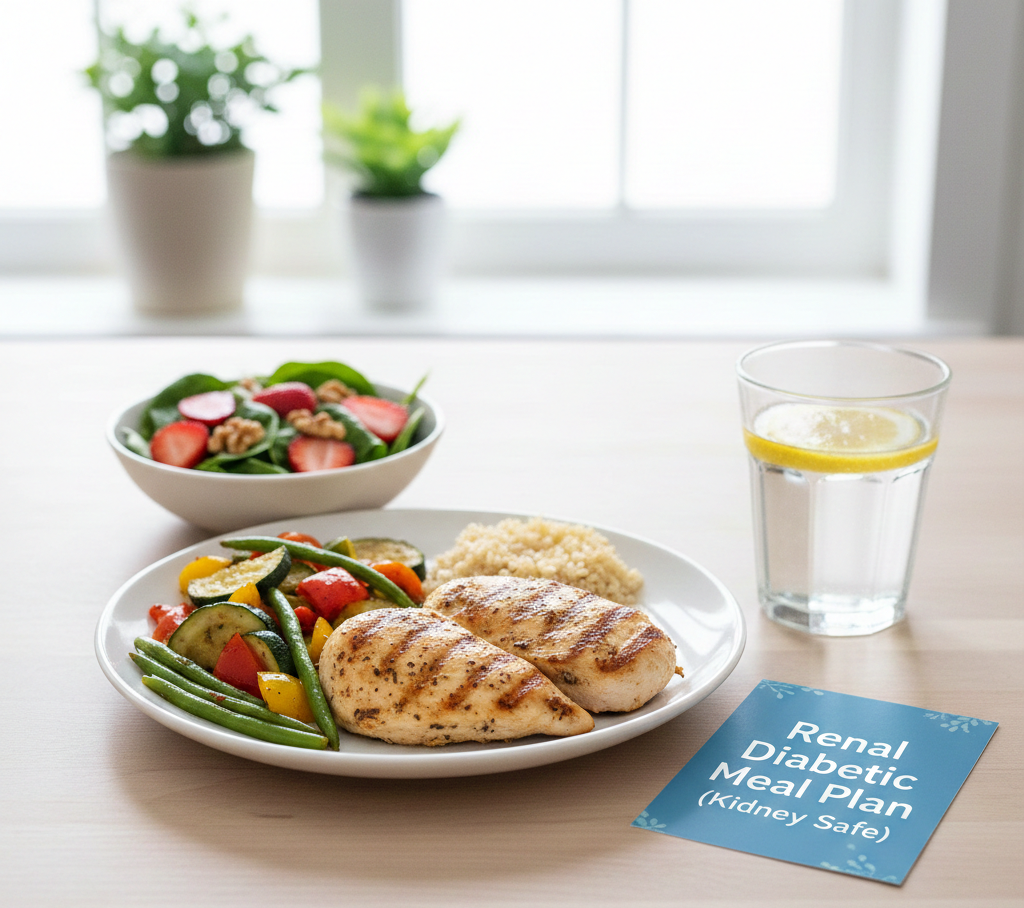
Renal Diabetic Meal Plan: The Kidney-Safe Guide to Dual Management
Managing diabetes is complicated. Managing Chronic Kidney Disease (CKD) is complicated. When you have both—a condition often called “Diabetic Kidney Disease”—nutritional advice can feel like a paradox. Foods that are celebrated in a standard diabetic diet, like whole grains, nuts, and avocados, can be dangerous for someone with advanced kidney disease due to high potassium and phosphorus levels.
This guide cuts through the confusion. We are moving beyond generic advice to provide a medically aligned renal diabetic meal plan. This approach balances the tightrope of controlling blood sugar (to preserve remaining kidney function) while limiting the waste products (urea, potassium, phosphorus) that damaged kidneys struggle to filter.
Whether you are in Stage 3 CKD looking to delay progression, or navigating life with diabetes, this guide provides the structure, food lists, and menu samples you need. Below, you’ll also find a deeper dive into each CKD stage, how lab values translate into daily food decisions, how dialysis changes the entire nutritional picture, and practical strategies for shopping, cooking, dining out, and tracking progress over time.
The “Healthy” Food Paradox: Why Standard Advice Fails
If you have recently visited a dietitian, you might be feeling overwhelmed. Standard diabetes advice focuses on “complex carbs” and “fiber.” However, renal diets focus on “low mineral load.” Here lies the conflict:
- Whole Grains (Brown Rice/Wheat Bread): Great for diabetes because of fiber. Bad for kidneys because of high phosphorus content.
- Leafy Greens & Tomatoes: Anti-inflammatory superstars. Bad for kidneys due to extremely high potassium levels.
- Dairy: A source of protein and calcium. Restricted in renal diets due to phosphorus overload.
The solution is a hybrid diet. We prioritize low-potassium fruits and vegetables (like berries and cauliflower) and choose carbohydrates that are lower in phosphorus, controlling the blood sugar spike through strict portion sizing rather than fiber density alone. For general diabetes management, you might look at a weekly diabetic meal plan, but for renal issues, we must be much more selective.
Why Diabetes and Kidney Disease Are So Often Linked
Diabetic kidney disease, also called diabetic nephropathy, develops because chronically elevated blood glucose damages the tiny blood vessels inside the kidneys’ filtering units, called nephrons. Over years, this damage reduces the kidneys’ ability to filter waste products and regulate fluid, electrolytes, and blood pressure. This is precisely why the two conditions must be managed together rather than as separate problems: better blood sugar control today directly slows the rate of future kidney damage, while poor kidney function makes blood sugar management itself more difficult, since insulin clearance and glucose metabolism are both affected by declining kidney function.
Understanding eGFR and What It Means for Your Plate
Estimated Glomerular Filtration Rate (eGFR) is the primary lab value used to stage kidney disease and stands for how efficiently your kidneys filter blood. An eGFR above 90 is generally considered normal, while progressively lower numbers indicate more advanced disease. Because dietary restrictions become stricter as eGFR falls, your renal diabetic meal plan should evolve as your lab numbers change; a diet appropriate for an eGFR of 55 may be far too permissive—or unnecessarily restrictive—for someone with an eGFR of 25. This is the single biggest reason nutritional advice for kidney disease can’t be one-size-fits-all, and why ongoing lab monitoring, not just symptoms, should guide dietary adjustments.
The Five Stages of CKD and How the Diet Changes at Each One
Chronic kidney disease is generally classified into five stages based on eGFR. Understanding where you fall helps you interpret why your care team’s recommendations may differ from a friend’s or a family member’s, even if you both carry a CKD diagnosis.
| Stage | eGFR Range | Typical Dietary Focus |
|---|---|---|
| Stage 1 | 90+ (with kidney damage markers) | Blood sugar and blood pressure control; minimal restriction |
| Stage 2 | 60–89 | Continue standard diabetic eating; monitor sodium |
| Stage 3a/3b | 30–59 | Begin phosphorus awareness; sodium restriction tightens |
| Stage 4 | 15–29 | Strict phosphorus/potassium limits; protein often reduced |
| Stage 5 / Dialysis | Below 15 | Protein needs often increase (if on dialysis); fluid restriction begins |
This progression explains a detail that confuses many newly diagnosed patients: protein recommendations can actually reverse direction once someone starts dialysis. Pre-dialysis patients are often asked to moderate protein to reduce the kidneys’ filtering workload, while dialysis itself removes protein and amino acids from the blood, meaning dialysis patients frequently need more protein, not less, to avoid malnutrition. This is one of the clearest illustrations of why self-directed dietary changes without professional guidance can backfire.
The Big 4: Nutrients You Must Monitor
To successfully execute a renal diabetic meal plan, you need to be a detective for four specific elements.
1. Sodium (Salt)
High blood pressure destroys kidney filters. Both diabetics and renal patients must limit sodium to under 2,000mg (or sometimes 1,500mg) per day. This means avoiding processed meats, canned soups, and fast food.
2. Potassium
Damaged kidneys cannot remove excess potassium. High levels can cause fatal heart arrhythmias.
Avoid: Bananas, Potatoes, Tomatoes, Avocados, Spinach.
Eat: Apples, Berries, Cauliflower, Red Bell Peppers, Green Beans.
3. Phosphorus
High phosphorus pulls calcium from your bones, making them weak and causing calcification in blood vessels.
Avoid: Dark colas, Chocolate, Nuts, Dairy, Bran.
Eat: Light-colored sodas (if sugar-free), Rice milk, Refined grains (in moderation).
4. Carbohydrates
While we might switch to white rice or white bread to save on phosphorus, these spike blood sugar faster. The trick is pairing them with safe proteins and fats to slow absorption. If you are struggling with carb counting, reviewing the low-sugar diabetic weekly menu can help with portion concepts.
The Hidden Fifth Factor: Fluid
While not always restricted in earlier CKD stages, fluid intake becomes an important consideration in Stage 4, Stage 5, and especially for patients on dialysis. When kidneys lose the ability to remove excess water, fluid can build up, causing swelling, high blood pressure, and dangerous strain on the heart and lungs. If your care team has given you a fluid allowance, remember that “fluid” includes not just beverages but also foods that are liquid at room temperature, such as soup, ice cream, gelatin, and popsicles. Managing thirst within a fluid-restricted plan often comes down to small tricks: sucking on ice chips (which count toward your allowance but feel more satisfying per ounce), using tart flavors like lemon to stimulate saliva, and spacing sips throughout the day rather than drinking large amounts at once.
Phosphate Additives: The Silent Threat in Packaged Food
Naturally occurring phosphorus in whole foods like meat and dairy is absorbed by the body at a rate of roughly 40 to 60 percent. Inorganic phosphate additives used to extend shelf life, enhance color, or retain moisture in processed foods, however, are absorbed at nearly 90 to 100 percent, making them disproportionately dangerous for renal patients even in small amounts. These additives are typically listed in ingredient panels with the word “phos” somewhere in the name—phosphoric acid, sodium phosphate, tripolyphosphate, and similar compounds. Because current labeling laws in many regions don’t require a specific phosphorus milligram count on the nutrition facts panel, scanning the ingredient list itself, rather than relying on the numbers alone, is often the more reliable strategy.

Need More Recipes?
Finding recipes that satisfy both low-sugar and kidney-safe requirements is tough. This cookbook is specifically dedicated to the “Renal Diabetic” diet.
Check Price on AmazonBuilding a Renal Diabetic Grocery List
Grocery shopping on this plan requires reading every label, since sodium, phosphorus additives, and added sugar can hide in the same product. Organizing your list by section makes the process faster and reduces the temptation to grab convenience items with hidden minerals.
Produce Section
Prioritize lower-potassium options: apples, berries, pineapple, grapes, cauliflower, cabbage, green beans, red bell peppers, and cucumbers. Fresh produce, even higher-potassium varieties, is still generally preferable to canned versions loaded with sodium, unless the can is specifically labeled low-sodium and rinsed thoroughly before use.
Protein Aisle
Choose fresh, unprocessed cuts of chicken, fish, and lean beef or pork rather than marinated, cured, or smoked versions, which are frequently injected with sodium and phosphate solutions. Egg whites are a particularly renal-friendly protein choice, since they deliver high-quality protein with a fraction of the phosphorus found in the yolk.
Grains and Starches
Refined white products—white bread, white rice, and white pasta—are generally preferred over whole grain versions in a renal diabetic context, specifically to reduce phosphorus load, even though this runs counter to typical diabetes advice. Portion control becomes the primary tool for managing blood sugar with these choices.
Dairy and Alternatives
Because dairy is one of the most concentrated phosphorus sources in a typical diet, many renal diabetic plans call for rice milk or a small, controlled portion of regular milk rather than unlimited dairy. Nut-based milks can also be high in phosphorus depending on the brand, so check labels rather than assuming any milk alternative is automatically safer.
A Sample One-Week Shopping List
- 1 dozen eggs (for egg white-forward cooking)
- 1 lb boneless, skinless chicken thighs
- 1 lb white fish fillets (cod, tilapia, or similar)
- Small package of shrimp
- 1 loaf white bread or sourdough
- White rice, white pasta, cream of wheat or grits
- Apples, berries, pineapple, grapes
- Red bell peppers, cauliflower, green beans, cabbage
- Rice milk (unsweetened)
- Olive oil, fresh herbs, garlic, lemons
- Low-sodium or no-salt-added canned tomato sauce (used sparingly)
- Salt-free seasoning blends
7-Day Renal Diabetic Meal Plan
Note: This plan assumes a “moderate” restriction suitable for Stage 3-4 CKD. Patients on dialysis often need MORE protein, while pre-dialysis patients need LESS. Always consult your nephrologist.
Day 1: The Safer Start
- Breakfast: Egg white omelet (lower phosphorus than yolks) with red bell peppers and onions. 1 slice of sourdough toast (white) with non-hydrogenated margarine.
- Lunch: Grilled chicken breast served on a bed of mixed lettuces (limit spinach) with cucumber, radish, and olive oil vinaigrette.
- Dinner: Baked Cod (white fish) seasoned with lemon and dill. Side of white rice (½ cup) and steamed green beans.
- Snack: ½ cup of Raspberries.
Day 2: Low-K Comfort
Many diabetics rely on potatoes, but they are potassium bombs. Here we use cauliflower. For other low-carb ideas that might need tweaking for renal safety, see our low-carb weekly diabetic menu.
- Breakfast: Cream of Wheat (lower phos than oatmeal) made with water or rice milk, topped with blueberries.
- Lunch: Turkey burger (lean) wrapped in lettuce. Side of carrot sticks.
- Dinner: “Cauliflower Mash” (steamed and mashed cauliflower with garlic powder/olive oil) served with a small pork chop.
- Snack: An Apple (skin on is fine, low potassium).
Day 3: Pasta Night Done Right
- Breakfast: Poached egg on half an English muffin.
- Lunch: Tuna salad (made with low-fat mayo) with low-sodium crackers. ½ cup of grapes.
- Dinner: White pasta (1 cup cooked) tossed with olive oil, garlic, and sautéed zucchini. Top with grilled shrimp.
- Snack: Strawberries.
Day 4: The Vegetarian Balance
Vegetarian protein can be tricky because beans are high in phosphorus/potassium. However, newer studies suggest plant phosphorus is absorbed less than animal phosphorus. If you are older, soft textures matter—check the diabetic menu for elderly with no teeth.
- Breakfast: Smoothie with rice milk, strawberries, and whey protein isolate (check label for phos).
- Lunch: Egg salad sandwich on white bread. Side of coleslaw (vinegar based, no salt).
- Dinner: Tofu stir-fry with broccoli, carrots, and white rice. Use low-sodium soy sauce sparingly.
- Snack: Pineapple chunks.
Day 5: Poultry & Peppers
- Breakfast: Scrambled egg whites with diced ham (rinse ham to reduce salt).
- Lunch: Leftover Tofu stir-fry.
- Dinner: Roast chicken thigh (skinless) with roasted red peppers and onions. Small baked potato (leached*: peel, slice, soak in water for 4 hours to remove potassium) or swap for corn.
- Snack: Shortbread cookie (check sugar).
Day 6: Simple Saturday
If you are busy working, meal prepping is key. See our diabetic menu for working adults for batch cooking strategies.
- Breakfast: Pancakes made with white flour (limit baking powder which has phosphorus) and blueberries. Sugar-free syrup.
- Lunch: Grilled chicken wrap with lettuce and mayonnaise.
- Dinner: Beef kebab (small portion) with peppers and onions. Couscous side.
- Snack: Plum.
Day 7: Sunday Reset
- Breakfast: French toast (using egg whites and white bread) with cinnamon.
- Lunch: Shrimp salad with pasta and vinaigrette.
- Dinner: Meatloaf made with oatmeal binder (small amount) or breadcrumbs, low-sodium tomato glaze. Steamed broccoli.
- Snack: Rice cake with a thin layer of cream cheese.
For long-term planning, consider adapting our 30-day diabetic menu by swapping out the high-potassium/phosphorus ingredients identified above.
Meal Prep Strategy for a Renal Diabetic Lifestyle
Because this diet depends so heavily on cooking from scratch to avoid hidden sodium and phosphate additives, meal prep isn’t just a convenience here—it’s close to a necessity. Restaurant and packaged convenience foods are simply too unpredictable for the level of mineral control this diet requires.
Batch-Leach Your Potatoes and Root Vegetables
If potatoes, sweet potatoes, or other root vegetables are part of your allowance, leaching a larger batch at once and portioning it into the refrigerator for the week saves significant time compared to leaching a fresh batch every time you want them.
Cook Proteins Without Salt, Then Season Individually
Preparing a batch of plain grilled or baked chicken, fish, or lean beef without added salt gives you a flexible base you can season differently for each meal using fresh herbs, lemon, garlic, and salt-free spice blends, keeping sodium consistently low across the week.
Pre-Portion Higher-Risk Foods
Foods like nuts, cheese, or higher-potassium fruits that are allowed only in small, specific portions are far easier to manage when divided into single servings immediately after shopping, rather than trying to eyeball a “handful” from a larger container each time.
Freeze Sauces and Bases in Small Portions
A homemade, salt-free tomato sauce or a lemon-herb marinade can be batch-cooked and frozen in ice cube trays or small containers, giving you flavorful building blocks that don’t compromise your sodium or phosphorus targets on a busy night.
How the Diet Changes Once Dialysis Begins
Starting dialysis is one of the most significant nutritional turning points in the CKD journey, and it often reverses several rules patients have followed for years leading up to it.
Protein Needs Typically Increase
Pre-dialysis diets often restrict protein to reduce the kidneys’ filtering workload. Dialysis, however, removes amino acids and some protein directly from the blood during treatment, so dialysis patients are frequently advised to increase protein intake substantially compared to their pre-dialysis targets, in order to prevent malnutrition and muscle wasting.
Fluid Restriction Becomes More Central
Because dialysis patients often produce very little urine, fluid intake between treatments must be carefully controlled to prevent dangerous fluid overload, which strains the heart and lungs. Many dialysis patients are given a specific daily fluid allowance based on their remaining urine output and weight gain between sessions.
Potassium and Phosphorus Restrictions Often Tighten
Since dialysis only partially replaces the kidneys’ filtering function and typically happens just a few times per week, potassium and phosphorus can still build up between sessions. Many dialysis patients take phosphate binder medication with meals specifically to reduce the amount of phosphorus absorbed from food, working alongside continued dietary caution.
Peritoneal Dialysis vs. Hemodialysis
The two primary forms of dialysis have somewhat different nutritional implications. Peritoneal dialysis, performed daily at home using the abdominal lining as a filter, provides more continuous waste removal and often allows for somewhat more dietary flexibility, though it also introduces glucose from the dialysis solution itself, which can affect blood sugar control in diabetic patients. Hemodialysis, typically performed three times weekly at a clinic, requires more careful management of fluid and mineral intake between the less frequent treatment sessions. Your renal dietitian will tailor recommendations specifically to which modality you use.

Flavor Without the Sodium
The hardest part of a renal diet is the lack of salt. Reclaim the joy of eating with kidney-safe, salt-free seasoning blends that don’t rely on potassium chloride (a common salt substitute that is dangerous for renal patients).
Check Price on AmazonUnderstanding Your Lab Values and What They Mean for Your Plate
Renal diabetic nutrition is unusually data-driven compared to most diet advice, because your actual blood work should be actively shaping your food choices, not just your symptoms or how you feel day to day.
Potassium (Blood)
A normal range is typically around 3.5 to 5.0 mEq/L. Levels above this range may prompt your doctor to tighten dietary potassium restriction or adjust medications that affect potassium, such as ACE inhibitors or potassium-sparing diuretics.
Phosphorus (Blood)
Normal is generally around 2.5 to 4.5 mg/dL. Elevated phosphorus over time is closely linked to bone disease and cardiovascular calcification, making it one of the most important numbers to track as CKD progresses.
Albumin
This protein level in the blood reflects overall nutritional status. Low albumin can signal insufficient protein intake, which is a particular concern for dialysis patients who need more protein, not less.
A1C and Fasting Glucose
These remain just as important as ever in a renal diabetic plan; note that A1C accuracy can sometimes be affected by advanced kidney disease and anemia, so your doctor may also rely on more frequent fasting glucose checks or continuous glucose monitoring for a clearer picture.
Bringing a simple printed log of your recent lab trends to nutrition appointments, alongside a few days of typical meals, helps your renal dietitian fine-tune this plan far more precisely than generic food lists alone ever could.
Pros and Cons of the Renal Diabetic Diet
✅ Advantages
- Preserves Kidney Function: Reduces the filtration workload, delaying dialysis.
- Controls Blood Pressure: Low sodium naturally lowers hypertension.
- Prevents Bone Disease: Managing phosphorus keeps bones stronger.
- Heart Health: Avoiding potassium spikes prevents cardiac events.
❌ Challenges
- Highly Restrictive: Eliminates many common “healthy” foods (avocados, nuts, whole grains).
- Preparation Time: Requires cooking from scratch to avoid sodium/phosphorus additives.
- Conflicting Advice: Requires constant balancing between diabetic needs (low carb) and renal needs (low protein/mineral).
- Social Eating: Very difficult to eat at restaurants due to hidden salt and phosphorus.
The Emotional Weight of a Highly Restrictive Diet
It’s worth naming directly: this is one of the more psychologically demanding diets to follow long-term, since it removes many foods considered “healthy defaults” elsewhere and requires near-constant vigilance around ingredient lists. Feelings of grief, frustration, or diet fatigue are common and valid. Renal dietitians and CKD support groups, whether in person or online, can be genuinely valuable resources—not just for recipe ideas, but for the emotional side of adjusting to a diet this demanding, which is just as real a part of chronic disease management as the numbers on a lab report.
Comparison: Renal Diabetic vs. Standard Diabetic Diet
| Category | Standard Diabetic Diet | Renal Diabetic Diet |
|---|---|---|
| Fiber Sources | Whole grains, bran, nuts, seeds | Fruits, vegetables, refined grains (to lower phos) |
| Fruits | Any (focus on GI), Avocados, Bananas | Low Potassium only (Berries, Apples, Pineapple) |
| Protein | Moderate to High (satiety) | Low to Moderate (reduce urea waste) |
| Dairy | Encouraged (yogurt, cheese) | Restricted (high phosphorus) |
| Salt Substitutes | Often used (Potassium Chloride) | FORBIDDEN (Dangerous Potassium levels) |
If your kidney function is still normal, you do not need these restrictions. Please refer to the 7-day diabetic menu or high-protein diabetic menu instead.
Where the Plant-Dominant Low Protein Approach Fits In
Newer research is exploring plant-focused, lower-protein eating patterns specifically for people managing both diabetes and CKD. The theory is that plant-based protein sources, even at similar total protein levels, may produce less acid load and potentially gentler phosphorus absorption than animal protein, since plant phosphorus is bound in a form the body absorbs less efficiently. This doesn’t mean animal protein must be eliminated, but it does suggest that shifting a portion of your protein intake toward well-planned plant sources like tofu, lentils prepared with leaching techniques, and egg whites may be worth discussing with your renal dietitian, particularly if you’re not yet on dialysis.
Expert Insight: The “Leeching” Technique
One of the best tricks in the renal toolkit is “leeching” vegetables. If you absolutely crave potatoes or sweet potatoes, you can reduce their potassium content by nearly half:
- Peel and slice the vegetable into small pieces.
- Rinse under warm water.
- Soak in a large pot of warm water for at least 2 hours (change water once).
- Rinse again and cook with heavy water (boil).
This allows you to incorporate some variety back into your meals, which is crucial for mental health and diet adherence.
Beyond Potatoes: What Else Can Be Leached
The same principle can be applied to other root vegetables and winter squashes that you’d otherwise need to avoid entirely, including carrots, beets, and rutabaga, though the potassium reduction varies by vegetable density and cut size. Smaller, thinner cuts leach more effectively than large chunks, since more surface area is exposed to the water. It’s worth noting that leaching also removes some water-soluble vitamins alongside the potassium, so leached vegetables shouldn’t be relied upon as a primary vitamin source; pairing them with your allowed low-potassium fruits and vegetables helps round out your micronutrient intake.
Cooking Methods That Naturally Support This Diet
Beyond leaching, several cooking techniques help control both sodium and mineral content without sacrificing flavor. Roasting vegetables with olive oil and salt-free herb blends develops natural sweetness and umami without added sodium. Acid-based flavor boosters like fresh lemon, lime, and vinegar can make food taste more seasoned than it actually is, reducing the temptation to reach for the salt shaker. Building flavor with aromatics—garlic, onion, ginger, and fresh herbs sautéed at the start of a dish—creates a flavor foundation that makes the rest of the meal require less added salt overall.
Dining Out and Social Eating on a Renal Diabetic Diet
Restaurant meals present a unique challenge here, since sodium and phosphate additives are often used liberally in commercial kitchens for flavor and shelf stability, and menus rarely disclose either. A few strategies make eating out more manageable without eliminating it entirely.
Choose Simply Prepared Dishes
Grilled, baked, or broiled proteins without sauce, paired with a plain vegetable side and rice, tend to be the safest bets. Avoid pre-marinated or breaded options, since marinades and breading are common sources of hidden sodium and phosphate additives.
Ask Direct Questions
Don’t hesitate to ask whether a dish can be prepared without added salt, and request sauces and dressings on the side so you control the quantity used. Most kitchens can accommodate these requests, even if it requires asking to speak with the kitchen directly for more unusual accommodations.
Watch Portion Sizes Closely
Restaurant protein portions frequently exceed the amount appropriate for a controlled-protein renal diet. Asking for a half portion, splitting an entrée, or requesting a to-go box at the start of the meal to portion out extra food before eating can help keep protein and sodium intake within your target range.
Special Occasions and Family Gatherings
When dining at someone else’s home, offering to bring a dish you know fits your restrictions ensures you have at least one safe option, and it takes pressure off your host to guess at your specific dietary needs. Communicating your restrictions clearly and kindly ahead of time, rather than navigating it silently at the table, tends to produce far better results for everyone involved.
Vitamins, Minerals, and Supplements in Renal Diabetic Care
Because this diet restricts several nutrient-dense food categories, some vitamin and mineral gaps are common, and supplementation is frequently part of a comprehensive care plan—but only under medical supervision, since some standard multivitamins contain minerals that are dangerous in excess for kidney patients.
Renal-Specific Vitamin Formulations
Many nephrologists prescribe a renal-specific vitamin B complex formulated without potassium, phosphorus, or excess vitamin A, since standard multivitamins can contain levels of these nutrients that would otherwise need to be avoided through diet.
Vitamin D and Calcium
Because damaged kidneys struggle to activate vitamin D and absorb calcium properly, many CKD patients are prescribed an active form of vitamin D along with calcium monitoring, since both under- and over-supplementation carry risks for bone health and vascular calcification.
Iron
Anemia is common in CKD due to reduced production of the hormone erythropoietin, which the kidneys normally produce to stimulate red blood cell formation. Iron supplementation, sometimes alongside erythropoietin-stimulating medications, is a frequent part of managing this complication.
Important: Never start an over-the-counter vitamin, mineral, or herbal supplement without checking with your nephrologist first. Some common supplements, including certain herbal products and high-dose vitamin C, can be harmful to compromised kidney function.
Common Myths About Renal Diabetic Eating, Debunked
Myth: “If it’s a salt substitute, it’s automatically safer.”
Most salt substitutes swap sodium chloride for potassium chloride, which can be dangerous for kidney patients with restricted potassium tolerance. Always check the ingredient label rather than assuming any product marketed as a “salt alternative” is renal-safe.
Myth: “All whole grains are bad for kidneys.”
The concern with whole grains is specifically their phosphorus content, not carbohydrates or fiber themselves. Depending on your individual lab values and the stage of your CKD, small, monitored portions of whole grains may still fit within your plan; this is a conversation for your renal dietitian rather than a blanket rule.
Myth: “Low protein means no protein.”
Protein restriction in pre-dialysis CKD is about moderation, not elimination—the body still requires adequate protein for muscle maintenance and immune function. The goal is hitting a specific, individualized gram target, not minimizing protein as much as possible.
Myth: “Fresh fruit is always better than canned or frozen.”
For potassium control specifically, some canned fruits packed in light syrup or juice (drained) can actually have lower potassium than their fresh counterparts due to leaching during processing, though the trade-off is added sugar, which matters for diabetes control. Frozen fruit without added sugar is often the best middle ground.
Myth: “This diet is the same for everyone with CKD.”
As covered throughout this guide, dietary restrictions shift significantly based on CKD stage, dialysis status, and individual lab trends. A meal plan appropriate for one person’s Stage 3 CKD could be inappropriate for another person at the same stage with different lab values or comorbidities.
Tracking Progress on a Renal Diabetic Meal Plan
Because this diet is guided so heavily by lab values, tracking progress looks a bit different than a typical weight-loss-focused diet. A few key markers are worth monitoring consistently alongside your care team.
eGFR Trend Over Time
A single eGFR reading matters less than the overall trend across several months. A stable or slowly declining eGFR generally signals that your combined blood sugar and dietary management is helping protect remaining kidney function.
Blood Pressure
Given how closely linked hypertension is to kidney damage, home blood pressure monitoring between appointments can provide valuable early feedback on whether your sodium intake is well-controlled.
Potassium and Phosphorus Lab Trends
Reviewing these values at each lab draw, rather than reacting to a single abnormal result in isolation, helps you and your dietitian identify whether recent dietary adjustments are moving in the right direction.
Weight and Fluid Status
Sudden weight gain over a short period, particularly for patients with fluid restrictions, often signals fluid retention rather than true weight gain and should be reported to your care team promptly.
Symptom Journal
Keeping a simple log of energy levels, appetite, swelling, and any muscle cramping (a potential sign of potassium imbalance) gives your care team useful qualitative context that lab values alone don’t always capture.
Extra Breakfast, Lunch, Dinner, and Snack Ideas to Rotate In
Once the core 7-day plan feels manageable, use the ideas below to keep your renal diabetic meal plan varied over the following weeks, since repetitive eating is one of the most common reasons people abandon restrictive diets.
Additional Breakfast Options
- Egg white and red pepper scramble with a slice of white toast
- Rice milk-based overnight “oats” made with cream of rice cereal and blueberries
- Plain grits topped with a small pat of butter and cinnamon
- English muffin with a thin layer of cream cheese and sliced strawberries
- Egg white and turkey bacon breakfast wrap in a small white flour tortilla
Additional Lunch Options
- Chicken and white rice bowl with sautéed cabbage and a lemon-olive oil dressing
- Tuna salad lettuce wraps made with low-fat mayonnaise
- Turkey and cucumber sandwich on white bread with mustard
- Shrimp and pasta salad with red bell pepper and a light vinaigrette
- Egg salad over a bed of shredded cabbage with olive oil and vinegar
Additional Dinner Options
- Baked chicken breast with roasted cauliflower and a small portion of white rice
- Grilled shrimp skewers with sautéed green beans and couscous
- Pork tenderloin with leached sweet potato mash and steamed green beans
- White fish tacos in corn tortillas with cabbage slaw and lime
- Beef and pepper stir-fry over white rice with low-sodium soy sauce
Additional Snack Options
- Rice cakes with a thin spread of cream cheese
- Fresh pineapple chunks
- A small serving of unsalted popcorn
- Apple slices with a small amount of cinnamon
- Cucumber slices with a light vinegar dressing
Flavor-Building Techniques That Don’t Rely on Salt or Sugar
The single biggest complaint about renal diabetic cooking is blandness, but this is almost always solvable with technique rather than seasoning packets. A few reliable approaches can transform simple, restriction-friendly ingredients into genuinely satisfying meals.
Toasting Spices and Aromatics
Briefly toasting whole spices like cumin, coriander, or mustard seed in a dry pan before grinding, or sautéing garlic and onion until golden before adding other ingredients, develops significantly deeper flavor than adding the same spices raw.
Acid as a Salt Substitute
A squeeze of fresh lemon or lime, or a splash of vinegar added at the very end of cooking, brightens a dish in a way that mimics some of the “pop” that salt normally provides, often reducing the perceived need for added sodium.
Building an Herb Garden
Fresh herbs—basil, cilantro, dill, rosemary, thyme—are naturally low in sodium, potassium, and phosphorus, and a small windowsill herb garden gives you an essentially unlimited, free flavor resource that dried, packaged seasoning blends can’t fully replicate.
Caramelization and Roasting
High-heat cooking methods like roasting and searing develop natural sugars and umami compounds in vegetables and proteins, creating complex flavor without needing any added sauce, salt, or sugar.
Kidney-Safe Swaps for Common High-Risk Ingredients
| Instead of… | Try… | Why |
|---|---|---|
| Table salt | Salt-free herb blends, lemon, vinegar | Avoids sodium without the potassium chloride risk of “salt substitutes” |
| Regular milk | Rice milk (unsweetened) | Significantly lower phosphorus |
| Whole wheat bread | White or sourdough bread | Lower phosphorus from bran and germ removal |
| Bananas | Apples, berries, pineapple | Meaningfully lower potassium content |
| Canned soup | Homemade broth-based soup, no added salt | Canned soups are frequently among the highest-sodium packaged foods |
| Peanut butter | Small portions of jam or thin layer of cream cheese | Nut butters are concentrated phosphorus sources |
| Dark cola | Light-colored, caffeine-free soda or sparkling water | Dark colas contain phosphoric acid additives |
Working Effectively With Your Nephrologist and Renal Dietitian
Because this diet is so individualized, the relationship you build with your care team matters as much as any food list. A few habits make these appointments more productive.
Keep a Running Food and Symptom Log
Even a simple week-long log of what you ate, how you felt, and any symptoms like swelling or fatigue gives your dietitian far more useful information than a general description of your eating habits from memory.
Ask for Specific Gram Targets, Not Just General Categories
Rather than leaving an appointment only knowing you should “watch your potassium,” ask for a specific daily milligram target based on your latest labs. Specific numbers are far easier to translate into actual grocery decisions than general categories of concern.
Revisit Your Plan After Every Major Lab Change
A renal diabetic meal plan is not a “set it and forget it” document. Significant changes in eGFR, potassium, phosphorus, or the start of dialysis all warrant a fresh conversation about whether your current food choices still match your medical needs.
Bring Your Medication List
Certain blood pressure medications, diuretics, and phosphate binders interact directly with dietary potassium and phosphorus. Reviewing your full medication list alongside your diet at each appointment helps your care team catch interactions that might otherwise be missed.
Sustaining Motivation on a Long-Term Restrictive Diet
Adherence research consistently shows that highly restrictive diets like this one are among the hardest to sustain over years, not because people lack willpower, but because the day-to-day cognitive load of scrutinizing every label and every restaurant menu is genuinely exhausting. A few practical mindset shifts can help.
Focus on What You Can Have, Not Just What’s Restricted
It’s easy for a restrictive diet to start feeling like an ever-growing list of “no.” Deliberately building a rotating list of go-to meals you genuinely enjoy—rather than constantly improvising around restrictions—shifts the mental framing toward abundance rather than deprivation.
Allow for Planned, Discussed Flexibility
Rather than an unplanned slip that feels like failure, discuss with your dietitian whether an occasional, carefully portioned treat can be built into your plan for special occasions. Having this planned in advance, with a clear understanding of the trade-off, tends to produce far better long-term adherence than an all-or-nothing approach.
Connect With Others Managing the Same Conditions
Support groups specifically for people managing both diabetes and CKD, whether through a hospital program or an online community, provide both practical recipe-sharing and the emotional validation of connecting with people who understand the specific daily burden of this dual diagnosis.
Frequently Asked Questions
Yes, but moderation is key. Egg whites are an excellent source of high-quality protein with low phosphorus. Egg yolks contain high phosphorus, so many renal dietitians recommend limiting yolks to 2-3 per week or switching to whites only.
Oatmeal is higher in phosphorus than cream of wheat or grits. However, it is a great source of fiber for diabetes. It can be included occasionally if your phosphorus levels are under control, but portion size is critical.
Whole grains contain the bran and germ, which are rich in phosphorus and potassium. In advanced kidney disease, the body cannot filter these minerals. White refined grains have these removed, making them “safer” for kidneys, though you must monitor portion sizes strictly to manage blood sugar.
Water is always best. Unsweetened tea and light-colored diet sodas (like Sprite Zero or Ginger Ale) are generally lower in phosphorus than dark colas. Avoid fruit juices due to high sugar and potassium.
No. Most salt substitutes are made of Potassium Chloride. For a kidney patient, this can cause dangerous spikes in blood potassium levels, leading to heart issues. Use herbs, lemon juice, and garlic instead.
Yes, often significantly. Many dialysis patients need to increase protein intake to offset losses during treatment, while fluid restriction typically becomes more important. Potassium and phosphorus restrictions often continue or tighten, sometimes alongside phosphate binder medications.
Protein targets are individualized based on your CKD stage, dialysis status, body weight, and lab values like albumin. Your nephrologist or renal dietitian can calculate a specific gram target for your situation rather than relying on generic guidelines.
Not necessarily. Many standard multivitamins contain potassium, phosphorus, or vitamin A levels that can be problematic for kidney patients. Renal-specific vitamin formulations are often recommended instead, and any supplement should be reviewed with your nephrologist first.
Final Verdict: Balance is Possible
Navigating a renal diabetic meal plan is undeniably challenging. It requires unlearning some “healthy eating” habits and paying close attention to blood work. However, by focusing on low-potassium fruits, controlling your protein intake, and eliminating processed sodium, you can significantly slow the progression of kidney disease while keeping your diabetes in check.
Remember, this diet is highly individual. Your stage of CKD (3, 4, or 5) dictates exactly how much protein and fluid you need. Use this guide as a foundation, but treat your renal dietitian as your architect.
Above all, treat this as a collaborative, evolving plan rather than a fixed set of rules. Your eGFR, potassium, phosphorus, and A1C will shift over time, sometimes improving with consistent effort and sometimes requiring further tightening as CKD naturally progresses. Regular follow-up with your nephrologist and renal dietitian, paired with the food-level knowledge in this guide, gives you the best possible foundation for protecting both your kidneys and your blood sugar for the years ahead.
Ready to start simple? Try incorporating just one kidney-safe meal from our list tomorrow. If you need a shorter test run, look at our 3-day diabetic meal plan and swap the high-potassium ingredients for the kidney-safe alternatives listed here.