Soul Food Diabetic Recipes: Preserving Tradition, Protecting Health
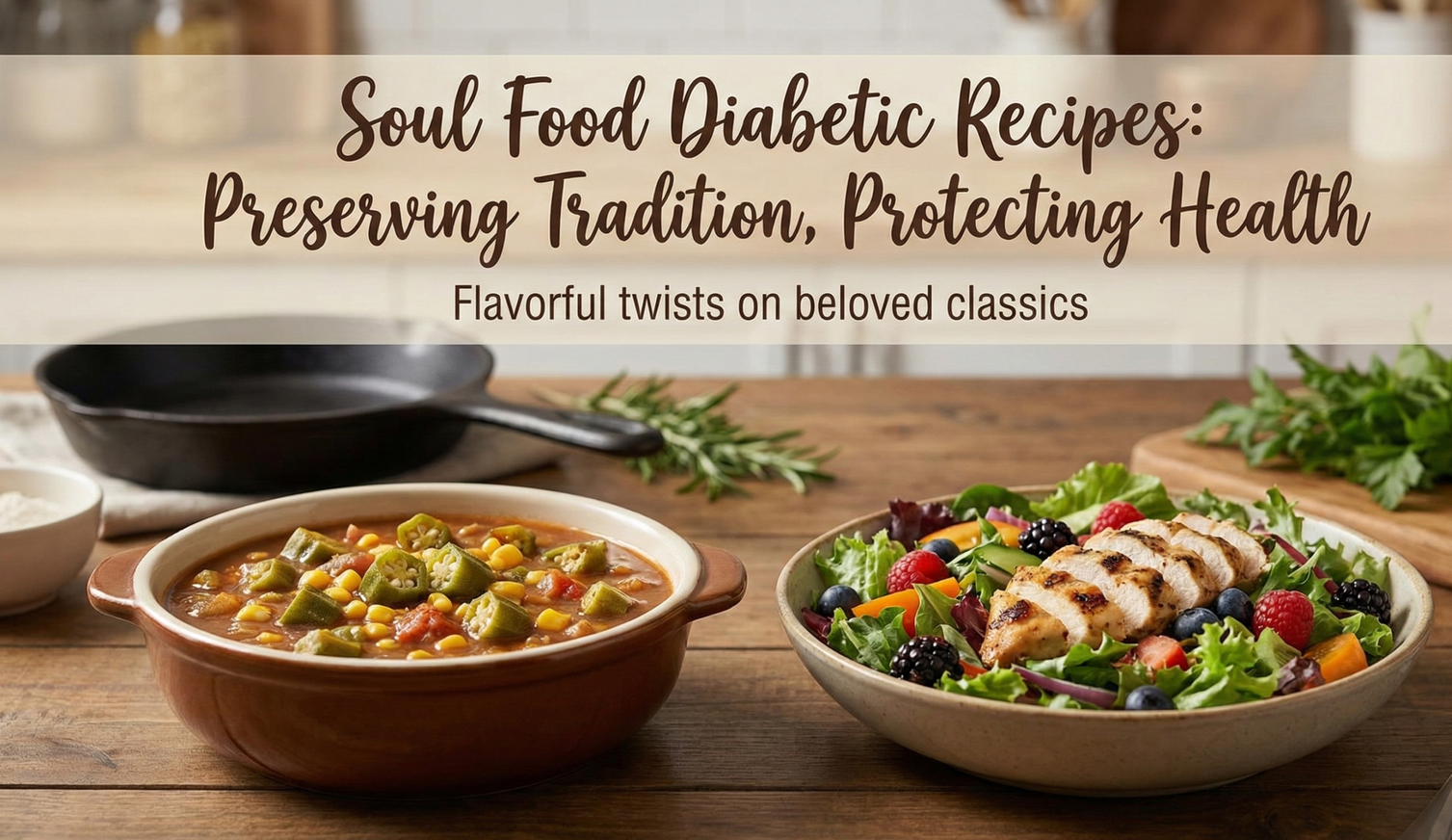
Soul food is more than just sustenance; it is a culinary chronicle of African American history, resilience, and community. The aromas of potlikker simmering, the crackle of a skillet, and the warmth of Sunday dinner are woven into the cultural fabric. However, for those managing diabetes, traditional soul food—often characterized by high sodium, sugary yams, and deep-fried preparations—can present a significant challenge.
The good news? You do not have to abandon your heritage to save your health. The roots of soul food are actually farm-to-table: leafy greens, sweet potatoes, legumes, and okra. By stripping away modern additives and returning to these nutrient-dense basics with smart preparation tweaks, Soul Food diabetic recipes can be part of a vibrant, heart-healthy diabetic diet.
This guide is your blueprint for “Remixing the Tradition.” We will cover how to keep the flavor while cutting the spike, offering recipes from breakfast to dessert that fit perfectly into your weekly diabetic meal plan. We also address the unique needs of African American communities disproportionately affected by type 2 diabetes, providing low-glycemic soul food alternatives that nourish both body and spirit.
Beyond the recipes themselves, you will find a full breakdown of the glycemic index as it applies to soul food staples, a sample week of meals, a grocery list built specifically for this way of cooking, and guidance for holidays, dining out, and special populations like seniors, children with type 1 diabetes, and pregnant women managing gestational diabetes. Whether you are newly diagnosed or have been managing diabetes for years, the goal of this guide is the same: give you enough tools and context to make confident decisions at the stove, not just a list of recipes to follow blindly.
The Soul Food Paradox: Roots vs. “The Sugar”
In the medical community, diabetes is often disproportionately high among African Americans. Part of addressing this is acknowledging the diet. Traditional “slave rations” required high calories for grueling labor, leading to a cuisine rich in pork fat, cornmeal, and molasses. Today, our lifestyles are sedentary, but the recipes remain calorie-dense. The good news: many soul food staples are naturally diabetic-friendly when prepared mindfully.
The Healthy Foundation
Before the heavy gravies and deep frying took over, soul food was primarily vegetable-based.
- Collard/Mustard Greens: Powerhouses of Vitamin K and fiber. They help stabilize blood sugar when cooked with smoked turkey instead of pork.
- Black-Eyed Peas: Excellent complex carbohydrates for blood sugar stability, rich in folate and magnesium.
- Sweet Potatoes: Lower glycemic index than white potatoes when boiled or roasted without sugar. Packed with beta-carotene.
- Okra: High in soluble fiber, which slows glucose absorption.
To make these safe for a menu for insulin resistance, we simply need to update the cooking methods: use lean proteins, replace heavy fats with plant-based oils, and reduce added sugars. This approach is sometimes called “heritage cooking 2.0.”
It helps to understand how this shift happened historically. Enslaved cooks were given the least desirable cuts of meat and the most basic pantry staples, and out of necessity turned them into some of the most flavorful dishes in American cuisine, using slow cooking, smoking, and bold seasoning to stretch limited ingredients. Sugar, once an expensive luxury good, only became a daily staple in the American diet, soul food included, as industrial sugar production expanded and prices fell through the 20th century. Cornmeal, greens, and beans stayed constant throughout that whole history; it is really the sugar, refined flour, and added fats layered on top over the last century that created most of the modern health challenges associated with the cuisine. Recognizing that history reframes “heritage cooking 2.0” not as a break from tradition, but as a return to an earlier, more vegetable-forward version of the same cuisine.
The Remix: Essential Pantry Swaps
You can’t cook new tricks with old ingredients. Here is how to restock your kitchen for diabetic-friendly soul food.
| Traditional Ingredient | Diabetic-Friendly Swap | Why? |
|---|---|---|
| Ham Hocks / Salt Pork | Smoked Turkey Wings / Liquid Smoke | Lowers saturated fat and sodium while keeping the smoky flavor. |
| White Flour (Breading) | Almond Flour / Crushed Pork Rinds / Coconut Flour | Drastically reduces carbs for “breaded” meats. |
| White Rice | Cauliflower Rice / Brown Rice & Quinoa blend | Prevents rapid glucose spikes; adds fiber. |
| Candied Yams (Brown Sugar) | Roasted Sweet Potato (Monk Fruit/Stevia) | Eliminates sugar load; emphasizes natural sweetness. |
| Vegetable Shortening/Lard | Avocado Oil / Olive Oil / Coconut Oil (in moderation) | Better for heart health and cholesterol management. |
| Corn Syrup (in desserts) | Allulose / Erythritol / Monk fruit syrup | Zero glycemic impact, works well in pies. |

Digital XL Air Fryer
Get that crispy “Sunday Fried Chicken” texture without the grease. Essential for a modern, diabetic soul food kitchen.
Check Price on AmazonUnderstanding the Glycemic Index in Soul Food Cooking
One of the biggest keyword gaps in most soul food guides is a clear explanation of why certain dishes spike blood sugar while others do not. The glycemic index (GI) ranks carbohydrate-containing foods based on how quickly they raise blood glucose compared to pure glucose. Foods with a GI of 55 or below are considered low, 56-69 medium, and 70 and above high. Traditional soul food leans heavily on high-GI staples like white rice, white bread, and sugar-laden desserts, but the vegetable-forward roots of the cuisine are naturally low-GI when prepared without added sugar.
Cooking method matters as much as the ingredient itself. A boiled sweet potato has a noticeably lower glycemic response than a baked one, because the starch structure changes with the cooking technique, and a mashed or pureed sweet potato digests faster than a whole roasted piece with the skin left on. Chilling starchy foods like rice, potatoes, and beans after cooking and eating them cold or reheated can also increase “resistant starch,” which behaves more like fiber in the digestive tract and blunts the blood sugar response. This is why leftover red beans and rice or a cold black-eyed pea salad can sometimes be gentler on blood sugar than the freshly cooked version.
| Soul Food Staple | Approximate Glycemic Index | Diabetic Notes |
|---|---|---|
| White Rice (long grain) | High (70-89) | Pair with protein and fiber; portion to 1/2 cup cooked. |
| Brown Rice | Medium (50-55) | Better fiber content slows absorption. |
| Black-Eyed Peas | Low (33-42) | Excellent base for soul food mains and salads. |
| Collard Greens | Very Low (under 15) | Virtually no impact on blood sugar; eat freely. |
| Candied Yams (traditional) | Very High (75+) | The brown sugar glaze, not the sweet potato, is the problem. |
| Cornbread (traditional) | High (60-70) | Almond flour versions bring this down significantly. |
| Okra | Very Low (under 20) | Soluble fiber actively slows glucose absorption in the gut. |
The Diabetic Plate Method, Soul Food Style
A simple visual trick works well for Sunday dinner: imagine your plate divided in half. Fill half with non-starchy vegetables such as collards, green beans, cabbage, or okra. Fill one quarter with a lean protein like baked chicken, smothered pork chop, or oven-fried fish. Fill the last quarter with a measured starch, whether that is a small scoop of rice, a slice of cornbread, or a portion of candied sweet potato. This method lets you keep every dish on the table while naturally controlling the carbohydrate load, without needing to weigh or calculate anything at the table.
Fiber is the quiet hero of soul food. Greens, okra, black-eyed peas, and beans all slow gastric emptying, which means glucose enters the bloodstream more gradually. Pairing a starchy side with a high-fiber vegetable, rather than eating the starch alone, is one of the simplest ways to flatten a post-meal blood sugar spike. Vinegar-based dressings and pot liquor with a splash of apple cider vinegar can offer a similar blunting effect, which is part of why greens cooked “down home” style with a vinegar finish have long been a smart choice, even before anyone understood the biochemistry behind it.
A Sample 7-Day Diabetic Soul Food Meal Plan
Putting all of these recipes together into a full week can feel overwhelming at first glance, so here is a sample structure that rotates through the recipes in this guide while keeping variety, fiber, and portion control in mind. Adjust portions based on your own carbohydrate targets, activity level, and guidance from your healthcare provider.
| Day | Breakfast | Dinner |
|---|---|---|
| Monday | Sweet Potato Hash with Turkey Sausage | Smoked Turkey Collard Greens + Oven-Fried Buttermilk Chicken |
| Tuesday | Southern Style Cornmeal Porridge | Smoky Red Beans with Turkey Sausage over brown rice |
| Wednesday | Shrimp and Cauliflower “Grits” | Smothered Cabbage with Smoked Turkey + Air Fryer Cornmeal Catfish |
| Thursday | Sweet Potato Hash (leftovers) or two eggs with greens | Chicken and Vegetable “Jambalaya” |
| Friday | Cornmeal Porridge or a boiled egg with sliced tomato | Baked Whiting with Southern Okra & Tomatoes |
| Saturday | Sweet Potato Hash with Turkey Sausage | Smothered Pork Chops with Onion Gravy + cauliflower mash |
| Sunday | Shrimp and Cauliflower “Grits” | Traditional Sunday Dinner: Oven-Fried Chicken, Collard Greens, Low-Carb Cornbread, small portion of Sweet Potato Pie |
Notice the pattern: every dinner pairs a lean protein with a generous portion of a non-starchy vegetable, and starchy sides like rice, cornbread, or sweet potato appear in modest, single portions rather than stacked together on the same plate. Snacks between meals can be pulled from the boiled peanuts, roasted chickpeas, or pickled okra covered earlier in this guide. Building the week around two or three batch-cooked proteins and one large pot of greens, as described in the meal prep section, keeps this plan realistic for a busy household rather than requiring fresh cooking every single night.
The Diabetic Soul Food Grocery List
Walking into the grocery store with a plan makes it far easier to stick to these swaps rather than falling back on old habits out of convenience. Building a consistent shopping list around a handful of core categories takes the guesswork out of the weekly trip.
Proteins to Stock
- Skinless chicken thighs and breasts
- Smoked turkey wings, necks, or legs
- Turkey sausage and turkey bacon
- Catfish, whiting, tilapia, and shrimp
- Eggs
- Trimmed pork chops (occasional)
Pantry and Produce Staples
- Almond flour, coconut flour, fine cornmeal
- Allulose, erythritol, or monk fruit sweetener
- Dried or canned no-salt-added beans (black-eyed peas, kidney beans, chickpeas)
- Fresh collards, mustard greens, cabbage, okra
- Sweet potatoes, onions, bell peppers, celery, garlic
- Low-sodium chicken and beef broth
Reading Labels: What Actually Matters
When choosing packaged versions of pantry staples, three numbers on the nutrition label deserve the most attention: total carbohydrates, fiber, and sodium. Subtracting the fiber grams from the total carbohydrate grams gives a rough “net carb” estimate that better reflects the food’s real impact on blood sugar. For sodium, aim to compare similar products side by side, since “smoked turkey” and “low-sodium broth” labels can vary significantly between brands. A product labeled “reduced sugar” is not automatically low-carb, since it may still contain a large amount of flour or starch, so always check the full nutrition panel rather than relying on front-of-package claims.
Shopping the perimeter of the store first, where fresh produce, meat, and eggs are typically located, naturally limits exposure to the processed, high-sugar center aisles where traditional soul food ingredients like candied yam mixes, pre-seasoned high-sodium meats, and sugary cornbread mixes tend to live. Buying dried beans instead of canned, and fresh or frozen vegetables instead of canned-in-syrup versions, gives you the most control over what actually ends up in the pot.
Breakfast: Starting the Day Right
Soul food breakfasts are hearty. We want to maintain that comfort without the “itis” (post-meal fatigue caused by blood sugar crashes). For more options, browse our breakfast ideas for diabetes.
1. Shrimp and “Grits” (Cauliflower Edition)
Traditional grits are high in carbs. This creamy cauliflower substitute mimics the texture perfectly and pairs beautifully with spicy shrimp.
Ingredients:
- 1 lb raw shrimp, peeled and deveined
- 1 head cauliflower, riced (or frozen cauliflower rice)
- 1/4 cup heavy cream or unsweetened almond milk
- 2 tbsp butter
- 1/2 cup sharp cheddar cheese, shredded
- Cajun seasoning (watch sodium), scallions, minced garlic
Instructions:
- The “Grits”: Steam cauliflower rice until very tender. Transfer to a blender or food processor. Add cream, butter, and cheese. Puree until smooth and thick. Season with salt and pepper.
- The Shrimp: In a skillet, sauté garlic in a little olive oil. Add shrimp and Cajun seasoning. Cook for 3-4 minutes until pink.
- Assembly: Spoon the cheesy cauliflower into a bowl and top with the spicy shrimp and drippings. Garnish with scallions.
Tip: This fits perfectly into a keto diabetic meal plan.
2. Sweet Potato Hash with Turkey Sausage
Instead of hash browns, we use sweet potatoes which release energy slower and are rich in fiber.
Ingredients:
- 2 medium sweet potatoes, diced small (about 1/2-inch)
- 1 lb turkey sausage (crumbled, low-sodium)
- 1 bell pepper, diced
- 1 onion, diced
- 1 tsp smoked paprika, 1/2 tsp cayenne (optional)
- 2 tbsp avocado oil
Instructions:
- Brown the turkey sausage in a cast-iron skillet. Remove and set aside.
- Add oil to the skillet. Add sweet potatoes, onions, and peppers. Cook on medium heat, covered, for 10 minutes until potatoes soften. Uncover and crisp up for 5–7 minutes.
- Return sausage to skillet, mix well, and heat through. Serve with a poached egg for extra protein.
3. Southern Style “Cornmeal” Porridge (Low-Carb)
A warm, comforting breakfast reminiscent of grits or porridge, made with flaxmeal and almond flour for a low-glycemic start.
Ingredients:
- 1/4 cup almond flour
- 2 tbsp golden flaxseed meal
- 1 cup unsweetened almond milk
- 1 tbsp butter
- Pinch of salt, cinnamon
- Optional: sugar-free maple syrup
Instructions:
- In a small saucepan, whisk almond flour and flax meal with 1/4 cup almond milk to form a paste.
- Stir in remaining milk, salt, and cinnamon. Cook over medium heat, stirring constantly, until thickened (about 3-4 minutes).
- Remove from heat, stir in butter. Serve warm with a drizzle of sugar-free syrup.
The Main Event: Sunday Dinner Remixed
Dinner is the heart of soul food. These diabetic dinner menu ideas bring the flavor without the guilt.
1. Oven-Fried “Buttermilk” Chicken
We skip the deep fryer and white flour but keep the crunch. This is a staple for any diabetic menu for seniors who miss traditional textures.
Ingredients:
- 4 Chicken thighs (bone-in, skin-on or off)
- 1/2 cup almond flour
- 1/4 cup Parmesan cheese, grated
- 1 tsp paprika, 1 tsp garlic powder, 1/2 tsp black pepper
- 1 egg beaten with 1 tbsp water
Instructions:
- Preheat oven to 400°F (200°C) or prep your Air Fryer.
- Mix almond flour, parmesan, and spices in a shallow bowl.
- Dip chicken in the egg wash, then press firmly into the flour mixture.
- Place on a wire rack on a baking sheet. Spray lightly with cooking spray.
- Bake for 35-40 minutes until golden and internal temp reaches 165°F.
2. Smoked Turkey Collard Greens
Greens are naturally diabetic-friendly. The key is avoiding the sodium bomb of processed meats. This dish is ideal for a high fiber diabetic meal plan.
Ingredients:
- 2 large bunches collard greens, washed and chopped
- 1 smoked turkey leg or wing (low-sodium if available)
- 1 onion, chopped
- 2 cloves garlic, minced
- 1 tbsp apple cider vinegar
- 1 tsp red pepper flakes
- 4 cups low-sodium chicken broth
Instructions:
- In a large pot, simmer the smoked turkey in chicken broth and 2 cups water for 45 minutes to create a rich stock.
- Remove turkey, pick meat off bone, and set aside. Skim any fat from broth.
- Add onion, garlic, vinegar, and red pepper flakes to broth. Bring to simmer.
- Add greens (they will cook down significantly). Simmer on low for 45-60 minutes until tender.
- Stir in picked turkey meat, adjust seasoning carefully (smoked meat adds salt).
3. Smothered Pork Chops with Onion Gravy (Lightened)
A soul food classic, remixed with a flourless gravy.
Ingredients:
- 4 bone-in pork chops, trimmed
- 1 tbsp avocado oil
- 2 large onions, sliced
- 2 cloves garlic
- 1 cup low-sodium beef broth
- 1 tsp xanthan gum (or 1 tbsp cornstarch for slightly more carbs)
- Salt, pepper, thyme
Instructions:
- Season pork chops with salt and pepper. Sear in oiled skillet over medium-high heat, 3-4 mins per side. Remove.
- In same skillet, sauté onions until soft and brown. Add garlic, cook 1 min.
- Add broth, scrape up bits. Bring to simmer. Whisk in xanthan gum gradually to thicken. Return pork chops to pan, cover and simmer 15-20 mins.
- Serve with cauliflower mash.
One-Pot Soul: Gumbo, Red Beans, and Jambalaya Remixed
Louisiana and Lowcountry cooking share deep roots with soul food, and dishes like gumbo, red beans and rice, and jambalaya are some of the most requested comfort foods for anyone managing insulin resistance. The trick with all three is the same: build a deeply flavored stock, control the starch, and load up on the low-glycemic vegetables that these dishes are built on, like the “holy trinity” of onion, celery, and bell pepper.
1. Diabetic-Friendly Seafood and Andouille Gumbo
A dark roux is traditionally made with equal parts flour and fat, but we lighten the carb load here while keeping the signature nutty, toasted flavor.
Ingredients:
- 1/3 cup almond flour (for the roux)
- 1/4 cup avocado oil
- 1 onion, 1 green bell pepper, 2 celery stalks, diced (the “holy trinity”)
- 4 cloves garlic, minced
- 6 oz turkey andouille sausage, sliced
- 6 cups low-sodium seafood or chicken stock
- 1 lb shrimp, peeled and deveined
- 1 lb okra, sliced
- 1 can diced tomatoes, no salt added
- 2 bay leaves, thyme, cayenne, filé powder to finish
Instructions:
- Build the roux: Whisk almond flour into hot avocado oil over medium heat, stirring constantly for 8-10 minutes until deep brown and nutty. Almond flour browns faster than wheat flour, so watch closely to avoid burning.
- Add the trinity and cook until softened, about 6 minutes. Add garlic and andouille, cook 3 more minutes.
- Pour in stock gradually, whisking to prevent lumps. Add tomatoes, bay leaves, and thyme. Simmer uncovered for 30 minutes.
- Add okra and simmer another 15 minutes until the gumbo thickens naturally.
- Add shrimp in the last 5 minutes of cooking. Finish with a pinch of filé powder off the heat. Serve over a small portion of cauliflower rice or a scoop of brown rice.
2. Smoky Red Beans with Turkey Sausage (Low-Sodium)
Classic Monday-day red beans, remixed with dried beans instead of canned to control sodium, and a smaller rice portion to manage the carb load.
Ingredients:
- 1 lb dried red kidney beans, soaked overnight
- 8 oz turkey smoked sausage, sliced
- 1 onion, 1 green bell pepper, 2 celery stalks, diced
- 3 cloves garlic, minced
- 6 cups low-sodium chicken broth
- 2 bay leaves, 1 tsp smoked paprika, 1/2 tsp cayenne, thyme
- Brown rice or cauliflower rice, for serving
Instructions:
- Drain soaked beans. In a large pot, sauté sausage until browned. Remove and set aside.
- In the same pot, sauté the trinity until soft, about 6 minutes. Add garlic, cook 1 minute.
- Return sausage to pot with beans, broth, bay leaves, and seasonings. Bring to a boil, then reduce to a simmer.
- Cover partially and simmer for 1.5 to 2 hours, stirring occasionally, until beans are creamy and tender. Mash a few beans against the side of the pot to naturally thicken the broth without added flour.
- Serve over a modest 1/2 cup portion of brown rice, keeping the beans as the star of the plate.
3. Chicken and Vegetable “Jambalaya” (Cauliflower Rice Base)
A weeknight-friendly jambalaya that swaps half the rice for cauliflower rice, cutting the carbohydrate density while preserving the dish’s signature texture.
Ingredients:
- 1 lb boneless chicken thighs, cubed
- 6 oz turkey andouille sausage, sliced
- 1 onion, 1 bell pepper, 2 celery stalks, diced
- 3 cloves garlic, minced
- 1 can diced tomatoes, no salt added
- 2 cups low-sodium chicken broth
- 1 cup brown rice, 2 cups cauliflower rice
- 1 tsp Cajun seasoning (low-sodium), smoked paprika, bay leaf
Instructions:
- In a large Dutch oven, brown chicken and sausage. Remove and set aside.
- Sauté the trinity until soft. Add garlic, cook 1 minute. Add tomatoes and seasoning.
- Stir in brown rice and broth. Bring to a boil, cover, and simmer 20 minutes.
- Stir in cauliflower rice and return chicken and sausage to the pot. Cover and cook another 8-10 minutes until rice is tender and liquid is absorbed.
- Let rest 5 minutes before serving so the flavors settle.
4. Low-Carb Chicken and Dumplings
A cold-weather soul food favorite, remixed with almond flour dumplings so the dish keeps its cozy, stick-to-your-ribs character without the carb overload of traditional biscuit dough.
Ingredients:
- 1 lb boneless chicken thighs
- 1 onion, 2 carrots, 2 celery stalks, diced
- 6 cups low-sodium chicken broth
- 1 cup almond flour, 1 egg, 1/2 tsp baking powder (for dumplings)
- 1/4 cup heavy cream, thyme, bay leaf
Instructions:
- Simmer chicken in broth with onion, carrots, and celery until cooked through, about 25 minutes. Remove chicken, shred, and set aside.
- Mix almond flour, egg, and baking powder into a soft dough for the dumplings.
- Bring broth back to a gentle simmer. Drop spoonfuls of dumpling dough into the pot. Cover and simmer 10 minutes without lifting the lid.
- Stir in shredded chicken and a splash of heavy cream. Season with thyme and pepper, then serve hot.
More Sunday Dinner Mains: Cabbage, Oxtails, and the Cuts We Grew Up On
Beyond fried chicken and pork chops, a full soul food table often includes braised cabbage, oxtails, and the rich, slow-cooked cuts that built the cuisine’s reputation for deep, soulful flavor. These dishes can absolutely stay in rotation with a few adjustments to fat and sodium.
1. Smothered Cabbage with Smoked Turkey
Cabbage is one of the lowest-carb vegetables in the soul food canon, making this a nearly worry-free side or light main course.
Ingredients:
- 1 medium head green cabbage, cored and sliced
- 1 smoked turkey wing or neck
- 1 onion, sliced
- 2 cloves garlic, minced
- 3 cups low-sodium chicken broth
- 1 tsp red pepper flakes, black pepper, apple cider vinegar
Instructions:
- Simmer the smoked turkey in broth for 30 minutes to build a flavorful stock. Remove, pick off the meat, and set aside.
- In a large pot, sauté onion and garlic until soft. Add cabbage in batches, letting it wilt down before adding more.
- Pour in the turkey stock and return the picked meat to the pot. Simmer uncovered for 20-25 minutes until the cabbage is tender.
- Finish with a splash of apple cider vinegar and a pinch of red pepper flakes just before serving.
2. Braised Oxtails, Trimmed and Lightened
Oxtails are naturally rich due to the connective tissue and marrow, but trimming visible fat before cooking and skimming the braising liquid keeps this special-occasion dish more manageable.
Ingredients:
- 3 lbs oxtails, excess fat trimmed
- 1 onion, 2 carrots, 2 celery stalks, chopped
- 4 cloves garlic, minced
- 3 cups low-sodium beef broth
- 2 tbsp tomato paste, thyme, bay leaves, allspice
- 1 tbsp avocado oil
Instructions:
- Sear oxtails in a Dutch oven until browned on all sides. Remove and set aside.
- Sauté onion, carrots, and celery until softened. Add garlic and tomato paste, cooking 1-2 minutes.
- Return oxtails to the pot with broth, thyme, bay leaves, and allspice. Bring to a simmer, cover, and cook low and slow for 3 hours (or pressure cook for 45 minutes) until fork-tender.
- Chill the braising liquid briefly and skim off the solidified fat before reheating and serving over a small portion of cauliflower mash.
A Word on Chitterlings, Neck Bones, and Other Traditional Cuts
Chitterlings, pig feet, and neck bones hold deep cultural and holiday significance for many families, and this guide is not about telling anyone to abandon them entirely. From a blood sugar standpoint, these cuts are naturally low in carbohydrates since they are pure protein and fat, so they will not directly spike glucose the way a starchy side will. The bigger concern is typically saturated fat and sodium, particularly for anyone also managing cholesterol or high blood pressure. Enjoying these dishes occasionally, in modest portions, alongside plenty of vegetables rather than alongside additional starches, allows the tradition to continue without becoming a daily habit.
The Fish Fry Remix: Catfish, Whiting, and Shrimp
Friday night fish fry is a soul food institution, but the deep fryer and white cornmeal breading make it one of the riskiest meals for blood sugar. These oven and air-fryer versions keep the crunch while giving you a dish that fits comfortably into a diabetic dinner menu.
1. Air Fryer “Cornmeal” Catfish
A half-and-half breading of fine cornmeal and almond flour gives you the classic Southern crunch and flavor with roughly half the carbohydrates of a traditional fry.
Ingredients:
- 4 catfish fillets
- 1/4 cup fine yellow cornmeal
- 1/2 cup almond flour
- 1 tsp Old Bay or Cajun seasoning (low-sodium)
- 1/2 tsp garlic powder, 1/2 tsp smoked paprika
- 1 egg beaten with 1 tbsp hot sauce
- Cooking spray or avocado oil spray
Instructions:
- Pat catfish dry. Mix cornmeal, almond flour, and seasonings in a shallow dish.
- Dip fillets in the egg and hot sauce mixture, then dredge in the cornmeal blend, pressing to adhere.
- Preheat air fryer to 400°F. Lightly spray the basket and the fillets.
- Air fry for 10-12 minutes, flipping halfway, until golden and the fish flakes easily.
- Serve with a wedge of lemon and a side of okra and tomatoes instead of fries.
2. Baked Whiting with Lemon-Herb Crust
Whiting is a milder, budget-friendly fish that takes seasoning beautifully. This oven-baked version skips breading almost entirely, relying on herbs for flavor.
Ingredients:
- 4 whiting fillets
- 2 tbsp olive oil
- Zest and juice of 1 lemon
- 2 cloves garlic, minced
- 1 tsp smoked paprika, thyme, parsley
Instructions:
- Preheat oven to 400°F. Arrange whiting fillets in a baking dish.
- Whisk olive oil, lemon zest and juice, garlic, and herbs. Pour over fillets.
- Bake for 12-15 minutes until fish flakes easily with a fork.
- Serve with steamed greens and a small portion of quinoa.
3. Spicy Baked Popcorn Shrimp
A lighter take on fried popcorn shrimp, perfect as a main course over a bed of greens or as a party appetizer for a diabetic-friendly potluck.
Ingredients:
- 1 lb small shrimp, peeled and deveined
- 1/2 cup crushed pork rinds or almond flour
- 1 tsp cayenne, 1 tsp paprika, garlic powder
- 1 egg, beaten
- Cooking spray
Instructions:
- Preheat oven to 425°F. Line a baking sheet with a wire rack.
- Dip shrimp in egg, then toss in the crushed pork rind or almond flour mixture with seasonings.
- Arrange on the rack in a single layer. Spray lightly with cooking spray.
- Bake for 8-10 minutes until crispy and shrimp are opaque throughout.
- Serve with a sugar-free cocktail sauce or a squeeze of fresh lemon.
Fish Fry Sides That Won’t Spike You
Skip the hush puppies and french fries. Instead, pair your fish with the Southern Okra & Tomatoes above, a simple vinegar-dressed coleslaw made with a light mayo and apple cider vinegar dressing, or roasted green beans with garlic. These sides carry the same Friday-night comfort without piling on refined carbohydrates.
Sides: Mac, Cheese, Cornbread, and Beyond
This is where most diabetics get tripped up. Pasta and cornmeal are carb-heavy. Here are the workarounds, plus new ideas for okra and beans.
Low-Carb “Cornbread”
Using almond flour with a hint of corn extract or a small amount of fine cornmeal can give the flavor without the massive glycemic load.
Hack: Cook it in a cast-iron skillet with a little bacon grease (in moderation) to get that authentic crust.
Recipe: Mix 1½ cups almond flour, ½ cup fine cornmeal (optional, or omit for lower carb), 2 tsp baking powder, ½ tsp salt. Whisk 3 eggs, ¼ cup melted butter, ¼ cup almond milk, 2 tbsp sweetener. Combine, pour into greased skillet, bake 375°F 20-25 min.
Baked Macaroni and “Cheese”
Mix whole wheat macaroni (50%) with roasted cauliflower florets (50%). The cheese sauce (made with evaporated skim milk and sharp cheddar) covers everything, so you barely notice the veggie swap. This reduces the carb count by half.
Southern Okra & Tomatoes (Low-Carb)
Okra is a diabetes superfood. This simple side dish is full of flavor.
Ingredients:
- 1 lb fresh or frozen okra, sliced
- 1 can (14 oz) diced tomatoes, no salt added
- 1/2 onion, diced
- 2 cloves garlic
- 1 tsp smoked paprika, pinch cayenne
- 1 tbsp olive oil
Instructions:
- Sauté onion and garlic in oil until soft. Add okra and cook 5 minutes, stirring.
- Add tomatoes, paprika, cayenne. Simmer 15-20 minutes until okra is tender but not slimy. Season with salt and pepper.

Classic Cast Iron Skillet (10.25 Inch)
From cornbread to smothering chicken, cast iron provides iron fortification and flavor depth that non-stick pans can’t match.
Check Price on AmazonDessert: Sweetness Without the Sugar
No soul food meal is complete without a little sweet treat. Integrating these into a low sugar diabetic weekly menu is easier than you think.
Diabetic Sweet Potato Pie
We use a nut-based crust and alternative sweeteners to make this holiday favorite blood-sugar safe.
Ingredients:
- Filling: 2 cups mashed sweet potatoes, 1/2 cup erythritol/monk fruit blend, 2 eggs, 1/2 cup evaporated milk, 1 tsp nutmeg, 1 tsp cinnamon, 1 tsp vanilla.
- Crust: 1.5 cups almond flour, 1/4 cup melted butter, 2 tbsp sweetener, pinch salt.
Instructions:
- Mix crust ingredients and press into a pie dish. Bake at 350°F for 10 mins. Cool.
- Blend filling ingredients until smooth. Pour into the crust.
- Bake at 350°F for 45-50 minutes until set. Cool completely before slicing.
Peach Cobbler (Low-Sugar)
Use fresh or frozen peaches, sweeten with allulose, and top with a low-carb biscuit crumble.
Ingredients:
- 4 cups sliced peaches
- 1/3 cup allulose (or erythritol)
- 1 tsp cinnamon, 1 tbsp lemon juice
- Topping: 1 cup almond flour, 1/4 cup coconut flour, 1/4 cup sweetener, 1/2 tsp baking powder, 1/4 cup cold butter, 1 egg
Instructions:
- Toss peaches with sweetener, cinnamon, lemon juice. Place in baking dish.
- In bowl, combine almond flour, coconut flour, sweetener, baking powder. Cut in butter until crumbly. Mix in egg to form dough. Drop spoonfuls over peaches.
- Bake at 375°F for 30-35 minutes until bubbly and topping is golden.
Holiday Table: Diabetic-Friendly Thanksgiving and Sunday Best
Holidays bring extra pressure, from cornbread dressing to sweet potato casserole piled with marshmallows. These remixes let you keep every dish on the table at Thanksgiving, Christmas, or a family reunion.
1. Low-Carb Cornbread Dressing
Built on the Low-Carb Cornbread from earlier in this guide, this dressing keeps the herby, savory character of the holiday classic without the heavy carb load of a traditional pan of dressing.
Ingredients:
- 1 batch Low-Carb Cornbread, cubed and dried overnight
- 1 onion, 2 celery stalks, diced
- 2 cups low-sodium chicken broth
- 2 eggs, beaten
- 1 tsp sage, thyme, black pepper
- 2 tbsp butter
Instructions:
- Preheat oven to 375°F. Sauté onion and celery in butter until soft, about 8 minutes.
- In a large bowl, combine dried cornbread cubes, sautéed vegetables, broth, eggs, and seasonings. Mix gently, letting the bread soak up the liquid.
- Transfer to a greased baking dish. Bake covered for 25 minutes, then uncover and bake 15 more minutes until the top is golden.
2. Sweet Potato Casserole with Pecan Streusel (Sugar-Free)
The centerpiece of many holiday tables, remixed so the marshmallow topping and brown sugar glaze no longer send blood sugar soaring.
Ingredients:
- 4 cups mashed sweet potato (boiled, not candied)
- 2 eggs, 1/4 cup melted butter, 1/3 cup monk fruit sweetener, 1 tsp vanilla, cinnamon, nutmeg
- Streusel: 1/2 cup chopped pecans, 1/4 cup almond flour, 2 tbsp melted butter, 2 tbsp sweetener, cinnamon
Instructions:
- Preheat oven to 350°F. Mix mashed sweet potato with eggs, butter, sweetener, vanilla, and spices. Spread into a baking dish.
- Combine streusel ingredients and sprinkle evenly over the top.
- Bake for 30-35 minutes until the streusel is golden and the filling is set.
3. Deviled Eggs, Southern Style
A protein-rich appetizer that is naturally low in carbohydrates, perfect for holidays, potlucks, or a make-ahead snack.
Ingredients:
- 12 large eggs, hard-boiled and peeled
- 1/3 cup light mayonnaise
- 1 tbsp yellow mustard, 1 tsp apple cider vinegar
- Smoked paprika, chives, for garnish
Instructions:
- Halve eggs lengthwise and scoop yolks into a bowl. Arrange whites on a serving platter.
- Mash yolks with mayonnaise, mustard, and vinegar until smooth. Season with salt and pepper.
- Pipe or spoon the filling back into the egg whites. Dust with smoked paprika and chives before serving.
Navigating a Traditional Family Gathering
Holidays are about connection, not deprivation. If ham hocks or candied yams made the old-fashioned way are on the table alongside your diabetic-friendly dishes, you do not have to police every dish on someone else’s table. Fill most of your plate with the dishes you can control, take a small taste of the traditional favorites, and check your blood sugar a couple of hours after the meal so you understand your own response. Bringing one or two of the recipes above to share is often the easiest way to guarantee there is something both delicious and safe waiting for you.
More Sweet Endings: Banana Pudding and Pound Cake
Banana pudding and pound cake are two of the most requested soul food desserts, and both can be remixed to fit a low-sugar diabetic weekly menu without losing their identity.
1. Diabetic Banana Pudding
Made with a sugar-free custard and just enough ripe banana to carry the classic flavor, this version keeps portions modest and satisfying.
Ingredients:
- 2 cups unsweetened almond milk
- 3 egg yolks
- 1/3 cup allulose or erythritol blend
- 2 tbsp cornstarch or 1 tsp xanthan gum
- 1 tsp vanilla extract
- 2 ripe bananas, sliced thin
- Low-carb vanilla wafers or a homemade almond flour wafer
Instructions:
- Whisk egg yolks, sweetener, and cornstarch in a bowl. Heat almond milk in a saucepan until just simmering.
- Slowly whisk the hot milk into the egg mixture to temper it, then return everything to the saucepan.
- Cook over medium-low heat, stirring constantly, until thickened into a custard, about 5-7 minutes. Stir in vanilla.
- Layer custard, banana slices, and wafers in a dish, finishing with a layer of custard on top. Chill at least 2 hours before serving.
2. Almond Flour Pound Cake
A dense, buttery pound cake that satisfies the craving for a slice of something sweet with coffee, built on almond flour instead of white flour and sugar.
Ingredients:
- 2 1/2 cups almond flour
- 1/2 cup butter, softened
- 2/3 cup allulose or monk fruit sweetener
- 4 eggs
- 1/4 cup sour cream
- 1 tsp vanilla extract, 1 tsp baking powder, pinch of salt
Instructions:
- Preheat oven to 325°F and grease a loaf pan.
- Cream butter and sweetener until fluffy. Beat in eggs one at a time, then stir in sour cream and vanilla.
- Fold in almond flour, baking powder, and salt until just combined.
- Pour into the prepared pan and bake for 45-55 minutes until a toothpick comes out clean. Cool completely before slicing to help the loaf set.
Portion control matters even with these lightened desserts, since almond flour and sweetener blends are still calorie-dense. A single modest slice or a half-cup serving, enjoyed after a balanced meal rather than on an empty stomach, produces a much gentler blood sugar response than the same dessert eaten alone as a snack.
Snacks and Sips: Boiled Peanuts, Sweet Tea, and More
Soul food culture runs on porch snacks and cold drinks as much as it does on Sunday dinner. Two of the biggest hidden sugar traps in the culture are sweet tea and store-bought snack foods, so this section focuses on keeping the tradition alive while protecting blood sugar between meals.
Classic Boiled Peanuts (Low-Sodium)
Boiled peanuts are naturally low in carbohydrates and high in fiber and protein, making them one of the most diabetes-friendly Southern snacks that exists. Simmer 1 lb raw green peanuts in salted water (use about half the traditional salt) with a bay leaf and a few dashes of hot sauce for 3-4 hours until tender. Drain and serve warm. Portion to about 1/2 cup per serving since peanuts are calorie-dense.
Roasted Chickpeas, Cajun Style
Toss canned chickpeas (rinsed and dried) with a tablespoon of olive oil, Cajun seasoning, garlic powder, and smoked paprika. Roast at 400°F for 25-30 minutes, shaking the pan halfway, until crispy. This gives you the crunchy, salty snack experience of fried pork skins with far more fiber and far less saturated fat.
Quick Pickled Okra
Pickled okra is a Southern pantry staple that adds a tangy, low-carb crunch to any spread and makes a great substitute for higher-carb crackers or chips.
Ingredients:
- 1 lb small okra pods, trimmed
- 1 cup apple cider vinegar, 1 cup water
- 1 tbsp salt, 1 tbsp allulose or sweetener of choice
- 2 cloves garlic, 1 tsp red pepper flakes, 1 tsp mustard seed, dill
Instructions:
- Pack okra tightly into clean jars along with garlic, red pepper flakes, mustard seed, and dill.
- Bring vinegar, water, salt, and sweetener to a boil. Pour hot brine over the okra, leaving 1/2 inch of headspace.
- Let cool, then refrigerate for at least 48 hours before eating. Keeps refrigerated for up to a month.
Rethinking the Sweet Tea Pitcher
Southern sweet tea can carry as much sugar as a can of soda in a single glass, making it one of the single biggest blood-sugar risks at any soul food gathering. The fix does not have to mean giving up the ritual of the pitcher on the counter.
- Sugar-Free Sweet Tea: Brew strong black tea, then sweeten with allulose or a monk fruit blend while still hot so it dissolves fully. Chill over ice with a lemon wedge.
- Hibiscus (Sorrel) Tea: A tart, ruby-red tea popular across the diaspora, hibiscus tea is naturally sugar-free and has been studied for modest blood pressure benefits. Steep dried hibiscus petals with ginger and a cinnamon stick, then sweeten lightly if desired.
- Fresh Lemonade: Fresh-squeezed lemon juice, water, and a sugar-free sweetener make a bright, low-carb alternative that still feels like a treat on a hot day.
Keeping a pitcher of one of these alternatives in the refrigerator next to the traditional sweet tea means everyone at the table has a safe option without feeling singled out or excluded from the ritual.
Special Considerations for Specific Groups
High Blood Pressure (Hypertension)
The “Silent Killer” often accompanies diabetes. Soul food traditionally uses seasoned salt and pork.
- Fix: Use herbs heavily (thyme, sage, rosemary). Use onion powder and garlic powder instead of onion salt/garlic salt. Use smoked paprika for depth.
- Resource: Diabetic menu for high blood pressure.
Kidney Health (Renal Diet)
If you have kidney complications, you must watch potassium and phosphorus.
- Caution: Sweet potatoes and greens are high in potassium. You may need to leech vegetables (soak in water) or limit portions. Work with a dietitian.
- Resource: Renal diabetic meal plan.
Budget Constraints
Soul food is historically economical. However, almond flour and steak are pricey. Stick to chicken legs, seasonal greens, dried beans, and frozen vegetables to keep costs down. Check our low-income diabetic menu for tips.
Gestational Diabetes and Family Cooking
Pregnant women diagnosed with gestational diabetes often feel the most pressure to step away from family meals entirely, but soul food can absolutely be part of a safe pregnancy diet with a few adjustments. Focus on lean proteins, plenty of greens and okra, and control starchy portions like rice, cornbread, and sweet potato to roughly one small serving per meal. Because gestational diabetes typically resolves after delivery, this is often a short-term adjustment rather than a permanent one, and working closely with an OB or dietitian on individualized carbohydrate targets is strongly recommended.
Type 1 Diabetes and Children in Soul Food Families
Children with type 1 diabetes growing up in soul food households do not need to eat separately from the rest of the family. The same swaps used throughout this guide, like smoked turkey instead of ham hocks and a smaller, carb-counted portion of rice or cornbread, allow kids to sit at the same table and eat mostly the same plate as everyone else. What matters most for type 1 households is accurate carbohydrate counting for insulin dosing, so keeping measuring cups on hand during big family meals and being consistent about portion sizes for the starchy sides makes mealtime far less stressful.
Dining Out and Soul Food Restaurants
Eating at a soul food restaurant does not have to derail your goals. A few strategies help: ask for greens cooked without added sugar or fatback when possible, request sauces and gravies on the side, choose grilled or baked proteins over fried when offered, and treat starchy sides like mac and cheese or candied yams as a shared taste rather than a full portion. Many restaurants will substitute a side of steamed vegetables for one of the starches if you ask.
Seniors and Long-Term Heritage Cooking
For seniors managing diabetes alongside other conditions like high blood pressure or reduced kidney function, heritage cooking should be approached as an ongoing conversation with a physician or registered dietitian rather than a one-time overhaul. Cooking in smaller batches, freezing individual portions of dishes like smothered pork chops or greens, and keeping sodium consistently low across the week all make it easier to enjoy familiar comfort foods without compounding other health risks.
Meal Prepping Soul Food for a Full Week
Soul food is naturally suited to batch cooking. Greens, beans, and smothered meats all improve with a day or two in the refrigerator as the flavors deepen, which makes this cuisine one of the easier styles to meal prep for busy weeks.
A Sample Diabetic Soul Food Prep Day
- Protein: Bake a large batch of Oven-Fried Buttermilk Chicken thighs or a pot of Smothered Pork Chops. Portion into individual containers.
- Greens: Cook a big pot of Smoked Turkey Collard Greens. These freeze beautifully and taste even better reheated.
- Starch: Prepare a batch of brown rice or cauliflower rice and portion into 1/2 cup servings so grabbing a controlled amount is effortless during the week.
- Snacks: Roast a batch of Cajun chickpeas or boil a pot of peanuts to have on hand for between-meal cravings.
Freezing in individual, labeled containers with the date and approximate carbohydrate count written on the lid removes the guesswork on busy weeknights. Greens, gumbo, red beans, and smothered dishes all freeze well for up to three months. Fried or air-fried items like the oven-fried chicken and catfish are best reheated in the oven or air fryer rather than the microwave, which helps the coating stay crisp instead of turning soft.
Batch cooking also makes portion control easier by removing the temptation to serve “just a little more” straight from the pot. Plating a full week of dinners into containers ahead of time, using the diabetic plate method described earlier in this guide, means every meal is already balanced before you even open the refrigerator on a Tuesday night.
Right-Sizing Soul Food for Smaller Households
Many soul food recipes, including the ones handed down through generations, are written to feed a large Sunday table. For someone cooking for one or two people while managing diabetes, that can mean either a lot of leftovers or a lot of temptation to eat a larger single portion just to avoid waste.
Most of the recipes throughout this guide freeze well in individual portions, particularly the greens, gumbo, red beans, smothered dishes, and soups. Cooking a full batch on a Sunday and freezing four or five single-serving containers turns one cooking session into most of a week’s worth of dinners, without requiring smaller households to cook from scratch every night. For the fried and baked items, like the oven-fried chicken or air fryer catfish, halving the recipe is straightforward since these dishes are built around individual pieces of protein rather than a single large pot.
Buying proteins like chicken thighs or catfish fillets individually rather than in large family packs, and portioning bulk staples like almond flour, dried beans, and cauliflower rice into smaller containers after each grocery trip, also helps keep smaller households from feeling pressured to cook or eat larger quantities than they actually need. The goal is the same regardless of household size: build a plate around the same protein, fiber, and controlled-starch structure described throughout this guide, just scaled to fit the number of people actually at the table.
Common Mistakes When Adapting Soul Food for Diabetes
Even well-intentioned adjustments can backfire if a few common pitfalls go unnoticed.
- Assuming “no sugar added” means low-carb: Sugar-free desserts can still be high in almond flour or other calorie-dense ingredients. Portion control still applies.
- Over-relying on smoked meats for flavor: Smoked turkey is a great fat swap, but it is still often high in sodium. Rinsing it before cooking and using low-sodium broth alongside it helps balance this out.
- Skipping protein at breakfast: A carb-only breakfast, even a “healthy” one like fruit and toast, tends to spike blood sugar faster than a breakfast anchored by eggs, turkey sausage, or another protein source.
- Treating the swap as all-or-nothing: You do not have to replace every single ingredient in a recipe at once. Swapping just the cooking fat, or just the sweetener, or just the flour, still adds up over time and is often more sustainable than overhauling an entire family recipe in one sitting.
- Ignoring portion creep at gatherings: A diabetic-friendly recipe eaten in a double portion can still spike blood sugar as much as a smaller portion of the traditional version. The plate method described earlier in this guide helps keep portions honest even during a big family spread.
Recognizing these patterns ahead of time makes it much easier to stay consistent, especially during the holidays and family gatherings when the temptation to fall back into old habits is strongest.
Beyond the Plate: Movement, Monitoring, and Culture
Diet is only part of the picture. The historical diet that fueled soul food’s high-calorie recipes was paired with physically demanding labor, from fieldwork to domestic labor, that burned off much of the energy those meals provided. Modern life is far more sedentary for most people, which is part of why the same recipes that once fueled a workday now contribute more directly to weight gain and blood sugar issues.
Reintroducing regular movement does not require a gym membership. A brisk 20-30 minute walk after Sunday dinner, done as a family tradition rather than a chore, can meaningfully blunt the blood sugar spike from a heavier meal. Community activities like church-organized walking groups, dancing at family gatherings, and gardening (which pairs naturally with growing your own collards, okra, and sweet potatoes) all count as legitimate movement that fits within cultural traditions rather than fighting against them.
Testing and Learning Your Own Response
Every body responds a little differently to the same plate of food. If you use a blood glucose meter or continuous glucose monitor, checking your levels one to two hours after a big family meal can teach you which specific dishes and portions spike you personally, rather than relying only on general glycemic index guidance. Over a few months of gatherings, most people start to notice clear patterns, such as white rice being more of a problem than cornbread, or a small slice of sweet potato pie sitting fine when eaten after a protein-rich meal but spiking blood sugar when eaten on an empty stomach.
Sleep and stress also play a meaningful role in blood sugar control, and holiday seasons or big family gatherings often bring both sleep disruption and emotional stress alongside rich food. Building in a short walk, a few minutes of quiet time, or simply pacing meals so you are not eating late into the night can support better numbers just as much as any single ingredient swap in this guide.
Beyond Blood Sugar: Fat Quality in Soul Food Cooking
Diabetes management is not only about carbohydrates. Because type 2 diabetes significantly raises the risk of heart disease, the type of fat used in cooking matters almost as much as the starch on the plate. Traditional soul food relies heavily on saturated fats like lard, fatback, and butter, which have been linked to higher LDL cholesterol when eaten frequently in large amounts.
This does not mean fat needs to disappear from the kitchen. Swapping lard or shortening for avocado oil, olive oil, or a modest amount of butter in most everyday cooking, while reserving traditional fats for special-occasion dishes, shifts the overall balance of the diet without erasing the flavor memory that makes soul food what it is. Avocado oil in particular has a high smoke point, making it well suited to the searing and pan-frying techniques common throughout this cuisine, from smothered pork chops to oven-fried chicken.
| Fat | Type | Best Use in Soul Food Cooking |
|---|---|---|
| Lard / Fatback | Saturated | Traditional flavor base; reserve for occasional, special-occasion dishes. |
| Butter | Saturated | Baking and finishing sauces; use in moderation. |
| Avocado Oil | Unsaturated, high smoke point | Everyday searing, frying, and roasting. |
| Olive Oil | Unsaturated | Sautéing vegetables, dressings, finishing greens. |
| Coconut Oil | Saturated (plant-based) | Baking, in moderation; adds subtle sweetness. |
Fish is another underused tool for improving fat quality in a soul food rotation. Catfish, whiting, and shrimp are already staples of the cuisine, and leaning into these dishes a few times a week in place of heavier smothered or fried meats naturally shifts the overall fat profile of the week toward the unsaturated fats associated with better cardiovascular outcomes, without asking anyone to give up a favorite Friday night tradition.
Meal Timing: When You Eat Matters Too
Family gatherings often stretch a single meal across several hours, with appetizers in the early afternoon, dinner in the evening, and dessert lingering long after. This grazing pattern can make it harder to gauge how much total carbohydrate has actually been eaten over the course of the day.
Eating in a more defined window, rather than picking at the dessert table for hours, tends to produce steadier blood sugar readings. Starting the meal with the vegetable and protein portions of the plate before moving on to starchier sides like rice or cornbread can also help, since protein and fiber eaten first slow the absorption of the carbohydrates that follow. This is sometimes called “food order,” and small studies have suggested it can meaningfully change the blood sugar response to the same meal depending on the sequence in which foods are eaten.
For anyone on insulin or other glucose-lowering medications, meal timing also interacts directly with medication schedules, so any changes to when or how much you eat at family gatherings are worth discussing with your prescribing doctor or a diabetes educator ahead of time, particularly around holidays when meals may run later or larger than usual. This guide is not a substitute for that individualized medical guidance, but it can give you a framework to bring into that conversation.
A Practical Approach for Big Family Meals
Consider filling your plate once using the plate method described earlier in this guide, eating the vegetables and protein first, then returning for a small, single portion of a starch or dessert later in the gathering rather than grazing continuously. This keeps you connected to the rhythm of the meal and the family time around it, while giving your body a clearer, more predictable pattern to respond to.
Soul Food Across the Diaspora: Gullah Geechee and Caribbean Influences
Soul food did not develop in isolation. The Gullah Geechee communities of the South Carolina and Georgia Lowcountry preserved West African cooking techniques with remarkable continuity, giving us dishes like okra soup, red rice, and shrimp and grits that share deep roots with soul food’s inland cousins. Caribbean cooking, brought north through generations of migration, contributed dishes like rice and peas, jerk-seasoned meats, and callaloo, all of which lean on the same low-glycemic vegetables and legumes found throughout this guide.
Recognizing these connections opens up more diabetic-friendly options rather than fewer. Callaloo, made from leafy amaranth or taro leaves, cooks down much like collard greens and carries the same fiber benefits. Rice and peas, made with kidney beans or pigeon peas and a modest portion of rice, follows the same low-glycemic-legume-plus-controlled-starch formula as red beans and rice. Okra soup, a direct link back to West African cooking traditions, uses the same soluble-fiber vegetable already highlighted throughout this guide as one of the most diabetes-friendly ingredients in the entire soul food pantry.
Exploring these related cuisines is a reminder that the healthiest version of soul food is often also the oldest and most traditional version, built around vegetables, legumes, and lean proteins long before sugar, refined flour, and deep frying became widely affordable and common in the American South.
A Diabetic’s Glossary of Soul Food Terms
Understanding the vocabulary of soul food cooking makes it easier to adapt recipes on the fly, whether you are reading an old family recipe card or a restaurant menu.
- Potlikker: The nutrient-rich broth left in the pot after simmering greens. Traditionally sipped or used to moisten cornbread; naturally low in carbohydrates on its own, though it can be salty depending on the meat used to season it.
- The Itis: Southern slang for the sluggish, sleepy feeling after a heavy meal, often driven by a large blood sugar spike followed by a crash. Balanced portions and fiber-rich sides help prevent it.
- Smothered: A cooking method where meat is seared, then simmered slowly in a seasoned gravy or broth until tender. Traditionally thickened with flour; can be lightened with xanthan gum or a longer reduction time.
- Liquor (Pot Liquor): Another name for potlikker, the flavorful liquid left from cooking greens or beans.
- Hoppin’ John: A New Year’s Day dish of black-eyed peas and rice, traditionally cooked with pork, symbolizing luck and prosperity for the year ahead.
- Fatback: Cured, salted pork fat used to season vegetables. High in saturated fat and sodium; smoked turkey or liquid smoke are the standard diabetic-friendly substitutes throughout this guide.
- Trinity: The onion, celery, and bell pepper base used to start gumbo, jambalaya, and many stews, borrowed from Louisiana Creole and Cajun cooking traditions.
- Filé Powder: Ground dried sassafras leaves, used to thicken and flavor gumbo at the very end of cooking. Adds flavor with negligible carbohydrates.
The Overlooked Nutrients: Magnesium and Potassium in Soul Food
Diabetes conversations tend to focus almost entirely on carbohydrates and sugar, but several minerals found throughout traditional soul food ingredients play a meaningful supporting role in blood sugar regulation and overall metabolic health.
Magnesium, found in leafy greens, black-eyed peas, and okra, is directly involved in how the body’s cells respond to insulin. Diets low in magnesium have been associated with a higher risk of insulin resistance, which makes it worth noting that many of the vegetables already central to soul food, particularly collard and mustard greens, are naturally rich sources of this mineral. Potassium, abundant in sweet potatoes, greens, and beans, supports healthy blood pressure regulation, which matters given how often diabetes and hypertension occur together in the same households.
This is one more reason the vegetable-forward, legume-heavy foundation of soul food described at the start of this guide deserves to stay front and center on the plate, even as sodium, added sugar, and refined starches get scaled back. The dishes that need the least adjustment, like a simple pot of greens or a bowl of black-eyed peas, are often doing some of the most nutritional heavy lifting in the entire meal.
For anyone on medications that affect potassium levels, such as certain blood pressure medications, it is worth mentioning high-potassium staples like sweet potatoes and greens to your doctor or pharmacist, since some medications require closer monitoring of dietary potassium. This is a simple conversation that ensures the healthiest parts of this cuisine can be enjoyed safely alongside whatever medication regimen you are already on.
The Flavor Arsenal: Herbs and Spices for Diabetic Soul Food
Deep flavor doesn’t require salt pork or sugar. Stock your pantry with these soulful seasonings:
- Smoked paprika: Imparts smoky bacon-like flavor.
- Garlic powder & onion powder: Essential for savory dishes without sodium.
- Cayenne & red pepper flakes: Heat without calories.
- Thyme, oregano, bay leaves: Classic in gumbo and greens.
- Nutritional yeast: Adds cheesy, nutty flavor to “cheese” sauces and veggies.
- Liquid smoke: A few drops give meaty depth to vegetarian dishes.

A Healthier Soul Food Cookbook
Over 100 recipes remixing African American favorites into low-sodium, low-sugar masterpieces.
Check Price on AmazonFrequently Asked Questions
Can I eat grits if I have diabetes?
Corn grits are high in carbohydrates and can spike blood sugar. It is best to eat them in very small portions paired with protein and fiber, or switch to a cauliflower-based substitute. Stone-ground grits have a slightly lower glycemic impact than instant, but still require caution.
Is smoked turkey really better than ham hocks?
Yes. Smoked turkey generally has significantly less saturated fat than pork ham hocks or fatback. However, it can still be high in sodium, so look for lower-sodium varieties or use liquid smoke for flavor. Always rinse smoked turkey before adding to dishes.
How do I season greens without salt pork?
Use smoked paprika, onions, garlic, vinegar, and red pepper flakes. Smoked turkey wings or necks are also a great lean alternative to provide that meaty, smoky depth. A dash of liquid smoke can also mimic the flavor.
Are sweet potatoes bad for diabetics?
No, they are nutritious and high in fiber. However, portion control is key. One small roasted sweet potato (about 3-4 ounces) is fine, but “Candied Yams” covered in brown sugar and marshmallows should be avoided. Boiling or roasting with cinnamon is the best preparation.
Can I eat black-eyed peas on a diabetic diet?
Absolutely. Black-eyed peas are legumes with a low glycemic index, rich in fiber and protein. A half-cup serving provides steady energy. Just watch out for added fats and sugars in traditional Hoppin’ John recipes. Use smoked turkey and skip the bacon.
What are the best soul food dishes for a diabetic potluck?
Consider bringing a diabetic-friendly version of collard greens (smoked turkey), baked catfish with cornmeal coating (use half cornmeal, half almond flour), or a sweet potato casserole sweetened with monk fruit and topped with pecans. That way you have a safe option and others enjoy it too.
Is gumbo okay for a diabetic to eat?
Yes, in moderation. A bowl of gumbo built on a lightly-floured or almond-flour roux, loaded with shrimp, okra, and vegetables, and served over a small portion of rice can fit comfortably into a diabetic meal plan. The main things to watch are the size of the rice portion and the sodium level of the stock and sausage used.
What can I drink instead of sweet tea?
Unsweetened iced tea with a monk fruit or allulose sweetener added while brewing, hibiscus (sorrel) tea, or fresh lemonade made with a sugar-free sweetener all preserve the ritual of a cold Southern drink without the sugar load of traditional sweet tea.
Can I still eat cornbread dressing at Thanksgiving?
Yes, especially if the dressing is made with a low-carb, almond-flour-based cornbread instead of traditional cornbread. Keep the portion to about a half-cup serving alongside a plate that is otherwise built around lean protein and greens.
Are boiled peanuts good for diabetics?
Boiled peanuts are a legume, not a true nut, and they carry a favorable mix of protein, fiber, and fat that makes them a relatively diabetes-friendly snack. Watch portion size, since they are still calorie-dense, and choose a lower-sodium boil when possible.
How can I lower the carbs in fried fish without losing the crunch?
Replace some or all of the traditional cornmeal breading with almond flour or crushed pork rinds, and bake or air fry instead of deep frying. This preserves a crisp, golden crust while cutting both the carbohydrate content and the added fat from the frying oil.
Can I eat oxtails or chitterlings if I have diabetes?
These cuts are naturally low in carbohydrates, so they will not directly spike blood sugar the way a starchy side would. The main concerns are saturated fat and sodium, so trimming visible fat, skimming braising liquid, and keeping portions modest and occasional is the safest approach, especially if you are also managing cholesterol or blood pressure.
What is the best soul food breakfast for stable blood sugar?
A protein-forward breakfast like Sweet Potato Hash with Turkey Sausage or Shrimp and Cauliflower Grits tends to produce a steadier blood sugar curve than a carb-heavy breakfast of grits and toast alone, because the protein and fat slow down how quickly the meal’s carbohydrates are absorbed.
How much rice or cornbread can a diabetic eat at one meal?
There is no single number that fits everyone, since carbohydrate tolerance varies by person, medication, and activity level. As a general starting point, many diabetic meal plans use about a half-cup serving of cooked rice or a small slice of cornbread as one carbohydrate portion, then build the rest of the plate around vegetables and protein. A registered dietitian can help set a personalized target.
Final Thoughts: Flavor, Family, and Future
Embracing Soul Food diabetic recipes is an act of love for yourself and your family. It demonstrates that our cultural foods are not “bad”—they just need to evolve with us. By using the recipes and swaps in this guide, you can enjoy the comfort of Big Mama’s kitchen while ensuring you are around to cook for the next generation.
Start small. Try the Oven-Fried Chicken this Sunday. Swap your white rice for cauliflower next week. Explore our daily & weekly meal plans for more inspiration. Your heritage is delicious—keep it healthy.
No single recipe or swap in this guide is a magic fix, and none of it replaces personalized guidance from your doctor or a registered dietitian who knows your full health picture. What this guide offers instead is a roadmap: a way to look at the dishes that built your family’s table and find the version of each one that lets you keep showing up to that table for many more years to come.
Upgrade Your Diabetic Kitchen
Find the best tools to make healthy soul food cooking effortless.
Shop Diabetic Kitchen Essentials on Amazon