Can a Diabetic Eat Bananas? What the Science Actually Says About Fruit and Blood Sugar
A practical, no-scare-tactics look at bananas, glycemic response, portion sizes, and how to fit this favorite fruit into a blood-sugar-friendly diet.
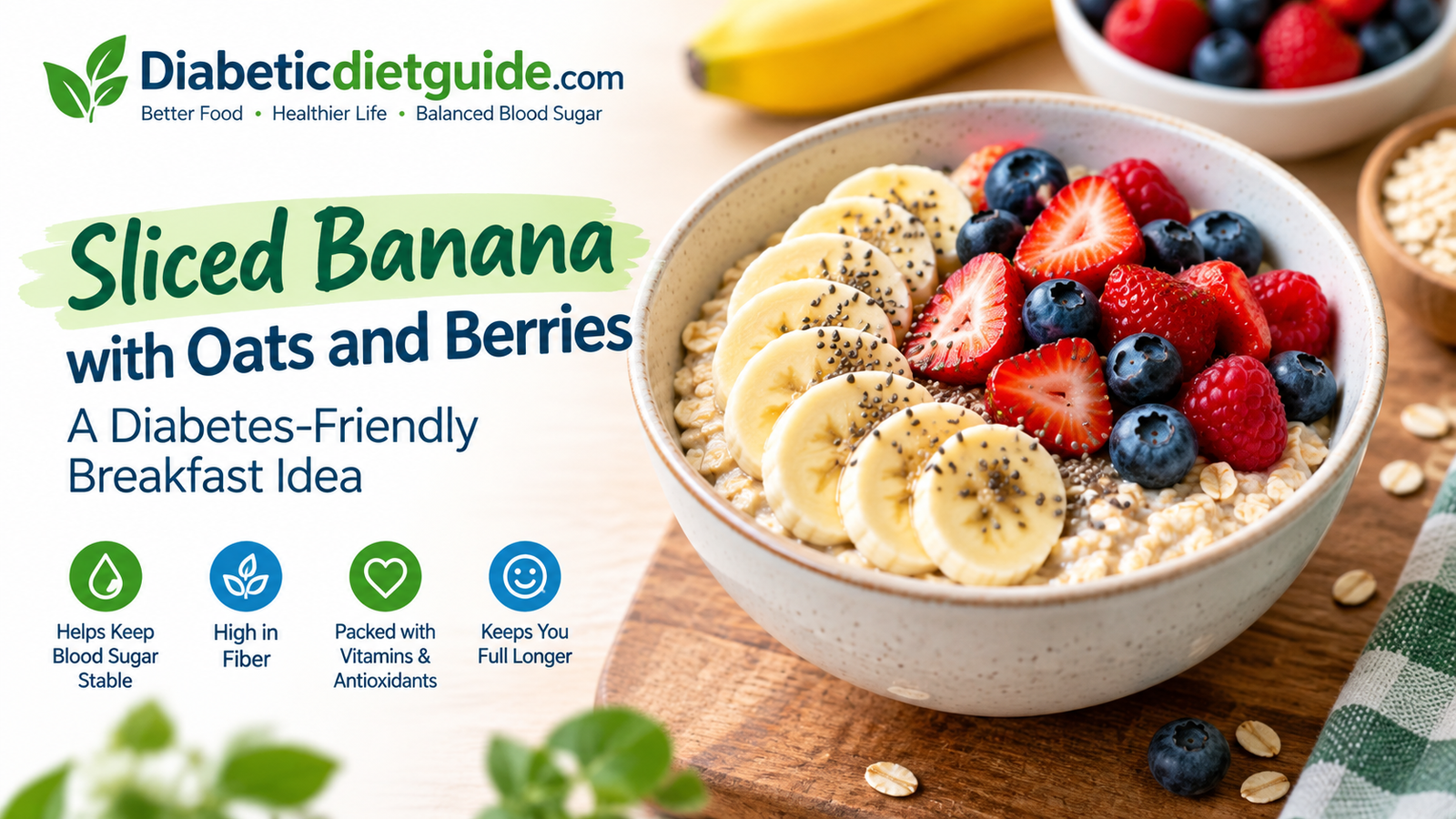
Table of Contents
- 1. What Really Happens to Blood Sugar When You Eat Fruit
- 2. Banana Nutrition Profile: Carbs, Fiber & Sugar
- 3. Ripeness Matters: Green vs. Ripe vs. Overripe
- 4. Portion Control: How Much Banana Is Safe?
- 5. Glycemic Index vs. Glycemic Load, Explained Simply
- 6. Bananas vs. Other Fruits: A Side-by-Side Look
- 7. Best Times of Day to Eat a Banana
- 8. Pairing Bananas With Protein and Fat
- 9. Type 1 vs. Type 2 Diabetes: Does It Change the Answer?
- 10. Potential Benefits: Potassium, Fiber & Resistant Starch
- 11. Who Should Be More Cautious With Bananas
- 12. Smart, Practical Ways to Eat Bananas With Diabetes
- FAQs
- Conclusion
If you’ve been told to “watch the fruit” since your diagnosis, bananas are probably the first thing that made you nervous. They’re sweet, soft, and carry a reputation as one of the higher-sugar fruits in the produce aisle. But the short answer is yes — most people with diabetes can eat bananas, and the real question isn’t whether they belong on your plate, it’s how much, when, and alongside what. This guide walks through the actual research on bananas and blood glucose, breaks down portion sizes that keep your numbers steady, and gives you realistic ways to enjoy this fruit without second-guessing every bite.
It helps to separate two very different questions that often get blended together: “Is a banana a healthy food?” and “Will a banana spike my blood sugar?” The answer to the first is almost always yes — bananas bring potassium, fiber, and a handful of vitamins that most eating patterns benefit from. The answer to the second is “it depends,” and it depends on specific, controllable factors rather than something inherent and unavoidable about the fruit itself. That distinction is the difference between fear-based food rules and an approach you can actually sustain for years. Throughout this guide, we’ll come back to four levers you control every time you reach for a banana: ripeness, portion size, timing, and what you eat alongside it. Master those four, and the question “can a diabetic eat bananas” stops being a yes-or-no debate and becomes a simple matter of personal calibration.
1. What Really Happens to Blood Sugar When You Eat Fruit
Every carbohydrate you eat — whether it comes from bread, rice, or a banana — eventually breaks down into glucose that enters your bloodstream. What differs between foods is how fast that glucose shows up and how much arrives at once. Fruit sits in an interesting middle ground: it contains natural sugar (mostly fructose and glucose), but it also comes packaged with fiber, water, and plant compounds that slow digestion compared to something like fruit juice or candy.
This is the core reason dietitians rarely put whole fruit in the same category as added sugar. A slice of cake and a banana might have a similar gram count of “sugar” on paper, but your body processes them very differently. The fiber in a banana forms a kind of physical barrier that slows how quickly your digestive enzymes reach the sugar molecules, which in turn slows the rise in blood glucose after you eat it.
That doesn’t mean bananas have zero effect on your blood sugar — they absolutely raise it, as any carbohydrate does. The goal isn’t to find a fruit that does nothing to your glucose levels; it’s to understand the size and speed of that rise so you can plan around it, the same way you would with a slice of bread or a cup of rice. Many readers building a broader eating pattern find it useful to look at a full 30-day low glycemic diet menu rather than evaluating single foods in isolation.
From a physiological standpoint, when glucose enters your bloodstream, your pancreas (in people without diabetes) or your remaining beta-cell function and any medication you take (in people with diabetes) works to move that glucose out of the blood and into your cells for energy or storage. In type 2 diabetes, insulin resistance means your cells don’t respond to insulin as efficiently, so glucose lingers in the bloodstream longer. This is precisely why the speed of a food’s sugar release matters so much: a slow, steady trickle of glucose gives your body’s insulin response time to keep pace, while a fast flood can outrun it and produce a sharper spike. Whole fruit, thanks to its fiber and water content, tends to fall on the “trickle” end of that spectrum compared to processed sugar sources, which is a meaningfully different physiological experience even when the total gram count of sugar looks similar on a label.
2. Banana Nutrition Profile: Carbs, Fiber & Sugar
A medium banana (roughly 118 grams, about 7 inches long) contains approximately 27 grams of carbohydrate, 14 grams of natural sugar, and 3.1 grams of fiber. It also delivers about 105 calories, 1.3 grams of protein, and a notable 422 mg of potassium, along with vitamin B6 and vitamin C.
Compare that to a slice of white bread (about 13–15 grams of carbohydrate with less than 1 gram of fiber), and you can see that a banana isn’t dramatically higher in usable carbohydrate than many staple foods already sitting in a diabetic meal plan. What sets it apart is the concentration of sugar relative to its size, which is why portioning is more important with bananas than with, say, leafy greens or berries.
| Nutrient (medium banana, ~118g) | Amount |
|---|---|
| Calories | ~105 kcal |
| Total Carbohydrate | ~27 g |
| Fiber | ~3.1 g |
| Natural Sugar | ~14 g |
| Protein | ~1.3 g |
| Potassium | ~422 mg |
| Vitamin B6 | ~0.4 mg (about 20% DV) |
If you’re tracking carbohydrate exchanges, a medium banana is generally counted as about 2 carb exchanges (roughly 15g each). That’s useful context whether you’re following a set meal plan or building your own, like the ones found in a weekly diabetic meal plan.
Beyond the carbohydrate numbers, it’s worth noting what else a banana contributes to your day. The roughly 0.4mg of vitamin B6 it supplies covers a meaningful share of the daily recommended intake, and B6 plays a supporting role in how your body metabolizes both carbohydrates and protein. Bananas also contain small amounts of magnesium and manganese, along with resistant starch and pectin — a soluble fiber also found in apples — which contributes to the feeling of fullness after eating one. None of these secondary nutrients cancel out the carbohydrate content, but they’re a useful reminder that “carb count” is only one column in a much larger nutritional spreadsheet, and it’s the column that matters most for blood sugar planning specifically, not for judging a food’s overall value.
3. Ripeness Matters: Green vs. Ripe vs. Overripe Bananas
One detail that surprises a lot of people: the ripeness of a banana changes its effect on blood sugar more than almost any other variable. A green, slightly underripe banana contains a meaningful amount of resistant starch — a type of starch your body digests more like fiber than sugar, since it resists breakdown in the small intestine. As a banana ripens and its skin turns from green to yellow to spotted brown, that resistant starch converts into simple sugars, which is exactly why an overripe banana tastes noticeably sweeter than a firm one.
In practical terms, this means a firmer, just-ripe banana (yellow with minimal spotting) will generally produce a gentler blood sugar response than a very soft, heavily spotted one. If you enjoy bananas often, choosing them slightly underripe and letting them soften just enough to eat comfortably is a small, free adjustment that can noticeably change your post-meal numbers.
Buying bananas in a range of ripeness is a simple habit that gives you more control day to day. Pick up one bunch that’s still slightly green at the stem and let it finish ripening on the counter over several days, rather than buying only fully yellow bunches that ripen further before you can eat them all. If you consistently end up with an overripe surplus, don’t toss it — very ripe, spotted bananas are excellent for baking or blending into smoothies alongside protein powder and ice, where the added protein and cold temperature both help offset the faster sugar release. Freezing overripe bananas (peeled, cut into chunks, in a sealed bag) also stops the ripening process entirely, so you always have a portion-controlled option ready for smoothies without waste.
4. Portion Control: How Much Banana Is Safe?
For most adults with type 2 diabetes who are otherwise managing their carbohydrate intake, half of a medium banana (about 13–14g of carbohydrate) is a reasonable single serving, especially when paired with protein or fat. A full medium banana can also fit into many meal plans, particularly at breakfast or around physical activity, when your body is more efficient at clearing glucose from the bloodstream.
Rather than a fixed rule, think in terms of your total carbohydrate budget for that meal. If your target is 45–60 grams of carbohydrate at a meal, a whole banana (about 27g) can occupy roughly half of that budget, leaving room for other carb sources like whole grains or dairy. This is the same logic used across structured plans, including a 1500-calorie diabetic menu or a 1800-calorie diabetic menu, where fruit is built into the day’s carbohydrate allotment rather than treated as an extra.
Smart Portion Habits
- Start with half a banana if you’re unsure how you respond
- Choose smaller “petite” bananas when available
- Slice and share a banana across two snacks instead of eating it whole at once
Portions to Watch
- Two or more bananas in one sitting
- Dried banana chips, which concentrate sugar and calories
- Banana-heavy smoothies with juice or added honey
A practical way to build this into your routine is to think of a banana the way you’d think of a slice of bread — as one identifiable “carb unit” rather than a free food. If you already count carbohydrates for insulin dosing or general tracking, weigh a banana without the peel once or twice to calibrate your eye for what a 15g-carb half-portion actually looks like on your plate. Most people find that after doing this a few times, they can eyeball portions accurately without needing a scale for every single banana going forward. This kind of calibration is especially useful if you’re working from a structured plan like a 2000-calorie diabetic menu, where every carbohydrate source needs to be accounted for to hit your daily targets.
5. Glycemic Index vs. Glycemic Load, Explained Simply
You’ve probably seen bananas described with a glycemic index (GI) number somewhere between 42 and 62, depending on ripeness — technically landing in the “low” to “medium” range. But GI alone can be misleading because it only measures how fast a fixed 50g of pure carbohydrate from that food raises blood sugar, regardless of how much of the food you’d realistically eat.
Glycemic load (GL) corrects for this by factoring in a normal serving size. A medium banana has a glycemic load of roughly 11–13, which falls in the “low to moderate” category — lower than a large baked potato, a bagel, or a can of soda, and comparable to a bowl of oatmeal. This is a big part of why nutrition professionals rarely tell people with diabetes to avoid bananas outright; the realistic glycemic load of a normal portion simply isn’t extreme.
| Food (typical serving) | Glycemic Load | Category |
|---|---|---|
| Medium banana | ~11–13 | Low–Moderate |
| White bagel | ~25 | High |
| Baked russet potato | ~18–26 | High |
| Cup of cooked oatmeal | ~9–13 | Low–Moderate |
| Can of regular soda | ~15–18 | High |
If you compare grains regularly, you may also find it useful to see how staples stack up in our breakdown of white rice vs. brown rice vs. quinoa for blood sugar.
The reason so many dietitians lean on glycemic load rather than glycemic index alone comes down to a simple flaw in how GI testing works: it standardizes every food to the same 50g carbohydrate reference, which sounds scientific but doesn’t reflect how people actually eat. Nobody eats 50g of pure carbohydrate from watermelon in one sitting — that would require eating several pounds of it — so watermelon’s high GI number overstates its real-world impact. Bananas happen to be a food where GI and GL tell a fairly similar story, but that’s not always the case, which is exactly why it’s worth checking both numbers, or better yet, skipping the lookup tables altogether and using your own glucose meter as the final word on how a specific portion affects you personally.
6. Bananas vs. Other Fruits: A Side-by-Side Look
Bananas often get singled out as “the sugary fruit,” but when you actually line them up against other common options, the picture is more nuanced. Berries tend to have less sugar and more fiber per serving, while tropical fruits like mango or pineapple can carry a similar or even higher sugar load in a typical serving.
| Fruit (100g serving) | Carbs | Fiber | Sugar | Est. GI |
|---|---|---|---|---|
| Banana | 23g | 2.6g | 12g | Low–Med |
| Apple (with skin) | 14g | 2.4g | 10g | Low |
| Blueberries | 14g | 2.4g | 10g | Low |
| Mango | 15g | 1.6g | 14g | Med |
| Watermelon | 8g | 0.4g | 6g | High |
| Grapes | 18g | 0.9g | 16g | Med |
Watermelon is a good example of a fruit with a high GI but a fairly low glycemic load in a normal serving, because it’s mostly water — we cover that nuance in detail in watermelon and diabetes: good or bad?. Berries, on the other hand, consistently rank as one of the gentlest fruit choices, and if you rotate between fresh and frozen options, our guide on fresh vs. frozen fruit for diabetics explains whether frozen changes the nutritional math.
What this comparison really shows is that no single fruit is universally “the best” or “the worst” choice — each has a different fiber-to-sugar ratio and a different realistic serving size. Bananas land in a very usable middle position: more filling and more nutrient-dense per calorie than watermelon, gentler on blood sugar than grapes or dried fruit, and more portable and shelf-stable than most berries, which is a big part of why they remain such a popular everyday snack even among people actively managing diabetes. Rather than ranking fruits into “safe” and “unsafe” columns, it’s more useful to think of them on a spectrum and rotate through several options across the week, which also happens to be better for overall nutrient variety than eating the same fruit daily.
7. Best Times of Day to Eat a Banana
Timing can matter almost as much as portion size. Many people find their blood sugar response to carbohydrates — bananas included — is more forgiving earlier in the day and around physical activity, when the body’s cells are more insulin-sensitive. Eating a banana as part of breakfast, or in the 30–60 minutes before or after exercise, often produces a smaller, shorter glucose spike than eating the same banana as a late-evening snack with no activity to follow.
This is partly why bananas show up so often in breakfast ideas for diabetes and pre- or post-workout snack lists, rather than in dinner-time recommendations. If you tend to eat later in the evening, it’s not that a banana becomes “off-limits” — it simply may be worth shrinking the portion or pairing it more deliberately with protein.
This time-of-day effect has a name in metabolic research: diurnal insulin sensitivity. In simple terms, cortisol and other hormones that naturally rise in the early morning can temporarily reduce insulin sensitivity right upon waking, which is one reason some people see a bigger response to breakfast carbohydrates than expected — a phenomenon sometimes called the “dawn phenomenon.” For most people, insulin sensitivity actually improves through the mid-morning and afternoon and tends to decline again later in the evening as activity winds down. This is a general pattern, not a universal rule, and it’s exactly why testing a banana at different times and logging the results is more useful than following a generic “eat fruit before noon” rule that may not match your own body’s rhythm.
8. Pairing Bananas With Protein and Fat
One of the simplest, most effective ways to blunt a banana’s impact on blood sugar is to never eat it entirely on its own. Protein and fat both slow gastric emptying — the rate at which food leaves your stomach — which in turn slows how quickly the sugar in the banana reaches your bloodstream.
Good pairing options include a tablespoon of natural nut butter, a serving of plain Greek yogurt, a small handful of nuts, or a scoop of unsweetened protein powder blended into a smoothie. Each of these adds staying power to the snack while flattening the glucose curve compared to eating the banana by itself.
Strong Pairings
- Half a banana + 1 tbsp natural peanut or almond butter
- Sliced banana + plain Greek yogurt + cinnamon
- Banana + a small handful of walnuts or almonds
- Banana blended into a protein smoothie (see our diabetic smoothie menu)
Pairings to Rethink
- Banana + white toast + jam (all fast carbs, no buffer)
- Banana blended with fruit juice or added syrup
- Fried banana desserts with sugar coating
The underlying mechanism is worth understanding, because it explains why the “pair carbs with protein or fat” rule works for almost any food, not just bananas. Fat slows the rate at which your stomach empties its contents into the small intestine, where most sugar absorption actually happens — this is called delayed gastric emptying. Protein has a smaller but similar slowing effect, and it also triggers the release of hormones that support a more gradual insulin response. Fiber, which bananas already contain some of, works through a related but distinct mechanism by physically thickening the contents of your gut and slowing enzyme access to the sugar molecules. Stack all three — fiber, protein, and fat — around a piece of fruit, and you get a meaningfully flatter, longer-lasting blood sugar curve than eating the fruit alone, even though the total carbohydrate content of the snack hasn’t changed at all.
9. Type 1 vs. Type 2 Diabetes: Does It Change the Answer?
The underlying principle is the same for both types — bananas can fit into a well-managed diet — but the practical approach differs slightly. People with type 1 diabetes who use insulin can often eat a full banana as long as it’s accurately counted into their carbohydrate dose, since rapid-acting insulin can be matched to the meal. The main variable to watch is the timing of the insulin dose relative to how quickly the banana’s carbohydrate is absorbed, which ripeness and pairing (covered in Sections 3 and 8) both influence.
For people with type 2 diabetes, especially those managing blood sugar primarily through diet, exercise, and oral medication rather than mealtime insulin, portion size and pairing tend to matter more, since there’s no flexible insulin dose to match against a larger carb load. In both cases, checking your own blood glucose response — rather than relying purely on general rules — remains the most reliable way to personalize your approach. If you’re newly navigating a diagnosis, our guide on signs, symptoms, and testing is a useful starting point.
Gestational diabetes adds another layer worth mentioning separately, since pregnancy hormones naturally increase insulin resistance regardless of prior diabetes history. Many pregnant women managing gestational diabetes are advised to be somewhat more conservative with fruit portions, particularly later in the day, and to prioritize pairing fruit with protein at every meal. Bananas aren’t off-limits during pregnancy, but the same principles of smaller portions, protein pairing, and personal glucose testing become even more important, since both a mother’s blood sugar control and fetal growth are being monitored closely. Readers navigating this specific situation may find our diabetic menu for pregnant women a useful companion resource.
10. Potential Benefits: Potassium, Fiber & Resistant Starch
It’s easy to focus only on the sugar content and miss what bananas actually contribute nutritionally. They’re one of the more accessible sources of potassium, a mineral involved in regulating blood pressure and supporting healthy nerve and muscle function — both relevant, since cardiovascular health is a major concern for many people managing diabetes.
The fiber content, while modest, contributes to the slower digestion discussed earlier and supports digestive regularity. And as covered in Section 3, less-ripe bananas offer resistant starch, which has been studied for its potential role in improving insulin sensitivity over time when included as part of a broader high-fiber eating pattern, similar to strategies used in a high-fiber diabetic meal plan.
Bananas also contain small amounts of dopamine and catechins, plant compounds with antioxidant properties, concentrated mostly in the peel and just underneath it — one more reason some people choose to blend the peel into smoothies, though this is entirely optional and mostly a matter of taste and texture tolerance. The vitamin B6 content mentioned earlier does double duty here as well, since B6 is directly involved in glycogen breakdown, the process your liver uses to release stored glucose between meals. None of these secondary compounds turn a banana into a therapeutic food for diabetes, but they add up to a nutrient package that’s considerably more useful than an equivalent amount of added sugar, which is the more relevant comparison than treating “sugar” as a single undifferentiated category.
11. Who Should Be More Cautious With Bananas
While bananas are safe for the vast majority of people with diabetes in reasonable portions, a few groups should be more deliberate:
- People with chronic kidney disease: Since diabetes is a leading cause of kidney complications, and bananas are high in potassium, anyone with reduced kidney function should follow their care team’s specific potassium guidance rather than general dietary advice. A renal diabetic meal plan typically limits high-potassium fruits like bananas.
- People with gastroparesis: Because bananas (especially less ripe ones) contain more resistant fiber, some people with delayed stomach emptying find they’re harder to digest comfortably.
- Anyone consistently seeing sharp post-meal spikes: If your glucose meter or CGM shows a large spike specifically after eating bananas, regardless of portion or pairing, that’s useful personal data — it doesn’t mean something is “wrong,” just that this particular food may need a smaller portion or a different time of day for you.
None of this means bananas are dangerous — it simply means the “who should be cautious” list is short and specific, not a blanket warning for everyone with diabetes.
One additional group worth a brief mention: people who experience gastrointestinal side effects from metformin or other diabetes medications sometimes find that high-fiber or resistant-starch foods, including less-ripe bananas, temporarily worsen bloating or discomfort while their digestive system adjusts. This is usually a short-term issue related to the medication rather than the banana itself, and it typically resolves as the body adapts. If it doesn’t, it’s worth mentioning to your prescriber rather than assuming fruit needs to be permanently restricted.
12. Smart, Practical Ways to Eat Bananas With Diabetes
Here are realistic, low-effort ways to keep bananas in your rotation without overthinking every serving:
- Slice half a banana over unsweetened Greek yogurt with a sprinkle of cinnamon and a few walnuts.
- Freeze banana slices and blend them into a protein smoothie instead of using more banana than a smoothie needs for sweetness.
- Use mashed ripe banana (in small amounts) to naturally sweeten oatmeal instead of added sugar.
- Pack half a banana with a small portion of natural almond butter as an afternoon snack.
- Add banana slices to a simple no-cook snack plate alongside cheese and nuts — see more ideas in our no-cook diabetic meals guide.
- If you’re building a full week of meals, our 7-day diabetic menu shows exactly where fruit like bananas fits into a balanced day.
The consistent theme across all of these: smaller portions, a protein or fat pairing, and awareness of ripeness — not avoidance.
Frequently Asked Questions
Can a diabetic eat a banana every day?
Many people with well-managed diabetes can eat a small to medium banana daily, especially when it’s counted into their overall carbohydrate budget and paired with protein or fat. The right frequency depends on your individual blood sugar response, so tracking your numbers after eating one is the most reliable way to confirm it works for you.
Is it better to eat a green banana or a ripe banana with diabetes?
A slightly underripe (firm, mostly yellow with minimal spotting) banana generally has a gentler effect on blood sugar than a very ripe, heavily spotted one, because riper bananas have converted more of their resistant starch into simple sugar.
How many carbs are in a banana?
A medium banana (about 118 grams) contains roughly 27 grams of total carbohydrate, including about 3 grams of fiber and 14 grams of natural sugar.
What’s the glycemic index of a banana?
Bananas generally fall between a GI of 42 and 62 depending on ripeness, placing them in the low-to-medium range rather than the high-GI category.
Are bananas better or worse than apples for blood sugar?
Apples tend to have slightly less sugar and a lower glycemic load per typical serving than bananas, but both are considered reasonable fruit choices for most people with diabetes when portioned appropriately.
Can bananas cause a blood sugar spike?
Any carbohydrate, including a banana, can raise blood sugar — the size of that rise depends on the portion eaten, the banana’s ripeness, what it’s paired with, and your individual insulin response.
Is half a banana a good snack for diabetics?
Yes — half a medium banana (around 13–14g of carbohydrate) paired with a source of protein or fat is a commonly recommended portion for a blood-sugar-friendly snack.
Do banana chips count the same as fresh bananas for diabetics?
No. Dried banana chips concentrate both sugar and calories into a much smaller volume, and many commercial versions are fried and coated in additional sugar, making them a significantly different food from fresh banana.
Can people with type 1 diabetes eat bananas?
Yes, as long as the carbohydrate content is accurately counted and matched with the appropriate insulin dose, the same way any other carbohydrate-containing food would be managed.
Are bananas safe for people with kidney disease and diabetes?
Bananas are high in potassium, so anyone with reduced kidney function should follow their care team’s specific guidance, since potassium restriction is often part of a renal diet.
What’s the best time of day to eat a banana with diabetes?
Morning, or around periods of physical activity, tends to produce a more moderate blood sugar response for most people, though individual results vary and are worth checking with your own glucose readings.
Can bananas help lower blood sugar over time?
Bananas aren’t a treatment for high blood sugar, but the fiber and resistant starch they contain — particularly in less-ripe bananas — can be part of a broader high-fiber eating pattern that supports more stable glucose levels over time.
Is a banana smoothie okay for diabetics?
A banana blended with unsweetened milk or yogurt and a source of protein can work well in moderation, but smoothies made with fruit juice, added honey, or multiple whole bananas tend to concentrate carbohydrate quickly and are easy to overdo compared to eating a banana whole.
Should diabetics avoid bananas entirely to be safe?
Avoiding bananas entirely isn’t necessary for most people with diabetes and can unnecessarily limit a nutrient-dense, affordable, and satisfying food; the more effective approach is adjusting portion size, ripeness, and pairing rather than full avoidance.
Conclusion: Bananas Don’t Have to Be Off the Table
The evidence doesn’t support treating bananas as a forbidden food for people with diabetes. What matters is portion size, ripeness, timing, and what you pair the banana with — the same variables that matter for nearly every carbohydrate-containing food in a diabetic diet. Start with a smaller, slightly firmer banana alongside a source of protein or fat, track how your own blood sugar responds, and adjust from there. That personalized feedback loop will tell you far more than any single rule ever could.
Ready to Build Bananas Into Your Routine the Right Way?
Track your response with confidence, portion smarter, and keep your favorite fruit on the menu.
Shop Diabetic-Friendly Essentials