Diabetic Starbucks Drinks: What to Order, What to Skip, and How to Customize
Smart picks, simple swaps, and ordering scripts that keep your coffee run blood-sugar friendly.
A morning coffee is a small ritual that many people with diabetes do not want to give up. The encouraging truth is that you do not have to. With a few informed swaps, Starbucks can be a perfectly workable stop. This guide walks through the best choices, the sneaky sugar traps, and the exact words to use at the counter.
What Makes a Starbucks Drink Diabetic-Friendly?
Walking into a coffee shop with diabetes can feel like crossing a minefield. The menu board is crowded with caramel, mocha and whipped cream, and the drinks that look the most harmless are often the ones that hit your bloodstream hardest. The good news: the base ingredients, espresso, coffee and tea, contain almost no carbohydrate. The trouble comes from what gets added.
A drink works well for most people with diabetes when it is low in added sugar, moderate in total carbohydrate, and paired with some protein or fat so glucose rises slowly. Many people aim for roughly 15 to 30 grams of carbohydrate for a drink, or less if the drink replaces a snack rather than a meal. Your own target depends on your medication, your care team’s guidance and how your body responds, so treat every number in this guide as an estimate and confirm it in the Starbucks app or on the nutrition page.
The Safest Starbucks Drinks for Blood Sugar
If you want zero guesswork, these are the closest thing to a free pass. They contain little to no carbohydrate in their plain form.
| Drink | Approx. carbs (grande) | Why it works |
|---|---|---|
| Pike Place or other brewed coffee | 0 g | Just coffee. Add a splash of cream if you like. |
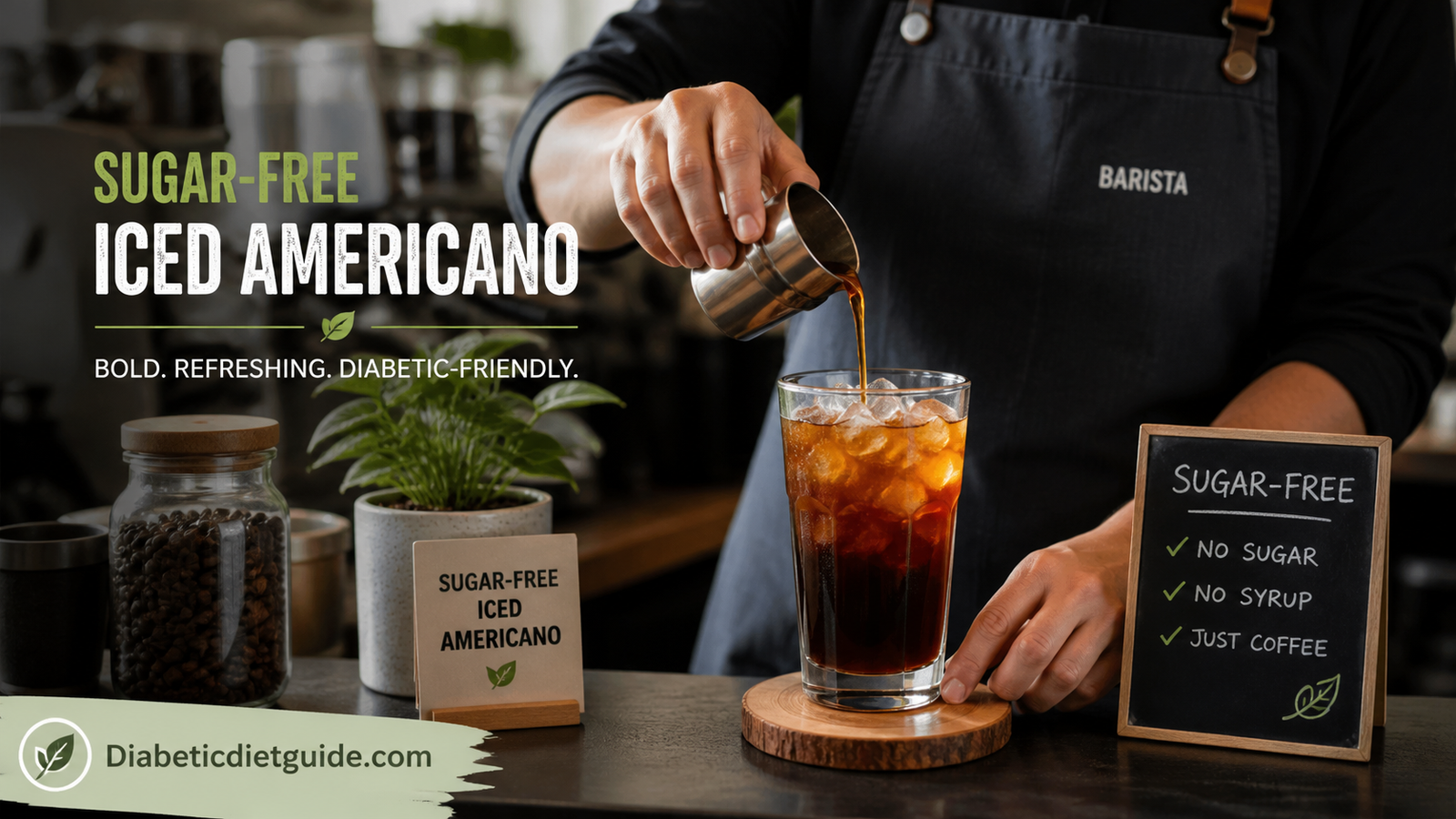
| Caffè Americano (hot or iced) | About 0 to 2 g | Espresso and water, with a bold flavor. |
| Cold brew, unsweetened | 0 g | Smooth and less bitter, so you may need less creamer. |
| Iced or hot tea, unsweetened | 0 g | Black, green or herbal; ask for no classic syrup. |
| Espresso shots | Under 1 g | Strong, small, and easy to dilute. |
Plain Americanos and brewed coffee are the staples for a reason. If black coffee feels too stark, a tablespoon or two of half-and-half adds richness for only a gram or so of carbohydrate. Many people find that fat slows the glucose curve, though it also adds calories, so keep an eye on portions if weight is part of your plan.
Lattes, Cappuccinos and Other Milk-Based Drinks
Milk is where things get nuanced. Cow’s milk contains lactose, a natural sugar, so a plain latte is never carb-free even with no syrup. A grande latte made with 2% milk typically lands around the high teens in grams of carbohydrate, which many people can fit into a meal plan. Cappuccinos and flat whites use less milk per drink, so they come in lower.
| Drink | Approx. carbs (grande) | Better move |
|---|---|---|
| Caffè Latte, 2% milk | About 17 to 19 g | Ask for fewer milk and an extra shot, or go short size. |
| Cappuccino | About 12 to 14 g | Foam-heavy, so less milk by volume. |
| Flat White | About 18 g | Smaller size keeps carbs near 12 g. |
| Caffè Misto | About 12 g | Half coffee, half steamed milk. |
| Latte with almond milk | About 5 to 8 g | Unsweetened plant milk drops carbs sharply. |
If you take cream in your coffee at home, our guide to the best coffee creamers for diabetes shows how to keep that habit consistent when you order out.
Choosing the Right Milk
Your milk choice can swing a drink by 10 grams of carbohydrate or more. Starbucks typically offers whole, 2%, nonfat, almond, soy, coconut and oat milk. Nutrition varies by region and recipe, so check the app before settling on a favorite.
Usually friendlier
- Almond milk: the lowest carbohydrate option on most menus
- Heavy cream splash: almost no carbs, high fat
- Unsweetened soy: more protein, steadier for some people
Watch closely
- Oat milk: higher in carbohydrate and quick to digest
- Nonfat milk: same lactose, less fat to slow it
- Sweetened coconut or flavored milks
Ask your barista whether the plant milk is sweetened. A few recipes include added sugar, which is the opposite of what you need.
Syrups, Sauces and the Sugar-Free Options
Each pump of classic syrup carries roughly 5 grams of sugar. A grande with four pumps therefore carries around 20 grams from syrup alone, before the milk is counted. Mocha and white mocha sauces are heavier still, and caramel drizzle adds more on top.
Many stores offer a sugar-free vanilla syrup sweetened with sucralose, and some locations carry other sugar-free flavors seasonally. Availability varies, so ask. If you prefer to compare sweeteners, our breakdown of stevia vs Splenda explains how each one behaves. Another trick is ordering one pump instead of four. Your taste buds adapt faster than you would expect.
Fast syrup math
- Grande default: usually 4 pumps. Ask for 1 or 2.
- Tall default: 3 pumps. Short: 2 pumps.
- Sauces (mocha, white mocha, caramel) are thicker and sweeter than syrups.
Drinks to Skip or Redesign
Some drinks are essentially dessert in a cup. A grande Caramel Frappuccino can contain around 50 to 60 grams of sugar, more than a standard can of soda. Seasonal lattes with sauces and whipped cream, hot chocolate, and chai lattes made from sweetened concentrate also tend to sit high.
| Drink | Typical sugar (grande) | Lower-sugar rebuild |
|---|---|---|
| Caramel Frappuccino | Roughly 50 to 60 g | Iced coffee, light ice, splash of cream, sugar-free syrup |
| Chai Tea Latte | Roughly 40 g | Brewed chai tea bag with steamed unsweetened milk |
| Seasonal sauce latte | Roughly 40 to 50 g | Latte, 1 pump sauce, extra cinnamon |
| Hot chocolate | Roughly 35 g | Decaf Americano with a dash of cocoa powder |
You do not have to give up the experience. You are simply rebuilding it with fewer sweeteners.
Iced Coffees, Cold Brew and Refreshers
Cold drinks are where hidden sugar shows up quietly. Iced coffee at many stores arrives pre-sweetened with classic syrup unless you ask otherwise, so say “unsweetened” every time. Cold brew and nitro cold brew are naturally smooth, and nitro’s creamy texture means you can often skip the sweetener entirely.
The Refreshers and fruit-based iced teas are marketed as light, but they rely on fruit juice concentrate and sugar. A grande can carry around 20 grams or more of sugar. If you want something fruity, an iced passion tango tea with no liquid cane sugar is usually a far better choice. Shaken iced teas also come sweetened by default, so be specific.
Tea Options That Keep Glucose Steady
Unsweetened tea is one of the easiest wins on the menu. Black, green, and herbal teas have effectively no carbohydrate. A steamed milk addition turns a tea bag into a gentle, cozy drink without a big sugar load, and a London Fog style drink works if you swap in a sugar-free syrup.
Green tea is a popular choice, and early research suggests some compounds may support metabolic health, though tea is not a treatment. Think of it as a good habit, not a medical strategy.
Food Pairings That Blunt a Glucose Spike
What you eat with the drink matters as much as the drink. A latte alone behaves differently from a latte with eggs. Starbucks food items vary, but protein-forward options generally treat your glucose more kindly than pastries.
- Egg bites: moderate carbohydrate and a protein anchor
- Plain Greek yogurt or protein box: steady and filling
- Unsalted nuts: a gentle snack, see our guide to diabetic snack ideas
- Oatmeal with nuts, no brown sugar: ask for toppings on the side
For a bigger plan around mornings, take a look at our diabetic breakfast menu and ideas for a high-protein diabetic menu.
How to Order Like a Pro
Baristas are happy to customize. Use a simple script: size, base, milk, sweetener amount, and any toppings. For example: “Grande iced Americano, a splash of almond milk, one pump of sugar-free vanilla, no classic syrup.”
The mobile app advantage
The app lets you adjust pumps, milk and toppings before you reach the counter and shows nutrition as you build. That makes it easier than shouting changes over a morning rush. For broader strategies away from home, read our eating out diabetic menu guide.
- Pick the smallest size that satisfies you.
- Skip whipped cream and drizzle by default.
- Ask for “no classic” on iced teas and coffees.
Testing, Timing and Individual Responses
Two people can drink the same latte and see very different readings. Fat, protein, caffeine, stress and sleep all play a role. Caffeine in particular can raise glucose in some people, while others see no change. If you use a continuous glucose monitor, try a new drink on a calm day and watch the curve for two to three hours.
Take notes. After a few weeks you will know which drinks are your safe regulars and which ones deserve occasional status. If you take insulin or medication that affects dosing, ask your care team how to handle beverage carbohydrate. Our overview of foods that lower blood sugar can support the bigger picture.
Making Starbucks-Style Drinks at Home
Home versions give you total control. Brew strong coffee or cold brew concentrate, froth unsweetened almond or soy milk, and use a sugar-free syrup or a dash of cinnamon and vanilla extract. A small milk frother pays for itself within a month if you buy daily.
- Iced vanilla latte: espresso, ice, unsweetened almond milk, sugar-free vanilla
- Cinnamon cold brew: cold brew, heavy cream splash, cinnamon
- Protein coffee: cold brew with a low-sugar shake, see our picks for protein shakes
If you like blended drinks, our diabetic smoothie menu has options with far less sugar than a Frappuccino.
Special Situations: Prediabetes, Energy Drinks and Meal Replacements
If you have prediabetes, the same rules apply, and starting these habits now can be a real advantage. Our menu for prediabetes shows how to build meals around them. For people who lean on caffeine, compare caffeinated options in our review of energy drinks for diabetics.
Some people also rely on nutrition shakes in a pinch. If that is you, see Glucerna vs Boost. Neither replaces a balanced plan, but they can be useful during a busy day.
Pros of ordering out
- Customizable and convenient
- Nutrition info published
- Plenty of zero-carb bases
Cons
- Hidden sugars in defaults
- Recipes vary by region
- Costs add up
Frequently Asked Questions
Can diabetics drink Starbucks coffee?
Yes. Plain brewed coffee, Americanos and cold brew contain almost no carbohydrate. Keep syrups and sauces limited.
What is the lowest sugar Starbucks drink?
Black brewed coffee, espresso, Americano, and unsweetened tea are essentially sugar-free.
Is a Starbucks latte okay for diabetics?
Often yes, in moderation. A grande made with 2% milk has roughly high-teen grams of carbohydrate from lactose. Almond milk lowers that.
Are Frappuccinos safe for diabetics?
They are usually very high in sugar, so most people save them for rare occasions or choose a rebuilt alternative.
Does Starbucks have sugar-free syrup?
Many locations stock sugar-free vanilla. Availability varies, so ask your barista.
What milk is best for blood sugar?
Unsweetened almond or soy milk is typically the lowest-carb choice. Oat milk tends to be higher.
Are Starbucks Refreshers good for diabetes?
Not usually. They contain added sugar and fruit concentrate, so unsweetened iced tea is a safer choice.
Can I order sugar-free iced coffee?
Yes. Ask for it unsweetened or with no classic syrup, since many iced coffees come pre-sweetened.
Does caffeine affect blood sugar?
It can in some people. Monitoring your own readings is the best way to find out.
How many pumps of syrup are in a grande?
Typically four pumps. You can ask for one or two, or switch to a sugar-free syrup.
Should I check nutrition before ordering?
Yes. The app and website list current nutrition, and recipes can differ by region.
Is it okay to have Starbucks every day?
Many people do, with low-carb choices. Check with your care team about what suits your plan.
Conclusion
Starbucks and diabetes can coexist. Lean on unsweetened coffee and tea, choose your milk on purpose, cut the pumps, and pair your drink with protein. Check nutrition in the app, track how your body responds, and keep your care team in the loop. Small customizations add up to big differences in your numbers.
This article is for general education and is not medical advice. Nutrition values are approximate and vary by location and recipe.