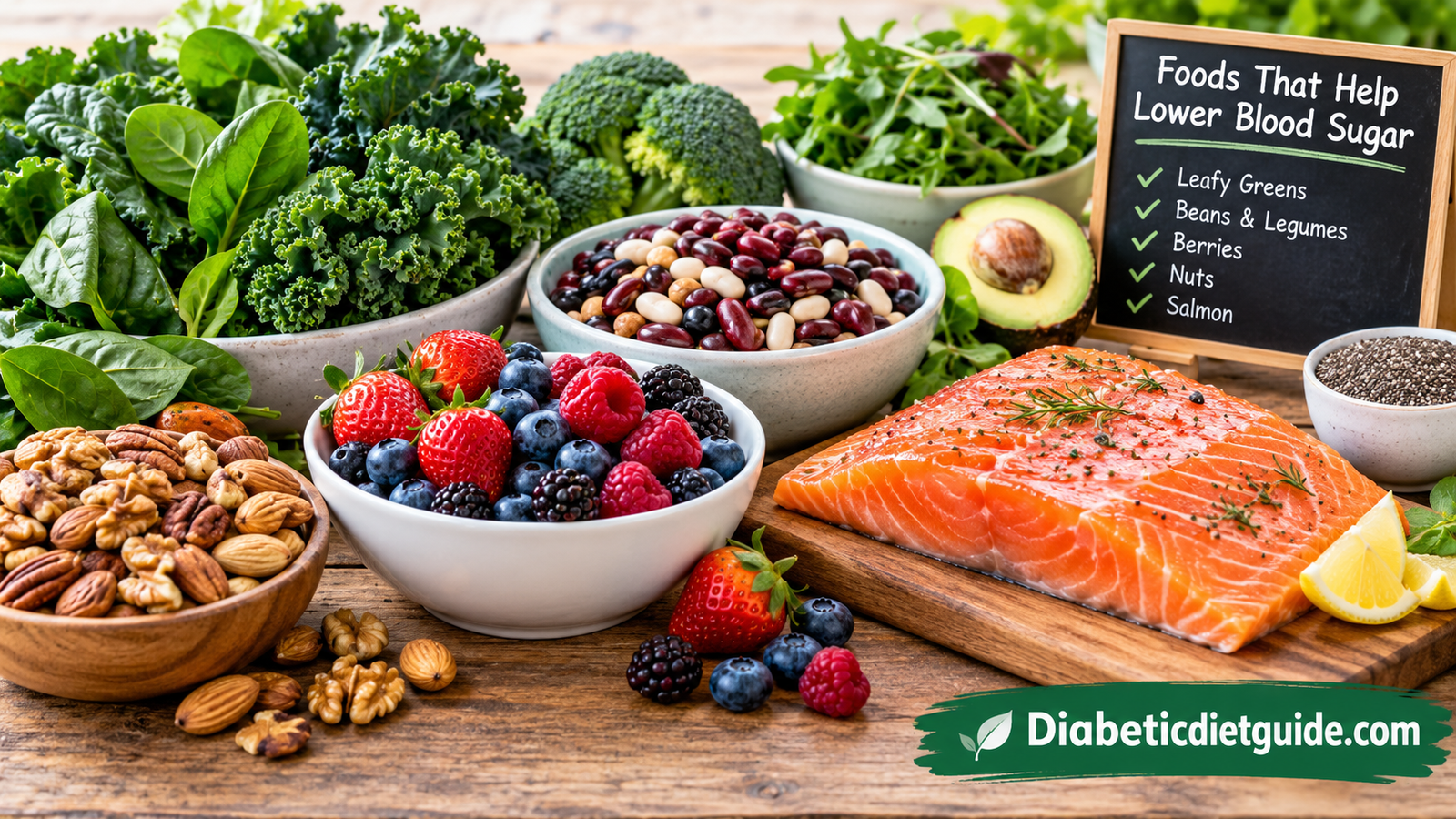
Foods That Lower Blood Sugar: The Complete, Practical Guide to Eating for Steadier Glucose
Which foods actually help keep glucose steady, why they work, and how to put them on your plate without turning every meal into a math problem.
Ask ten people what lowers blood sugar and you will probably get ten different answers: cinnamon, apple cider vinegar, bitter melon, a mysterious tea from a cousin’s neighbor. Some of those ideas have a thread of truth. Most are a distraction from something far simpler. The foods that do the most for your glucose are ordinary, affordable and already sitting in the produce aisle, the bean section and the freezer case.
Here is the honest framing before we begin. No single food “cures” high blood sugar, and nothing on your plate replaces medication when medication is needed. What food can do is change the shape of your glucose curve. A meal built from fiber-rich plants, quality protein and healthy fats produces a gentle rise and a slow, steady fall. A meal built from refined starch and sugar produces a sharp spike and an equally sharp crash that leaves you hungry again in two hours. Over weeks and months, those curves add up to very different numbers on a lab report.
In this guide we will walk through the foods with the strongest track record for supporting healthy blood sugar, explain the mechanism behind each so you can make your own good decisions, and show you how to combine them into meals you will actually enjoy. We will also be straight about where the hype outruns the evidence. You will find comparison tables, pros and cons, shopping ideas and a full day of sample eating along the way.
How Food Moves Your Blood Sugar (and What “Lowering” Really Means)
When you eat, your digestive system breaks carbohydrates down into glucose, which enters the bloodstream. The pancreas releases insulin, and insulin acts like a key that lets glucose move out of the blood and into muscle, liver and fat cells. In type 2 diabetes and prediabetes the key fits poorly, a state called insulin resistance, so glucose lingers in the blood longer than it should. If you want a deeper look at that process and how eating patterns can ease it, our insulin resistance diet plan goes into the details.
So when we talk about “foods that lower blood sugar,” we usually mean one of three things. Some foods have a low glycemic impact, meaning they barely raise glucose to begin with. Some slow the absorption of other foods eaten alongside them, flattening the curve. And a smaller group may improve insulin sensitivity over time, helping your body clear glucose more efficiently. The best meals use all three strategies at once.
Glycemic index versus glycemic load
The glycemic index (GI) ranks carbohydrate foods from 0 to 100 based on how quickly they raise blood glucose compared with pure glucose. Foods scoring 55 or below are considered low, 56 to 69 medium, and 70 or above high. It is a helpful compass, but it has a blind spot: it does not account for how much of the food you actually eat. Watermelon has a high GI, yet a normal slice contains so little carbohydrate that its real-world effect is modest. Glycemic load (GL) fixes this by multiplying the GI by the grams of carbohydrate in a serving, which is why many dietitians treat GL as the more realistic number.
| Food (typical serving) | Approx. GI | Approx. GL | Impact on glucose |
|---|---|---|---|
| Lentils, cooked (1/2 cup) | Low (about 30) | Low | Very gentle rise |
| Chickpeas, cooked (1/2 cup) | Low (about 28) | Low | Very gentle rise |
| Steel-cut oats, cooked (3/4 cup) | Low to medium | Low to medium | Gradual, sustained |
| Apple, medium | Low (about 36) | Low | Gentle rise |
| Brown rice, cooked (1/2 cup) | Medium (about 68) | Medium | Moderate rise |
| White bread, 1 slice | High (about 75) | Medium | Quick rise |
| Russet potato, baked | High (80 or more) | High | Sharp rise |
| Sweetened soda, 12 oz | High (about 63 or more) | High | Fast, large spike |
These numbers are approximations. Individual responses vary based on how food is cooked, how ripe it is, what it is eaten with and your own physiology. That last part is important: two people can eat the identical bowl of oatmeal and see different results. If you use a glucose meter or continuous monitor, your own data beats any chart.
The four levers that flatten a glucose curve
- FiberSoluble fiber forms a gel in the gut that slows sugar absorption.
- ProteinTriggers satiety hormones and slows stomach emptying.
- Healthy fatDelays digestion so carbohydrate enters the blood more slowly.
- Acid and structureVinegar, intact grains and cooled starches all lower the glucose response.
Keep these four levers in mind as you read. Nearly every food in this guide earns its place by pulling at least one of them. If you like having a structured path to follow, the 30-day low glycemic diet menu shows how these principles translate into a full month of meals.
A reliable glucose meter and test strips turn guesswork into personal data you can act on.
Non-Starchy Vegetables: The Foundation of Every Blood Sugar Friendly Plate
If you only change one thing about your eating, fill half your plate with non-starchy vegetables. Leafy greens, broccoli, cauliflower, peppers, zucchini, mushrooms, asparagus, green beans, cucumbers, tomatoes and cabbage contain very little digestible carbohydrate, plenty of fiber and a remarkable amount of volume for the calories. A full cup of raw spinach contains roughly one gram of net carbohydrate. You could eat a mixing bowl of it and barely nudge your meter.
The benefit goes beyond what these vegetables lack. Their bulk fills the stomach, which makes you less likely to overeat the starchy items next to them. The fiber slows digestion of everything else on the plate. And they supply magnesium, potassium and polyphenols, nutrients that are frequently low in people with insulin resistance. Some research suggests that diets rich in leafy green vegetables are associated with a lower risk of developing type 2 diabetes, although association is not proof of cause.
The standouts worth building meals around
- Spinach, kale, Swiss chard and collards: excellent sources of magnesium, a mineral involved in how your cells respond to insulin. Wilt them into eggs, soups and stir-fries.
- Broccoli and other cruciferous vegetables: broccoli, Brussels sprouts, cabbage and cauliflower contain sulforaphane, a compound that has shown interesting effects on glucose production in the liver in early studies.
- Okra: its gel-like mucilage slows absorption, and it is a staple in many traditional diets for exactly that reason.
- Peppers, tomatoes and zucchini: bright, versatile and easy to roast or grill.
- Mushrooms: a savory, meaty substitute that adds umami without carbohydrates.
Cooking tips that keep vegetables appealing
Plain steamed vegetables are a fast track to giving up. Roast them at high heat with olive oil until the edges caramelize. Grill them. Shave raw ones into salads. Toss them with garlic, lemon, chili flakes or a spoonful of tahini. For ready-made inspiration, browse our collection of diabetic salad recipes, or lean on no-cook diabetic meals when you are short on time. Crispy roasted vegetables from the oven or an air fryer diabetic recipe can even satisfy a craving for something crunchy without the breading or deep-frying.
Why they work
- Minimal effect on glucose
- High fiber and water for fullness
- Rich in magnesium, potassium and antioxidants
- Inexpensive, especially frozen
Watch-outs
- Creamy sauces and breading add hidden carbs
- Large raw portions can bother sensitive stomachs
- Starchy lookalikes (corn, peas, potatoes) count as carbohydrate
One practical trick: eat the vegetables first. A growing body of research on food order suggests that starting a meal with fiber and protein before the carbohydrates can reduce the post-meal glucose rise. We will return to that in the section on meal strategy.
A good spiralizer or sheet pan makes zucchini noodles and roasted vegetables almost effortless.
Beans, Lentils and Chickpeas: Carbohydrates That Behave Like Medicine
Legumes are one of the most reliably helpful foods for blood sugar, and they are also among the most overlooked. They do contain carbohydrate, so they are not “free” the way spinach is. But that carbohydrate arrives packaged with a huge amount of soluble fiber, resistant starch and plant protein. The result is a food that is digested slowly and raises glucose far less than its carbohydrate count would suggest.
Clinical trials of low glycemic index diets that emphasize legumes have repeatedly shown modest improvements in long-term glucose markers such as HbA1c compared with other approaches. Legumes also have what researchers call the “second meal effect”: eating lentils at lunch can lower your glucose response to dinner, apparently because fermentation of their fiber in the gut produces short-chain fatty acids that improve how the body handles the next meal.
How different legumes compare
| Legume (1/2 cup cooked) | Fiber | Protein | Best uses |
|---|---|---|---|
| Lentils (green, brown, red) | About 8 g | About 9 g | Soups, curries, salads, dal |
| Chickpeas | About 6 g | About 7 g | Roasted snacks, hummus, stews |
| Black beans | About 7 g | About 8 g | Tacos, bowls, soups |
| Kidney beans | About 6 g | About 8 g | Chili, rice dishes, salads |
| Black-eyed peas | About 6 g | About 6 g | Stews, sides, salads |
Practical ways to eat more of them
You do not need to cook dried beans from scratch, although doing so saves money. Canned beans are fine; just rinse them well, which removes up to 40 percent of the sodium, or buy no-salt-added versions. Start with a small portion if beans upset your digestion, and increase gradually so your gut bacteria can adapt.
- Swap half the rice or pasta in a dish for lentils or chickpeas.
- Add a scoop of black beans to your morning eggs.
- Blend white beans into soups for creaminess without cream.
- Roast chickpeas with paprika for a crunchy snack that replaces chips.
- Make a pot of dal, as in many traditional Indian meals. Our Indian diabetic diet chart shows how lentils anchor the cuisine, and the Mexican diabetic food recipes make excellent use of pinto and black beans.
If you are aiming for 25 to 35 grams of fiber a day, which is a common target, legumes are the quickest way to get there. A structured high fiber diabetic meal plan can show you how it looks across a full day.
Dried lentils, no-salt-added canned beans and a pressure cooker make legumes a weeknight habit.
Whole Grains and Smart Starches: Choosing Carbohydrates That Cooperate
Carbohydrates are not the enemy, and for most people living with diabetes, cutting them to nothing is neither necessary nor sustainable. The goal is to choose carbohydrates that arrive slowly. That means intact, minimally processed grains over refined flour, and sensible portions over bottomless bowls.
Processing matters enormously. Steel-cut oats and rolled oats keep their structure and contain beta-glucan, a soluble fiber with some of the best evidence for lowering both post-meal glucose and cholesterol. Instant oats, finely ground into powder, digest much faster. The same logic applies to bread: whole-kernel and sprouted breads digest more slowly than soft white sandwich loaves, even when the nutrition labels look similar.
Grains and starches ranked by how gently they behave
- BarleyOne of the lowest GI grains thanks to its beta-glucan content.
- Steel-cut oatsChewy, filling and slow to digest.
- QuinoaA seed with complete protein; see the truth about this super grain.
- Bulgur and farroCracked or intact wheat with plenty of fiber.
- Sweet potato (with skin)Lower GI than white potato when boiled, and rich in fiber.
- Brown and wild riceBetter than white, but portions still matter.
The rice question
Rice deserves special attention because it is the daily staple for billions of people. White rice has a high glycemic index, brown rice a medium one, and the difference is real but smaller than marketing implies. Cooling cooked rice, potatoes or pasta in the refrigerator and then reheating them increases resistant starch, which resists digestion and can modestly reduce the glucose rise. Pairing rice with beans, vegetables and a protein matters more than which color of grain you pick. We dug into the numbers in our comparison of white rice, brown rice and quinoa for blood sugar.
Breads, cereals and crackers
This is where labels earn their keep. Look for a whole grain as the first ingredient, at least three grams of fiber per serving, and minimal added sugar. Our guides to the best bread for diabetics, the best cereal for diabetics and the best crackers for diabetics do the label-reading for you. If mornings are your hardest meal, our breakfast ideas for diabetes offer plenty of alternatives to the sugary default.
Benefits
- Fiber and beta-glucan slow absorption
- Sustained energy and fullness
- Support heart health and cholesterol
Cautions
- Still carbohydrate; portions matter
- “Multigrain” does not mean whole grain
- Flavored instant oatmeal packets are often loaded with sugar
Steel-cut oats and rolled oats are inexpensive and versatile bases for blood sugar friendly breakfasts.
Nuts, Seeds and Nut Butters: Small Handfuls, Big Glucose Payoff
A handful of nuts is one of the few snacks that raises blood sugar almost not at all. They are rich in unsaturated fat, protein, fiber and magnesium, and studies of nut consumption in people with type 2 diabetes have found modest improvements in fasting glucose and long-term glucose control. Even better, nuts seem to blunt the glucose response of the meal they are eaten with. Adding almonds to a carbohydrate-rich breakfast, for example, has been shown to lower the after-meal rise compared with the same breakfast without them.
Nuts and seeds worth keeping on hand
| Option (1 oz / small handful) | Net carbs | Why it helps |
|---|---|---|
| Almonds | About 3 g | High in magnesium and vitamin E; consistently studied for glucose control |
| Walnuts | About 2 g | Plant omega-3 fats that support heart health |
| Pistachios | About 5 g | Shelling slows eating; shown to lower post-meal glucose in studies |
| Pecans | About 1 g | Very low carbohydrate, rich in monounsaturated fat |
| Chia seeds (1 tbsp) | Under 1 g | Forms a gel that slows digestion; about 4 g fiber |
| Ground flaxseed (1 tbsp) | Under 1 g | Lignans and soluble fiber; stir into oatmeal or yogurt |
| Pumpkin seeds | About 2 g | Excellent magnesium and zinc source |
Our roundup of the 5 best nuts for diabetics compares them in more detail, including how to pick unsalted, dry-roasted or raw versions. And when you want something spreadable, the best peanut butter for diabetics list highlights brands without added sugar or hydrogenated oils.
Portion is the whole game
Nuts are calorie-dense. A one-ounce serving, about a small handful or two tablespoons of nut butter, delivers roughly 160 to 200 calories. That is perfectly reasonable as a snack or meal topper, but a bag eaten mindlessly in front of the television can quietly add several hundred calories, which works against weight management goals that also improve glucose. Pre-portion them into small containers. For more combinations that satisfy between meals, check our list of diabetic snack ideas.
- Pair apple slices with almond butter for sweet-and-protein balance.
- Sprinkle chia or hemp seeds over yogurt or salads.
- Use ground almonds or walnuts as a crunchy coating for baked fish or chicken.
- Choose nut butters with one or two ingredients: nuts and maybe salt.
Portioned almonds, pistachios and walnuts are the easiest grab-and-go option for steady energy.
Fatty Fish, Eggs and Lean Protein: Anchors for Steady Energy
Protein has almost no direct effect on blood glucose when eaten alone, and it makes meals far more satisfying. When protein accompanies carbohydrates, it slows the rate at which the stomach empties and prompts the release of gut hormones, such as GLP-1, that help regulate insulin and appetite. This is the same hormone pathway that modern diabetes and weight-loss medications mimic, which is a good reminder that food has real physiological effects.
Fatty fish
Salmon, sardines, mackerel, trout and herring supply long-chain omega-3 fatty acids, which are linked with lower triglycerides and a healthier cardiovascular profile. Because people with diabetes face a higher risk of heart disease, this is not a minor bonus. Aim for two servings a week of baked, grilled or poached fish. Canned salmon and sardines are inexpensive, shelf-stable and perfect on top of salads or whole-grain crackers.
Eggs
Eggs are cheap, rich in high-quality protein and have a negligible effect on glucose. The old worry about dietary cholesterol has softened considerably for most people, although some research suggests people with diabetes should be a bit more moderate. We cover the details in how many eggs a diabetic can eat in a day.
Poultry, tofu, tempeh and other lean options
Skinless chicken or turkey, tofu, tempeh, edamame and low-fat cottage cheese all supply protein without much saturated fat. Prefer unprocessed forms over deli meats, bacon and sausage, which are high in sodium and, in the case of processed red meat, associated with a higher risk of type 2 diabetes in large observational studies. If you want to build more of your day around these foods, see our high protein diabetic menu and the broader heart healthy diabetic diet guide.
What about protein shakes?
A quality shake can be a useful tool when appetite is low or time is short, but whole foods should still lead. Look for at least 15 grams of protein, minimal added sugar and a short ingredient list. We reviewed popular options in our guide to the best protein shakes for diabetes.
Strengths
- Minimal direct glucose impact
- Boosts fullness and preserves muscle
- Omega-3s from fish protect the heart
Cautions
- Breaded or fried versions add refined carbs
- Processed meats are high in sodium
- Very high protein intake may not suit people with kidney disease
Canned wild salmon and sardines make a fast, glucose-friendly lunch with no cooking at all.
Fruit That Plays Nicely With Blood Sugar
Fruit has a complicated reputation among people managing diabetes, and it is largely undeserved. Yes, fruit contains natural sugar. But it also contains fiber, water, vitamins and polyphenols, and observational research links eating whole fruit with a lower risk of type 2 diabetes. The key words are whole and portion. Whole fruit is a very different thing from fruit juice, which strips out the fiber and delivers sugar quickly.
Best choices
- BerriesStrawberries, blueberries, raspberries and blackberries are lowest in sugar and highest in fiber and anthocyanins.
- Apples and pearsEaten with the skin, their pectin and polyphenols keep the glycemic response low.
- Cherries and plumsLow GI and rich in antioxidants.
- CitrusGrapefruit and oranges are surprisingly gentle when eaten whole; see can a diabetic eat oranges.
- Peaches and kiwiModerate in carbs, rich in vitamin C.
- Avocado and tomatoTechnically fruits and nearly carbohydrate-free.
The ones that raise questions
Bananas, watermelon, mango, pineapple and dried fruit tend to raise glucose faster, mostly because of concentrated sugars or higher glycemic index. That does not mean off-limits. A small, slightly green banana with peanut butter is a reasonable snack; we walk through the nuances in can a diabetic eat bananas. Likewise, watermelon and diabetes is a good example of why glycemic load tells a fuller story than glycemic index. Dried fruit packs sugar into a tiny volume, so a quarter cup is often the sensible limit.
Fresh versus frozen
Frozen fruit is picked ripe and frozen quickly, preserving most nutrients and fiber, and it is often cheaper. Avoid frozen packages with added sugar or syrup. Our comparison of fresh vs frozen fruit for diabetics details when each one wins. Frozen berries blended into a diabetic-friendly smoothie with Greek yogurt, a spoonful of chia and a handful of spinach make a fast breakfast that behaves.
Simple fruit rules
- Eat fruit whole, not juiced.
- Pair it with protein or fat: berries with yogurt, apple with cheese or nut butter.
- Keep portions to roughly the size of a tennis ball, or one cup of berries.
- Spread fruit across the day rather than eating several servings at once.
Unsweetened frozen berry blends are an affordable way to enjoy fruit year-round without the sugar spike.
Yogurt, Kefir and Fermented Foods: Gut-Friendly Allies
Your gut microbiome plays a role in how you respond to food, and while the science is still maturing, fermented foods are among the more promising everyday additions. Several large analyses have found that regular yogurt consumption is associated with a lower risk of developing type 2 diabetes. The protein in dairy slows digestion and stimulates insulin release appropriately, and live cultures may support a healthier gut environment.
Choosing yogurt wisely
The yogurt aisle is a minefield. Many “fruit on the bottom” and flavored cups contain as much sugar as a candy bar. Choose plain, unsweetened Greek or Icelandic-style yogurt, which has roughly twice the protein of regular yogurt and fewer carbohydrates. Add your own cinnamon, berries, nuts or seeds. Our guide to the 5 best yogurt for diabetes narrows down the brands worth buying.
| Option (3/4 to 1 cup) | Typical carbs | Typical protein | Verdict |
|---|---|---|---|
| Plain Greek yogurt, unsweetened | 6 to 9 g | 15 to 20 g | Excellent everyday choice |
| Plain Icelandic skyr | 6 to 8 g | 17 to 20 g | Excellent, very thick |
| Plain kefir, unsweetened | 10 to 12 g | 8 to 11 g | Good, drinkable probiotic |
| Flavored low-fat yogurt | 20 to 30 g | 5 to 8 g | Mostly added sugar; limit |
| Sweetened plant-based yogurt | 15 to 25 g | 1 to 5 g | Check labels carefully |
Other fermented foods
Sauerkraut, kimchi, miso, tempeh and unsweetened kombucha bring tangy flavor and live cultures. Vinegar-based pickles contribute acetic acid, which we will discuss shortly. Watch sodium: kimchi, miso and sauerkraut can be high, which matters for anyone also managing blood pressure. Our low sodium diabetic meal plan shows how to keep salt under control while still enjoying bold flavors.
Coffee lovers should know that what you add matters more than the coffee itself. Sweetened creamers can add 5 to 10 grams of sugar per tablespoon or two. See our recommendations for the best coffee creamer for diabetes.
Plain Greek yogurt, kefir and fermented vegetables pair well with berries, seeds and savory meals.
Olive Oil, Avocado and Healthy Fats: Slowing the Curve Without Spiking It
For decades, fat was treated as the villain, and many people with diabetes swapped it for refined carbohydrates, which was exactly the wrong trade. Unsaturated fats have no direct effect on blood glucose, they slow stomach emptying and they improve the quality of the meal. Mediterranean-style eating, built around olive oil, vegetables, legumes, fish and nuts, has some of the strongest evidence of any dietary pattern for both blood sugar control and heart protection. In one well-known Spanish trial, a Mediterranean diet supplemented with olive oil reduced the incidence of type 2 diabetes in older adults at high cardiovascular risk.
Fats to favor
- Extra-virgin olive oil: use it for dressings, drizzling and moderate-heat cooking. It contains polyphenols that may reduce inflammation.
- Avocado: a half provides several grams of fiber and monounsaturated fat with very little carbohydrate. Add it to eggs, salads or whole-grain toast.
- Olives: a salty, satisfying snack; watch sodium.
- Tahini and nut oils: tahini whisked with lemon makes a dressing that coats vegetables beautifully.
- Fatty fish and walnuts: a double benefit, as both fat and protein sources.
Fats to limit
Saturated fat from fatty cuts of meat, butter, cream and many baked goods, along with industrially produced trans fats, can worsen insulin resistance and raise LDL cholesterol. You do not need to eliminate saturated fat entirely, but swapping some of it for unsaturated fat is one of the most evidence-backed shifts you can make. If cholesterol is a concern too, take a look at our diabetic menu for high cholesterol and the heart healthy diabetic menu.
A note on low-carb and keto approaches
Some people find that very low-carbohydrate eating lowers glucose quickly, and short-term studies support that. It is not right for everyone, particularly if you take insulin or sulfonylureas, which can cause low blood sugar when carbohydrates drop suddenly. If you are curious, read keto diabetic recipes and meal planning and discuss it with your doctor first. Most people do better with a moderate approach built on fiber-rich carbohydrates than with an all-or-nothing one.
Why they help
- No direct glucose rise
- Slow digestion and boost satisfaction
- Protect the heart
Watch-outs
- Calorie-dense; measure oils
- Fried food adds refined carbs and unhealthy fats
- Coconut oil and butter are high in saturated fat
A good cold-pressed extra-virgin olive oil turns plain vegetables and beans into something you crave.
Vinegar, Cinnamon, Herbs and Drinks: Helpful Extras and Honest Limits
This is the category where marketing runs wild, so let’s keep our feet on the ground. A few small additions to your meals have real if modest evidence behind them. Others deserve a polite shrug.
Vinegar
Several small trials show that about one to two tablespoons of vinegar, diluted in water or used in a salad dressing before or with a carbohydrate-rich meal, can lower the post-meal glucose rise. Acetic acid appears to slow starch digestion and improve muscle uptake of glucose. The effect is modest, and vinegar is not a replacement for medication. It can also irritate the throat and erode tooth enamel, so always dilute it and rinse your mouth afterward. People with gastroparesis, a common diabetes complication, should avoid it unless a doctor approves.
Cinnamon
Cinnamon is the most famous “blood sugar spice,” but the research is mixed. Some studies show small reductions in fasting glucose, others show nothing. If you enjoy it, there is no harm in sprinkling it on yogurt, oatmeal or coffee. Cassia cinnamon, the common supermarket type, contains coumarin, which can stress the liver in large daily amounts, so Ceylon cinnamon is a safer choice for frequent use. Treat it as flavor that lets you reduce added sugar, which is where much of its real benefit lies.
Herbs and spices worth cooking with
- TurmericCurcumin has anti-inflammatory properties; pair with black pepper.
- GingerSome studies suggest improved fasting glucose.
- FenugreekIts soluble fiber has shown benefit in small trials.
- Garlic and onionAdd flavor so you can cut salt and sugar.
Bold seasoning is a quiet superpower because it lets simple, healthy food taste exciting. Reading labels on bottled sauces matters too, since ketchup, barbecue sauce and teriyaki can hide a lot of sugar. See our review of the best sugar-free condiments for swaps that keep flavor without the spike.
What to drink
Water is the best default. Unsweetened tea, especially green tea, and black coffee in moderation are fine for most people. Beyond that, be careful: fruit juice, sweet tea, sodas, sports drinks and many “healthy” smoothies deliver sugar fast. Sugar-free sweeteners can help some people cut calories, and we compare two popular options in stevia vs Splenda. If you rely on a caffeinated pick-me-up, the guide to the best energy drinks for diabetics highlights lower-sugar choices, and the list of diabetic-friendly Starbucks drinks helps when you are ordering out.
Ceylon cinnamon and quality spice blends make plain meals exciting without sweeteners.
Building the Plate and Timing Meals for the Flattest Curve
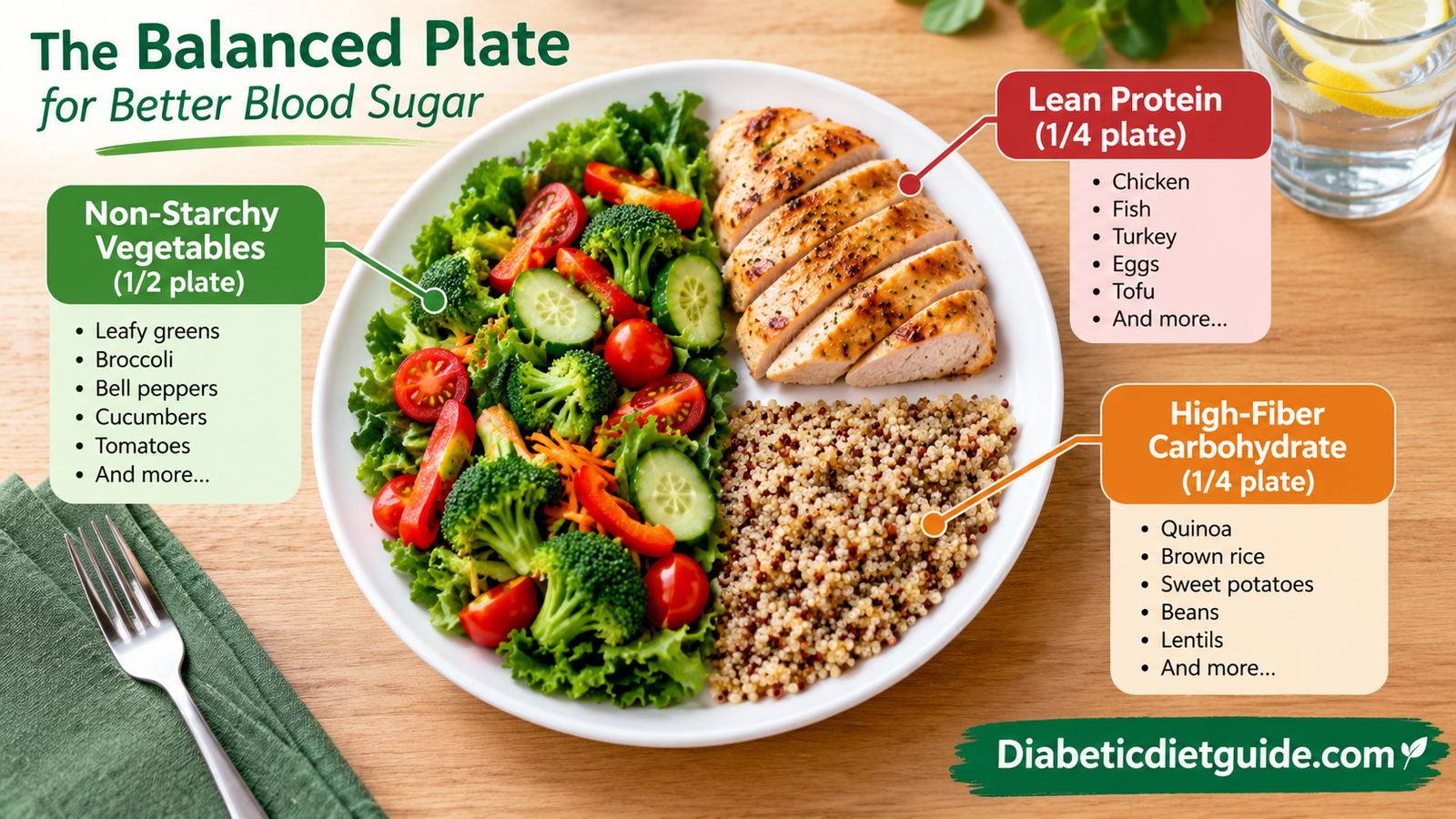
Knowing which foods help is half the battle. The other half is putting them together. The plate method, popularized by diabetes educators, makes this almost automatic: fill half of a nine-inch plate with non-starchy vegetables, one quarter with lean protein and one quarter with a fiber-rich carbohydrate, then add a small serving of healthy fat. No weighing, no counting.
Food order and pairing
Research from several groups has found that eating vegetables and protein before carbohydrates can lower the post-meal glucose peak by a meaningful amount compared with eating the same foods in the reverse order. You do not need to be rigid about it. Starting dinner with a salad or a bowl of soup, then moving to the main dish, is a natural way to gain the benefit. Never eat carbohydrates “naked”: pair them with protein, fat or fiber. Crackers with cheese, fruit with nuts, toast with eggs and avocado.
Movement after meals
This is not food, but it belongs here. A ten to fifteen minute walk after eating helps muscles pull glucose out of the bloodstream and has been shown to lower post-meal spikes more effectively than the same amount of exercise at another time of day. Even standing and doing light chores helps.
Meal timing and consistency
Regular meal times make glucose more predictable, especially if you take medication. Skipping breakfast then overeating late in the day often leads to bigger swings. Eating a larger share of your carbohydrate earlier in the day, when insulin sensitivity tends to be higher, works well for many people. If you work irregular hours, our diabetic menu for working adults was written with busy schedules in mind. For ideas by meal, explore the diabetic breakfast menu, lunch menu and dinner menu ideas.
Eating out without the guesswork
Restaurant meals are usually larger, saltier and starchier than home cooking. Ask for dressing on the side, swap fries for vegetables, choose grilled over breaded, and box half the plate before you start. Our eating out diabetic menu offers cuisine-by-cuisine strategies. Budget matters too, and healthy eating does not have to be expensive; our low income diabetic menu shows how beans, frozen vegetables and eggs stretch a dollar.
Structured plans when you want a roadmap
Some people thrive with structure. If that is you, choose a length that suits your lifestyle: the 1-day simple diabetic menu for a quick reset, a 3-day plan, the 7-day diabetic menu, or the weekly diabetic meal plan. Prefer fewer carbs? The low-carb weekly diabetic menu may fit.
| Strategy | What to do | Why it helps |
|---|---|---|
| Plate method | Half vegetables, quarter protein, quarter smart carbs | Automatic portion control and fiber |
| Veggies first | Start with salad, soup or vegetables | Lowers the post-meal peak |
| Pair carbs | Add protein, fat or fiber to every carbohydrate | Slows glucose entry |
| Walk after meals | 10 to 15 minutes of gentle movement | Muscles absorb glucose directly |
| Hydrate | Water or unsweetened tea instead of sugary drinks | Removes liquid sugar load |
Divided plates and measuring cups take the guesswork out of the plate method.
A Sample Day and Smart Swaps: Putting Every Food Together
Theory is easy; Tuesday at 6 p.m. is harder. Here is what a full day of blood sugar friendly eating can look like using the foods we have covered. Adjust portions to your own calorie and carbohydrate targets. If you want calorie-specific versions, we have a 1200 calorie, 1500 calorie, 1800 calorie and 2000 calorie diabetic menu.
| Meal | What’s on the plate | Glucose-friendly features |
|---|---|---|
| Breakfast | Plain Greek yogurt, 1/2 cup blueberries, chia seeds, chopped walnuts, dash of cinnamon | Protein, fiber, healthy fat, low sugar |
| Mid-morning | Small apple with a tablespoon of almond butter | Fiber plus fat slows fruit sugar |
| Lunch | Lentil and vegetable soup, side salad with olive oil and lemon, one slice sprouted-grain toast | Legumes, vegetables first, whole grain |
| Afternoon | Handful of pistachios and cucumber slices | Crunchy, low carbohydrate |
| Dinner | Baked salmon, roasted broccoli and peppers, 1/2 cup barley or quinoa | Omega-3s, fiber, slow carbohydrate |
| Evening | Unsweetened tea or a small cup of berries | Satisfying without a spike |
Easy swaps that quietly lower glucose
- Swap white rice for half cauliflower rice and half brown rice, or lentils.
- Swap fruit juice for whole fruit or water with citrus slices.
- Swap sweetened cereal for oats topped with nuts and berries.
- Swap potato chips for roasted chickpeas or nuts.
- Swap flavored yogurt for plain yogurt plus fruit.
- Swap creamy dressing for olive oil and vinegar.
- Swap candy and cookies for a few squares of dark chocolate; see the best chocolate for diabetics and dessert recipes for diabetics.
When fiber needs a boost
Most adults eat far less fiber than recommended. Increase it slowly and drink plenty of water. If you struggle to meet your goals through food, a supplement may help; compare options in our review of the best fiber supplements for diabetics. If your goals include weight loss, our diabetic meal plan for weight loss works well alongside these foods, and those earlier in their journey can start with the menu for prediabetes.
Special situations
Needs change with life stage. Pregnancy and gestational diabetes require individualized care, so see the diabetic menu for pregnant women. Older adults may need softer textures or more calories, which is where the diabetic menu for seniors comes in. Those who follow plant-based diets will appreciate the vegetarian and vegan meal plans, and holiday cooks will find help in diabetic holiday recipes.
Glass containers keep portioned lunches fresh so the healthy option is always ready.
Frequently Asked Questions About Foods That Lower Blood Sugar
What foods lower blood sugar the fastest?
No food acts like a medicine, so nothing “lowers” a high reading quickly. Foods can, however, prevent big rises. Non-starchy vegetables, beans, lentils, nuts, eggs, fish and plain Greek yogurt have the smallest impact. If your glucose is dangerously high, follow your treatment plan and contact your healthcare provider rather than relying on food.
Can I lower blood sugar naturally without medication?
For some people with prediabetes or early type 2 diabetes, consistent changes in food, activity, sleep and weight can bring numbers into a healthy range. Many others still need medication, and that is not a failure. Never stop or reduce medication without medical guidance.
Which fruits are best for blood sugar control?
Berries, apples, pears, cherries, plums and citrus are generally the most gentle because of their fiber and lower sugar content. Eat them whole, keep portions reasonable and pair with protein or fat for the best results.
Is oatmeal good for diabetes?
Steel-cut and rolled oats are good choices because their beta-glucan fiber slows digestion. Avoid flavored instant packets and skip heaping toppings of sugar. Add nuts, seeds, cinnamon and berries, and measure your portion.
Does apple cider vinegar really work?
Small studies show it may modestly reduce the post-meal glucose rise when taken before or with a carbohydrate-rich meal. The effect is small, it can irritate the throat and teeth, and it is not a replacement for treatment. Dilute it and talk with your doctor if you take medication.
Does cinnamon lower blood sugar?
Evidence is mixed. Some trials show small improvements while others show none. Ceylon cinnamon is safer than cassia for regular use. Think of it as a way to add sweetness without sugar rather than a treatment.
Are eggs safe for people with diabetes?
Yes for most people. Eggs have almost no effect on glucose and are a source of complete protein. People with diabetes and high cholesterol may want to be more moderate, so ask your care team what number is right for you.
Should I avoid all carbohydrates?
Not usually. Fiber-rich carbohydrates such as legumes, intact whole grains, fruit and vegetables are associated with better outcomes. Focus on quality, portion size and pairing carbohydrates with protein, fat or fiber.
What can I drink to keep blood sugar steady?
Water, sparkling water, unsweetened tea and black coffee are the best bets. Avoid fruit juice, regular soda, sweet tea and sugary coffee drinks unless you are treating a low blood sugar.
Does eating vegetables first really make a difference?
Studies show that eating vegetables and protein before carbohydrates can lower the after-meal glucose peak. The effect varies by person, but it costs nothing and is easy to try. Pair it with a short walk after eating for even better results.
Are artificial sweeteners better than sugar?
They do not raise blood glucose directly, which makes them useful for some people. Research on long-term effects is still evolving, so moderation is sensible. Use them to replace sugar in drinks rather than as a license to eat more sweets.
How long does it take for diet changes to affect blood sugar?
Post-meal readings can improve within days. Fasting glucose often improves over weeks, and HbA1c, which reflects roughly three months, shows the full result after a few months of consistent habits. Keep a log or use a monitor to see your own pattern.
Final Thoughts: Small, Repeatable Choices Win
The foods that lower blood sugar are not exotic, and they are not a secret. They are vegetables, beans and lentils, intact whole grains, nuts and seeds, fish and eggs, berries and apples, plain yogurt and good fats, flavored with herbs, spices and the occasional splash of vinegar. Each one works by slowing digestion, adding fiber or improving how your body responds to insulin. Combined thoughtfully, they flatten the spikes that wear down your energy and your health.
You do not need to overhaul everything tomorrow. Choose one habit this week: swap one sugary drink for water, add a vegetable to every dinner, start breakfast with protein, or take a ten-minute walk after your largest meal. Then add another. Check your numbers, notice what works for your body, and keep what helps. Progress built from small, repeatable choices beats any short-lived perfect diet.
Stock up on the essentials and make your next grocery trip your best one yet.
This article is for general education and does not replace personalized advice from your doctor, pharmacist or registered dietitian. As an Amazon Associate, we may earn from qualifying purchases made through links on this page, at no extra cost to you.