One of the hardest things to give up after a diabetes diagnosis isn’t necessarily the sweets—it’s the crunch. That satisfying snap of a saltine in your soup or the buttery crisp of a Ritz cracker with cheese is a texture we all crave. But most traditional crackers are essentially “pre-digested” sugar. Made from refined white flour, they hit your bloodstream almost as fast as candy.
But you don’t have to live a crunch-less life.
The health food aisle has exploded with innovation. In 2026, we have access to crackers made from almond flour, flax seeds, sprouted grains, and even cheese. These aren’t just “cardboard” substitutes; they are nutrient-dense powerhouses that can fit perfectly into a blood-sugar-friendly diet.
In this guide, we’ve analyzed the nutritional labels, tested the textures, and ranked the 10 best crackers for diabetics. Whether you need a sturdy vehicle for your hummus or a keto-friendly snack, we have found the perfect box for you.
We’ve also gone beyond just the top picks — this guide includes a full glycemic index breakdown, a step-by-step nutrition label reading guide, a list of crackers to avoid, the best times to eat crackers with diabetes, homemade cracker recipes, store-by-store buying guides, and specific guidance for Type 1, Type 2, and gestational diabetes. This is the most complete cracker guide on the internet.
Buying Guide: The “3-Rule” Check
Not all “healthy” crackers are safe. Many gluten-free options are packed with potato starch and rice flour, which can spike blood sugar faster than wheat. When shopping, use this 3-point checklist:
- Fiber is King: Look for at least 3g of fiber per serving. Fiber slows digestion.
- Net Carb Limit: Aim for 15g Net Carbs or less per serving. (Total Carbs – Fiber = Net Carbs).
- Whole Ingredients: The first ingredient should be a nut, seed, or whole grain (like whole wheat or rye), not “enriched flour” or “starch.”
Glycemic Index Deep Dive: What It Means for Diabetics
The Glycemic Index (GI) is a ranking system from 0 to 100 that measures how quickly a carbohydrate-containing food raises blood glucose levels compared to pure glucose (rated at 100). For people managing diabetes, understanding the GI of your crackers is just as important as counting net carbs.
Here is how the scale breaks down in practical terms for crackers:
Why GI Alone Isn’t Enough: Meet Glycemic Load (GL)
While GI tells you how fast a food raises blood sugar, it doesn’t account for how much of that food you’re eating. That’s where Glycemic Load (GL) comes in. GL = GI × (Carbs per serving ÷ 100). A food can have a high GI but a low GL if you eat a small portion.
🧠 The GI vs. GL in Practice
Watermelon has a high GI of 72 but a very low GL of 4 per typical serving. Similarly, a cracker with a medium GI of 60 but only 10g of net carbs has a GL of 6 — quite manageable. Always look at both GI and the actual carb quantity per serving to get the full picture.
For crackers, the sweet spot is: GI under 55 AND Net Carbs under 15g per serving. This combination gives you the best blood sugar outcome.
What Lowers the GI of a Cracker?
The ingredients in a cracker directly determine its GI. Here are the science-backed factors that drive GI down:
- Dietary Fiber: Soluble fiber forms a gel-like substance in your gut that physically slows sugar absorption. Every gram of fiber effectively “blocks” some carbohydrate impact.
- Fat Content: Healthy fats (from almonds, seeds, coconut oil) slow gastric emptying — the process by which food leaves your stomach — buying your insulin response more time.
- Protein: Protein triggers a minimal insulin response compared to carbohydrates, and it slows digestion.
- Whole vs. Refined Grain: The intact cell walls of whole grains require more digestive work, which inherently lowers the GI compared to refined flour where the cell walls are destroyed.
- Acidity: Vinegar, sourdough, or acidic toppings (like tomato) measurably lower GI by slowing starch digestion. This is one reason sourdough rye bread has a lower GI than standard wheat bread.
- Particle Size: The finer a grain is ground, the faster it digests. Stone-ground whole wheat has a lower GI than standard whole wheat because the larger starch particles take longer to break down.
“When we look at managing postprandial glucose in patients with Type 2 diabetes, the combination of fiber and healthy fat in the snack is the most powerful lever we have outside of medication. A seed-based cracker with a fat-and-protein topping is genuinely therapeutic.” — Paraphrased from consensus nutritional guidelines for Type 2 Diabetes management, 2025
How to Read a Cracker Nutrition Label (Step-by-Step)
The supermarket aisle is a minefield of misleading health claims. “Multigrain,” “wheat,” “natural,” and “made with whole grain” can all be used on crackers that are primarily refined flour. Here is your step-by-step guide to reading a cracker label like a diabetes dietitian.
Check the Serving Size First — Before Anything Else
This is the most manipulated number on any nutrition label. A serving of Triscuit is 6 crackers (28g). A serving of Almond Nut Thins is 16 crackers (30g). The per-serving numbers are meaningless until you know how many crackers constitute a “serving.” Realistically decide how many you’ll eat and adjust your math accordingly.
Calculate Net Carbs (The Number That Matters Most)
Look at Total Carbohydrates, then subtract Dietary Fiber. That number is your Net Carbs — the carbohydrates that will actually impact your blood sugar. Some brands also list “Sugar Alcohols” (like erythritol or xylitol); subtract about half of those as well, as they have a minimal blood sugar impact. Target: 15g Net Carbs or fewer per serving.
Scan the Fiber Line
Aim for at least 3g of fiber per serving. If a cracker has 20g total carbs but 8g fiber, its net carbs are only 12g — that’s a much better profile than a cracker with 15g total carbs and 0g fiber. Fiber is your friend; always seek it out.
Check Total Sugars vs. Added Sugars
Since 2020, nutrition labels in the US must list “Added Sugars” separately. A diabetic-friendly cracker should have 0g or as close to 0g of Added Sugars as possible. Natural sugars from a small amount of fruit or whole grain are less concerning than cane sugar, honey, or corn syrup added during manufacturing.
Read the Ingredient List Top-Down
Ingredients are listed in descending order by weight. The first ingredient is what the cracker is mostly made of. If the first ingredient is “Enriched Wheat Flour,” “White Flour,” “Rice Flour,” or “Potato Starch,” put it back. You want to see “Whole Grain Wheat,” “Almond Flour,” “Oat Bran,” “Flaxseeds,” or similar as the first listed ingredient.
Evaluate Sodium Content
Many people with Type 2 diabetes also manage hypertension. High sodium intake worsens blood pressure. A reasonable target is under 200mg of sodium per serving. Watch out for “reduced fat” crackers, which often compensate by adding extra salt. Lightly salted versions of popular brands are always the smarter choice.
Look at Fat Quality
Not all fats are equal. Check the “Saturated Fat” and “Trans Fat” lines. Zero trans fats is non-negotiable. Look for crackers that use healthier oils (avocado oil, olive oil, coconut oil) rather than “partially hydrogenated” oils or highly refined “sunflower oil” or “canola oil,” which are higher in inflammatory omega-6 fatty acids. Nuts and seeds provide naturally good fats without any processing concerns.
⚠️ Common “Health Halo” Label Tricks to Ignore
- “Multigrain” — means multiple grains, NOT whole grains. Those grains can all be refined.
- “Made with Whole Grain” — could mean 5% whole grain. Look for “100% Whole Grain” or “Whole Grain” as the first ingredient.
- “Natural” — has no regulated FDA meaning. This label is meaningless.
- “Low Fat” — fat-free crackers often replace fat with sugar or refined starch, causing faster blood sugar spikes.
- “Gluten-Free” — does NOT mean low-carb or diabetic-friendly. Many GF crackers use high-GI rice or potato starch.
- “Ancient Grains” — a marketing term. Spelt, amaranth, and kamut are still grains and still raise blood sugar, even if they do so a bit more gently than wheat.
1. Simple Mills Almond Flour Crackers (Best Flavor)
If you miss the buttery, savory taste of a “Wheat Thin” or “Cheez-It,” Simple Mills is the closest healthier alternative. Made primarily from a nut and seed flour blend, they offer a satisfying crunch without the grains.

Simple Mills Farmhouse Cheddar
These crackers are grain-free, corn-free, and soy-free. The almond flour base provides healthy fats and protein, which helps stabilize blood sugar. The texture is flaky and crisp, making them perfect for snacking straight out of the box.
Pros
- Incredible flavor (tastes like “real” crackers)
- 3g Protein per serving
- Clean ingredient list
- No processed oils
Cons
- Slightly higher carb count (17g total) than seed crackers
- Addictive (easy to overeat)
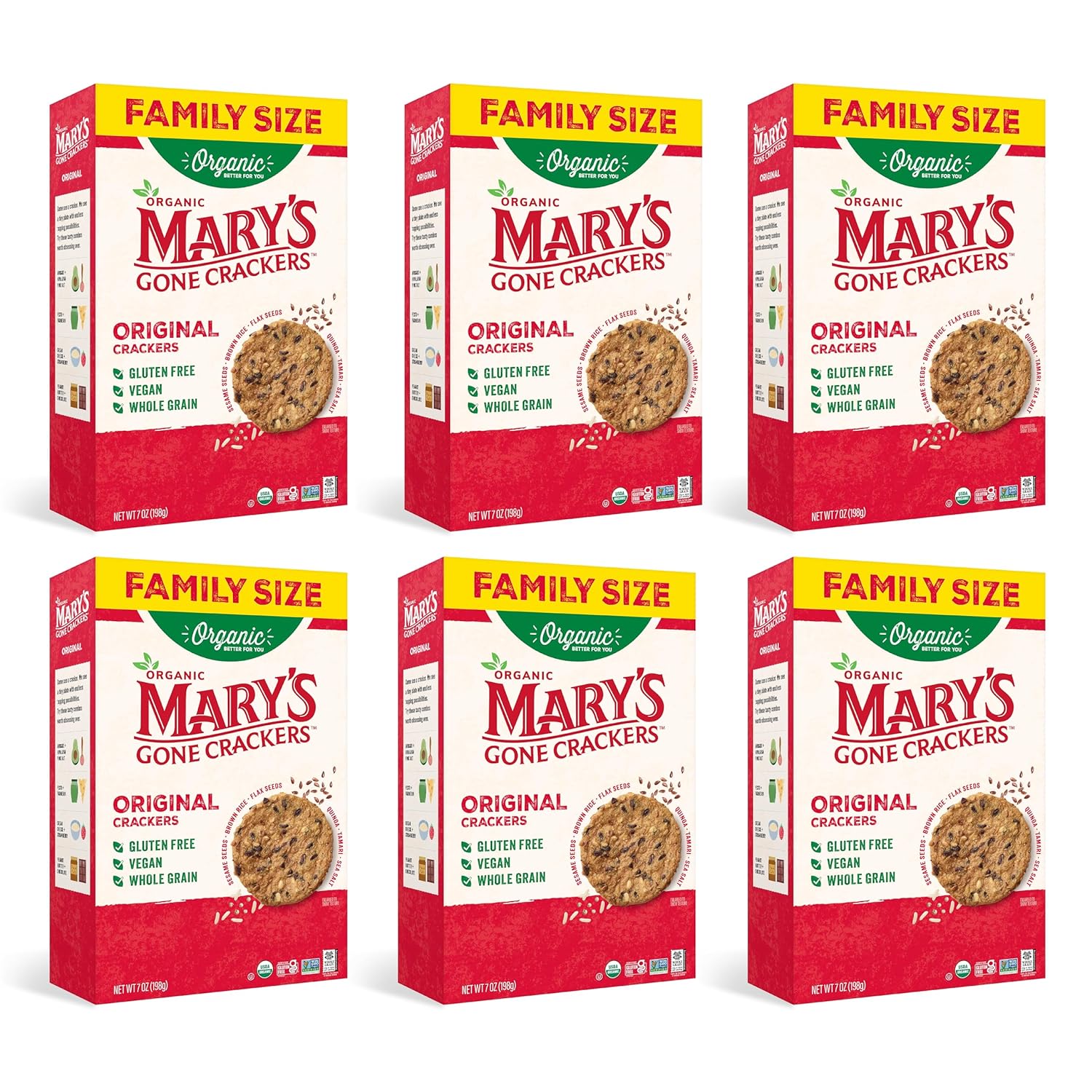
2. Mary’s Gone Crackers (Best Crunch)
For those who love a serious, hearty crunch, Mary’s Gone Crackers are legendary. They aren’t trying to be a Ritz; they are proudly their own thing—a dense, seed-packed mosaic of flavor.
Mary’s Gone Crackers Original
Made with brown rice, quinoa, flax seeds, and sesame seeds. They are incredibly sturdy, making them the perfect vehicle for heavy dips like guacamole or tuna salad. They are organic and gluten-free.
Pros
- Excellent crunch
- Whole grain & Seed based
- 450mg Omega-3 fatty acids per serving
- Sturdy for dipping
Cons
- Hard texture (careful if you have dental issues)
- Earthy flavor isn’t for everyone
3. Flackers Flax Seed Crackers (Best Keto)
If you are strictly watching your carb intake or following a keto diet, Flackers are a lifesaver. They are made almost entirely of organic flax seeds that have been sprouted.

Doctor in the Kitchen Flackers
Because they are mostly fiber, the net carb count is incredibly low (often 1g per serving). They are crunchy and savory, but chew thoroughly to get the full nutritional benefit of the seeds.
Pros
- 1g Net Carb (Ultra Low)
- High in Omega-3s
- Raw and Sprouted
- Gluten-Free
Cons
- Texture can be a bit gooey if not chewed well
- Strong flax flavor
4. Triscuit Original (Best Availability)
Sometimes you just want something you can buy at any gas station or corner store. Triscuit Original is the diamond in the rough of the conventional cracker aisle.

Triscuit Original
The ingredient list is shockingly simple: Whole Grain Wheat, Oil, and Salt. That’s it. The “shredded” texture provides a good amount of fiber (3g) for a standard wheat cracker. Just avoid the flavored versions, which often have hidden sugars.
Pros
- Widely available & affordable
- Only 3 ingredients
- 3g Fiber per serving
- No added sugar
Cons
- Contains Wheat (Gluten)
- Higher carb count (20g) than seed crackers
5. Wasa Multi Grain Crispbread (Best Volume)
If you are a “volume eater” who wants to feel like they are eating a lot of food, Wasa Crispbreads are perfect. These large, plank-like crackers are low in calories but take a long time to eat.

Wasa Multi Grain
A staple in Europe, Wasa is made from whole grain rye. The fiber content is high, and the distinct crunch is satisfying. They make excellent open-faced sandwich bases (like avocado toast).
Pros
- Large serving size for few calories
- Whole grain rye base
- Very sturdy
- Zero sugar
Cons
- Can feel dry if eaten plain
- Bland flavor without toppings
6. Hu Kitchen Grain-Free Crackers (Best Clean Label)
Hu Kitchen (famous for their chocolate) makes an incredible cracker for the Paleo crowd. They are free from industrial seed oils (like canola or sunflower), which many health-conscious diabetics try to avoid.

Hu Grain-Free Crackers
Made with a unique blend of almond, cassava, and coconut flour. They are thin, crispy, and have a neutral flavor that works with everything. They use organic coconut oil instead of cheap vegetable oils.
Pros
- No inflammatory oils
- Grain-free & Gluten-free
- 3g Fiber
- Non-GMO
Cons
- Expensive
- Crackers are small and break easily
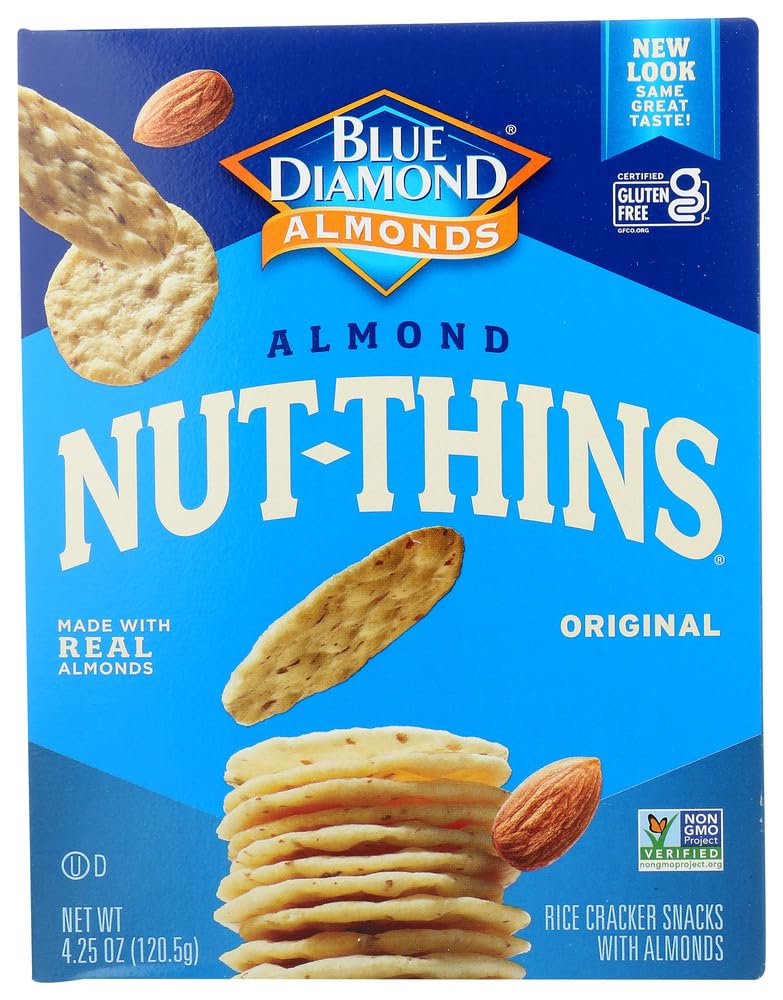
7. Blue Diamond Almond Nut Thins (Best Gluten-Free)
These are a hybrid cracker made from rice flour and almonds. They are incredibly popular in the gluten-free community because they have a very traditional “cracker” snap.
Blue Diamond Almond Nut Thins
While slightly higher in carbs due to the rice flour, the almond content adds protein. They are very crunchy and salty, satisfying that “chip” craving.
Pros
- Great texture and snap
- Lower sodium options available
- 3g Protein
Cons
- Contains Rice Flour (Higher GI than seeds)
- Lower fiber (1-2g)
8. HighKey Almond Flour Crackers (Best “Ritz” Swap)
If you specifically miss the buttery, melt-in-your-mouth texture of a Ritz cracker, HighKey has engineered a keto version that gets scary close.

HighKey Sea Salt Crackers
Using almond flour and butter, HighKey delivers a rich, savory cracker with only 1-2g of net carbs. They are softer than seed crackers but very satisfying.
Pros
- Mimics buttery cracker texture
- Ultra Low Carb (Keto)
- High fat (satiating)
Cons
- Small serving size (volume wise)
- Contains dairy (butter)
9. Julian Bakery Paleo Thin (Best Paleo)
Julian Bakery focuses on low-carb breads and crackers. Their Paleo Thin crackers are distinctive because they often use cassava flour and seeds, resulting in a large, flat cracker.

Julian Bakery Paleo Thin
These are excellent for portion control as 6 crackers constitutes a serving, but the crackers are substantial. They are organic and GMO-free.
Pros
- 5-6g Net Carbs
- Organic ingredients
- Good size for toppings
Cons
- Can be bland without toppings
- Texture varies by batch
10. GG Scandinavian Fiber Crispbread (Best High Fiber)
This is the “hardcore” health cracker. It has gained a cult following in the modeling and fitness world because it is essentially pure fiber. It fills you up without the calories.

GG Scandinavian Bran Crispbread
With 4g of fiber per cracker and only 20 calories, it’s a metabolic miracle. However, be warned: it is very dry. You must drink water with it.
Pros
- Unbeatable fiber content
- Lowest calorie option
- 3g Net Carbs
Cons
- Very dry “cardboard” texture
- Must be eaten with toppings
Nutritional Showdown Chart (Per Serving)
| Brand | Total Carbs | Fiber | Net Carbs | Protein | Calories |
|---|---|---|---|---|---|
| Simple Mills | 17g | 2g | 15g | 3g | 150 |
| Mary’s Gone | 21g | 3g | 18g | 3g | 140 |
| Flackers | 10g | 9g | 1g | 6g | 110 |
| Triscuit | 20g | 3g | 17g | 3g | 120 |
| Wasa Multi | 11g | 3g | 8g | 2g | 45 |
| Hu Kitchen | 13g | 3g | 10g | 3g | 110 |
| Blue Diamond | 22g | 1g | 21g | 3g | 130 |
| HighKey | 11g | 2g | 9g | 6g | 140 |
| Julian Bakery | 7g | 2g | 5g | 2g | 70 |
| GG Crispbread | 6g | 4g | 2g | 1g | 20 |
Crackers to Avoid If You Have Diabetes
Knowing what not to eat is just as important as knowing what to buy. Here are the most popular conventional cracker brands and exactly why they are problematic for blood sugar management. We’re not saying you can never eat these — but they should never be your default snack choice.
Nabisco Saltines (Premium)
The quintessential hospital cracker is made from enriched white flour with essentially zero nutritional value. They have a GI of approximately 72 — nearly as high as pure glucose.
Ritz Original
The buttery flavor you love comes from refined flour and partially hydrogenated oils. Despite the small size, a single serving of 5 crackers delivers 10g of net carbs with virtually no fiber or protein to slow them down.
Wheat Thins Original
Misleadingly named — the first ingredient is enriched flour, with whole wheat flour listed second. Despite the “wheat” branding, sugar is the third ingredient, making these a poor choice for diabetics.
Goldfish Crackers
A childhood staple made entirely of enriched wheat flour with less than 1g of fiber. The “Whole Grain” version is only marginally better. The fun shapes don’t make them metabolically safe for diabetics.
Plain Rice Crackers
A particularly dangerous “health halo” food. White rice crackers have one of the highest GIs of any cracker — sometimes up to 80 — due to the puffed white rice base. Many diabetics switch from Saltines to rice crackers thinking they’re being healthy, but the blood sugar impact is actually worse.
Cheez-It Original
While the real cheese adds some protein, the primary ingredient is enriched flour. The flavor is addictive, which makes it easy to eat far more than one serving. Portion control is extremely difficult with this cracker.
Graham Crackers
Often perceived as a “healthy” choice (especially for children), standard graham crackers contain enriched flour and significant added sugar. They are essentially cookies masquerading as crackers.
“Fat-Free” Crackers
When manufacturers remove fat, they replace the flavor and texture with sugar or refined starch. Fat-free crackers are paradoxically often worse for blood sugar than their full-fat counterparts. This is a classic case of “nutritional reductionism” gone wrong.
⚠️ The “Gluten-Free Trap” for Diabetics
One of the most common mistakes diabetics make is assuming “gluten-free” means “blood sugar safe.” Many mainstream gluten-free crackers use white rice flour, tapioca starch, or potato starch — all high-GI ingredients that can spike blood sugar faster than regular wheat crackers. Always read the ingredient list of any gluten-free product before assuming it’s diabetic-friendly. The exceptions are crackers that are gluten-free because they’re made from nuts and seeds (like Simple Mills, Flackers, or Mary’s Gone Crackers), which are genuinely good choices.
Ingredient Red Flags: What to Watch for on Any Cracker Label
You don’t need a nutrition degree to spot a bad cracker. Memorize this short list of ingredient red flags and scan every label before putting a box in your cart.
-
Enriched Flour / Enriched White Flour / Enriched Wheat Flour: This is refined white flour that has had nutrients stripped out and then some added back via synthetic vitamins. It is a high-GI ingredient regardless of what nutrients are “enriched” back in. If this is the first ingredient, put it back.
-
High Fructose Corn Syrup (HFCS): A highly processed sweetener that some research links to insulin resistance. Its presence in a cracker signals that the product is designed for addictive taste, not nutrition.
-
Partially Hydrogenated Oils: These are trans fats, which worsen insulin resistance and increase cardiovascular risk — a double threat for diabetics. While banned from most foods in the US, they may still appear in imported products.
-
Modified Food Starch / Tapioca Starch / Potato Starch: These are added thickeners with very high GI values. They are commonly found in gluten-free products as a texture-builder but wreak havoc on blood sugar.
-
Sugar, Dextrose, Maltodextrin (in first 5 ingredients): These are all forms of added sugar. Maltodextrin in particular has a GI of approximately 110 — higher than pure glucose — making it one of the worst sweeteners for blood sugar management.
-
Soybean Oil / Canola Oil / Sunflower Oil: These highly refined seed oils are high in omega-6 fatty acids and low in omega-3s. The imbalanced omega-6 to omega-3 ratio (often 20:1 in modern diets, versus the ideal 4:1) is associated with increased systemic inflammation, which worsens insulin resistance over time.
-
Artificial Colors (Red 40, Yellow 5, Blue 1): While not directly linked to blood sugar, these synthetic dyes have no nutritional value and their presence indicates the cracker is highly processed. They are a marker of overall low food quality.
-
BHA / BHT / TBHQ: These are petroleum-derived preservatives. While considered “generally safe” by the FDA, many holistic health practitioners recommend avoiding them, especially for those managing chronic conditions like diabetes.
“Never Eat Naked”: Pairing Ideas
The cardinal rule of eating carbs with diabetes is “Never Eat Naked Carbs.” Eating a cracker alone causes a faster spike than eating it with fat or protein. Always pair your cracker with a “buddy.”
- Avocado: Healthy fats slow digestion.
- Cheese: Hard cheeses like cheddar or swiss add protein and calcium.
- Tuna/Chicken Salad: Turns a snack into a mini-meal.
- Hummus: Adds more fiber and flavor.
- Nut Butter: Almond or peanut butter adds satiety.
The “Macro Stack” Method: Optimal Cracker Pairings
Going beyond simple pairing, the “Macro Stack” method pairs crackers with a food from each of the three macronutrient groups — fat, protein, and fiber — to create the most blood-sugar-stable snack possible. Here are five complete macro stack combinations:
| Cracker Base | Fat Component | Protein Component | Fiber Boost | Estimated Blood Sugar Impact |
|---|---|---|---|---|
| Flackers (2 servings) | Avocado (1/4) | Hard-boiled egg (1) | Sliced cucumber | Very Low |
| Wasa Crispbread (2) | Cream cheese (2 tbsp) | Smoked salmon (1 oz) | Capers + dill | Low |
| Triscuit (6) | Almond butter (1 tbsp) | Greek yogurt dip | Celery sticks | Low-Medium |
| Simple Mills (16) | Cheddar cheese (1 oz) | Tuna salad (2 oz) | Sliced bell pepper | Low-Medium |
| GG Crispbread (2) | Hummus (3 tbsp) | Deli turkey (1 oz) | Sliced radish | Very Low |
Best Time of Day to Eat Crackers with Diabetes
Timing your cracker intake relative to your daily schedule and medication rhythm can make a significant difference in how your blood sugar responds. Blood sugar management is not just about what you eat — it’s also about when you eat it.
Morning (7–9 AM)
Blood sugar tends to be naturally elevated in the morning due to the “dawn phenomenon” — a cortisol-driven glucose release. Stick to ultra-low carb options like Flackers or GG Crispbread in the morning. Pair with egg and avocado. Avoid sweet or high-GI crackers at breakfast.
Mid-Morning (10–11 AM)
This is often an ideal snack window — blood sugar has stabilized from breakfast, insulin sensitivity is reasonably high. A serving of Triscuit with cheese or Simple Mills with nut butter works well here. This prevents you from arriving at lunch ravenously hungry.
Afternoon (2–4 PM)
The classic “3 PM slump” is real, and many people reach for crackers then. This is a good time for crackers because insulin sensitivity is still reasonable. Opt for crackers with a substantial fat and protein pairing (like Mary’s Gone Crackers with hummus and avocado) to avoid the energy crash-and-spike cycle.
Bedtime Snack (9–10 PM)
This is the most nuanced timing. For some people with diabetes, a small bedtime snack prevents nighttime hypoglycemia (low blood sugar). The best bedtime cracker choice is a single GG Crispbread or Wasa with almond butter or cheese — minimal carbs, high fat, and a slow-release protein. Avoid high-GI crackers at night, as insulin sensitivity drops significantly in the evening.
💡 Post-Exercise: The Best Time for Higher-Carb Crackers
If you exercise regularly, the 30-60 minute window immediately after moderate exercise is the optimal time for slightly higher-carb crackers (like Triscuit or even Mary’s Gone Crackers). During this window, your muscles are actively absorbing glucose for glycogen replenishment, and your cells are more insulin-sensitive. A post-workout snack of Triscuits with protein helps your body use those carbs productively rather than storing them as fat or spiking your blood sugar.
Portion Control for Crackers: A Practical Guide
Even the healthiest cracker can spike blood sugar if eaten in the wrong quantity. Portion control is arguably the most important factor in cracker management for diabetics. The challenge is that crackers are one of the most portion-distorting foods — it’s very easy to mindlessly eat two or three servings thinking you’ve only had one.
The Pre-Portion Rule
Never eat crackers directly from the box. Before you sit down, count out exactly one serving (as defined on the label) and place it in a bowl or on a plate. Close the box and put it away. This single habit can reduce cracker consumption by 30-50% for most people, simply by removing the “mindless eating” element.
Visual Portion Guide by Brand
⚠️ The “Serving Size Trap”
Blue Diamond Almond Nut Thins define a serving as 16 crackers. That sounds like a lot — but 16 of those crackers weigh only 30g and deliver 21g net carbs. If you’re not careful, you can eat 32 crackers (two servings, 42g net carbs) while thinking you had “just a few crackers.” Always weigh your portions with a food scale if you’re serious about blood sugar management.
How to Manage Cravings for More Crackers
The urge to “just have one more” is real and biochemically driven. Here are four practical strategies for managing cracker portion control:
- Drink 8 oz of water before eating your crackers. Thirst is often disguised as hunger. A glass of water often reduces the number of crackers needed to feel satisfied.
- Eat slowly and chew thoroughly. It takes 15-20 minutes for satiety signals to reach your brain. If you eat your crackers in 2 minutes, your brain hasn’t had time to register fullness before you want more.
- Add a high-volume vegetable to your snack plate. Sliced cucumber, celery, or bell pepper takes time to eat and adds zero glycemic impact, creating a sense of abundance that reduces the urge for extra crackers.
- Use a smaller plate or bowl. Visual volume matters for satiety. A single serving of crackers in a small bowl looks like “a lot” compared to the same crackers on a dinner plate where they look sparse.
Where to Buy Diabetic-Friendly Crackers: Store-by-Store Guide
Availability is a real barrier. Not every store carries the full range of diabetic-friendly crackers, and knowing where to look saves time and frustration. Here is a practical guide to which stores carry which brands.
🛒 Walmart
Best for: Triscuit, Wasa Crispbread, Blue Diamond Nut Thins. Walmart typically carries these in the cracker or natural foods aisle at the lowest retail prices. Simple Mills is increasingly available in larger Supercenter locations.
Tip: Check the “Better for You” or “Gluten Free” shelf section, often tucked in the regular cracker aisle or in a dedicated health food section.
🏪 Costco
Best for: Simple Mills (they sell a large 3-pack at significantly lower cost per ounce), Mary’s Gone Crackers (rotating seasonal availability), Triscuit (bulk packs). Costco is the most cost-effective way to buy Simple Mills if you go through them regularly.
Tip: Costco’s selection rotates. If you find a good diabetic-friendly cracker there, buy multiple boxes — it may not be there next time.
🎯 Target
Best for: Simple Mills, Blue Diamond, Hu Kitchen Crackers. Target’s “Good & Gather” house brand also offers some whole grain crispbreads worth checking. Their snack aisle tends to stock a wider health-food range than Walmart.
Tip: Use the Target app to check in-store availability before you go — cracker stock can be inconsistent.
🌿 Whole Foods / Sprouts
Best for: Flackers, GG Crispbread, Julian Bakery, Hu Kitchen, Mary’s Gone Crackers. Health-focused grocery stores carry the widest selection of specialty diabetic-friendly crackers. Expect to pay a premium.
Tip: Whole Foods’ 365 house brand offers several decent whole grain crispbreads at lower prices than name brands.
📦 Amazon
Best for: All brands listed in this article, often in multi-packs. Amazon Subscribe & Save can reduce per-box cost by 5-15%. Best for Flackers, GG Crispbread, and Julian Bakery, which are hard to find locally.
Tip: Check the “Currently Unavailable” dates — some specialty crackers have supply chain issues and go out of stock for weeks.
🏥 CVS / Walgreens
Best for: Emergency situations only. Triscuit is commonly stocked. In a pinch, it’s better than Saltines or Ritz from these stores. Don’t expect to find specialty low-carb crackers at pharmacy chains.
Tip: The “Better Choice” or “Natural” mini-section at some CVS locations occasionally stocks Simple Mills. Check the end-caps.
Type 1 vs. Type 2 Diabetes: Does Cracker Choice Differ?
The short answer is: somewhat, but not dramatically. Both conditions involve blood sugar management, but the underlying mechanism and treatment approach differ in ways that affect cracker strategy.
For Type 1 Diabetes
People with Type 1 diabetes use insulin doses that are calculated relative to carbohydrate intake (the insulin-to-carb ratio). This means that someone with Type 1 can technically eat higher-carb crackers as long as they dose their insulin correctly. However, there are two reasons to still favor low-GI, high-fiber crackers:
- Predictability: High-fiber, low-GI crackers produce more predictable blood sugar curves. When you eat a high-GI cracker (like Saltines), the glucose hits your bloodstream rapidly and inconsistently, making it harder to match your insulin timing. Low-GI crackers create a slower, more predictable glucose rise that is easier to dose for.
- Hypoglycemia Risk: People with Type 1 must also consider crackers as a treatment for low blood sugar. Simple, fast-acting crackers (like Saltines) are actually useful during a hypoglycemic episode when rapid glucose delivery is needed. Keep a small emergency pack of Saltines or plain rice crackers for this purpose — they are useful medically even if they’re not ideal for snacking.
For Type 2 Diabetes
For Type 2 diabetes, the strategy is straightforward: consistently choose low-GI, high-fiber crackers. Type 2 management focuses on reducing the overall carbohydrate load reaching the bloodstream and maintaining steady insulin sensitivity. Every high-GI meal or snack further strains an already impaired insulin response.
People with Type 2 who are managing with diet alone (no medication) have the strictest need to choose carefully. Those on Metformin or GLP-1 receptor agonists (like semaglutide/Ozempic) have some additional pharmacological buffer, but this should never be used as a reason to eat poor-quality crackers. The medication manages insulin resistance; it doesn’t make refined carbs nutritionally harmless.
For Prediabetes
If you have been told you are prediabetic (A1C between 5.7% and 6.4%), this is your most powerful window for intervention. The cracker choices you make now are a direct lever on whether your condition progresses to Type 2 or reverses. Treat cracker selection as seriously as someone with an established diagnosis — the same principles apply: fiber first, whole ingredients, 15g net carbs or less per serving.
Crackers for Gestational Diabetes
Gestational diabetes (GD) develops during pregnancy and requires particularly careful blood sugar management, as both the mother’s and baby’s health depend on stable glucose levels. Cracker choices for gestational diabetes follow the same general principles as Type 2, but with some additional considerations.
Why Crackers Are Often Recommended During Pregnancy
Ironically, crackers are one of the most commonly recommended foods for pregnant women — particularly in the first trimester for managing morning sickness. The challenge for women with GD is finding crackers that manage nausea without spiking blood sugar. The key is choosing crackers that are:
- Bland enough to settle the stomach (strong flavors can worsen nausea)
- Low enough in net carbs not to cause a glucose spike
- Nutritionally valuable enough to support fetal development
Best Cracker Choices for Gestational Diabetes
🤰 Top Picks for Gestational Diabetes
Triscuit Original: Simple, bland enough for nausea, 3g fiber, widely available. Pair with mild cheese for protein. The whole wheat base provides some B vitamins beneficial during pregnancy.
Wasa Rye Crispbread: Excellent fiber content and very low calories. A good choice for women managing both blood sugar and gestational weight gain simultaneously.
Simple Mills (Sea Salt flavor): The neutral flavor is nausea-friendly. The almond flour base provides healthy fats and vitamin E, both beneficial during pregnancy. Check with your OB regarding tree nut intake if you have a nut allergy history.
GG Scandinavian Crispbread: The ultra-high fiber content (4g per single cracker) helps manage the constipation that commonly accompanies pregnancy while keeping blood sugar minimal. Eat with plenty of water.
⚠️ Important Note for Gestational Diabetes
Always consult your OB-GYN or certified diabetes educator (CDE) before making significant dietary changes during pregnancy. Blood sugar targets during gestational diabetes are typically stricter than for Type 2 diabetes — often targeting under 95 mg/dL fasting and under 140 mg/dL one hour post-meal. Your carb allowance per snack may be specifically prescribed by your medical team. This guide provides general information but should not replace personalized medical advice during pregnancy.
Crackers for Diabetics with Heart Disease or High Cholesterol
Having both diabetes and cardiovascular disease (or high cholesterol) is extremely common — the two conditions share many root causes and risk factors. Approximately 68% of adults with diabetes over age 65 die from some form of heart disease or stroke. Cracker selection for this dual condition requires an additional layer of nutritional criteria beyond just blood sugar management.
Additional Criteria for Heart-Healthy Crackers
-
High in Soluble Fiber: Soluble fiber (found in oats, flaxseeds, and psyllium) specifically binds to cholesterol in the digestive tract and helps excrete it from the body. Look for crackers containing oat bran, flaxseeds, or psyllium husk. GG Crispbread (oat bran base) and Flackers (flax base) both excel here.
-
Omega-3 Fatty Acids: ALA omega-3s from flaxseeds (found in Flackers and Mary’s Gone Crackers) support heart health by reducing triglyceride levels and mild anti-inflammatory effects. Mary’s Gone Crackers delivers 450mg of ALA per serving.
-
Low in Sodium: Hypertension frequently accompanies both diabetes and heart disease. Target under 140mg of sodium per serving. Specifically seek out “low sodium” or “lightly salted” versions of your preferred cracker brands.
-
Zero Trans Fats: Trans fats simultaneously raise LDL (“bad”) cholesterol and lower HDL (“good”) cholesterol — the worst possible combination for cardiovascular health. This should be non-negotiable. Check both the nutrition label and the ingredient list (any “partially hydrogenated oil” means trans fats regardless of the “0g” claim on the label, as the FDA allows rounding down).
-
Plant Sterols / Stanols (Bonus): Some specialty crackers are fortified with plant sterols, which have clinically demonstrated LDL-lowering effects. These are not widely available but worth seeking out if cholesterol management is a priority.
Best Crackers for Kids with Diabetes
Children with Type 1 diabetes face unique challenges around food — peer pressure, school lunches, birthday parties, and the very real need for foods that are both nutritionally sound and kid-approved. The “best” cracker for a child is one they’ll actually eat consistently, so palatability matters more than it does for adults.
What Makes a Cracker Kid-Friendly and Diabetic-Safe?
- Familiar texture: Kids tend to reject textures that feel too different from what they’re used to. Extremely dense seed crackers (like Flackers) are often a tough sell. Start with crackers that are closer to familiar favorites.
- Mild flavor: Most children prefer milder flavors. Strongly flavored seeds or rye can be off-putting. Simple Mills (especially the lightly salted versions), Triscuit, and Wasa Light Rye are the gentlest starting points.
- Fun shapes or sizes: Simple Mills makes various sizes. Blue Diamond Nut Thins, while not the highest-fiber choice, have an appealing crunch that many kids love.
Recommended Progression for Kids
Rather than immediately switching a child from Goldfish to Flackers (a jarring transition), consider a gradual approach:
| Stage | Cracker Option | Why It Works | Net Carbs |
|---|---|---|---|
| Starting Out | Triscuit Original (mini sizes) | Simple ingredients, familiar texture, widely available for school lunches | 17g |
| Step Up | Simple Mills Sea Salt | Mild flavor, great crunch, grain-free, fun size similar to Cheez-Its | 15g |
| Advanced | Mary’s Gone Crackers Original | More seed content, higher nutrition, sturdy for dipping | 18g |
| Lunchbox Hero | GG Crispbread + hummus pack | Ultra-high fiber, very low carbs, pairs well with pre-portioned dips | 2g |
🎒 School Lunchbox Tips for Diabetic Kids
Pre-portion crackers in a small container so the child eats the right amount without having to count. Include a fat/protein pairing (a small cube of cheese, a mini hummus cup, or a tablespoon of peanut butter in a dip container) to slow glucose absorption. Communicate with school staff about the child’s snack plan so they can support appropriate portions and avoid swapping snacks with classmates.
3 Homemade Diabetic-Friendly Cracker Recipes
The ultimate level of cracker control is making your own. Homemade crackers let you choose every single ingredient, control sodium to the milligram, and customize flavors endlessly. These three recipes are specifically designed for blood sugar management, with minimal net carbs and maximum fiber and healthy fat.
Recipe 1: Almond Flour & Rosemary Crackers
The closest homemade version to Simple Mills — grain-free, crispy, and deeply savory.
Ingredients:
- 2 cups blanched almond flour (not almond meal)
- 1 egg white
- 1 tbsp olive oil
- 1/2 tsp sea salt
- 1 tsp fresh or dried rosemary (finely chopped)
- 1/2 tsp garlic powder
- Optional: 1 tbsp sesame seeds for topping
Instructions:
- Preheat oven to 350°F (175°C). Line a baking sheet with parchment paper.
- Combine almond flour, salt, rosemary, and garlic powder in a bowl. Mix well.
- Add egg white and olive oil. Mix until a dough forms. It should be slightly sticky but hold together.
- Place dough between two sheets of parchment paper and roll out as thin as possible (about 1/16 inch). Thin = crispy.
- Remove top parchment. Score the dough into small square or rectangle shapes with a knife or pizza cutter. Sprinkle sesame seeds if using, and press lightly.
- Bake 12-16 minutes until golden brown at the edges. Watch carefully — almond flour burns quickly. The center will crisp up as they cool.
- Cool completely on a rack before serving. Store in an airtight container for up to 5 days.
Nutritional Note: Almond flour provides monounsaturated fats, vitamin E, and magnesium — nutrients that support insulin sensitivity. These crackers have approximately 1g net carb per 5 cracker serving.
Recipe 2: Flaxseed & Everything Bagel Crackers
An ultra-low-carb, omega-3 rich cracker with the nostalgic “everything bagel” flavor profile.
Ingredients:
- 2 cups ground flaxseed (golden flaxseed preferred for milder flavor)
- 1/3 cup water
- 1/2 tsp sea salt
- 2 tbsp “Everything Bagel” seasoning (sesame seeds, poppy seeds, dried garlic, dried onion, coarse salt)
- 1 tsp apple cider vinegar (lowers GI slightly)
Instructions:
- Preheat oven to 325°F (163°C). Flaxseed crackers bake at lower temperature to prevent burning.
- Mix ground flaxseed, salt, and vinegar in a bowl. Add water gradually and mix until it forms a thick, slightly sticky dough. Let sit 3 minutes to gel (flaxseed absorbs liquid).
- Spread the dough on a parchment-lined baking sheet as thinly and evenly as possible. Use a wet spatula to smooth it out.
- Sprinkle everything bagel seasoning evenly over the top and press gently.
- Score into cracker-sized pieces before baking.
- Bake 18-22 minutes until edges are firm and the center feels dry to the touch.
- Break along scored lines and allow to cool completely. Store in an airtight container for up to 1 week.
Nutritional Note: Ground flaxseed is approximately 37% dietary fiber by weight, making these among the lowest net-carb crackers possible. They also deliver around 1,600mg of ALA omega-3s per serving — comparable to a small piece of salmon.
Recipe 3: Seed & Oat Bran Crispbread (GG-Style)
A homemade version of the Scandinavian crispbread style — dense, fiber-rich, and ultra-satisfying with toppings.
Ingredients:
- 1 cup oat bran
- 1/2 cup ground flaxseed
- 1/4 cup sunflower seeds
- 1/4 cup pumpkin seeds (pepitas)
- 2 tbsp sesame seeds
- 1 tsp sea salt
- 1 cup water
- 1 tbsp olive oil
Instructions:
- Preheat oven to 300°F (150°C). Low and slow is the key for crispbreads.
- Combine all dry ingredients in a large bowl. Mix well to distribute seeds evenly.
- Add water and olive oil. Stir until combined. The mixture will be quite wet — this is correct. Let stand for 10 minutes while the oat bran and flaxseed absorb the water.
- Spread the thick batter onto a parchment-lined baking sheet in a thin, even layer (approximately 3-4mm thick). Use a wet spatula.
- Score into rectangles (approximately 3×4 inches) with a knife.
- Bake 30-40 minutes, until the crispbreads feel firm and dry throughout. Flip halfway through baking.
- Turn off oven and leave crispbreads in the cooling oven for an additional 20 minutes for maximum crispness.
- Break along scored lines. Store in an airtight container for up to 2 weeks.
Nutritional Note: Oat bran contains beta-glucan, a soluble fiber that has been clinically demonstrated to lower LDL cholesterol and blunt post-meal blood sugar spikes. Combined with flaxseed and pepitas, this crispbread delivers an exceptional nutritional profile for a simple homemade snack.
How to Monitor Your Blood Sugar After Eating Crackers
Reading about low-GI crackers is one thing — seeing how your own body responds to them is another. Blood sugar responses are highly individual. Two people eating the same cracker can have meaningfully different glucose responses based on their gut microbiome composition, insulin sensitivity, physical activity level, and what else they ate that day.
The 1-2-Hour Post-Meal Test
The gold standard for understanding your personal response to a cracker is to test your blood sugar at two intervals after eating:
- 1 hour post-eating: This captures the peak glucose response. For most people with diabetes, the target is under 180 mg/dL at 1 hour post-meal.
- 2 hours post-eating: This shows how quickly your blood sugar is returning to baseline. The target for most people with diabetes is under 140 mg/dL at 2 hours post-meal.
If a cracker causes you to exceed these targets even when paired with protein and fat, it is not a good choice for your individual physiology — regardless of what any guide says about it.
Using a Continuous Glucose Monitor (CGM) for Cracker Testing
If you have access to a continuous glucose monitor (CGM) such as a Dexcom G7, Libre 3, or any of the newer models, you can get a real-time “movie” of your blood sugar response rather than just two “snapshots.” CGMs are increasingly accessible — some models are now available without a prescription, and insurance coverage has expanded significantly for people with both Type 1 and Type 2 diabetes.
To use a CGM to evaluate crackers, follow this protocol:
- Start from a stable baseline. Test a cracker when your blood sugar has been stable for at least 2 hours and you haven’t eaten for 3+ hours. This isolates the cracker’s response from other food effects.
- Eat the cracker alone first. Test one brand, plain, at the listed serving size, with no pairing. This establishes your “worst case” individual response.
- Then test with your intended pairing. Repeat the process with your usual pairing (cracker + cheese, cracker + avocado, etc.) and observe the difference. This demonstrates quantitatively how much your pairing reduces the glucose spike.
- Keep a log. Note the cracker brand, serving size, pairing used, and the 1-hour and 2-hour readings. After a few weeks, you’ll have a clear personal reference guide.
What a “Good” Cracker Response Looks Like
A blood-sugar-friendly cracker with a good pairing should produce a glucose curve with the following characteristics on a CGM:
- A gradual rise that peaks between 30-60 minutes (not a rapid spike at 15-20 minutes)
- A peak that stays under 140-160 mg/dL (for most people with Type 2)
- A smooth, gradual return to baseline over 1-2 hours (not a rapid “crash” that triggers hunger and cravings)
- No “double peak” (which can indicate that the cracker is being slowly absorbed but then causing a secondary glucose release)
Frequently Asked Questions
The Verdict: Crunch Without the Crash
You don’t have to banish crackers from your pantry. By swapping white flour for almond flour, seeds, or whole rye, you can enjoy a satisfying snack that supports your health goals.
For the best overall flavor, try Simple Mills. For the best crunch and nutrition profile, go with Mary’s Gone Crackers. And if you are strictly watching carbs, Flackers are your best friend.
Remember to always pair your crackers with a fat and protein “buddy,” stay within one serving size, and monitor how your own blood sugar responds — because the best cracker is the one your body handles well.
Get A Free 7-Day Meal Plan