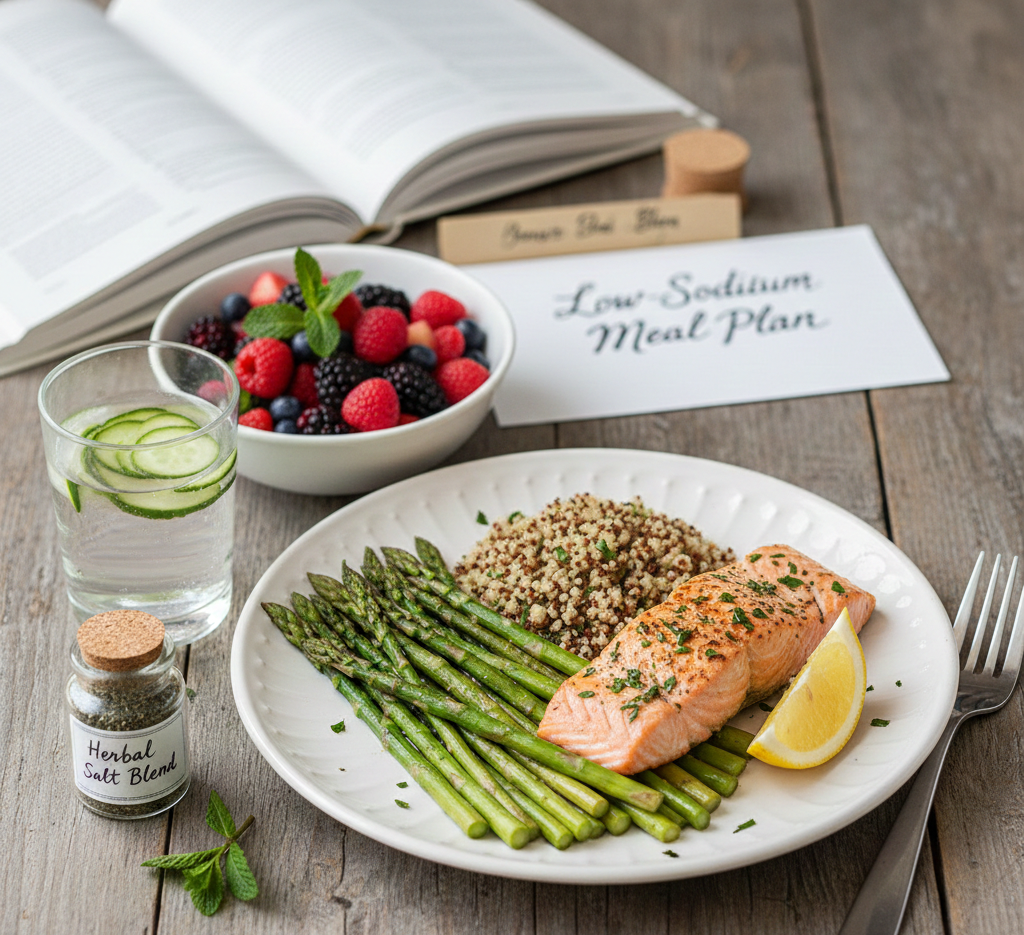
Low-Sodium Diabetic Meal Plan: The Ultimate Double-Defense Guide
Managing diabetes is rarely a solo act. It often brings along an unwanted partner: hypertension (high blood pressure). In fact, statistics suggest that nearly two out of three people with diabetes also report having high blood pressure. This creates a physiological “double whammy” that significantly increases the risk of heart attack, stroke, and kidney failure.
The solution isn’t just cutting carbs; it’s cutting the salt. A low-sodium diabetic meal plan is the gold standard for metabolic protection. It’s about more than just hiding the salt shaker—it’s about reimagining how you flavor food, understanding hidden sodium traps, and balancing your blood sugar simultaneously.
In this comprehensive guide, we will dismantle the myth that “low salt” means “no flavor.” We will provide you with a structured plan, shopping strategies, and the culinary secrets needed to protect your heart and pancreas without sacrificing the joy of eating.
What You’ll Learn In This Guide
- Why sodium and diabetes are a dangerous combination
- The deep science: sodium, insulin, and kidney function
- Hidden sodium traps in “healthy” foods
- How to read a nutrition label for sodium
- Full 7-day low-sodium diabetic meal plan
- Low-sodium breakfast, lunch, dinner, and snack recipes
- Flavor engineering without salt
- Sodium and diabetes medications
- Low-sodium vs. DASH diet vs. standard ADA guidelines
- Grocery shopping, meal prep, and batch cooking
- Eating out and navigating social situations
- Low-sodium plans for specific conditions (kidney disease, heart failure, seniors, pregnancy)
- Budget strategies and international cuisine ideas
- Exercise, supplements, and electrolyte balance
- Psychological strategies for long-term success
- Monitoring your progress
- Myths, mistakes, and FAQs
The Lethal Combination: Why Sodium Matters for Diabetics
Why is salt such a villain in the diabetic narrative? When you consume excess sodium, your body holds onto water to dilute it. This increases blood volume, which raises blood pressure. For a diabetic whose blood vessels are already prone to damage from high glucose, this added pressure is disastrous.
Expert Insight: “Think of your blood vessels like a garden hose. Diabetes causes the hose to become stiff and brittle. High sodium turns up the water pressure. A stiff hose under high pressure is a recipe for a burst.”
Furthermore, there is a direct link to kidney health. The kidneys act as the body’s filtration system. High blood pressure damages these delicate filters. If you are already concerned about renal function, adopting a low-sodium approach is the first line of defense. (See our detailed renal diabetic meal plan for advanced kidney care).
The Sodium-Glucose Feedback Loop
There’s a less-discussed relationship worth understanding: chronically high blood glucose itself can affect how the kidneys handle sodium. Elevated glucose increases sodium reabsorption in the kidney’s tubules, which means poorly controlled blood sugar can actually make it harder for your body to excrete excess sodium in the first place. This creates a two-way street — high sodium worsens blood pressure, and poorly controlled glucose makes the body retain more sodium than it otherwise would. Addressing both diet levers together, rather than one at a time, produces better results than either strategy alone.
Sodium, Insulin Resistance, and Weight
High-sodium diets are also strongly associated with higher consumption of ultra-processed foods, which tend to be calorie-dense and carbohydrate-heavy at the same time. It’s rarely sodium acting alone; it’s usually a marker for a broader dietary pattern that also drives blood sugar instability and weight gain. This is part of why cutting sodium so often produces knock-on benefits for glucose control, even though salt itself doesn’t directly raise blood sugar.
The “Healthy” Foods That Are Salt Bombs
Many diabetics switch to “healthy” foods to control their sugar, inadvertently spiking their sodium intake. It is crucial to identify these imposters.
| Food Item | Why It’s Dangerous | Better Alternative |
|---|---|---|
| Canned Veggies | Preserved in brine. One can may contain 1000mg+ sodium. | Frozen vegetables (plain) or “No Salt Added” cans. |
| Cottage Cheese | Often recommended for protein, but loaded with salt. | Greek Yogurt (plain) or Low-Sodium Cottage Cheese. |
| Deli Turkey | Processed with sodium nitrate to preserve color/texture. | Home-roasted turkey breast or boiled chicken. |
| Vegetable Juice | A single glass can exceed the daily sodium limit. | Homemade smoothies or raw veggies. |
| Salad Dressings | “Light” or “Fat-Free” versions often add salt for flavor. | Olive oil & vinegar with fresh herbs. |
| Bread & Bagels | Bread is a top sodium source simply due to how often it’s eaten, not per-slice content. | Low-sodium or sprouted grain bread, eaten in smaller portions. |
| Soup (canned/boxed) | A single serving can carry 700–1,200mg of sodium, and most containers hold 2+ servings. | Homemade stock or “reduced sodium” labeled soups, diluted further. |
| Marinades & Sauces | Soy sauce, teriyaki, and BBQ sauce are among the saltiest condiments by volume. | Coconut aminos, citrus-based marinades, dry spice rubs. |
| Cheese | Even “healthy” cheeses like feta or parmesan are naturally high in sodium from the curing process. | Use as a garnish (1 tbsp) rather than a main ingredient. |
If you are shopping on a budget, it is tempting to rely on canned goods. Check our low-income diabetic menu for tips on how to rinse canned foods to reduce sodium by up to 40%.
How to Read a Nutrition Label for Sodium
Sodium labeling can be genuinely confusing, and manufacturers are skilled at making high-sodium foods look reasonable at first glance.
The Terms That Actually Matter
- “Sodium Free”: Less than 5mg per serving.
- “Very Low Sodium”: 35mg or less per serving.
- “Low Sodium”: 140mg or less per serving.
- “Reduced Sodium”: At least 25% less sodium than the original product — but the original may have been extremely high to begin with, so this label alone doesn’t guarantee a genuinely low-sodium food.
- “Light in Sodium” / “Lightly Salted”: At least 50% less sodium than the regular version.
The Serving Size Trap
The single biggest label mistake people make is ignoring the serving size. A frozen entrée might list “480mg sodium,” which sounds manageable, until you notice the package actually contains 2.5 servings. If you eat the whole tray (which most people do), you’ve just consumed 1,200mg — nearly your entire daily target in one meal.
Watch for Sodium’s Aliases
Sodium doesn’t only appear as “salt” on an ingredient list. Also scan for: monosodium glutamate (MSG), sodium bicarbonate (baking soda), sodium nitrate/nitrite, sodium benzoate, disodium phosphate, and sodium citrate. Each of these contributes to your daily total even though the word “salt” never appears.

Flavor Without the Spike
Retrain your palate with high-quality, salt-free seasoning blends. Garlic herb, lemon pepper, and spicy chipotle blends can make you forget the salt shaker entirely.
Check Price on Amazon7-Day Low-Sodium Diabetic Meal Plan
This menu is designed to keep sodium under 1,500mg per day while maintaining stable blood glucose. It emphasizes fresh ingredients and whole foods.
Day 1: The Herb Garden
- Breakfast: Oatmeal cooked with water, topped with walnuts and cinnamon (naturally sodium-free).
- Lunch: Grilled chicken breast seasoned with rosemary and lemon juice. Spinach salad with oil/vinegar.
- Dinner: Baked Salmon (use fresh dill, no salt) with quinoa and steamed broccoli.
- Snack: Apple slices with almond butter.
Day 2: Potassium Power
Potassium helps counteract sodium. (Note: Limit this if you have advanced kidney disease).
- Breakfast: Avocado toast on low-sodium sprouted grain bread. Sprinkle with red pepper flakes.
- Lunch: Lentil soup made from scratch (dry lentils, no bouillon cubes) with carrots and celery.
- Dinner: Stir-fry using low-sodium soy sauce substitute (Coconut Aminos), tofu, bell peppers, and snap peas.
- Snack: Unsalted sunflower seeds.
Day 3: Heart Healthy Focus
For a deeper dive into cardiac care, refer to the heart-healthy diabetic menu.
- Breakfast: Egg white omelet with mushrooms and onions. Flavor with nutritional yeast instead of cheese.
- Lunch: Tuna salad made with mashed avocado instead of mayonnaise. Serve in lettuce cups.
- Dinner: Roast Turkey Tenderloin with sweet potato (skin on) and green beans.
- Snack: Pear.
Day 4: Plant-Based Low Sodium
- Breakfast: Smoothie with spinach, banana, flaxseed, and unsweetened almond milk.
- Lunch: Quinoa bowl with black beans (rinsed thoroughly), corn, and fresh salsa (check label for sodium).
- Dinner: Whole wheat pasta tossed with olive oil, garlic, roasted cherry tomatoes, and basil.
- Snack: Carrot sticks with homemade hummus (limit tahini/salt).
Day 5: Comfort Food Remixed
- Breakfast: Greek yogurt (plain) with berries and chia seeds.
- Lunch: Leftover Turkey Tenderloin sandwich on low-sodium bread with mustard.
- Dinner: “Unstuffed” Cabbage Rolls: Ground lean beef, cabbage, onions, and low-sodium tomato sauce over brown rice.
- Snack: Air-popped popcorn seasoned with garlic powder (no salt).
Day 6: The Weekend Prep
Batch cooking helps control sodium. See our diabetic menu for working adults for prep ideas.
- Breakfast: Scrambled eggs with diced bell peppers. Side of orange slices.
- Lunch: Grilled shrimp skewers with a large mixed green salad.
- Dinner: Roasted Chicken Thighs (skinless) with root vegetables (parsnips, turnips) roasted in olive oil.
- Snack: Handful of unsalted almonds.
Day 7: Simple Sunday
- Breakfast: Whole grain toast with peanut butter (check ingredients: just peanuts).
- Lunch: Chicken vegetable soup (homemade stock is essential here).
- Dinner: Flank steak (marinated in lime, cumin, cilantro) with grilled zucchini.
- Snack: Grapes.
Looking for more variety? You can adapt our 30-day diabetic menu by simply removing added salt and processed meats from the recipes.

Recipes That Actually Taste Good
Don’t get stuck eating bland chicken. Get hundreds of chef-created recipes that prioritize flavor profiling over sodium content.
Check Price on AmazonFlavor Engineering: How to Cook Without Salt
The biggest fear when starting a low-sodium diabetic meal plan is that food will taste bland. This only happens if you simply remove salt without replacing it. You must use the “Flavor Triangle”: Acid, Heat, and Herbs.
1. Acid (The Salt Mimic)
Lemon juice, lime juice, and vinegar (apple cider, balsamic, red wine) brighten up food in a way that mimics salt. A squeeze of lemon on steamed broccoli or fish makes the natural flavors pop.
2. Heat (The Distractor)
Chili flakes, cayenne pepper, and fresh jalapenos distract the tongue from the lack of salt. Spicy food is also great for metabolism.
3. Fresh Herbs (The Aromatic)
Dried herbs lose potency. Fresh basil, cilantro, parsley, and mint provide a complexity that salt cannot match. If you are a senior with diminishing taste buds, increasing aromatics is crucial.
Read more: Diabetic menu for seniors.
4. Umami (The Depth-Builder)
Umami-rich, naturally low-sodium ingredients add savory depth without a sodium cost. Mushrooms (especially dried and rehydrated shiitake), nutritional yeast, roasted garlic, tomato paste, and a small amount of unsalted parmesan rind simmered in a soup all build the “savory backbone” that people usually associate with salt.
5. Toasting & Browning
The Maillard reaction — the browning that happens when you sear meat, roast vegetables, or toast spices in a dry pan before adding them to a dish — develops complex flavor compounds that make food taste more “finished,” reducing the craving for added salt.
Best Low-Sodium Swaps for Common Pantry Staples
| High-Sodium Staple | Low-Sodium Swap |
|---|---|
| Soy Sauce (900mg+/tbsp) | Coconut Aminos (~90mg/tbsp) or low-sodium tamari |
| Bouillon Cubes | Homemade stock or “no-sodium-added” broth |
| Table Salt | Citrus zest, vinegar, or a salt-free herb blend |
| Garlic Salt | Garlic powder (check for “no salt added”) |
| Ketchup | No-salt-added tomato paste with vinegar and a touch of allulose |
| Canned Soup | Homemade soup with fresh herbs and no-salt-added stock |
Sodium and Diabetes Medications: What to Know
Sodium intake doesn’t exist in a vacuum — it interacts with several medications commonly prescribed alongside diabetes management.
- ACE Inhibitors & ARBs (common for diabetic kidney protection): These already lower blood pressure and can raise potassium levels. Pairing them with potassium-based salt substitutes can push potassium too high, so check with your prescriber before switching to a “lite salt” product.
- Diuretics (“Water Pills”): Some diuretics cause the body to lose sodium and potassium, while others (potassium-sparing) do the opposite. Your ideal sodium and potassium targets can shift depending on which type you’re prescribed.
- SGLT2 Inhibitors: These diabetes medications increase urinary glucose and fluid loss, which can also affect electrolyte balance, particularly in hot weather or with vigorous exercise.
None of this means you should avoid a low-sodium approach — quite the opposite, it’s usually recommended — but it does mean your target isn’t necessarily “as low as possible.” Your care team can give you a personalized number based on your specific prescriptions and kidney function.
Low-Sodium vs. DASH Diet vs. Standard ADA Guidelines
| Approach | Sodium Target | Primary Focus | Best For |
|---|---|---|---|
| Low-Sodium Diabetic Plan | ~1,500mg/day | Sodium restriction + glucose control | Diabetics with hypertension or early kidney concerns |
| DASH Diet | ~2,300mg/day (1,500mg for the stricter version) | Blood pressure via whole foods and potassium-rich produce | General hypertension management |
| Standard ADA Guidance | Under 2,300mg/day | Balanced carbohydrate and general nutrition | General diabetes management without significant hypertension |
In practice, a low-sodium diabetic meal plan borrows heavily from DASH principles — plenty of vegetables, fruit, lean protein, and whole grains — while layering in the carbohydrate awareness that DASH alone doesn’t address.
Grocery Shopping and Meal Prep for Low-Sodium Success
Sample Low-Sodium Grocery List
- Fresh or frozen (plain) vegetables — no sauce packets
- Fresh poultry, fish, and lean cuts of meat (not pre-marinated or brined)
- Dry beans and lentils instead of canned, or “no salt added” canned versions
- Plain oats, brown rice, quinoa
- Unsalted nuts and seeds
- Fresh garlic, onions, ginger, and a rotating selection of fresh herbs
- Citrus fruits (lemons, limes) for acid-based flavoring
- No-salt-added canned tomatoes and tomato paste
- Low-sodium or homemade stock
- Vinegar varieties: balsamic, apple cider, red wine
Batch-Cooking Tips
Cook a large pot of unsalted stock or beans on the weekend, then portion and freeze. Season individual meals right before eating rather than salting the entire batch — this lets each family member adjust to their own taste and keeps your base ingredients flexible for multiple recipes throughout the week.
Eating Out on a Low-Sodium Diabetic Plan
Restaurant meals are the single largest source of “invisible” sodium for most people, often exceeding 2,000mg in one dish. A few practical strategies:
- Ask for sauces and dressings on the side so you control the amount.
- Request “no added salt” when ordering grilled or roasted proteins — most kitchens can accommodate this.
- Avoid the bread basket and pickled items at the start of the meal, both common sodium bombs.
- Choose grilled over breaded or fried proteins, since breading often contains salt in the coating itself.
- Be cautious with Asian cuisine unless you can request low-sodium soy sauce, since soy-based sauces are among the highest-sodium condiments in any cuisine.
Common Mistakes on a Low-Sodium Diabetic Diet
- Switching only the salt shaker: Most dietary sodium comes from processed and restaurant food, not the shaker on your table.
- Over-relying on potassium-based salt substitutes without checking with a doctor, especially if you take blood pressure medication or have any kidney impairment.
- Assuming “natural” or “organic” means low-sodium — these labels have nothing to do with sodium content.
- Not reading the serving size and underestimating total sodium in a package.
- Removing salt but adding sugar to compensate for blandness, which undermines the diabetes half of the equation.
- Giving up during the “bland” adjustment window instead of pushing through the 2–3 weeks it typically takes for taste buds to recalibrate.
Myths vs. Facts About Sodium and Diabetes
Pros and Cons of a Low-Sodium Diabetic Diet
Advantages
- Blood Pressure Control: Significant reduction in systolic pressure within weeks.
- Reduced Bloating: Less water retention means you feel lighter and less puffy.
- Kidney Protection: Slows the progression of diabetic nephropathy.
- Better Taste Sensitivity: After 2-3 weeks, your taste buds reset, and natural foods taste sweeter.
Disadvantages
- Adjustment Period: Food may taste “bland” for the first 14 days.
- Cooking Time: Requires more scratch cooking; convenience foods are usually off-limits.
- Social Difficulty: Eating out becomes challenging as restaurant food is notoriously salty.

Track Your Vital Stats
You manage your glucose with a meter; manage your heart with a BP monitor. Seeing the numbers drop is the best motivation to stick to the diet.
Check Price on AmazonThe Deep Science: Sodium, Insulin, and Your Kidneys
To truly understand why a low-sodium diabetic meal plan works, it helps to understand the biological machinery at play. This isn’t just about “less salt equals lower blood pressure.” The relationship between sodium, insulin signaling, and kidney function is a three-way conversation that determines how your body manages fluid, glucose, and blood pressure simultaneously.
The Renin-Angiotensin-Aldosterone System (RAAS)
When sodium levels in the blood are high, or when blood volume increases, the kidneys release an enzyme called renin. Renin triggers a cascade: angiotensinogen becomes angiotensin I, which is converted to angiotensin II by ACE (angiotensin-converting enzyme). Angiotensin II is a potent vasoconstrictor — it narrows blood vessels, which directly raises blood pressure. It also signals the adrenal glands to release aldosterone, which tells the kidneys to reabsorb more sodium and water, further increasing blood volume.
In people with type 2 diabetes, this system is often already overactive. Insulin resistance itself stimulates the RAAS, creating a state where the body is perpetually telling itself to retain sodium even when levels are adequate. This is one reason why many people with type 2 diabetes develop hypertension even before significant weight gain occurs.
How High Insulin Drives Sodium Retention
Insulin has a lesser-known function beyond glucose disposal: it directly stimulates sodium reabsorption in the kidneys. When insulin levels are chronically elevated — as they are in insulin resistance — the kidneys hold onto more sodium than they should. This is called “insulin-mediated sodium retention.” It means that the hyperinsulinemia common in type 2 diabetes is itself a driver of fluid retention and elevated blood pressure, independent of dietary salt intake.
This is a crucial insight: even if two people eat the same amount of sodium, the person with insulin resistance will retain more of it because their elevated insulin levels are constantly signaling the kidneys to hold on. Reducing sodium intake in this context is especially important because the body’s “brakes” on sodium retention are already compromised.
SGLT2 Inhibitors: The Sodium Connection
SGLT2 inhibitors (such as empagliflozin, dapagliflozin, and canagliflozin) work by blocking sodium-glucose co-transporter 2 in the kidneys. Normally, this transporter reabsorbs both sodium and glucose back into the blood. When it’s blocked, both glucose and sodium are excreted in the urine. This is why SGLT2 inhibitors have a modest diuretic effect and can lower blood pressure — they’re literally helping the body get rid of excess sodium.
If you’re taking an SGLT2 inhibitor, your sodium needs may be slightly different from someone not on this medication. The increased urinary sodium loss means you may not need to restrict sodium as aggressively, but you also need to stay well-hydrated and be aware of electrolyte shifts, particularly in hot weather or during intense exercise.
The Kidney-Glucose-Sodium Triangle
Your kidneys filter approximately 180 liters of blood per day. In a healthy person, they excrete excess sodium while retaining what’s needed. In diabetes, this filtering system takes a double hit:
- High blood glucose damages the delicate glomerular membranes over time, reducing filtration efficiency.
- High blood pressure puts mechanical stress on the same glomerular structures, accelerating damage.
- High sodium worsens the blood pressure, completing the destructive triangle.
Breaking any one leg of this triangle helps the other two. Lowering sodium reduces blood pressure, which reduces mechanical stress on the kidneys, which helps preserve filtration function, which helps the kidneys manage glucose and sodium more effectively. It’s a virtuous cycle that starts with what you put on your plate.
Inflammation and Endothelial Dysfunction
Beyond the mechanical effects on blood pressure, excess sodium has been shown to promote systemic inflammation and impair endothelial function — the ability of blood vessel linings to dilate and contract properly. Studies have demonstrated that high-sodium diets increase levels of pro-inflammatory cytokines and reduce the bioavailability of nitric oxide, a molecule essential for blood vessel relaxation. In people with diabetes, whose endothelial function is already compromised by chronic hyperglycemia, this added sodium-driven inflammation accelerates vascular damage throughout the body, from the large arteries of the heart to the tiny capillaries of the retina and kidneys.
Low-Sodium Diabetic Breakfast Recipes & Ideas
Breakfast is often the hardest meal to navigate on a low-sodium diabetic plan. Cereals, breads, yogurt, and even eggs prepared the usual way can carry surprising sodium loads. The key is starting with naturally sodium-free staples and building flavor from scratch.
Savory Oatmeal with Spinach and Poached Egg
Cook steel-cut oats in water with a pinch of black pepper and garlic powder. In the last two minutes, stir in a handful of baby spinach until wilted. Top with a poached egg and a drizzle of extra-virgin olive oil. The egg yolk provides richness that replaces the need for salt, while the spinach adds iron and folate.
Blueberry-Almond Overnight Oats
Combine 1/2 cup rolled oats, 1/2 cup unsweetened almond milk, 1/4 cup plain Greek yogurt, 1 tablespoon chia seeds, and 1/2 cup fresh blueberries in a mason jar. Refrigerate overnight. In the morning, top with sliced almonds and a drizzle of pure maple syrup (1 teaspoon).
Sweet Potato and Black Bean Breakfast Bowl
Roast diced sweet potato cubes with cumin, smoked paprika, and olive oil at 400F for 15 minutes. Layer over cooked quinoa with rinsed black beans, sliced avocado, and a squeeze of lime.
Apple-Cinnamon Protein Smoothie
Blend 1 small apple (cored, with skin), 1 scoop unsweetened vanilla protein powder, 1 tablespoon almond butter, 1/2 teaspoon cinnamon, 1 cup unsweetened almond milk, and a handful of ice.
Mushroom and Herb Egg Scramble
Sauté sliced cremini mushrooms in olive oil until golden, then add two beaten eggs and fresh chives. Scramble gently and serve on a bed of arugula dressed with lemon juice.
Quick Low-Sodium Breakfast Combos (Under 100mg Sodium)
- Toast + Topping: 2 slices low-sodium sprouted grain bread with 2 tablespoons unsalted almond butter and sliced banana (total sodium: ~30mg).
- Yogurt Parfait: 1 cup plain Greek yogurt with 1/2 cup mixed berries, 1 tablespoon unsalted walnuts, and a drizzle of honey (total sodium: ~60mg).
- Cottage Cheese Swap: 1/2 cup low-sodium cottage cheese with fresh peaches and ground flaxseed (total sodium: ~90mg).
- Leftover Grain Bowl: 1/2 cup leftover brown rice or quinoa with a fried egg and sliced avocado (total sodium: ~40mg).
Low-Sodium Diabetic Lunch Recipes for Work & Home
Lunch is where convenience foods collide with sodium. Deli sandwiches, canned soups, and frozen meals are all sodium-heavy. The solution is batch-prepping low-sodium components on the weekend so weekday lunches assemble in minutes.
Mediterranean Chicken Grain Bowl
Season chicken breasts with oregano, thyme, garlic powder, and a squeeze of lemon. Grill or pan-sear until cooked through. Slice and serve over cooked farro with diced cucumber, cherry tomatoes, kalamata olives (2-3 olives), and a drizzle of olive oil mixed with red wine vinegar.
Turkey and Avocado Lettuce Wraps
Use large butter lettuce leaves as wraps. Fill with sliced home-roasted turkey breast, mashed avocado, shredded carrots, and a squeeze of lime.
Japanese-Inspired Salmon Rice Bowl
Season a salmon fillet with ginger, garlic, and a small amount of coconut aminos (about 1 teaspoon). Bake at 400F for 12-15 minutes. Serve over brown rice with sliced cucumber, edamame (unsalted), and pickled ginger.
Hearty Lentil and Vegetable Soup
Sauté diced onions, carrots, and celery in olive oil. Add 1 cup dry green lentils, 4 cups no-sodium-added vegetable broth, a can of no-salt-added diced tomatoes, and season with thyme, bay leaf, and black pepper. Simmer for 25 minutes.
Stuffed Bell Peppers (Low-Sodium Version)
Hollow out bell peppers and fill with a mixture of cooked ground turkey, brown rice, diced tomatoes (no salt added), corn, cumin, and chili powder. Top with a small sprinkle of part-skim mozzarella and bake at 375F for 25 minutes.
Meal Prep Strategy: The Sunday System
Dedicate 90 minutes on Sunday to preparing these five components:
- Cook a large batch of whole grains (quinoa, brown rice, or farro) — about 3 cups dry.
- Roast or grill 2 pounds of protein (chicken breast, salmon fillets, or turkey tenderloin) with different seasonings for each.
- Prepare two large pots of soup or stew and portion into individual containers.
- Wash and chop fresh vegetables for salads and grain bowls.
- Make a batch of homemade dressing (olive oil, vinegar, mustard, herbs — no salt).
Low-Sodium Diabetic Dinner Recipes: From Simple to Gourmet
Dinner is where the low-sodium approach truly shines, because you have time to build layers of flavor.
Herb-Crusted Rack of Lamb with Roasted Vegetables
Combine fresh rosemary, thyme, garlic, and olive oil into a paste. Coat rack of lamb and roast at 450F for 20-25 minutes. Serve with roasted Brussels sprouts and carrots tossed in olive oil and balsamic vinegar.
Coconut Curry Chicken with Cauliflower Rice
Sauté chicken pieces in coconut oil with Thai curry paste (check label), fresh ginger, and garlic. Add light coconut milk and simmer. Stir in bell peppers and snap peas in the last 5 minutes. Serve over riced cauliflower.
Pan-Seared Duck Breast with Cherry Reduction
Score the duck skin and sear skin-side down for 12-15 minutes. Meanwhile, simmer 1 cup frozen cherries with 2 tablespoons balsamic vinegar until thickened. Slice duck and drizzle with cherry reduction.
One-Pan Lemon Garlic Shrimp and Asparagus
Toss shrimp and asparagus with olive oil, minced garlic, lemon zest, red pepper flakes, and black pepper. Roast at 425F for 8-10 minutes. Finish with fresh parsley and a squeeze of lemon juice.
Slow-Cooker Pulled Pork (No-Salt Rub)
Rub a pork shoulder with smoked paprika, brown sugar, garlic powder, onion powder, cumin, black pepper, and cayenne. Cook in slow cooker with onions and apple cider vinegar on low for 8 hours. One 3-pound roast yields about 10 servings.
Weekly Dinner Rotation Template
| Night | Protein | Cooking Method | Flavor Profile |
|---|---|---|---|
| Monday | Chicken breast | Grilled | Mediterranean (herbs, lemon) |
| Tuesday | Salmon fillet | Baked | Asian (ginger, coconut aminos) |
| Wednesday | Ground turkey | Stovetop | Mexican (cumin, chili powder) |
| Thursday | Tofu or tempeh | Stir-fried | Thai (curry paste, lime) |
| Friday | Shrimp | Roasted | Italian (garlic, basil) |
| Saturday | Lean beef | Grilled | American (herb rub) |
| Sunday | Slow-cooker batch | Braised | Comfort (smoky, sweet) |
50+ Low-Sodium Diabetic Snack Ideas
Snacking is where many people unknowingly blow their sodium budget. Stock your kitchen with whole-food snacks that require zero processing.
Fresh Fruit Options (All Under 5mg Sodium)
- Apple slices with 1 tablespoon unsalted almond butter
- Half a grapefruit (check with your doctor if you take statins)
- Frozen grapes — they taste like sorbet and take longer to eat
- Mixed berries with a dollop of unsweetened whipped cream
- Pear slices with a small handful of unsalted walnuts
- Citrus segments (orange, mandarin, or clementine)
- Banana with 1 tablespoon unsalted peanut butter
Vegetable-Based Snacks
- Carrot and celery sticks with homemade hummus
- Cucumber rounds topped with mashed avocado
- Bell pepper strips with guacamole
- Roasted chickpeas seasoned with cumin and paprika
- Cherry tomatoes with fresh mozzarella (1 small ball) and basil
- Jicama sticks with lime juice and chili powder
- Sugar snap peas with unsalted edamame
Protein-Rich Snacks
- Hard-boiled egg (about 65mg sodium) with black pepper
- Homemade turkey meatballs
- Edamame pods (frozen, unsalted)
- Tuna mixed with avocado instead of mayo
- Roasted unsalted almonds (1 oz = about 23 nuts)
- Chia seed pudding made with unsweetened almond milk
Sweet Treats (Diabetic-Friendly and Low-Sodium)
- Dark chocolate (70%+ cacao) — 1 oz squares, about 5mg sodium
- Frozen banana “ice cream” (blend frozen bananas until creamy)
- Homemade energy balls: oats, unsalted peanut butter, flaxseed, a touch of honey
- Baked apple with cinnamon and a small drizzle of maple syrup
- Coconut yogurt (unsweetened) with dark chocolate chips
Low-Sodium Diabetic Meal Plan for Weight Loss
Weight loss and sodium reduction are natural allies. Excess sodium causes the body to retain water — often 2-4 pounds of water weight that masks true progress on the scale.
How Low Sodium Supports Weight Loss
- Reduces appetite: High-sodium meals increase appetite and caloric intake at subsequent meals.
- Eliminates processed foods: The biggest sodium sources are also the biggest calorie sources.
- Improves insulin sensitivity: Lower sodium intake has been linked to improved insulin sensitivity.
- Reduces bloating: Less water retention creates a flatter abdomen and less digestive discomfort.
Calorie-Controlled Low-Sodium Sample Day (1,500 Calories)
| Meal | Food | Calories | Sodium | Carbs |
|---|---|---|---|---|
| Breakfast | Overnight oats with berries and chia seeds | 310 | 20mg | 42g |
| Snack | Apple slices with 1 tbsp almond butter | 190 | 5mg | 25g |
| Lunch | Grilled chicken salad with olive oil dressing | 420 | 90mg | 15g |
| Snack | Carrot sticks with 2 tbsp hummus | 100 | 65mg | 12g |
| Dinner | Baked salmon with quinoa and roasted broccoli | 480 | 110mg | 35g |
| Total | 1,500 | ~290mg | ~129g |
Expert Insight: “When weight loss is a goal alongside sodium restriction, prioritize protein at every meal. Protein is the most satiating macronutrient, has minimal sodium, and helps preserve muscle mass during caloric deficit.”
Weight Loss Plateau Breakers on a Low-Sodium Plan
- Increase non-starchy vegetables: Fill half your plate with vegetables like zucchini, cauliflower, and leafy greens.
- Time your carbohydrates: Eat your largest carbohydrate-containing meal earlier in the day.
- Add resistance training: Building muscle increases resting metabolic rate.
- Check portion creep: Use a food scale for 1-2 weeks to verify you’re eating the portions you think you are.
- Manage stress and sleep: Chronic stress elevates cortisol, which promotes abdominal fat storage.
Adapting the Low-Sodium Plan for Type 1 vs. Type 2 Diabetes
Type 1 Diabetes Considerations
- Insulin-dependent sodium handling: People with type 1 diabetes do not produce insulin, so insulin-mediated sodium retention is less of a factor. However, exogenous insulin injections can still cause sodium and fluid retention at higher doses.
- Exercise and hyponatremia risk: People with type 1 diabetes who exercise vigorously may be at slightly higher risk for exercise-associated hyponatremia because they may already be restricting sodium.
- Carb counting takes priority: For type 1 diabetes, carbohydrate counting and insulin dosing are the primary management tools. Sodium restriction sits alongside rather than in front of carbohydrate management.
- CGM synergy: If you use a CGM, you can observe how different meals affect your glucose in real time, pairing well with sodium reduction.
Type 2 Diabetes Considerations
- Insulin resistance amplifies sodium retention: Lowering sodium intake is even more impactful for type 2 diabetes because it addresses a mechanism that’s already overactive.
- Weight loss synergy: For many people with type 2 diabetes, weight loss can dramatically improve or even reverse insulin resistance. The low-sodium approach often accelerates weight loss.
- Medication adjustments: As you lose weight and improve insulin sensitivity, your medications may need to be adjusted downward — a good sign that your diet is working.
Low-Sodium Diabetic Meal Plan for Seniors
Older adults with diabetes face unique challenges with sodium restriction. See our diabetic menu for seniors for a comprehensive overview.
Why Seniors Are Especially Vulnerable
- Diminished taste acuity: After age 60, taste bud density decreases. Older adults often crave saltier food to perceive adequate flavor.
- Medication load: Seniors often take 5-10+ medications, many affecting sodium and potassium balance.
- Sarcopenia risk: Adequate protein intake is essential for preventing muscle loss, requiring careful selection of lean, low-sodium protein sources.
- Hydration challenges: The thirst mechanism weakens with age, making sodium management a balancing act.
Practical Tips for Seniors
- Use aromatic seasonings generously — fresh herbs, citrus zest, garlic, and onion powder.
- Batch cook and freeze in single portions for always-available nutritious meals.
- Consider texture modifications: soups, stews, smoothies, and mashed preparations.
- Involve a caregiver or family member with weekly meal prep.
- Monitor sodium and potassium together with regular blood tests.
Low-Sodium Diabetic Meal Plan for Kidney Disease (CKD)
When diabetes and CKD coexist, sodium management becomes even more critical. See our renal diabetic meal plan for a dedicated plan.
Sodium Targets by CKD Stage
| CKD Stage | GFR Range | Sodium Target | Key Considerations |
|---|---|---|---|
| Stage 1-2 | 60-89 mL/min | Under 2,300mg/day | Mild reduction; focus on whole foods |
| Stage 3a | 45-59 mL/min | Under 2,000mg/day | Begin monitoring potassium |
| Stage 3b | 30-44 mL/min | Under 1,800mg/day | Protein restriction may begin |
| Stage 4 | 15-29 mL/min | Under 1,500mg/day | Strict sodium and potassium limits |
| Stage 5 | <15 mL/min | Under 1,500mg/day | Fluid restriction may apply |
Potassium: The Hidden Complication
- Leach high-potassium vegetables by dicing and soaking 2-4 hours, then boiling in large pot and draining.
- Choose lower-potassium fruits: apples, berries, grapes, pineapple.
- Monitor portion sizes: 1/2 cup fruit and 1 cup vegetables per meal.
- Avoid salt substitutes — most are potassium chloride.
Low-Sodium Diabetic Meal Plan for Heart Failure
Heart failure and diabetes frequently coexist. Most cardiologists recommend 1,500-2,000mg of sodium per day for people with heart failure, with some severe cases requiring under 1,000mg.
Expert Insight: “For heart failure patients, sodium isn’t just about long-term outcomes — it’s about day-to-day symptom control. A single high-sodium restaurant meal can cause noticeable ankle swelling within hours.”
Heart Failure-Specific Dietary Principles
- Fluid restriction may also apply: Some patients need to limit total fluid intake to 1.5-2 liters per day.
- Small, frequent meals: Five to six small meals may be more comfortable than three large ones.
- Adequate protein despite restrictions: Prioritize lean, low-sodium protein to prevent muscle wasting.
- Beware of NSAIDs: They cause sodium and water retention and can worsen heart failure.
Meal Prep Mastery: Batch Cooking & Freezer Meals
The 4-Container System
- Protein Container: Cook 2-3 pounds of lean protein with different seasonings for each batch.
- Grain Container: Prepare 4-6 cups of cooked whole grains as the base for bowls, salads, and side dishes.
- Vegetable Container: Wash, chop, and store raw vegetables. Also roast a large sheet pan of mixed vegetables.
- Sauce Container: Prepare 2-3 low-sodium sauces: a lemon-herb vinaigrette, a garlic-ginger sauce, and a chimichurri.
Freezer-Friendly Low-Sodium Meals
- Chicken and vegetable soup — freezes for up to 3 months
- Black bean and sweet potato chili — flavors improve after freezing
- Stuffed bell peppers — freeze individually wrapped
- Turkey meatballs — freeze on a sheet pan, then transfer to bags
- Lentil and vegetable curry — freezes perfectly
- Salmon patties — freeze uncooked or cooked
Eating on a Budget: Low-Sodium Diabetic Meals for Less
The core strategy of cooking from whole ingredients is actually cheaper than buying processed foods. See our low-income diabetic menu for more tips.
Top 10 Budget Low-Sodium Diabetic Staples
| Food | Average Cost | Sodium | Why It’s Great |
|---|---|---|---|
| Dry beans & lentils | $0.10-0.15/serving | ~5mg | Protein, fiber, iron, extremely cheap |
| Oats | $0.08-0.12/serving | ~0mg | Complex carbs, beta-glucan fiber |
| Eggs | $0.25-0.40/egg | ~65mg each | Complete protein, versatile |
| Frozen vegetables | $0.30-0.50/serving | ~10mg | Nutritionally equivalent to fresh |
| Brown rice | $0.08-0.12/serving | ~5mg | Whole grain, stores indefinitely |
| Whole chickens | $1.50-2.50/lb | ~70mg/serving | Roast once, multiple meals; bones make stock |
| Potatoes & sweet potatoes | $0.40-0.60/serving | ~10mg | Filling, versatile |
| Cabbage | $0.20-0.30/serving | ~15mg | Lasts weeks in fridge |
| Carrots | $0.15-0.25/serving | ~35mg | Snackable, soups, roasting |
| Frozen chicken thighs | $1.00-1.50/serving | ~75mg | More flavor than breast, cheaper |
Weekly Budget Meal Plan ($50-60/Week for One Person)
- Breakfasts: Oatmeal with fruit (5 days) + egg scramble (2 days) = ~$8
- Lunches: Bean and rice bowls (3 days) + big-batch soup (4 servings) = ~$10
- Dinners: Roasted whole chicken (3-4 meals) + baked potato and green beans (2 meals) + lentil curry (2 meals) = ~$22
- Snacks: Carrots, apples, unsalted popcorn, homemade hummus = ~$8
- Pantry staples: Amortized weekly cost ~$5
Low-Sodium International Cuisine: Global Flavors Without the Salt
Mexican-Inspired
- Fajitas: Season with cumin, chili powder, garlic powder, and lime juice. Serve in corn tortillas with fresh pico de gallo.
- Black bean soup: Cook dried beans with onion, garlic, cumin, and smoked paprika.
- Guacamole: Mash avocados with lime juice, diced onion, tomato, cilantro, and cumin.
Asian-Inspired
- Stir-fry: Use coconut aminos (90mg/tbsp vs. 900mg for soy sauce) or rice vinegar, garlic, and ginger.
- Pho-inspired soup: Make broth from scratch with charred onion, ginger, star anise, and cinnamon.
- Sushi bowls: Rice, fresh fish, rice vinegar, coconut aminos, and sesame seeds.
Mediterranean-Inspired
- Shakshuka: Poach eggs in tomato sauce with bell peppers, onions, cumin, and paprika.
- Greek salad: Cucumber, tomato, red onion, small amount of feta, olive oil, and red wine vinegar.
Indian-Inspired
- Dal: Cook lentils with turmeric, cumin, coriander, ginger, garlic, and tomatoes.
- Tandoori-style chicken: Marinate in yogurt, paprika, cumin, coriander, turmeric, and garam masala.
Quick Low-Sodium Sauce Guide by Cuisine
| Cuisine | High-Sodium Sauce | Low-Sodium Alternative |
|---|---|---|
| Mexican | Salsa from jar (200-400mg/tbsp) | Fresh pico de gallo (~5mg/tbsp) |
| Asian | Soy sauce (900mg/tbsp) | Coconut aminos (90mg/tbsp) |
| Italian | Store-bought marinara (300-500mg/half cup) | Homemade with fresh tomatoes (~15mg) |
| Indian | Curry paste from jar (300-600mg/tbsp) | Homemade spice blend (~5mg/tbsp) |
| American | BBQ sauce (250-400mg/tbsp) | Homemade: tomato paste, vinegar, spices (~10mg) |
Navigating Holidays, Parties & Social Eating
Before the Event
- Eat a small, low-sodium snack before arriving.
- Offer to bring a dish — guarantees at least one low-sodium option.
- Set a mental sodium budget: keep breakfast and lunch very low-sodium to compensate.
During the Event
- Fill your plate once — scan the buffet and choose your best options on the first pass.
- Focus on fresh items: grilled meats, fresh salads, roasted vegetables.
- Limit bread and crackers — among the highest-sodium items on any table.
- Drink water between bites to slow your eating pace.
- Be polite but firm: “I’m watching my salt intake” is sufficient.
After the Event
- Don’t “punish” yourself — return to normal eating at the next meal.
- Drink extra water to help kidneys flush excess sodium.
- Resume your routine immediately.
Holiday-Specific Tips
Thanksgiving
- Turkey (naturally low-sodium if not pre-brined) is ideal
- Make gravy from scratch with pan drippings
- Sweet potato casserole is fine in small portions
- Cranberry sauce: make from fresh cranberries
Christmas / Holiday Dinner
- Ham is extremely high in sodium — limit to 2-3 oz
- Roast beef or prime rib is a better centerpiece
- Steamed vegetables with olive oil and herbs are always safe
- Desserts are usually low-sodium
Exercise, Sodium, and Diabetes: Finding the Balance
How Exercise Affects Sodium Balance
During exercise, the body loses sodium through sweat — estimated at 500-1,500mg per liter. For a moderate 60-minute workout, you might lose 200-600mg of sodium.
Exercise Sodium Guidelines
| Activity Level | Duration | Sodium Strategy |
|---|---|---|
| Light activity | Under 30 minutes | No additional sodium needed |
| Moderate exercise | 30-60 minutes | Small snack with sodium post-workout |
| Vigorous exercise | 60-90 minutes | Low-sodium electrolyte drink post-workout |
| Endurance / hot | 90+ minutes | Electrolyte replacement during and after |
The Best Exercises for Blood Pressure and Blood Sugar
- Walking (30 minutes daily): The most evidence-based exercise for reducing blood pressure.
- Resistance training (2-3x/week): Builds muscle and improves insulin sensitivity.
- Swimming: Full-body, low-impact exercise ideal for people with joint issues.
- Yoga: Reduces both systolic blood pressure and fasting glucose levels.
- HIIT: Short bursts of intense activity improve insulin sensitivity efficiently.
Supplements, Electrolytes & Micronutrients
Key Electrolytes to Monitor
| Electrolyte | Role | Diet Impact | Food Sources |
|---|---|---|---|
| Sodium | Fluid balance, nerve signaling | Deliberately reduced | Whole foods naturally contain 50-400mg/serving |
| Potassium | Counteracts sodium, heart rhythm | May increase with more produce | Potatoes, bananas, beans, leafy greens |
| Magnesium | Insulin sensitivity, muscle function | Often depleted in diabetes | Nuts, seeds, dark chocolate, leafy greens |
| Calcium | Bone health, muscle contraction | Some diuretics increase calcium loss | Dairy, fortified plant milks, leafy greens |
| Chloride | Acid-base balance | Decreases with sodium restriction | Tomatoes, celery, olives, lettuce |
Supplements Worth Discussing with Your Doctor
- Magnesium glycinate (200-400mg daily): Improves insulin sensitivity and may lower blood pressure.
- Vitamin D (1,000-2,000 IU daily): Deficiency is common in diabetes and associated with worse outcomes.
- Omega-3 fatty acids (1-2g EPA+DHA daily): Reduces triglycerides and has modest blood-pressure-lowering effects.
- Coenzyme Q10 (100-200mg daily): May help reduce blood pressure and improve endothelial function.
- B-complex vitamin: Especially important if you take metformin, which depletes B12.
DIY Low-Sodium Electrolyte Drink
- 2 cups water
- 1/4 teaspoon salt (about 575mg sodium)
- 2 tablespoons honey or maple syrup
- Juice of 1 lemon or lime
Monitoring Your Progress: Blood Pressure, Weight & A1C
Blood Pressure Monitoring
- Frequency: Check at the same time each day for consistency.
- Target: ADA recommends under 130/80 mmHg for most people with diabetes.
- Technique: Sit quietly 5 minutes. Feet flat, arm at heart level, cuff on bare skin. Take 2-3 readings and record the average.
- When to expect changes: Measurable improvement within 1-2 weeks, full effects by 4-6 weeks.
Blood Glucose Tracking
- Fasting glucose: Target 80-130 mg/dL.
- Post-meal glucose: Target under 180 mg/dL (2 hours after eating).
Weight and Waist Circumference
- Weigh yourself weekly at the same time for consistency.
- Expect initial rapid loss: first 3-5 pounds is typically water weight.
- Waist circumference: under 40 inches for men, under 35 for women.
What Good Progress Looks Like
| Metric | Starting Point | At 4 Weeks | At 3 Months |
|---|---|---|---|
| Systolic BP | 140 mmHg | 130-135 mmHg | 120-130 mmHg |
| Fasting glucose | 150 mg/dL | 130-140 mg/dL | 110-130 mg/dL |
| Weight | Baseline | -3 to 5 lbs | -8 to 15 lbs |
| A1C | 8.0% | No change yet | 7.0-7.5% |
The Psychology of Diet Change: Staying on Track Long-Term
The Habit Loop: Cue, Routine, Reward
- Cue: After-work hunger. Routine: Reach for chips. Replacement: Air-popped popcorn with garlic powder and lime.
- Cue: Lunchtime at the office. Routine: Deli sandwich. Replacement: Pre-packed grain bowl from meal prep.
- Cue: Evening boredom. Routine: Crackers and cheese. Replacement: Herbal tea and unsalted almonds.
The “Two-Week Wall” and How to Get Past It
- Front-load your support system — tell someone what you’re doing.
- Keep a taste journal — note one good flavor experience daily.
- Allow one flexible meal per week — planned flexibility prevents all-or-nothing thinking.
- Track non-scale victories: better energy, sleep, less bloating.
Motivation Strategies That Actually Work
- Visual tracking: Mark each successful day on a calendar.
- Accountability partnerships: Share photos of meals and check in weekly.
- Reframe the narrative: “I’m choosing foods that protect my heart and kidneys.”
- Celebrate milestones: Reward yourself with something unrelated to food after 30 days.
Low-Sodium Diabetic Cooking Techniques: Master the Fundamentals
Dry Heat Methods (Baking, Roasting, Grilling)
- Roasting vegetables: Uniform pieces, olive oil, single layer on sheet pan, 425F for 20-30 minutes. Don’t overcrowd.
- Grilling: Char adds smoky flavor. Marinate proteins in citrus and herbs first.
- Spice crusts: Coat fish or chicken in ground spices before baking.
Moist Heat Methods (Braising, Poaching, Steaming)
- Braising: Sear protein, add flavorful liquid (herbs, garlic, onion), cook covered at low temperature for 1-3 hours.
- Poaching: Gently cook in water, white wine, lemon slices, peppercorns, and fresh herbs.
- Steaming with infusions: Add herbs or citrus to steaming water.
Flavor Concentration Techniques
- Reduction: Simmer until half volume for concentrated flavor.
- Toasting spices: Dry-toast 30-60 seconds to release oils and deepen flavor.
- Caramelizing onions: Cook 30-45 minutes over medium-low heat for sweet, jammy depth.
- Charring: Blacken skin of peppers, tomatoes, or eggplant for smoky flavor.
Acid and Brightness Techniques
- Finishing with citrus: A squeeze of lemon or lime just before serving transforms flat-tasting dishes.
- Vinegar deglazing: Pour wine vinegar into hot pan after searing to create flavorful sauce base.
- Quick-pickled garnishes: Onions, cucumbers, or radishes in vinegar (not brine) add tangy crunch.
Kids, Teens & Family Low-Sodium Diabetic Meal Planning
Age-Appropriate Adaptations
| Age Group | Approach | Key Foods | Tips |
|---|---|---|---|
| Toddlers (1-3) | Naturally low-sodium | Sweet potato, avocado, vegetables, plain yogurt | Introduce diverse flavors early |
| Children (4-12) | Involve in cooking | Fruit, chicken tenders, pasta, cheese in moderation | Let them choose between healthy options |
| Teens (13-18) | Teach label reading | Smoothies, grain bowls, pizza, stir-fry | Address peer pressure around fast food |
Kid-Friendly Low-Sodium Recipes
- Homemade chicken nuggets: Coat in crushed unsalted cornflakes, garlic powder, and paprika. Bake at 400F.
- Mini meatloaves: Ground turkey with oats, egg, onion, garlic powder. Muffin tin, 20 minutes.
- Fruit frozen yogurt: Blend frozen berries with Greek yogurt and honey.
- Veggie-loaded mac and cheese: Butternut squash puree sauce with sharp cheddar and nutmeg.
Low-Sodium Diabetic Meal Plan for Gestational Diabetes
Keep sodium under 2,300mg per day during pregnancy. Excessive restriction is not recommended as pregnant women need adequate sodium for increased blood volume.
Expert Insight: “Pregnancy is not the time for dramatic dietary experiments. Focus on carbohydrate quality and meal timing for blood sugar control.”
Key Nutritional Priorities
- Folate: 600mcg daily from leafy greens, legumes, and fortified grains.
- Iron: 27mg daily from lean red meat, spinach, and lentils.
- Calcium: 1,000mg daily from dairy, fortified plant milks, and leafy greens.
- DHA (Omega-3): 200-300mg daily from low-mercury fish or supplements.
- Protein: 71g daily, spread across all meals and snacks.
Sample Gestational Diabetes Low-Sodium Day
| Meal | Food | Sodium | Carbs | Protein |
|---|---|---|---|---|
| Breakfast | Whole grain toast with avocado and eggs | 200mg | 28g | 18g |
| Snack | Greek yogurt with walnuts and berries | 80mg | 20g | 15g |
| Lunch | Grilled salmon salad with olive oil dressing | 120mg | 15g | 30g |
| Snack | Apple with almond butter | 5mg | 25g | 4g |
| Dinner | Chicken breast with quinoa and broccoli | 100mg | 35g | 35g |
| Total | ~505mg | ~123g | ~102g |
Seasonal Eating: Summer & Winter Strategies
Summer Strategies
- Hydrate strategically: Increase water, add a pinch of salt if exercising outdoors.
- Embrace raw preparations: Cold salads, crudités, and chilled soups like gazpacho.
- Grill everything: Corn, zucchini, eggplant, and peppers develop natural sweetness.
- Frozen fruit treats: Blend frozen berries with coconut milk and freeze in popsicle molds.
Winter Strategies
- Batch-cook soups and stews: Minestrone, chicken vegetable, or lentil soup freeze perfectly.
- Roast root vegetables: Sweet potatoes, parsnips, and carrots with cinnamon, cumin, or rosemary.
- Warm spice blends: Cinnamon, nutmeg, ginger, cardamom, and allspice.
- Citrus for brightness: Squeeze orange or lemon over heavy winter dishes.
Year-Round Pantry Essentials
- Extra-virgin olive oil and regular olive oil
- At least 3 types of vinegar (balsamic, apple cider, red wine)
- No-salt-added canned tomatoes (diced, crushed, and paste)
- 8-10 dried spices (cumin, paprika, turmeric, coriander, cinnamon, garlic powder, onion powder, black pepper)
- Fresh garlic and onions
- Low-sodium or homemade stock
- Coconut aminos
- Dried beans and lentils
More Myths vs. Facts: Advanced Sodium Misconceptions
Real Results: What Happens When You Commit
Case Study 1: The Type 2 Diagnosis Turning Point
“After my A1C came back at 8.7 and my blood pressure was 152/94, I started a low-sodium meal plan and began walking 30 minutes a day. Within four weeks, my home BP dropped to 128/82. At three months, my A1C was 7.1.”
Key changes: Eliminated all processed foods, cooked from scratch daily, walked after dinner, lost 12 pounds.
Case Study 2: The Kidney Function Stabilizer
“When my eGFR dropped to 42, my nephrologist put me on a strict low-sodium diet. Six months later, my eGFR was stable at 40 — no further decline. BP went from 148/90 to 122/78.”
Key changes: CKD-appropriate low-sodium plan, leached high-potassium vegetables, worked with renal dietitian.
Case Study 3: The Medication Reducer
“I was on three BP medications and still not at target. After three months of a DASH-style low-sodium approach, my doctor reduced one medication and lowered another. I also lost 18 pounds.”
Key changes: DASH-based low-sodium plan, batch-cooked on weekends, used herbs and spices liberally.
Your Weekly Low-Sodium Diabetic Tracker
Use this tracker template each week to monitor your sodium intake, blood sugar, blood pressure, and physical activity.
| Day | Est. Sodium | Fasting BG | Post-Meal BG | Blood Pressure | Exercise |
|---|---|---|---|---|---|
| Mon | ____mg | ____mg/dL | ____mg/dL | ____/____ | __________ |
| Tue | ____mg | ____mg/dL | ____mg/dL | ____/____ | __________ |
| Wed | ____mg | ____mg/dL | ____mg/dL | ____/____ | __________ |
| Thu | ____mg | ____mg/dL | ____mg/dL | ____/____ | __________ |
| Fri | ____mg | ____mg/dL | ____mg/dL | ____/____ | __________ |
| Sat | ____mg | ____mg/dL | ____mg/dL | ____/____ | __________ |
| Sun | ____mg | ____mg/dL | ____mg/dL | ____/____ | __________ |
- Weigh yourself once per week (same day, same time).
- Record one non-scale victory per week.
- At the end of each week, identify one thing to improve next week.
The 14-Day Quick Start: Your First Two Weeks
Week 1: Foundation (Days 1-7)
- Day 1: Read nutrition labels on every packaged food in your kitchen. Note sodium content.
- Day 2: Replace your salt shaker with a salt-free herb blend.
- Day 3: Make one homemade meal from scratch.
- Day 4: Buy lemons, limes, and fresh herbs. Use them at every meal.
- Day 5: Prepare a batch of plain brown rice or quinoa.
- Day 6: Rinse all canned beans and vegetables before using.
- Day 7: Cook one full day of meals using the Day 1 menu.
Week 2: Expansion (Days 8-14)
- Day 8: Try one new low-sodium recipe from this guide.
- Day 9: Prepare a full day of meals in advance.
- Day 10: Eat at a restaurant using the eating-out strategies.
- Day 11: Start using the weekly tracker.
- Day 12: Do 30 minutes of physical activity.
- Day 13: Cook a full-day menu, batch-prepping for tomorrow.
- Day 14: Review your first two weeks. What worked? Plan one adjustment.
Frequently Asked Questions
The AHA generally recommends no more than 2,300 mg per day for healthy adults, but for those with diabetes or hypertension, the ideal limit is often lowered to 1,500 mg per day. Always consult your doctor for your specific target.
By weight, sea salt and pink salt contain roughly the same amount of sodium as table salt. While they have trace minerals, they still raise blood pressure just as much.
Proceed with caution. Many are made from Potassium Chloride. If you have kidney disease or take certain blood pressure medications, excess potassium can be dangerous.
Yes! Draining and rinsing under running water reduces sodium by about 40%.
Indirectly, yes. Sodium causes water retention, and low-sodium diets usually eliminate processed foods, significantly reducing calorie intake.
Most people notice a meaningful shift within 2 to 3 weeks of consistently eating lower-sodium meals.
It can, particularly for people on ACE inhibitors, ARBs, or diuretics. Discuss your specific sodium target with your prescriber.
Bread and baked goods — not because any single serving is extremely salty, but because they’re eaten so frequently.
Yes, with strategy. Choose grilled over fried, ask for sauces on the side, request no added salt, and avoid the bread basket. Steakhouses and Mediterranean restaurants tend to have the most low-sodium-friendly options.
Coconut aminos contain about 90mg sodium per tablespoon vs. 900mg+ for regular soy sauce — a 90% reduction. It’s slightly sweeter, so adjust recipes accordingly.
Sodium doesn’t directly raise blood sugar, but high-sodium diets are associated with ultra-processed, high-carb foods that do. Excess sodium also impairs insulin sensitivity over time.
Moderate exercise under 60 minutes generally doesn’t require extra sodium. For vigorous exercise over 90 minutes, especially in heat, consider a low-sodium electrolyte replacement.
Magnesium glycinate, vitamin D, and omega-3 fatty acids are commonly recommended. If you take metformin, a B-complex supplement prevents B12 depletion. Always discuss with your healthcare team.
Eat a low-sodium snack before the event, bring a healthy dish, focus on grilled meats and fresh vegetables, and limit high-sodium sides. One meal won’t undo your progress — return to normal eating at the next meal.
Moderate sodium restriction (under 2,300mg/day) is safe and beneficial. Excessive restriction is not recommended. Work with your OB-GYN for a personalized target.
Final Verdict: A Lifestyle of Longevity
Adopting a low-sodium diabetic meal plan is one of the most proactive steps you can take for your longevity. It effectively creates a shield around your kidneys and heart while you manage your blood sugar. It requires a shift in mindset — viewing food not as a vehicle for salt, but as a complex tapestry of natural flavors waiting to be unlocked.
Start small. Try one low-sodium day this week. Experiment with lemon juice instead of the salt shaker. If you are ready to take the next step, consider downloading our 7-day diabetic menu guide and applying the low-sodium principles you learned here.