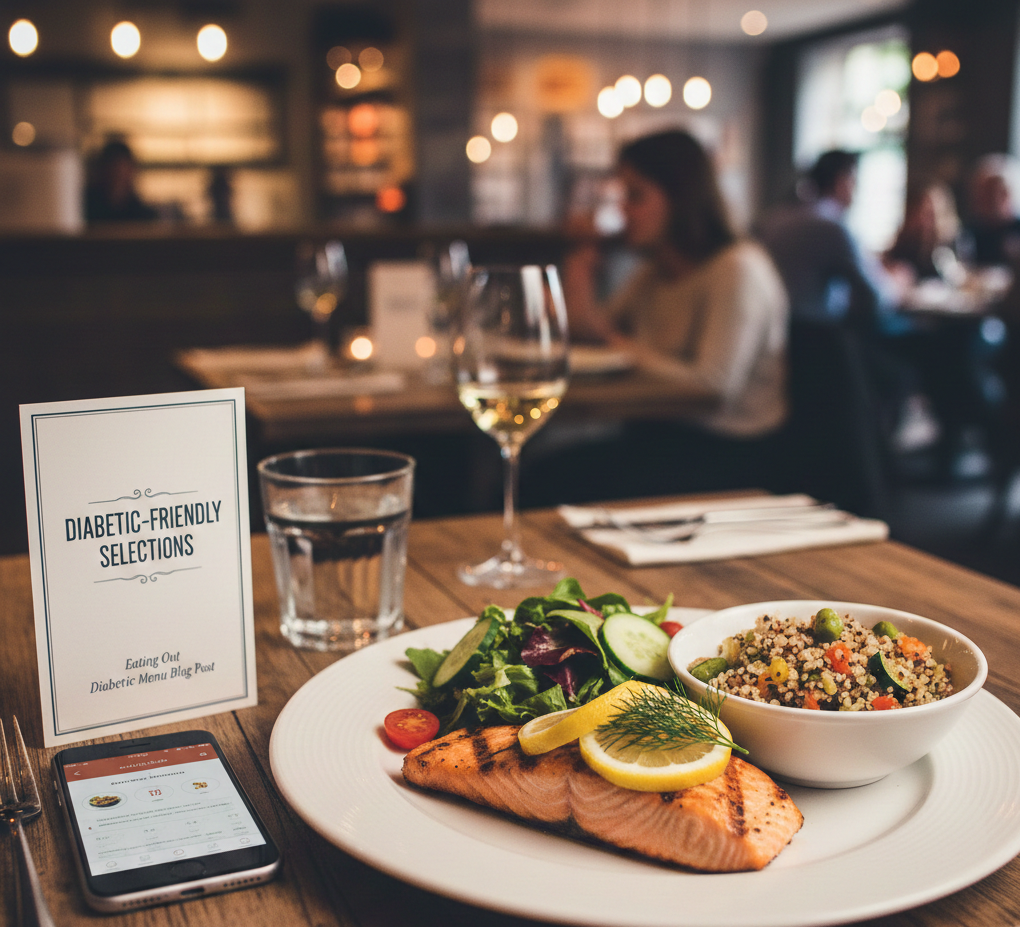
Eating Out Diabetic Menu: The Ultimate Guide to Restaurant Dining
Category: Lifestyle Guide | Reading Time: 15 Minutes
For many, the phrase “eating out” conjures images of relaxation, celebration, and convenience. However, for the millions of people living with diabetes, walking into a restaurant can feel less like a treat and more like a tactical mission. Hidden sugars in sauces, oversized portions, and the mystery of carbohydrate counts can turn a simple dinner into a source of anxiety.
But having diabetes does not mean you are sentenced to a lifetime of Tupperware and eating at home. An eating out diabetic menu strategy is entirely possible. It requires a shift in mindset: moving from passive consumption to active selection. Whether you are managing Type 1, Type 2, or Pre-diabetes, the restaurant world is still your oyster (which, incidentally, is a great low-carb choice!).
In this comprehensive guide, we will dismantle the menu. We will explore how to navigate everything from fast food joints to high-end steakhouses. We will discuss how to integrate restaurant meals into your weekly diabetic meal plan without derailing your progress. Put down the menu anxiety—it’s time to order with confidence.
The Pre-Game Strategy: Planning Before You Arrive
The battle for blood sugar control is often won or lost before you even step foot in the restaurant. Spontaneity is fun, but preparation is safe. If you are following a strict regimen like a 1500 calorie diabetic menu, checking the menu online is non-negotiable.
1. Analyze the Online Menu
Most restaurants publish nutritional information online. Look for the carbohydrate counts and sodium levels. If you are on a low sodium diabetic meal plan, you will be shocked to find that a single appetizer can contain your daily limit of salt.
2. The “Appetizer Trap”
Arriving hungry is dangerous. The bread basket or the bowl of tortilla chips is the nemesis of stable glucose. Consider eating a small, high-protein snack before you leave the house—perhaps something from our list of diabetic snack ideas—so you aren’t famished when you sit down.
3. Timing Your Medication
Restaurant service is slower than home cooking. If you take rapid-acting insulin, taking it when you order might lead to hypoglycemia if the food takes 45 minutes to arrive. Wait until the appetizer arrives or you see the food coming.

The Calorie King Calorie, Fat & Carbohydrate Counter
The pocket-sized bible for eating out. Quickly look up carb counts for thousands of restaurant chains and generic foods discreetly at the table.
Check Price on AmazonUnderstanding Menu Labeling: Why Some Menus Show Calories
You may have noticed that larger chain restaurants increasingly print calorie counts directly next to menu items, while small independent restaurants rarely do. This isn’t random. Many regions now require chain restaurants above a certain number of locations to disclose calorie information on printed menus and menu boards, while smaller independent restaurants are typically exempt from these requirements.
This distinction matters practically: at a large chain, you can often make a fully informed decision at a glance, while at an independent restaurant, the same information usually requires either checking the restaurant’s own website in advance or simply asking your server directly. Calorie counts alone also don’t tell the whole story for diabetes management, since two dishes with identical calories can have very different carbohydrate and sugar content depending on what those calories come from. Use posted calorie information as a helpful starting point, not the final word, and pair it with the ingredient-focused questions covered next.
Portion Sizes: A Simple Hand-Based Visual Guide
Restaurant portions are notoriously oversized, often two to three times a standard serving size, which makes visual portion estimation one of the most useful skills you can bring to any meal, sit-down or fast food alike. The advantage of using your own hand as a reference is that it’s proportional to your body size and it’s always with you, no scale or app required.
| Hand Reference | Approximate Portion |
|---|---|
| Palm of your hand (no fingers) | 3-4 oz of protein, roughly one serving of meat, poultry, or fish |
| Cupped hand | About 1/2 cup, a typical serving of rice, pasta, or potato |
| Closed fist | About 1 cup, a good target for non-starchy vegetables (you can have more) |
| Thumb (tip to base) | About 1 tablespoon, useful for estimating salad dressing or added fats |
| Thumb tip only | About 1 teaspoon, useful for butter, oil, or sauce drizzles |
When a restaurant plate arrives that clearly exceeds these proportions, and most do, mentally divide the plate before you take your first bite rather than after you’re already halfway through it. Asking for a to-go container at the start of the meal, and boxing up the excess before eating, removes the temptation entirely and turns one oversized restaurant meal into two reasonably portioned ones, effectively giving you a ready-made lunch for the following day.
The Exact Script: What to Say to Your Server
One of the biggest hurdles for people newly diagnosed with diabetes isn’t nutritional knowledge, it’s the social discomfort of asking for changes to a dish. Many of us grew up being told not to be “difficult” at a restaurant, and that conditioning is hard to shake. But servers field customized requests dozens of times a shift. Allergies, religious dietary rules, weight loss goals, and medical conditions like diabetes are all part of a normal night at work for them. You are not a burden; you are a paying customer with a medical need, and most kitchens are more flexible than the printed menu suggests.
Here is a simple script you can adapt at almost any sit-down restaurant. Start with a direct, friendly opener: “I have diabetes, so I need to keep an eye on carbs and sugar tonight. Could you help me with a couple of substitutions?” This single sentence does three things. It tells the server this is medical, not a picky preference. It signals you’re not asking them to redesign the whole menu. And it opens the door for them to actually recommend dishes, since many servers already know which kitchen items are lower in starch.
Four Questions Worth Asking Every Time
- “Is this sauce made with sugar or honey?” This single question eliminates most of the surprises hiding in barbecue glazes, teriyaki reductions, and “house” dressings.
- “Can I get double vegetables instead of the starch side?” Kitchens almost always say yes, since vegetables are usually cheaper than the rice or potato you’re swapping out.
- “Can the dressing or sauce come on the side?” This alone can cut 200-400 calories and a meaningful amount of added sugar from a salad or entrée.
- “Is this fried, or can it be grilled or baked instead?” Many kitchens will happily prepare the same protein a different way if you ask before you order rather than after the plate arrives.
If you are dining with a group and feel self-conscious about slowing things down, ask your questions quickly and decisively rather than agonizing out loud over the menu. A confident “I’ll have the salmon, grilled, with the sauce on the side and double broccoli instead of rice” takes five seconds and reads as decisive, not high-maintenance. For more scripts specific to work lunches and client dinners, see our guide to a diabetic menu for working adults.
Calling Ahead for Special Occasions
For milestone dinners like anniversaries, birthdays, or business dinners at unfamiliar restaurants, consider calling ahead during a slow period, like mid-afternoon. Ask to speak with a manager or chef and explain that you have diabetes and want to plan your order in advance. Nicer restaurants, in particular, are often thrilled to prepare something off-menu for a guest who calls ahead, since it lets the kitchen shine rather than scramble.
Decoding Menu Language: What Restaurant Words Really Mean
Restaurant menus are written by marketing teams, not dietitians. Certain words are practically flashing warning signs once you know what to look for, while others are quiet green lights.
Words That Signal Trouble
- “Crispy” or “Crunchy”: Almost always means breaded and deep-fried, adding a significant flour and oil load to what might otherwise be a lean protein.
- “Glazed” or “Candied”: These are sugar-based coatings, often brushed on more than once during cooking, common on salmon, carrots, and bacon.
- “Creamy” or “Smothered”: Signals a cream, cheese, or butter-based sauce that adds substantial saturated fat and calories.
- “BBQ” or “Teriyaki”: These sauces are built on a sugar or honey base and can add 15-20g of carbohydrate per serving without you realizing it.
- “Stuffed” or “Loaded”: Usually means extra cheese, extra starch, or both, layered inside or on top of the main item.
- “Battered” or “Tempura”: A flour-and-liquid coating fried to a crisp; treat this the same as a breaded item.
Words That Are Usually Safer
- “Grilled,” “Broiled,” or “Roasted”: These cooking methods generally involve little to no added flour or heavy sauce.
- “Steamed”: One of the gentlest preparations, especially for vegetables and seafood.
- “Blackened” or “Seared”: Usually just a spice rub and high heat, without significant added sugar.
- “On the side”: A phrase you should use often yourself when requesting sauces and dressings.
The Psychology of Dining Out: Handling Social Pressure
Nutrition information only solves half the problem. The other half is psychological. Well-meaning friends and family push desserts. Coworkers order a round of appetizers “for the table” that happens to be a basket of fried onion rings. A parent or in-law takes it personally when you decline the second helping of candied yams they made “just for you.” None of this is really about food; it’s about social bonding, and learning to navigate it without guilt or conflict is a genuine skill.
The “Broken Record” Technique
When someone repeatedly pushes food or drink on you, you don’t owe them a medical explanation every time. A calm, repeated response works better than debating your diagnosis at the table. Something like, “I’m good for now, but thank you,” said pleasantly and consistently, tends to end the conversation faster than a detailed explanation of your A1C targets.
Reframing “No” as Self-Care, Not Deprivation
People with diabetes often describe restaurant meals as a minefield of things they “can’t” have. Try flipping the internal script: you are choosing the grilled salmon because it makes you feel good afterward, not because a rule forbids the fettuccine alfredo. This reframe matters because willpower fueled by resentment tends to run out. Willpower fueled by genuinely wanting to feel steady, energized, and clear-headed for the rest of the evening tends to last.
Handling the “You Can Have One Bite” Crowd
If a taste of something derails your evening because “one bite” becomes three bites and then half the plate, it’s completely reasonable to skip the taste altogether and say so plainly: “I’ll pass, but it looks great.” You don’t need to justify this to anyone. If you’d rather participate a little, the Three Bite Rule described later in this guide gives you a structured, pre-decided way to taste something without spiraling.
Restaurants as a Support System, Not the Enemy
It helps to remember that a restaurant kitchen is, in a sense, on your side. Chefs generally want returning customers, and returning customers who feel well after a meal come back more often than those who leave feeling sluggish or guilty. Treating your server and the kitchen as collaborators rather than obstacles tends to produce better meals and a more relaxed night out. If anxiety about eating out is significant enough to make you avoid restaurants altogether, it may be worth discussing with your care team alongside your broader weekly diabetic meal plan, since social isolation carries its own health costs.
Cuisine-Specific Survival Guides
Different cuisines present different challenges. Here is how to navigate the most common restaurant types while sticking to your health goals.
1. Italian: The Carb Conundrum
Italian food is notorious for pasta and pizza, making it difficult for those on a low carb weekly diabetic menu.
- The Swap: Ask for “Zoodles” (zucchini noodles) or gluten-free pasta (often bean-based, which has more fiber). If not available, order a meat dish like Chicken Piccata or Marsala and swap the side of pasta for double steamed broccoli.
- The Pizza Hack: Thin crust is non-negotiable. Eat one or two slices max and fill up on a large Caesar salad (no croutons) beforehand.
2. Mexican: The Hidden Lard and Chips
Mexican food can actually be very diabetic-friendly if you avoid the fried tortillas. It fits well with high-fiber diets due to the beans.
- The Order: Fajitas are the gold standard. Grilled meat, peppers, and onions. Skip the tortillas and eat them with a fork, or ask for lettuce cups.
- The Beans: Ask for whole black beans or pinto beans instead of refried beans, which are often cooked with lard. This aligns better with a heart-healthy diabetic menu.
3. Chinese and Asian: The Sweet Sauce Trap
Asian cuisine is tricky because sauces like Teriyaki, General Tso’s, and Sweet & Sour are essentially sugar syrups.
- The Order: Steamed protein with sauce on the side. Brown rice is better than white, but still high carb—limit to 1/2 cup.
- The Soup: Hot and Sour soup or Egg Drop soup are generally low carb choices compared to Wonton soup (which has flour wrappers).
4. The Steakhouse: The Simplest Choice
A steakhouse is often the easiest place to eat. It naturally aligns with a high protein diabetic menu.
- The Order: Filet or Sirloin (leaner cuts).
- The Sides: Swap the loaded baked potato for grilled asparagus or spinach. Be wary of creamed spinach, which is high in calories.
The Chain Restaurant Cheat Sheet
Independent restaurants are wonderful, but chain restaurants have one huge advantage: predictability. Once you’ve found a diabetes-friendly order at a chain, that same order will taste and measure the same way whether you’re in Dhaka, Denver, or Dublin. Many major chains also publish full nutrition breakdowns online, which removes the guesswork almost entirely. Below is a quick-reference cheat sheet for some of the most commonly visited casual dining chains.
| Restaurant Type | Smart Order | What to Skip |
|---|---|---|
| Casual American Grill | Grilled chicken breast, double vegetables, side salad with dressing on the side | Loaded potato skins, sweetened barbecue glaze, sugary lemonade |
| Upscale Casual / Bistro | “Lighter fare” or “under 600 calorie” menu section if available; grilled fish with steamed vegetables | Cream-based soups, bread basket, oversized pasta portions |
| Fast-Casual Bowl Concept | Protein bowl with double greens, half portion of rice or beans, salsa instead of creamy sauce | Full-portion rice and beans together, queso, sugary agua fresca |
| Noodle and Stir-Fry Chains | Zucchini noodles or cauliflower rice base, grilled protein, extra vegetables | Cream-based noodle sauces, full-size wheat noodle portions |
| Sandwich / Sub Chains | Salad version of any sub, or open-face on whole grain with vinegar and oil | Footlong white bread subs, sweet sauces, footlong add-on cheese |
| Casual Burger Chains | Lettuce-wrapped single patty burger, side salad | Double-stack burgers, milkshakes, large fries |
Whenever you visit a chain for the first time, a quick search of the restaurant’s name plus “nutrition PDF” will usually surface a downloadable guide with full carbohydrate and sodium counts. Save the ones you use most often to your phone so you can reference them even with a weak signal inside the restaurant.
Buffets, Family-Style Meals, and All-You-Can-Eat Restaurants
Buffets present a unique challenge because the entire business model is built around volume. Unlimited food at a fixed price encourages overeating even in people without diabetes, and the sheer variety can make portion tracking feel impossible. That said, a buffet can absolutely fit into a diabetes-friendly lifestyle with a bit of strategy.
Survey Before You Serve
Walk the entire buffet line once with an empty plate before serving yourself anything. This “scouting lap” lets you compare options and identify the two or three dishes genuinely worth the carbohydrate budget, rather than filling your plate with the first appealing thing you see and regretting it three stations later.
Build the Plate in a Specific Order
Fill half the plate with non-starchy vegetables and salad first. Then add a palm-sized portion of protein. Only after those two categories are accounted for should you add a small scoop of a starch you actually want, rather than a starch that happened to be closest to the serving spoon.
Sit Away From the Food
Choose a table with your back to the buffet line, or at least out of easy sightline. Proximity to food is one of the strongest predictors of how much a person eats, buffet research consistently shows this, and simply removing the visual cue reduces “just one more trip” temptation.
Family-Style Dinners
Family-style restaurants, where shared platters land in the middle of the table, work best if you serve your own plate once and then physically push the serving dishes toward the center of the table, out of easy reach. This creates a small but real barrier between you and mindless refills while everyone continues talking and eating.
Sushi and Seafood Restaurants: A Hidden Carb Trap
Sushi has a reputation as a “healthy” choice, and fish itself is an excellent, lean protein. The problem is the rice. A single roll can contain nearly a full cup of sushi rice, which is seasoned with sugar and rice vinegar during preparation, meaning the carbohydrate load is baked in before the roll ever reaches your plate.
- The Order: Sashimi (fish with no rice) is the single lowest-carb option on any sushi menu, and pairs perfectly with edamame and a cucumber salad.
- The Roll Rule: If you want rolls, choose ones without tempura, spicy mayo, or “crunch” toppings, and stick to one or two pieces rather than an entire roll.
- Sauces: Eel sauce and spicy mayo are both sugar-heavy. Soy sauce and wasabi are safer flavor boosters.
- Non-Sushi Seafood: Grilled or broiled fish entrées at a seafood restaurant are typically excellent choices, especially when paired with steamed vegetables rather than rice pilaf or hush puppies.
Fried seafood, including popcorn shrimp, fish and chips, and coconut shrimp, should generally be treated the same as any other breaded and fried dish. If you love the flavor of fried seafood, look for a “blackened” or “grilled” version of the same fish on the menu, which usually delivers similar flavor with a fraction of the refined carbohydrate.
More Cuisine Guides: Indian, Thai, Mediterranean, and Korean BBQ
Beyond the most common cuisines covered earlier, several other global cuisines come up often enough in restaurant dining that they deserve their own quick strategy notes.
Indian Cuisine: Rich Sauces, Real Fiber
Indian food leans heavily on legumes and vegetables, which is genuinely good news, but the rich, ghee-based curries and naan bread can add up quickly. Favor tandoori-style grilled proteins and dal (lentil) dishes, which are naturally high in fiber and protein. Ask for naan to be shared or skipped altogether, and request plain basmati rice in a small, measured portion rather than the standard large scoop. Watch for the word “korma,” which usually signals a rich, cream- and cashew-based sauce with more calories and carbs than a tomato-based “masala” or dry “tikka” preparation.
Thai and Vietnamese: Balance the Sugar and Fish Sauce
Thai and Vietnamese cuisine often balances sweet, salty, and sour flavors, which means sugar is a common ingredient even in savory dishes. Pad Thai, in particular, is built on a sweetened tamarind sauce over rice noodles and can be one of the higher-carbohydrate items on a Thai menu. A better order is a stir-fried protein and vegetable dish, or a Vietnamese pho with extra bean sprouts, herbs, and lime, asking for the noodle portion to be reduced or the broth to be spooned over extra vegetables instead. Green papaya salad and fresh spring rolls (not fried) are both excellent lower-carb starters in this category.
Mediterranean and Greek: Naturally Diabetes-Friendly
Mediterranean cuisine is consistently highlighted in nutrition research as one of the more diabetes-friendly eating patterns available, largely because of its emphasis on olive oil, legumes, grilled proteins, and vegetables. A platter built around grilled chicken or lamb, a Greek salad, and hummus with cucumber instead of pita bread is an easy, satisfying order almost anywhere this cuisine is served. Be mindful of large portions of rice pilaf and be aware that baklava and other honey-soaked pastries are among the more sugar-dense desserts you’ll encounter in any cuisine.
Korean BBQ and Hot Pot: Cook Your Own Control
Korean barbecue and hot pot restaurants offer an unusual advantage: you often cook your own protein and vegetables at the table, which gives you direct control over portions and ingredients in a way a plated meal never allows. Load up on grilled meats and the accompanying vegetable side dishes (banchan), and go easy on the sweetened marinades used on bulgogi-style meats and the small bowl of white rice that typically accompanies the meal.
Vegetarian and Vegan Diabetic Dining Out
Plant-based eating and diabetes management overlap nicely on paper, since vegetables, legumes, and whole grains form the backbone of both, but restaurant vegetarian and vegan menus can quietly lean on refined carbohydrates to fill the plate when meat is removed. Pasta, rice bowls, bread, and fried tofu are common defaults, so a bit of extra attention pays off.
- Anchor the plate with plant protein. Tofu, tempeh, edamame, lentils, chickpeas, and beans all provide protein and fiber that slow digestion, unlike a plate built mostly around pasta or rice.
- Watch fried tofu and breaded “meat alternative” dishes. These follow the same “crispy equals breaded” rule covered earlier in this guide.
- Ask for extra vegetables in place of extra grain. Most kitchens will happily double the vegetable portion in a stir-fry or bowl at no charge.
- Be cautious with plant-based “milks” in coffee and smoothies. Some flavored oat and almond milks contain added sugar; ask for the unsweetened version specifically.
A vegetarian or vegan diner managing diabetes benefits from the same plate-method thinking described earlier in this guide: half vegetables, one quarter plant protein, one quarter intact, lower-glycemic carbohydrate.
Date Nights, Client Dinners, and First-Time Social Meals
Some restaurant meals carry extra social weight, a first date, a job interview lunch, a client dinner, where you may feel less comfortable asking detailed questions or requesting substitutions than you would with close family. A few adjustments make these higher-stakes meals easier to manage without drawing attention to your diabetes at all, if you’d rather keep it private.
Ordering Without Explaining
You never owe anyone a medical explanation for your order. “I’ll have the salmon with the vegetables, and could I get the sauce on the side?” reads as a completely normal, even sophisticated, order at any restaurant, with zero need to mention diabetes at all if you’d prefer to keep that information private in a professional or early-dating context.
Managing Alcohol in Professional or Social Settings
If declining a drink or ordering something unusual might draw questions you’d rather avoid, ordering a sparkling water with lime, or a light beer or dry wine consumed slowly alongside food, both blend in easily while keeping your choices safer, as covered in more detail in the alcohol section of this guide.
Choosing the Restaurant When You Have a Say
If you’re the one selecting the venue for a client dinner or date, steakhouses, Mediterranean restaurants, and modern American bistros with a “lighter fare” section tend to offer the most flexibility without feeling like a compromise, letting you steer the evening toward a diabetes-friendly menu before you even sit down.
Common Mistakes People Make When Eating Out With Diabetes
Even people who understand the nutrition science well can fall into a handful of predictable traps at restaurants. Recognizing these patterns in advance makes them far easier to avoid in the moment.
Mistake 1: Trusting the “Healthy” Label Blindly
A menu section labeled “light,” “fit,” or “healthy” isn’t independently verified. Some “healthy” salads, loaded with candied nuts, dried fruit, cheese, and a sugary vinaigrette, can carry more calories and carbohydrate than a simple burger. Always glance at the actual ingredients rather than trusting the section header alone.
Mistake 2: Skipping Meals to “Save Room”
Arriving at dinner having skipped breakfast and lunch to “save calories” almost always backfires, leading to overordering, faster eating, and a much sharper blood sugar swing than a day of consistent, spaced meals would produce.
Mistake 3: Assuming Grilled Always Means Healthy
Grilled items are often lower-carb, but many are basted in a sweetened marinade or finished with a butter compound at the table. “Grilled” tells you about the cooking method, not necessarily the sauce, so it’s still worth a quick clarifying question.
Mistake 4: Forgetting the Drink Entirely
It’s easy to carefully plan an entrée and then order a large regular soda or sweetened iced tea on autopilot. Beverages are frequently the single largest, and most avoidable, source of added sugar in an entire restaurant meal.
Mistake 5: Treating One Meal as a Referendum
A single higher-carb restaurant meal, whether planned or accidental, doesn’t undo weeks of consistent choices. Treating one dinner as a “failure” often triggers all-or-nothing thinking that leads to a worse pattern than the original meal ever would have.
Building Your Personal Restaurant Playbook
The single most effective long-term strategy in this entire guide is also the simplest: build a short, personal list of “safe” go-to orders at the restaurants you actually visit, rather than starting from scratch every single time you eat out.
- List your five most-visited restaurants. Think about where you actually eat, not an idealized list of health-food spots you rarely go to.
- Find one reliable order at each. Use the strategies in this guide, checking the online menu, asking your server the four key questions, and applying the plate method, to land on a dependable order.
- Write it down. Keep the list in your phone’s notes app, alongside your weekly diabetic meal plan, so it’s available the moment you need it.
- Revisit and refine quarterly. As new menu items appear or your own preferences shift, update your list rather than treating it as fixed forever.
Over time, this playbook removes almost all of the decision fatigue that makes dining out feel stressful in the first place. Ordering becomes a matter of habit and confidence rather than a fresh negotiation with the menu every time you sit down.
Restaurant Red Flags: A Quick Pre-Order Checklist
Before you finalize an order, run through this short mental checklist. It takes seconds once it becomes a habit, and it catches the majority of hidden carbohydrate and sugar traps covered throughout this guide.
- Does the description include a “trouble word” like crispy, glazed, smothered, battered, or loaded?
- Is there a starch (bread, rice, pasta, potato) I haven’t accounted for, hiding as a side or a base?
- Is the sauce or dressing already mixed in, rather than served on the side?
- Have I actually decided on a drink, or am I about to order a sugary one on autopilot?
- Am I ordering out of genuine hunger, or out of habit, boredom, or social pressure?
If you can answer these five questions before the server arrives at your table, you’ll walk into nearly any restaurant with a clear, confident plan rather than a last-second scramble through the menu.
The Fast Food Reality Check
Sometimes, life happens, and the drive-thru is the only option. Busy professionals relying on a diabetic menu for working adults know this struggle well.
Burger Joints
Most major chains will do a “lettuce wrap” or “protein style” burger. Removing the bun saves you 30-40g of carbohydrates instantly. Pair it with a side salad instead of fries. If you must have fries, choose the smallest size (kids size) and skip the ketchup (which is high sugar).
Sandwich Shops
Turn any sub into a salad (“sub in a tub”). If you need the bread, choose whole wheat and scoop out the soft inside dough to reduce the carb load. Load up on vinegar and oil instead of sugary onion sauce or honey mustard.
Breakfast Chains
Avoid the pancakes and waffles. Look for egg bites, oatmeal (unsweetened), or breakfast burritos where you can eat the filling and discard the tortilla. This mimics a good diabetic breakfast menu option.

Portable Portion Control Containers
Discreet containers to help you visualize proper portion sizes or pack leftovers instantly. Great for managing intake on the go.
Check Price on AmazonCoffee Shops and Smoothie Bars: The Sneakiest Sugar Sources
Of all the categories in this guide, coffee shops and juice bars may be the most underestimated. A basic black coffee has essentially zero carbohydrates, but the moment syrups, whipped cream, and flavored milks enter the picture, a single “coffee” can rival a slice of cake in sugar content.
Coffee Shop Rules of Thumb
- Choose unsweetened milk alternatives like unsweetened almond or oat milk over flavored syrups and sweetened creamers.
- Ask for “no pump” or “sugar-free syrup” if you want a flavored latte. Most major coffee chains carry a sugar-free version of their most popular syrups.
- Skip the whipped cream on hot drinks, or ask for it on the side so you control the amount, if any.
- Watch out for “refreshers” and frappe-style blended drinks. These are often built on a sweetened fruit base or juice concentrate and can carry 50 grams of carbohydrate or more in a single medium size.
The Smoothie and Juice Bar Trap
Smoothies feel virtuous because they’re built from fruit, but a 20-ounce smoothie can easily contain three to four servings of fruit blended with juice or sherbet, delivering 60-90 grams of carbohydrate in a single cup with almost none of the fiber that whole fruit provides. If you enjoy smoothies, look for a location that will build one around protein powder or Greek yogurt, a single serving of berries, and unsweetened almond milk, and ask them to hold the added juice, honey, or agave.
Food Trucks and Counter-Service Spots
Food trucks and small counter-service stalls don’t usually publish detailed nutrition information, which makes them trickier to navigate than a national chain. The good news is that the menus tend to be short, which makes it easier to ask direct questions and get a straight answer from the person actually cooking your food.
- Ask what’s pre-made versus made to order. Made-to-order items are easier to customize than something scooped from a pre-assembled tray.
- Watch for glazes and drizzles. Food truck cuisine, especially fusion concepts, often finishes a dish with a sweet sauce for visual appeal. Ask for it on the side or left off entirely.
- Bowls beat wraps and sandwiches. A protein-and-vegetable bowl gives you more control over the carbohydrate portion than a tortilla or bun that’s already built into the dish.
- Bring your own real question: “What’s in the sauce?” is often enough, since food truck operators tend to know their recipes by heart and can tell you immediately whether sugar or honey is involved.
Navigating Drinks and Desserts
The meal isn’t just the food. What you drink can have a bigger impact on your blood sugar than what you chew.
Alcohol and Diabetes
Alcohol prevents the liver from releasing glucose. This sounds good, but it can actually lead to delayed hypoglycemia (low blood sugar), especially if you are on insulin. Never drink on an empty stomach.
- Best Choice: Light beer, dry wine (red or white), or spirits with diet soda/soda water.
- Avoid: Sweet cocktails (Margaritas, Piña Coladas), dessert wines, and craft beers with high residual sugar.
The Dessert Dilemma
If everyone is ordering dessert, you don’t have to sit there with a glass of water. Two strategies work:
- The Three Bite Rule: Order the dessert, take three mindful bites to satisfy the taste, and push it away (or share it).
- The Berry Option: Ask for a bowl of fresh berries with a dollop of unsweetened whipped cream. This is a staple in many low sugar diabetic weekly menus.
The Glycemic Index and the Plate Method: A Quick Reference
Not all carbohydrates behave the same way in your body, even at identical gram counts. The glycemic index (GI) ranks how quickly a food raises blood sugar compared to pure glucose. Understanding roughly where common restaurant carbs fall on this scale helps you make faster, better decisions when the table is waiting on your order.
| Lower GI (Gentler Rise) | Higher GI (Sharper Spike) |
|---|---|
| Beans, lentils, chickpeas | White rice, white bread |
| Steel-cut or old-fashioned oats | Instant oatmeal, pancakes, waffles |
| Sweet potato (whole, not mashed) | Russet baked or mashed potato |
| Whole grain or sourdough bread | White dinner rolls, breadsticks |
| Most non-starchy vegetables | French fries, tater tots, hash browns |
| Berries, apples, pears | Watermelon, dried fruit, fruit juice |
You don’t need to memorize an exact numerical GI score for every food to benefit from this concept. The pattern that matters most is this: the more processed, mashed, or refined a carbohydrate is, the faster it tends to hit your bloodstream. A whole sweet potato behaves differently than the same sweet potato mashed and sweetened at a buffet. Whenever two similar options appear on a menu, lean toward the less processed, more intact version.
The Diabetes Plate Method, Restaurant Edition
The plate method is a visual shortcut that works whether you’re at a formal steakhouse or a paper-plate barbecue joint. Picture your plate divided into three sections: half filled with non-starchy vegetables or salad, one quarter filled with a lean protein, and one quarter filled with a carbohydrate source, ideally one of the lower-GI options above. This single mental image does most of the heavy lifting of carb counting without requiring a scale, an app, or a spreadsheet at the table, and it pairs naturally with any 1-day simple diabetic menu you’re already using at home.
Dining Out vs. Home Cooking: A Diabetic Comparison
While we can make eating out safer, it is important to understand the trade-offs compared to preparing a 1-day simple diabetic menu at home.
| Factor | Eating Out | Home Cooking |
|---|---|---|
| Portion Control | Difficult (Portions often 2-3x needed) | Precise (Can use scales) |
| Sodium Content | Extremely High | Controllable |
| Carb Counting | Estimates/Guesswork | Accurate |
| Social Aspect | High (Relaxation) | Variable (Work involved) |
| Cost | High | Low |
Eating Out While Traveling: Road Trips, Airports, and Cruises
Travel disrupts every routine that normally keeps blood sugar steady: meal timing, activity level, sleep, and time zones can all shift at once, and restaurant food becomes the default rather than the occasional treat. A little preparation goes a long way toward keeping a trip enjoyable instead of stressful.
Road Trips and Gas Station Stops
Gas station food courts have improved dramatically, but the candy aisle is still the most visible section by design. Look for hard-boiled eggs, string cheese, roasted nuts in the shell, sugar-free jerky, and bottled water as reliable staples nearly every travel stop carries. Packing a small cooler with diabetic snack ideas from home remains the single best strategy for long highway stretches where healthy options may be scarce for hours at a time.
Airport and Airplane Food
Airport terminals now often include a grab-and-go option with a protein box, hummus and vegetables, or a simple salad, and these are almost always a better choice than a fast food combo meal eaten under time pressure at the gate. If you’re flying with a meal service, most airlines allow advance requests for a diabetic or low-sugar meal, typically 24-48 hours before departure, through your booking. Carrying your own snacks onboard is still wise, since delays can push a scheduled meal hours past when you actually need to eat.
Cruises and All-Inclusive Resorts
Cruise ships and all-inclusive resorts essentially function as a permanent buffet, so the buffet strategies described earlier in this guide, the scouting lap, building your plate in a specific order, and sitting away from the food line, become daily habits rather than occasional tactics. Most cruise lines can accommodate a diabetes-friendly diet if you notify them during booking, and many main dining rooms will prepare a simplified, lower-carbohydrate version of the night’s entrée on request.
Holiday and Special Occasion Dining
Holidays concentrate nearly every restaurant challenge into a single meal: large portions, family pressure, sugary drinks, and dessert tables that stay out for hours. The good news is that the same core strategies from this guide apply, just with a bit more intention.
Thanksgiving, Holiday Dinners, and Potlucks
At a potluck or holiday dinner, you often can’t see nutrition information or ask a chef about ingredients, so visual triage becomes your main tool. Favor the roasted turkey or ham over casseroles bound together with cream soup and cheese. Take a modest scoop of one starchy side you genuinely love rather than a small taste of five different starches, which adds up quickly even in small portions. Green bean casserole, candied yams, and dinner rolls are classic “trouble word” dishes; a simple green salad or roasted vegetable side is usually available and much gentler on blood sugar.
Weddings and Formal Events
Most wedding and banquet caterers can accommodate a dietary request if you notify the host or venue in advance, similar to how you’d request a vegetarian or gluten-free plate. If advance notice isn’t possible, apply the plate method described earlier: fill up on the vegetable and protein components of the plated meal and treat the starch and dessert course as optional rather than default.
Office Parties and Potluck Lunches
Workplace celebrations often revolve around cake, donuts, and pizza brought in by a well-meaning coworker. Eating a small protein-forward snack before the party, similar to the “Appetizer Trap” strategy discussed earlier, prevents you from arriving hungry to a table covered in the day’s least diabetes-friendly options. If a slice of birthday cake matters to you socially, the Three Bite Rule described later in this guide lets you participate without a full-size portion.
Special Considerations for Complex Health Needs
If your diabetes is complicated by other conditions, the rules tighten slightly.
High Blood Pressure
For those needing a diabetic menu for high blood pressure, restaurant soups and marinades are the enemy. Request grilled meats with no salt added (just pepper) and dressing/sauces on the side. Lemon juice is your best friend for flavor.
Kidney Health
A renal diabetic meal plan requires watching potassium and phosphorus. This means avoiding the baked potato bar and tomato-based pasta sauces. Stick to white rice, cauliflower, and lean proteins.
Pregnancy
For a diabetic menu for pregnant women, food safety is paramount alongside blood sugar. Avoid undercooked meats (rare steaks), raw fish (sushi), and unpasteurized cheeses to prevent infections that could complicate the pregnancy.

Stylish Medical Alert Bracelet
If you have a hypoglycemic episode in a restaurant, this bracelet speaks for you. Essential safety gear for dining out alone or in groups.
Check Price on AmazonDining Out with Type 1 Diabetes: CGMs, Pumps, and Insulin Timing
Type 1 diabetes adds a layer of technical precision to restaurant dining that Type 2 management doesn’t always require, particularly around insulin dosing. Restaurant meals are notoriously hard to carb-count accurately because portions vary, hidden fats and sugars slow digestion, and service timing is unpredictable, all of which can throw off a pre-meal insulin dose.
Continuous Glucose Monitors at the Table
A continuous glucose monitor (CGM) is genuinely useful at restaurants because it shows the trend arrow, not just a single number, letting you see whether a meal is starting to spike blood sugar in real time rather than waiting for a fingerstick an hour later. Many people with Type 1 diabetes glance at their CGM app discreetly under the table partway through a meal to decide whether a small correction dose is needed before dessert arrives.
Handling High-Fat, High-Protein Meals
Restaurant dishes are often higher in fat than home-cooked meals, and fat slows gastric emptying, which can delay a blood sugar rise for hours after a meal ends. This is a common source of confusing overnight lows or unexpected late-night highs after a rich restaurant dinner. Extended or combination insulin bolus features, available on many pumps, are specifically designed for this “pizza effect,” and it’s worth discussing a restaurant-specific bolus strategy with your endocrinologist if you eat out frequently.
Dosing for Uncertainty
When you genuinely can’t estimate carbs with confidence, some clinicians recommend a strategy of dosing partially at the start of the meal and adding a smaller correction dose afterward once you have a clearer sense of the actual portion, rather than guessing the full dose upfront. This is a conversation to have with your own care team rather than a one-size-fits-all rule, since insulin sensitivity and target ranges vary significantly from person to person.
Eating Out with Kids Who Have Diabetes
Taking a child with Type 1 or Type 2 diabetes to a restaurant brings its own set of dynamics, since kids’ menus are almost universally built around chicken tenders, mac and cheese, and sugary drinks. A little planning helps the outing feel normal rather than restrictive for a child who already manages a lot at a young age.
- Let the child help choose within limits. Offering two or three pre-approved options (“grilled chicken or the turkey sandwich”) gives a sense of control without opening the door to the entire menu.
- Ask for substitutions early. Most kids’ menus will swap fries for apple slices, a side salad, or steamed vegetables on request, and kitchens are usually well-practiced at this since it’s a common ask from many families, not just those managing diabetes.
- Skip the “kids drink included” trap. Many kids’ meal combos automatically include a soda or juice box unless you specifically request water or milk instead.
- Normalize, don’t isolate. Where possible, order in a way that lets the child’s plate look similar to the rest of the table’s, just with smart substitutions, rather than a visibly different “diet plate” that singles them out in front of friends.
Involving kids in restaurant decision-making, rather than simply telling them what they can’t have, tends to build better long-term habits than strict rules imposed from the outside. Many families find it helpful to practice ordering scripts at home before a big outing, similar to the exact language covered in the “Ask Your Server” section above.
Apps and Tech Tools for Restaurant Nutrition Lookup
Beyond a printed carb-counting reference, a number of smartphone apps can speed up restaurant decision-making considerably. Most major nutrition-tracking apps maintain a restaurant food database that lets you search a chain by name and pull up nutrition facts for individual menu items in seconds, which is especially useful when a restaurant’s own website is slow to load or missing a full nutrition PDF.
- General food-logging apps with large restaurant databases are useful for quickly checking calories, carbs, and sodium for chain restaurant items before you order.
- Glycemic index lookup apps can help you quickly compare two carbohydrate options when you’re unsure which will spike blood sugar faster.
- CGM companion apps, for those using continuous glucose monitors, let you glance at your trend line discreetly at the table without pulling out a testing kit.
- Restaurant menu and reservation apps often display full menus, including nutrition callouts, before you ever leave the house, which supports the “Analyze the Online Menu” habit discussed earlier in this guide.
Post-Meal Habits: Walking, Monitoring, and Recovery
What you do in the hour after a restaurant meal can matter almost as much as what you ordered. A short walk after eating, even just 10 to 15 minutes around the parking lot or a nearby block, helps muscles pull glucose out of the bloodstream and can meaningfully blunt the post-meal spike that follows a carbohydrate-heavy dinner.
The Post-Meal Walk
Research on post-meal walking consistently shows a measurable blood sugar benefit compared to sitting or lying down immediately after eating. If a walk isn’t practical, even standing and doing light movement, like a stroll through a shop after dinner, is better than heading straight to a couch.
Checking In With Your Numbers
If you monitor blood sugar, checking one to two hours after a restaurant meal gives useful feedback about how that specific dish affected you personally. Restaurant portions and preparation vary enough that the same dish at two different locations of the same chain can produce noticeably different results, so treat your own readings as the most reliable data point over time.
Don’t Punish a High Reading
If a meal out results in a higher-than-expected number, resist the urge to skip your next meal entirely or over-correct with excessive exercise. A single elevated reading after a restaurant meal is a data point, not a failure, and the most productive response is simply noting what worked and what didn’t for next time, then returning to your normal weekly diabetic meal plan at the very next meal.
Frequently Asked Questions
The best method is to use a smartphone app or a reference book like Calorie King. If unavailable, use visual estimations: a fist size is roughly 1 cup (30-45g carbs for pasta/rice), and a palm is 3oz of protein. Always overestimate to be safe.
American-Chinese food can be high in sugar and refined carbs. However, you can make it diabetic-friendly by ordering steamed dishes (Buddha’s Delight or Steamed Chicken with Broccoli), asking for sauce on the side, and skipping the white rice in favor of brown rice or no rice.
Opt for thin-crust pizza to minimize dough. Limit yourself to 1-2 slices and load the pizza with vegetables and lean meats. Supplement the meal with a large green salad with vinaigrette dressing to fill up.
Yes, studies suggest that consuming vinegar (like in a salad dressing) before a high-carb meal can improve insulin sensitivity and blunt the blood sugar spike. Start your meal with a salad with oil and vinegar dressing.
Survey the entire buffet before picking up a plate. Fill half your plate with non-starchy vegetables first. Choose one carb dish to enjoy and skip the rest. Sit far away from the food stations to avoid the temptation of seconds.
Sashimi, which is fish without rice, is the lowest-carb sushi option. Regular rolls contain nearly a cup of sweetened rice, so limit yourself to one or two pieces and avoid tempura or heavy sauces like eel sauce and spicy mayo.
Choose plain coffee, cold brew, or espresso drinks made with unsweetened milk alternatives. Ask for sugar-free syrup and skip whipped cream. Avoid blended frappe-style drinks and fruit smoothies, which can contain 60 grams or more of carbohydrate.
Pack portable protein snacks for road trips and flights, request a diabetic meal in advance on flights that offer meal service, and apply buffet strategies like building your plate with vegetables first at hotel breakfasts and cruise dining rooms.
Yes, a short 10 to 15 minute walk after a meal helps muscles absorb glucose from the bloodstream and can noticeably reduce the post-meal blood sugar spike compared to sitting immediately after eating.
Conclusion: Reclaiming the Joy of Dining Out
Eating out with diabetes requires mindfulness, but it doesn’t require misery. By understanding the menu, asking for modifications, and prioritizing protein and vegetables, you can enjoy social gatherings and delicious food without compromising your health.
Remember, one meal does not define your diabetes management. It is about the consistency of your choices over time. Whether you are grabbing a quick lunch or sitting down for a five-course anniversary dinner, the principles remain the same: Balance your plate, watch your portions, and enjoy the company.
If you need help structuring your meals at home to allow for these occasional indulgences, a structured plan is your best defense.
Get Your Blueprint for Healthy Eating
Explore our full range of meal plans designed to stabilize blood sugar.
View the 30-Day Plan