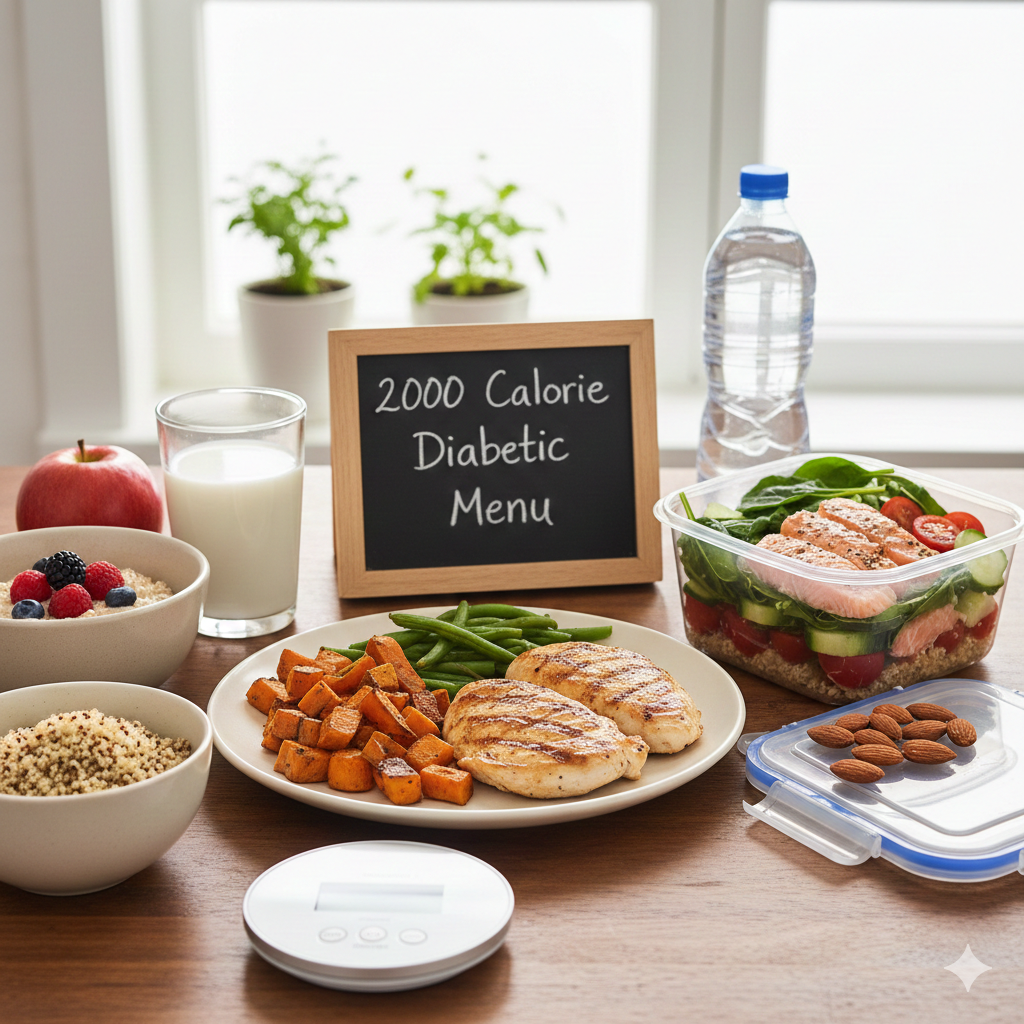
The Definitive Guide to a 2000 Calorie Diabetic Menu
Managing diabetes with a 2000‑calorie meal plan is not about eating more — it’s about eating smarter. Whether you’re an active man, a pregnant woman managing gestational diabetes, a teenager with type 1, or a physically active senior, this comprehensive blueprint fills the nutritional gap between weight maintenance and blood sugar stability. We go far beyond the usual 1500‑calorie restriction, giving you freedom, flexibility, and glucose control.
What’s Covered in This Guide
- Who a 2000 calorie diabetic diet is (and isn’t) right for
- Macronutrient targets and glycemic load basics
- 7-day sample menu with carb counts
- Diabetes types explained: Type 1, Type 2, gestational, and prediabetes on 2000 calories
- Exercise, insulin timing, and blood sugar management
- Medication and meal-timing interactions
- Eating out, travel, and social situations
- Meal prep systems and a two-week rotating grocery list
- Glycemic index vs glycemic load, explained in depth
- Supplements: what has evidence, what doesn’t
- Common myths, mistakes, and troubleshooting
- Bonus recipes and a printable-style exchange list
- FAQ and further reading
Finding the nutritional “sweet spot” when living with diabetes can feel like a high-wire act. While much of the advice online focuses on severe restriction, many individuals—particularly active men, taller adults, pregnant women in their third trimester, or those with physically demanding jobs—simply cannot sustain their energy levels on low-calorie plans. This is where a well-structured 2000 calorie diabetic menu becomes essential.
Contrary to the misconception that diabetes management requires starvation, eating 2,000 calories a day can be perfectly healthy if the macronutrients are balanced correctly. The goal isn’t just to fill the stomach; it is to fuel the body while keeping blood glucose levels stable. In this expanded guide we also address common keyword gaps: diabetic menu for active men, diabetic meal plan for construction workers, gestational diabetes 2000 calories, type 2 diabetes high calorie needs, and budget diabetic menu.
This guide acts as your comprehensive blueprint. We will move beyond vague advice and dive into concrete meal plans, food lists, and strategies to make this lifestyle sustainable. Whether you are transitioning from a 1800 calorie diabetic menu and need a bit more fuel, or you are an active individual diagnosed with Type 2 diabetes, this guide is tailored for you.
Who Needs a 2000 Calorie Diabetic Diet? (Target audience deep dive)
Caloric needs are highly individual. While a 1500 calorie diabetic menu is often the gold standard for weight loss in sedentary individuals, 2000 calories serves a different demographic.
This plan is generally ideal for:
- Active Men & Athletes: Average-height men who exercise moderately (3-4 times a week) or do strength training. Also for men with physically taxing jobs.
- Physically Demanding Jobs: Construction workers, nurses, warehouse staff, or anyone on their feet all day need sustained energy. A diabetic menu for working adults in these fields must prevent hypoglycemia (low blood sugar).
- Teenagers with Diabetes: Adolescents experiencing growth spurts often require higher caloric intake. A diabetic menu for teenagers needs to support development without spiking insulin.
- Pregnant Women (Gestational Diabetes): In the later stages of pregnancy, caloric needs rise. A carefully monitored diabetic menu for pregnant women ensures the baby grows while managing Gestational Diabetes.
- Active seniors / large framed individuals: Some elderly with good mobility may need 2000 cal; for those with chewing issues we also link to diabetic menu for elderly with no teeth and for lower cal 1200 calorie diabetic menu for seniors.
Expert Note: If you are sedentary or trying to lose significant weight rapidly, this calorie tier might be too high. Consider checking our 1200 calorie diabetic menu guide for stricter deficits. But for those with high TDEE, 2000 kcal is your maintenance or slight deficit level.
A Closer Look: Estimating Your Actual Needs
Calorie targets are never one-size-fits-all, and a diabetic diet should always be built on top of an honest estimate of your Total Daily Energy Expenditure (TDEE) rather than a flat number pulled from a chart. Two people with the same diagnosis, the same age, and even the same body weight can have TDEEs that differ by 500-700 calories simply because of activity level, muscle mass, and job type. The table below is a rough starting point, not a prescription — always adjust based on how your body and glucose readings respond over 2-3 weeks.
| Profile | Typical Height/Weight Range | Activity Level | Approx. Daily Need |
|---|---|---|---|
| Sedentary office worker (male) | 5’9″-6’0″, 170-200 lb | Low | 1800-2100 kcal |
| Active male, moderate exercise | 5’9″-6’1″, 165-210 lb | Moderate-High | 2200-2600 kcal |
| Construction/warehouse worker | Varies | Very High | 2600-3200 kcal (may need to size up from this guide) |
| Sedentary woman, weight maintenance | 5’3″-5’7″, 130-170 lb | Low-Moderate | 1700-2000 kcal |
| Pregnant woman, 2nd/3rd trimester with GDM | Varies | Low-Moderate | 1900-2200 kcal (physician-guided) |
| Teenager, growth spurt | Varies widely | Moderate-High | 2000-2600 kcal |
If you fall meaningfully outside these ranges, this menu can still work as a foundation — you would simply scale portions up or down by roughly 10-15% rather than restructuring the whole plan. The macro ratios (45-50% carb, 20-25% protein, ~30% fat) stay fairly consistent across calorie tiers; it’s the absolute gram amounts that shift.
The Core Strategy: Macronutrient Balance & glycemic load
Eating 2,000 calories of pizza is vastly different from 2,000 calories of whole grains, lean proteins, and healthy fats. To manage diabetes effectively at this calorie level, we usually aim for a specific split:
- Carbohydrates (45-50%): Approximately 225g–250g per day. The focus must be on complex carbs with a low Glycemic Index (GI).
- Protein (20-25%): Essential for muscle repair and satiety. Aim for 100g–125g protein.
- Fats (30%): Primarily mono- and polyunsaturated fats (avocados, nuts, olive oil) to protect heart health, which is crucial for diabetics.
- Fiber: at least 30g daily to blunt glucose spikes.
Green Light Foods (low‑GI, high density)
Build your meals around these staples:
- Proteins: Salmon, chicken breast, tofu, turkey, lean beef, eggs, sardines, whey isolate (if needed).
- Carbs: Quinoa, brown rice, steel-cut oats, sweet potatoes, lentils, chickpeas, barley.
- Fats: Almonds, walnuts, chia seeds, olive oil, avocado, flaxseed.
- Vegetables: Spinach, broccoli, kale, peppers, zucchini, asparagus, Brussels sprouts (non-starchy = unlimited).
Glycemic Index vs. Glycemic Load: Why Both Matter
Most diabetic diet articles mention the Glycemic Index (GI) and stop there, but GI alone can be misleading. GI measures how quickly a carbohydrate-containing food raises blood glucose compared to pure glucose, on a scale of 0-100, assuming a fixed portion. Watermelon, for instance, has a high GI (around 72-80) because the sugar it contains is absorbed quickly. But a typical serving of watermelon contains relatively little actual carbohydrate compared to, say, a bagel — so eating a cup of watermelon does not spike blood sugar nearly as much as the GI number alone would suggest.
This is where Glycemic Load (GL) becomes the more useful number for real-world meal planning. GL factors in both the GI of the food and the actual amount of carbohydrate in a typical serving. The formula is: GL = (GI × grams of carbohydrate per serving) ÷ 100. A GL under 10 is considered low, 11-19 is medium, and 20+ is high. When you’re building a 2000 calorie diabetic menu, aiming for a total daily GL in the 80-100 range (moderate) rather than piling on high-GL foods at every meal tends to produce steadier post-meal readings.
Practical takeaway: don’t avoid a food just because you’ve heard its GI is “high” — check the realistic portion size and GL before crossing it off your list. Carrots and pumpkin are classic examples of high-GI, low-GL foods that are perfectly reasonable in a diabetic meal plan in normal portions.
Diabetes Types and How They Change This Menu
Not every case of diabetes behaves the same way on the same calorie and carbohydrate load, so it’s worth breaking down how this 2000 calorie framework should flex depending on diagnosis.
Type 2 Diabetes
For most people with Type 2 diabetes who are not on insulin, this guide can be followed largely as written. The emphasis on fiber, low-GI carbohydrates, and consistent meal timing supports the insulin resistance that characterizes Type 2. Weight management is often a secondary goal alongside glucose control, so pairing this menu with regular movement (see the exercise section below) tends to produce the best combined results for A1c and waistline.
Type 1 Diabetes
Type 1 diabetics on insulin therapy will want to treat the carb counts in this guide as a starting point for carbohydrate counting rather than a fixed prescription, since insulin dosing (via injections or a pump) is typically matched to grams of carbohydrate consumed using an individualized insulin-to-carb ratio set by an endocrinologist. The consistent structure of three meals plus two snacks in this plan actually works well for Type 1 management because it creates predictable dosing windows, but exact insulin timing and correction factors should always come from your care team, not a blog post.
Gestational Diabetes (GDM)
Pregnant women managing gestational diabetes typically need carbohydrates spread more evenly and, often, a smaller carbohydrate allotment at breakfast specifically, because insulin resistance tends to be highest in the morning during pregnancy due to placental hormones. A common adjustment is to keep breakfast to 30g of carbohydrate or less and shift more carbohydrate to lunch and dinner. This 2000 calorie framework can be adapted this way, but GDM meal plans should always be built in coordination with an OB-GYN or a registered dietitian who has access to your glucose logs.
Prediabetes
If you’ve been told you’re prediabetic rather than diabetic, a 2000 calorie plan built around low-GI carbs, fiber, and protein is one of the most effective interventions available — research consistently shows that modest weight loss (5-7% of body weight) combined with dietary changes like the ones in this guide can delay or prevent progression to Type 2 diabetes in a large percentage of cases.

Glass Meal Prep Containers (3 Compartment)
Portion control is the secret weapon for a 2000 calorie diet. Keep your macros separated and your meals fresh. BPA‑free, oven safe.
Check Price on AmazonExercise, Activity, and Blood Sugar on a 2000 Calorie Plan
Because this calorie tier is frequently chosen by people who are more physically active, it’s worth spending real time on how movement interacts with meal timing and glucose control — a topic that’s often glossed over in generic diabetic diet content.
Timing Meals Around Workouts
For moderate exercise (brisk walking, light cycling, resistance training under an hour), most people with Type 2 diabetes don’t need to significantly change this menu — just be mindful that exercise itself lowers blood glucose, sometimes for up to 24 hours afterward, so if you’re on medications that can cause hypoglycemia, monitor more closely on heavy training days. For Type 1 diabetics or anyone on insulin, a pre-exercise snack with roughly 15-30g of carbohydrate is often recommended if blood glucose is below 150 mg/dL before activity, though exact thresholds should come from your endocrinologist.
Sample Adjustments for Physically Demanding Jobs
Construction workers, warehouse staff, delivery drivers, and similar physically demanding roles often burn through glycogen faster and may find the standard two-snack structure in this guide insufficient to prevent afternoon energy crashes. A common fix is to add a third snack — something like a small handful of nuts with a piece of fruit, or a hard-boiled egg with whole grain crackers — timed roughly two hours before the shift’s most physically intense period. This can push total calories up to 2200-2400, which is appropriate for high-output jobs; consider it a natural bridge toward what we cover in our diabetic menu for working adults guide.
Resistance Training and Protein Needs
If strength training is part of your routine, the 100-125g daily protein target in this plan sits at the lower end of what’s optimal for muscle retention and growth. Active lifters with diabetes often benefit from nudging protein toward 130-150g while trimming a small amount of carbohydrate to keep total calories at 2000, especially if fat loss alongside strength maintenance is a goal. Spreading protein across all three meals (rather than loading it mostly at dinner, which is a common pattern) also appears to support better muscle protein synthesis throughout the day.
Cardiovascular Exercise and A1c
Regular aerobic activity — even 20-30 minutes of brisk walking most days — has been shown in numerous studies to meaningfully improve insulin sensitivity independent of weight loss. Pairing this 2000 calorie menu with a consistent walking habit is one of the simplest, lowest-cost interventions available for anyone working to bring their A1c down over a 3-6 month window.
Medication and Meal Timing Considerations
This is general education, not medical advice — always follow your prescriber’s specific instructions — but understanding broadly how common diabetes medications relate to meal timing can help you get more out of a structured plan like this one.
- Metformin: Usually taken with food to reduce gastrointestinal side effects. The consistent three-meals-plus-snacks structure in this guide pairs naturally with twice-daily metformin dosing.
- Sulfonylureas (e.g., glipizide, glimepiride): These stimulate insulin release and carry a real risk of hypoglycemia if a meal is skipped or delayed. The predictable snack timing in this plan is particularly useful for anyone on this drug class.
- Rapid-acting insulin: Typically dosed based on the carbohydrate content of the upcoming meal, which is why the carb counts listed throughout this guide’s 7-day menu can double as a carb-counting reference — again, always in coordination with your care team’s specific insulin-to-carb ratio.
- GLP-1 receptor agonists (e.g., semaglutide, liraglutide): These slow gastric emptying and often reduce appetite substantially. If you’re on this class of medication, you may find 2000 calories is more than you naturally want to eat; it’s fine to eat to satiety and not force the full amount, but try to preserve protein intake specifically since appetite suppression can otherwise lead to inadequate protein and muscle loss.
If you ever feel shaky, sweaty, confused, or unusually hungry between meals, treat it as possible hypoglycemia first and ask questions later — 15g of fast-acting carbohydrate (like 4oz of juice or 3-4 glucose tablets), followed by rechecking blood sugar in 15 minutes, is the standard first response taught in most diabetes education programs.
7-Day Expanded 2000 Calorie Diabetic Menu (with carb counts)
Below is a structured plan. We have spaced the calories out to include three main meals and two snacks per day to prevent blood sugar spikes and crashes. For a broader view of planning, you can also reference our weekly diabetic meal plan or 14‑day diabetic meal plan. We also include approximate carb grams for transparency.
Day 1: The Balanced Start (Carbs ~245g)
- Breakfast (510 cal): 2 scrambled eggs with 1 cup spinach, 2 slices whole-wheat toast (24g carb each) with ¼ avocado, 1 cup mixed berries. (Carbs ~48g)
- Snack (190 cal): Greek yogurt (unsweetened, 170g) with 1 tbsp flaxseeds. (8g carb)
- Lunch (610 cal): Grilled chicken breast (6oz) over 1 cup cooked quinoa, cucumbers, tomatoes, feta (1oz), olive oil. (Carbs ~45g)
- Snack (210 cal): Medium apple + 1.5 tbsp almond butter. (28g carb)
- Dinner (480 cal): Baked salmon (5oz) with asparagus (unlimited) and 1 medium baked sweet potato. (30g carb)
Day 2: High Fiber Focus (Carbs ~250g)
- Breakfast (460 cal): Steel-cut oats (1/2 cup dry) made with water/almond milk, topped with 15g walnuts + 1 small diced apple. (Carbs ~55g)
- Snack (240 cal): 1 cup low-fat cottage cheese + ½ peach (sliced). (12g carb)
- Lunch (640 cal): Turkey burger (4oz patty) lettuce wrap, side of bean salad (½ cup black beans, corn, peppers) and a pear. (Carb ~65g)
- Snack (160 cal): Hard-boiled egg + 10 almonds. (3g carb)
- Dinner (500 cal): Lean beef stir-fry (4oz beef) with broccoli, snap peas, ⅔ cup brown rice. (42g carb)
Need a quick solution? See our 1-day simple diabetic menu for busy days.
Day 3: Plant-Forward Power (Carbs ~235g)
- Breakfast (490 cal): Tofu scramble (firm tofu 6oz) with turmeric, onions, peppers + 1 whole grain English muffin. (Carbs 42g)
- Snack (200 cal): ¼ cup hummus with carrot & celery sticks. (15g carb)
- Lunch (590 cal): Lentil soup (1.5 cups) with 6 whole-grain crackers + mixed greens vinaigrette. (Carbs 64g)
- Snack (190 cal): Handful trail mix (nuts & seeds, no candy). (12g carb)
- Dinner (530 cal): Grilled shrimp skewers (6oz) with zucchini noodles (zoodles) + 2 tbsp pesto. (18g carb)

The Complete Diabetic Cookbook for Beginners
Running out of ideas? This cookbook offers 500+ easy recipes tailored for glucose management, with 2000‑calorie options.
Check Price on AmazonDay 4: Lean & Mean (Carbs ~240g)
- Breakfast (500 cal): Veggie omelet (3 eggs, mushrooms, onions) + slice rye toast. (Carbs 32g)
- Lunch (620 cal): Tuna salad (5oz tuna, olive oil mayo) in whole wheat pita with lettuce. (Carbs 50g)
- Dinner (530 cal): Roasted chicken thigh (skinless, 5oz), roasted Brussels sprouts, ⅔ cup wild rice. (Carbs 38g)
- Snacks: String cheese + 1 cup grapes (24g carb); low-carb protein shake (4g carb).
Day 5: Seafood & Greens (Carbs ~210g)
- Breakfast (450 cal): Chia pudding (3 tbsp chia, almond milk) with raspberries. (Carbs 28g)
- Lunch (600 cal): Sardines (1 tin) on 2 slices rye toast with tomato. (Carbs 42g)
- Dinner (560 cal): Cod baked in foil (6oz), steamed green beans, 1 cup cooked quinoa. (Carbs 44g)
- Snacks: 1 cup edamame (12g carb); 1 orange (15g).
Looking for a longer commitment? Transition into our 30-day diabetic menu for consistent results.
Day 6: Comfort Food Modified (Carbs ~255g)
- Breakfast (510 cal): 2 whole grain pancakes (sugar-free syrup) + 2 turkey bacon strips. (Carbs 52g)
- Lunch (620 cal): Chili with lean ground turkey & kidney beans (1.5 cups), side vinegar coleslaw. (Carbs 60g)
- Dinner (520 cal): Whole wheat pasta (1.3 cups cooked) with marinara + lean meatballs (3oz), side salad. (Carbs 70g)
- Snacks: Celery with 2 tbsp peanut butter (8g carb); 1 kiwi (10g).
Day 7: The Sunday Reset (Carbs ~230g)
- Breakfast (470 cal): Smoothie bowl (spinach, 1 scoop protein, ½ banana, almond milk) topped with pumpkin seeds. (Carbs 38g)
- Lunch (600 cal): Leftover chili over 1 small baked potato (with skin). (Carbs 64g)
- Dinner (560 cal): Grilled sirloin steak (5oz), sautéed mushrooms, cauliflower mash (1 cup). (Carbs 24g)
- Snacks: Air-popped popcorn (3 cups, 18g carb); Greek yogurt (9g).
Eating Out, Travel, and Social Situations
One of the biggest practical gaps in most diabetic meal-plan articles is what to do when you’re not the one cooking. Since this 2000 calorie plan is built for people with active, often social lives, here’s how to keep it working outside your own kitchen.
Restaurant Strategy
Most sit-down restaurants can accommodate this plan with a few habits: order protein and non-starchy vegetables first mentally, then decide on one starch (bread, rice, potato, pasta) rather than defaulting to all the starches a meal typically includes. Ask for sauces and dressings on the side — restaurant sauces are a common hidden source of added sugar. A useful rule of thumb: build the plate mentally as half non-starchy vegetables, a quarter lean protein, and a quarter starch, which mirrors the “diabetes plate method” taught by many dietitians.
Fast Food, When It Happens
Grilled (not fried) chicken sandwiches without the bun or with half the bun, side salads instead of fries, and water or unsweetened tea instead of soda are the fastest ways to keep a fast-food stop from derailing a day’s carb budget. Many chains now publish nutrition information online — checking it before ordering, rather than after, avoids surprises.
Air Travel and Road Trips
Pack shelf-stable versions of this plan’s snacks — nuts, jerky, single-serve nut butter packets, whole fruit — since airport and gas-station options skew heavily toward refined carbohydrate. For longer trips, a small soft cooler with hard-boiled eggs, cheese sticks, and cut vegetables can bridge multiple meals without needing refrigeration for more than a few hours.
Alcohol
Alcohol interacts with diabetes medications, particularly insulin and sulfonylureas, by increasing the risk of delayed hypoglycemia — sometimes hours after drinking, including overnight. If alcohol is part of your life, drier wines and spirits mixed with soda water tend to add fewer carbohydrates than beer or sweet cocktails, but the bigger safety point is to never drink on an empty stomach and to check blood glucose before bed on any day you’ve had alcohol.
Holidays and Special Occasions
A single higher-carb meal at a holiday gathering is not a diet failure — it’s a data point. The most sustainable approach, used by people who keep this kind of plan going for years rather than weeks, is to enjoy the occasion, return to the regular structure at the very next meal, and use post-meal glucose readings as feedback rather than as a reason for guilt.
Adjusting for Specific Needs
A 2000‑calorie diet is versatile, but different groups have different requirements.
Seniors & Chewing Difficulties
While many seniors require fewer calories, active seniors may still need 2000. However, chewing textures can be an issue. If dental health is a concern, look into a diabetic menu for elderly with no teeth, which focuses on soft, nutrient-dense foods like smoothies and soups. For those with lower metabolic rates, a 1200 calorie diabetic menu for seniors is usually safer to prevent weight gain.
Budget Considerations (low‑income diabetic menu)
Eating healthy amounts of protein and produce can get expensive. You don’t need to buy premium organic steaks to hit your macros. Eggs, beans, lentils, and frozen vegetables are excellent staples. Check our guide on the low income diabetic menu for tips on shopping smart without sacrificing health. Use canned fish (sardines, tuna) and bulk whole grains.
Carbohydrate Sensitivity / Low‑Carb approach
If you find that 2000 calories with moderate carbs spikes your sugar, you may need to shift the ratios toward fats and proteins. A low carb weekly diabetic menu approach keeps the calories high but drastically reduces the insulin load. For example, replace quinoa with extra non-starchy veg and increase healthy fats.
Renal (Kidney) Considerations
Diabetes is the leading cause of chronic kidney disease, so many people managing both conditions search for a renal diabetic 2000 calorie menu. The core difference is potassium, phosphorus, and sodium management layered on top of the standard glucose-focused approach: this often means limiting high-potassium foods like potatoes, tomatoes, oranges, and bananas, choosing lower-phosphorus protein sources, and watching sodium closely. Because renal diets vary enormously based on the stage of kidney disease and current lab values, this is one area where working directly with a renal dietitian is far more valuable than any general guide, including this one.
Gluten-Free Diabetic Eating
For the overlap population managing both diabetes and celiac disease or gluten sensitivity, most of the whole grains recommended in this guide (steel-cut oats when certified gluten-free, quinoa, brown rice) are naturally gluten-free, making the core structure of this plan relatively easy to adapt. The main substitutions needed are swapping traditional whole-wheat bread and pasta for certified gluten-free versions, which sometimes carry a slightly higher glycemic index — pairing them with extra fiber or protein in the same meal helps offset this.
Meal Prep Systems That Actually Stick
A 2000 calorie plan with five eating occasions a day only works long-term if the prep behind it is efficient. Here’s a system many readers have found sustainable.
The Sunday Batch-Cook Method
Pick two protein sources, two starches, and three vegetables for the week. Roast or grill all proteins in one session (a sheet pan of chicken thighs alongside a tray of salmon, for example), cook a large batch of a grain like quinoa or brown rice, and roast a mixed tray of vegetables. This single 90-minute session can supply the base components for 8-10 meals across the week, which you then mix and match with fresh additions like a quick salad or a piece of fruit.
Portioning for Carb Counting
Weighing cooked grains and starches once, and noting the carb count for that specific container size, removes the guesswork for the rest of the week. A kitchen scale used consistently is genuinely one of the highest-leverage tools for anyone counting carbohydrates seriously.
Freezer-Friendly Backups
Soups, chilis, and turkey meatballs (like the ones referenced in Day 6 above) all freeze well in individual portions. Keeping 3-4 backup meals in the freezer at all times is one of the most effective ways to prevent a busy or exhausting day from turning into a drive-through stop.
A Two-Week Rotating Grocery List
To reduce decision fatigue, many people find it easier to rotate between two fixed grocery lists every other week rather than reinventing the menu constantly. A sample Week A list might include chicken breast, salmon, eggs, Greek yogurt, quinoa, sweet potatoes, spinach, broccoli, avocados, almonds, and berries. A Week B list might swap in turkey, tofu, lentils, brown rice, zucchini, peppers, walnuts, and citrus. Alternating keeps the diet varied enough to stay interesting without requiring a new plan every single week.
Supplements: What Has Evidence, What Doesn’t
Diabetic diet content is often flooded with supplement claims, so it’s worth being direct about what current evidence actually supports as an adjunct to a solid diet like this one — none of these replace medication or a balanced meal plan, and you should discuss any supplement with your physician before starting, especially given interactions with common diabetes medications.
- Fiber supplements (psyllium husk): Reasonably good evidence for modestly blunting post-meal glucose spikes when taken before carbohydrate-containing meals.
- Vitamin D: Often low in people with Type 2 diabetes; supplementation is sometimes recommended after a blood test confirms deficiency, though it’s not a direct glucose-lowering agent.
- Magnesium: Some evidence linking low magnesium status to worse insulin sensitivity, though supplementation studies show mixed results.
- Cinnamon, berberine, chromium: Popular in supplement marketing; evidence is mixed to weak and inconsistent across studies. Berberine in particular can interact with several medications, so medical guidance is important before use.
- Omega-3 fatty acids (fish oil): Better evidence for cardiovascular support than for direct glucose control, but cardiovascular risk reduction is highly relevant given diabetes’ impact on heart health.
The honest bottom line: no supplement on this list comes close to the impact of the dietary pattern, consistent meal timing, and movement habits covered elsewhere in this guide. Supplements are, at best, a small edge on top of those fundamentals.
Common Myths and Mistakes on a 2000 Calorie Diabetic Plan
Myth: “Diabetics can’t eat any fruit.”
Whole fruit, eaten in reasonable portions and ideally paired with protein or fat (like the apple-and-almond-butter snack in Day 1), is perfectly compatible with good glucose control for most people with diabetes. It’s fruit juice and dried fruit — both of which concentrate sugar and strip out fiber — that tend to cause the bigger spikes.
Myth: “Higher calories always mean worse blood sugar.”
Calorie level and glycemic response are related but distinct. A 2000 calorie day built around the low-GI, high-fiber structure in this guide often produces better post-meal readings than a 1200 calorie day built around refined carbohydrates, because the type and pacing of carbohydrate matters as much as the total.
Myth: “Skipping meals helps control blood sugar.”
For most people on glucose-lowering medications, skipping meals increases the risk of both hypoglycemia and, paradoxically, higher blood sugar later in the day due to compensatory eating and stress-hormone release. The five-meal structure in this guide exists specifically to avoid this pattern.
Mistake: Not accounting for liquid calories.
Coffee creamers, flavored coffee drinks, and juice are among the easiest ways to blow past both the calorie and carbohydrate targets in this plan without realizing it, since they don’t feel like “a meal.” Tracking beverages with the same seriousness as food is one of the simplest high-impact changes available.
Mistake: Treating “sugar-free” as “carb-free.”
Many sugar-free products still contain significant carbohydrate from other sources (flour, maltodextrin, sugar alcohols that partially count toward net carbs). Always check total carbohydrate on the label, not just the sugar line.
Comparison: Choosing Your Calorie Tier
Not sure if 2000 is right for you? Here is how it compares to other common diabetic diet plans.
| Feature | 1500 Calorie Plan | 1800 Calorie Plan | 2000 Calorie Plan |
|---|---|---|---|
| Target Audience | Weight loss, Sedentary women | Maintenance for women, Weight loss for men | Active men, Heavy labor, Maintenance, pregnancy |
| Hunger Levels | High (requires discipline) | Moderate | Low (high satiety) |
| Meal Frequency | 3 Meals | 3 Meals + 1 Snack | 3 Meals + 2/3 Snacks |
| Carb Allowance | ~150g – 175g | ~180g – 200g | ~225g – 250g |
| Typical A1c impact | Rapid initial drop | Moderate loss / maintenance | Sustainable long-term |
Pros and Cons of a 2000 Calorie Diabetic Diet
✅ Pros
- Sustainability: It is much easier to stick to long-term than restrictive diets.
- Energy: Provides sufficient fuel for exercise and heavy work.
- Nutrient Density: Allows for a wider variety of fruits and vegetables.
- Muscle Retention: Adequate protein helps prevent muscle loss during glucose management.
- Social flexibility: easier to dine out.
❌ Cons
- Weight Loss Speed: Weight loss will be slower compared to 1500 or 1200 calorie plans.
- Monitoring Required: You must diligently track macros; it’s easy to accidentally overeat.
- Grocery Cost: Higher food volume means a slightly higher grocery bill.
- Not suitable for very sedentary individuals.
Tips for Success (from real readers)
- Pre-plan Your Snacks: At 2000 calories, snacks are not “treats”—they are nutritional bridges. If you fail to plan them, you might grab a high-sugar convenience food.
- Hydrate: High fiber intake (common in this diet) requires plenty of water to prevent digestive issues.
- Consistency is Key: Try to eat at the same times every day. This helps regulate your body’s insulin sensitivity. For a month-long strategy, review our 30-day diabetic menu.
- Test, Don’t Guess: Use your glucometer 2 hours after meals to see how your body reacts to the increased food volume.
- Use a food scale: 6oz of chicken is easy to misjudge.
- Keep a simple log: Even a basic note of meal, portion, and 2-hour glucose reading for two weeks reveals patterns that are impossible to spot from memory alone.
- Build a “safe list”: Identify 8-10 meals that reliably keep your readings in range and rotate them as your default, saving experimentation for when you have more bandwidth to troubleshoot.
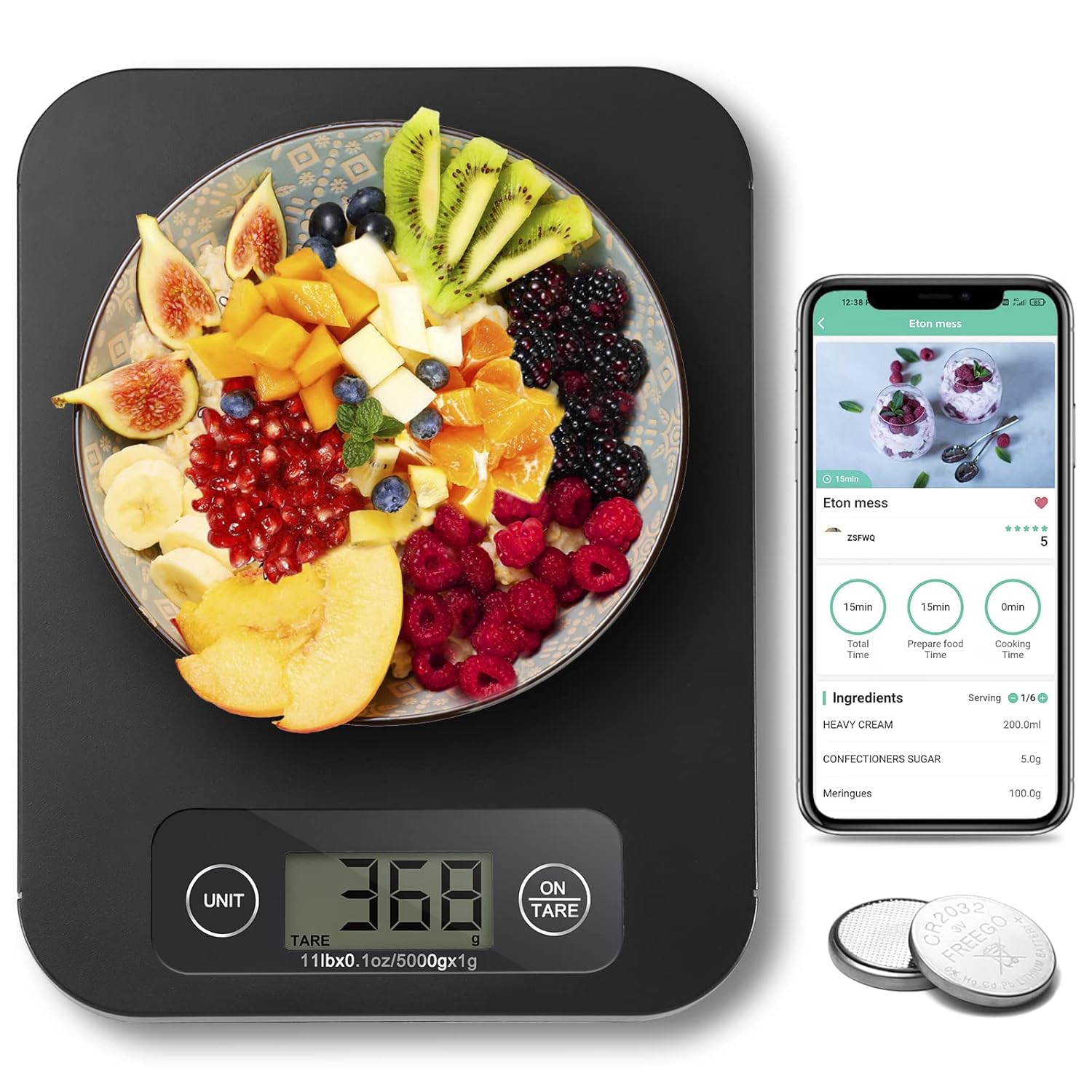
Precision Digital Kitchen Food Scale
Don’t guess 6oz of chicken vs 8oz. A scale ensures your 2000 calorie plan doesn’t accidentally become 2500.
Check Price on AmazonBonus: Three Reader-Favorite Recipes
Sheet-Pan Lemon Herb Chicken with Roasted Vegetables
Toss 1.5 lb boneless chicken thighs (skin removed) with 2 tbsp olive oil, the juice of one lemon, minced garlic, and dried oregano. Spread on a sheet pan with quartered Brussels sprouts and sliced bell peppers. Roast at 425°F for 25-30 minutes. Yields 4 servings at roughly 380 calories and 9g carbohydrate each, making it an easy drop-in for the dinner slot on any high-fiber day.
Weeknight Lentil and Vegetable Soup
Sauté a diced onion, two carrots, and two celery stalks in a tablespoon of olive oil until softened. Add 1.5 cups dried green or brown lentils, a can of diced tomatoes, 6 cups low-sodium vegetable broth, and a bay leaf. Simmer 30-35 minutes until lentils are tender. This makes roughly 6 servings at about 220 calories and 34g carbohydrate each — high in fiber, which helps offset the carbohydrate load, and freezes exceptionally well for the meal-prep system described above.
Greek Yogurt Berry Parfait (Snack or Light Breakfast)
Layer ¾ cup plain, unsweetened Greek yogurt with ½ cup mixed berries and a tablespoon of chopped walnuts. This comes in around 210 calories with roughly 16g carbohydrate, most of it from fiber-rich berries, and pairs naturally with the snack slots throughout the 7-day menu above.
Frequently Asked Questions
Is 2000 calories too much for a diabetic?
Not necessarily. For active men, taller individuals, or those with physically demanding jobs, 2000 calories is appropriate to maintain weight and energy levels. However, for sedentary individuals, it may lead to weight gain.
How many carbs should be in a 2000 calorie diabetic diet?
Generally, carbohydrates should make up about 45-50% of total calories. For a 2000 calorie diet, this equates to approximately 225g to 250g of carbohydrates per day, ideally spread across meals to avoid spikes.
Can I lose weight on a 2000 calorie diabetic menu?
Yes, if your Total Daily Energy Expenditure (TDEE) is higher than 2000 calories (common for active men or larger individuals), you will lose weight. However, it will be a slower, more sustainable loss than on lower-calorie diets.
Can I eat sweets on this plan?
While you have more calorie wiggle room, sugary sweets still spike insulin. It is better to use your “extra” calories on nutrient-dense foods. If you crave sweets, opt for berries, dark chocolate, or sugar-free alternatives.
Is this menu suitable for gestational diabetes?
With adjustments (spreading carbs evenly), yes. Always consult your ob-gyn. Our diabetic menu for pregnant women offers more targeted advice.
How is a Type 1 diabetic menu different from a Type 2 diabetic menu at 2000 calories?
The food choices overlap heavily, but Type 1 diabetics generally need to match insulin doses to carbohydrate intake meal by meal, using an individualized insulin-to-carb ratio from their care team, whereas Type 2 management often focuses more on overall carbohydrate quality, weight, and medication timing.
What’s the difference between glycemic index and glycemic load?
Glycemic index measures how fast a food raises blood sugar per fixed portion, while glycemic load factors in the realistic serving size, giving a more accurate picture of a food’s actual impact on blood glucose in everyday eating.
Do I need to eat exactly five times a day on this plan?
No — the three-meals-plus-two-snacks structure is a helpful default for steady glucose control and medication timing, but some people do well with three larger meals and no snacks, or with a different rhythm. What matters most is consistency and matching the pattern to your medication schedule.
Can I follow this menu if I have kidney disease along with diabetes?
This general guide is not designed for renal diets. If you have chronic kidney disease alongside diabetes, work with a renal dietitian to adjust potassium, phosphorus, and sodium, since those needs vary significantly by CKD stage.
Is exercise necessary to follow this plan successfully?
Exercise isn’t strictly required to eat this way, but because 2000 calories is calibrated for moderately active people, pairing the menu with regular movement — even daily walking — tends to produce better glucose control and makes the calorie level appropriate for your actual energy expenditure.
Conclusion
Adopting a 2000 calorie diabetic menu is about finding freedom through structure. It allows you to fuel your body adequately without the constant hunger pangs associated with restrictive dieting, all while keeping your blood sugar in a safe range. By prioritizing complex carbohydrates, lean proteins, and healthy fats, you turn your food into medicine.
Remember, the best diet is the one you can stick to. Start with our 3-day diabetic meal plan to test the waters, and if you feel energetic and your glucose readings are stable, you have found your rhythm.
Ready to take control of your kitchen?
Shop Diabetic Essentials on AmazonThe Complete Diabetic Exchange List for a 2000 Calorie Day
The “exchange system” has been used in diabetes education for decades because it turns meal planning into simple substitution rather than constant recalculation. Foods are grouped into categories where one serving within a category has roughly the same effect on blood glucose as any other serving in that category, letting you swap items freely without redoing your math. Below is an expanded exchange list scaled for a 2000 calorie day, broken into the categories most relevant to the meal plan above.
Starch Exchanges (about 15g carbohydrate, 80 calories per exchange) — aim for 10-12 exchanges/day
- 1 slice whole-wheat bread
- ⅓ cup cooked brown rice or quinoa
- ½ cup cooked oatmeal
- ½ cup cooked beans, lentils, or peas (also counts partly as a protein exchange)
- ½ medium sweet potato or ⅓ cup mashed
- 3 cups air-popped popcorn
- 6 whole-grain crackers
- ⅓ cup cooked whole-wheat pasta
Fruit Exchanges (about 15g carbohydrate, 60 calories per exchange) — aim for 3-4 exchanges/day
- 1 small apple, orange, or pear
- 1 cup whole strawberries or ¾ cup blueberries
- 17 small grapes
- 1 small banana (about 6 inches)
- 1¼ cup watermelon cubes
- 2 tbsp dried fruit (use sparingly — concentrated sugar)
Milk/Dairy Exchanges (about 12g carbohydrate, 90-150 calories depending on fat content) — aim for 2-3 exchanges/day
- 1 cup skim or 1% milk
- ¾ cup plain, unsweetened Greek yogurt
- 1 cup unsweetened soy or almond milk (check label — some are lower carb than dairy milk)
Non-Starchy Vegetable Exchanges (about 5g carbohydrate, 25 calories per exchange) — largely unlimited, aim for 5+ servings
- 1 cup raw or ½ cup cooked broccoli, cauliflower, or green beans
- 1 cup raw spinach or 2 cups mixed salad greens
- 1 medium tomato or ½ cup salsa
- ½ cup cooked zucchini, peppers, or mushrooms
Protein Exchanges (0g carbohydrate, roughly 35-75 calories depending on fat content per ounce) — aim for 6-8 exchanges/day
- 1 oz cooked chicken, turkey, or lean beef
- 1 oz baked or grilled fish
- 1 large egg
- ¼ cup low-fat cottage cheese
- 1 oz reduced-fat cheese
- ¼ cup tofu or tempeh (also a small carb contribution)
Fat Exchanges (about 5g fat, 45 calories per exchange) — aim for 6-8 exchanges/day
- 1 tsp olive oil, canola oil, or butter
- ⅛ medium avocado
- 6 almonds or 4 walnut halves
- 1 tbsp regular salad dressing or 2 tbsp reduced-fat dressing
- 1 tbsp seeds (chia, flax, sunflower)
Using this list, a full day might look like: 3 starch + 1 fruit + 3 protein + 2 fat at breakfast; 1 fruit + 1 dairy at snack; 3 starch + 1 vegetable + 4 protein + 2 fat at lunch; 1 fruit + 2 fat at snack; 3 starch + 2 vegetable + 4 protein + 2 fat at dinner — landing close to the macro targets outlined earlier in this guide while giving you total flexibility over which specific foods you choose each day.
Extended Food Lists: Building a Deeper Pantry
Beyond the core “green light” staples mentioned earlier, a wider pantry makes this plan easier to sustain for months and years rather than weeks. Below are additional foods worth stocking, organized by how they function in a diabetic-friendly kitchen.
Pantry Staples for Quick Meals
Canned beans (rinsed to reduce sodium), canned tomatoes without added sugar, low-sodium broth, canned tuna and salmon, whole-grain pasta, dried lentils and split peas, quinoa, steel-cut and old-fashioned oats, natural peanut or almond butter with no added sugar, unsweetened applesauce, and a good extra-virgin olive oil form the backbone of a pantry that can produce a compliant meal in under 20 minutes on even the busiest night.
Freezer Staples
Frozen vegetables (no sauce, no breading) are nutritionally comparable to fresh in most cases and dramatically reduce food waste and prep time. Frozen berries are excellent for smoothies and yogurt bowls year-round. Individually portioned frozen chicken breasts or fish fillets make it easy to cook exactly the amount needed without overbuying fresh meat that might spoil before use. Pre-portioned frozen meatballs or veggie burgers (check labels for carb count) can also serve as fast backups.
Condiments and Flavor Boosters That Won’t Spike Blood Sugar
Mustard, hot sauce, vinegar (balsamic, apple cider, rice), fresh and dried herbs, garlic, ginger, low-sodium soy sauce or tamari, nutritional yeast, and citrus zest all add substantial flavor with negligible carbohydrate impact, which matters a great deal for long-term adherence — bland food is one of the most common reasons people abandon diabetic meal plans within the first month.
Smart Swaps Table
| Instead of | Try | Why |
|---|---|---|
| White rice | Cauliflower rice blended 50/50 with brown rice | Lowers overall glycemic load while keeping texture familiar |
| Regular pasta | Whole-wheat or chickpea pasta | More fiber and protein, slower glucose release |
| Sugary breakfast cereal | Steel-cut oats with nuts and berries | Far lower glycemic impact, higher satiety |
| Flavored yogurt | Plain Greek yogurt with fresh fruit | Removes 15-20g of added sugar per serving typically |
| Fruit juice | Whole fruit plus water | Retains fiber, slows sugar absorption significantly |
| Regular soda | Sparkling water with a splash of juice or citrus | Removes 35-40g sugar per can |
Troubleshooting: When the Numbers Don’t Match the Plan
Even a well-designed 2000 calorie diabetic menu doesn’t always produce the readings you expect on paper, and it helps to know the most common reasons why before assuming the plan itself has failed.
“I’m eating exactly what’s listed and my blood sugar is still high.”
Individual glycemic responses vary substantially even to identical meals — this is well documented in continuous glucose monitor research showing that two people eating the same bowl of oatmeal can have peak glucose readings that differ by 40-60 mg/dL. Stress, poor sleep, illness, and dehydration can all raise blood glucose independent of food. If a specific meal consistently produces a high reading for you, it’s reasonable to treat that as personal data and substitute it, even if it “should” theoretically work based on general guidelines.
“I’m losing weight faster than expected.”
This usually means your actual TDEE is higher than 2000 calories, which is common among the active-lifestyle groups this guide targets. If weight loss is not a goal, add 200-300 calories through additional healthy fats (extra olive oil, nuts) or a slightly larger portion of lean protein at dinner.
“I feel hungry despite hitting 2000 calories.”
This is frequently a protein or fiber shortfall rather than a true calorie shortfall. Check whether you’re consistently hitting the 100-125g daily protein target and the 30g fiber target outlined earlier — both nutrients are strongly linked to satiety, and a diet that’s technically 2000 calories but low in either can leave you hungry despite being calorically adequate on paper.
“My morning readings are high even though I ate well the night before.”
This is often the “dawn phenomenon,” a normal hormonal surge that raises blood glucose in the early morning hours in many people with diabetes, independent of the previous night’s meal. It’s worth mentioning to your physician if it’s a consistent pattern, since it sometimes affects medication timing decisions rather than diet.
“I plateaued after initial success.”
Plateaus after 4-8 weeks are extremely common and typically reflect metabolic adaptation rather than plan failure. Small adjustments — rotating which starches you use, changing workout timing, or reassessing portion sizes with a fresh food scale calibration — often restart progress without requiring a complete plan overhaul.
Reader Case Studies (Illustrative Examples)
To make this guide more concrete, here are three illustrative composite scenarios showing how the same 2000 calorie framework gets adapted differently in practice. These are illustrative examples for educational purposes, not individual medical case reports.
Scenario 1: The Active Office Worker Transitioning to Standing Desk Work
A man with Type 2 diabetes, recently prescribed metformin, starts this plan after being told his sedentary desk job combined with a 1500-calorie diet was leaving him fatigued by mid-afternoon. Moving to the 2000 calorie structure with two snacks, plus a 20-minute walk after lunch, stabilizes his afternoon energy within two weeks, and his fasting glucose readings trend down over three months as consistent meal timing improves his medication’s effectiveness.
Scenario 2: The Third-Trimester Pregnancy with Gestational Diabetes
A pregnant woman diagnosed with gestational diabetes in her third trimester works with her OB-GYN to adapt this plan by capping breakfast carbohydrate at 30g (roughly half of Day 1’s breakfast as written) and shifting the difference to lunch and dinner. Her post-meal readings, which were spiking above target after breakfast specifically, come into range within a week of this adjustment, illustrating why the morning-carb-sensitivity pattern discussed earlier in this guide matters so much for GDM specifically.
Scenario 3: The Weightlifter with Type 1 Diabetes
A competitive amateur lifter with Type 1 diabetes uses the 7-day menu as a carbohydrate-counting reference, adjusting his rapid-acting insulin doses meal by meal according to his personal insulin-to-carb ratio, while increasing protein toward 150g/day and shifting a portion of the carbohydrate from Day 6’s pasta dinner to pre-workout timing on training days. This illustrates how the same base plan can be reshaped around a specific medication regimen and training schedule without abandoning its underlying structure.
🔍 Related searches you may find useful: diabetic exchange list 2000 calories, 2000 calorie ADA diet, diabetic diet for active males, high calorie diabetic diet for underweight, type 1 diabetic meal plan 2000 calories, renal diabetic 2000 calorie menu (modified), gluten free diabetic 2000 calories, diabetic meal plan for construction workers, diabetic exercise meal timing, diabetic diet eating out guide, gestational diabetes glycemic load, prediabetes 2000 calorie plan, diabetic meal prep for beginners. All our linked guides (1200, 1500, 1800, low carb) are interlinked for your convenience.