What Are Diabetic Socks? A Complete Guide to Diabetic-Friendly Footwear
Everything you need to know about how diabetic socks are built, why they matter for foot health, and how to choose a pair that actually protects your feet every day.
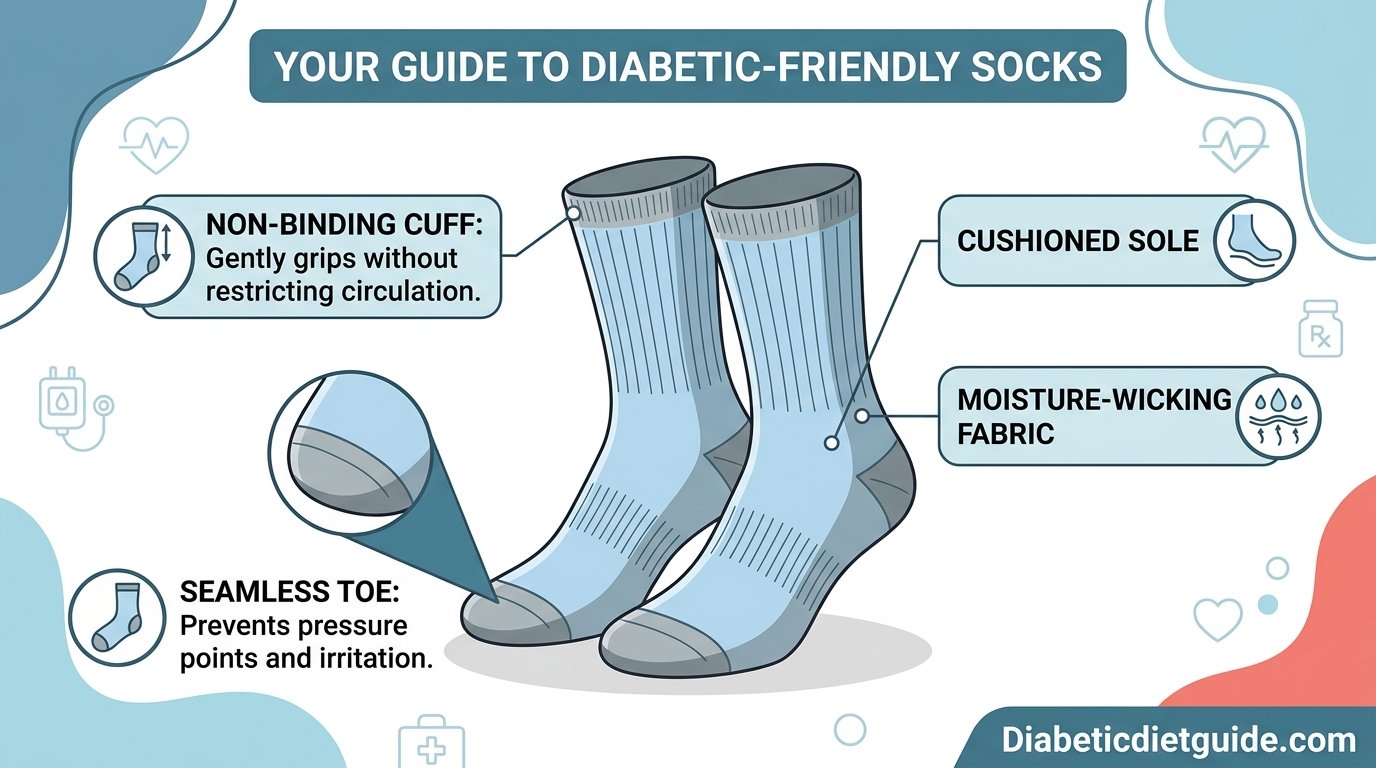
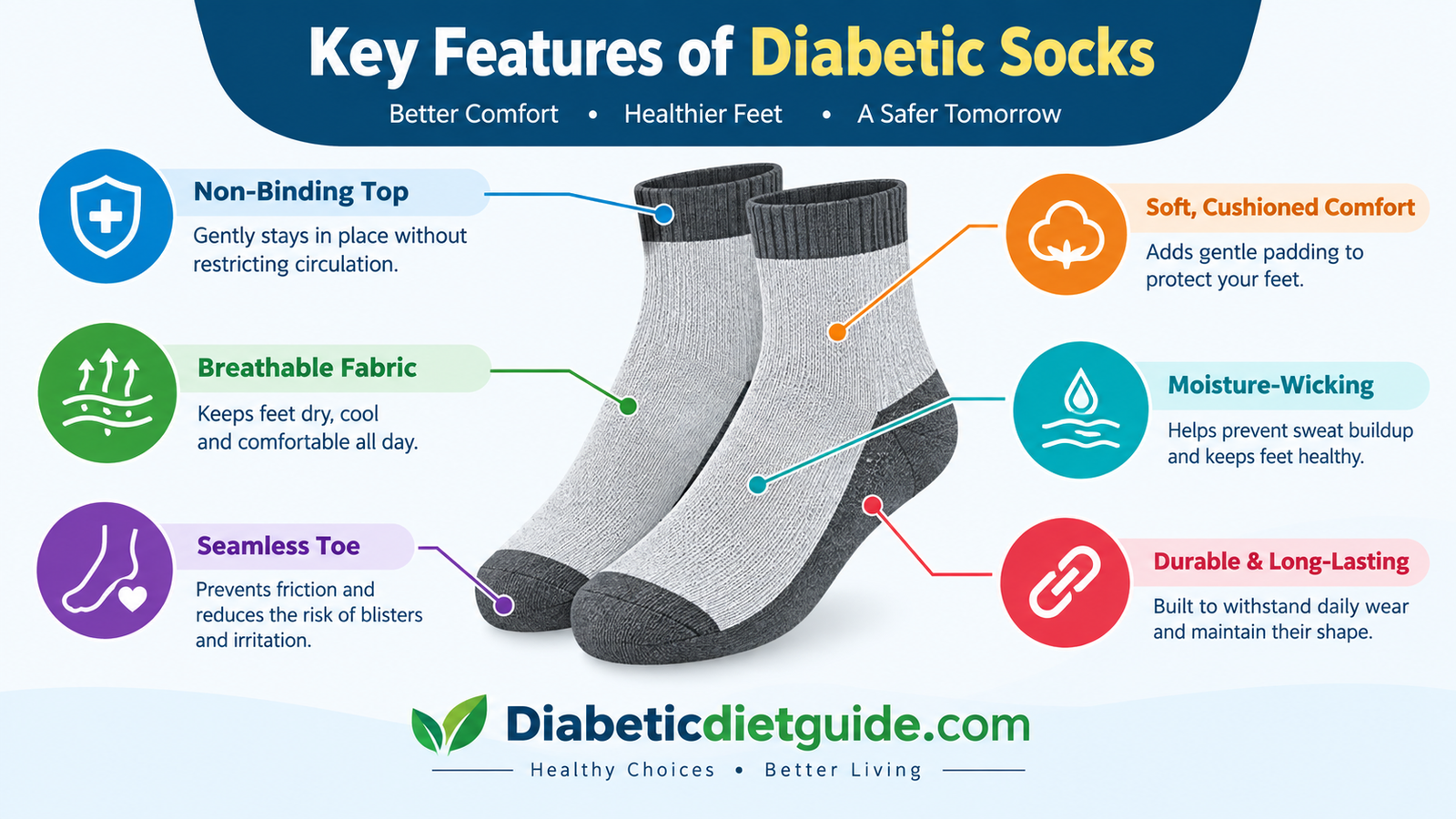
Diabetic socks are socks engineered specifically to protect feet that have lost some of their ability to feel pain, warmth, or pressure. They swap out tight elastic bands, rough seams, and moisture-trapping fabric for a design built around one goal: reducing the risk of blisters, sores, and infections that can turn into much bigger problems for someone living with diabetes.
If you’ve ever stood in the sock aisle wondering whether “diabetic socks” are a real medical necessity or just clever marketing, you’re not alone. The short answer is that they’re a legitimate, low-cost layer of protection recommended by podiatrists and diabetes educators — but not every sock labeled “diabetic” delivers on that promise equally well. This guide walks through exactly what makes a sock diabetic-friendly, how that differs from what’s sitting in a regular multipack, which materials and styles hold up best, and how to actually shop for a pair that fits your feet and your life.
1. What Are Diabetic Socks, Exactly?
At their most basic, diabetic socks are socks designed to minimize friction, pressure, and moisture around the foot — the three biggest triggers for the skin breakdown that people with diabetes are especially vulnerable to. They’re not a single product with one fixed design; rather, “diabetic sock” describes a category built around a shared set of protective principles that any sock in that category should follow.
The idea grew out of a fairly simple clinical observation. Diabetes can damage the small nerves in the feet over time, a condition called peripheral neuropathy, and it can also narrow the blood vessels that deliver oxygen and nutrients to the skin. When both of those things happen together, a person can develop a blister or a pressure sore and not feel it happening. By the time it’s noticed, healing is slower than normal because circulation is already compromised. A sock that removes the seams, elastic, and rough fibers that cause that initial irritation is, in effect, removing one of the earliest triggers in that chain of events.
That’s why diabetic socks are built around a handful of consistent design choices rather than a single gimmick: a smooth, non-abrasive toe closure; a cuff that holds the sock up without cutting off circulation; fabric that pulls sweat away from the skin instead of holding onto it; and a bit of extra cushioning in the areas that take the most pressure during walking. None of these features are exotic on their own — the innovation is in combining all of them intentionally into one product, rather than treating comfort as an afterthought the way most everyday socks do.
It’s worth noting that diabetic socks are not a treatment for diabetes itself, and they don’t replace medical care, daily foot checks, or well-fitted shoes. Think of them as one layer in a broader foot-protection routine — a passive, always-on safeguard that reduces daily wear and tear on skin that may not be able to send you a pain signal when something’s wrong.
It’s also useful to understand that “diabetic sock” isn’t a strictly regulated medical term the way “insulin” or “prescription orthotic” is. There’s no single governing body that certifies a sock as officially diabetic-grade, which means the label is applied somewhat inconsistently across brands. Some manufacturers back up the claim with genuine seamless construction, clinical-style testing, and detailed material specifications. Others simply print “diabetic” on the packaging of a slightly softer version of their standard sock line. That inconsistency is exactly why it helps to know the underlying features rather than trusting the word on the label alone — a theme this guide will keep coming back to.
Diabetic socks also tend to be manufactured with a bit more attention to consistent sizing than a typical multipack. Because fit plays such a direct role in preventing pressure points, better brands offer a size range tied to actual shoe size rather than a loose “fits most” claim, and many offer wide or extra-wide versions for feet that have changed shape over time due to swelling or structural changes associated with long-term diabetes.
2. Why Foot Health Matters So Much for People With Diabetes
Foot complications are one of the more preventable, yet still common, consequences of long-term diabetes. High blood sugar over time can damage both the nerves and the small blood vessels in the lower legs and feet, which creates a combination that’s uniquely risky: reduced sensation plus reduced healing capacity. A small cut or blister that a person without diabetes would notice, treat, and forget about can, in someone with advanced neuropathy, go unnoticed for days.
This is part of why foot inspections are such a consistent recommendation from diabetes educators, and why so many people who are newly diagnosed — or who suspect something may be off with their blood sugar — start paying closer attention to symptoms. If you’re unsure whether some of the sensations you’re noticing in your hands or feet could be connected to blood sugar issues, it’s worth reading through the signs and symptoms worth watching for and discussing them with a doctor rather than guessing.
Socks fit into this picture because they’re in constant contact with the skin for hours every day. A seam that digs into the corner of a toe, or an elastic band that leaves a deep groove around the ankle, might be a minor annoyance for most people. For someone with reduced sensation, that same seam can quietly cause a pressure injury that isn’t felt until it’s already become a sore. Multiply that friction over a full day of walking, standing, and moving, and it’s easy to see why sock design — something most people never think twice about — becomes a genuine health consideration for the diabetic foot.
None of this means every diabetic sock user will develop a foot ulcer without one, but the logic is simple: reducing daily mechanical stress on the skin reduces the number of opportunities for an injury to start in the first place. That’s a low-effort, low-cost intervention compared to treating an infection after the fact.
There’s also a circulatory piece of this that’s worth understanding on its own. Peripheral artery disease, which narrows the arteries carrying blood to the legs and feet, shows up more often in people with long-standing diabetes than in the general population. Reduced blood flow means fewer infection-fighting cells reach the site of a wound, and it means tissue has a harder time repairing itself once damage occurs. This is why even a minor foot injury in someone with both neuropathy and reduced circulation can take weeks longer to heal than the same injury would in someone without either condition — and why prevention carries so much more weight than it might for a typical foot ailment.
Because these risks build up gradually and often silently, foot health tends to get more attention the longer someone has lived with diabetes, rather than immediately at diagnosis. That’s a mistake worth avoiding. Building protective habits — supportive socks, daily inspection, proper footwear — early on, before any nerve or circulation changes are noticeable, tends to be far easier than trying to reverse course after a problem has already developed.
3. The Core Features That Define a Good Diabetic Sock
Not every sock marketed as “diabetic” actually checks every box that matters. Here are the features that consistently show up in socks recommended by podiatrists and diabetes foot-care specialists.
- Seamless (or smooth) toe closure. Traditional socks are stitched together at the toe with a seam that can rub against the skin with every step. Diabetic socks either eliminate that seam entirely or use a flat, hand-linked closure that lies smooth against the toes.
- Non-binding top band. Instead of tight elastic that leaves a ring around the calf or ankle, the cuff uses a looser, stretchy knit that holds the sock in place without constricting blood flow.
- Moisture-wicking fibers. Fabrics like fine-gauge cotton blends, bamboo viscose, or synthetic wicking yarns pull sweat away from the skin, since damp skin is more prone to blistering, cracking, and fungal infection.
- Extra cushioning at pressure points. Many diabetic socks add a bit of padded density under the ball of the foot and heel, the two areas that absorb the most repeated impact while walking.
- Antimicrobial or odor-resistant treatment. Some brands treat the yarn to slow the growth of bacteria and fungus, which matters more for feet that may already be more vulnerable to slow-healing infections.
- Flat, low-profile stitching throughout. Beyond the toe seam, the entire sock is usually knit in a way that avoids raised ridges anywhere the fabric contacts skin.
A genuinely well-made diabetic sock will typically list several of these features explicitly on the packaging or product description. If a listing only mentions one — usually “seamless” — it’s worth reading the fine print, since a sock can be seamless at the toe and still use tight, constrictive elastic at the top.
Two additional features are worth watching for, especially if you’ve had foot problems before. The first is a roomier, non-restrictive toe box, which gives the toes a bit more space to sit naturally rather than being pressed together — a small adjustment that can meaningfully reduce friction between the toes themselves, not just against the shoe. The second is graduated density knitting, where the sock is thicker in high-pressure zones like the heel and forefoot, and thinner elsewhere to preserve breathability. Together, these details separate a sock that merely avoids causing harm from one that actively supports healthy circulation and even weight distribution throughout the day.
4. Diabetic Socks vs. Regular Socks — What’s Actually Different
On a shelf, diabetic socks and standard cotton socks can look nearly identical. The differences are mostly in construction details that aren’t obvious until you handle — or wear — both.
| Feature | Regular Socks | Diabetic Socks |
|---|---|---|
| Toe seam | Standard stitched seam, can feel raised | Seamless or flat hand-linked closure |
| Top band / cuff | Tight elastic, often leaves an indentation | Non-binding, gentle stretch, no deep marks |
| Moisture control | Varies, often minimal | Wicking fibers built into the design |
| Cushioning | Minimal or none | Reinforced at heel and ball of foot |
| Color | Any color | Often light colors, so drainage/blood is visible early |
| Typical price | Lower per pair | Slightly higher per pair, reflecting the added construction |
That last row on color is a detail many people overlook. Light-colored diabetic socks make it easier to spot the first sign of a wound — a small amount of drainage or blood — before it becomes visible on the skin itself. It’s a small design choice, but it reflects the underlying philosophy behind the whole category: catch problems early, while they’re still easy to treat.
5. Materials Commonly Used in Diabetic Socks
The fabric a sock is knit from affects breathability, warmth, durability, and how well it manages moisture — all of which matter more when the skin underneath can’t always signal discomfort. Here’s how the most common materials compare.
Cotton blends
- Soft, breathable, widely available
- Affordable and easy to wash repeatedly
- Less moisture-wicking than synthetic fibers on its own
- Can hold onto sweat if not blended with wicking yarn
Bamboo viscose
- Naturally soft with a smooth hand-feel
- Good moisture absorption and breathability
- Mild natural antimicrobial properties
- Can wear down slightly faster than synthetics
Merino wool
- Excellent temperature regulation, warm without overheating
- Naturally odor-resistant
- Higher price point
- Not ideal for very hot, humid climates
Synthetic wicking blends
- Best-in-class moisture management
- Durable and quick-drying, good for activity
- Less breathable feel than natural fibers for some wearers
- Quality varies widely between brands
Many of the better diabetic sock brands don’t rely on a single fiber at all — they blend two or three of the above to balance softness, moisture control, and durability, then finish the yarn with an antimicrobial treatment on top. If you’re deciding between materials, think about your climate and activity level first: a warm, dry climate favors lighter cotton-bamboo blends, while colder or more active lifestyles often do better with a wool or synthetic wicking blend.
It’s also worth paying attention to how a fabric behaves after repeated washing, since diabetic socks are typically laundered far more often than an average pair of dress socks. Natural fibers like cotton and bamboo can lose some of their shape and elasticity faster under frequent hot washing, while synthetic wicking blends tend to hold their structure longer but may flatten out their cushioning sooner. Reading a handful of reviews that specifically mention durability after months of use is often more useful than the initial in-hand feel of a brand-new pair.
6. The Real Benefits of Wearing Diabetic Socks
It’s easy to treat “diabetic socks” as a marketing label, but the practical benefits are grounded in fairly straightforward mechanics of skin protection.
- Fewer pressure points. Removing seams and tight bands means less repeated friction in the same spots, day after day.
- Better moisture management. Drier skin is less prone to cracking, blistering, and fungal infections like athlete’s foot.
- Improved circulation comfort. A non-binding cuff doesn’t compress the lower leg the way tight elastic can, which matters for anyone already dealing with reduced blood flow.
- Earlier problem detection. Light-colored, smooth fabric makes it easier to spot early signs of irritation, drainage, or swelling before they escalate.
- Added cushioning where it counts. Extra padding at the heel and ball of the foot can reduce the cumulative impact of a full day of walking or standing.
- Simple, low-effort protection. Unlike many aspects of diabetes management, wearing the right socks doesn’t require monitoring, scheduling, or extra time — you just put them on.
None of these benefits are dramatic on their own, which is exactly the point. Diabetic socks aren’t meant to be a single dramatic intervention; they’re meant to quietly reduce risk in the background of an ordinary day, the same way a well-fitted shoe or a daily foot check does.
There’s also a behavioral benefit that’s easy to overlook: consistency. Because diabetic socks require no extra steps beyond putting them on, they tend to be one of the easiest parts of a foot-care routine to actually stick with long-term, compared to habits like daily inspections or moisturizing that require remembering and repeating a deliberate action. Building a foundation of low-effort protective habits — the kind that happen automatically once they’re part of your routine — tends to support the more effortful habits around them, rather than competing with them for attention.
7. Who Should Be Wearing Diabetic Socks
While the name suggests they’re only for people formally diagnosed with diabetes, the practical audience is a bit broader than that.
- People with Type 1 or Type 2 diabetes, particularly those who’ve noticed any tingling, numbness, or reduced sensation in their feet.
- People with diagnosed peripheral neuropathy from any cause, not just diabetes, since the underlying risk — reduced sensation — is the same.
- People with poor circulation from vascular conditions, smoking history, or age-related changes in blood flow.
- Older adults in general, since skin thins and circulation naturally slows with age, even without a diabetes diagnosis.
- Anyone recovering from a foot wound or ulcer who wants to reduce the chance of a repeat injury while healing.
- People who are pre-diabetic or at higher risk and want to build protective habits early, before nerve or vascular changes progress.
It’s also worth mentioning pregnancy here, since gestational diabetes brings a temporary version of the same circulatory and blood-sugar changes that make foot protection worthwhile. Swelling in the feet and ankles is common in later pregnancy regardless of diabetes status, and a non-binding sock that won’t dig into already-swollen skin is a comfortable, low-risk choice during that window, even if the need is temporary rather than lifelong.
If you’re supporting your feet with the right socks, it’s worth pairing that with supportive footwear and insoles as well — the combination matters more than any single product. A good pair of insoles designed for diabetic feet can further reduce pressure at the exact spots where ulcers most often start, working alongside your socks rather than replacing them.
8. How to Choose the Right Pair
With so many brands using the word “diabetic” loosely, it helps to shop with a short checklist rather than trusting the label alone.
Fit and sizing
A diabetic sock should never require you to size down for a “snug” feel. Look for a size range based on shoe size rather than generic small/medium/large, and make sure the cuff sits comfortably without digging in — you should be able to slide a finger under the top band without much resistance.
Feature checklist
- Seamless or flat-knit toe closure — confirmed in the product description, not just implied by the name
- Non-binding top band, sometimes labeled “loose top” or “wide comfort band”
- Moisture-wicking fabric blend appropriate to your climate
- Light or white color if you want easier visual monitoring for drainage
- Reinforced heel and toe for durability, without a raised seam
- Machine washable without special care, since daily wear means daily laundering
| Situation | Sock style to prioritize |
|---|---|
| Active during the day, lots of walking | Cushioned, moisture-wicking crew socks |
| Swelling in the lower leg | Non-binding socks with mild graduated compression (check with your doctor first) |
| Hot, humid climate | Lightweight bamboo or cotton-wicking blend, low-cut |
| Cold climate or poor circulation | Merino wool blend, crew or knee-high |
| History of foot ulcers | Extra-cushioned, seamless, light-colored socks |
If you also deal with high blood pressure alongside diabetes, it’s worth being cautious about any sock marketed with strong compression, since compression and circulation issues can interact in ways that are worth discussing with a doctor rather than guessing at from a product label.
Shopping mistakes worth avoiding
- Buying by size label alone. “One size fits most” often means an average fit, not necessarily an accurate one — check for shoe-size-based sizing whenever possible.
- Assuming dark colors are fine. Darker fabric can hide early signs of drainage or irritation that a lighter sock would reveal immediately.
- Choosing looks over construction. A stylish pattern or logo doesn’t tell you anything about the toe seam or cuff — always check the actual product description.
- Ignoring return policies. Fit and feel vary enough between brands that it’s worth buying from a seller with an easy return process the first time you try a new brand.
- Overbuying thick socks for tight shoes. If your shoes are already snug, added sock thickness can create new pressure rather than relieving it — adjust shoe fit first if needed.
9. Types of Diabetic Socks Available
Diabetic socks aren’t a single silhouette — they come in several lengths and functional styles, each suited to slightly different needs.
- Crew socks: The most common style, hitting mid-calf. A good all-purpose choice for daily wear with sneakers or walking shoes.
- Ankle / no-show socks: Lower-cut for warmer weather or low-top shoes, while still keeping the seamless toe and non-binding cuff features.
- Knee-high socks: Useful for people who spend long hours standing or sitting, offering more even coverage up the lower leg.
- Mild compression diabetic socks: Provide gentle graduated pressure to support circulation, typically recommended only after checking with a healthcare provider.
- Moisture-wicking athletic styles: Built with more cushioning and breathability for people who walk, hike, or exercise regularly.
- Thermal or wool-blend styles: Designed for colder climates, prioritizing warmth without sacrificing the non-binding, seamless construction.
A less commonly discussed option worth knowing about is the diabetic slipper sock — a heavier, cushioned style meant for indoor wear rather than shoes. These are especially useful for people who spend a lot of time barefoot or in loose slippers at home, since bare feet lose the protective benefit of any sock at all, and thin, worn-out slippers often provide little cushioning of their own.
Whichever style you choose, it pairs best with shoes that are equally thoughtful about fit and pressure distribution. If neuropathy is part of your situation, it’s worth browsing shoes built specifically for diabetic neuropathy, and for warmer weather, a supportive pair of diabetic-friendly sandals can extend the same protective principles into open-toe footwear.
10. Fitting Diabetic Socks Into a Daily Foot Care Routine
Socks work best as one piece of a broader habit, not a standalone fix. A simple daily routine built around foot health typically includes a few consistent steps.
- Inspect your feet daily. Look (or have someone help you look) at the soles, heels, and between the toes for redness, blisters, or cuts.
- Wash and dry thoroughly. Clean feet with lukewarm water, and dry carefully between the toes where moisture likes to linger.
- Moisturize the skin — but not between the toes. Dry, cracked skin is an entry point for infection, but damp spaces between toes encourage fungus.
- Put on clean, well-fitted diabetic socks before shoes, checking that the toe closure sits flat and the cuff isn’t digging in.
- Choose supportive, properly sized shoes and swap them out at the first sign of excessive wear.
- Trim nails carefully and straight across, or have a podiatrist handle nail care if reaching your feet comfortably is difficult.
Consistency matters more than any single step in this list. A daily foot check that happens most days but gets skipped during a busy week is far less useful than one built into an existing habit — right after a shower, for instance, or right before bed — where it’s less likely to be forgotten. The same goes for socks: keeping enough clean pairs on hand removes the temptation to reach for a worn-out or ill-fitting pair simply because it was the only clean option available that morning.
Because this routine often means carrying a few extra supplies — spare socks, moisturizer, a small mirror for checking the soles of your feet — many people find it easier to keep everything together in one place. A dedicated bag for diabetic supplies can make it far simpler to stay consistent, especially when traveling or heading to work.
11. Common Myths About Diabetic Socks, Debunked
Myth: “Any soft sock is basically a diabetic sock.”
Softness is only one piece of the puzzle. A sock can feel soft to the touch and still have a tight elastic cuff or a raised toe seam that causes problems over hours of wear. The construction details matter more than the surface feel.
Myth: “Compression socks and diabetic socks are the same thing.”
They overlap but aren’t identical. Standard diabetic socks are non-binding by design, while compression socks intentionally apply graduated pressure to support circulation. Some diabetic socks include mild compression, but that’s a specific sub-category, not the default — and it’s one worth checking with a doctor about first.
Myth: “You only need them if you already have a foot ulcer.”
Diabetic socks are most useful as prevention, not just treatment. Waiting until a sore has already formed misses the entire point of reducing friction and moisture before damage occurs.
Myth: “More cushioning is always better.”
Extra padding helps at pressure points like the heel and ball of the foot, but overly thick socks can make shoes fit too tightly, which creates a new source of pressure. Fit still comes first.
Myth: “They’re only useful for people who already have neuropathy.”
Because neuropathy tends to develop gradually and can go unnoticed early on, many people benefit from the protective habit well before any symptoms show up — prevention doesn’t require a diagnosis first.
Myth: “Expensive automatically means better.”
Price often reflects brand positioning as much as it reflects construction quality. Some mid-priced brands genuinely nail the seamless, non-binding, moisture-wicking combination, while some premium-priced options cut corners on one feature to justify a higher price elsewhere. Checking the specific features against the checklist in this guide is more reliable than price alone.
Myth: “If my feet feel fine, my current socks must be fine too.”
This is exactly the assumption that reduced sensation can undermine. Comfort as reported by the wearer isn’t always a reliable signal once neuropathy is present, which is why visual inspection and objective features — not just how a sock feels — should guide the decision.
12. When and How Often to Replace Diabetic Socks
Even a well-made sock has a lifespan, and diabetic socks in particular lose their protective qualities before they look visibly worn out.
- Elastic that’s lost its stretch. If the cuff no longer holds the sock up gently on its own, the non-binding fit is compromised.
- Thinning at the heel or ball of the foot. Once the reinforced cushioning wears through, that area no longer offers the protection it was designed for.
- Visible seams or fraying at the toe. A seamless closure that’s started to fray can create exactly the friction point the sock was meant to prevent.
- Persistent odor after washing. This can signal that antimicrobial treatments have worn off and bacteria are building up in the fibers.
- General rule of thumb: many people rotate through a fresh pair of daily-wear diabetic socks every four to six months with regular use, replacing sooner if any of the signs above appear.
Because these socks are worn daily and washed frequently, it’s worth keeping a small rotation of several pairs rather than just one or two — that way no single pair takes on the bulk of the wear, and you’re less likely to be caught without a clean, undamaged pair on hand.
Proper washing also extends the useful life of a pair. Machine washing in warm — not hot — water helps preserve elastic fibers and antimicrobial treatments longer than repeated high-heat washing, and air drying or a low-heat dryer setting tends to be gentler on the cushioned zones than high heat, which can compress and break down padding over time. Turning socks inside out before washing can also help reduce pilling on the outer surface, keeping the fabric smoother against the skin for longer.
Frequently Asked Questions
Are diabetic socks really different from regular socks?
Yes. The differences are in construction rather than appearance — a seamless or flat toe closure, a non-binding cuff, moisture-wicking fibers, and added cushioning at pressure points are all features that a typical everyday sock usually doesn’t include.
Do I need a prescription to buy diabetic socks?
No, diabetic socks are sold over the counter and don’t require a prescription. Some specialty medical-grade compression styles may be covered under insurance with documentation, but standard non-binding diabetic socks are available to anyone.
Can people without diabetes wear diabetic socks?
Absolutely. Anyone who wants a smoother, less constrictive sock — including people with sensitive skin, poor circulation, or general foot discomfort — can benefit from the same design features.
Are diabetic socks the same as compression socks?
Not exactly. Standard diabetic socks are designed to be non-binding, while compression socks apply intentional graduated pressure. Some diabetic sock lines include a mild-compression option, but it’s a distinct category worth confirming before buying.
What material is best for diabetic socks?
It depends on climate and activity level. Cotton and bamboo blends work well for everyday wear in moderate climates, wool blends suit colder weather, and synthetic wicking blends perform best for higher activity levels or humid conditions.
How often should diabetic socks be replaced?
Many people replace their daily-wear diabetic socks roughly every four to six months, or sooner if the elastic loosens, the cushioning thins, or seams start to fray.
Should diabetic socks be worn every day?
Daily wear is generally recommended for anyone with neuropathy, circulation issues, or a history of foot wounds, since the protective benefits come from consistent, ongoing use rather than occasional wear.
Do diabetic socks help with foot pain?
They can reduce pressure-related discomfort thanks to added cushioning and a non-binding fit, though they aren’t a treatment for underlying nerve pain or circulation problems, which should be evaluated by a doctor.
Why are diabetic socks often light-colored or white?
Lighter colors make it easier to spot early signs of drainage, blood, or irritation on the fabric, which supports earlier detection of a developing foot problem.
Can diabetic socks be worn with any type of shoe?
They work best with properly fitted, supportive shoes. Pairing them with shoes that are too tight can offset the benefit of the non-binding, cushioned design.
Are diabetic socks safe for people with swelling or edema?
Non-binding diabetic socks are generally well suited to mild swelling since they avoid tight elastic, but anyone with more significant edema should check with their doctor about whether a compression style is appropriate.
How do I know if my current socks are causing foot problems?
Look for indentation marks from tight elastic, redness or marks at the toe seam, or visible dampness at the end of the day — these are all signs that a switch to a seamless, non-binding, moisture-wicking sock could help.
Conclusion
Diabetic socks aren’t a flashy addition to a foot-care routine, but they address a real and well-documented risk: the everyday friction, tight elastic, and trapped moisture that can turn into a much bigger problem when sensation and circulation are already compromised. The details that matter — a seamless toe, a non-binding cuff, moisture-wicking fabric, and a bit of extra cushioning — are easy to check for once you know what to look for, and easy to build into a daily habit once you have a few good pairs in rotation.
If you’re ready to make the switch, start by comparing a few well-reviewed options side by side, and keep the checklist from this guide handy while you shop. A seamless toe, a non-binding cuff, moisture-wicking fabric, light color, and reinforced cushioning aren’t a lot to remember, and once you know what those features look like in a product listing, choosing well becomes second nature. From there, the rest is just consistency — wearing them daily, washing them properly, checking your feet as part of the same routine, and replacing pairs before they wear past the point of being useful. Small, repeatable habits like these are exactly the kind of foot-health foundation that holds up well over the long run.
Shop Diabetic Socks on Amazon