Where to Buy Diabetic Needles: A Complete Buyer’s Guide
From local pharmacies to online retailers, here’s exactly where to find insulin syringes, pen needles, and lancets — plus how to buy them safely, affordably, and without a hassle.
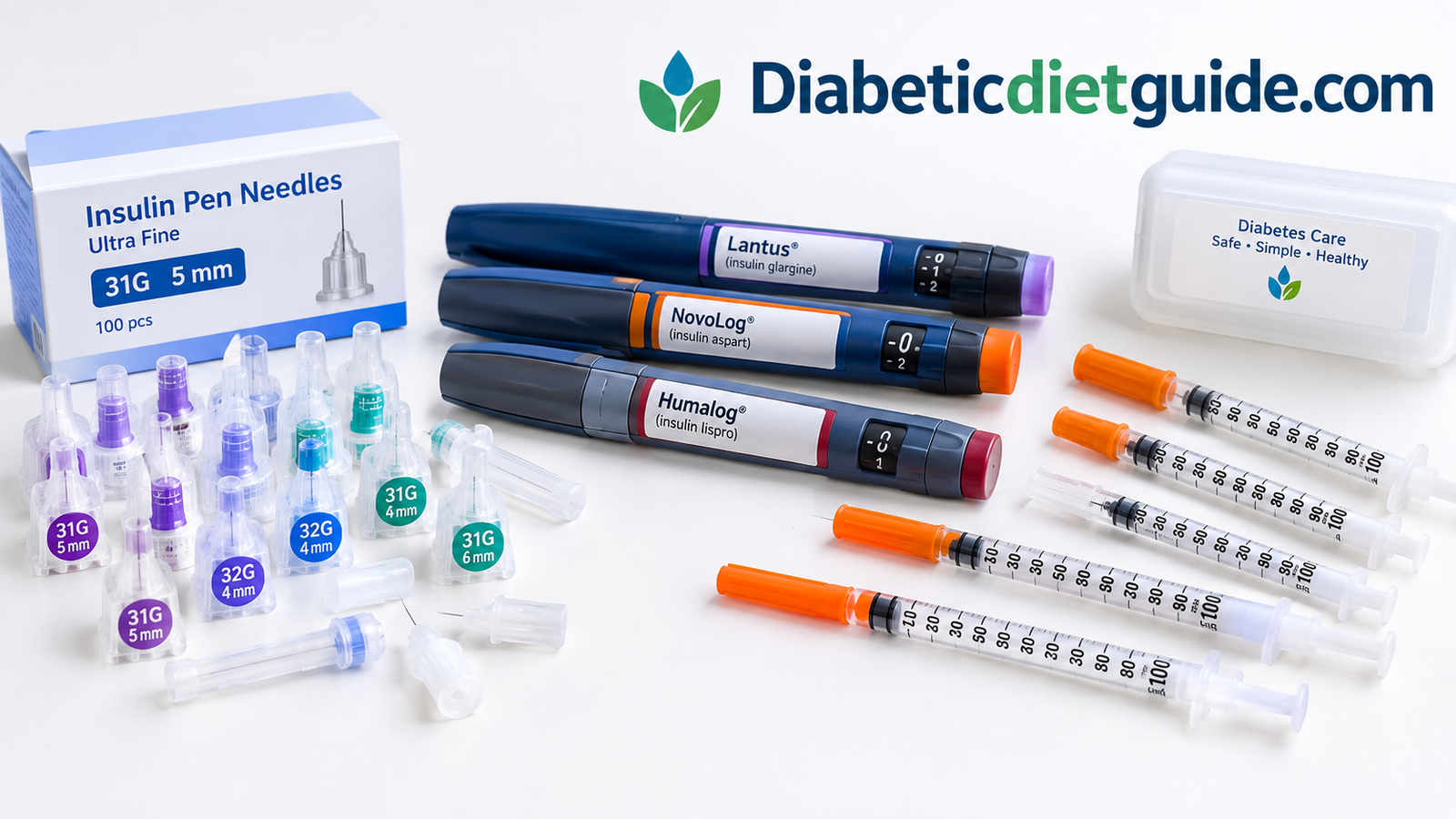
Buying the right needle isn’t complicated once you know where to look — this guide breaks down every option.
Jump to a section
If you or someone you care for manages diabetes with insulin, you already know that needles are a recurring, non-negotiable expense. The good news is that diabetic needles — whether that means insulin syringes, pen needles, or lancets for blood glucose testing — are widely available through more channels than most people realize. This guide walks through every legitimate place to buy them, what each option costs, and how to make sure what arrives in the mail (or leaves the pharmacy counter with you) is exactly what your prescription calls for.
Before diving into where to shop, it helps to know how diabetes is typically diagnosed and monitored, since the type of diabetes and treatment plan a person has will usually determine which needle type and gauge their doctor recommends.
What makes needle shopping slightly more involved than picking up a bottle of aspirin is that “the right needle” isn’t universal — it’s specific to the delivery method your doctor prescribed (vial-and-syringe or pen), the gauge that suits your skin and injection routine, and, for many people, whatever channel gets the best price once insurance is factored in. The rest of this guide walks through each buying channel in the order most people should consider them, followed by the practical details — gauge, length, format, cost, storage, and disposal — that make sure whatever you buy actually fits your prescription.
1. Understanding Diabetic Needles: Types and Uses
“Diabetic needles” is really an umbrella term that covers three distinct categories of supply, and knowing which one you need before you shop will save you a returned order or a wasted trip.
Insulin Syringes
These are the classic hollow needle-and-barrel combination used to draw insulin from a vial and inject it manually. They’re sold in boxes of 90 or 100, in a handful of barrel sizes (0.3 mL, 0.5 mL, and 1 mL) that determine how finely a dose can be measured.
Pen Needles
Pen needles are short, screw-on (or snap-on) tips used with prefilled or reusable insulin pens rather than a vial. They’re generally shorter and thinner than syringe needles, which many people find less noticeable at injection.
Lancets
Lancets aren’t for insulin at all — they’re the tiny, spring-loaded points used with a lancing device to draw a drop of blood for a glucose meter or continuous glucose monitor calibration. They’re sold separately from syringes and pen needles, though many of the same retailers carry all three.
2. Do You Need a Prescription to Buy Diabetic Needles?
This is usually the first question people ask, and the honest answer is: it depends on your state and the retailer, not on some universal federal rule. In most U.S. states, insulin syringes and pen needles can be purchased over the counter without a prescription, because they’re classified as medical supplies rather than a controlled substance. A handful of states do restrict over-the-counter sales or cap the quantity you can buy at once, so a pharmacist may ask a few questions or request ID even when no prescription is legally required.
That said, buying with a prescription is almost always the better financial move, even in states where it isn’t mandatory. A prescription is what allows insurance, Medicare Part D, or Medicaid to cover some or all of the cost, and it’s required if you want to use an FSA or HSA card at most retailers without a manual reimbursement claim.
Buying With a Prescription
- Insurance and Medicare/Medicaid coverage possible
- Easier FSA/HSA reimbursement
- Pharmacist can flag interactions or dosing questions
Buying Without One (OTC)
- Full retail price, out of pocket
- Not accepted by all state pharmacy boards
- No pharmacist review of your supply needs
If you’re uninsured or between prescriptions, OTC purchase is a perfectly legal bridge option in most states — just confirm your state’s specific rule with the pharmacy before you drive over, since policies vary by state pharmacy board and can change.
3. Buying Diabetic Needles at Local Pharmacies
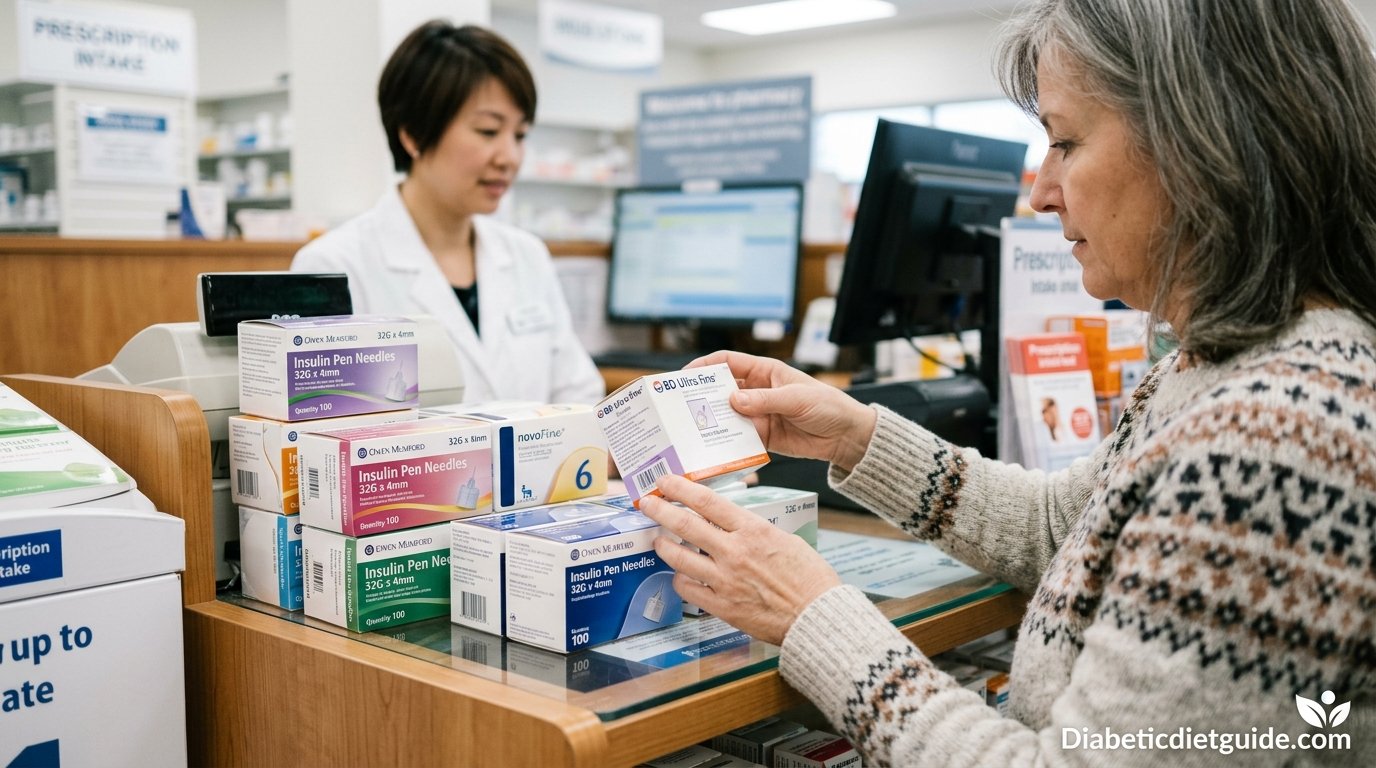
For most people, the local pharmacy counter remains the simplest and most reliable place to buy diabetic needles, especially when timing matters — you can typically walk in and walk out the same day.
Chain Pharmacies
National chains keep insulin syringes and the most common pen needle gauges in stock behind the counter (not on open shelves, due to needle-disposal regulations in many states). Ask the pharmacy technician directly rather than searching the aisles — they’ll usually pull the box for you.
Independent Pharmacies
Smaller, independently owned pharmacies are often underrated for diabetic supplies. They tend to carry a narrower brand selection but can special-order less common gauges or lengths within a day or two, and pharmacists at independents often have more time to walk through insurance coverage questions.
If you carry supplies with you during the day, a dedicated case makes a real difference — see our picks for the best bags to carry diabetic supplies for options that keep syringes, pens, and a sharps container organized and discreet.
4. Buying Diabetic Needles Online
Online ordering has become the default for a large share of diabetic supply purchases, mostly because it turns a recurring errand into an automated one. A few categories of online seller are worth distinguishing:
- Licensed online pharmacies (CVS.com, Walgreens.com, Walmart Pharmacy online, etc.) — these process your existing prescription and insurance exactly like the physical location would, and typically ship within a few days.
- Diabetic supply-specific retailers — sites built entirely around diabetes management products, often with subscription/auto-refill options tuned specifically to needle consumption rates.
- General marketplaces — large marketplaces that sell OTC-eligible syringes and pen needles without a prescription requirement in most states, generally at competitive per-unit pricing.
What to Verify Before You Order Online
| Check | Why It Matters |
|---|---|
| Seller is a licensed pharmacy or established retailer | Avoids counterfeit or expired stock |
| Gauge and length match your prescription | Wrong length can affect injection depth and comfort |
| Unit count and price-per-needle | Larger boxes are almost always cheaper per unit |
| Return policy on opened medical supply boxes | Many retailers can’t accept opened sharps boxes back |
| Estimated delivery window | Order early enough to avoid running out |
5. Diabetic Needles on Amazon: What to Expect
Amazon has quietly become one of the largest retailers of OTC diabetic supplies simply because of selection and delivery speed. A search turns up insulin syringes and pen needles from most of the major medical-supply manufacturers, typically in the same box counts you’d find at a pharmacy.
What’s Genuinely Useful About Buying on Amazon
- Side-by-side comparison of gauge, length, and box count on one page
- Subscribe & Save style repeat-delivery pricing on many listings
- Verified purchase reviews that often mention comfort and ease of use
- Fast shipping, which matters if you’ve miscalculated how many needles are left
What to Watch For
Because Amazon is an open marketplace, listings are fulfilled by many different sellers. Stick to listings sold and shipped by Amazon or a manufacturer’s official storefront, check that the box is sealed and within its printed expiration window in photos, and read the most recent reviews rather than only the top-rated ones — packaging and sellers can change over time on a single listing.
6. Big-Box Stores and Supermarket Pharmacies
Retailers like Walmart, Target, Costco, Sam’s Club, Kroger, and Publix all operate in-store pharmacies that stock the same diabetic supplies as dedicated drugstore chains, frequently at lower cash prices because of their overall pharmacy volume.
Why This Category Is Worth Checking
Big-box and supermarket pharmacies compete aggressively on generic and store-brand pricing. Several offer their own store-brand insulin syringes at a noticeably lower price point than name-brand equivalents, with identical specifications on gauge and barrel size. Warehouse clubs like Costco and Sam’s Club also sell larger multi-box quantities, which lowers the effective per-needle cost for anyone going through supplies quickly.
A Practical Comparison
| Retailer Type | Typical Advantage | Consideration |
|---|---|---|
| Chain drugstore | Convenience, extended hours, wide locations | Cash prices often higher than warehouse clubs |
| Big-box pharmacy | Competitive cash pricing, store brands | Pharmacy hours shorter than 24-hour drugstores |
| Warehouse club | Lowest per-unit cost at bulk sizes | Membership required at most locations |
| Supermarket pharmacy | Combine with grocery run | Smaller supply selection than dedicated pharmacies |
7. Buying Through Your Insurance or Mail-Order Pharmacy
If you have health insurance, Medicare, or Medicaid, your plan very likely has a preferred mail-order pharmacy that handles maintenance supplies like insulin needles at a lower copay than a retail pharmacy visit.
How Mail-Order Typically Works
- Your doctor sends a prescription (often for a 90-day supply) to the mail-order pharmacy named on your insurance card.
- The pharmacy verifies your coverage and calculates your copay.
- Supplies ship directly to your home, usually with an option for automatic refills before you run out.
Medicare Part B and Part D Considerations
For Medicare enrollees, syringes and pen needles used to inject insulin are generally covered under Part D (prescription drug coverage) rather than Part B, since Part B mainly covers insulin delivered through a pump. Coverage details and copays vary by plan, so it’s worth a quick call to your plan administrator before assuming a specific price.
8. Manufacturer-Direct and Specialty Diabetic Supply Companies
Beyond pharmacies and general retailers, there’s a category of business built entirely around diabetes management — specialty medical supply companies and, in some cases, needle manufacturers themselves.
Specialty Diabetic Supply Retailers
These companies typically process insurance directly, similar to a mail-order pharmacy, but focus exclusively on diabetes-related products: needles, glucose meters, test strips, continuous glucose monitor sensors, and related accessories. Because diabetes supplies are their entire business, customer service reps tend to be well-versed in coverage rules and can often tell you your exact copay before you commit to an order.
Manufacturer Direct Programs
Some pen needle and syringe manufacturers run patient assistance or direct-order programs, particularly useful for anyone who is uninsured or facing a high deductible. These programs are usually income-based or tied to demonstrating financial need, and applications typically go through the manufacturer’s own website rather than a pharmacy.
Specialty Suppliers
- Staff who specialize in diabetes-only billing questions
- Bundled ordering (needles, strips, meters together)
- Often ship recurring supplies automatically
Manufacturer Direct
- Application and income verification required
- Processing can take longer than a retail order
- Not a fit for routine, well-insured purchases
9. Needle Gauges and Lengths: What to Choose When Buying
Once you know where you’re buying, getting the gauge and length right is what actually determines comfort and correct dosing. This is set by your doctor, but knowing the basic terms helps you buy confidently and catch an obvious mismatch before you check out.
Gauge (Needle Thickness)
Gauge numbers work in reverse of what you’d expect: a higher gauge number means a thinner needle. Most insulin needles fall between 29 and 32 gauge, with thinner (higher-gauge) needles generally described as more comfortable for frequent injections.
Length
Pen needle lengths commonly range from about 4mm to 8mm, while syringe needles run slightly longer. Shorter lengths have become more common in recent years as research has shown they work effectively for most body types, but the right length still depends on individual factors your prescriber evaluates.
| Common Gauge | Relative Thickness | Typical Use |
|---|---|---|
| 29G | Thicker of the common range | Syringes, some higher-viscosity medications |
| 30–31G | Mid-range | Most common pen needle sizes |
| 32–34G | Thinnest, most comfortable | Frequent daily injections |
It’s also worth noting that gauge and length aren’t purely about comfort — they can affect how consistently a dose is delivered. A needle that’s too long for a person’s tissue type may reach muscle rather than the intended subcutaneous layer, while one that’s too short may not fully clear the skin’s surface layer for certain body types. This is exactly why prescribers tailor gauge and length individually rather than defaulting everyone to the same size, and why it’s worth flagging any change in comfort or bruising to your care team rather than simply switching sizes on your own next time you reorder.
10. Comparing Syringes vs. Pen Needles vs. Safety Needles
Which format you’re buying changes both where you should shop and roughly what you’ll pay. Here’s how the three most common formats stack up.
| Format | Best For | Typical Box Size | Notes |
|---|---|---|---|
| Insulin Syringes | Drawing insulin from a vial | 90–100 count | Most economical per-dose option |
| Pen Needles | Prefilled or reusable insulin pens | 90–100 count | Quick to attach, widely preferred for convenience |
| Safety Needles | Caregivers, clinical settings, needle-stick sensitivity | Varies | Built-in shield after use; higher cost per unit |
Safety needles — the versions with a retracting or shielding mechanism — are worth calling out separately. They’re not usually necessary for someone injecting only themselves at home, but they’re standard practice for caregivers, home health aides, or anyone handling needle disposal for another person, since they reduce the risk of accidental needle-stick injury.
11. Cost-Saving Tips When Buying Diabetic Needles
Needle costs add up fast for anyone injecting multiple times a day, so a handful of buying habits can meaningfully lower the annual total.
- Buy the largest box your storage allows. A 100-count box is almost always cheaper per needle than a 30-count box of the same brand and gauge.
- Compare store brand to name brand. Store-brand syringes and pen needles at big-box pharmacies are manufactured to the same specifications and are usually 20–40% cheaper.
- Ask your pharmacy about manufacturer coupons. Several needle and pen manufacturers offer periodic discount cards, especially for new prescriptions.
- Use an FSA or HSA card. Diabetic needles are FSA/HSA-eligible, which effectively gives you a discount equal to your tax rate.
- Check subscription pricing online. Recurring-delivery discounts on Amazon and pharmacy websites commonly run 5–15% below one-time purchase price.
- Ask about 90-day supplies through mail-order. A single 90-day copay is often cheaper than three separate 30-day retail copays.
If cost pressure extends beyond supplies into daily food choices, our weekly diabetic meal plan and diabetic snack ideas are built with the same budget-conscious approach in mind.
12. Storage, Disposal, and Safety After You Buy
Buying the right supply is only half the process — storing it correctly and disposing of used needles properly keeps you, your household, and your local sanitation workers safe.
Storage
- Keep unopened boxes in a cool, dry place away from direct sunlight; most needles don’t require refrigeration (insulin itself does, but the needles don’t).
- Keep boxes out of reach of children and pets.
- If you travel, a dedicated case protects sterility and keeps supplies organized — see our guide to the best bags for carrying diabetic supplies.
Disposal
Used needles are considered “sharps” and should never go directly into household trash or recycling. Most areas support one or more of the following:
- An FDA-cleared sharps disposal container, filled and then dropped off at a participating pharmacy or collection site.
- A mail-back sharps disposal program, where a pre-paid container is shipped to a disposal facility once full.
- Community drop-box programs at hospitals, health departments, or fire stations in many cities.
Traveling With Diabetic Needles
If you’re flying, the TSA allows insulin, pen needles, and syringes in carry-on luggage when accompanied by the insulin itself, even in quantities larger than the standard liquids limit. It’s worth keeping supplies in their original, labeled packaging and carrying a copy of your prescription, since this can speed up screening and answer any questions before they come up. A dedicated travel case does double duty here — it keeps everything together and signals clearly to security staff that what they’re looking at is medical, not something to be concerned about.
Frequently Asked Questions
Can I buy diabetic needles without a prescription?
In most U.S. states, yes — insulin syringes and pen needles are classified as OTC medical supplies. A few states restrict this or limit quantity, so it’s worth confirming with your local pharmacy.
Is it cheaper to buy diabetic needles online or in-store?
It depends on the retailer and whether you’re using insurance. Online marketplaces and subscription pricing are often cheaper for out-of-pocket buyers, while insurance-covered purchases are usually cheapest through a retail or mail-order pharmacy copay.
Does Amazon sell real, FDA-approved diabetic needles?
Yes, when purchased from listings sold by Amazon or an official manufacturer storefront. As with any open marketplace, check that the seller is reputable and the box is sealed and within its expiration window.
Can I use my FSA or HSA card to buy diabetic needles?
Yes, insulin syringes, pen needles, and lancets are FSA/HSA-eligible expenses at most retailers, including many online marketplace listings.
What’s the difference between a pen needle and a syringe?
A syringe draws insulin from a vial and injects it directly; a pen needle screws onto an insulin pen (prefilled or reusable) and is generally shorter and thinner.
How many needles come in a typical box?
Most insulin syringe and pen needle boxes contain 90 or 100 units, though smaller trial-size boxes are sometimes available.
Do diabetic needles expire?
Yes. Unopened boxes typically carry an expiration date several years out; always check the printed date before use and before purchasing, especially from third-party online sellers.
Can I reuse a needle to save money?
Manufacturers design these needles for single use, and reuse is generally discouraged by healthcare providers due to reduced sharpness and hygiene concerns. Talk to your provider about cost-saving options rather than reusing needles.
Where can I dispose of used diabetic needles?
Use an FDA-cleared sharps container, a mail-back disposal program, or a local community drop-box site. Never place loose needles in household trash.
Does Medicare cover diabetic needles?
Needles and syringes used with insulin are generally covered under Medicare Part D (prescription drug coverage). Coverage details vary by plan, so check with your specific plan administrator.
What gauge needle is most common for insulin injections?
Most people use needles between 29 and 32 gauge, with thinner (higher-numbered) gauges generally considered more comfortable. Your prescriber determines the specific gauge for your treatment.
Can I buy diabetic needles at a grocery store pharmacy?
Yes, most supermarket pharmacies carry standard insulin syringes and common pen needle sizes, similar to a dedicated drugstore pharmacy.
Buying Diabetic Needles Doesn’t Have to Be Complicated
Whether you go through your local pharmacy, an online marketplace, or your insurance’s mail-order program, the important part is matching the gauge and format to your prescription and buying from a source you trust. Once that’s dialed in, restocking becomes routine rather than a hassle.
Shop Diabetic Needles on AmazonYou May Also Like
More diabetes management guides from Diabetic Diet Guide