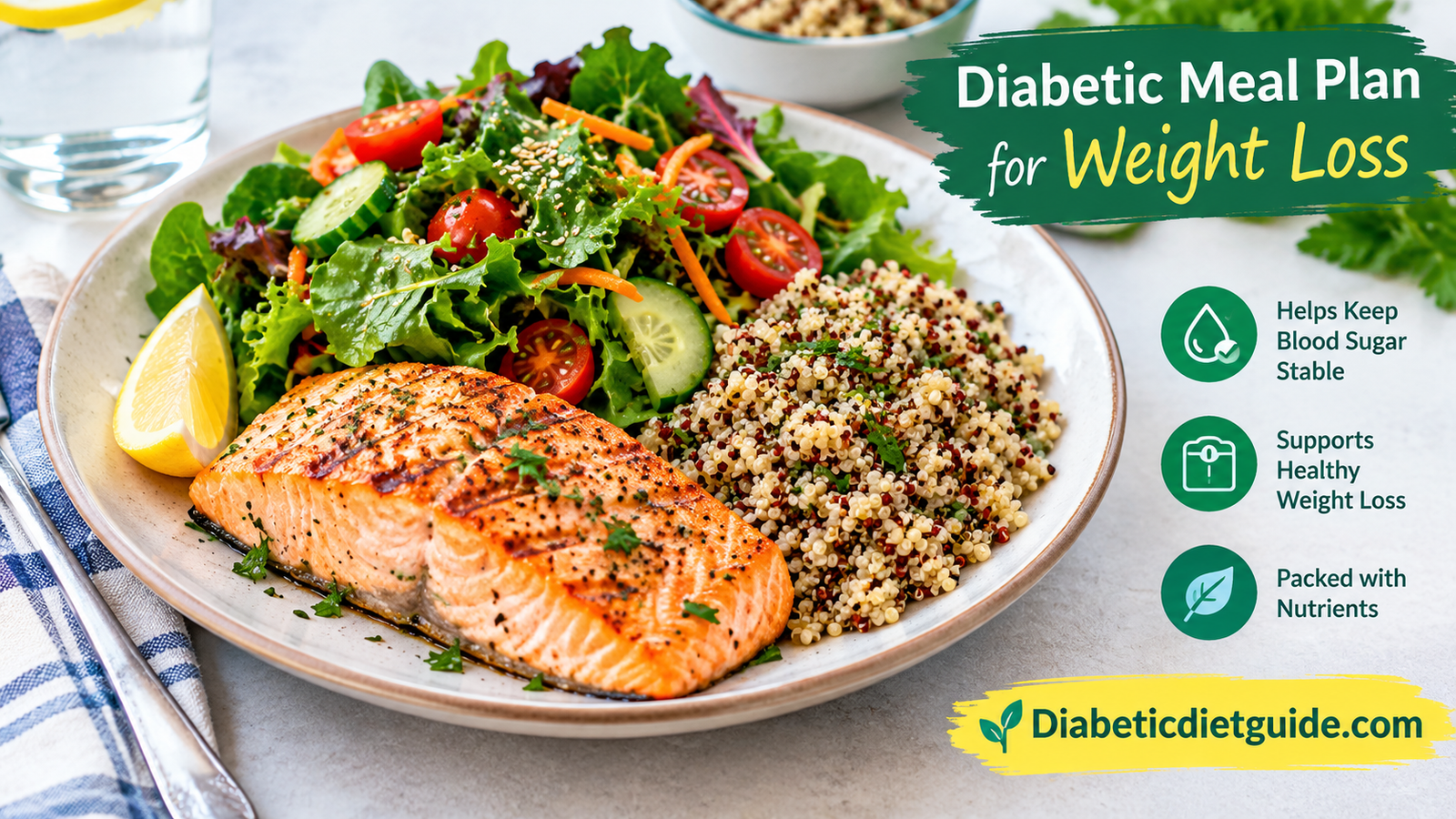
Diabetic Meal Plan for Weight Loss: A Practical, Blood-Sugar-Friendly Guide You Can Actually Follow
Lose weight steadily, keep your glucose steadier, and eat food you genuinely enjoy. Here is how to build a plan around real meals, realistic portions and simple habits.
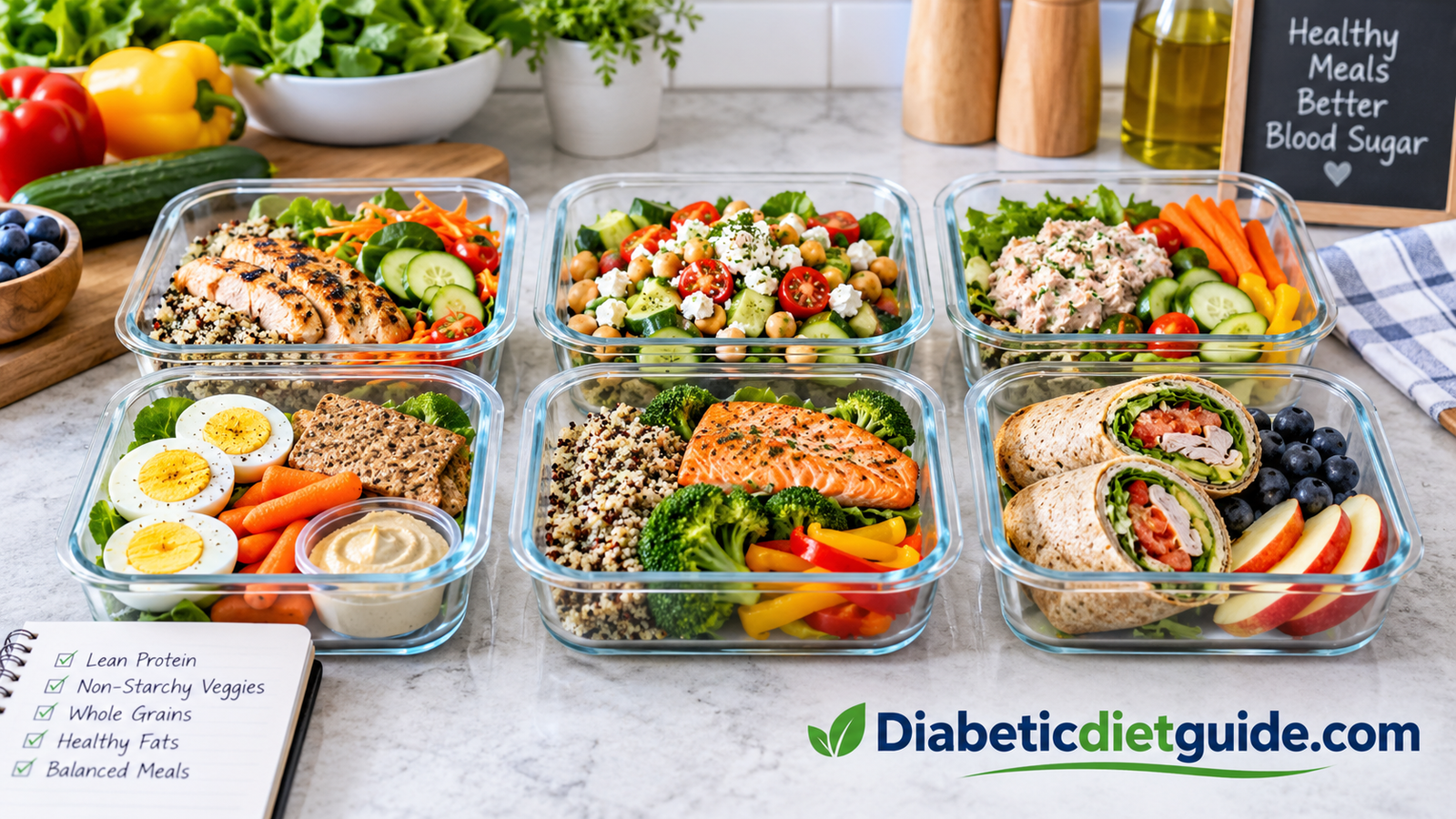
If you live with type 2 diabetes or prediabetes, you have probably heard the same advice a hundred times: lose some weight and your numbers will improve. What almost nobody explains is how to do that without feeling hungry, confused or deprived. A good diabetic meal plan for weight loss is not a punishment diet. It is a structure that helps you eat satisfying food, trim calories gently, and avoid the sharp glucose spikes that leave you tired and craving more.
This guide walks through the whole picture. You will learn why modest weight loss has such a large effect on blood sugar, the principles that make a plan work, how to build a plate, how many calories to aim for, and what a full week of eating can look like. You will also find grocery lists, prep strategies, restaurant tips, and answers to the questions people ask most often.
If you would like a ready-made structure to start from, our weekly diabetic meal plan is a good companion to the ideas below.
Think of the plan as a framework rather than a rigid prescription. Every body responds a little differently, so you will use your own glucose readings, hunger levels and energy as feedback, tweaking portions and food choices as you go. Some people feel best with more plant foods, others with more protein and fewer starches. Both can work. What does not work is guessing, skipping meals, or following a plan so strict that a single dinner out feels like failure. Expect the first two weeks to be about learning, and expect real momentum to build from there as shopping, cooking and portioning become automatic. By the end of this guide, you will have everything you need to design a week that fits your tastes, your budget and your schedule, plus a clear idea of when to check in with your healthcare team along the way.
Ready to stock your kitchen for a diabetic-friendly week?
Shop Diabetes-Friendly Foods1. Why Weight Loss Matters So Much When You Have Diabetes
Excess body fat, especially around the abdomen and inside the liver and pancreas, makes the body less responsive to insulin. This is called insulin resistance, and it is the engine behind most cases of type 2 diabetes. When you lose even a modest amount of weight, cells often become more sensitive to insulin again, the liver releases less glucose overnight, and the pancreas has an easier job. Many people see fasting glucose, A1C, blood pressure and cholesterol all move in a better direction together.
Research on lifestyle programs has consistently shown that losing roughly 5 to 7 percent of starting body weight can meaningfully improve blood sugar control, and larger losses sustained over time have led some people to reduce medications or even reach remission under medical supervision. You do not need to reach a textbook ideal weight to benefit. For someone who weighs 200 pounds, that first milestone is only 10 to 14 pounds.
What changes first
- Fasting glucose often improves within the first few weeks as insulin sensitivity rises.
- Blood pressure tends to drop with every few pounds lost, which is why many people also explore a diabetic menu for high blood pressure alongside weight loss.
- Triglycerides and cholesterol usually shift favorably, which supports the goals of a heart healthy diabetic menu.
- Energy and sleep frequently improve, which makes consistent habits easier to keep.
Why diabetes can make weight loss feel harder
If you have struggled, it is not a character flaw. High insulin levels encourage fat storage and can blunt hunger signals. Some diabetes medications, including insulin and certain oral drugs, are associated with weight gain. Blood sugar swings can trigger intense cravings for sugary or starchy food. Stress, poor sleep and irregular meals add to the pattern. A well-built meal plan works against each of these by keeping meals steady, high in fiber and protein, and predictable.
The encouraging truth is that the same habits that lower your weight also lower your glucose, so every good meal does double duty.
Support your weight loss goals with a reliable digital food scale.
See Digital Food Scales2. The Core Principles of a Diabetic Weight Loss Meal Plan
There is no single magic diet for diabetes. Major diabetes organizations agree that several eating patterns can work, including Mediterranean, lower-carbohydrate, plant-forward and DASH-style approaches. What they share matters more than the label. These are the principles that show up in nearly every successful plan.
Principle 1: A modest, sustainable calorie deficit
Crash diets backfire. A deficit of roughly 300 to 750 calories below maintenance usually produces about one-half to one and a half pounds of loss per week for many adults, which is steady enough to protect muscle and keep glucose predictable. Bigger deficits can cause dizziness, rebound hunger and, for people on certain medications, dangerous lows.
Principle 2: Consistent carbohydrate, not zero carbohydrate
Carbohydrate has the largest effect on post-meal glucose, so spreading it evenly across the day makes your readings easier to predict. Choosing high-fiber, minimally processed sources slows digestion and flattens the curve. You will find more on this in section 4.
Principle 3: Protein at every meal
Protein increases fullness, helps preserve lean muscle while you lose fat, and has a minimal direct effect on glucose for most people. Anchoring each meal around a palm-sized portion is one of the easiest upgrades you can make. If you want to lean into this idea, the high protein diabetic menu is worth a look.
Principle 4: Fill up on non-starchy vegetables
Leafy greens, broccoli, peppers, zucchini, cauliflower, tomatoes and similar vegetables add volume, fiber and nutrients for very few calories. They are the secret behind meals that look generous but fit a deficit.
Principle 5: Regular meal timing
Skipping meals often leads to overeating later and unpredictable glucose. Three structured meals with one or two planned snacks, if you need them, keep appetite and blood sugar calmer.
Principle 6: Build for the long haul
The best plan is the one you can follow in month six. That means foods you like, recipes you can actually cook, and room for celebrations. Restriction that is too harsh almost always ends in a rebound.
What works well
- Gradual deficits with steady carbs
- High fiber and protein at each meal
- Planning meals ahead of time
- Flexible rules for social events
What tends to backfire
- Skipping meals to “save” calories
- Cutting every carb overnight
- Relying on “diet” packaged foods
- Ignoring medication changes
Common mistakes to avoid in the first month
Most people who stall in the first few weeks run into the same handful of problems. The first is cutting too hard, too fast. An aggressive plan feels virtuous on day three and impossible by day twenty. The second is relying on “diet” or “sugar-free” packaged foods that are still heavy in refined starch and calories. The third is forgetting about liquid calories, such as sweetened coffee drinks, juice and alcohol. The fourth is eating too little protein, which leaves you hungry and gradually costs you muscle. And the fifth is treating one off-plan meal as a reason to abandon the whole day. A single meal rarely derails progress; the habit of quitting after it does.
If you recognize yourself in this list, take heart. Each of these is fixable with a small adjustment, not a complete restart. Pick the one that sounds most familiar and fix only that this week.
Make portion control effortless with the right containers.
Browse Portion Control Plates3. The Plate Method and Portion Control Made Simple
You do not need a food scale and a spreadsheet to start. The diabetes plate method, widely taught by diabetes educators, gives you a visual shortcut that quietly manages calories and carbohydrate at the same time.
How to build your plate
- Use a standard 9-inch dinner plate.
- Fill half of it with non-starchy vegetables such as salad, green beans, broccoli, cauliflower or roasted peppers.
- Fill one quarter with lean protein such as fish, skinless poultry, eggs, tofu, beans or lean cuts of meat.
- Fill the final quarter with high-fiber carbohydrate such as quinoa, brown rice, sweet potato, whole-grain pasta or legumes.
- Add a small amount of healthy fat, such as olive oil, avocado or a few nuts.
- Choose a zero-calorie drink like water, sparkling water or unsweetened tea.
Hand-based portion cues for when you are on the go
| Food group | Portion cue | Approximate amount |
|---|---|---|
| Protein | Palm of your hand | 3 to 4 ounces cooked |
| Starchy carbs | Cupped hand | About one-half to two-thirds cup cooked |
| Vegetables | Two open fists | 1 to 2 cups |
| Healthy fats | Thumb tip | About 1 teaspoon oil or nut butter |
| Fruit | Tennis-ball size | One small piece or about one cup berries |
The plate method is also easy to adjust for different needs. People with kidney concerns can pair it with a renal diabetic meal plan, while those watching salt may like the approach in this low sodium diabetic meal plan.
Take the guesswork out of serving sizes with a good measuring set.
Find Measuring Cups and Spoons4. Carbs, Glycemic Index and Fiber: Getting the Balance Right
Carbohydrate is not the enemy, but it is the nutrient you have to manage most carefully. The type, the amount and the company it keeps on the plate all shape how high your glucose rises and how long it stays there.
How many carbs should you eat?
There is no universal number. Many people lose weight comfortably on a moderate intake that falls somewhere around 30 to 45 grams of carbohydrate per meal, while others do better with a lower-carbohydrate pattern. The right range depends on your medication, your activity level, your glucose readings and your preferences. A registered dietitian can help you test and set your own target. If you want to explore the lower end, this guide to keto diabetic recipes and meal planning and the low carb weekly diabetic menu show how it can look in practice.
Understanding glycemic index and glycemic load
Glycemic index ranks foods by how quickly they raise glucose compared with pure glucose. Glycemic load adds portion size to the picture, which is more realistic, because a small serving of a high-index food can have less impact than a huge serving of a medium one. As a rule of thumb, whole, intact, high-fiber foods generally land lower than refined, processed ones. If you want a longer-term structure around this idea, try the 30 day low glycemic diet menu.
| Lower-impact choices | Higher-impact choices | Easy swap |
|---|---|---|
| Steel-cut oats | Instant sweetened oatmeal | Plain oats with berries and nuts |
| Lentils and beans | White rice in large portions | Half rice, half lentils |
| Sourdough or seeded whole grain bread | Soft white bread | Thin-sliced whole grain, open-faced |
| Whole fruit | Fruit juice | Berries or an apple |
| Sweet potato with skin | Instant mashed potatoes | Baked potato, skin on, with Greek yogurt |
Why fiber deserves the spotlight
Fiber slows digestion, blunts glucose spikes, feeds beneficial gut bacteria and keeps you full for hours. Aim for about 25 to 35 grams a day from vegetables, legumes, berries, nuts, seeds and intact whole grains. Increase slowly and drink plenty of water to avoid bloating. The high fiber diabetic meal plan gives a full week of ideas.
Pairing is a powerful trick
Eating carbohydrate alongside protein, fat and fiber slows absorption. An apple with peanut butter acts very differently than an apple alone. Many people also find that eating vegetables and protein first, then carbohydrate last, produces a smaller post-meal rise.
Reading labels like a pro
Packaged foods can quietly sabotage a good plan, so it pays to look at the nutrition panel with a few specific questions. Start with the serving size, because every number below it refers to that amount, and many packages contain two or three servings. Next, look at total carbohydrate rather than just sugar, since starches also raise glucose. Then check fiber: when a food has several grams of fiber, the carbohydrate count is easier on your blood sugar. Finally, scan the ingredient list. If sugar, syrup or refined flour appear in the first few ingredients, the product is likely to spike you.
A useful rule of thumb for many packaged carbohydrate foods is to look for at least 3 grams of fiber per serving and keep added sugars as low as possible. Over time you will memorize your go-to brands and stop needing to check every item.
Keep your pantry stocked with high-fiber staples.
Shop High-Fiber Whole Grains5. Protein and Healthy Fats: Your Fullness Team
When people struggle to stay on a weight loss plan, the cause is usually hunger. Protein and healthy fats are your best defense. They take longer to digest, they steady appetite hormones, and they turn meals into something that actually satisfies.
Best protein choices
- Fish and seafood: salmon, sardines, trout, shrimp and cod. Fatty fish also deliver omega-3 fats that support heart health.
- Poultry: skinless chicken or turkey breast, or thighs trimmed of visible fat.
- Eggs: affordable, versatile and filling. If you are curious about limits, see our guide on how many eggs a diabetic can eat in a day.
- Plant proteins: lentils, chickpeas, black beans, tofu, tempeh and edamame. These bring fiber along with the protein.
- Dairy: plain Greek yogurt, cottage cheese and skyr. Check out the 5 best yogurts for diabetes for label-reading help.
Healthy fats that earn their calories
Fat is calorie-dense, so portions matter, but the right fats improve satiety and support cholesterol. Favor olive oil, avocado, nuts, seeds and fatty fish. A small handful of nuts goes a long way; the 5 best nuts for diabetics breaks down your options, and the 5 best peanut butters for diabetics helps you pick one without added sugar.
Fats and proteins to limit
Go easy on processed meats like bacon, sausage and deli meats, which are high in sodium and saturated fat. Limit fried foods, heavy cream sauces and pastries made with shortening. If cholesterol is a concern, the diabetic menu for high cholesterol offers a thoughtful framework.
| Protein source | Typical serving | Approx. protein | Why it helps |
|---|---|---|---|
| Grilled chicken breast | 4 oz cooked | About 35 g | Lean, very filling |
| Salmon fillet | 4 oz cooked | About 25 g | Omega-3 fats |
| Plain Greek yogurt | 3/4 cup | About 15 to 18 g | Protein plus probiotics |
| Cooked lentils | 1/2 cup | About 9 g | Fiber and slow carbs |
| Large egg | 1 egg | About 6 g | Cheap and versatile |
| Firm tofu | 4 oz | About 9 to 10 g | Plant-based, low carb |
Prefer plant-based eating? Both the diabetic meal plan for vegetarians and the vegan diabetic meal plan make it easy to reach your protein goals without meat.
Add lean protein and healthy fats to every meal.
Explore Healthy Protein Options6. Calorie Targets That Actually Work for Weight Loss
Calorie needs vary widely depending on age, sex, height, current weight and activity. A common starting point is to estimate maintenance calories, then subtract about 300 to 500 for steady loss. A dietitian can give you a more precise number. The ranges below are typical starting points that many programs use.
| Daily calories | Often suits | Typical pace | Learn more |
|---|---|---|---|
| 1,200 | Smaller, less active adults or some older adults under supervision | Faster, requires care | 1200 calorie diabetic menu |
| 1,500 | Many women and smaller men aiming for steady loss | Moderate | 1500 calorie diabetic menu |
| 1,800 | Taller or more active adults | Gradual | 1800 calorie diabetic menu |
| 2,000 | Larger, very active adults or maintenance | Slow or maintenance | 2000 calorie diabetic menu |
Choosing your starting level
If you are unsure, start with the higher number that still produces a gentle loss. Track your weight for two to three weeks, then adjust by 100 to 200 calories if the scale is not moving. Older adults need extra care to preserve muscle, so protein and strength activity matter even more. Our guide to the 1200 calorie diabetic menu for seniors covers this in depth.
Think beyond the number
Calories matter, but the quality of those calories decides how hungry you feel. A 1,500-calorie day built from vegetables, lean protein, legumes and healthy fats feels dramatically different from 1,500 calories of crackers and sweet drinks. Build around real food first, and the numbers tend to take care of themselves.
Spacing your calories through the day
Some people feel best with three evenly sized meals; others prefer a lighter breakfast and a bigger dinner, or the reverse. What matters is consistency. Try to avoid saving most of your calories for the evening, because late, heavy meals often lead to higher overnight and morning glucose. A roughly even split, with slightly more protein earlier in the day, works well for many people. If you take medications that lower glucose, keep meal timing steady so doses and food stay in sync.
Planning your calories? A food journal keeps you on track.
Find Food and Glucose Logbooks7. A Full 7-Day Sample Diabetic Meal Plan for Weight Loss
This sample week averages roughly 1,400 to 1,600 calories per day with about 30 to 45 grams of carbohydrate at main meals and 10 to 20 grams at snacks. Treat it as a template, not a rulebook. Scale portions up or down for your own needs, and swap freely using the ideas in the next section. For more complete structures, see the 7 day diabetic menu and the 14 day diabetic meal plan.
| Day | Breakfast | Lunch | Dinner | Snack |
|---|---|---|---|---|
| Mon | Veggie omelet (2 eggs, spinach, peppers) with 1 slice seeded toast | Big salad with grilled chicken, chickpeas, olive oil and lemon | Baked salmon, roasted broccoli, 1/2 cup quinoa | Apple with 1 tbsp almond butter |
| Tue | Plain Greek yogurt, berries, chia seeds, walnuts | Turkey and avocado lettuce wraps with side of cucumber slices | Chicken stir-fry with mixed vegetables and 1/2 cup brown rice | Celery with hummus |
| Wed | Steel-cut oats with cinnamon, a few pecans and sliced strawberries | Lentil and vegetable soup with a side salad | Turkey meatballs, zucchini noodles, marinara | Cottage cheese with cherry tomatoes |
| Thu | Scrambled eggs with mushrooms and tomatoes, half an avocado | Tuna salad (olive oil or yogurt base) on greens with a few whole-grain crackers | Grilled shrimp, asparagus, small sweet potato | Small handful of almonds |
| Fri | Protein smoothie: unsweetened milk, protein powder, spinach, berries, flax | Black bean and veggie bowl with salsa and a spoonful of Greek yogurt | Baked cod with lemon, green beans, 1/2 cup whole-wheat pasta | Hard-boiled egg |
| Sat | Cottage cheese bowl with sliced peaches and pumpkin seeds | Chicken, vegetable and barley soup | Lean beef or tofu fajita bowl with peppers, onions and lettuce | Sugar-free gelatin or a small pear |
| Sun | Whole-grain toast with smashed avocado and a poached egg | Mediterranean plate: grilled chicken, tabbouleh, cucumber salad | Slow-cooker chicken, roasted Brussels sprouts, cauliflower mash | Plain yogurt with cinnamon |
How to customize the week
- Need more calories? Add a second fruit, a bigger portion of whole grains, or extra olive oil.
- Need fewer? Reduce the starchy portions first, keep the vegetables and protein intact.
- Short on time? Repeat two breakfasts and two lunches all week. Repetition is a feature, not a flaw. The 3 day diabetic meal plan and 1 day simple diabetic menu are perfect for starting small.
- Want a longer run? Move on to the 30 day diabetic menu once the first week feels easy.
Make weekly prep easy with sturdy meal prep containers.
Shop Meal Prep Containers8. Breakfast, Lunch, Dinner and Snack Ideas You Will Actually Enjoy
Variety keeps a plan alive. Use these building blocks to mix and match, keeping each meal anchored by protein, fiber and vegetables.
Breakfast ideas
A protein-rich breakfast sets the tone for appetite all day. Try vegetable omelets, Greek yogurt with berries and seeds, chia pudding made with unsweetened milk, or savory oatmeal topped with an egg. If you are bored of eggs, our collections of diabetic breakfast menu ideas and breakfast ideas for diabetes have plenty of alternatives. Smoothie fans can also browse the diabetic smoothie menu, and if cereal is your weakness, see the 5 best cereals for diabetics.
Lunch ideas
Think big salads with protein, soups loaded with beans and vegetables, grain bowls with a small portion of whole grain, and lettuce wraps. Leftover dinner protein over greens is the easiest lunch of all. For more inspiration, check the diabetic lunch menu. Busy days call for no cook diabetic meals, and if you are juggling a job, the diabetic menu for working adults is designed for packed schedules.
Dinner ideas
Keep dinners simple: one protein, two vegetables, one modest starch. Sheet-pan meals, slow-cooker dishes and stir-fries are friendly formats. Browse diabetic dinner menu ideas for more, or try 5 ingredient diabetic recipes when you want minimal effort. An air fryer can deliver crispy texture with far less oil; see these air fryer diabetic recipes.
Cuisine-inspired meals
You do not have to give up the foods you grew up with. Adapt them instead. Explore Mexican diabetic food recipes, Chinese diabetic recipes, soul food diabetic recipes and the Indian diabetic diet chart for lighter versions that still taste like home.
Smart snacks
Snacks are optional, but they help some people bridge long gaps between meals. Choose protein or fiber, ideally both: nuts, hummus and vegetables, cottage cheese, hard-boiled eggs or plain yogurt. The full list in these diabetic snack ideas is a good place to browse, and the best crackers for diabetics and best diabetic protein bars guides help when you need a grab-and-go option.
Satisfying a sweet tooth
A plan that bans dessert forever rarely lasts. Build in small, planned treats such as berries with whipped Greek yogurt, a square of dark chocolate, or a baked apple. These resources help: best dessert recipes for diabetics, best chocolate for diabetics and best ice cream for diabetics.
Mindful eating habits that quietly cut calories
The way you eat matters nearly as much as what you eat. Slowing down gives your brain time to register fullness, which typically takes about twenty minutes. Put your fork down between bites, chew thoroughly, and eat at a table away from screens whenever you can. Drink a glass of water before meals. Serve food in the kitchen rather than putting serving dishes on the table, which discourages second helpings. And pay attention to the difference between true hunger and habit, boredom or stress. Rating your hunger from one to ten before eating is a surprisingly effective check.
These small behaviors cost nothing, require no special foods and compound over months. They are also easy to maintain long after the initial motivation fades, which is exactly what you want from a weight loss plan.
Satisfy cravings with smart, lower-sugar snacks and treats.
Browse Diabetic Snacks9. The Diabetic Weight Loss Grocery List and Pantry Setup
What you buy decides what you eat. A stocked kitchen turns healthy eating into the easy default. Here is a practical shopping framework to keep in your phone.
| Category | Stock up on | Limit or avoid |
|---|---|---|
| Vegetables | Spinach, kale, broccoli, cauliflower, peppers, zucchini, tomatoes, frozen vegetable blends | Canned vegetables with heavy sauces or added salt |
| Proteins | Chicken breast, fish, eggs, tofu, canned tuna or salmon, lentils, beans | Processed deli meats, breaded and fried proteins |
| Whole grains | Oats, quinoa, barley, brown rice, whole-grain bread and pasta | Sugary cereals, white bread, instant noodles |
| Fruit | Berries, apples, pears, citrus, peaches | Fruit juice, canned fruit in syrup, dried fruit in large portions |
| Healthy fats | Olive oil, avocado, nuts, seeds, natural nut butter | Margarine with trans fats, creamy bottled dressings |
| Dairy and alternatives | Plain Greek yogurt, cottage cheese, unsweetened plant milk | Flavored yogurt with added sugar |
| Flavor boosters | Herbs, spices, vinegar, mustard, garlic, lemon, salsa | Sugary sauces, ketchup, sweet marinades |
Fruit questions answered
Many people worry that fruit is off limits. It is not, but portions and types matter. Whole fruit with fiber is a much better choice than juice. If you want specifics, see whether a diabetic can eat bananas, check the answer on oranges, read about watermelon and diabetes, and compare fresh vs frozen fruit for diabetics.
Smart pantry swaps
- Rice and grains: compare white rice, brown rice and quinoa for blood sugar, and learn whether quinoa is good for diabetics.
- Bread: use the best bread for diabetics guide to read labels.
- Sweeteners: weigh the differences in stevia vs Splenda, and check sugar-free condiments for flavor without the spike.
- Coffee creamer: this guide to the best coffee creamer for diabetes removes the guesswork from your morning cup.
Shopping on a tight budget
Weight loss does not require expensive specialty foods. Frozen vegetables, dried beans, eggs, canned fish, oats and seasonal produce are inexpensive and nutritious. The low income diabetic menu shows how to do it for less.
Stock your pantry with smarter swaps and budget-friendly basics.
Shop Pantry Essentials10. Meal Prep and Kitchen Tools That Make Success Easier
The biggest threat to any plan is a tired, hungry evening with nothing ready. Ninety minutes of prep once or twice a week can protect you from that scenario.
A simple weekly prep routine
- Plan: choose three dinners, two breakfasts and two lunches to repeat.
- Shop: buy from your list only. Avoid shopping hungry.
- Batch cook proteins: bake chicken thighs, boil eggs and cook a pot of lentils or beans.
- Prep vegetables: wash, chop and roast a big tray; keep raw veggies ready for snacking.
- Cook one whole grain: quinoa or brown rice keeps for several days and can be portioned.
- Portion and label: use containers so grab-and-go meals are obvious.
Helpful tools
- Portion-control containers so you do not have to measure every time.
- A digital kitchen scale for the first few weeks, which quickly trains your eye.
- An air fryer or slow cooker to cook healthy meals with little effort.
- A blender for protein smoothies and soups.
- A good insulated bag for taking meals to work. If you carry testing supplies, see the 5 best bags to carry diabetic supplies.
Convenience options when life gets busy
Not everyone has time to cook. Some people like meal delivery programs for structure; our Nutrisystem review covers how one popular program works. Others use nutrition shakes as a backup, and the Glucerna vs Boost comparison and 6 best protein shakes for diabetes help you choose wisely.
Pros of meal prep
- Saves time and money
- Removes decision fatigue
- Keeps portions consistent
- Reduces impulse eating
Cons to manage
- Can feel repetitive
- Needs fridge and freezer space
- Some foods lose texture, so cook them fresh
Freezer-friendly batch meals
If you cook only once a week, the freezer is your best friend. Soups, stews, chili, turkey meatballs, bean burritos wrapped in whole-grain tortillas and cooked lentil dishes all freeze beautifully. Portion them into single-serve containers, label with the date, and pull one out the night before. Freeze sauces separately from pasta or rice, which can turn mushy. Having four or five of these on hand means you are never more than five minutes from a balanced meal, even on days when everything else goes wrong.
Speed up dinner with an air fryer or slow cooker.
See Kitchen Helpers11. Eating Out, Travel and Special Occasions Without Losing Progress
A plan that only works at your own kitchen table will not survive real life. The goal is not perfection but a repeatable strategy for restaurants, parties and busy weeks.
Restaurant strategies that work
- Look at the menu in advance. Most restaurants post it online, so you can decide before hunger takes over.
- Start with a salad or broth-based soup. It takes the edge off appetite.
- Choose grilled, baked, broiled or steamed over fried or breaded.
- Ask for dressings and sauces on the side and use just enough for flavor.
- Swap the starch for extra vegetables or a side salad.
- Box half the entrée right away. Restaurant portions are often two servings.
- Skip sugary drinks. Choose water, sparkling water or unsweetened tea.
The full walkthrough in our eating out diabetic menu guide covers popular cuisine styles one by one.
Parties, holidays and gifts
Eat a protein-rich snack beforehand, scan the table before filling your plate, and fill half of it with vegetables or salad. Choose the one or two special foods you truly love and enjoy them mindfully rather than sampling everything. If you are hosting or gifting, the best diabetic food gifts list has thoughtful ideas.
Drinks and energy boosters
Liquid calories add up quickly and can spike glucose. Water should be your default. If you want something with caffeine or flavor, see the best energy drinks for diabetics for lower-sugar options.
Different life stages and needs
Your plan should match your life. Some people need extra adjustments: the diabetic menu for seniors, the menu for elderly with no teeth, the diabetic menu for teenagers and the diabetic menu for pregnant women each address those needs. Pregnancy in particular is not a time for calorie restriction, so always follow your obstetric team’s guidance.
Anyone with prediabetes or early insulin resistance can start with the menu for prediabetes, the insulin resistance diet plan or the menu for insulin resistance.
Dining on the go? Pack a lunch bag that keeps meals fresh.
Shop Insulated Lunch Bags12. Tracking Progress, Beating Plateaus and Staying Safe
What you measure, you can improve. Tracking does not have to be obsessive. A few simple data points will show you whether the plan is working and where to adjust.
What to track
- Weight: weigh yourself one to three times a week at the same time and look at the trend, not the daily number.
- Glucose readings: note fasting values and post-meal readings, usually one to two hours after you start eating, as your care team advises.
- Waist measurement: it can drop even when the scale stalls.
- Energy, hunger and sleep: they tell you whether your plan is sustainable.
- Food log: a quick photo or note is enough to spot patterns.
Use your meter to learn your own foods
Two people can react differently to the same meal. If you test before and after meals, you will learn which foods spike you and which are safe bets. This personal feedback is often more useful than any glycemic index chart.
Breaking through a plateau
- Double-check portion sizes and liquid calories; small drifts add up.
- Add a daily 10 to 20 minute walk after meals, which also blunts post-meal glucose.
- Include two sessions of strength training each week to protect muscle.
- Prioritize sleep, since short sleep raises hunger hormones and insulin resistance.
- Reduce calories by only 100 to 150 if you have truly stalled for several weeks.
Safety checkpoints
Do not forget your feet, mouth and daily care
Weight loss is only one part of diabetes care. As your activity increases, comfortable footwear matters; these guides to the best insoles for diabetic feet, shoes for diabetic neuropathy and diabetic sandals for women can help, and you can learn what diabetic socks are and why they matter. Do not neglect dental health either; see the 5 best mouthwashes for diabetics. If you are supplementing fiber, read the 5 best fiber supplements for diabetics and discuss it with your provider. Lastly, if you need supplies, here is where to buy diabetic needles.
Movement, sleep and stress: the other half of the plan
Food is the biggest lever, but it is not the only one. A short walk after meals can lower post-meal glucose noticeably, and it adds up to real calorie burn over weeks. Resistance training builds muscle, and more muscle means more places to store glucose and a higher resting metabolism. Aim for movement you enjoy, such as brisk walking, cycling, swimming, dancing or gardening, rather than workouts you dread.
Sleep and stress matter just as much. Consistently getting less than about seven hours raises hunger hormones, increases cravings for sugary food and worsens insulin resistance. Chronic stress raises cortisol, which pushes glucose up and encourages abdominal fat storage. Simple tools such as a regular bedtime, a screen-free wind-down, breathing exercises and time outdoors can make your meal plan easier to follow. If you are interested in an eating pattern that supports both heart and glucose goals, the heart healthy diabetic diet pairs well with these lifestyle habits, and the low sugar diabetic weekly menu is a handy reference when you want to cut added sugars further.
Celebrate non-scale victories
The scale is only one data point. Notice when your clothes fit better, your fasting readings improve, your energy lasts through the afternoon, your doctor lowers a medication, or you climb stairs without getting winded. These wins keep motivation high when weight loss slows, and they are often the earliest signs that your plan is working.
Track your progress with the right tools at home.
See Home Health TrackersFrequently Asked Questions About a Diabetic Meal Plan for Weight Loss
1. How much weight can I safely lose per week with diabetes?
Most guidance supports about one-half to two pounds per week, with slower being fine. The first weeks may show faster loss from water. Steady loss protects muscle and keeps blood sugar more predictable.
2. Do I need to go low carb to lose weight with diabetes?
No. Several patterns work, including Mediterranean, plant-forward and moderate-carb approaches. Lower-carb can help some people, but the best choice is the one you can follow consistently and that your care team supports.
3. What is the best breakfast for diabetes and weight loss?
A protein-rich breakfast with fiber, such as a vegetable omelet, Greek yogurt with berries and nuts, or oats topped with seeds and an egg, tends to keep hunger and glucose steady through the morning.
4. Can I eat fruit on a diabetic weight loss plan?
Yes. Whole fruit with its fiber is a good choice in sensible portions, such as one small piece or about a cup of berries. Limit juice and dried fruit, and pair fruit with protein or fat when possible.
5. How many calories should a diabetic eat to lose weight?
Many adults start between 1,200 and 1,800 calories, depending on size and activity. A registered dietitian can set a more exact target. Avoid dropping very low without medical supervision.
6. Is intermittent fasting safe for people with diabetes?
It can work for some people but carries a risk of low blood sugar, especially with insulin or sulfonylureas. Speak with your healthcare provider before trying it so medications can be adjusted if needed.
7. Should I snack between meals?
Only if you need to. Snacks can help prevent overeating at the next meal, but some people do well with three meals alone. Choose protein or fiber-rich options if you do snack.
8. Why is my blood sugar high even though I am eating healthy?
Stress, poor sleep, illness, certain medications, large portions of even healthy carbs, and the dawn phenomenon can all raise readings. Track patterns and share them with your care team rather than getting discouraged.
9. Are artificial sweeteners okay while losing weight?
Many people use them in moderation to cut sugar without affecting glucose directly. Responses vary, so watch your own readings and cravings, and prioritize whole foods overall.
10. How does exercise fit into the plan?
Activity improves insulin sensitivity and helps preserve muscle. Aim for roughly 150 minutes of moderate activity weekly plus two strength sessions, and consider short walks after meals. Check with your provider if you have complications.
11. Can weight loss reverse type 2 diabetes?
Some people achieve remission, meaning normal readings without diabetes medication, particularly after substantial weight loss early in the disease. Remission needs ongoing monitoring and is not a cure, and it should be guided by a medical professional.
12. When should I see a dietitian?
Any time you start a new plan, take glucose-lowering medication, have kidney or heart concerns, or feel stuck. A registered dietitian or certified diabetes educator can personalize everything in this guide.
Conclusion: Small, Steady Choices Add Up
A diabetic meal plan for weight loss does not have to be complicated, expensive or joyless. Fill half your plate with vegetables, anchor every meal with protein, choose fiber-rich carbohydrates in sensible portions, and keep your calorie deficit gentle enough to sustain. Prepare ahead, plan for restaurants and celebrations, and use your own glucose readings and body measurements as feedback instead of judgment.
Start with one change this week, perhaps a better breakfast or a prepped lunch, then build from there. Each step improves your insulin sensitivity, your energy and your long-term health. Be patient with plateaus, partner with your healthcare team, and remember that progress is rarely a straight line. If you want a place to begin today, the weekly diabetic meal plan is a friendly first step.
Ready to start your plan? Grab the tools that make it easy.
Shop Diabetic Meal Plan Helpers