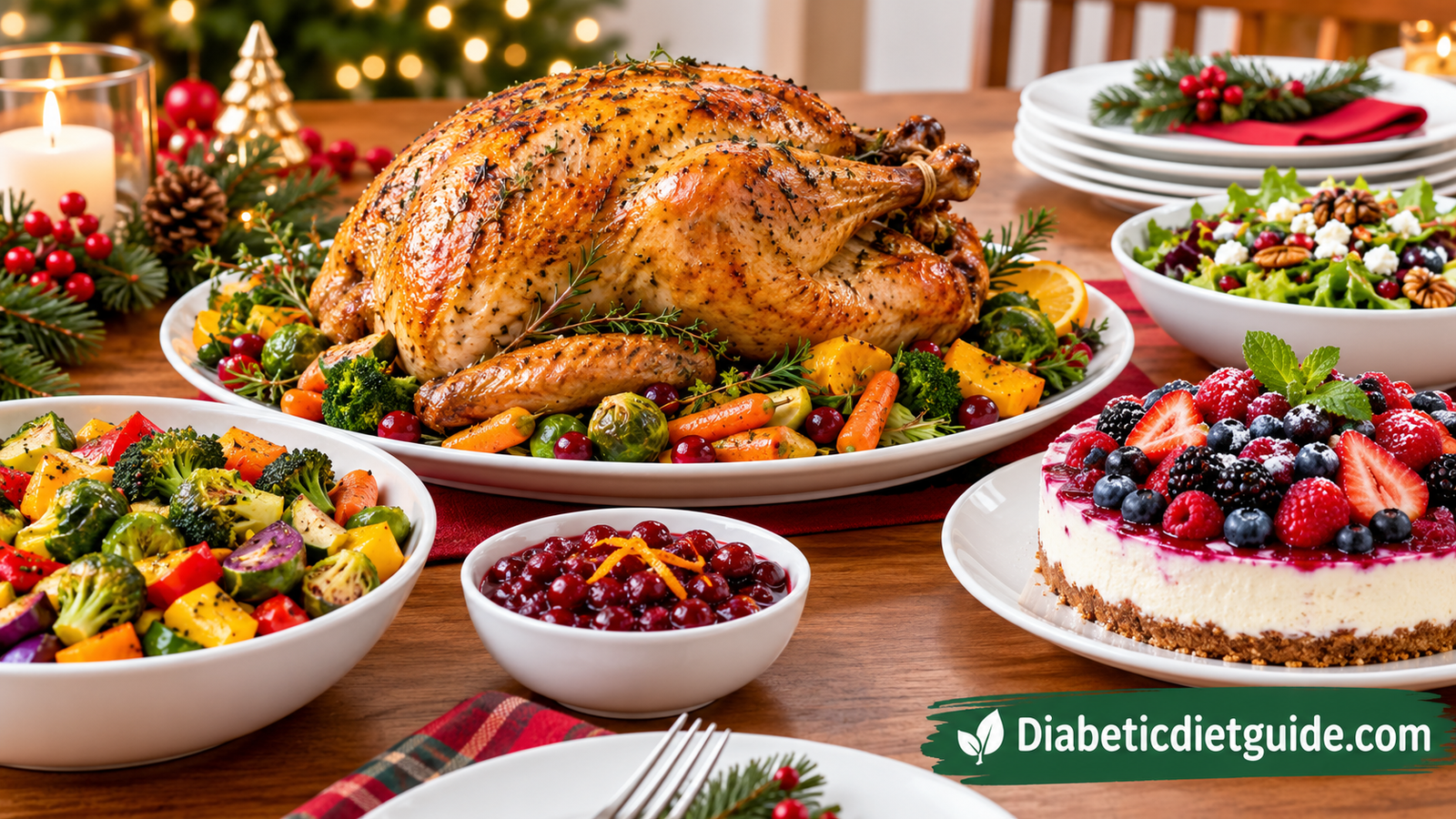
Diabetic Holiday Recipes: Festive Dishes That Keep Blood Sugar Steady
Roasts, sides, desserts, and drinks that taste like the holidays, built around fiber, protein, and smart carbs so you can enjoy the table instead of dreading it.
The holidays have a way of turning every surface into a buffet. Cookie tins show up at work, relatives press second helpings on you, and the one dish you look forward to all year is usually the one drenched in sugar or built on a mountain of refined starch. If you live with diabetes, or you’re cooking for someone who does, that pressure can take the joy out of the season.
It doesn’t have to. A holiday meal is not a test you pass or fail. It is a handful of decisions about portions, ingredients, and timing, and most of those decisions can be made in your kitchen before anyone sits down. This guide gives you tested-style recipes, honest swaps, and a practical game plan for the big day, with ideas for appetizers, mains, sides, desserts, drinks, and the leftover days that follow.
Why Holiday Eating Feels So Tricky With Diabetes
Most days, you have a rhythm. You know roughly what breakfast does to your numbers, which lunches keep you steady, and how much a walk after dinner helps. Holidays scramble all of that. Meals happen at odd hours, portions are bigger, the menu is full of dishes you rarely eat, and the schedule is packed with travel, guests, and cooking. Stress alone can nudge glucose upward, and so can poor sleep, so the season stacks the deck before a single bite.
The food itself is the other half of the problem. Traditional holiday menus lean heavily on refined carbohydrates and added sugar: dinner rolls, stuffing, sweet potatoes under marshmallows, cranberry sauce from a can, pies, cookies, eggnog. Eaten together, with little protein or fiber to slow digestion, that combination can send blood sugar climbing quickly and keep it elevated for hours.
The good news is that a holiday table has plenty of foods that already work in your favor. Turkey, roast beef, salmon, and ham (watch the glaze) are protein-rich. Green beans, Brussels sprouts, cauliflower, carrots, and winter squash bring fiber and volume. Nuts, olive oil, herbs, and spices deliver flavor without sugar. Your job is not to avoid the holiday table. It is to build a plate where those foods do most of the work.
Reframe the goal
Instead of asking, “What am I not allowed to eat?” try asking, “What do I want most, and how do I make room for it?” If grandma’s pecan pie is the dish you wait all year for, plan the rest of the meal around a small slice of it. Maybe you skip the roll, go lighter on potatoes, and take a walk afterward. That is a trade, not a failure, and trades are how people with diabetes eat well for decades.
If you’re managing insulin resistance or early-stage blood sugar changes, the same logic applies. Our insulin resistance diet plan and the prediabetes menu lay out the everyday eating pattern that makes holiday splurges easier to absorb. And if you’re cooking for older relatives, the diabetic menu for seniors covers texture, appetite, and portion concerns that often come up at family gatherings.
What a blood-sugar-friendly holiday dish has in common
- Fiber first: vegetables, beans, whole grains, nuts, and seeds slow the rise in glucose.
- Protein anchored: a palm-sized serving of lean meat, fish, eggs, or tofu steadies the meal.
- Fat that earns its place: olive oil, avocado, and nuts add satisfaction so you don’t go hunting for sugar later.
- Sweetness on purpose: fruit, spices like cinnamon and nutmeg, and measured sweeteners replace heaps of sugar.
- Portions you can see: smaller plates and pre-portioned desserts keep generous recipes from becoming accidental seconds and thirds.
Stock up on the basics: a good digital kitchen scale takes the guesswork out of holiday portions.
Shop Kitchen Scales on AmazonYour Holiday Game Plan: Plates, Timing, and Portions
Good holiday eating is mostly decided before dinner is served. A little planning removes the in-the-moment pressure that leads to rushed decisions, and it works whether you are hosting, visiting, or somewhere in between.
Use the plate method
The simplest tool you have is the plate itself. Fill half of a standard dinner plate with non-starchy vegetables: green beans, roasted Brussels sprouts, salad, cauliflower, asparagus. Reserve one quarter for lean protein, and the last quarter for the starch or treat you care most about, whether that is stuffing, mashed potatoes, or a roll. Take that plate to the table and enjoy it slowly. If you want more, go back for vegetables and protein first.
Don’t arrive starving
Skipping meals earlier in the day to “save room” backfires more often than it helps. You arrive hungry, eat fast, and overshoot. Eat a normal breakfast with protein, and if dinner is late, have a small snack such as a handful of almonds or a cheese stick an hour or two before. If you take glucose-lowering medication or insulin, follow your doctor’s guidance on timing around irregular meals, because a delayed dinner can matter more than any recipe.
Plan around your numbers, not around guilt
If you check your glucose, test before the meal and again one to two hours afterward on at least a few holiday days. You’ll learn quickly which dishes your body handles well and which ones deserve smaller portions. That feedback is far more useful than any general rule. For structure on everyday targets, our low-carb weekly diabetic menu and the calorie-based plans for 1,500 calories and 1,800 calories show how a balanced day looks, so you can slot holiday meals into the same framework.
Build in movement
A 10 to 20 minute walk after a big meal helps muscles pull glucose out of the bloodstream. Make it a tradition: a loop around the block, a game of catch with the kids, a stroll to see neighborhood lights. It is the cheapest, most pleasant glucose tool there is.
Handling restaurant and potluck meals
Not every holiday meal happens in your kitchen. At restaurants, scan the menu ahead of time, ask for sauces on the side, and choose a vegetable in place of fries or bread. Our guide to the eating-out diabetic menu has specific strategies. At potlucks, bring a dish you know fits your plan. It guarantees at least one safe option, and everyone else will be grateful for a vegetable. When fiber is a priority across the whole week, the high-fiber diabetic meal plan is a handy reference.
| Holiday situation | Smart move | Why it helps |
|---|---|---|
| Dinner is served late | Have a small protein snack earlier | Prevents overeating and avoids lows if you use glucose-lowering medication |
| Buffet-style meal | Scan the whole table, then plate vegetables and protein first | Fills most of your plate before starch gets a say |
| Dessert table with many options | Choose one you love and take a small portion | Satisfies the craving without a stack of sugars |
| Long travel day | Pack nuts, cheese, and fresh vegetables | Keeps you away from airport and gas-station snacks |
| Pushy host | Say, “That looks wonderful, I’ll start small” | Politely sets a portion without turning down hospitality |
Portion-control plates and containers make the plate method effortless at any table.
See Portion Control Plates on AmazonAppetizers and Party Starters That Won’t Spike You
Appetizers are where many holiday meals quietly go sideways. Cheese and crackers, pigs in blankets, and chip dips can add up to a full meal’s worth of carbohydrate before the turkey even comes out of the oven. The fix is to serve starters that are built on protein, vegetables, and healthy fat, so guests (and you) fill up on things that help instead of hurt.
If you want crunch, steer toward seeds, nuts, and crisp raw vegetables. For crackers, pick a high-fiber, seed-heavy variety; our rundown of the best crackers for diabetics compares options. A bowl of roasted nuts is also a fine party staple, and the best nuts for diabetics guide helps you choose the right ones, unsalted or lightly salted if you also watch blood pressure.
Herbed Shrimp Cocktail With Lemon-Horseradish Dip
Ingredients
- 1½ pounds large shrimp, peeled and deveined, tails on
- 1 lemon, halved, plus 1 tablespoon juice for the dip
- 2 bay leaves and 1 teaspoon whole peppercorns
- ½ cup plain unsweetened Greek yogurt
- 2 tablespoons prepared horseradish, drained
- 1 tablespoon chopped fresh dill
- Pinch of black pepper and a small pinch of salt
Method
- Bring a large pot of water to a gentle boil with the halved lemon, bay leaves, and peppercorns. Reduce to a simmer for 5 minutes so the water is fragrant.
- Add the shrimp and cook for 2 to 3 minutes, just until pink and curled into a loose C shape.
- Transfer the shrimp to a bowl of ice water for 2 minutes, then drain and pat dry.
- Stir together the yogurt, horseradish, lemon juice, dill, pepper, and salt. Chill until serving.
- Arrange the shrimp on a platter over crushed ice with the dip and lemon wedges.
Shrimp is almost carbohydrate-free, high in protein, and feels festive. It also makes it easy to guide guests toward something lighter without announcing a thing.
Cucumber Bites With Smoked Salmon and Herbed Cream Cheese
Ingredients
- 2 large English cucumbers, cut into ½-inch rounds
- 4 ounces whipped cream cheese or soft goat cheese
- 1 tablespoon chopped chives and 1 teaspoon lemon zest
- 4 ounces smoked salmon, cut into small ribbons
- Fresh dill and cracked pepper to finish
Method
- Mix the cream cheese with chives and lemon zest until smooth.
- Spoon or pipe about a teaspoon onto each cucumber round.
- Top with a ribbon of salmon, a sprig of dill, and a crack of pepper.
- Chill for 20 minutes before serving so the bites firm up.
More starter ideas that need almost no effort
- Caprese skewers: cherry tomatoes, small mozzarella balls, and basil with a drizzle of olive oil.
- Deviled eggs: swap mayonnaise for Greek yogurt and add mustard and smoked paprika.
- Veggie platter with hummus: cucumber, bell pepper, radishes, and celery for dipping.
- Marinated olives and roasted almonds: set out in small bowls so portions stay modest.
For more ideas that need no stove at all, browse our collection of no-cook diabetic meals, the 5-ingredient diabetic recipes, and the broader diabetic snack ideas list. If you are serving a dip or sauce, check labels carefully, since many store-bought options hide sugar; the guide to sugar-free condiments points you toward cleaner choices.
Serve starters in style with a tiered tray and small bowls that keep portions in check.
Browse Serving Trays on AmazonShowstopper Main Dishes for the Holiday Table
The centerpiece protein is the easiest part of a holiday meal to get right, because most of the classic mains are naturally low in carbohydrate. The trouble creeps in with glazes, gravies thickened with flour, and sweet stuffings cooked inside the bird. Keep the seasoning bold, the sauces light, and the protein simple, and your main dish will carry the whole plate.
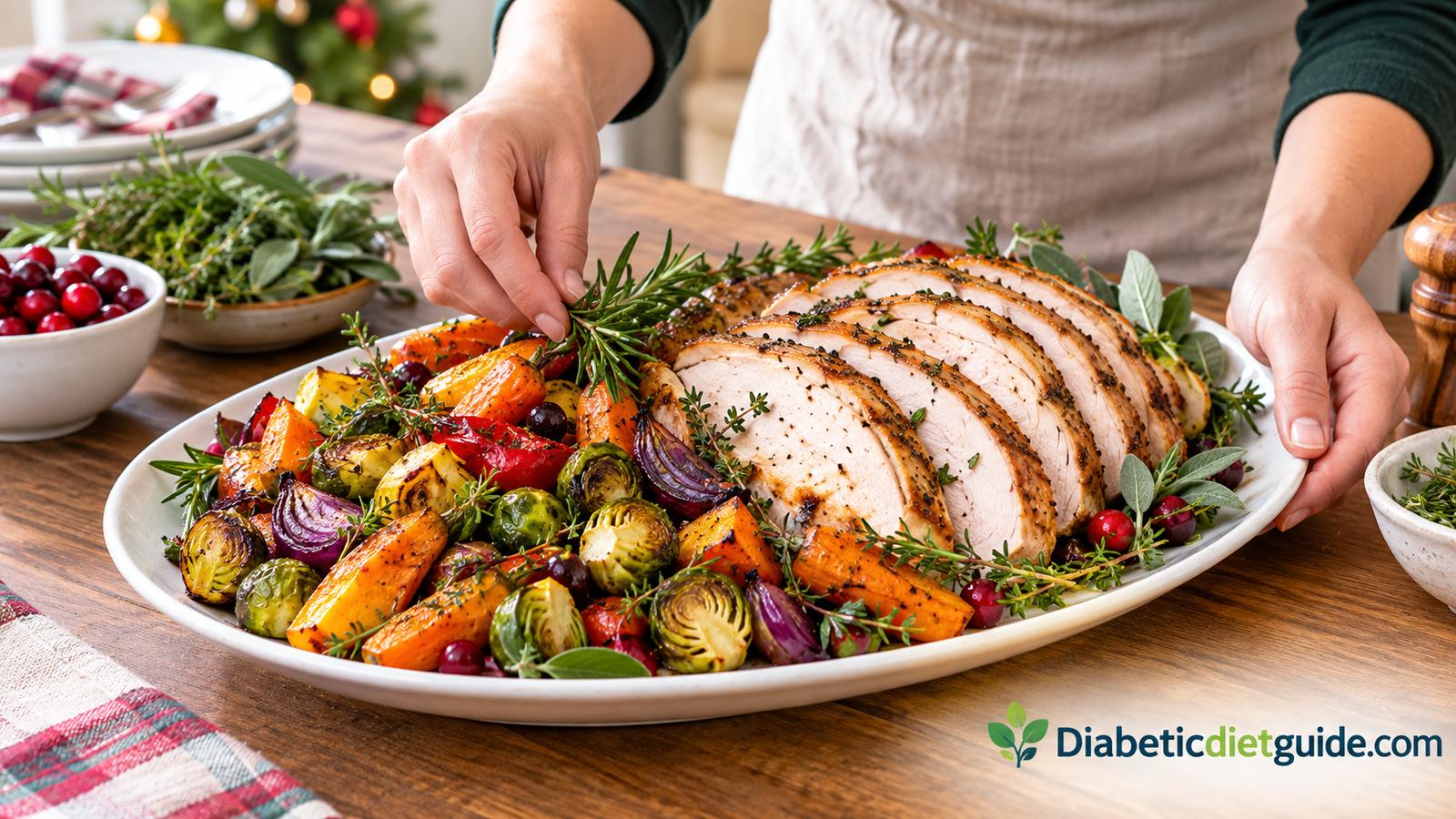
Herb-Butter Roast Turkey Breast
Ingredients
- One 4 to 5 pound bone-in turkey breast, patted dry
- 3 tablespoons softened butter or olive oil
- 2 teaspoons each chopped fresh rosemary, thyme, and sage
- 4 garlic cloves, minced, and the zest of 1 orange
- 1 teaspoon black pepper, ¾ teaspoon salt
- 1 cup low-sodium chicken broth for the pan
Method
- Heat the oven to 350°F (175°C). Mix the butter, herbs, garlic, zest, pepper, and salt into a paste.
- Loosen the skin gently and rub half the paste under it. Rub the rest over the surface.
- Set the breast on a rack in a roasting pan with the broth underneath.
- Roast for about 1½ to 2 hours, basting every 30 minutes, until the thickest part reaches 165°F (74°C).
- Rest for 20 minutes before carving. Skim the pan juices and serve as a light gravy with no flour added.
A turkey breast cooks faster and is easier to carve than a whole bird, and it gives you leftover protein for lunches. Pair it with plenty of vegetables and you’ve covered two-thirds of the plate. If heart health or sodium is on your radar too, our heart-healthy diabetic menu, the heart-healthy diabetic diet guide, and the low-sodium diabetic meal plan show how to season boldly with herbs and citrus in place of salt.
Maple-Mustard Salmon With Roasted Lemon
Ingredients
- 6 salmon fillets (about 5 ounces each)
- 2 tablespoons Dijon mustard and 1 tablespoon whole-grain mustard
- 2 teaspoons sugar-free maple-flavored syrup (or 1 teaspoon real maple syrup, for a very light touch)
- 1 tablespoon olive oil, 2 garlic cloves minced
- 1 lemon, sliced thin, plus fresh parsley to serve
Method
- Heat the oven to 400°F (200°C) and line a sheet pan with parchment.
- Whisk the mustards, syrup, olive oil, and garlic. Brush it over the salmon.
- Lay lemon slices on and around the fillets.
- Roast for 12 to 15 minutes, until the fish flakes easily. Scatter with parsley.
Fish is a smart alternative if your family is tired of turkey, and omega-3-rich salmon pairs well with a green vegetable and a small serving of grain. When your protein needs are higher, the high-protein diabetic menu offers more ideas for building meals around lean sources, and the diabetic dinner menu ideas page is great for turning holiday leftovers into weeknight dinners.
A word about ham, glazes, and gravy
Ham is a holiday tradition, but most are cured, salty, and finished with a sugary glaze. If ham is a must, choose a lower-sodium option, skip the brown-sugar packet, and glaze lightly with Dijon mustard, a spoonful of orange juice, and a pinch of cloves. For gravy, thicken pan juices with a teaspoon of cornstarch stirred into cold water rather than a flour roux, or simply reduce the juices until they coat a spoon. If you own an air fryer, it can also handle smaller cuts, chicken thighs, and vegetables on a crowded day; see our air fryer diabetic recipes for timing and temperature ideas.
An instant-read thermometer is the best way to nail a juicy roast every time.
Shop Meat Thermometers on AmazonSide Dishes Worth Fighting Over
Ask anyone what they love most about a holiday meal and the answer is usually a side dish. That is excellent news, because sides are where you have the most room to improve a menu without anyone noticing. Roasting vegetables until they caramelize, folding in nuts or herbs, and using a measured amount of whole grains can create dishes that are every bit as satisfying as the starchy classics.
Maple-Free Roasted Brussels Sprouts With Pecans
Ingredients
- 2 pounds Brussels sprouts, trimmed and halved
- 3 tablespoons olive oil
- ½ cup chopped pecans
- 2 teaspoons balsamic vinegar
- 1 teaspoon Dijon mustard, black pepper, and a pinch of salt
- Zest of 1 lemon
Method
- Heat the oven to 425°F (220°C). Toss the sprouts with oil, pepper, and salt, and spread them cut-side down on a sheet pan.
- Roast for 20 to 25 minutes until deeply browned on the cut sides.
- Add the pecans for the last 5 minutes so they toast without burning.
- Whisk the vinegar and mustard together, toss with the hot sprouts, and finish with lemon zest.
Garlic Green Beans With Toasted Almonds
Ingredients
- 2 pounds fresh green beans, trimmed
- 2 tablespoons olive oil and 4 garlic cloves, sliced thin
- ⅓ cup sliced almonds
- Juice of ½ lemon, black pepper, pinch of salt
Method
- Blanch the beans in boiling salted water for 3 minutes, then plunge into ice water and drain.
- Toast the almonds in a dry skillet over medium heat for 3 minutes until golden. Set aside.
- Warm the oil with the garlic over low heat for 1 minute. Add the beans and toss until hot.
- Finish with lemon juice, pepper, and the almonds.
Grains, beans, and starchy vegetables, measured not banned
Starches are not the enemy; the size of the pile is. A third of a cup of cooked whole grains, a small scoop of sweet potato, or a few spoonfuls of beans can fit well when the rest of the plate is balanced. If you’re deciding which grain to serve, our comparison of white rice, brown rice, and quinoa for blood sugar walks through the differences, and the article on whether quinoa is good for diabetics explains why it often makes a good stuffing or pilaf base.
Wild Rice and Mushroom Pilaf
Ingredients
- 1 cup wild rice blend, rinsed
- 8 ounces cremini mushrooms, sliced
- 1 small onion, diced, 2 celery stalks, diced
- 2 cups low-sodium vegetable broth
- 1 tablespoon olive oil, 1 teaspoon dried thyme
- ¼ cup chopped parsley and ¼ cup toasted walnuts
Method
- Sauté the onion and celery in oil for 5 minutes. Add mushrooms and cook until their liquid evaporates.
- Stir in the rice, thyme, and broth. Cover and simmer 40 to 45 minutes until the grains burst open and the liquid is absorbed.
- Fluff, then fold in the parsley and walnuts.
Looking for more structure for the weeks around the holidays? The 30-day low-glycemic diet menu shows how to keep carbohydrates steady, and the best bread for diabetics roundup helps if rolls are non-negotiable at your table. Choose a dense, seeded loaf and enjoy one slice.
Sheet pans and roasting trays are the workhorses of every holiday vegetable.
Shop Baking Sheets on AmazonSmart Swaps for Classic Holiday Dishes
You don’t need to give up your family’s favorites. You only need to change a few things inside them. The right swap keeps the flavor and texture that people look for while cutting back on refined starch and added sugar. Some swaps are close to perfect, like mashed cauliflower blended with a little potato. Others are different enough that it is better to treat them as a new dish rather than a copy.
| Classic dish | Smarter version | What changes |
|---|---|---|
| Mashed potatoes | Half cauliflower, half potato, with Greek yogurt and roasted garlic | Fewer carbs and more fiber, still creamy |
| Bread stuffing | Cubed seeded bread or cauliflower rice with celery, onion, sage, and sausage | Much lower in refined starch |
| Candied sweet potatoes | Roasted sweet potato wedges with cinnamon and pecans | Removes the marshmallow and sugar topping |
| Canned cranberry sauce | Fresh cranberries simmered with orange zest and a sweetener | Cuts sugar by a large margin |
| Green bean casserole | Fresh green beans with sautéed mushrooms and almond slivers | No canned soup or fried onions |
| Dinner rolls | One whole-grain or seeded roll, or lettuce wraps | More fiber and a smaller portion |
Sugar-Smart Cranberry Orange Relish
Ingredients
- 12 ounces fresh cranberries
- 1 orange, zest and juice
- ¼ cup water
- 3 to 4 tablespoons granulated stevia or monk fruit blend, to taste
- ½ teaspoon cinnamon
Method
- Combine the cranberries, orange zest and juice, water, and cinnamon in a saucepan.
- Simmer over medium heat for 10 minutes, until the berries pop and the sauce thickens.
- Remove from the heat, stir in sweetener, and taste. Add more only if needed.
- Cool completely. The relish thickens as it chills.
Choosing a sweetener
Not all sweeteners behave the same in a recipe. Some are heat-stable and bake beautifully; others turn bitter or lose sweetness. Our comparison of stevia vs. Splenda breaks down taste, baking performance, and blends. Many cooks like a combination of stevia and erythritol or monk fruit for desserts, and a pinch of salt to round out the sweetness.
Why swapping works
- Keeps the dishes everyone expects
- Cuts refined carbs and added sugar
- Adds fiber, protein, or healthy fat
- Often easier on the cook too
Where to be careful
- Some sweeteners cause digestive upset in large amounts
- Texture may differ from the original
- “Sugar-free” products can still contain starch
- Tell guests with allergies what’s in each dish
Plant-forward and low-carb tables
If some of your guests eat vegan, vegetarian, or keto, a few thoughtful dishes can cover everyone. Our vegan diabetic meal plan, the diabetic meal plan for vegetarians, and the keto diabetic recipes and meal planning guide are good places to start, and your coffee drinkers will appreciate the best coffee creamers for diabetes at the dessert table.
A reliable baking-friendly sweetener makes every swap easier.
Find Sugar Substitutes on AmazonSalads and Soups That Start the Meal Right
A salad or a cup of broth-based soup is one of the oldest tricks for steadier holiday eating. Starting with something rich in water and fiber takes the edge off hunger, gives you a head start on vegetables, and slows down the pace of the meal. It also makes the table feel more abundant, because color and freshness cut through all the rich, roasted food.
Winter Pomegranate and Kale Salad
Ingredients
- 8 cups baby kale or shredded lacinato kale, stems removed
- ½ cup pomegranate seeds
- ¼ cup toasted pumpkin seeds
- ¼ cup shaved Parmesan
- 3 tablespoons olive oil, 2 tablespoons lemon juice
- 1 teaspoon Dijon mustard, black pepper, pinch of salt
Method
- Whisk the oil, lemon juice, mustard, pepper, and salt in a large bowl.
- Add the kale and massage it with your hands for 1 minute until it softens and darkens.
- Top with pomegranate seeds, pumpkin seeds, and Parmesan. Toss just before serving.
Roasted Butternut Squash and Ginger Soup
Ingredients
- 1 large butternut squash (about 3 pounds), peeled and cubed
- 1 onion, chopped, 3 garlic cloves
- 1 tablespoon grated fresh ginger
- 4 cups low-sodium vegetable or chicken broth
- 2 tablespoons olive oil, ½ teaspoon nutmeg
- ¼ cup unsweetened plain Greek yogurt to finish
Method
- Toss the squash with oil and roast at 425°F (220°C) for 30 minutes until tender and browned.
- Sauté the onion, garlic, and ginger in a pot for 5 minutes. Add squash, broth, and nutmeg.
- Simmer 10 minutes, then blend until smooth. Thin with a little water if needed.
- Serve with a spoonful of yogurt and a few pumpkin seeds on top.
Squash is a starchy vegetable, so keep portions to a cup and treat it as part of your carbohydrate allotment. Still, it comes packed with fiber and vitamins. If you manage high blood pressure alongside diabetes, the diabetic menu for high blood pressure has soups and salads that rely on herbs for flavor. For lighter lunch-style salad ideas to serve on any day of the season, see our diabetic salad recipes and the diabetic lunch menu.
Fruit in savory dishes
Pomegranate, citrus, and apple slices add brightness to winter salads. They also come with sugar, so portions matter. If you wonder how fruit fits, our guides on whether a diabetic can eat oranges and on watermelon and diabetes explain how serving size and pairing with protein change the picture.
A good salad bowl set and an immersion blender make winter soups and salads a breeze.
Shop Immersion Blenders on AmazonDesserts Without the Crash
This is the section everybody scrolls to first, so let’s be honest about it. You can have dessert with diabetes. The question is what kind, how much, and what else you ate. A small portion of a well-made dessert after a balanced meal behaves very differently from a large slice eaten on an empty stomach at 4 p.m. Pairing sweets with protein and fiber, or having them straight after a meal, tends to blunt the glucose rise.
Whole-food desserts such as baked fruit, nut-based bars, and chocolate-dipped strawberries win because the fiber, fat, and protein slow absorption. When you want more variety, our full collection of the best dessert recipes for diabetics has plenty to explore.
Cinnamon Baked Apples With Walnuts
Ingredients
- 6 small firm apples, cored but left whole
- ⅓ cup chopped walnuts
- 2 tablespoons rolled oats
- 1 tablespoon butter, melted, 1½ teaspoons cinnamon
- 1 tablespoon granulated sweetener blend
- ½ cup water for the baking dish
Method
- Heat the oven to 350°F (175°C). Stand the apples in a baking dish with the water.
- Stir together walnuts, oats, butter, cinnamon, and sweetener. Spoon into each apple.
- Bake 35 to 40 minutes until tender. Serve warm with a spoonful of plain Greek yogurt.
Dark Chocolate Peppermint Bark With Nuts
Ingredients
- 8 ounces dark chocolate (70% cacao or higher), chopped
- ½ cup chopped almonds or pistachios
- ½ teaspoon peppermint extract
- Pinch of flaky salt
Method
- Melt the chocolate gently in a double boiler or in 30-second bursts in the microwave, stirring in between.
- Stir in the peppermint extract and half the nuts.
- Spread onto a parchment-lined tray about ¼ inch thick. Top with remaining nuts and salt.
- Chill 30 minutes until firm, then break into pieces and keep refrigerated.
Chocolate is one of the easiest treats to adapt. Read our guide to the best chocolate for diabetics for brands that balance flavor and sugar content. If you’re serving frozen treats, the roundup of the best ice cream for diabetics is a useful shortcut, and a spoonful of diabetes-friendly yogurt makes an elegant topping for baked fruit.
Fruit that works in holiday desserts
Berries, cherries, apples, and pears are the usual winners. Frozen fruit is also a fine option and often cheaper; the guide on fresh vs. frozen fruit for diabetics explains why. If bananas feature in a family recipe, read whether a diabetic can eat bananas before you decide how much to use.
| Dessert | Approx. carbs per serving | Notes |
|---|---|---|
| Standard slice of pecan pie | 55 to 65 g | High in sugar and refined flour |
| Cinnamon baked apple with walnuts | About 20 g | Fiber and nuts slow absorption |
| Two pieces of dark chocolate bark | About 8 g | Small, rich, easy to portion |
| Berries with whipped cream | 10 to 15 g | Skip sugar in the cream |
| Crustless pumpkin custard | 10 to 14 g | Warm spices and no pastry |
Silicone molds and mini baking dishes make single-serve desserts simple.
See Ramekins and Molds on AmazonFestive Drinks and Sips for Every Celebration
Liquid sugar is easy to overlook because it doesn’t feel like food. Eggnog, spiced lattes, hot chocolate, mulled cider, and holiday cocktails can each contain as many carbohydrates as a dessert, and they hit the bloodstream fast. Festive does not have to mean sweet. Sparkling water, herbal tea, and unsweetened infusions can look just as celebratory in a good glass.
Cranberry-Orange Sparkler
Ingredients
- 1 tablespoon unsweetened cranberry juice
- 1 cup plain or citrus-flavored sparkling water
- 2 orange slices and a few fresh cranberries
- 1 sprig rosemary, plenty of ice
Method
- Fill a tall glass with ice and the orange slices.
- Pour in the cranberry juice, then top with sparkling water.
- Garnish with cranberries and rosemary. Stir once and serve.
Spiced Hot Cocoa With Unsweetened Almond Milk
Ingredients
- 2 cups unsweetened almond or other low-carb milk
- 2 tablespoons unsweetened cocoa powder
- 1 to 2 teaspoons powdered sweetener, to taste
- ½ teaspoon cinnamon, pinch of cayenne, ¼ teaspoon vanilla
Method
- Whisk the cocoa, sweetener, and cinnamon with a splash of the milk to make a smooth paste.
- Add the rest of the milk and warm over medium heat, whisking until steaming.
- Stir in vanilla and cayenne. Pour into mugs.
When you need quick energy or a meal replacement
Travel days and busy hosting days sometimes call for a drink instead of a meal. Choose carefully. Our guides to the best protein shakes for diabetes and the best energy drinks for diabetics highlight options that avoid the sugar bomb, and the head-to-head Glucerna vs. Boost comparison is useful if you rely on nutrition shakes. For something cold and fruity, the diabetic smoothie menu shows how to blend with greens, protein, and a modest portion of fruit.
Alcohol and diabetes: a few cautions
- Alcohol can cause low blood sugar, sometimes hours later, especially on an empty stomach or with insulin or certain medications.
- Never drink without food, and ask your doctor what is safe for you.
- Dry wine, spirits with soda water, or light beer are lower in sugar than sweet cocktails and ciders.
- Alternate every alcoholic drink with water, and check your glucose before bed.
Festive glassware makes sugar-free sparklers feel like a celebration.
Shop Glassware on AmazonHoliday Breakfast, Brunch, and Leftover Magic
Holiday mornings are a minefield of cinnamon rolls, coffee cake, and pancakes dripping with syrup. They are also a chance to set the tone for the day. A breakfast anchored in protein and fiber can keep you steady through hours of cooking, unwrapping, and visiting. Eggs, Greek yogurt, nut butter, and oats do most of the work.
Crustless Spinach and Feta Egg Bake
Ingredients
- 10 large eggs and ½ cup milk of choice
- 5 ounces fresh spinach, wilted and squeezed dry
- 1 cup diced bell pepper and ½ cup diced onion
- ½ cup crumbled feta, black pepper, ½ teaspoon garlic powder
Method
- Heat the oven to 375°F (190°C) and grease a 9 by 13-inch baking dish.
- Sauté the pepper and onion for 4 minutes. Spread with the spinach in the dish.
- Whisk the eggs, milk, pepper, and garlic powder. Pour over the vegetables and sprinkle with feta.
- Bake for 28 to 32 minutes until set in the center. Rest 5 minutes before cutting.
Overnight Pumpkin Spice Chia Pudding
Ingredients
- ¼ cup chia seeds, 1 cup unsweetened almond milk
- ½ cup canned pumpkin purée (not pie filling)
- 1½ teaspoons pumpkin pie spice, 1 teaspoon vanilla
- 2 teaspoons sweetener of choice, chopped pecans to finish
Method
- Whisk everything except the pecans in a bowl or jar.
- Refrigerate overnight, stirring once after 30 minutes to prevent clumping.
- Spoon into cups and top with pecans.
More morning ideas are waiting in our diabetic breakfast menu and the list of breakfast ideas for diabetes. Eggs are central to many holiday brunches, so if you wonder about quantity, how many eggs a diabetic can eat in a day offers guidance. For quick cereal mornings, check the best cereals for diabetics, and for a protein-rich spread on toast, see the best peanut butters for diabetics.
Making the most of leftovers
Leftovers are the bonus round of holiday cooking. Turkey becomes a lettuce-wrap filling, soup with white beans and kale, or a hearty salad. Roasted vegetables turn into frittata fillers. Cooked salmon makes a creamy spread for cucumber rounds. Store cooked food in shallow containers within two hours of serving and reheat to 165°F. Label what you’ve cooked so the sugar-heavy dishes don’t sneak into your lunch box by accident.
Glass storage containers keep holiday leftovers fresh and portioned for the week.
Shop Storage Containers on AmazonGlobal Holiday Flavors That Fit a Diabetes-Friendly Plate
Not every family celebrates with turkey and pie. Holiday tables around the world are loaded with spices, legumes, vegetables, and fresh herbs that suit a diabetes-friendly approach beautifully. The trick is to enjoy the flavors, swap in whole grains or vegetables where white rice, tortillas, or fried batter would normally go, and to be mindful of sweets, which tend to be rich across many cuisines.
Mexican-inspired holiday dishes
Think slow-cooked chicken tinga, grilled shrimp with lime, black beans, roasted poblanos, and crisp jicama salad. Corn tortillas in small portions work better than flour, and a topping of avocado, fresh salsa, and pumpkin seeds adds fiber. Find more ideas in our Mexican diabetic food recipes.
Chinese-inspired holiday dishes
Steamed fish with ginger and scallion, stir-fried greens, tofu with mushrooms, and egg drop soup bring plenty of flavor with limited sugar. Be careful with sweet-and-sour sauces and glazes, which are often loaded with sugar. Our Chinese diabetic recipes show how to lighten the sauce while keeping the wok-fresh taste.
Soul food classics, lightened
Collard greens braised with smoked turkey, baked chicken, okra stew, and roasted sweet potatoes can all fit when cooking methods change from frying to baking and when sugar and fat are trimmed. The soul food diabetic recipes guide offers lower-sugar versions of family favorites without losing the warmth. If cholesterol is also a concern, the diabetic menu for high cholesterol offers helpful guidance.
Indian-inspired holiday dishes
Lentil dal, tandoori-style chicken, vegetable curries, and cucumber-yogurt raita are naturally full of protein and fiber. Whole-grain rotis and smaller portions of basmati rice keep the carbohydrates measured. Our Indian diabetic diet chart breaks down portion sizes in a practical way.
Spiced Lentil and Vegetable Stew
Ingredients
- 1½ cups dry brown or green lentils, rinsed
- 1 tablespoon olive oil, 1 onion, diced, 3 garlic cloves
- 2 carrots, diced, 2 celery stalks, diced
- 1 can (14 ounces) diced tomatoes, no sugar added
- 1 tablespoon curry powder, 1 teaspoon cumin, ½ teaspoon turmeric
- 6 cups low-sodium vegetable broth, 4 cups chopped spinach
Method
- Sauté the onion, carrots, and celery in oil for 6 minutes. Add garlic and spices and cook 1 minute.
- Add lentils, tomatoes, and broth. Simmer, partly covered, for 30 to 35 minutes until lentils are tender.
- Stir in the spinach until wilted. Season with pepper and a squeeze of lemon.
A well-stocked spice rack lets you travel the world without leaving your kitchen.
Shop Spice Sets on AmazonDay-of Strategy, Gifts, and Your Holiday Kitchen Kit
You have the recipes. Now let’s make the day itself run smoothly. Think of this section as your behind-the-scenes checklist for the days leading up to the meal, the meal itself, and the days that follow.
The week before
- Pick your menu and decide which two or three dishes you want most. Build the rest around them.
- Do a pantry check: olive oil, spices, broth, nuts, canned tomatoes, frozen vegetables, and a sweetener you trust.
- Prep what you can: wash and trim vegetables, make the cranberry relish, bake the dessert.
- Restock testing supplies and medication. If you need a refresher, see our tips on where to buy diabetic needles.
The day of
- Eat a normal, protein-forward breakfast.
- Taste as you cook, but stay mindful. A spoonful here and there adds up.
- Fill your plate with vegetables and protein first, then add the dishes you love most in small portions.
- Eat slowly, put the fork down between bites, and pause before seconds.
- Take a post-meal walk and check glucose if that is part of your routine.
Keep eating on track the rest of the season
The holidays last weeks, not one afternoon. A flexible weekly structure keeps you grounded, and these resources help: the weekly diabetic meal plan, the 7-day diabetic menu, the 3-day diabetic meal plan, and the 1-day simple diabetic menu for the busiest stretches. If you work through the season, the diabetic menu for working adults keeps lunches and office treats under control.
Gifts and travel
If you are shopping for someone with diabetes, our list of the best diabetic food gifts avoids the usual candy and cookie trap. For travel, a well-organized kit matters: the best bags to carry diabetic supplies keep meters, snacks, and medication together, and if you are on your feet more than usual, read what diabetic socks are and whether they might help you.
Air fryer or oven? A quick look
Air fryer perks
- Crisp texture with very little oil
- Frees up oven space on busy days
- Fast for vegetables and small cuts of meat
Air fryer limits
- Small capacity for big crowds
- Not ideal for large roasts or casseroles
- Needs batch cooking for family-size portions
Kitchen kit checklist
- Digital kitchen scale and measuring cups for portions
- Instant-read thermometer for roasts
- Two rimmed sheet pans and a roasting rack
- Glass containers for leftovers
- Small ramekins for single-serve desserts
Get your kitchen holiday-ready with a few smart tools that save time and keep portions honest.
Shop Kitchen Essentials on AmazonFrequently Asked Questions About Diabetic Holiday Recipes
Can I eat dessert at the holidays if I have diabetes?
Yes. Dessert can fit into a diabetes meal plan. Choose a small portion, eat it after a balanced meal rather than on an empty stomach, and pair it with protein or fiber. Recipes made with nuts, berries, baked fruit, and dark chocolate are good places to begin, but always follow the advice of your doctor or dietitian.
What is the best main dish for a diabetic holiday dinner?
Lean proteins such as roast turkey breast, salmon, chicken, or beef tenderloin are all good choices because they contain little or no carbohydrate. Keep glazes and gravies light, and balance the protein with plenty of non-starchy vegetables.
How can I make mashed potatoes more diabetes-friendly?
Replace half the potatoes with steamed cauliflower, use Greek yogurt or a little olive oil in place of heavy cream and lots of butter, and flavor with roasted garlic and herbs. Keep the portion to about a half cup.
Are sugar substitutes safe for holiday baking?
Many people with diabetes use stevia, monk fruit, erythritol, and similar products without trouble, though large amounts of sugar alcohols can cause stomach upset. Look for blends designed for baking, start with less than you think you need, and ask your care team if you have questions about a particular product.
What should I eat before a big holiday meal?
Eat a normal breakfast and, if the meal is late, a small protein-based snack such as nuts or cheese. Arriving ravenous makes it harder to control portions. If you take insulin or glucose-lowering medication, ask your doctor how to handle a delayed meal.
How many carbs should a holiday meal have?
It depends on your individual plan, medications, activity level, and goals. Many meal plans fall somewhere in the range of 30 to 60 grams of carbohydrate per meal, but your own target may be different. Your dietitian can give you a number that fits your needs.
Can I drink alcohol at holiday parties?
Some people can, in moderation and with food, but alcohol can cause low blood sugar and may interact with medications. Choose dry wine, spirits with zero-sugar mixers, or light beer, avoid sweet cocktails, and talk to your healthcare provider about what is safe for you.
How do I handle holiday meals at someone else’s house?
Offer to bring a dish you know fits your plan, fill half your plate with vegetables, and take small portions of the foods you most want. Let the host know about your needs ahead of time if you are comfortable doing so.
Is fruit okay on a diabetic holiday menu?
Yes, in sensible portions. Berries, apples, pears, and citrus are good choices. Eating fruit with nuts, yogurt, or cheese slows the rise in blood sugar compared with eating fruit alone.
What are good diabetic-friendly appetizers?
Shrimp cocktail, deviled eggs made with Greek yogurt, cucumber bites with smoked salmon, veggie platters with hummus, and small bowls of nuts all work well. They are low in refined carbohydrates and high in protein or healthy fat.
How do I store and reheat leftovers safely?
Refrigerate food within two hours, use shallow containers so it cools quickly, and eat leftovers within three to four days. Reheat to an internal temperature of 165°F (74°C) and discard anything left out too long.
What if my blood sugar goes high after a holiday meal?
One high reading does not undo your efforts. Drink water, take a walk if you feel well enough, and return to your usual routine at the next meal. Follow your doctor’s instructions for high readings, and call your care team if you see repeated high numbers or have symptoms that concern you.
Conclusion: Celebrate Well and Keep the Joy
Diabetic holiday cooking is not about taking things away. It is about choosing what matters, building plates that work with your body, and bringing creativity to the dishes you serve. A herb-roasted turkey, a tray of crisp roasted vegetables, a fragrant lentil stew, a warm baked apple: these are not sad substitutes. They are good food that happens to be good for you too.
Start small. Pick two or three recipes from this guide, make one swap you’ve been curious about, and add a walk to your holiday plans. Pay attention to how you feel and what your numbers tell you, and adjust from there. With a little preparation, the season can be about people, stories, and flavors rather than worry.
Ready to cook? Gather your holiday essentials in one place and make this the easiest, tastiest season yet.
Shop Diabetic-Friendly Cookbooks on AmazonYou May Also Like
Keep exploring meal plans, recipes, and product guides from our diabetic diet library.
Pingback: Diabetic Christmas Dessert Recipes: Festive Sweets